



About this worksheet
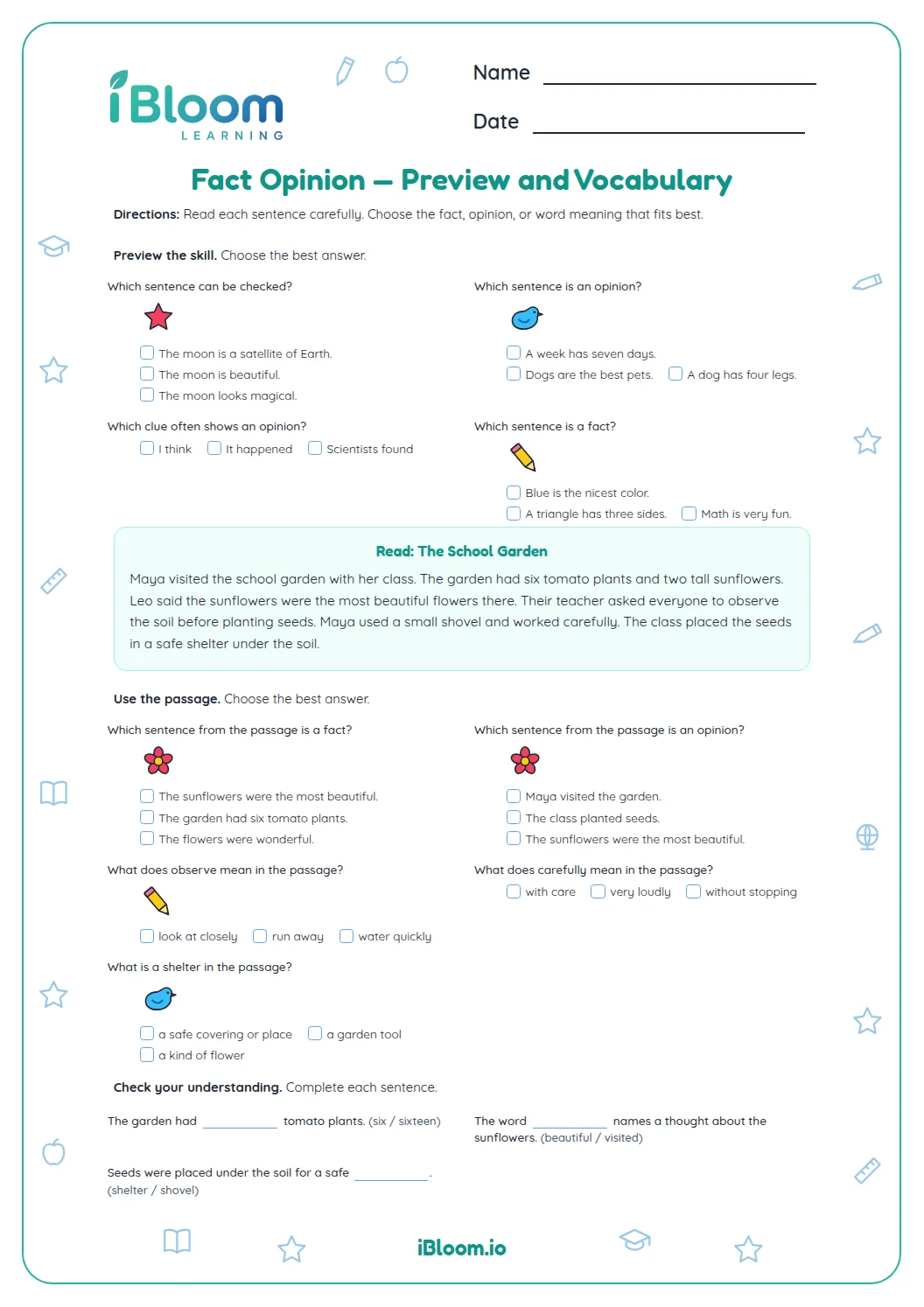
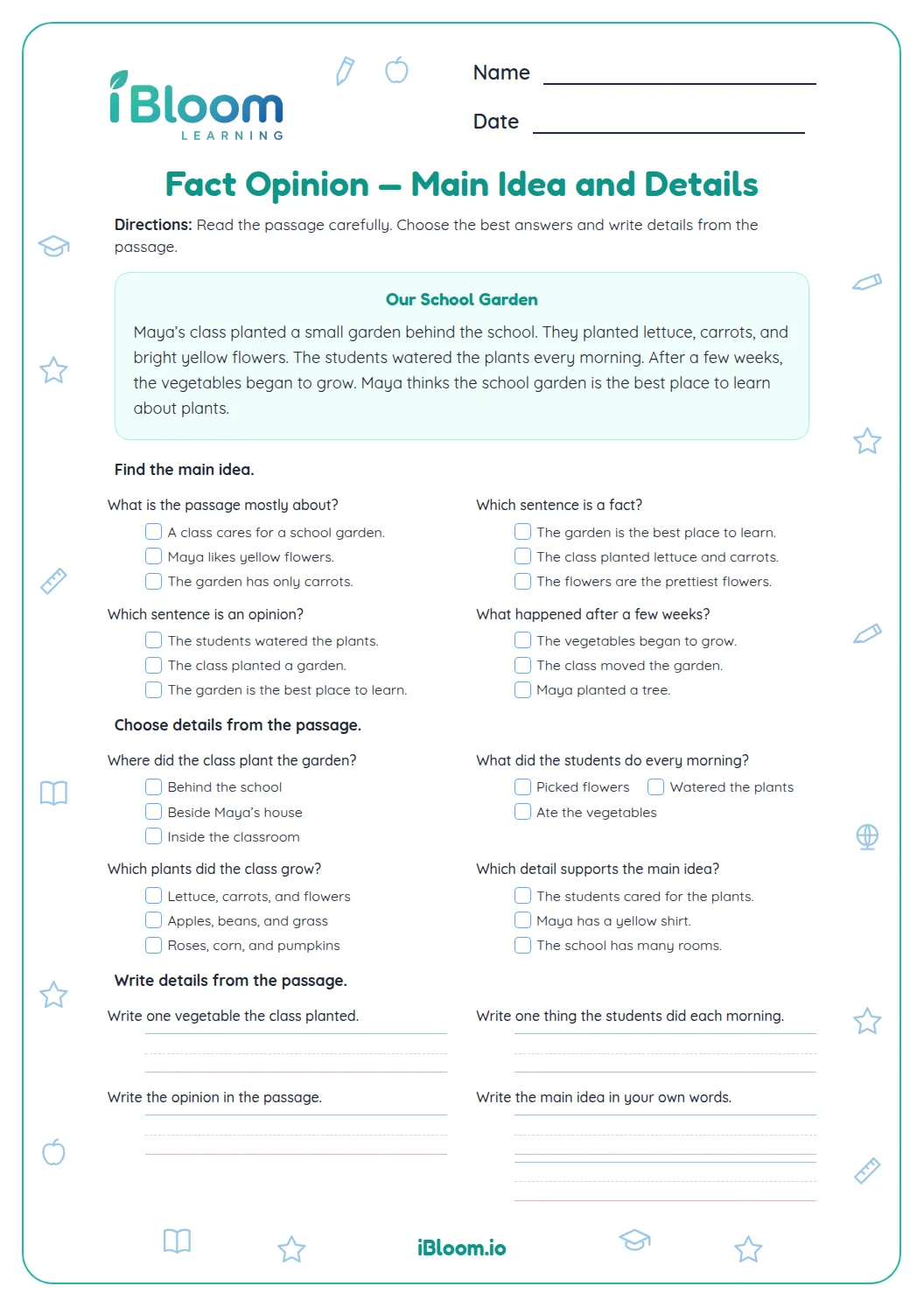
This Grade 2 reading worksheet uses an original passage about a library garden. Students identify checkable facts and personal opinions, retrieve details, and support one written response with evidence from the text. It practices asking and answering questions about key details and distinguishing statements supported by evidence from opinions. Fourteen questions move from classification to comprehension and a short explanation.
Aligned to RI.2.1
What makes a statement a fact or an opinion?
A fact can be checked using evidence in the passage or another reliable source. An opinion shares a preference or judgment, often with words such as best or prettiest.
- 1“The gauge showed two inches of rain” is checkable; “the prettiest vegetables” expresses a judgment.
How do details support an answer?
Return to the passage and find the exact sentence that answers who, what, or how many. For question 7, Maya wrote the rain measurement in her notebook.
- 1Question 7: Maya and her dad planted six tomato plants.
How to use this worksheet
- 1Read the full passage once.
- 2For each statement, ask whether evidence could check it.
- 3Return to the passage to find names, numbers, and actions.
- 4Use the passage’s words in short answers.
- 5For the final response, name a fact and how someone could check it.
Common mistakes and quick fixes
The mistake
Calling every true-sounding statement a fact.
The fix
Check whether the passage supports it.
The mistake
Treating a strong preference as a fact.
The fix
Notice judgment words such as prettiest.
The mistake
Answering from memory.
The fix
Reread the sentence and use its detail.
Students answer questions about key details in the passage.
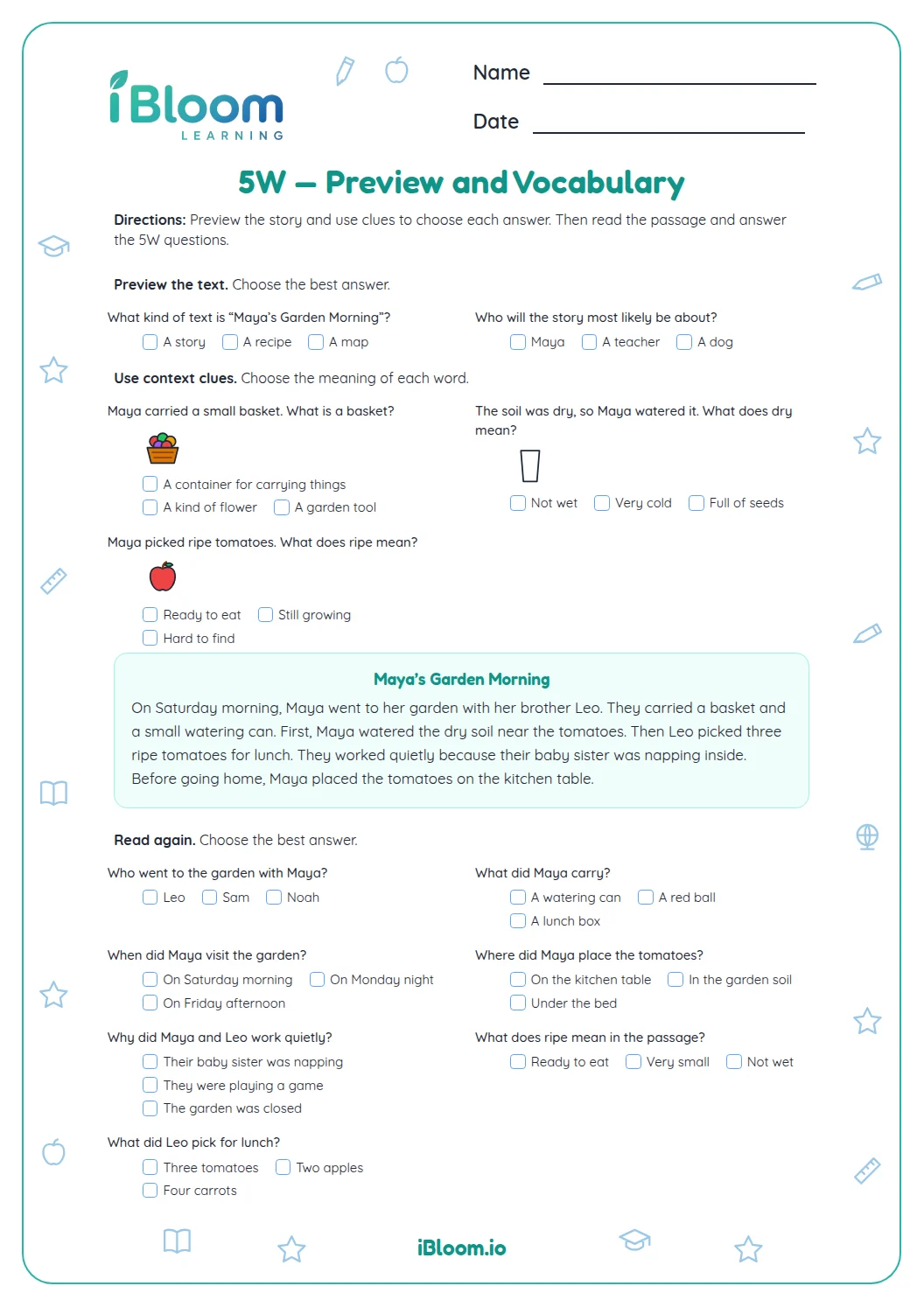
Answer who, what, and how many questions using details in the garden passage.
On this sheet:
Show the official wordingHide the official wording
Ask and answer such questions as who, what, where, when, why, and how to demonstrate understanding of key details in a text.
What to practice next
Further reading
Questions parents and teachers ask
How can a second grader tell a fact from an opinion?
A fact is a statement that can be checked with evidence, while an opinion expresses a preference or judgment. In this passage, the rain gauge reading can be checked; calling purple beans the prettiest vegetables is Maya’s opinion. Ask the child to point to the passage detail that makes a statement checkable or opinion-based.
What is the passage about?
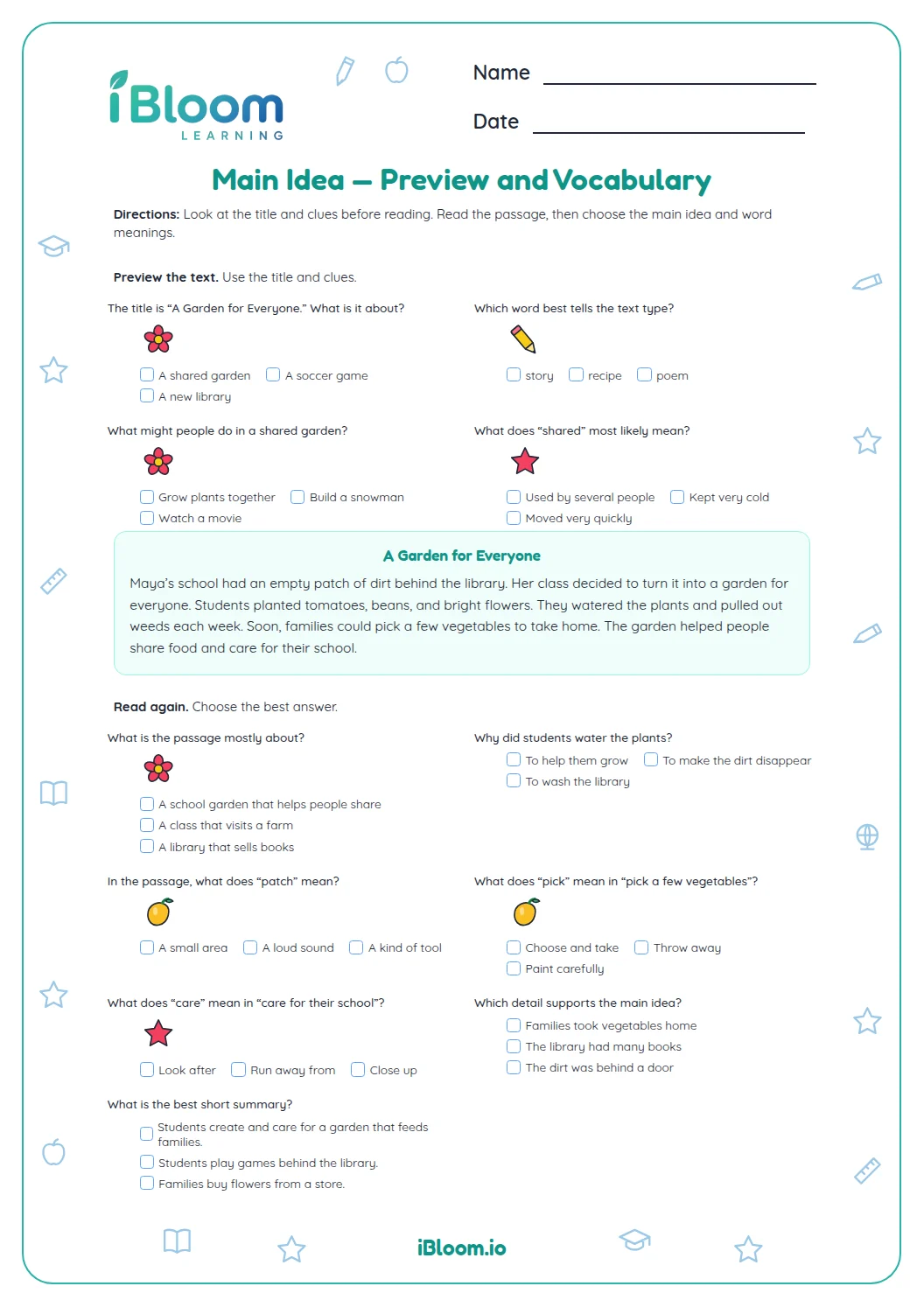
Maya and her dad help plant a garden beside the town library. A librarian records rain, visitors sign up to help, and Maya shares what she likes about the garden. Students use those details to answer comprehension questions. Rereading the garden passage helps children distinguish a recorded detail from Maya’s personal judgment.
What does the written response ask students to do?
The final question asks students to name one fact from the passage and explain how it could be checked. A response might use the rain gauge detail and say that someone could read the gauge to verify the measurement. The answer should name a fact that appears in the story and a sensible way to verify it.
How many questions are on the worksheet?
There are 14 questions after the passage: six fact-or-opinion choices, six questions about passage details, one short-answer question about opinion words, and one written response using evidence from the text. The passage is printed before the questions so students can look back for names and numbers.
Does the worksheet include an answer key?
Yes. The separate key identifies the correct fact-or-opinion choices and passage details. For the written response, it provides a sample; other accurate responses that name a passage fact and explain how to check it can also work. Accept other passage details when the response clearly explains how someone could check them.