
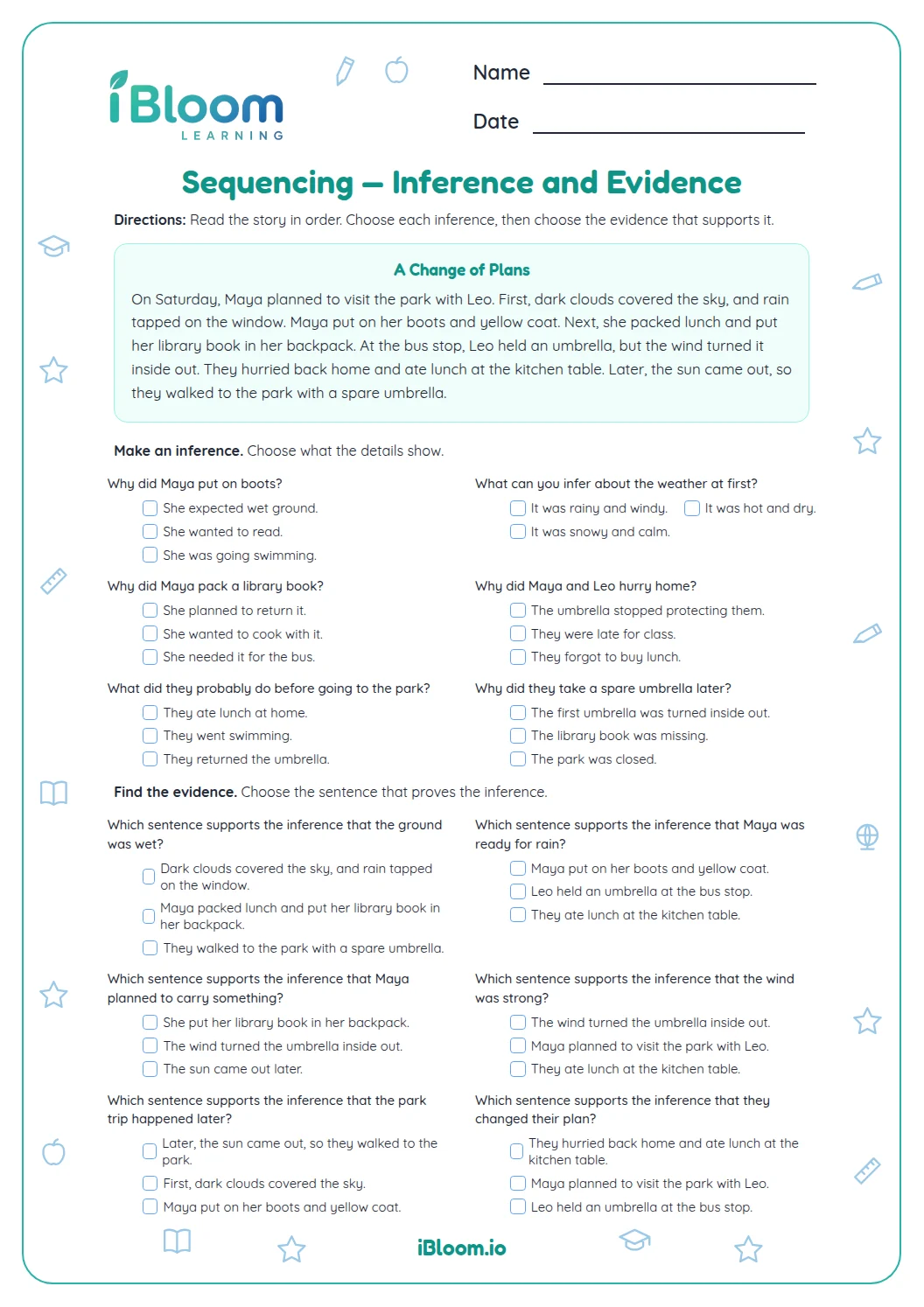
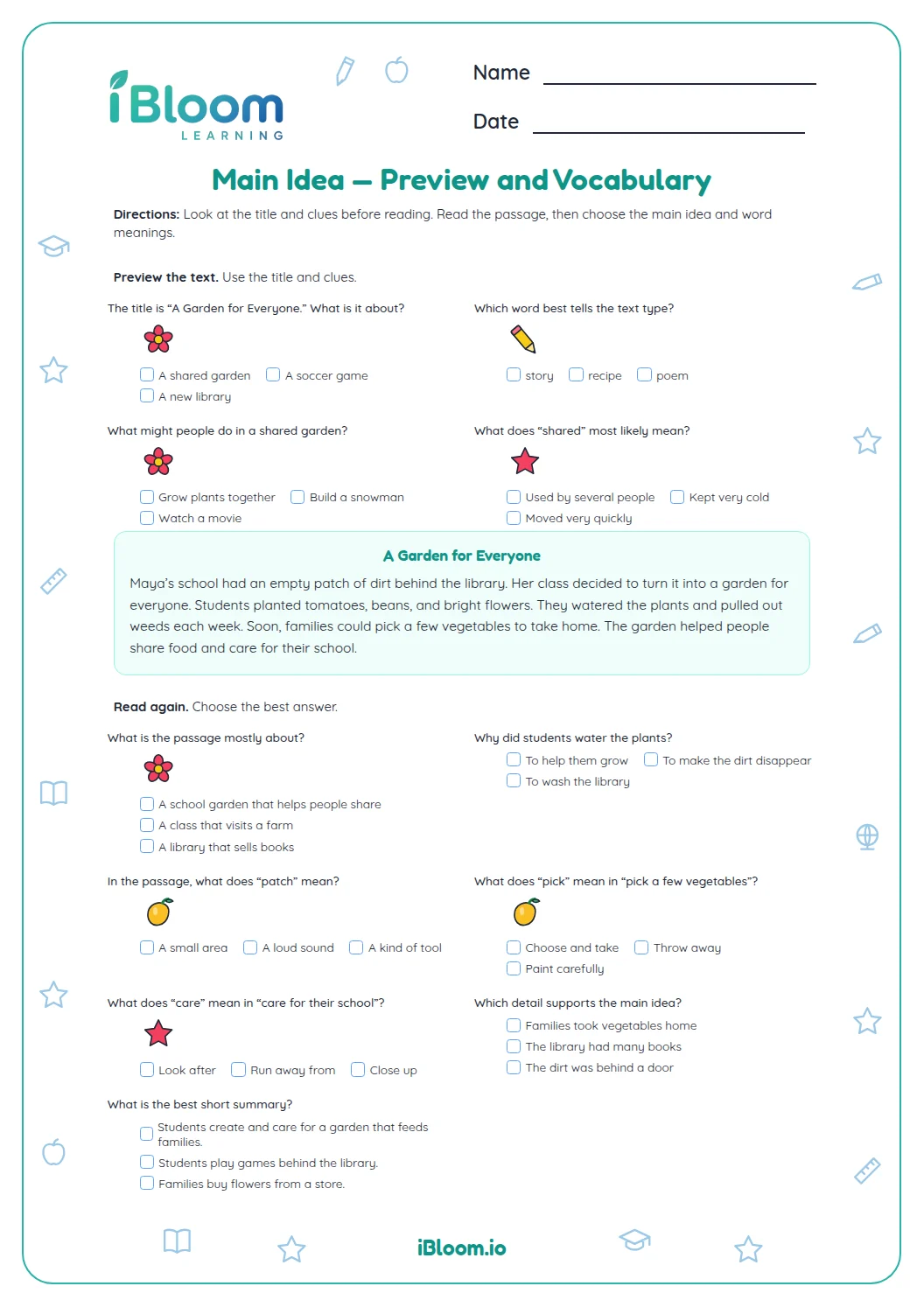
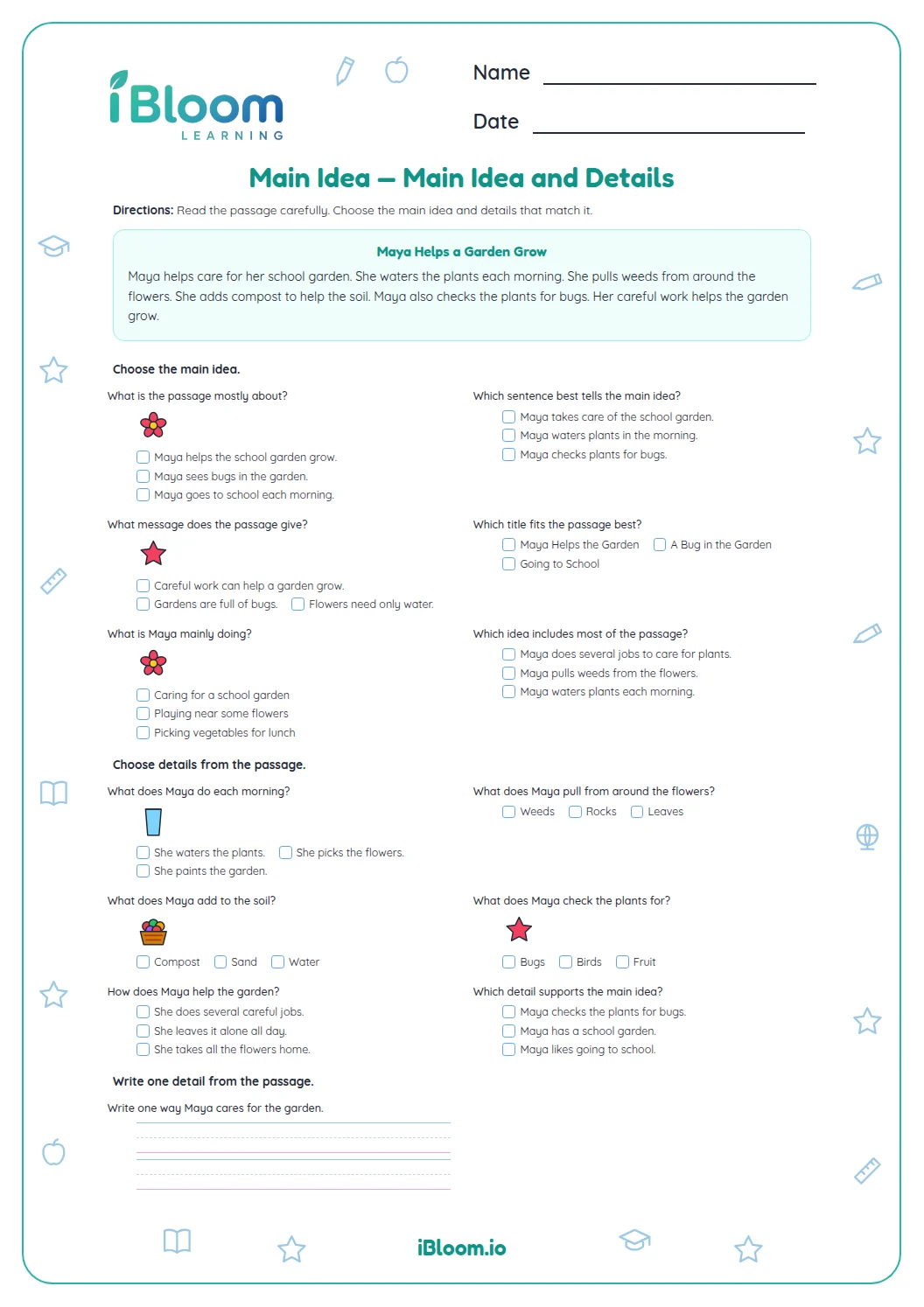
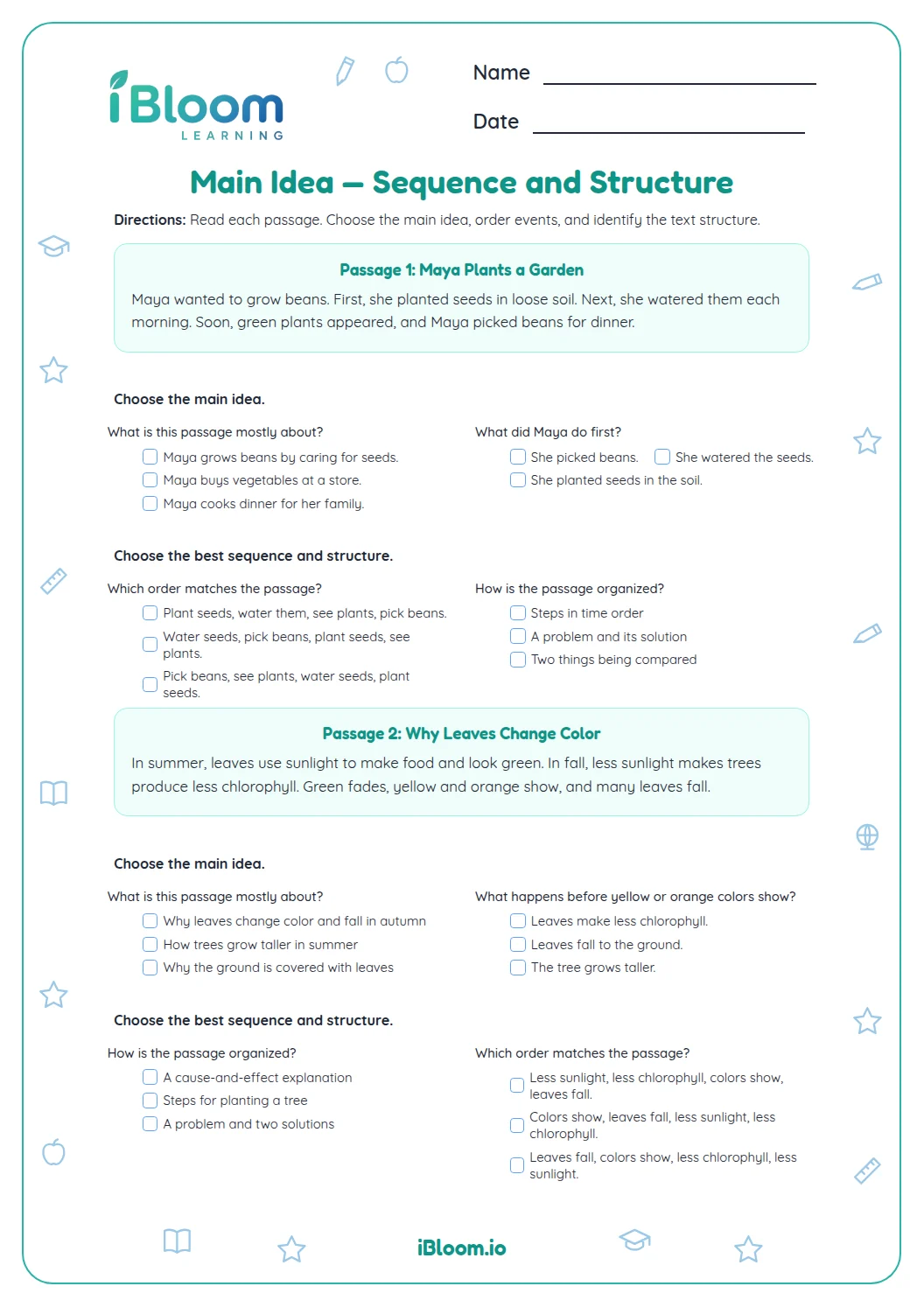



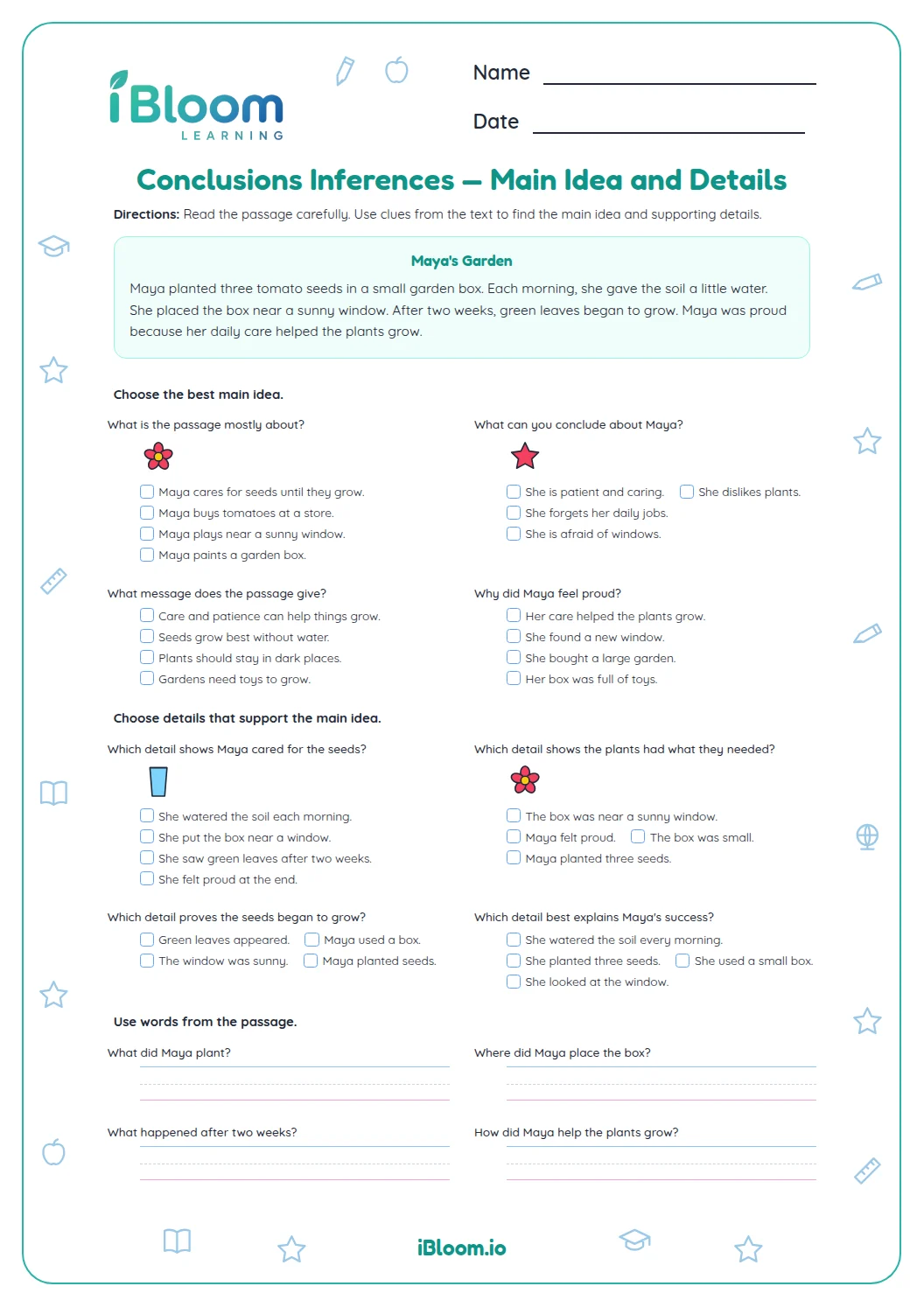
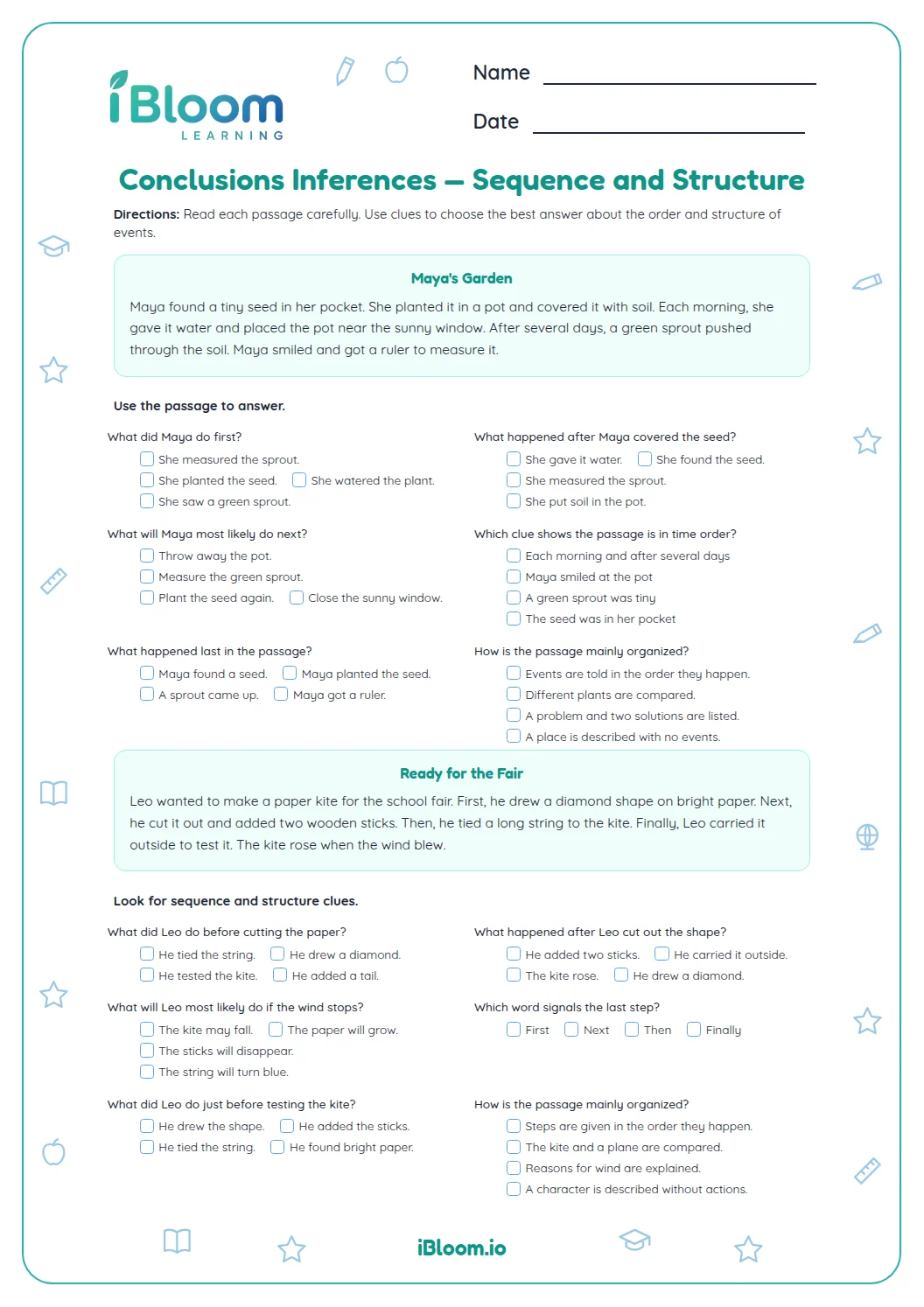
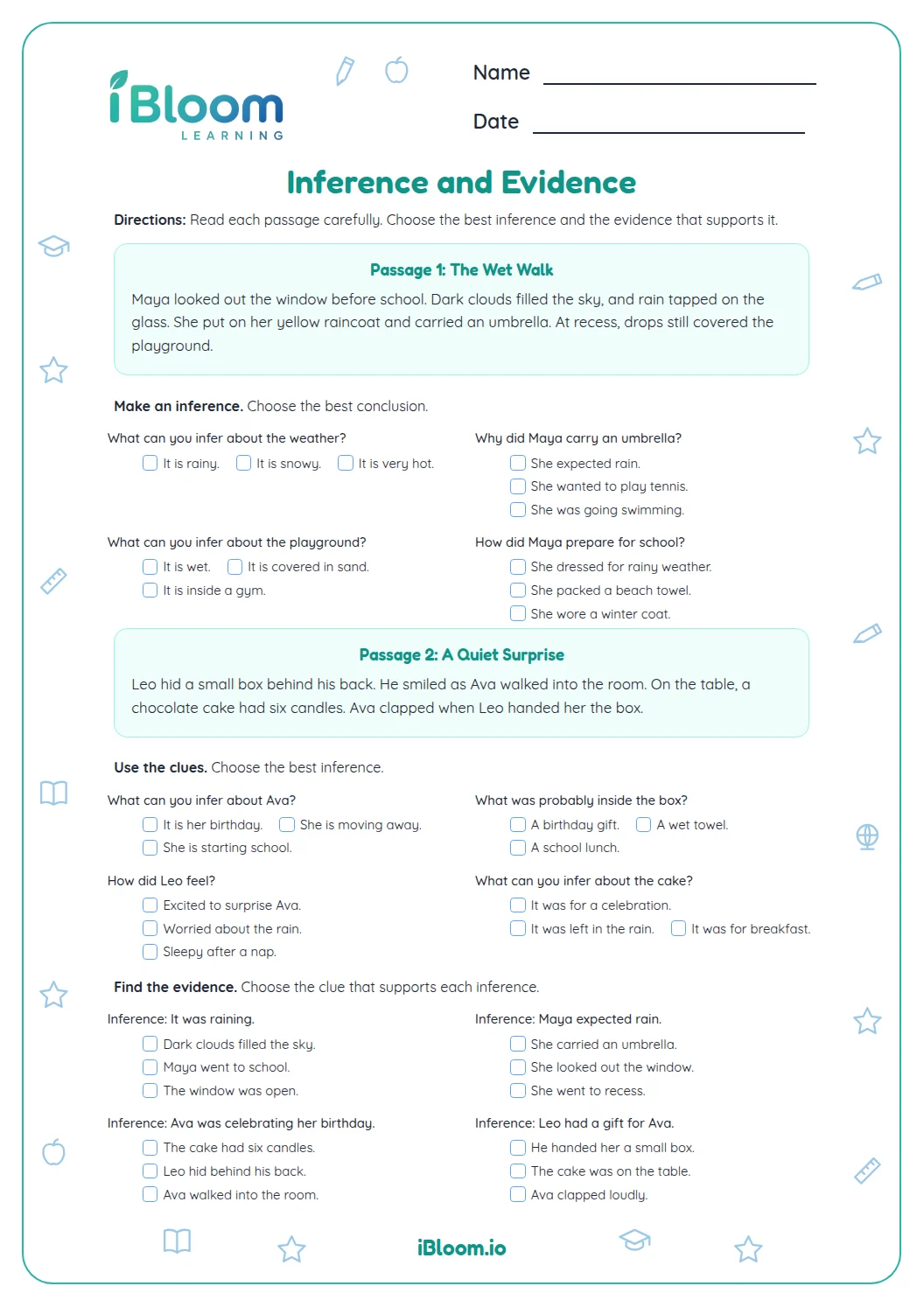
About this worksheet
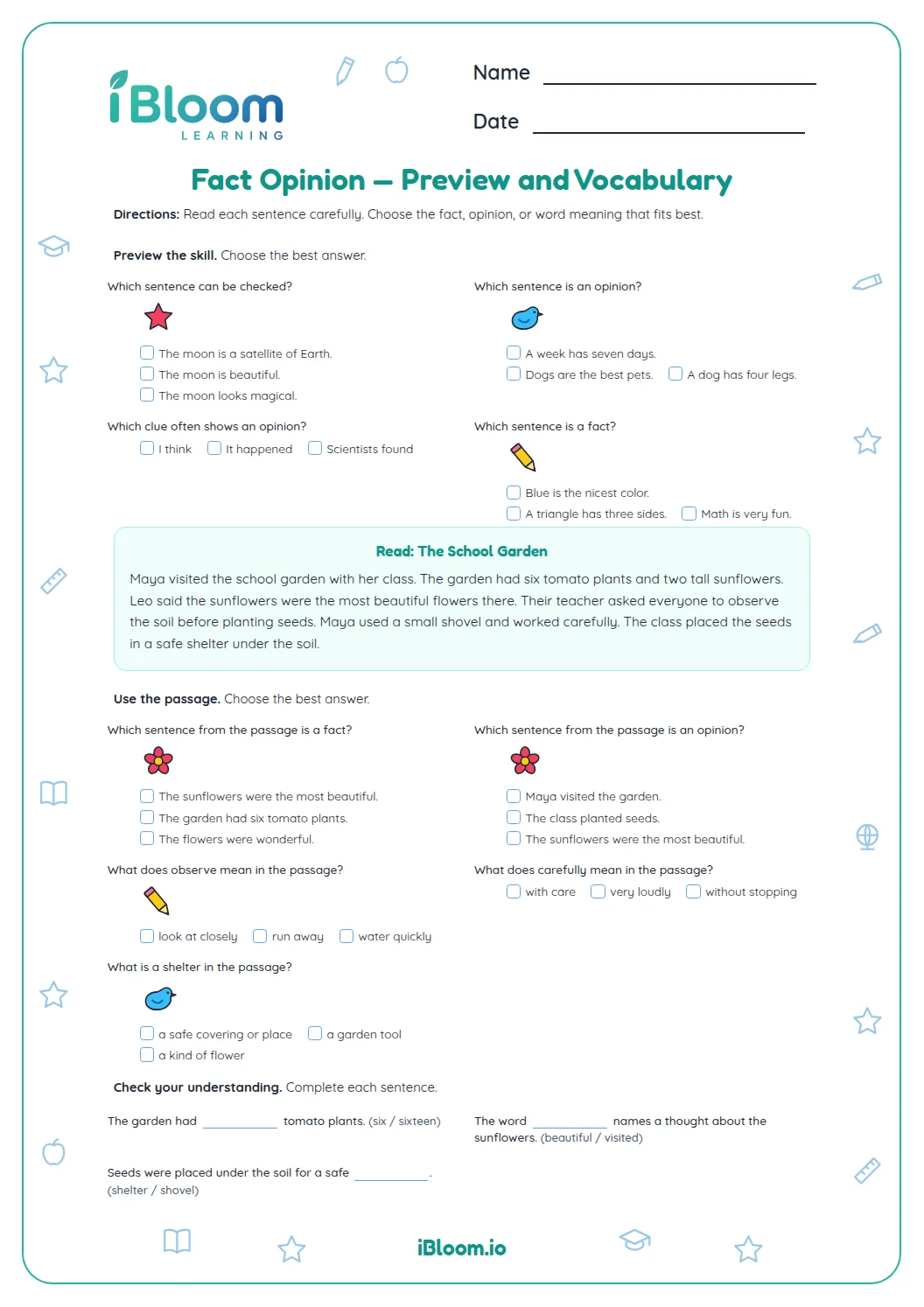
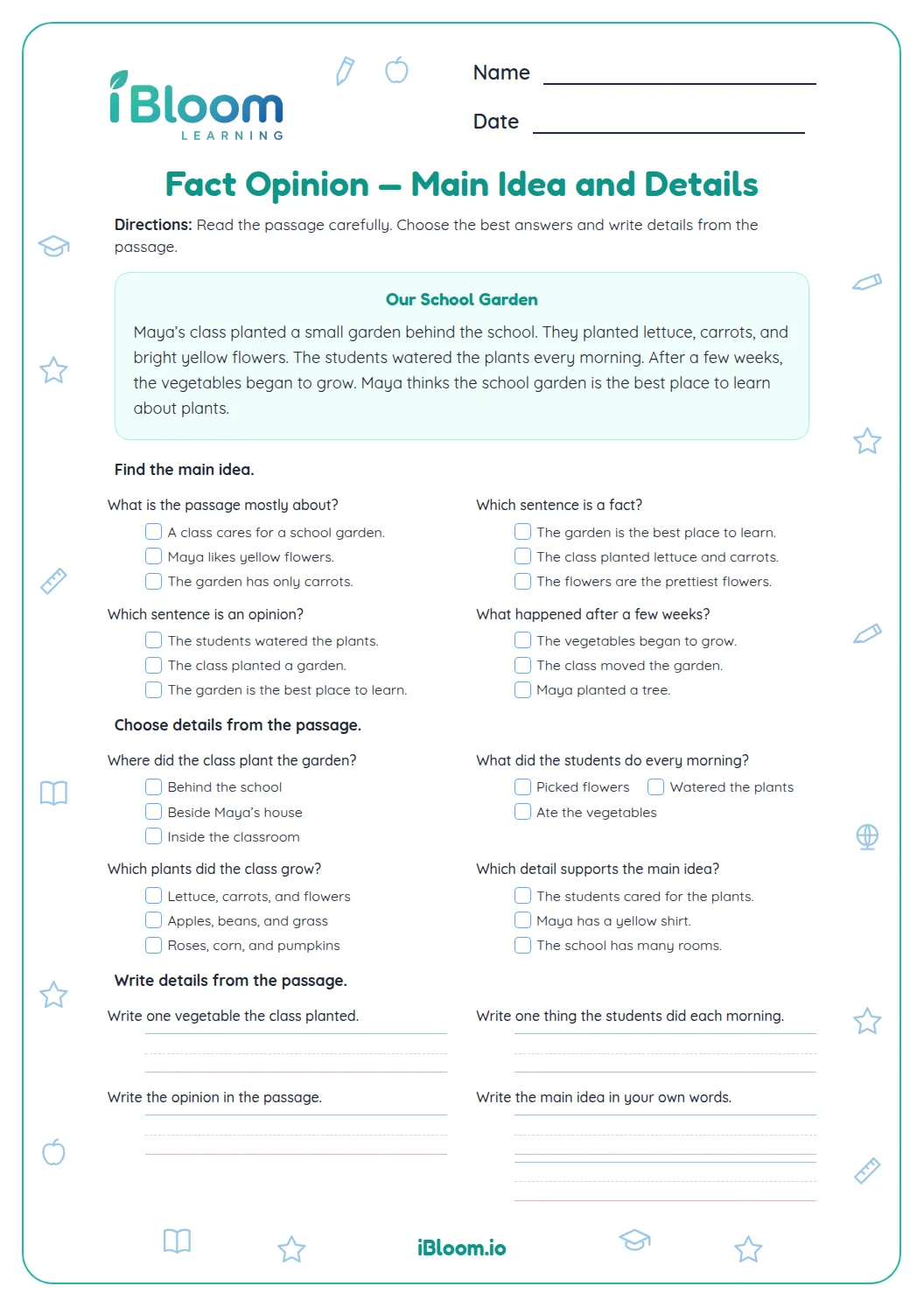
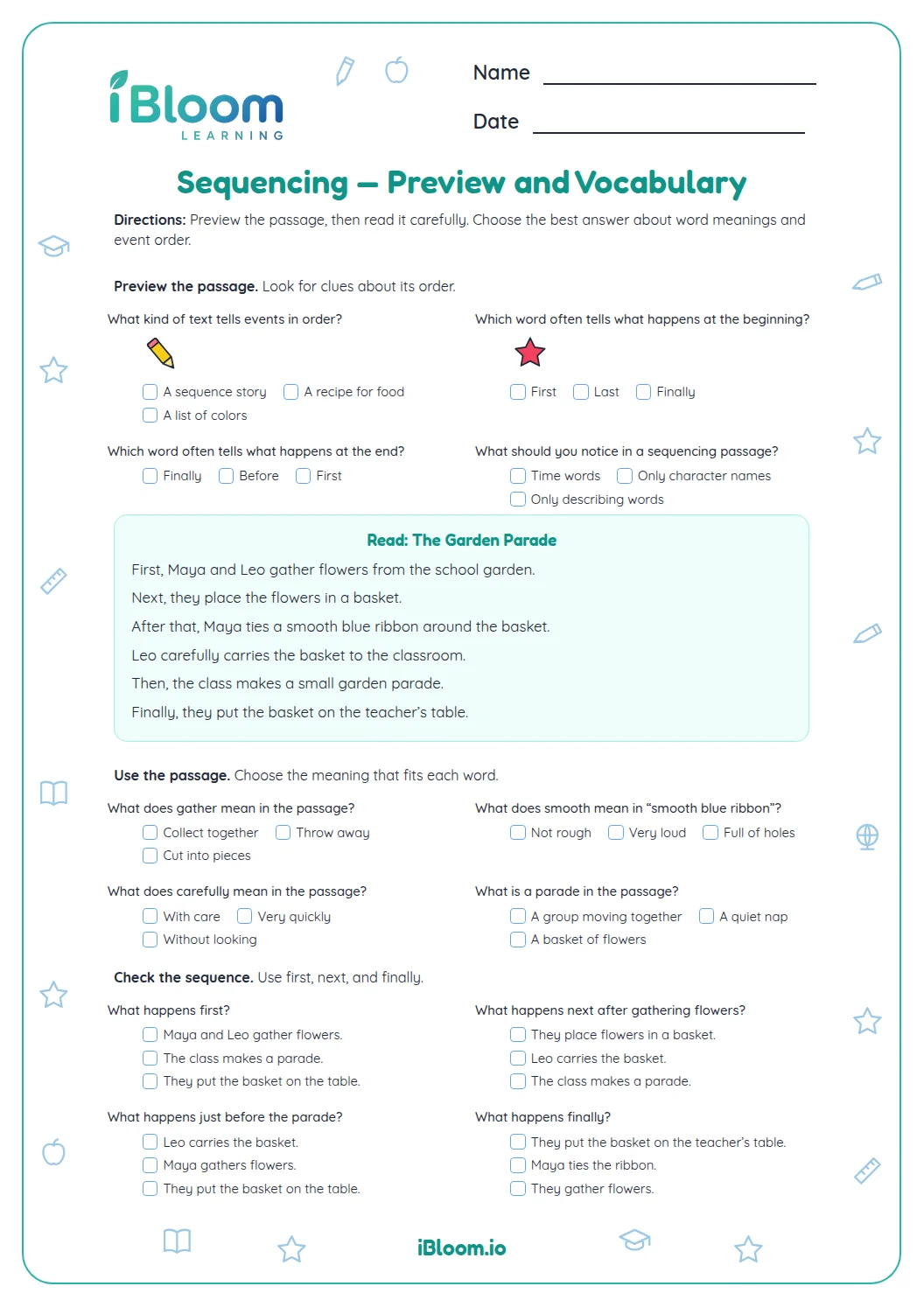
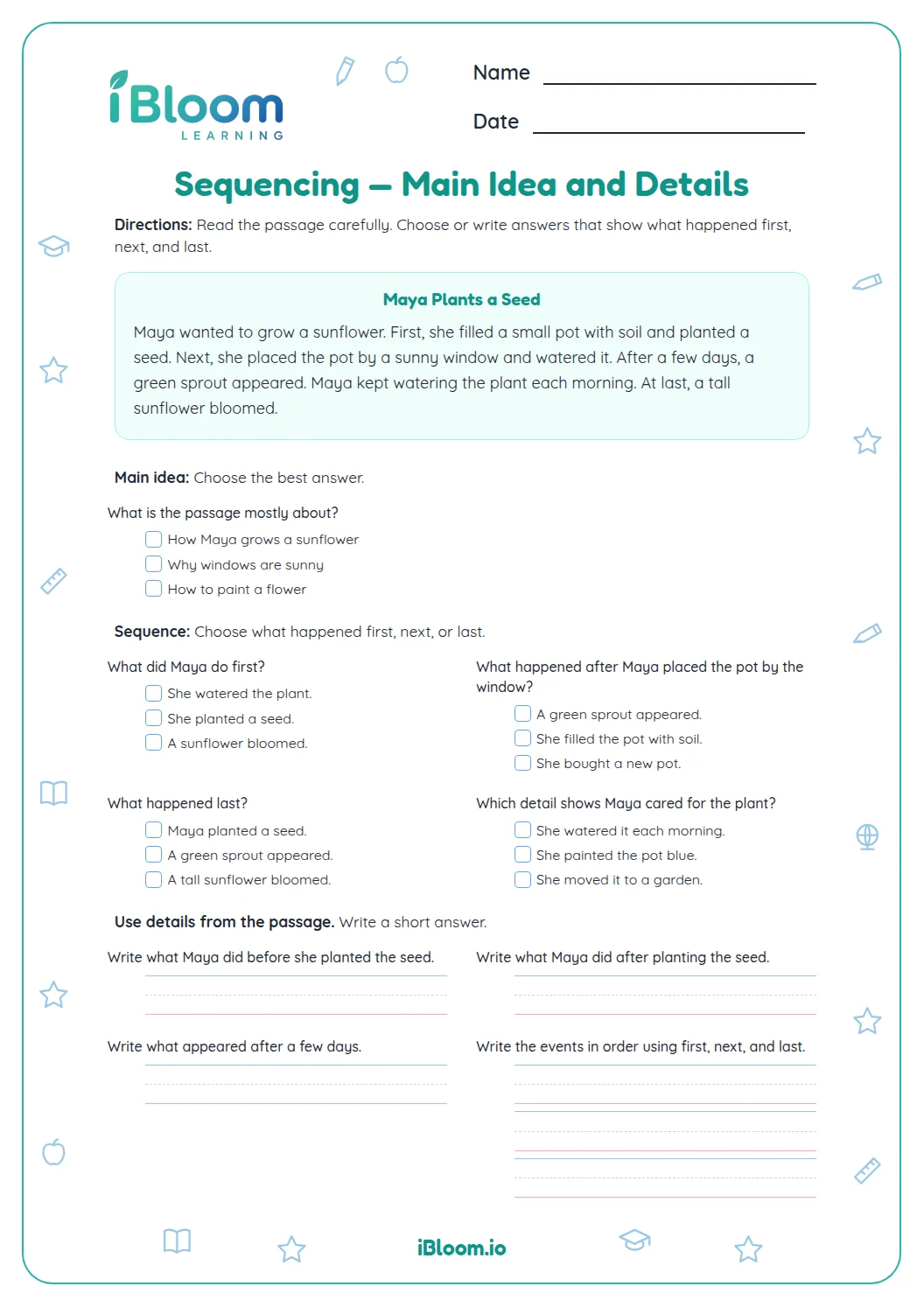
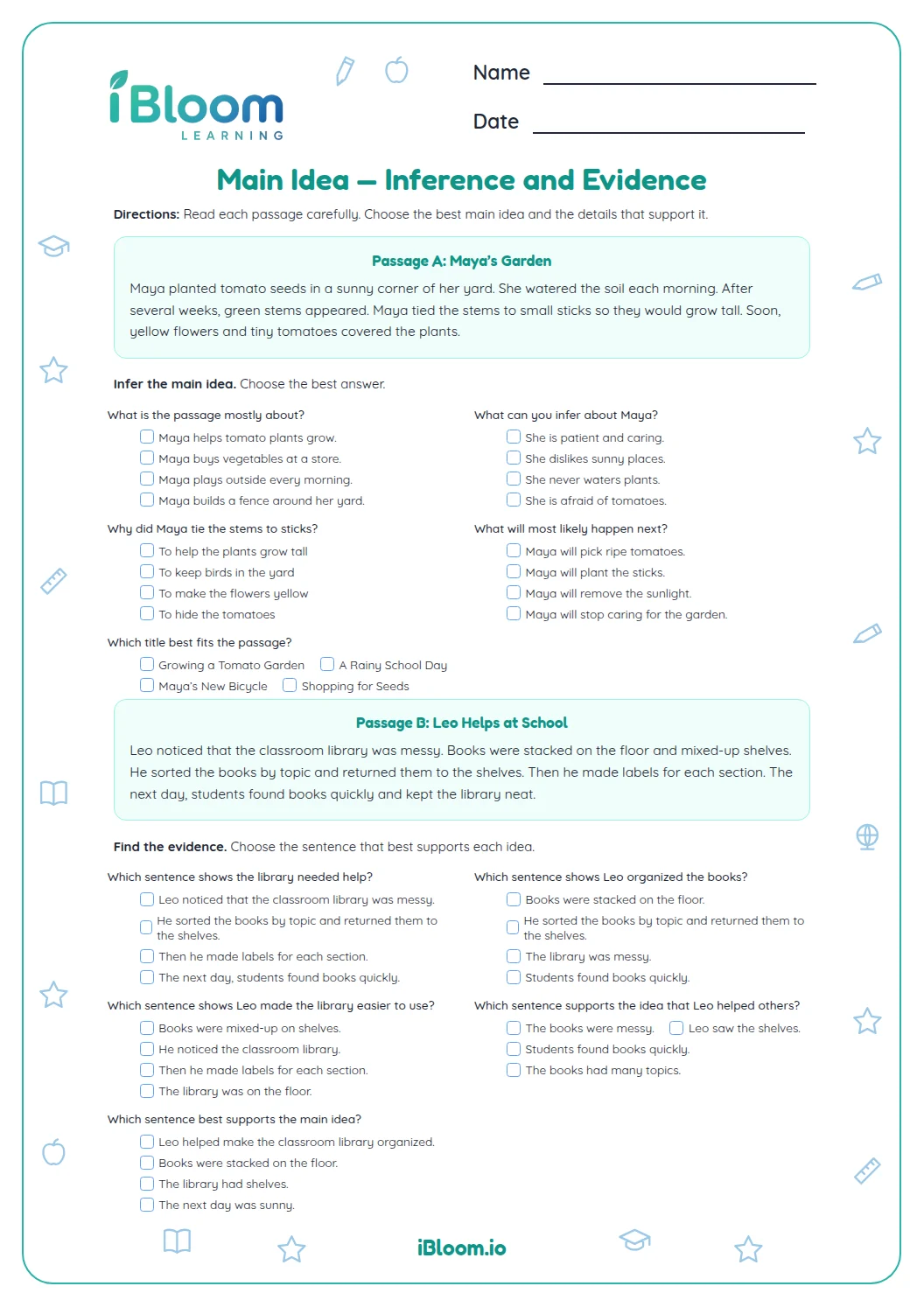
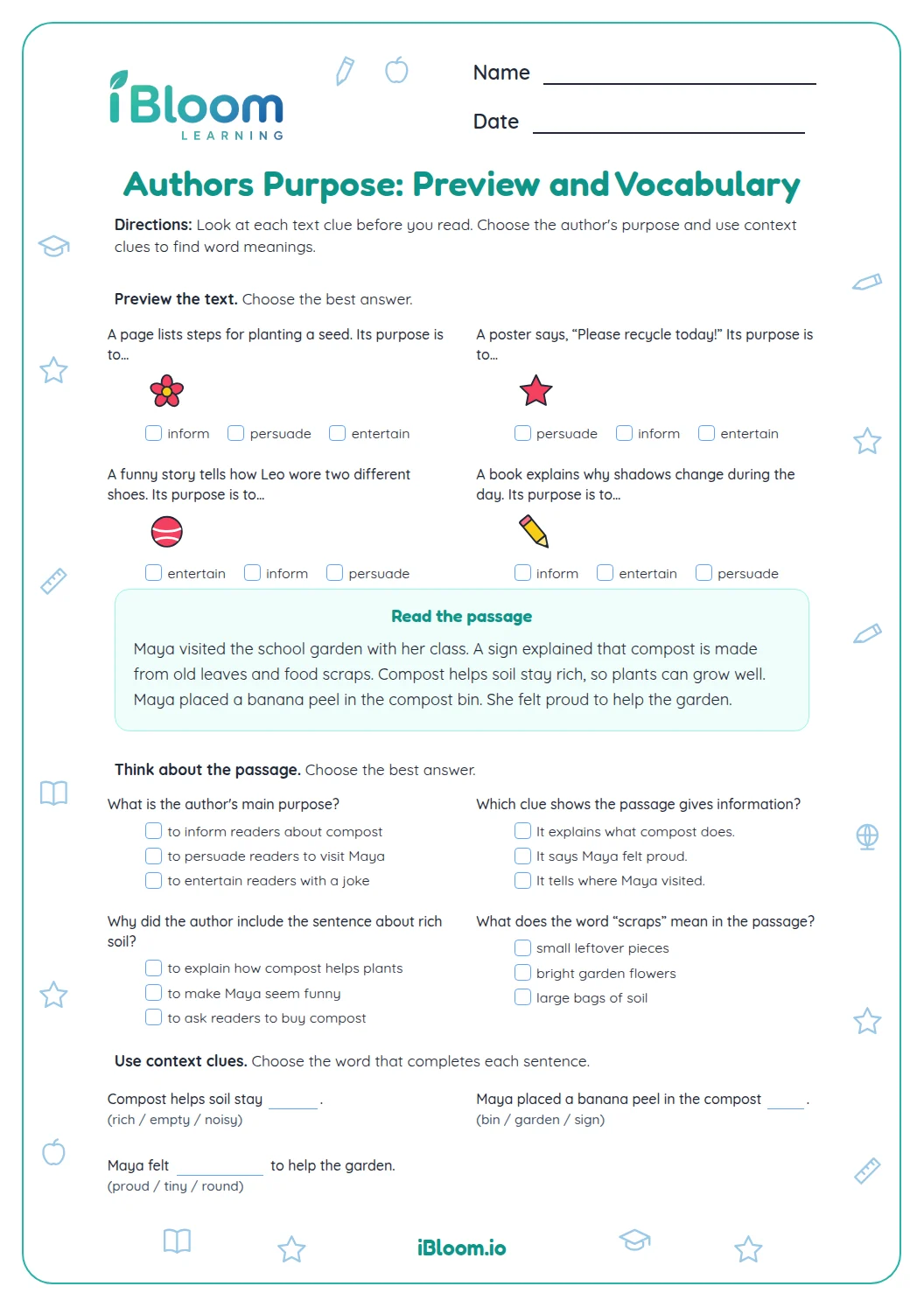
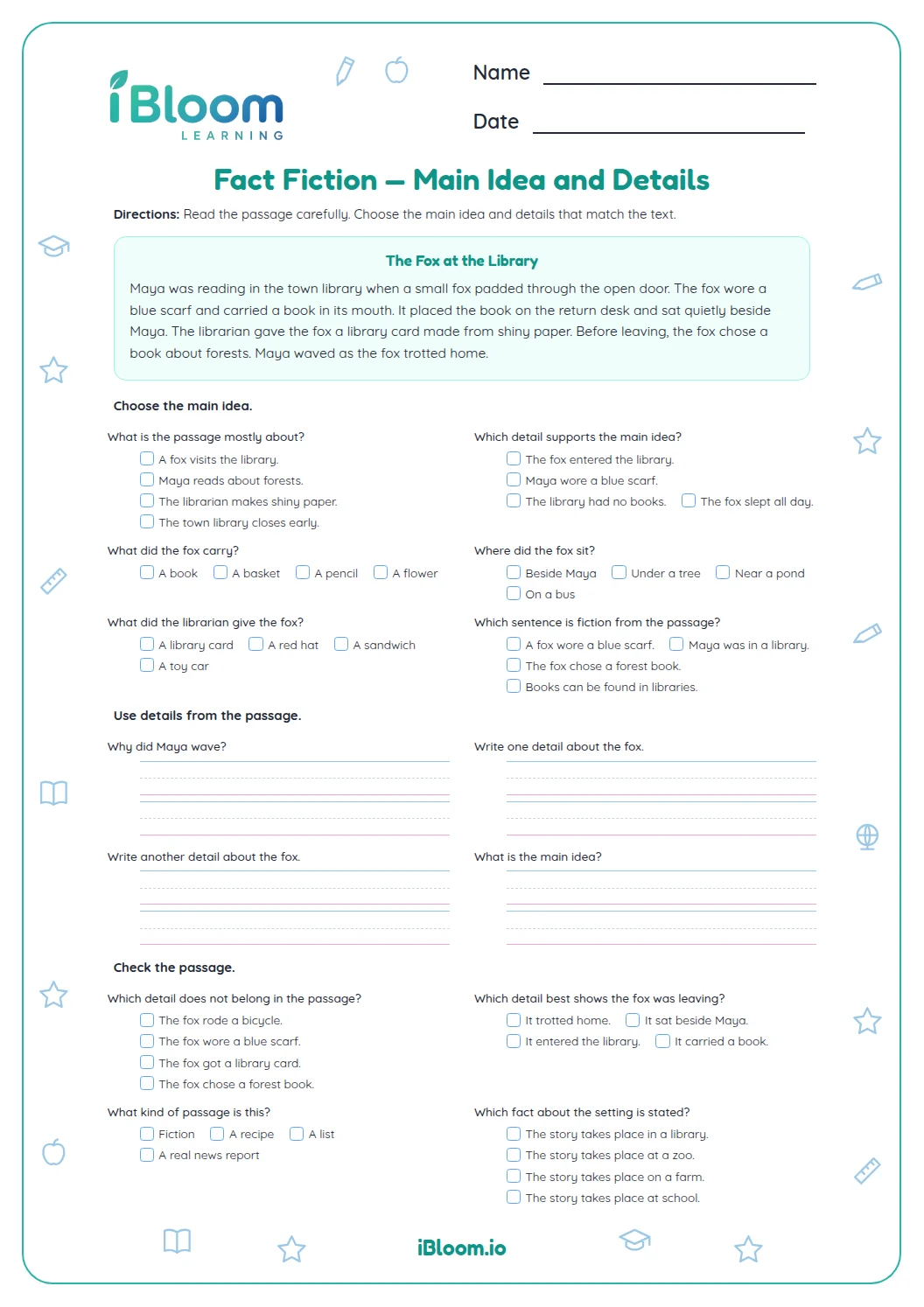
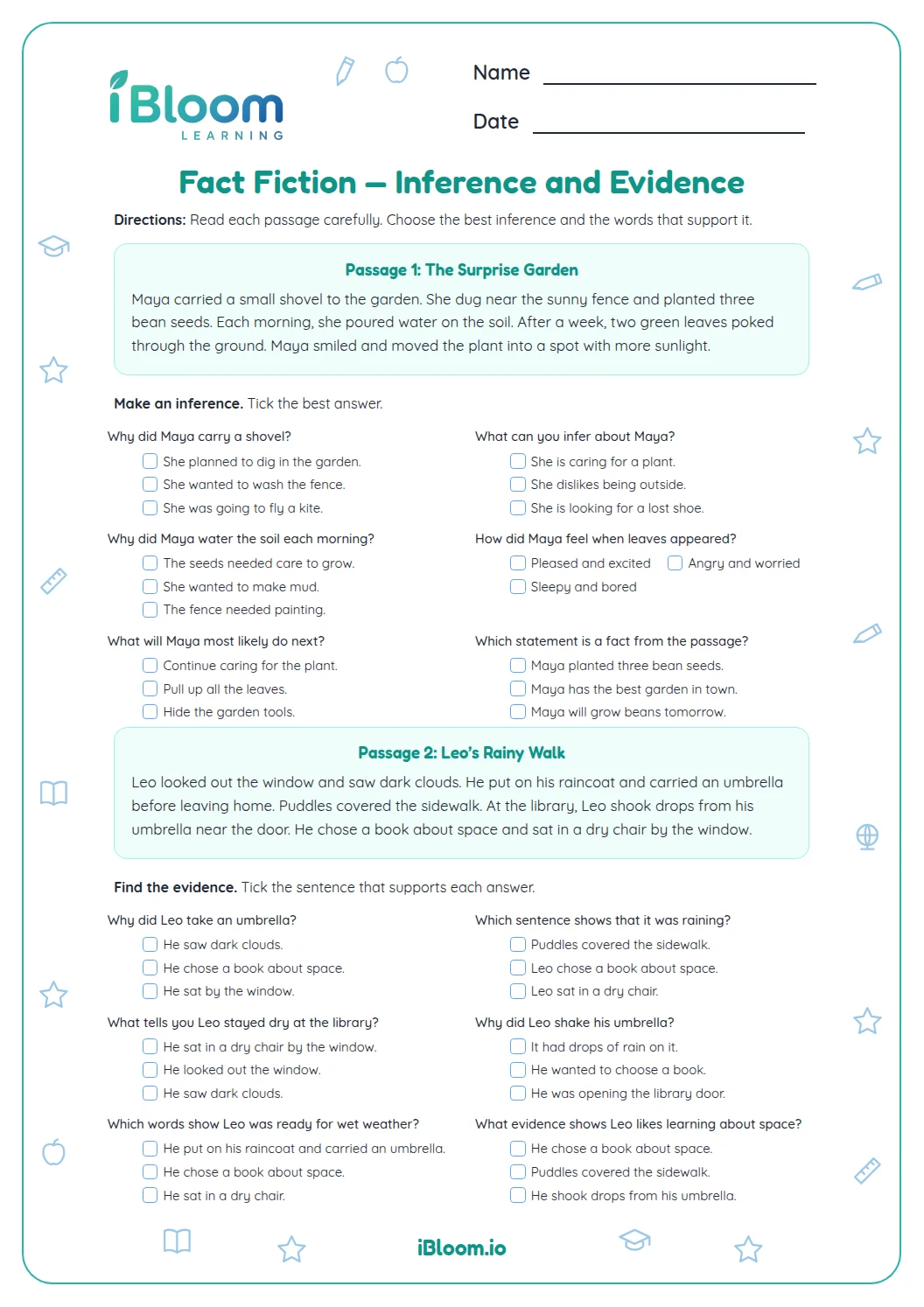
This free two-page worksheet gives Grade 2 children one short passage, "Maya Plants a Garden," and asks them to read it two ways. In Part B, they put Maya's steps in order using clue words such as first, next and finally, and notice that the steps are told in time order. In Part C, they decide whether sentences from the passage are facts, which can be checked, or opinions, which tell what someone thinks. In Part D, they circle the word that gives an opinion away. It practices Common Core RI.2.3 and RI.2.1, with a separate answer key.
Aligned to RI.2.3 and RI.2.1
What is the difference between a fact and an opinion?
A fact is something you can check by looking, counting, measuring or asking a trustworthy source. An opinion is what a person thinks or feels, and two people can honestly disagree about it. Most of the time, a sentence with a word like best, wonderful or prettiest is an opinion.
Grade 2 readers do not need long definitions. One question does most of the work: could I check this? If the answer is yes, it is a fact.
How do clue words help put steps in order?
Writers who explain how to do something use words such as first, next, then, after that and finally. In Maya's passage, each of the five sentences in the first paragraph starts with one of these clues, so children can follow the garden from the first step to the last.
Part B asks for the first step, the step right after the soil is loosened and the last step, then which words show the order. Its last question names the structure: the first paragraph is told in time order, the way most how-to writing is.
- 1What did Maya do right after she loosened the soil?
- 2Find the clue: "Next, she loosened the soil..."
- 3Read the sentence after it: "Then she dropped three bean seeds into the soil..."
- 4Answer: Dropped in bean seeds
What is on this worksheet?
The passage is Part A. Part B has five questions on the order of the steps and how the paragraph is organized. Part C gives four sentences, three taken from the passage, and children color Fact or Opinion for each. Part D gives two new sentences and asks children to circle the one word that shows an opinion.
The passage mixes both kinds of sentence on purpose: Maya planted three seeds and beans need water and sunlight, which are facts, while she thinks gardening is the best hobby and the sign looks wonderful, which are opinions.
- Part A: a two-paragraph passage, five steps and then three more sentences
- Part B: 5 questions on the order of the steps and the paragraph's structure
- Part C: 4 sentences, color Fact or Opinion
- Part D: 2 sentences, circle the opinion word
How to use this worksheet at home or in class
- 1Read the passage aloud together, or let your child read it first and then read it again with you.
- 2Point out the clue words first, next, then, after that and finally, and ask your child to tell the steps back in their own words.
- 3Let your child answer Part B, then check each answer by finding the matching sentence in the passage.
- 4For Part C, ask "Could I check that?" before choosing Fact or Opinion.
- 5In Part D, ask what word shows how someone feels or what they think, and have your child circle it.
- 6Check with the answer key, and ask your child to make up one fact and one opinion about their own day.
Common mistakes and quick fixes
The mistake
Calling a sentence a fact because it sounds sure, such as "Gardening is the best hobby."
The fix
Ask whether anyone could say "I disagree." If they could, it is an opinion. Another child might like drawing better.
The mistake
Picking the step that is easiest to remember instead of the step the clue word points to, such as "Made a sign" for what Maya did first.
The fix
Find the word first in the passage, then read the sentence that starts with it. The clue words point to the right step.
The mistake
Circling a word that can be checked, like beans or garden, instead of the word that shows a judgment.
The fix
Ask which word another person might disagree with. Anyone can see the beans; not everyone would say the sign looks wonderful.
Common Core alignment
Most US states use the Common Core Reading standards or a close state version, so this sheet fits Grade 2 informational reading in most classrooms.
Describe how the steps in a text connect, in the order they happen.
On this sheet: Part B follows the steps of planting beans in order and names the paragraph's time-order structure.
Show the official wordingHide the official wording
Describe the connection between a series of historical events, scientific ideas or concepts, or steps in technical procedures in a text.
Answer questions about the key details in a text.
On this sheet: Part B asks what Maya did first, next and last, and children find each answer in the passage.
Show the official wordingHide the official wording
Ask and answer such questions as who, what, where, when, why, and how to demonstrate understanding of key details in a text.
What to practice next
Make more practice
Further reading
Questions parents and teachers ask
What is a fact and an opinion for second graders?
A fact is something you can check, and an opinion is what someone thinks or feels. On this sheet, "Maya planted three bean seeds" is a fact because you could count the seeds. "The sign looks wonderful" is an opinion because another person might not think so.
What are the answers to Part C?
The four answers are Fact, Opinion, Fact and Opinion, in order. Maya planting three bean seeds and beans needing water and sunlight are facts that can be checked. Gardening being the best hobby and the sign looking wonderful are opinions. The answer key shows all 11 answers.
How does the sheet teach sequence?
It uses the clue words in the passage. Each step in the first paragraph starts with first, next, then, after that or finally, so children can find the step by finding the word. Part B asks for the first step, the one after the soil is loosened, and the last.
Why is Part D about circling a word?
Circling one word makes children look at how an opinion is built. In "Maya has the nicest garden," the word nicest tells you it is a judgment someone could disagree with. Spotting words like nicest, best and wonderful helps children notice opinions in ads, reviews and books.
My child can read the passage but mixes up fact and opinion. What can I do?
Ask "Could I check that?" after each sentence. If the answer is yes, it is a fact. Then take turns saying one fact and one opinion about something at home, such as dinner: "We had pasta" and "Pasta is the yummiest food." Making up pairs like this helps the difference stick.
Is there an answer key, and how long does the sheet take?
Yes. The answer key is two separate pages with the correct answer marked for all 11 questions. Most second graders finish in about 15 minutes. Reading the passage aloud first, or stopping to talk about the clue words, can add a few minutes.