


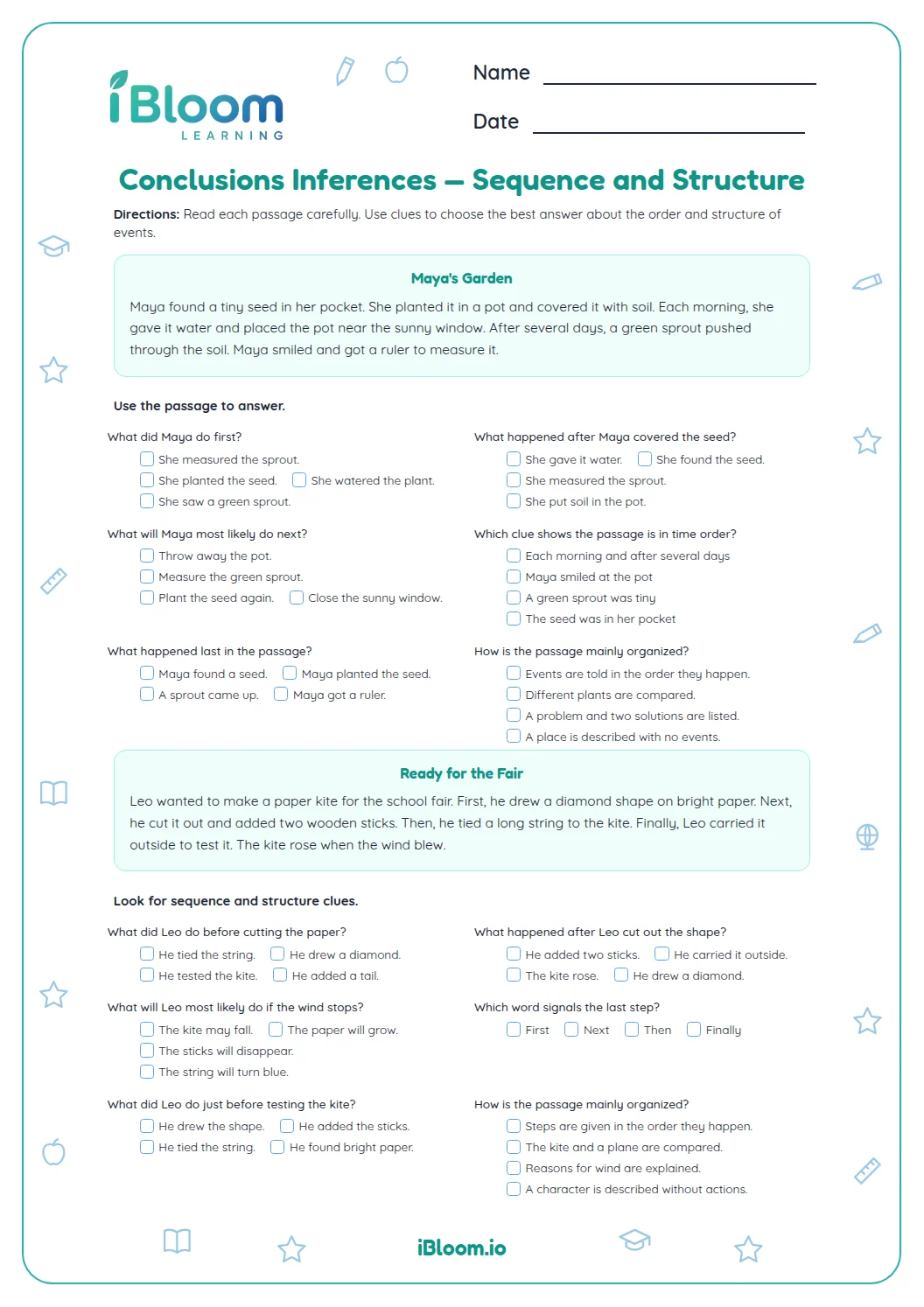
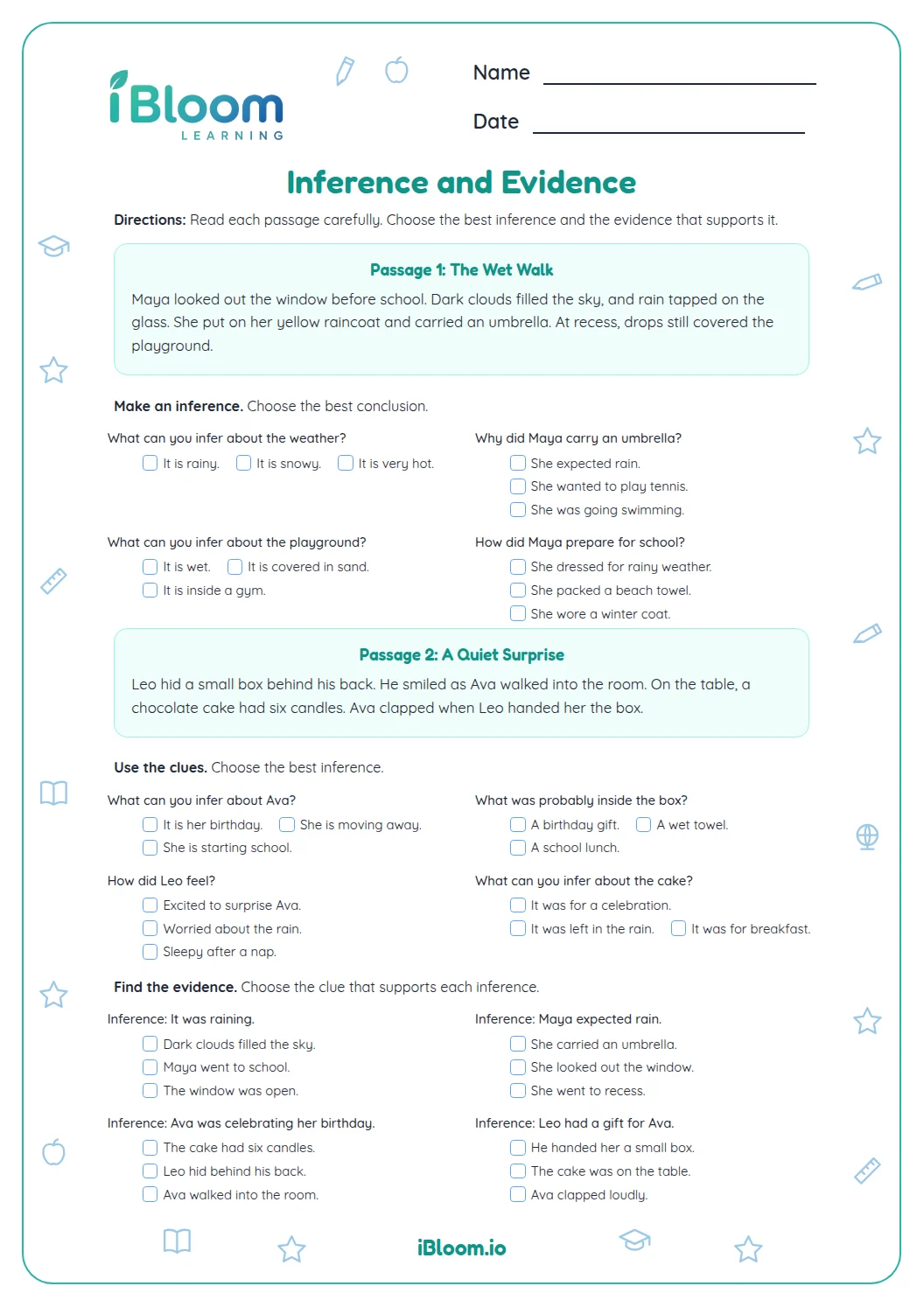
About this worksheet
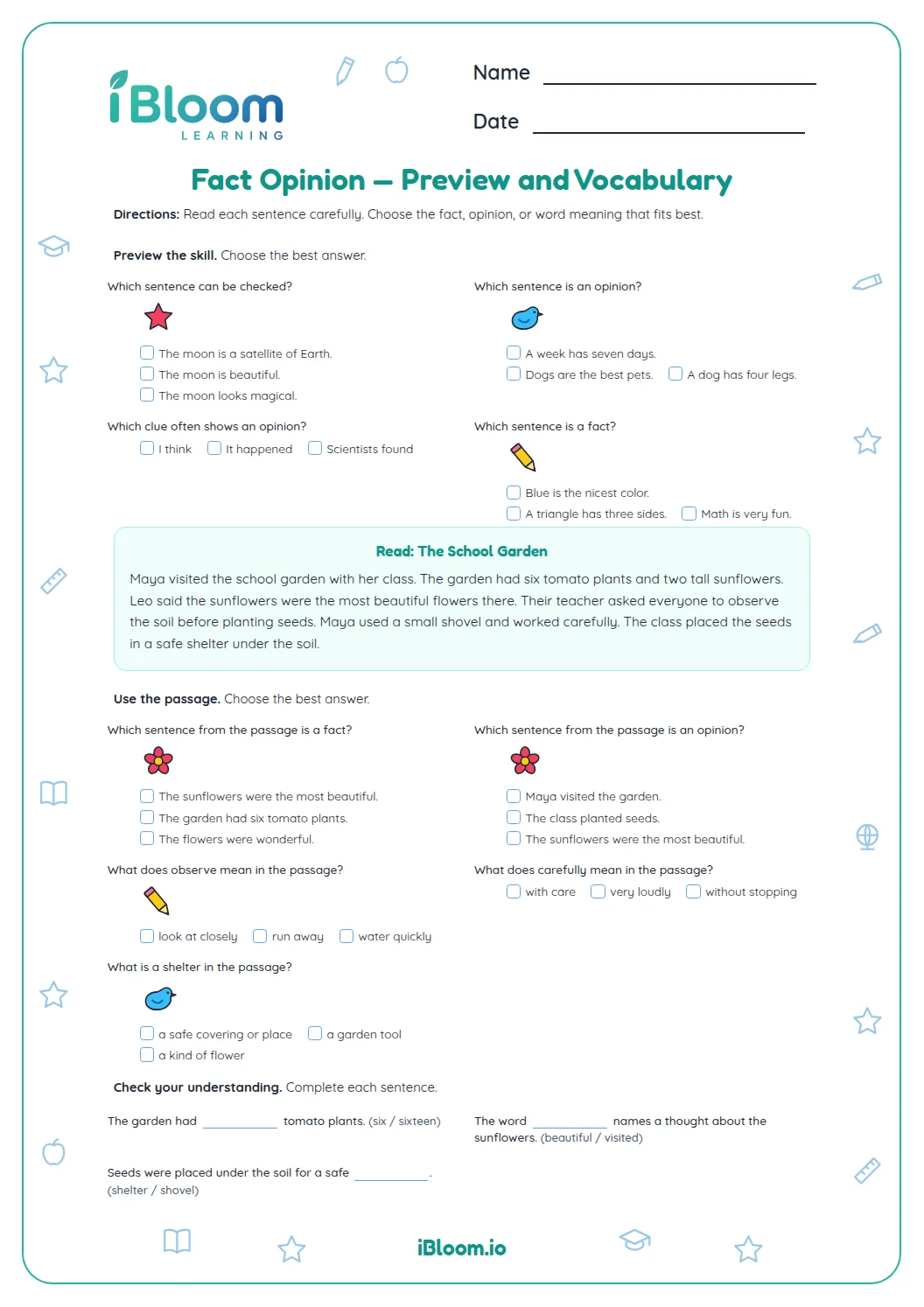
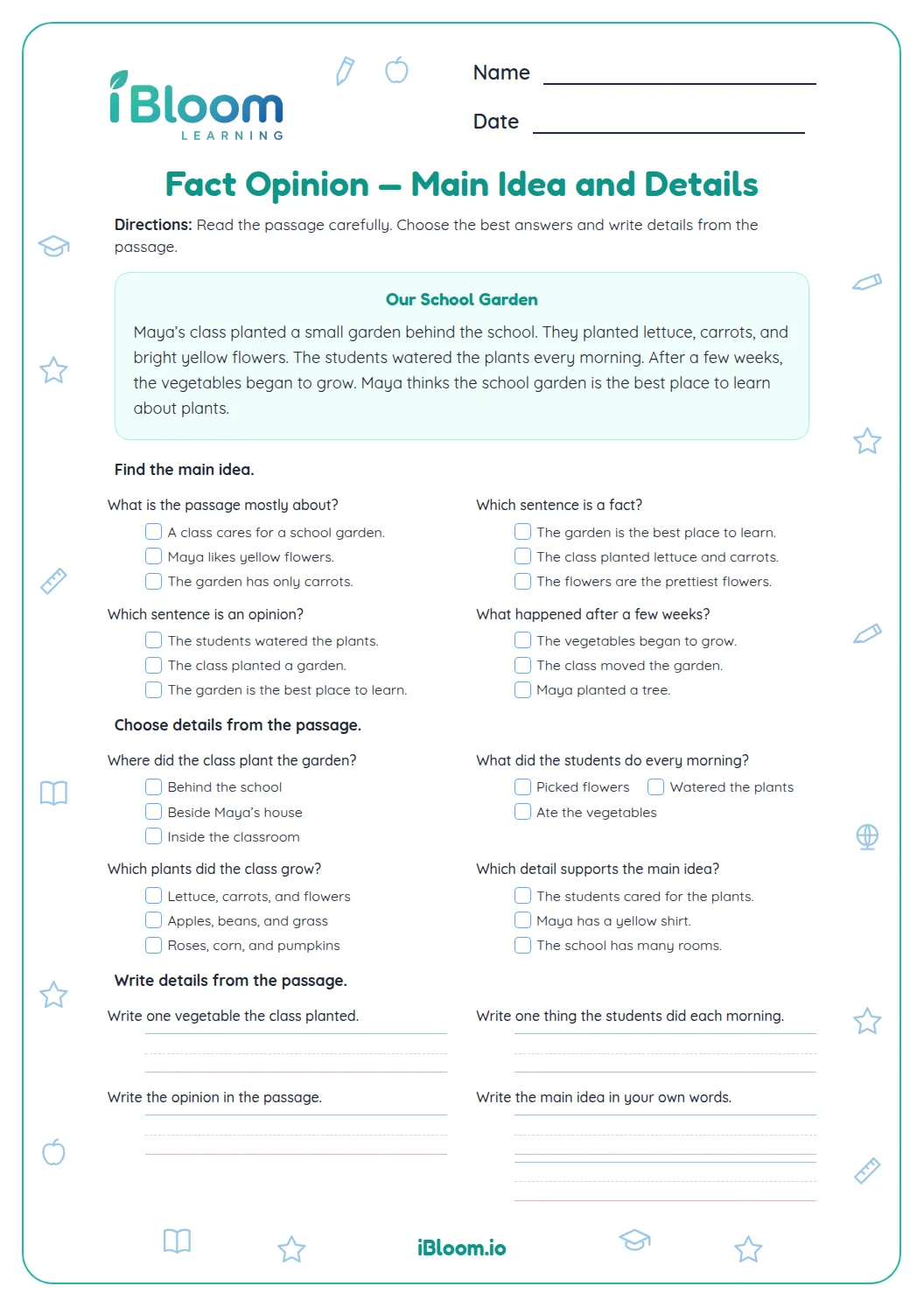
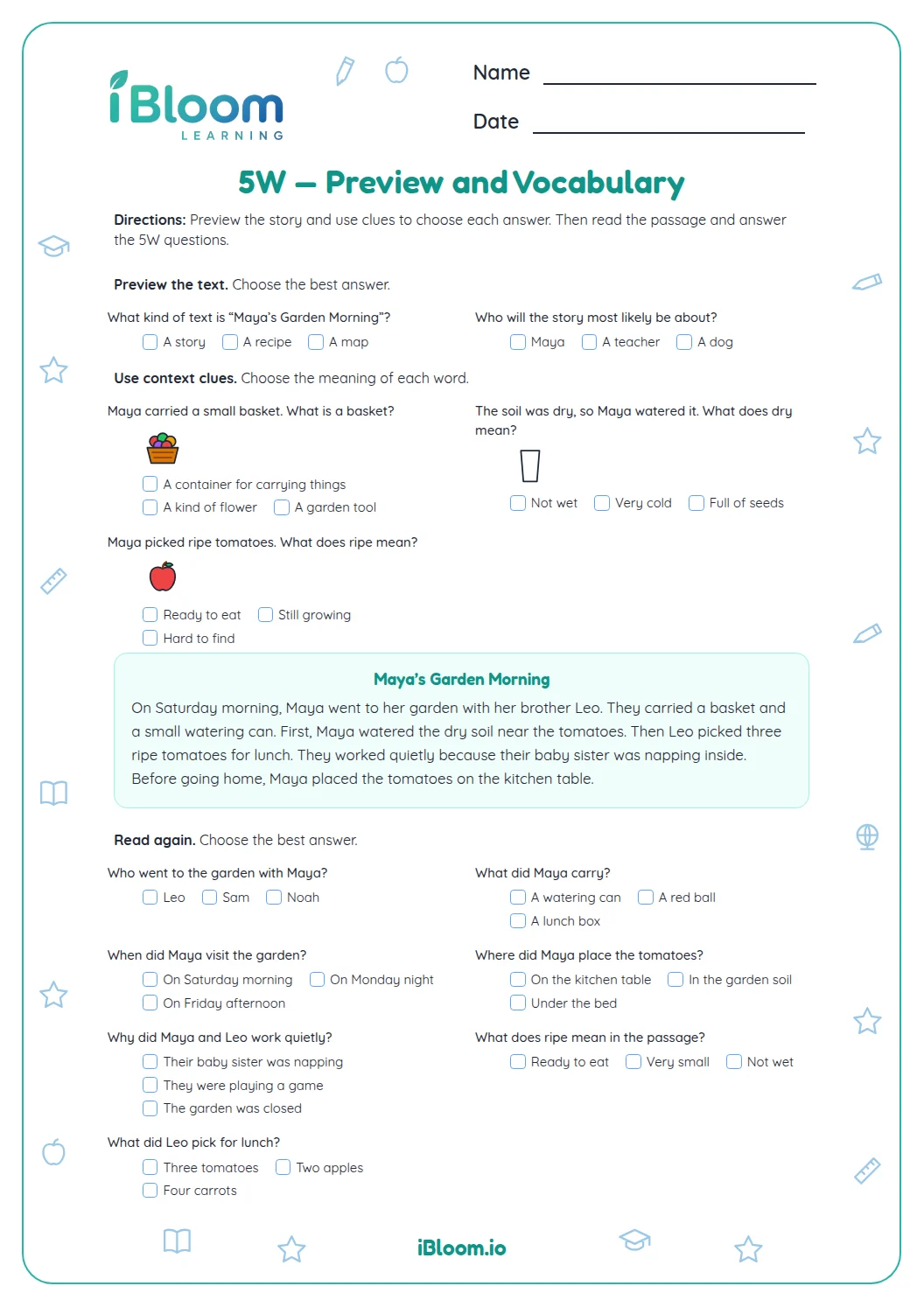
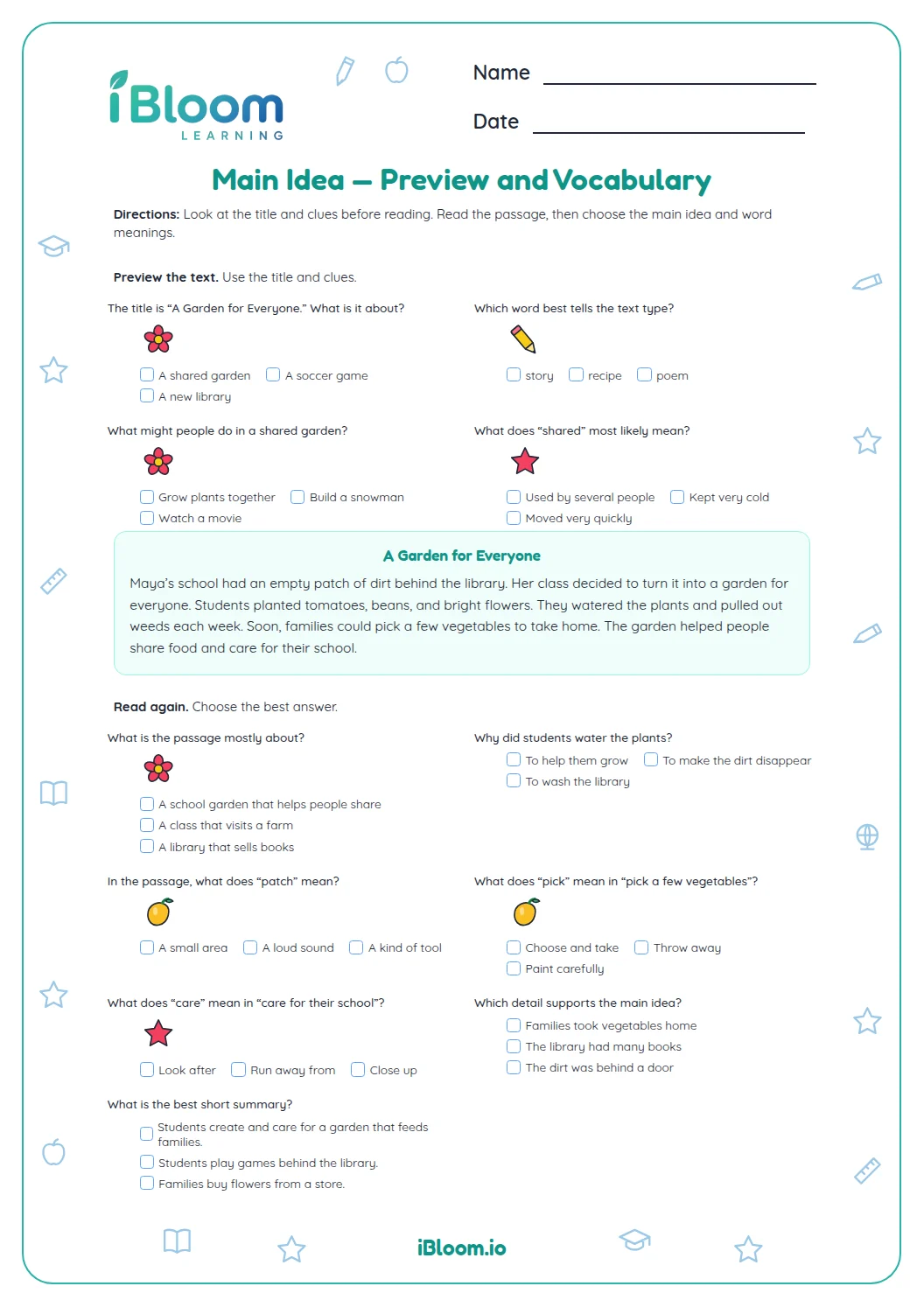
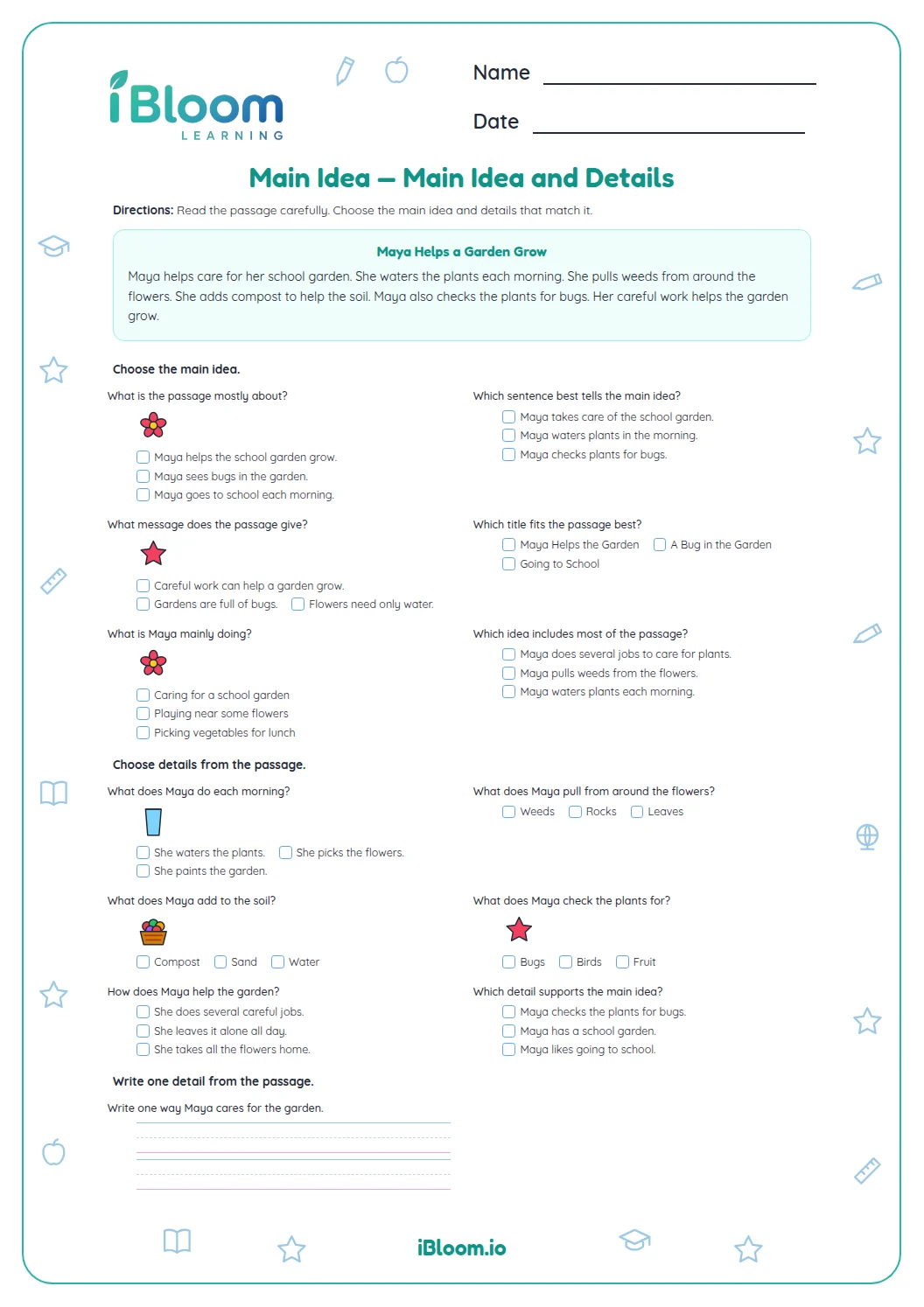
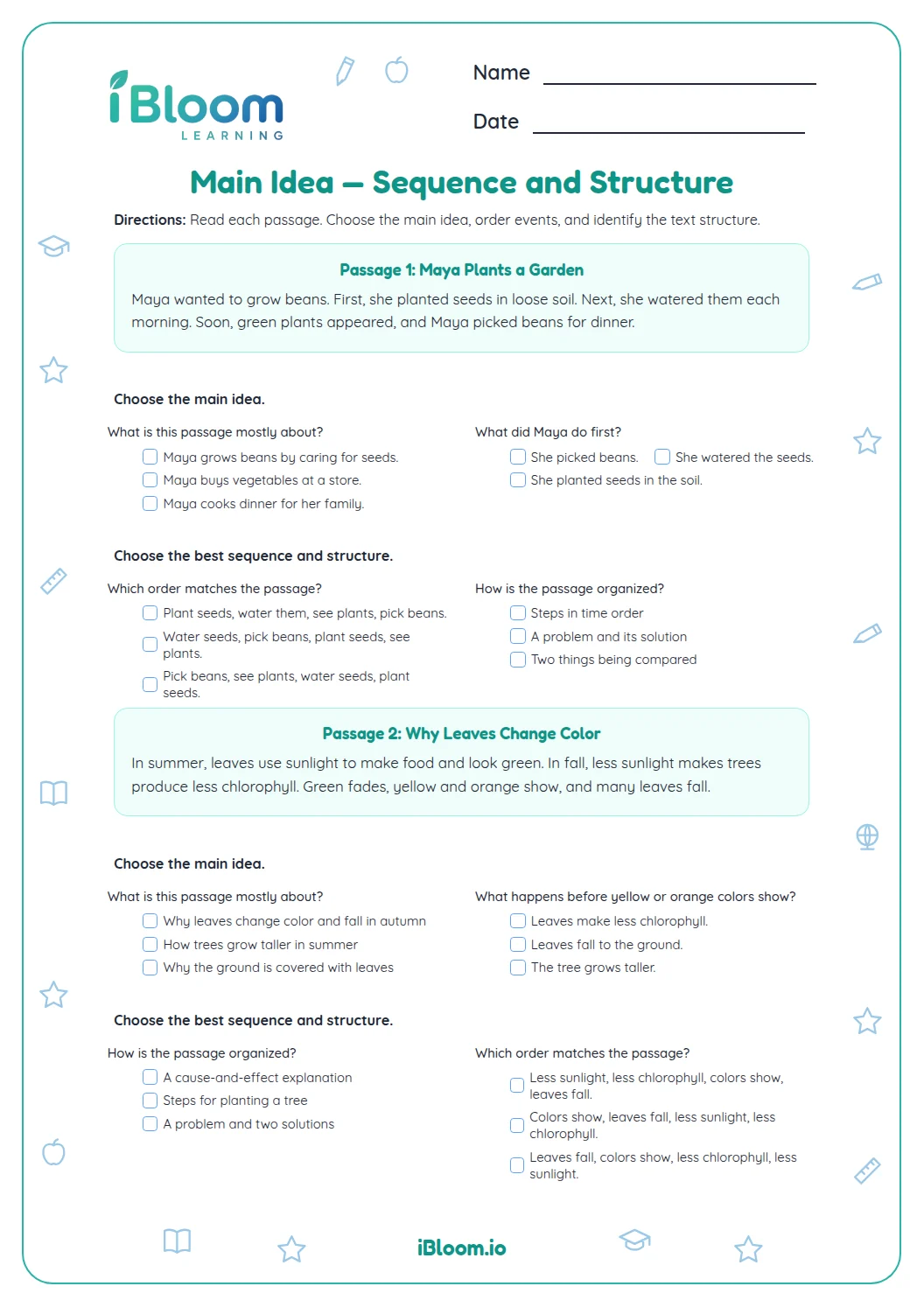
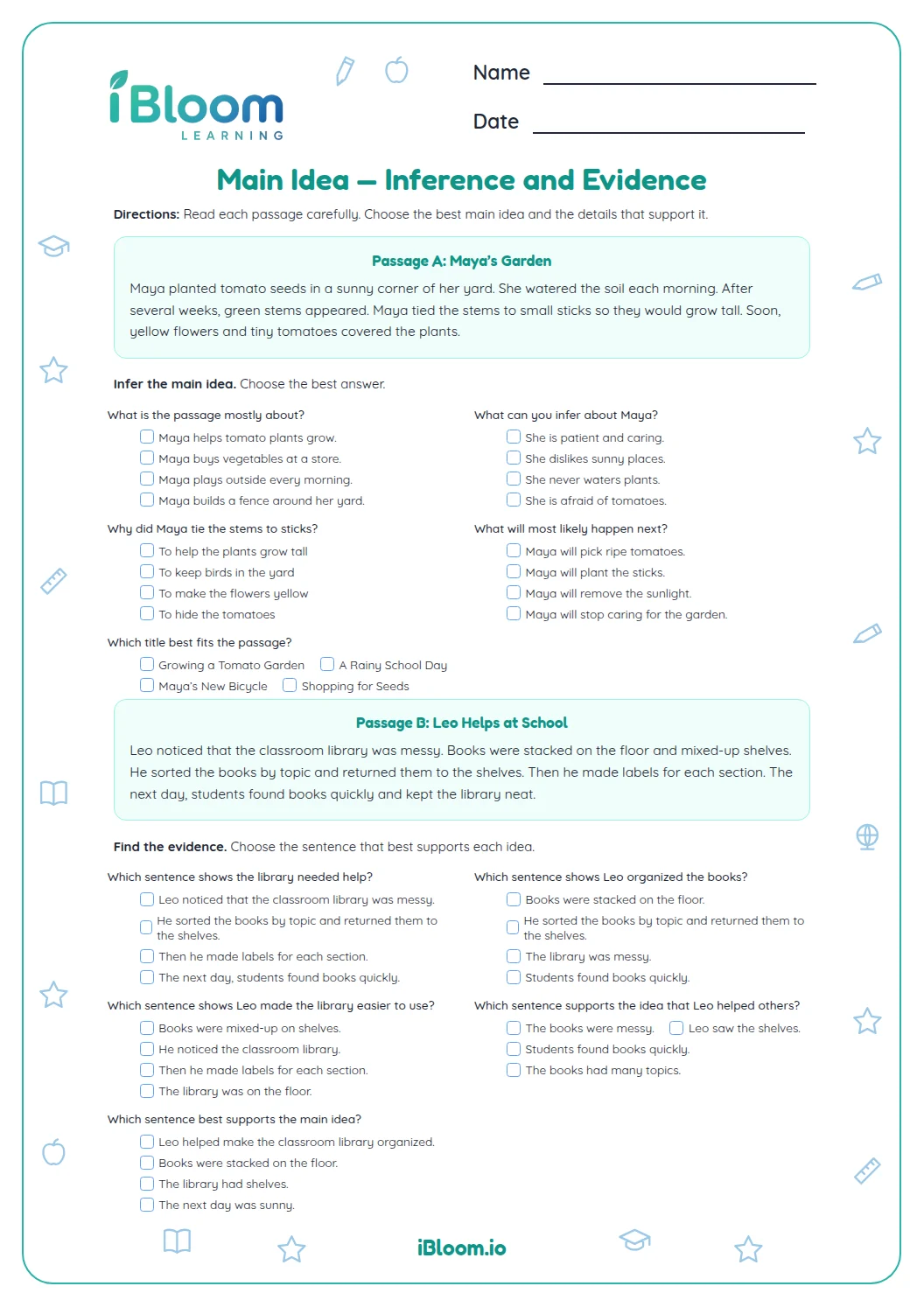
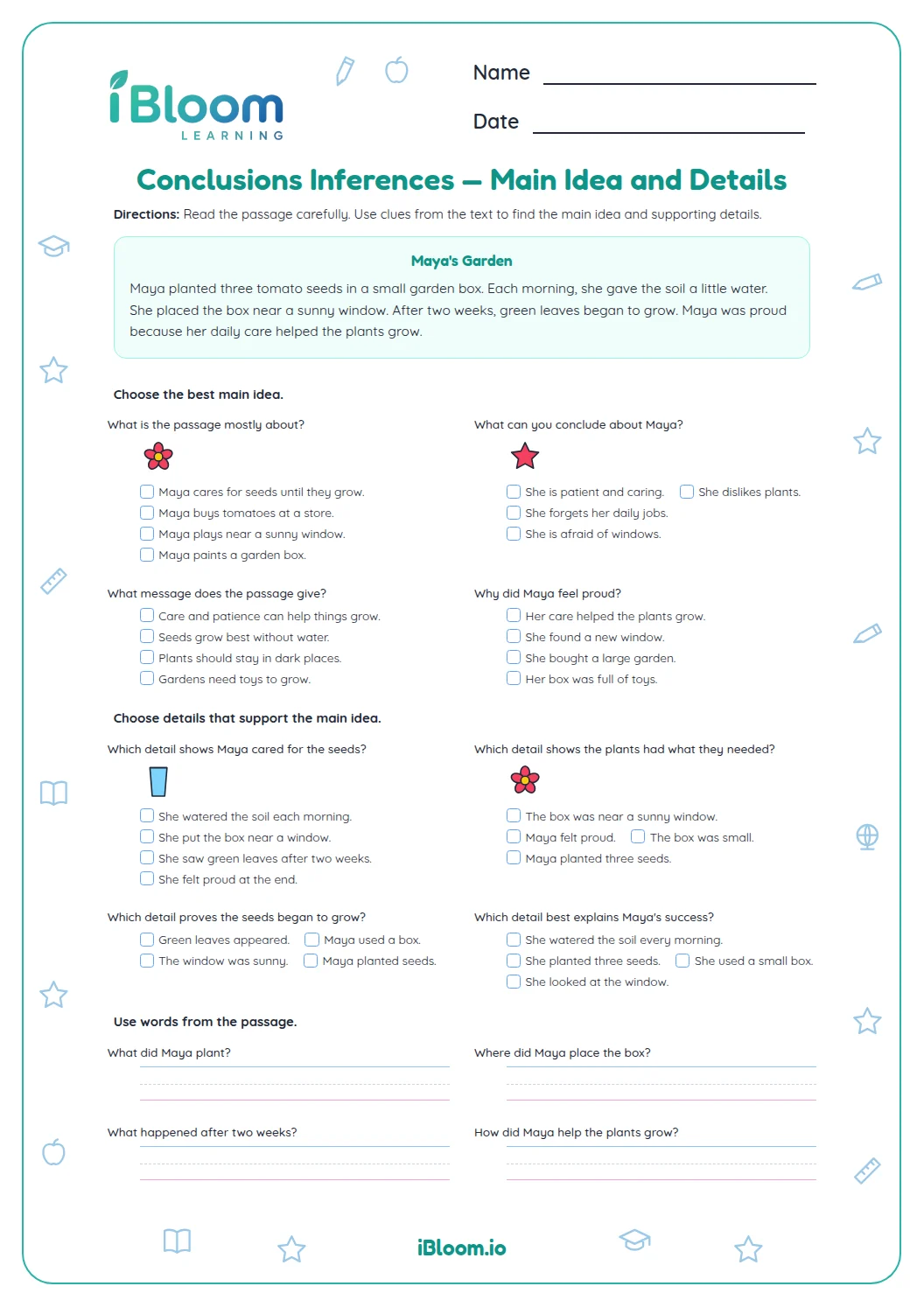
This Grade 2 printable uses an original school-garden passage to practice distinguishing checkable facts from opinions and linking opinions to supporting details. Its 14 questions include six classification choices, four evidence choices, and four short written responses. A separate answer key provides answers and sample responses. Readers answer questions using details from the passage.
Aligned to RI.2.1
How can you tell a fact from an opinion?
A fact can be checked against the passage or another reliable source. An opinion tells what someone thinks, likes, or believes. In question 2, “Tomatoes are the tastiest garden food” is an opinion because people can prefer different foods.
Use the whole statement, not just one word, to decide. The passage says the class has four beds; that is a checkable detail and therefore a fact.
- 1“Tomatoes are the tastiest garden food.”
- 2Different people may choose different foods.
- 3This statement is an opinion.
How does a detail support an opinion?
An author may give a reason or example that explains an opinion. The passage says the garden is a good place to learn because students watch seeds change into plants. That detail directly supports the opinion.
What will readers practice?
First classify statements, then answer passage-detail questions, and finally explain an answer in a complete sentence. The key gives sample wording for responses that can vary.
How to use this worksheet
- 1Read the passage once to understand the garden details.
- 2Ask whether each statement can be checked or expresses a judgment.
- 3Find the author’s reason or a passage detail that supports an opinion.
- 4Use passage wording when a question asks for a fact.
- 5Write a complete sentence for the final responses.
Mistakes to watch for
The mistake
Calling every sentence in a passage a fact.
The fix
Look for preferences or judgments such as “best” or “more fun.”
The mistake
Choosing a true detail that does not support the opinion.
The fix
Ask how the detail explains the author’s point.
The mistake
Treating an opinion as false because someone disagrees.
The fix
An opinion expresses a viewpoint; disagreement does not make it a fact.
Common Core alignment
The questions connect reading and evidence to the standard below.
Ask and answer questions to show understanding of key details in a text.
On this sheet: Readers answer what and which questions using facts and supporting details from the passage.
Show the official wordingHide the official wording
Ask and answer such questions as who, what, where, when, why, and how to demonstrate understanding of key details in a text.
What to practice next
Make more practice
Further reading
Questions parents and teachers ask
What is the difference between a fact and an opinion?
A fact is a statement that can be checked, while an opinion tells what someone thinks or prefers. The passage’s four raised beds are a fact; calling sunflowers the prettiest flowers is an opinion because readers may disagree about the best flower.
How does the passage show an opinion with a reason?
The author says the garden is a good place to learn because students can watch seeds change into plants. That detail directly supports the opinion. Other questions ask about watering days, plant growth, and how the class cared for the garden. Each answer can be checked against the passage.
How many questions are included?
The sheet has 14 questions: six fact-or-opinion sorts, four passage-detail choices, and four short written responses. The garden passage comes first, followed by a separate answer key. The final responses ask children to explain their thinking in writing and point to information from the text.
Can students phrase written answers differently?
Yes. The answer key gives a sample response, but children may use different words. The answer should match a detail or idea in the passage and explain it clearly in a complete thought. For example, a child can name Tuesday and Thursday as the watering days.
Which reading standard does this page practice?
The passage questions practice CCSS RI.2.1, asking readers to answer what and which questions with key text details. Students use facts from the garden passage and select details that support an author’s opinion. The official link provides the full wording of the standard.