


About this worksheet
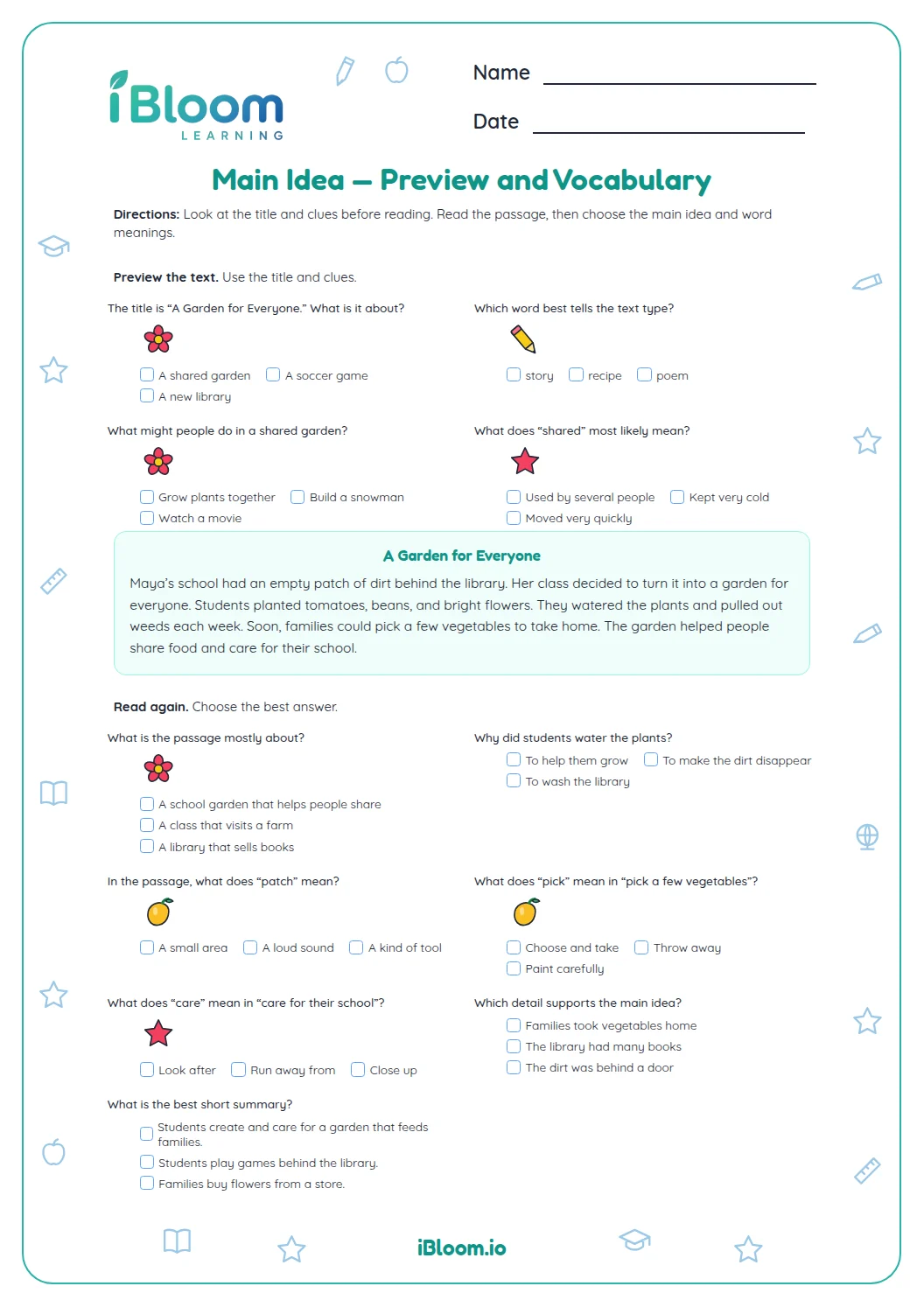
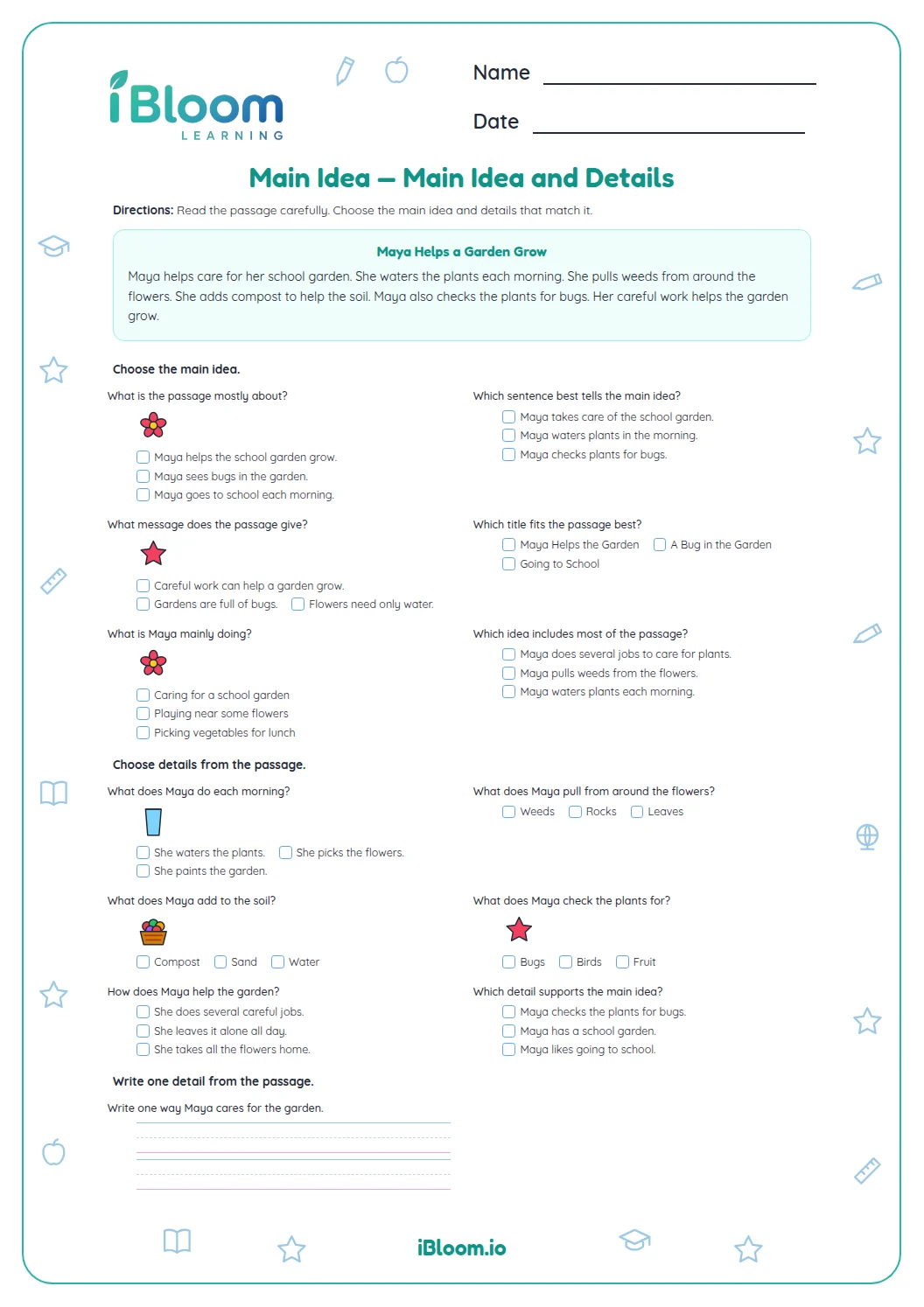
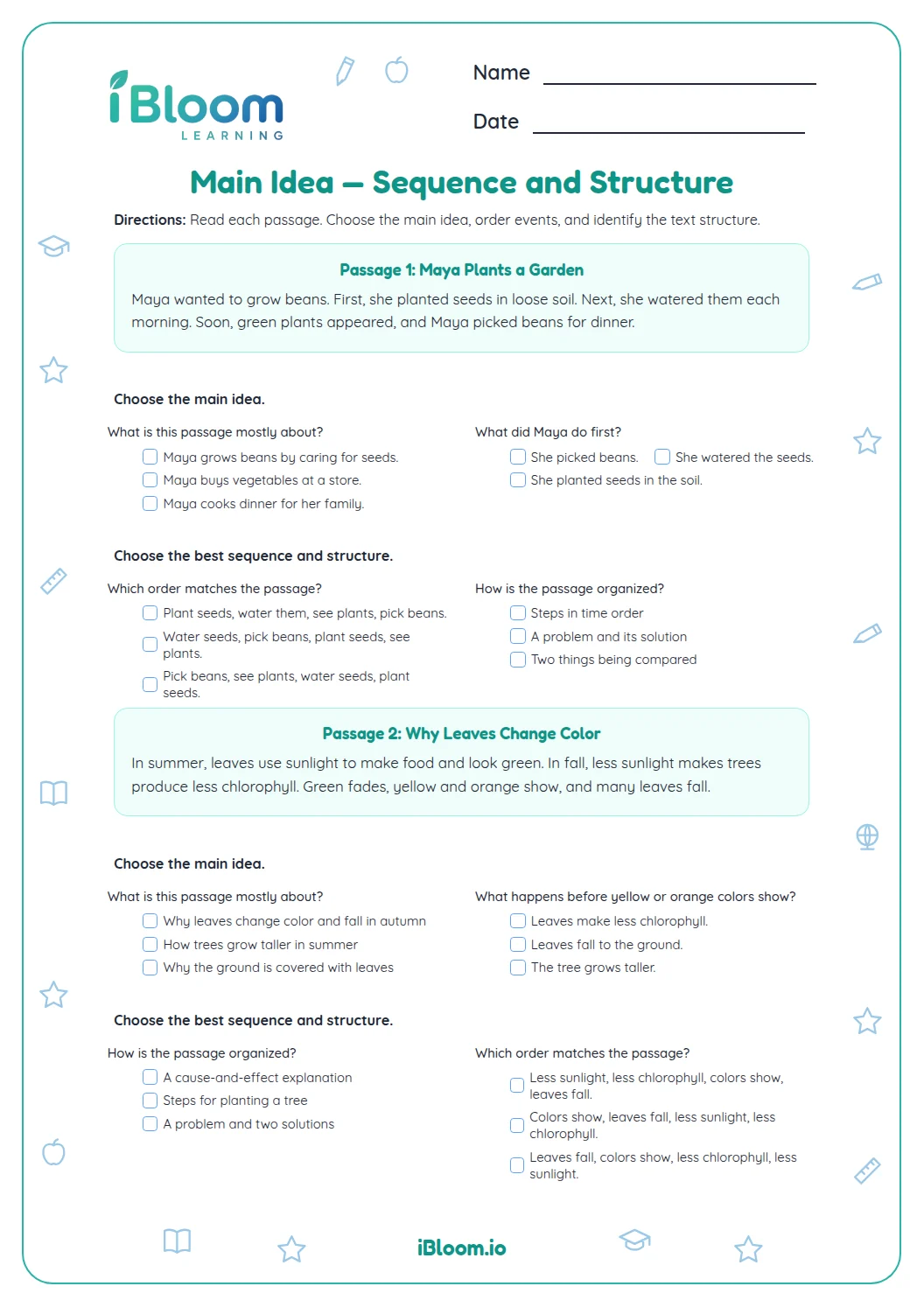
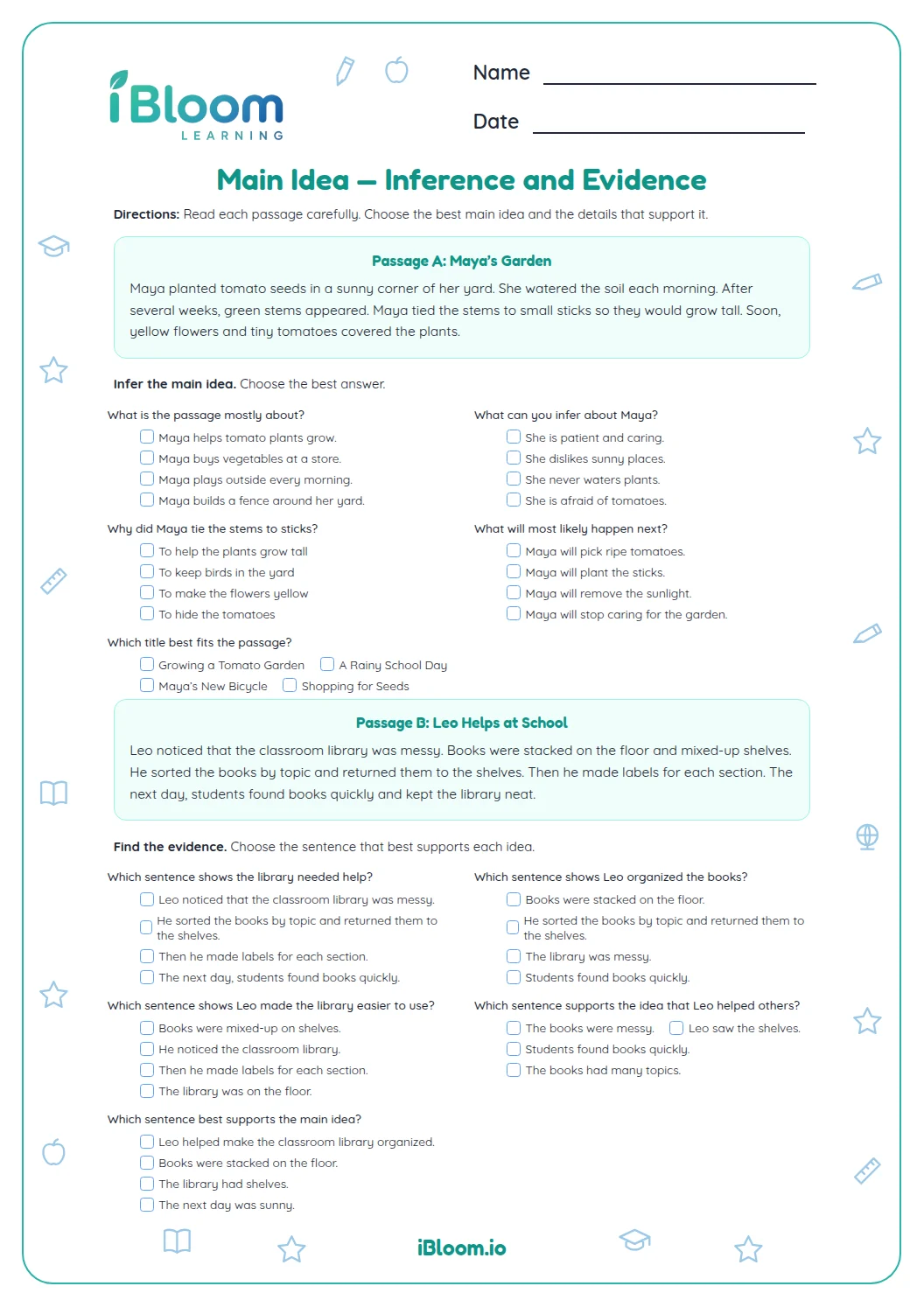
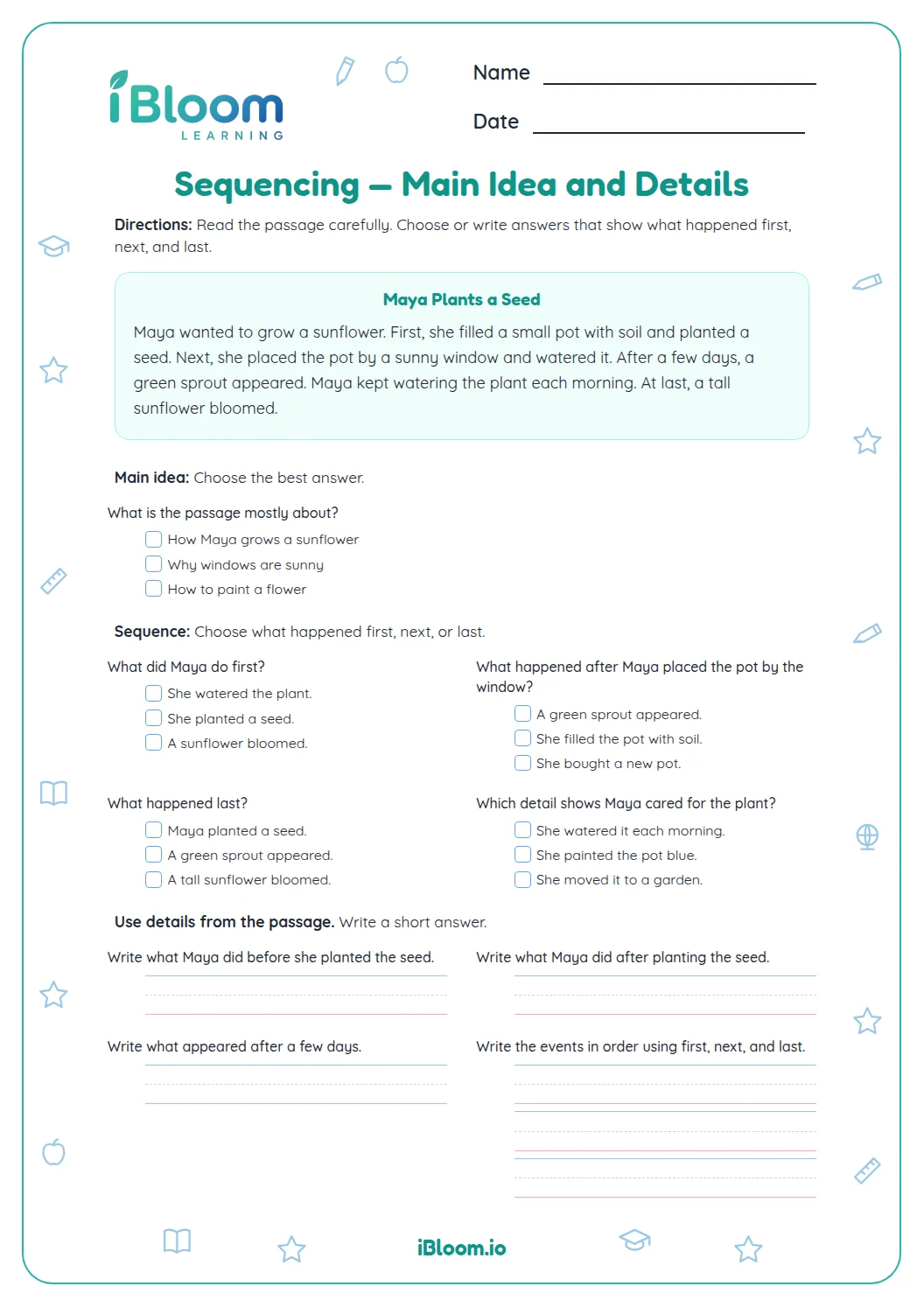
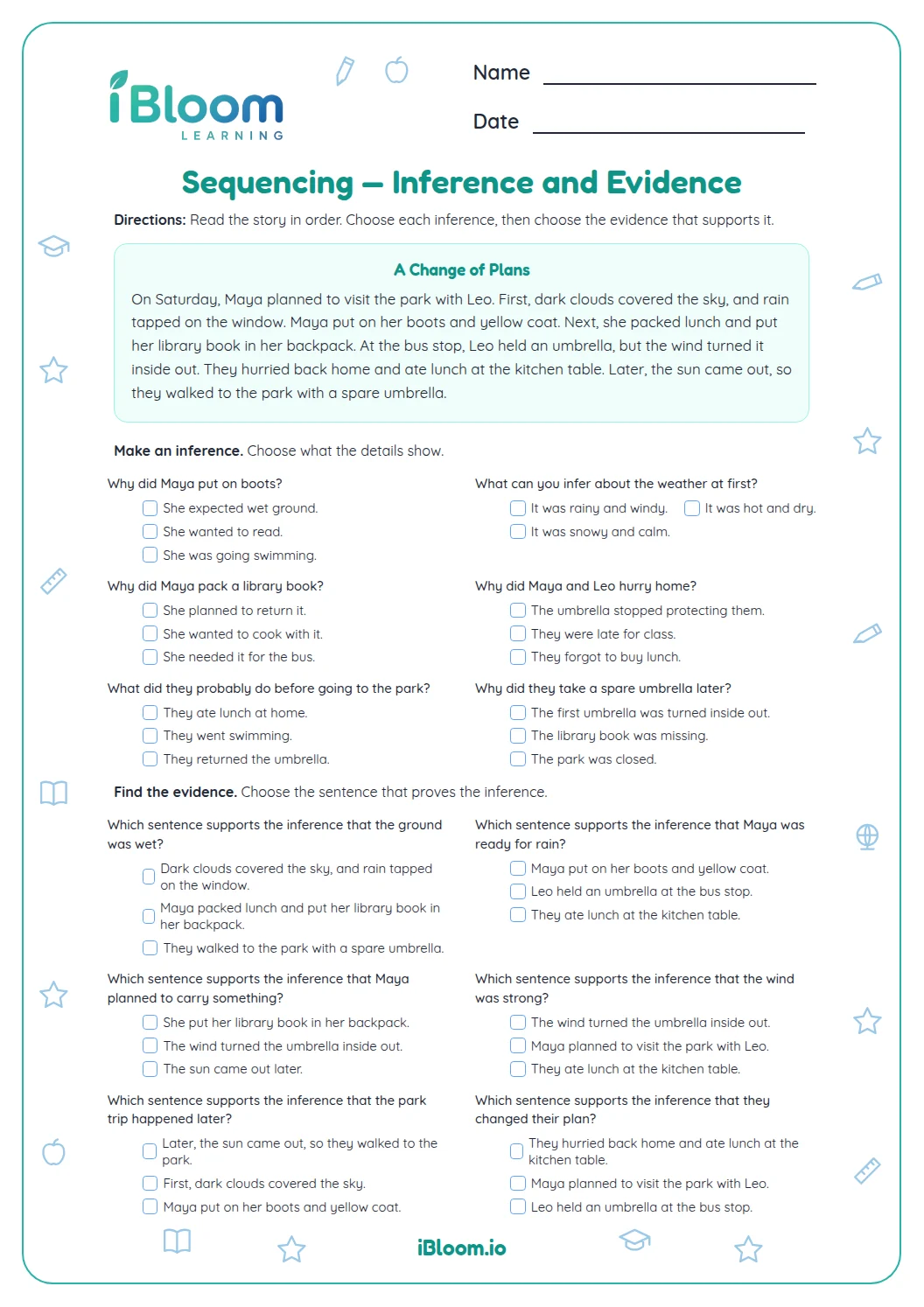
This Grade 2 reading worksheet includes three original passages about a class garden, a library visit, and rainy-day projects. Fourteen questions ask students to identify main ideas, choose supporting details, follow events, and write a main-idea sentence. A separate answer key is included. The questions practice CCSS RI.2.2.
Aligned to RI.2.2
How do I find a passage’s main idea?
Ask what the whole passage is mostly about. Then check whether the answer fits several details, not just one sentence. A supporting detail gives an example or fact about that larger idea.
- 1The class makes a watering chart and measures seedlings.
- 2Those details support the idea that the class cares for its garden.
How are the passages different?
The passages have different topics: caring for seedlings, using a library, and making projects on a rainy day. Match each question to its passage, then look back for details or events that answer it.
How to use this worksheet
- 1Read the passage once to learn its topic.
- 2Ask what idea fits the whole passage.
- 3Reread to find details that support that idea.
- 4Check that a choice belongs to the passage in the question.
- 5Write the main idea as a complete sentence.
Common mistakes and quick fixes
The mistake
Choosing one interesting detail as the main idea.
The fix
Look for an idea that covers more than one event or fact.
The mistake
Picking a choice that is true but too narrow.
The fix
Check whether it tells what most of the passage is about.
The mistake
Using a detail from a different passage.
The fix
Reread the passage named in the question before answering.
Common Core alignment
This page practices CCSS RI.2.2 through the questions on the worksheet.
Name what each short passage is mostly about and select details that support it.
On this sheet: Name what each short passage is mostly about and select details that support it.
Show the official wordingHide the official wording
Identify the main topic of a multiparagraph text as well as the focus of specific paragraphs within the text.
What to practice next
Make more practice
Further reading
Questions parents and teachers ask
What does main idea mean?
The main idea tells what a whole passage is mostly about. A supporting detail gives a specific fact or example that helps explain that bigger idea. Ask whether the choice fits several parts of the text rather than only one sentence.
How many passages are on this worksheet?
There are three original short passages: a class garden, a library visit, and rainy-day projects. Questions ask students to name each passage’s main idea and choose details that fit it. The last prompt invites a sentence in the student’s own words.
How can I help my child find a supporting detail?
Have your child reread the passage and point to a sentence that gives an example of the main idea. Then ask whether that sentence fits the whole topic or describes only one small part. Comparing the sentence with the selected main idea helps.
Why are some answers written and others multiple choice?
The choice questions give practice distinguishing a broad main idea from details that do not fit. The final written response lets students state the main idea of the rainy-day passage in their own sentence. The answer key includes a sample response.
Is an answer key included?
Yes. The separate key lists the correct choices and a sample sentence for the written response. A student may use different wording if the sentence captures the whole rainy-day passage. Compare the main idea with the details, rather than requiring the sample wording exactly.
How long does it take?
Allow about 20 minutes to read the three passages and answer the questions. Students can reread a passage when they need to check a detail or think about the main idea. Reading speed and time spent discussing the answers will affect how long the activity takes.