


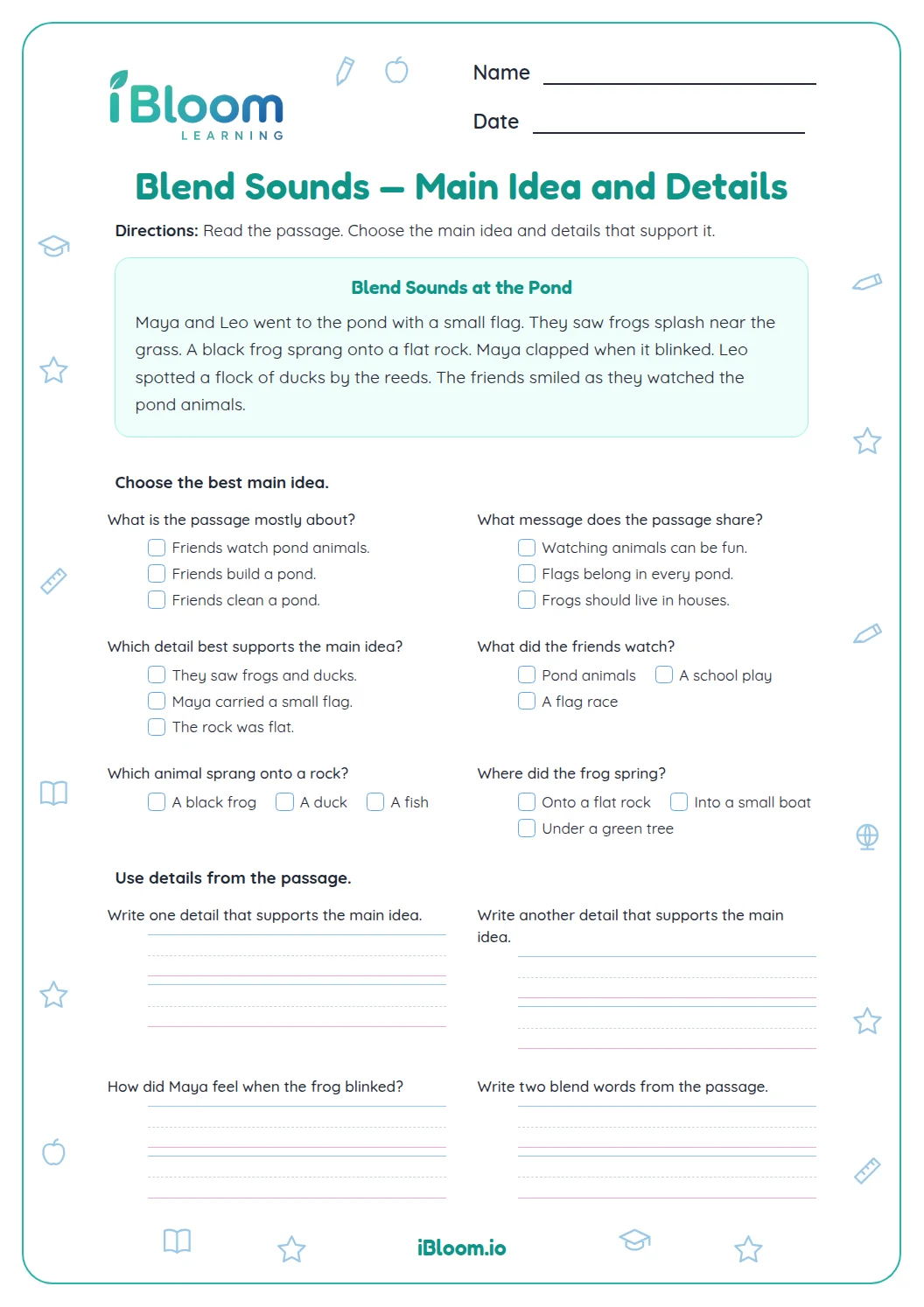

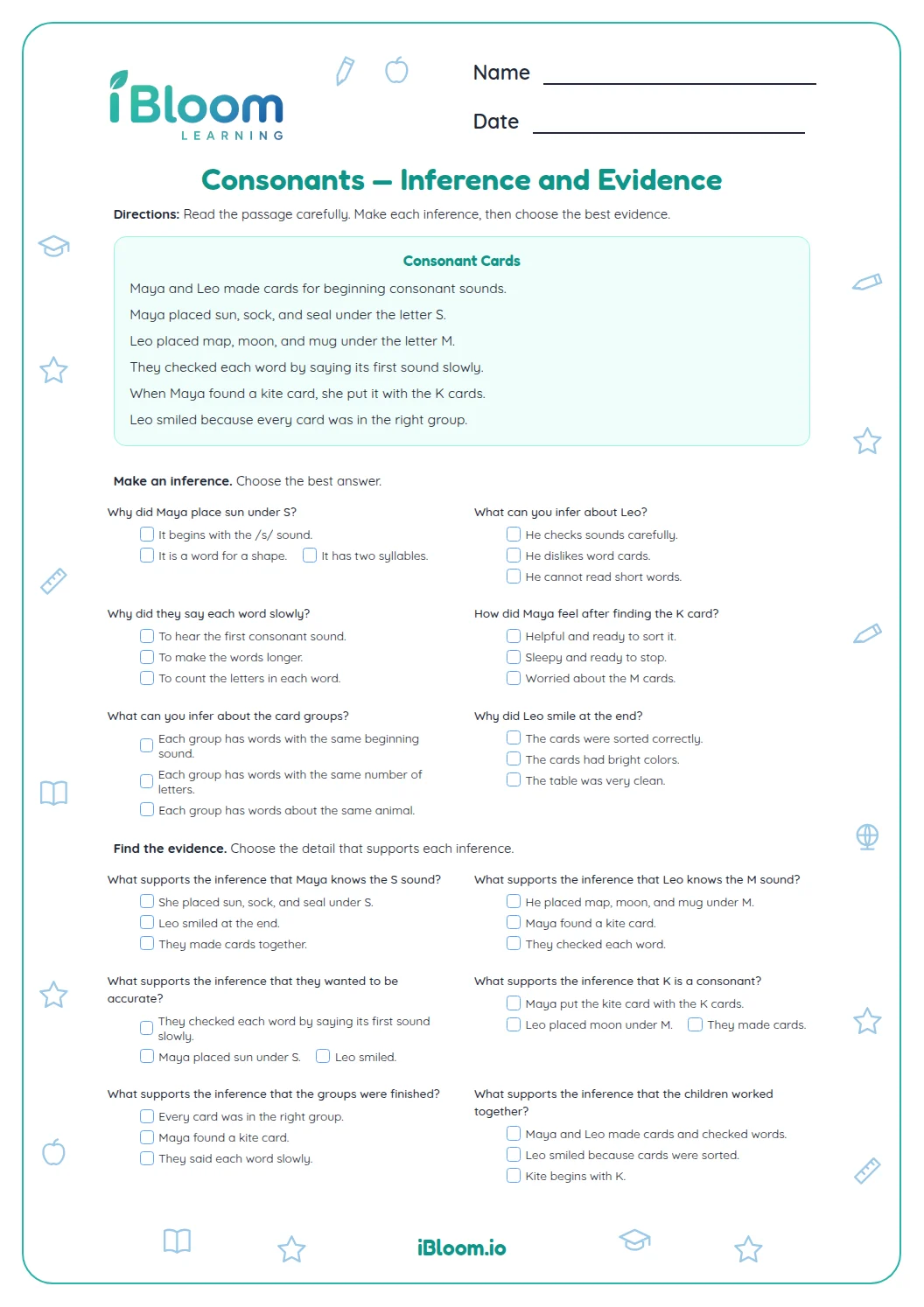
About this worksheet
This Grade 2 phonics worksheet pairs an original garden story with sound-substitution, vocabulary, and story-detail questions. Children change one sound while keeping the others, then use the passage to interpret words and find details. The 16 questions and answer key support a focused read-and-practice session.
What does the passage tell about?
Mia and Ben plant a seed in a pot, tend it, and notice a shoot appear. Children can return to the story for details about the pot, soil, label, and growing plant.
- 1“Change the first sound in pot to /h/.”
- 2Keep /ot/ and replace /p/ with /h/: hot.
How does sound substitution work?
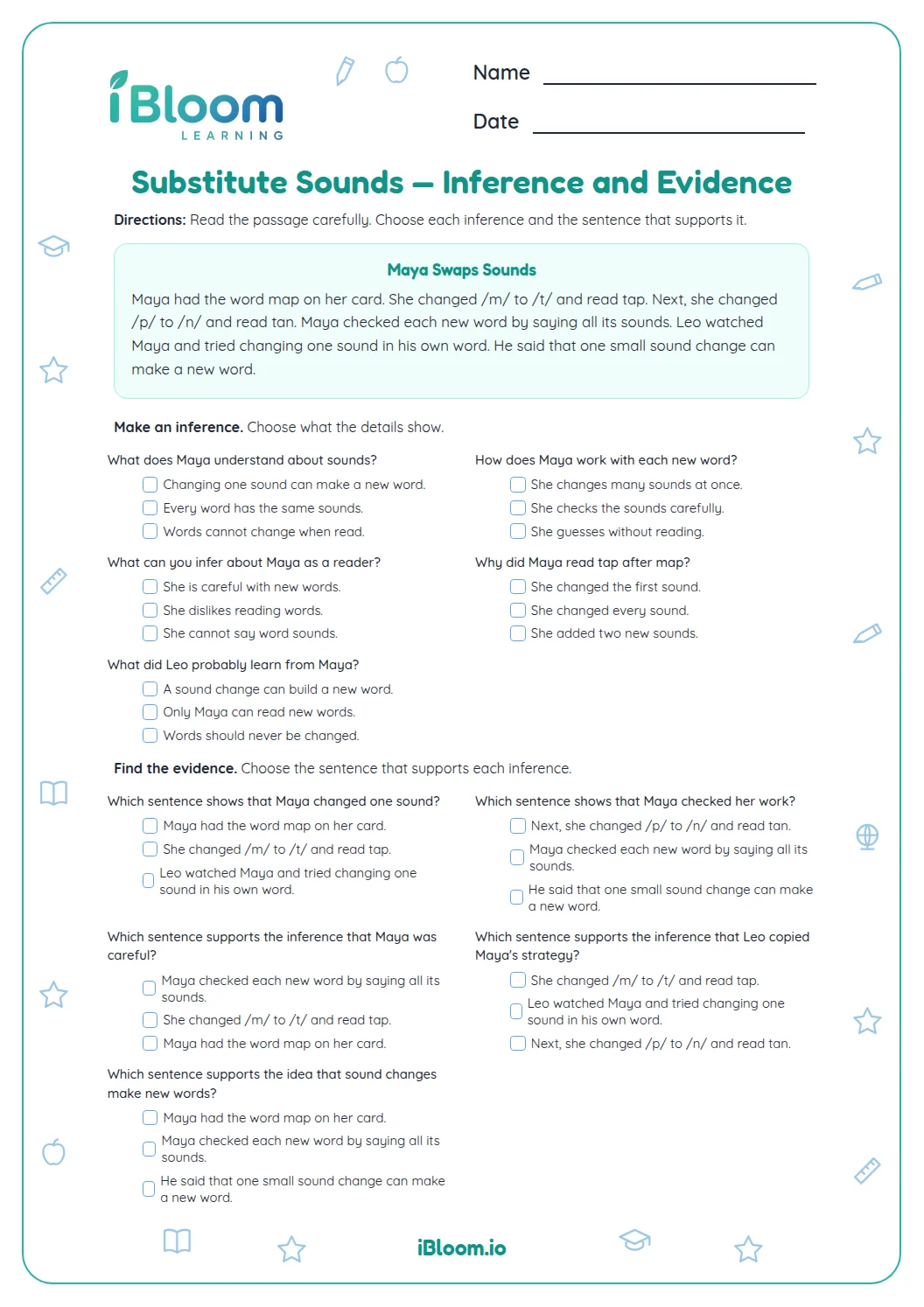
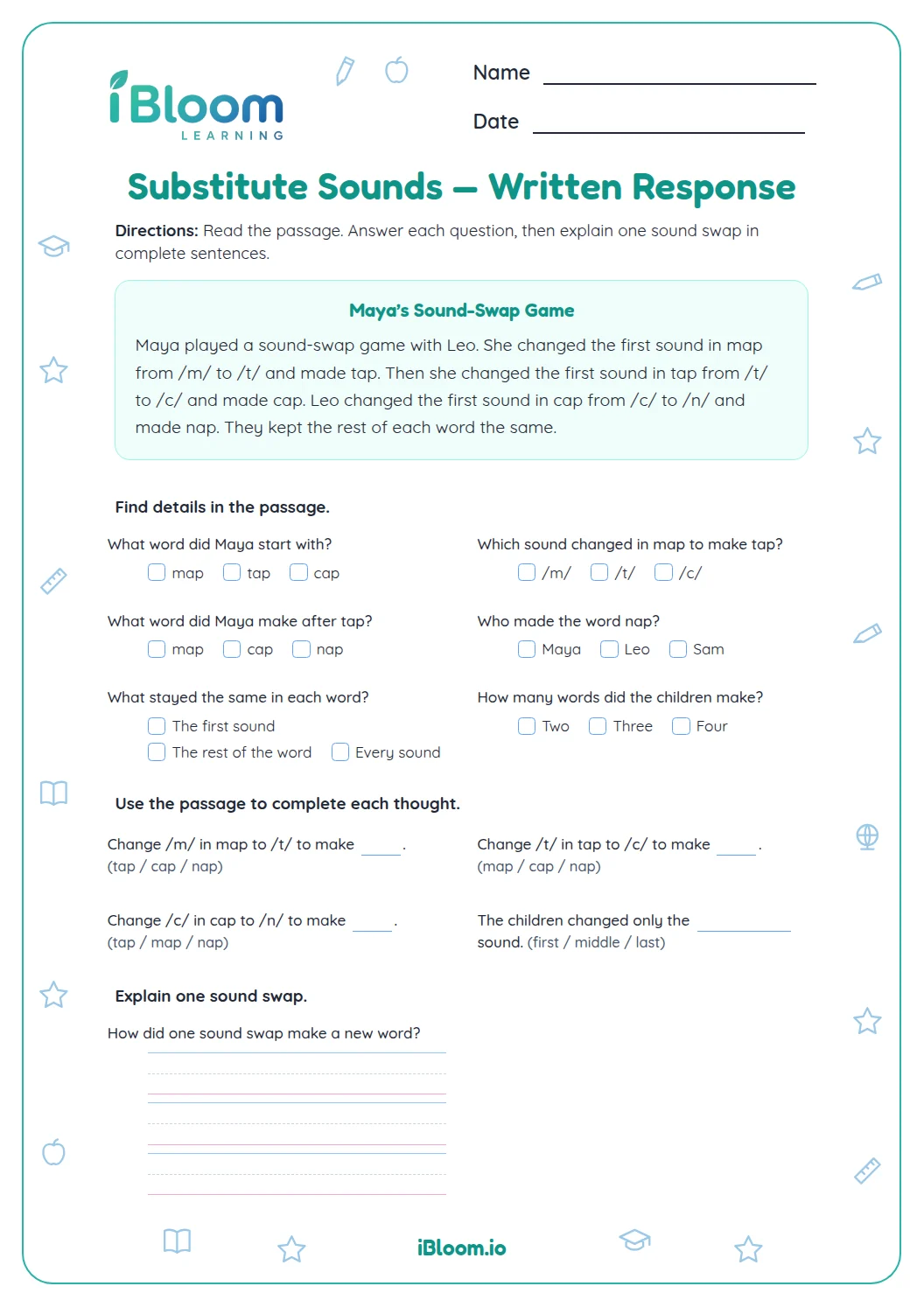
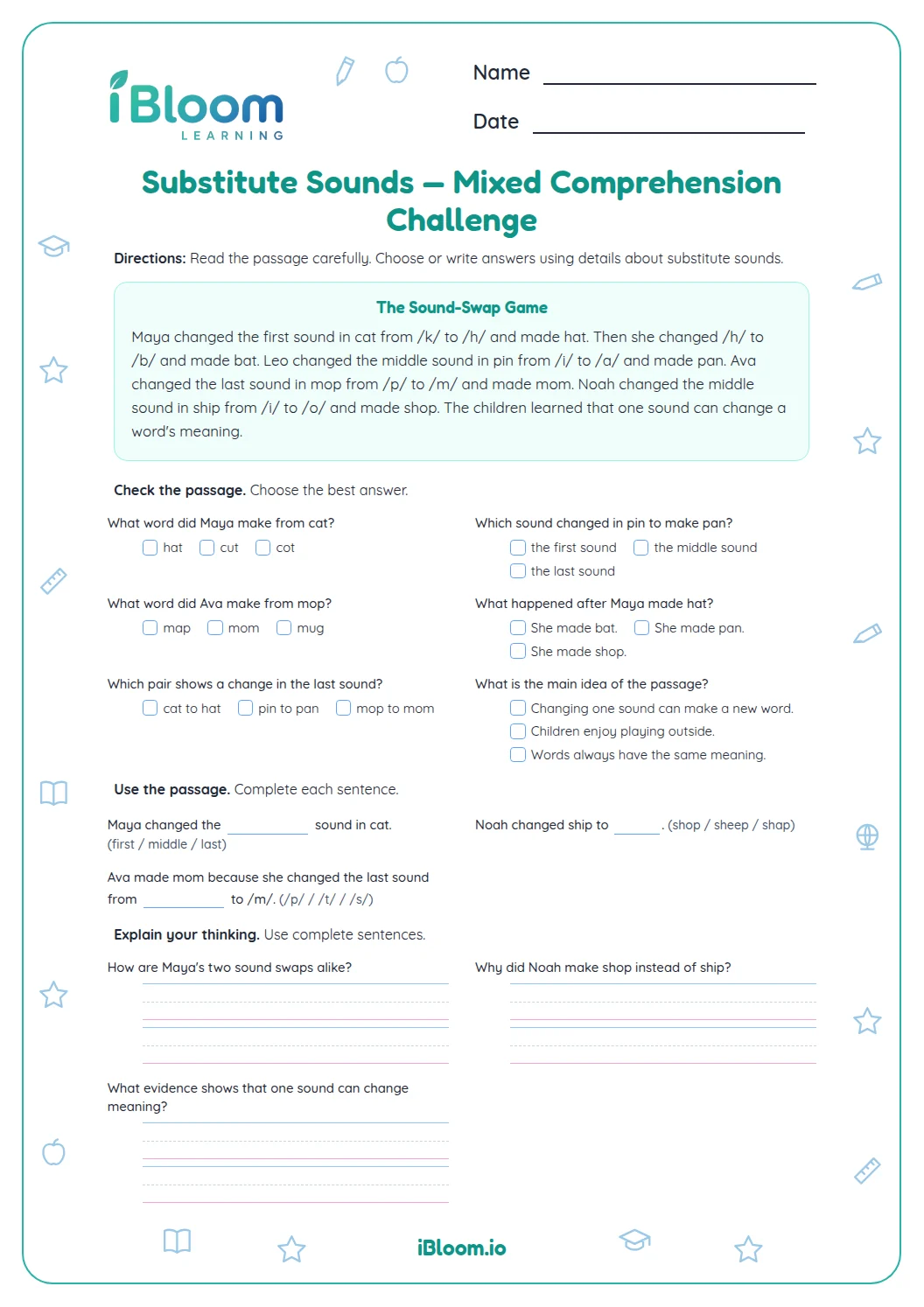
Say the word slowly, change only the named sound, and blend the sounds again. In “mat” changed to “sat,” the final /at/ stays the same while the first sound changes.
How can story clues help with vocabulary?
Read the sentence around an unfamiliar word. In the passage, “a tiny shoot pushed up” and the garden setting show that tiny means very small and shoot is a new plant growth.
How to use this worksheet
- 1Read the story once for what happens.
- 2For a beginning-sound question, say the word aloud and listen at the start.
- 3For a substitution, change one sound and keep the remaining sounds.
- 4Use nearby story details to check a vocabulary meaning.
- 5Answer detail questions with a clear sentence or passage event.
Common mistakes and quick fixes
The mistake
Changing more than one sound in a word.
The fix
Replace only the sound named; keep the other sounds in order.
The mistake
Confusing a letter name with a speech sound.
The fix
Say the word and listen to the sound it starts with.
The mistake
Guessing a meaning without checking the story.
The fix
Reread the sentence around the word and use its context.
What to practice next
Make more practice
Questions parents and teachers ask
How long is the story?
The story is 113 words long. Children read it before answering questions about its sounds, vocabulary and events. The questions ask children to listen for sounds as well as read the story, so saying each word aloud can help. A second read can help confirm the sound and meaning.
What is sound substitution?
Sound substitution means replacing one sound in a word while keeping the other sounds. For example, changing the first sound in “pot” to /h/ makes “hot.” Each sound-swap item changes one beginning sound and keeps the remaining sounds in the same order.
Does the story include the answers?
It includes the words and details children need. Questions ask them to listen to sounds, interpret “tiny” and “shoot,” and identify what happened before the shoot appeared. The passage supplies the context for garden vocabulary, while the questions give evidence for each response.
How should I help with a sound question?
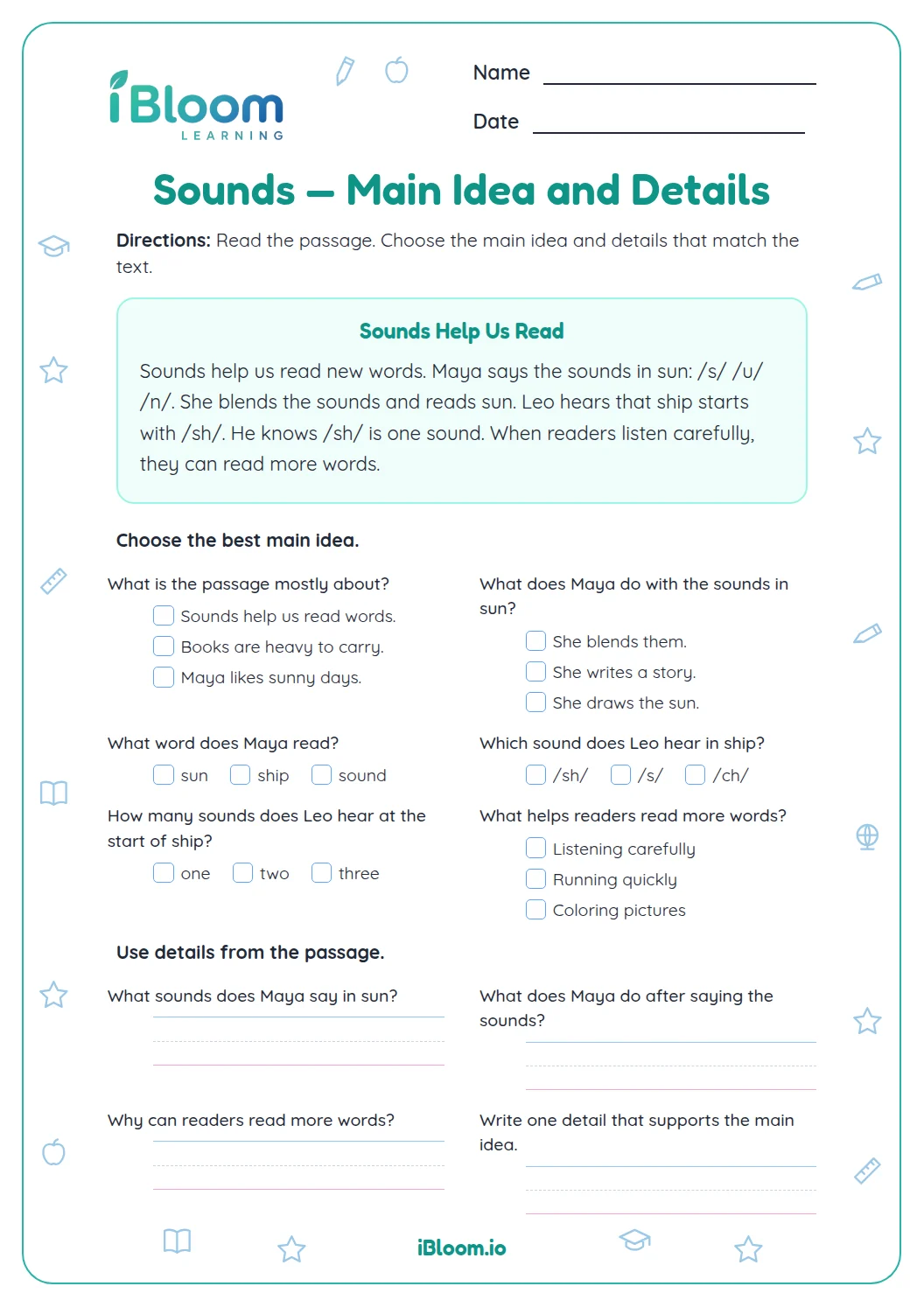
Ask the child to say the word slowly and listen to its first sound. Then have them replace only that sound and blend the new word together. For story details, return to the passage and locate the sentence that tells what happened.
What comes after this preview page?
The sibling phonics pages offer focused practice with individual sounds, segmenting and blending. Choosing the next activity can depend on whether the child needs to hear sounds, separate them or put them together. The answer key gives a sample for the written response and the expected word or choice for the other items.