

About this worksheet
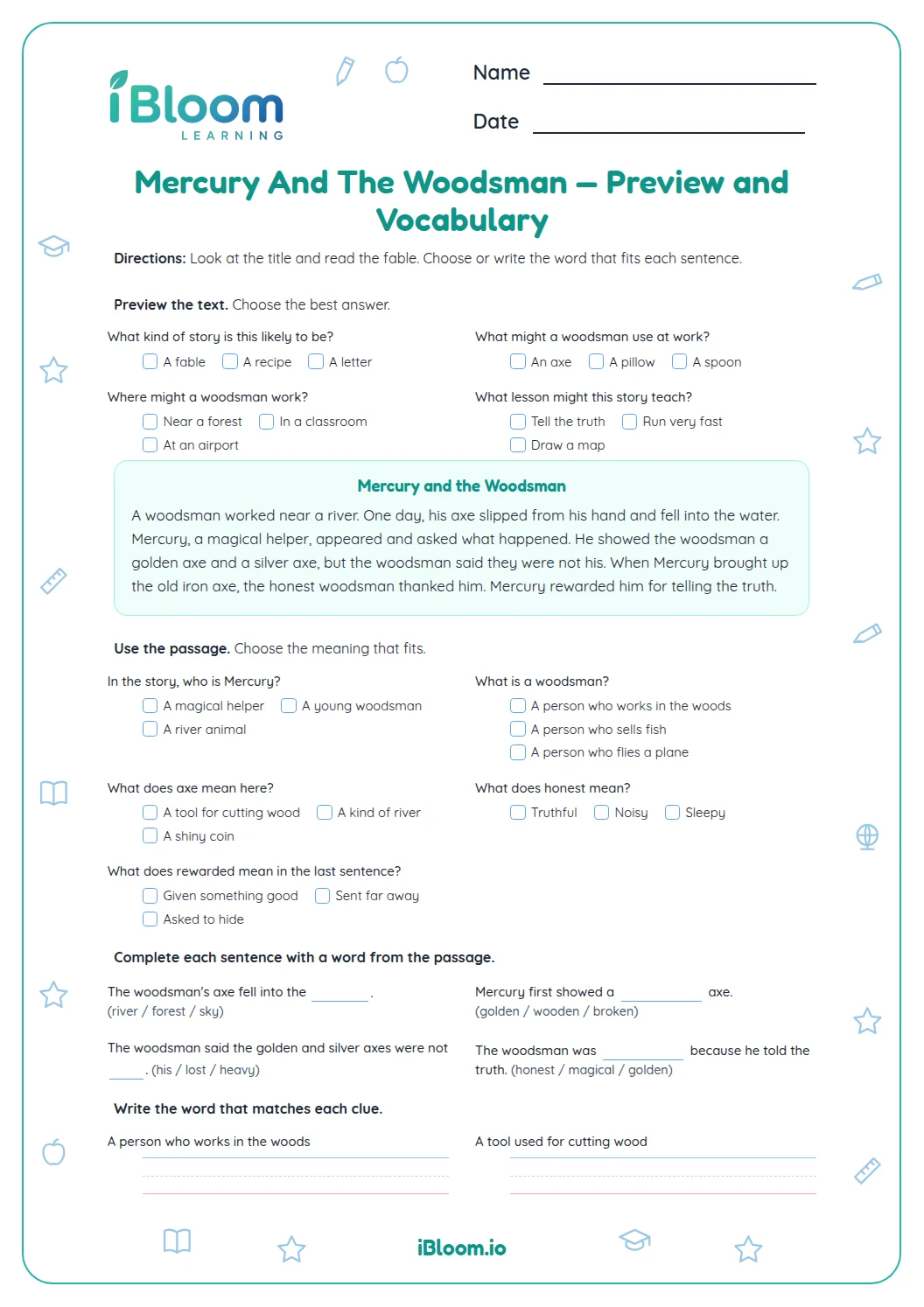
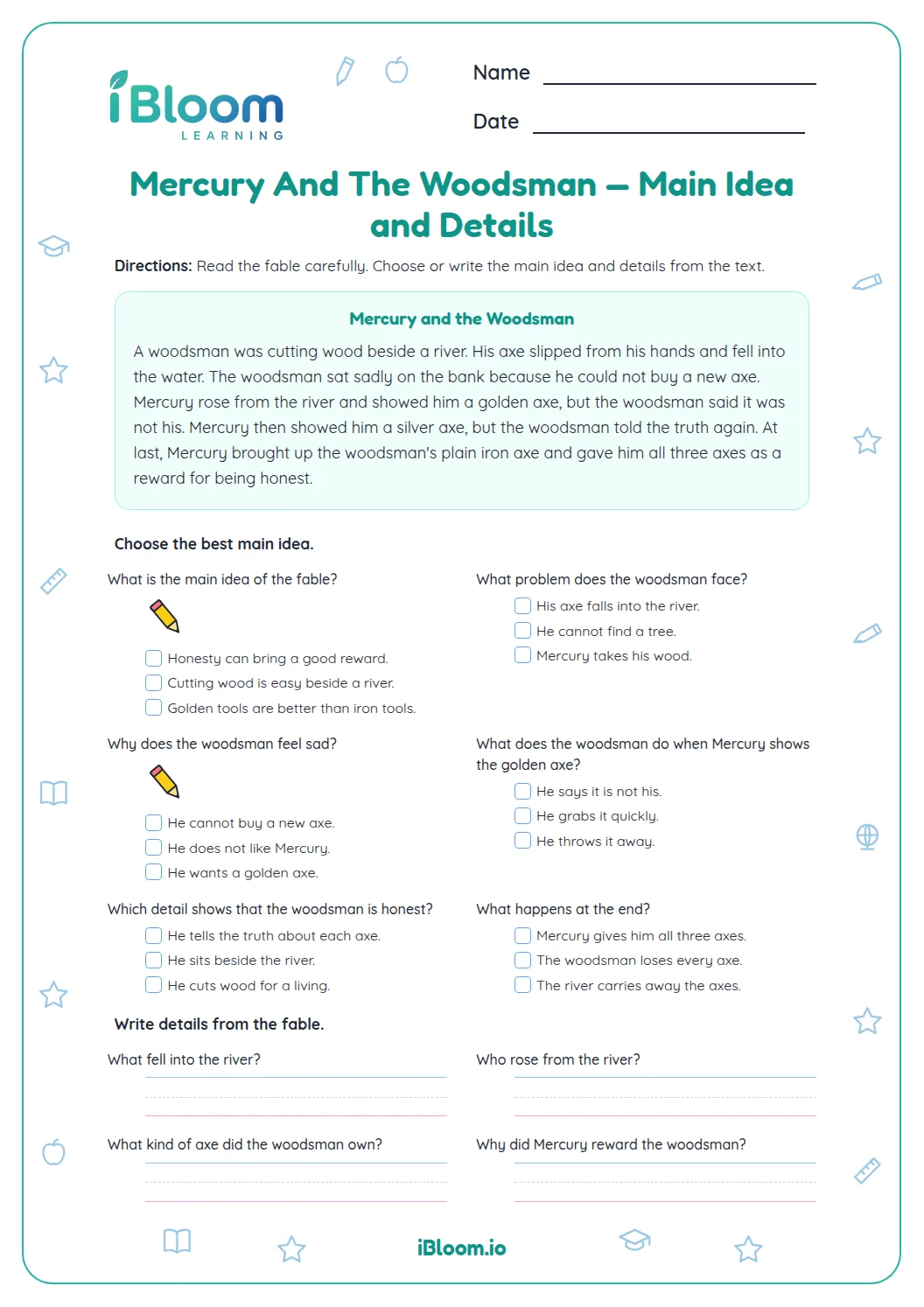
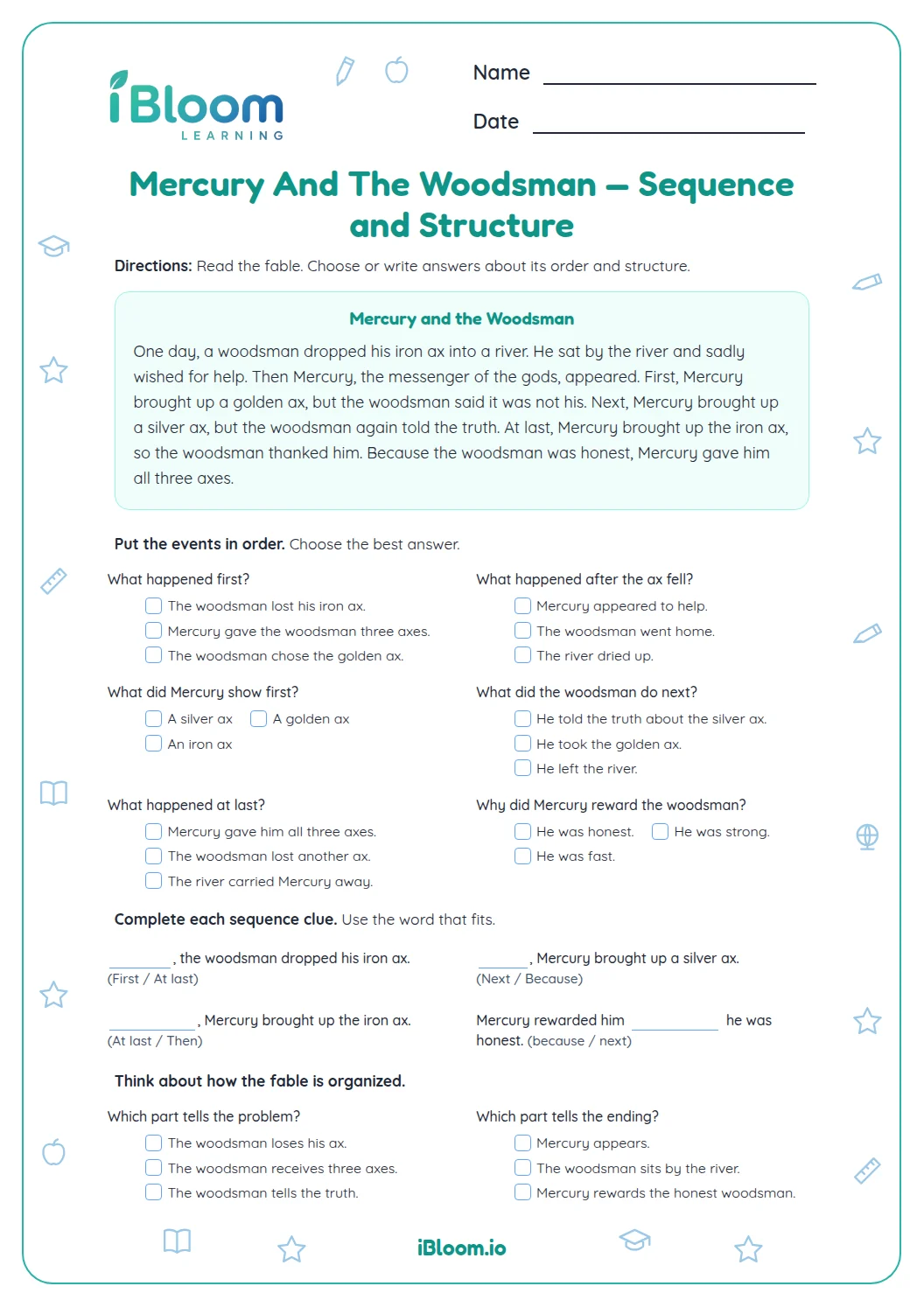
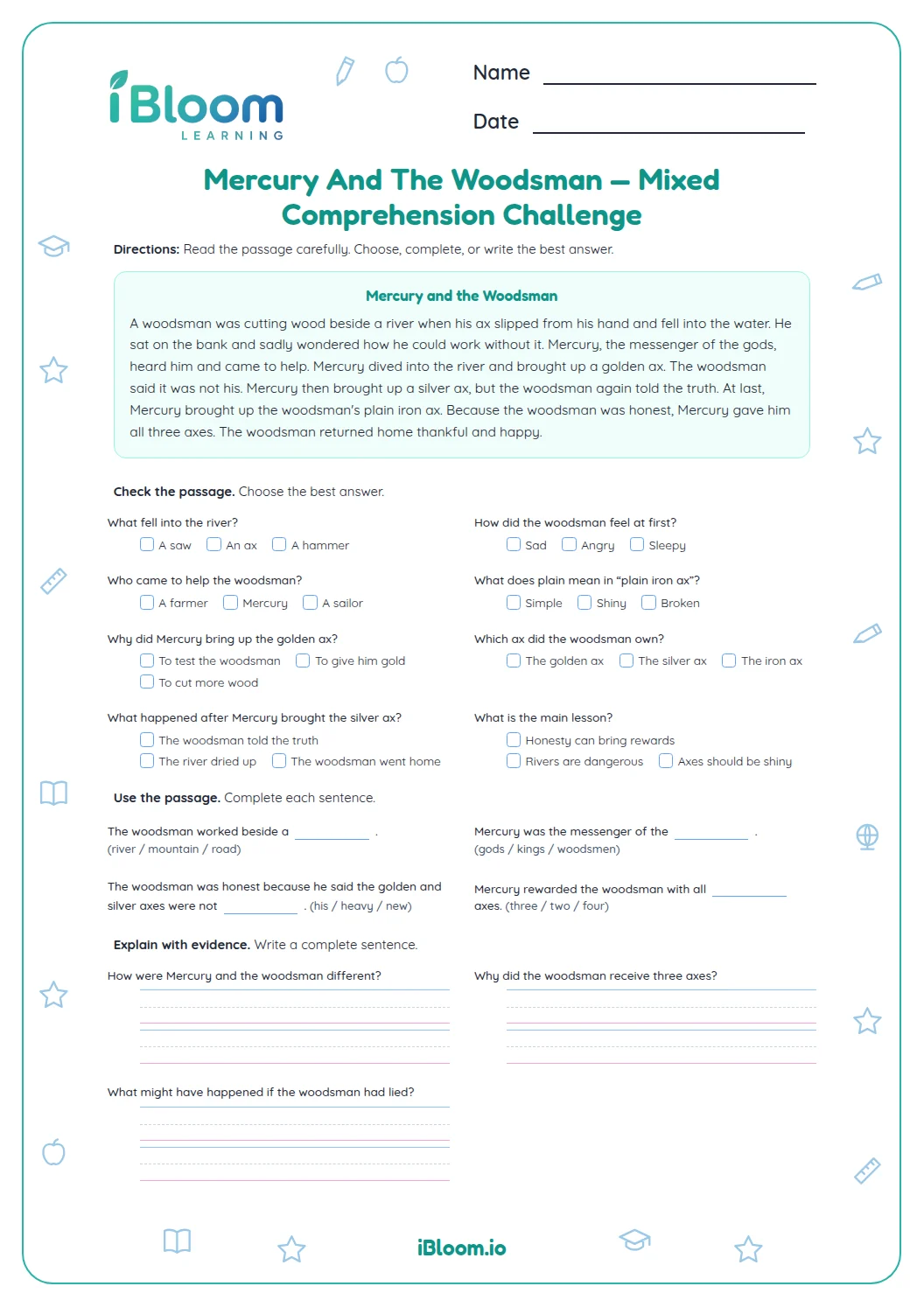
This free Grade 2 worksheet retells the traditional fable of Mercury and the Woodsman. Students answer 14 questions about what happened, why Mercury tested the woodsman, and what his choices reveal. One written response asks them to connect the fable’s lesson to a story detail. The practice aligns with CCSS RL.2.1, asking readers to answer questions using key details.
Aligned to RL.2.1 and RL.2.2
What clues explain the woodsman’s problem?
The story opens with the iron axe slipping into the river. The woodsman cannot do his work without it, which explains his sigh. Questions 1–8 ask readers to track the event and Mercury’s actions.
How can readers infer that the woodsman is honest?
An inference combines a clue with what a reader knows. The woodsman says the gold axe and the silver axe are not his, even though either might seem valuable. His answers show that he tells the truth.
- 1Question 10: What can readers infer about the woodsman?
- 2Clue: He refuses to claim either valuable axe.
- 3Inference: He is honest.
What lesson does the fable teach?
The ending connects honesty with a reward: Mercury gives the woodsman all three axes because he told the truth. A complete answer names the lesson and points to the ending as evidence.
How to use this worksheet
- 1Read the fable once to follow the problem and its solution.
- 2For an inference question, notice what a character says or does.
- 3Find the exact clue in the story before writing an inference.
- 4For the lesson question, connect the beginning problem to the ending.
- 5Check that each written response includes a story detail.
Mistakes to watch for
The mistake
Calling the woodsman honest without giving a clue.
The fix
Add the moment when he refuses the gold and silver axes.
The mistake
Assuming Mercury gave the axes before finding the iron one.
The fix
Reread the events in order and locate the fable’s last paragraph.
The mistake
Naming a lesson that does not match the ending.
The fix
Use Mercury’s reward to explain what the story teaches about truthfulness.
Common Core alignment
These standards describe the reading and writing work on this page.
Answer questions and draw a simple inference from story details.
On this sheet: Questions ask readers to use key details and support an inference.
Show the official wordingHide the official wording
Ask and answer such questions as who, what, where, when, why, and how to demonstrate understanding of key details in a text.
Retell a fable and identify its lesson from the ending.
On this sheet: Questions ask students to explain the fable’s lesson and events.
Show the official wordingHide the official wording
Recount stories, including fables and folktales from diverse cultures, and determine their central message, lesson, or moral.
What to practice next
Make more practice
Further reading
Questions parents and teachers ask
How many questions are on this fable worksheet?
There are 14 questions: 13 multiple-choice items and one written response. They ask about story events, the woodsman’s choices, clues that support an inference, a vocabulary word and the lesson of the fable. The key gives an answer for each item.
What evidence shows that the woodsman is honest?
When Mercury offers the gold and silver axes, the woodsman says neither belongs to him. He identifies the plain iron axe when Mercury brings it up. His honest answers help readers infer that he tells the truth, and this choice earns Mercury’s trust.
What is the lesson of Mercury and the Woodsman?
The fable shows that honesty can bring a reward. Mercury gives the woodsman all three axes after he truthfully refuses the gold and silver ones. The ending links the woodsman’s honesty with Mercury’s gift, giving readers a clear event to use as evidence.
What does the answer key include?
The key lists answers for all 14 questions and gives a sample response for the written item. Other wording can be correct when it names a supported idea and uses a detail from the fable. A student can reread the relevant event to check an answer.
How can an adult help with inference questions?
Ask the student what the character did, then what that action suggests. Have them point to the story clue before answering. This keeps the inference connected to the text rather than to a guess. For example, ask what the woodsman’s refusals show about him.