


About this worksheet
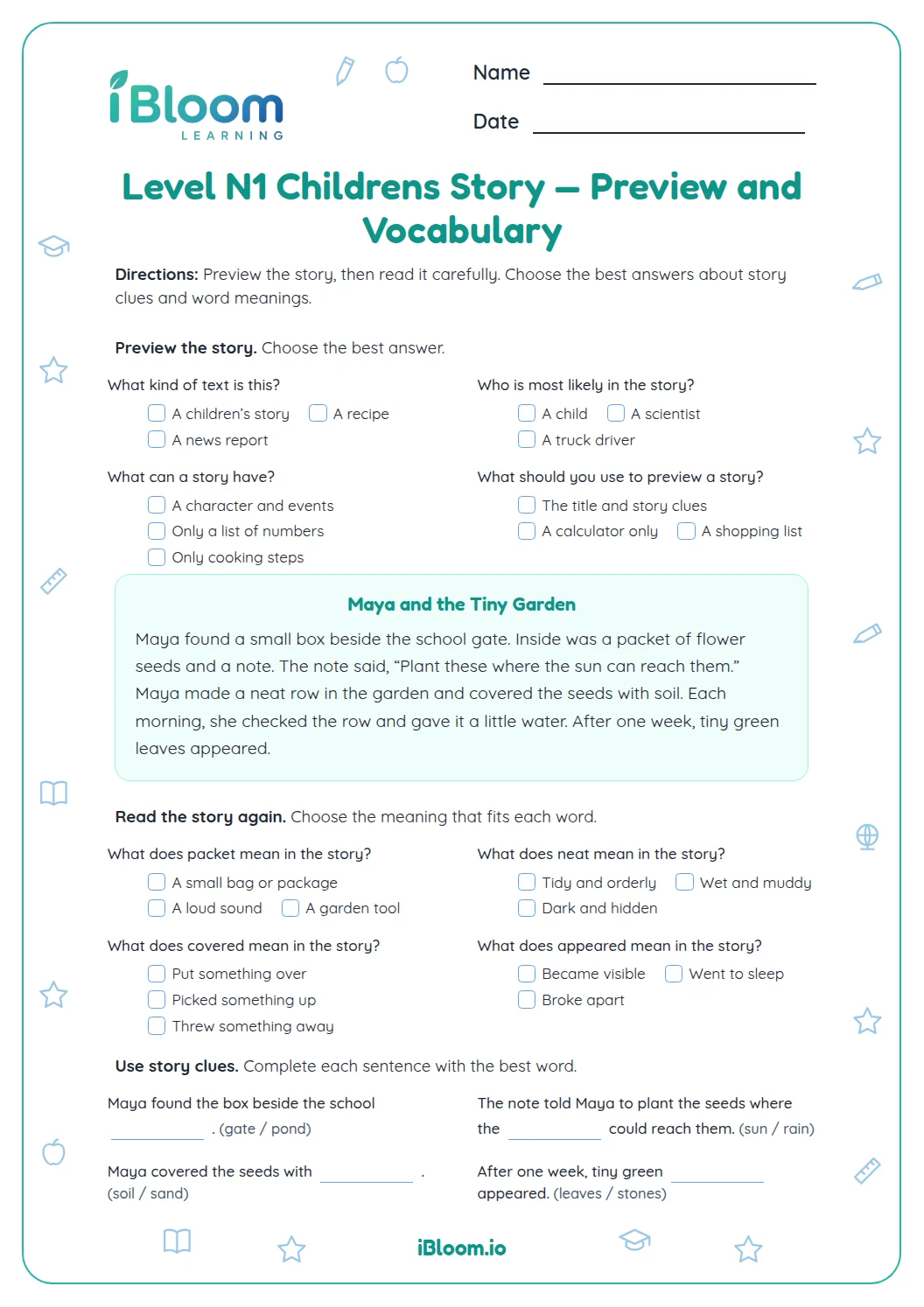
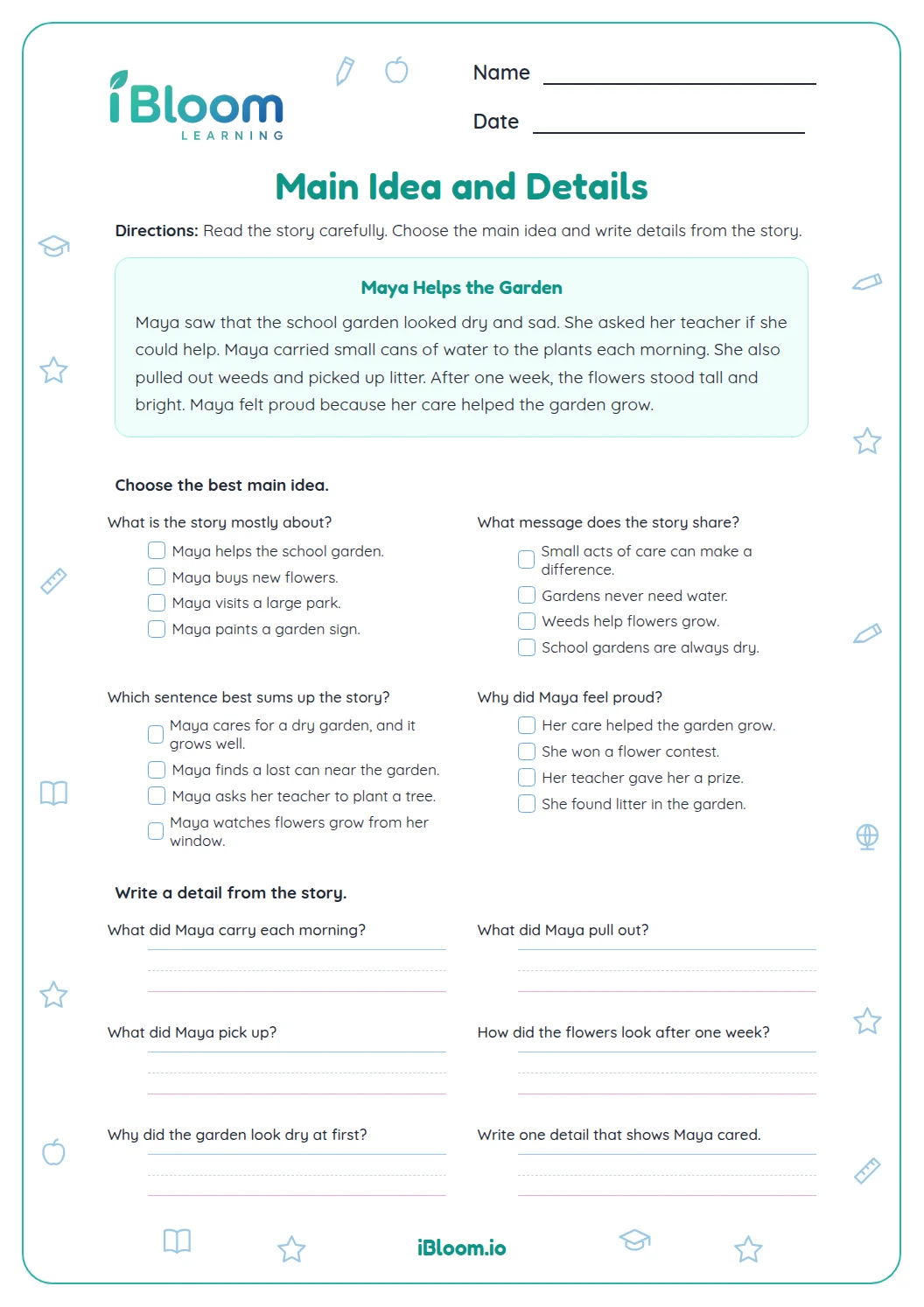
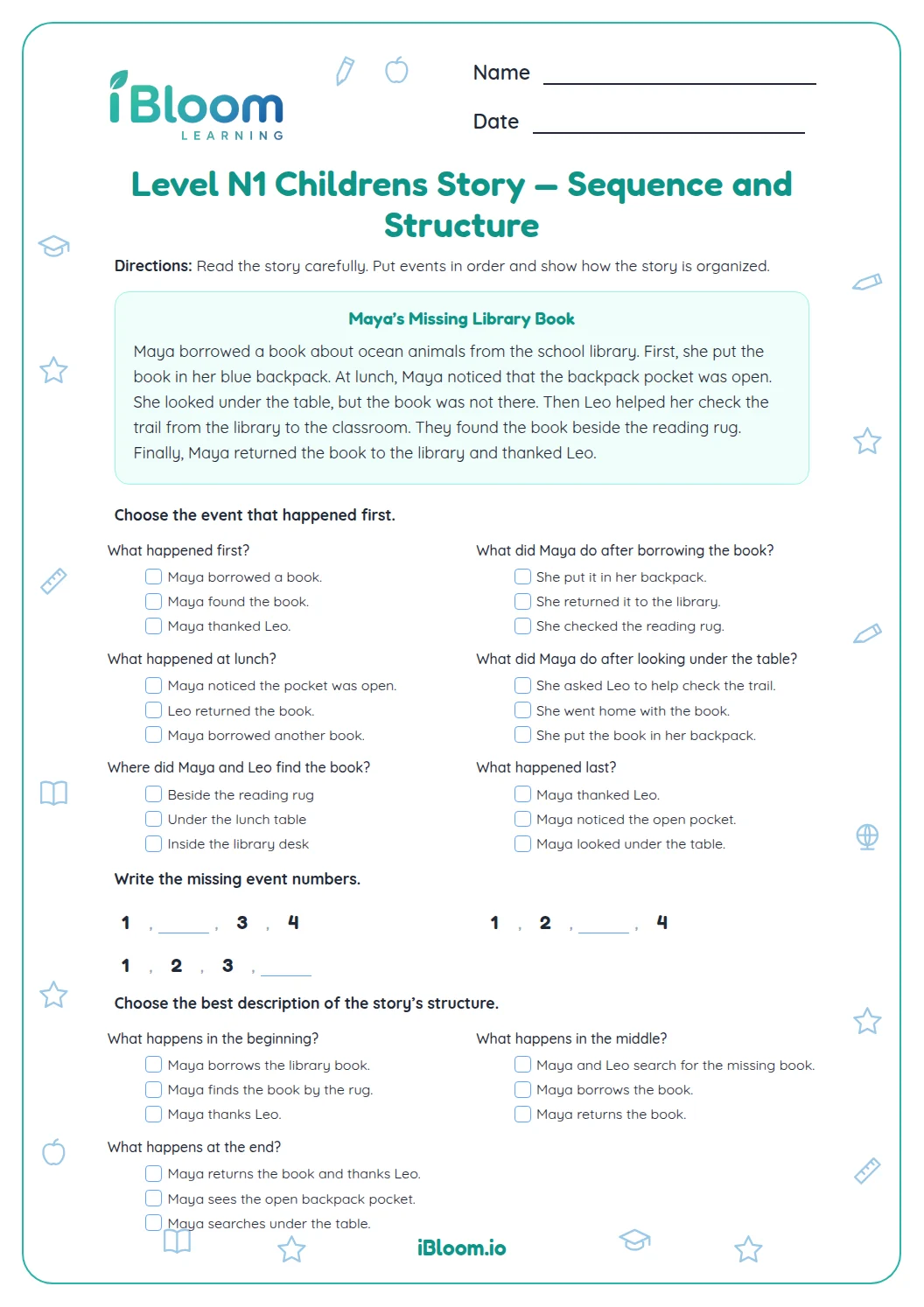
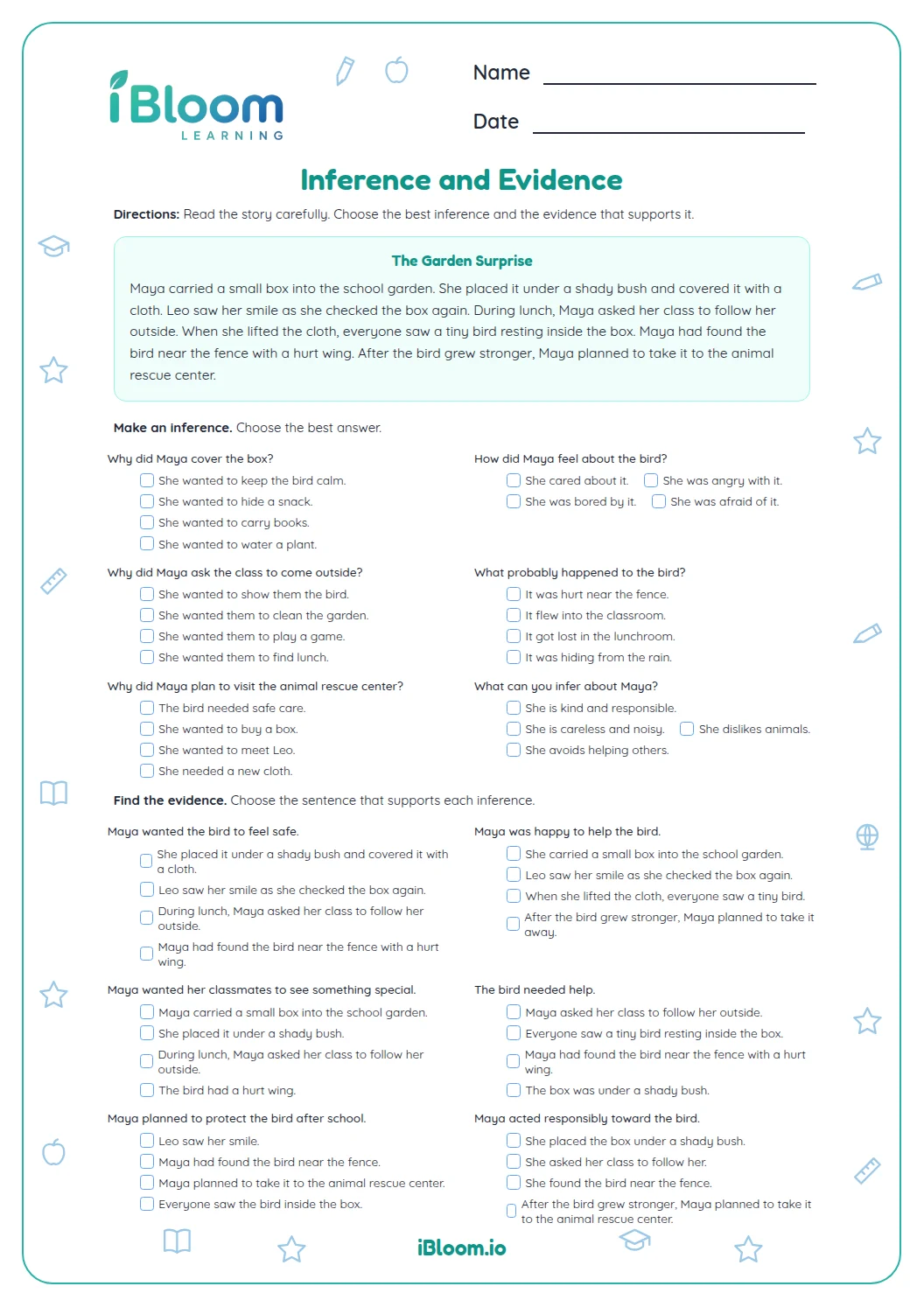
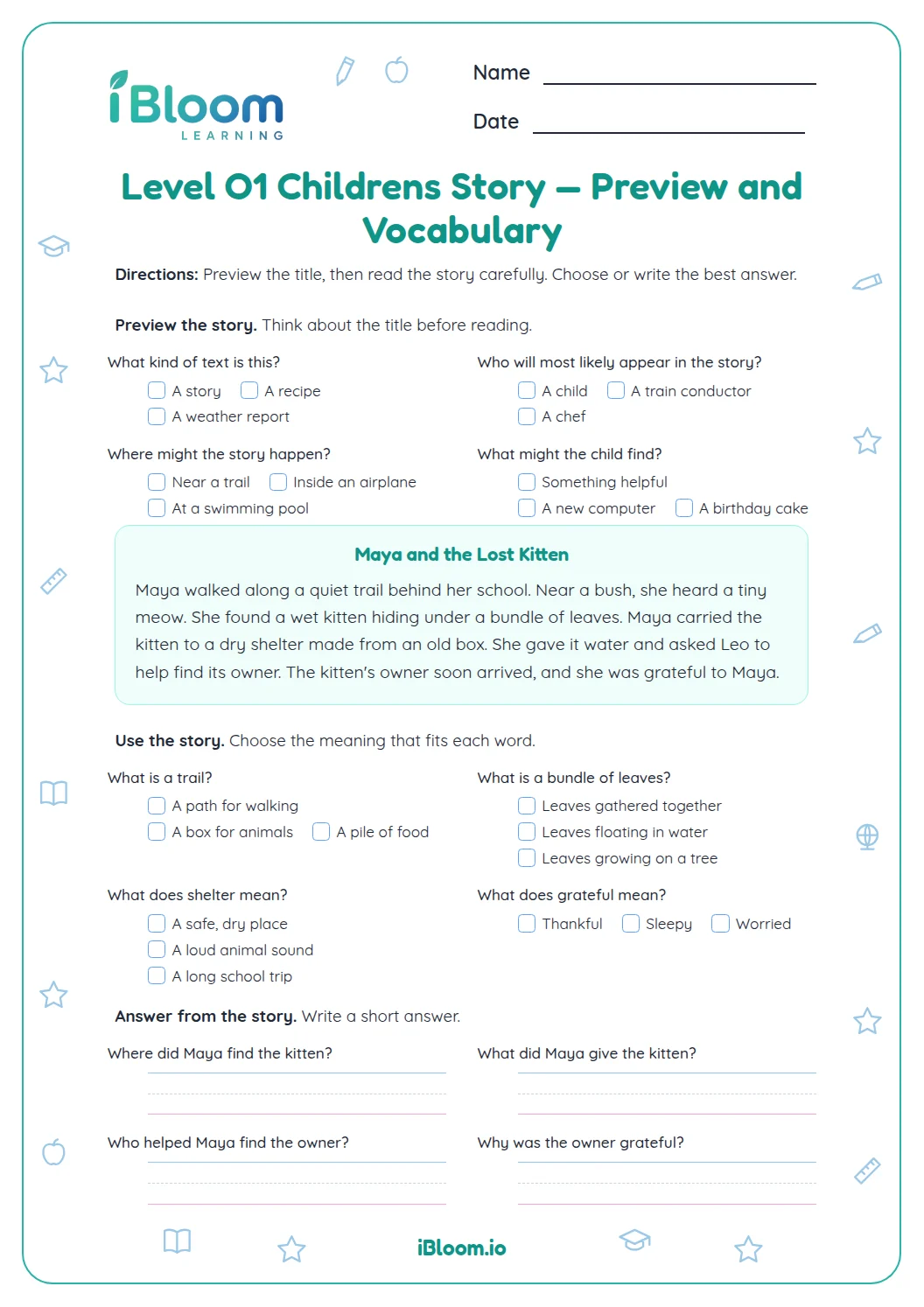
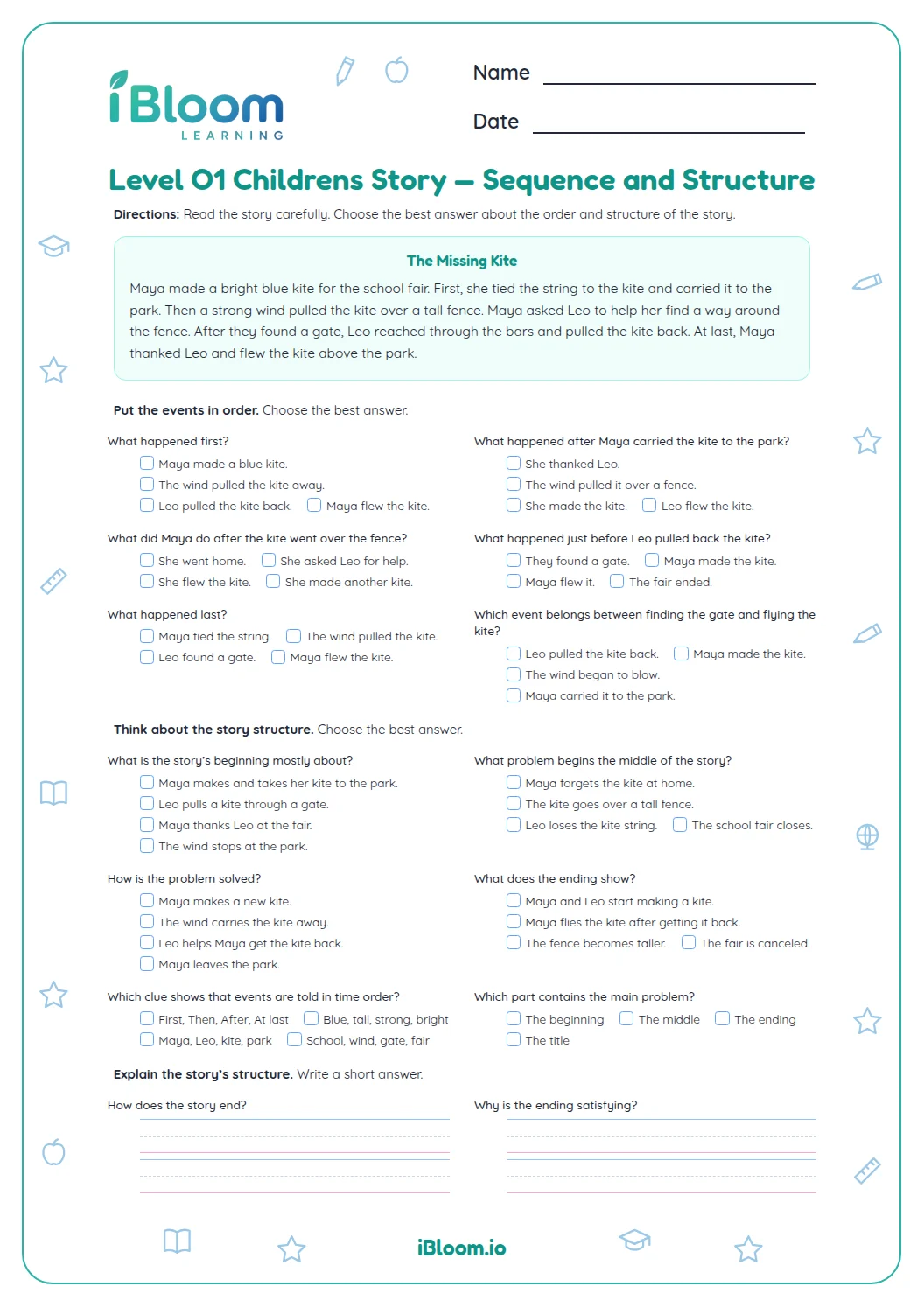
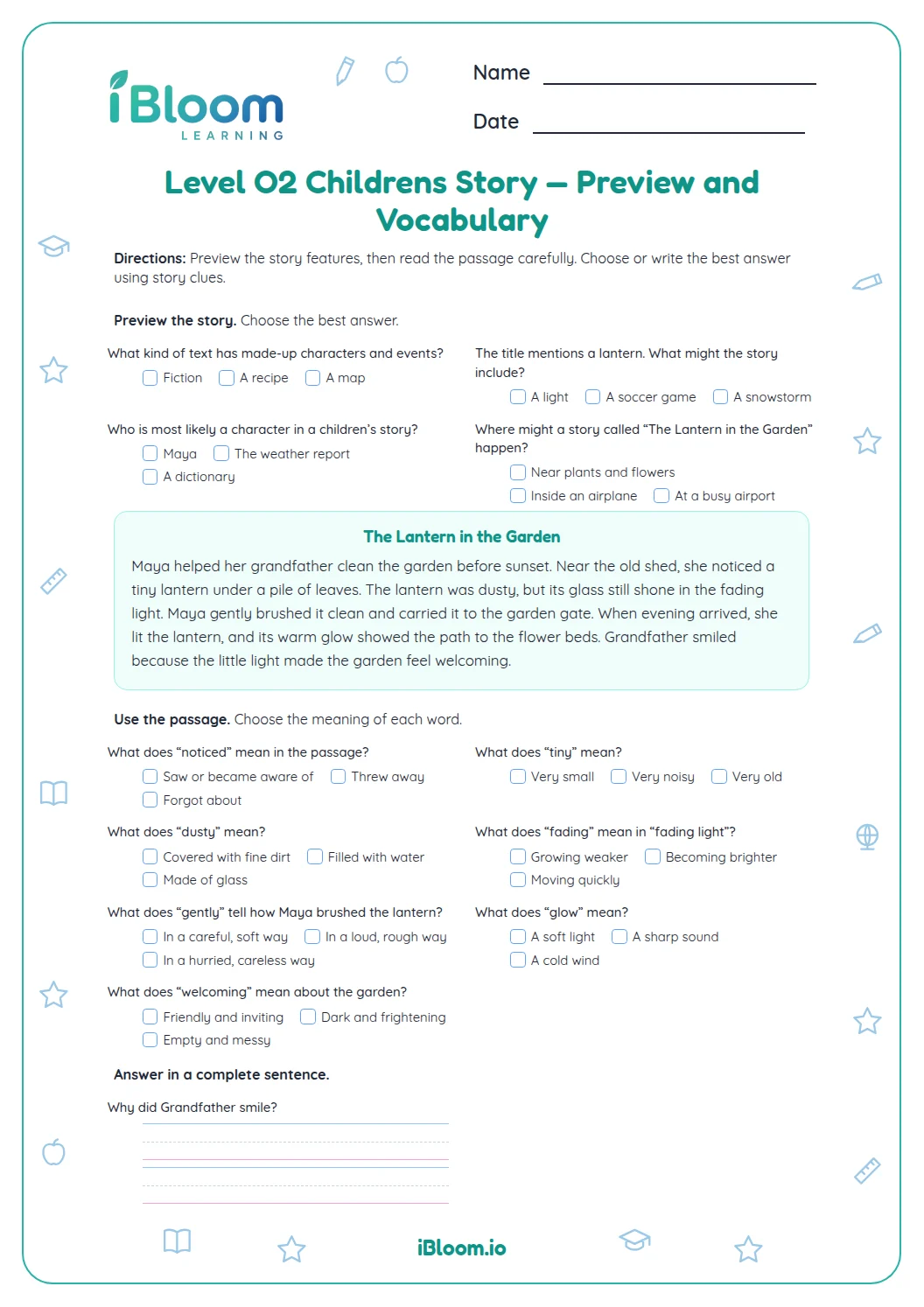
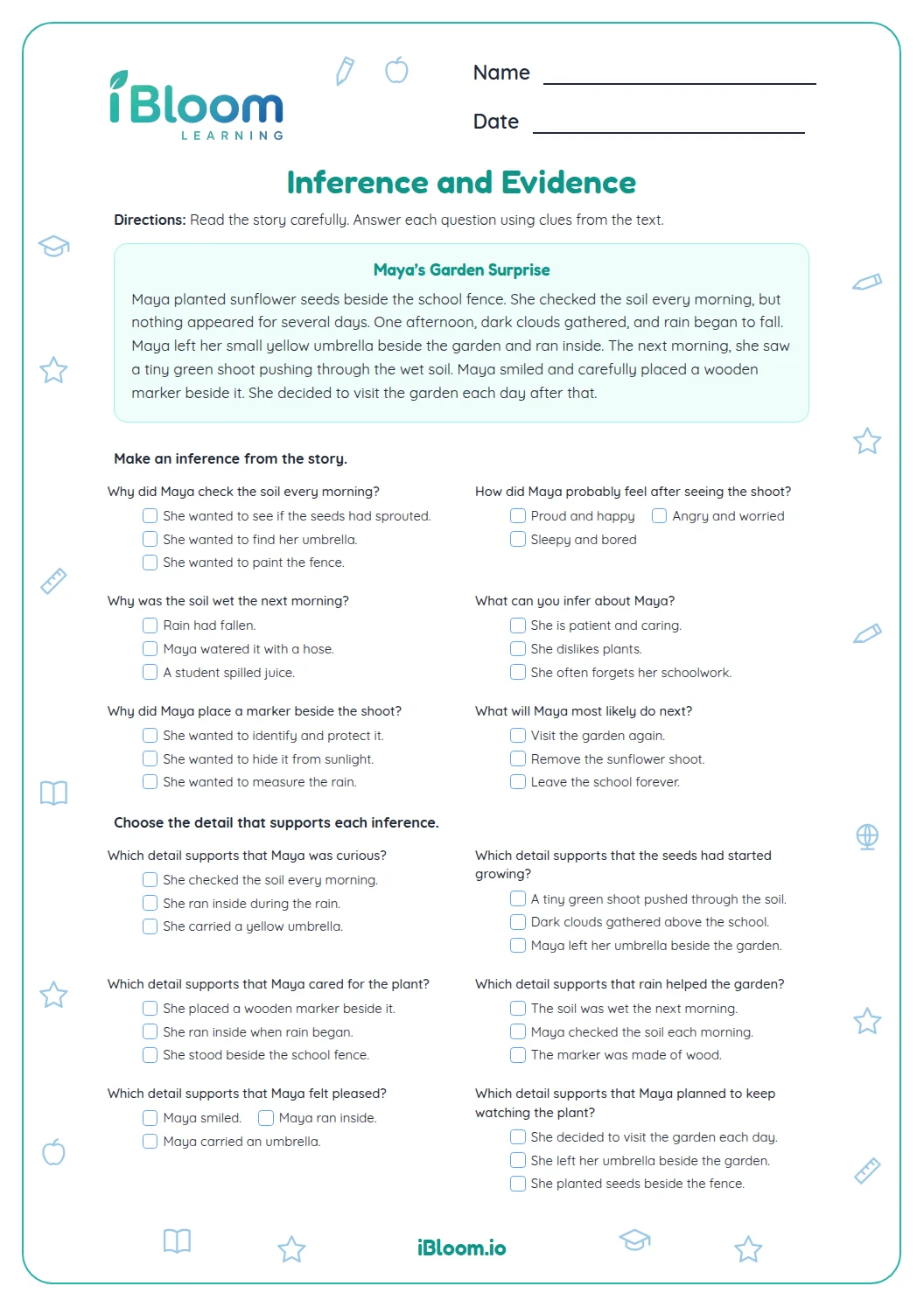
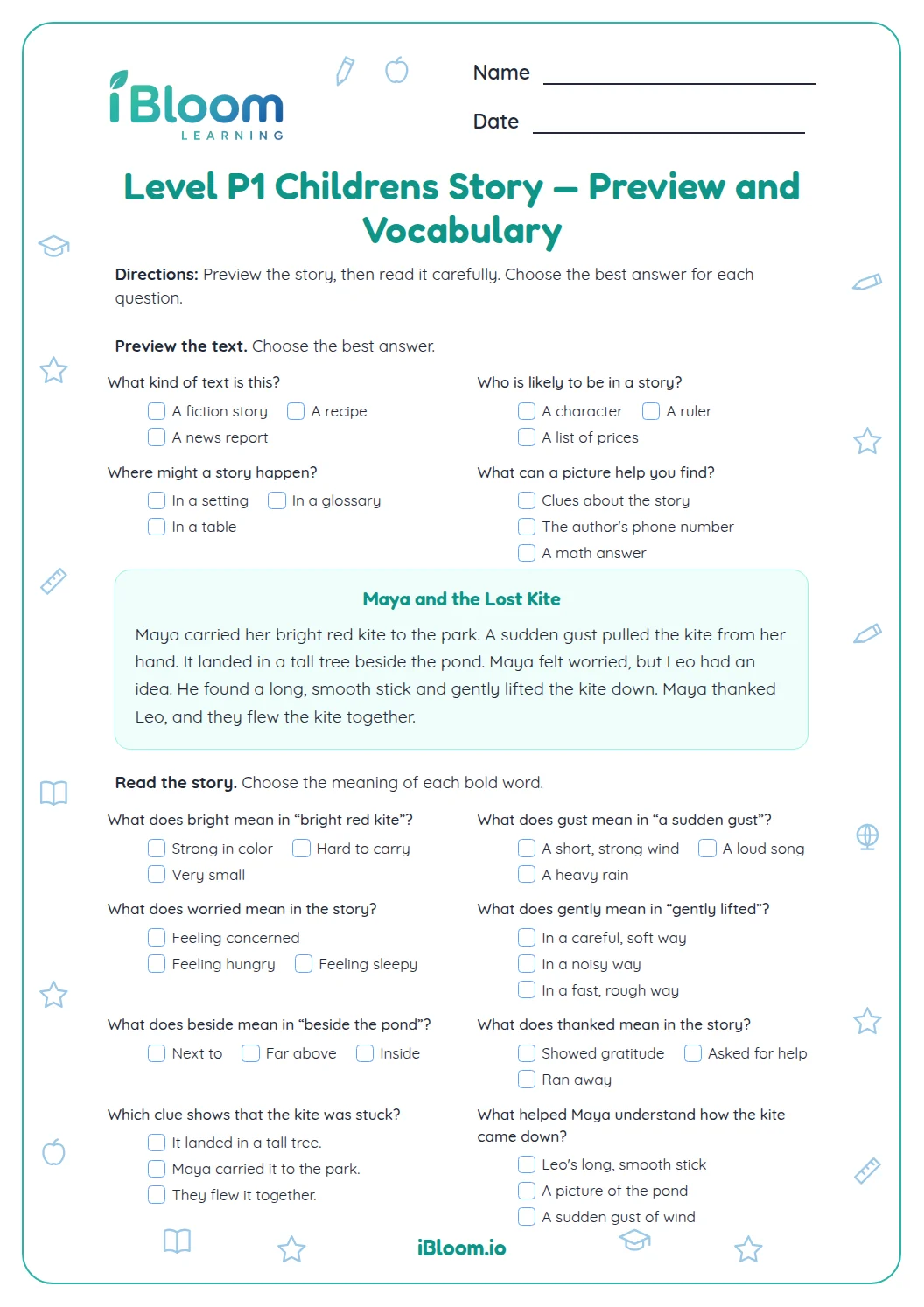
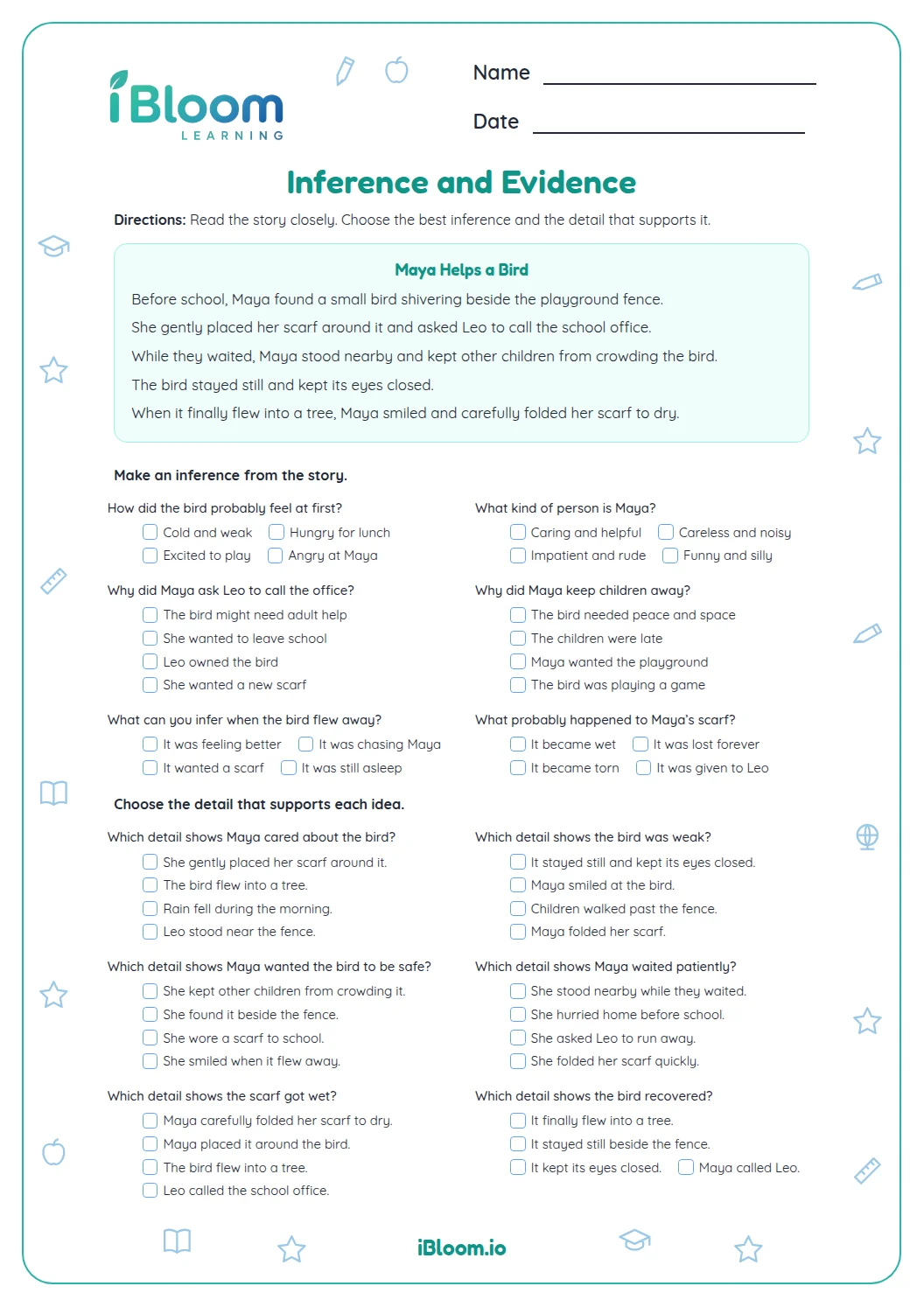
This free Grade 3 printable pairs an original story about Maya and Leo caring for a school garden with 14 multiple-choice comprehension questions. Students locate details, consider why characters act, follow the sequence of events, and make an inference from the text. The three-page worksheet and separate answer key replace the old single recall item with a complete practice set. The page practices CCSS RL.3.1 through text-based answers and RL.3.3 through character actions and event sequence.
Aligned to RL.3.1 and RL.3.3
How does the passage support detail questions?
Maya’s story follows one clear problem and a sequence of actions: she plants a bean, waits, cares for the patch, and sees flowers. Detail questions ask students to locate information stated directly in the passage.
When answering, students can reread the paragraph where an event appears and use a precise word or phrase from the text.
- 1Question: Where did Maya find the bean seeds?
- 2Reread the first sentence.
- 3It says she found them in her grandfather’s shed.
- 4Answer: In a shed.
How can students explain an event or lesson?
Some answers require more than finding a name or object. Students explain how Maya cared for the seed or connect her patience to what happened later. A strong response names an event and points to a supporting detail.
The last questions invite a short explanation. The answer key offers samples, while other clear answers supported by the passage can also be accepted.
How should families use the answer key?
Check factual answers against the story, then read open responses for a clear idea and a relevant detail. If a response is close, ask the student to show which sentence supports it. This keeps the conversation grounded in the text.
How to use this worksheet
- 1Read the title and think about what a garden story may include.
- 2Read the passage once for the main events.
- 3Return to the story when a question asks for a detail.
- 4Compare the choices, then return to the passage to confirm the supporting detail.
- 5Compare responses with the key and accept other text-supported wording.
Common mistakes and quick fixes
The mistake
Answering from memory without checking the passage.
The fix
Reread the sentence or paragraph that describes the event.
The mistake
Retelling many events when a short answer is asked.
The fix
Answer the question directly, then add one useful detail if needed.
The mistake
Giving a lesson without evidence.
The fix
Name one action or event in the story that supports the lesson.
Common Core alignment
Students answer from a literary text and explain how a character’s actions shape events.
Answer questions using the story as evidence.
On this sheet: The questions ask students to use details from the passage as the basis for their choices.
Show the official wordingHide the official wording
Ask and answer questions to demonstrate understanding of a text, referring explicitly to the text as the basis for the answers.
Explain Maya’s actions and how events unfold.
On this sheet: Questions ask why characters act, how events unfold, and what students can infer about the helpers.
Show the official wordingHide the official wording
Describe characters in a story (e.g., their traits, motivations, or feelings) and explain how their actions contribute to the sequence of events.
What to practice next
Make more practice
Further reading
Questions parents and teachers ask
What is the story about?
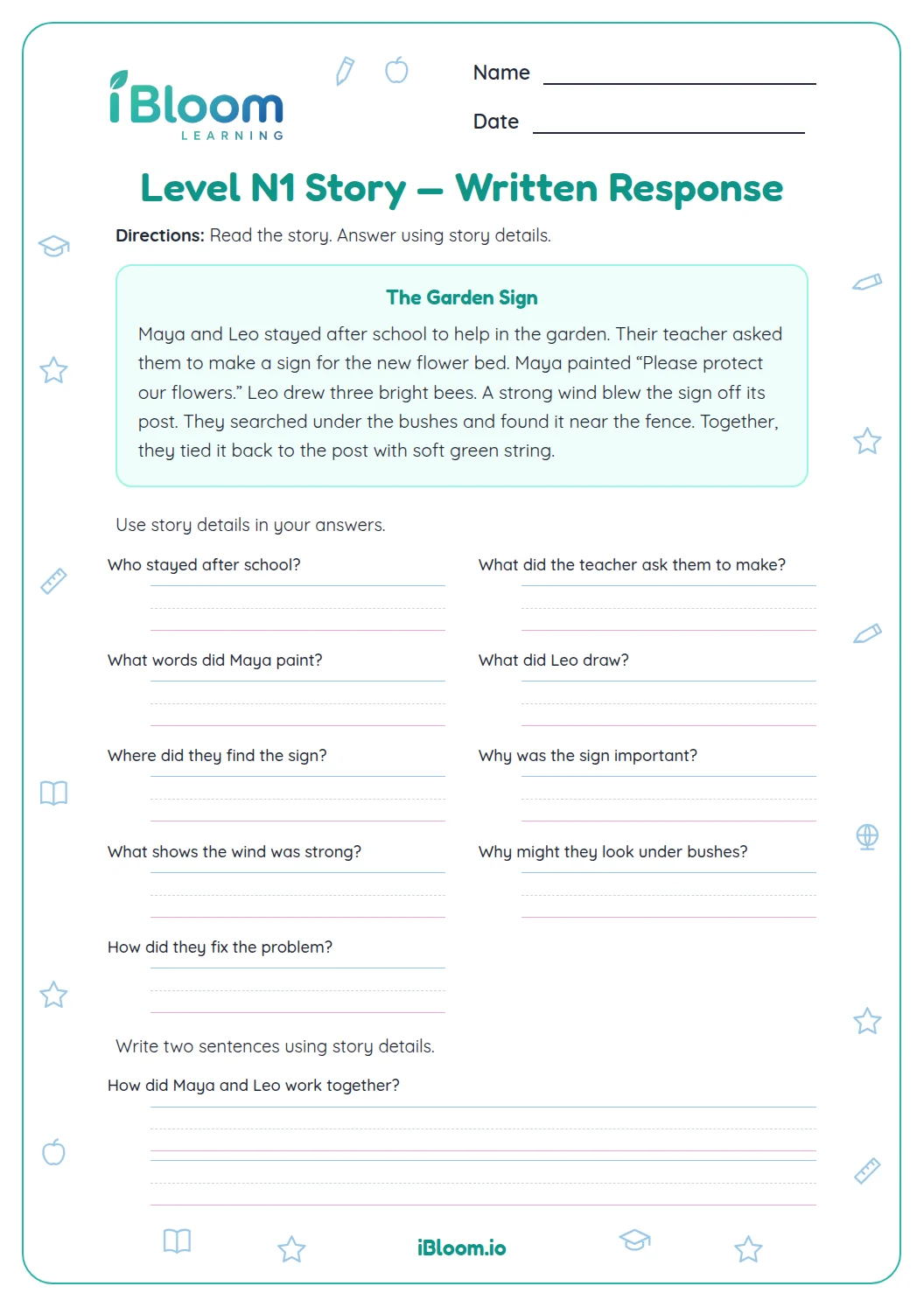
Maya and Leo help their teacher plant a bean garden behind their school. When a paper sign blows into the garden and bends two stems, they use small sticks to support the plants and check them again the next morning.
How many questions are on this worksheet?
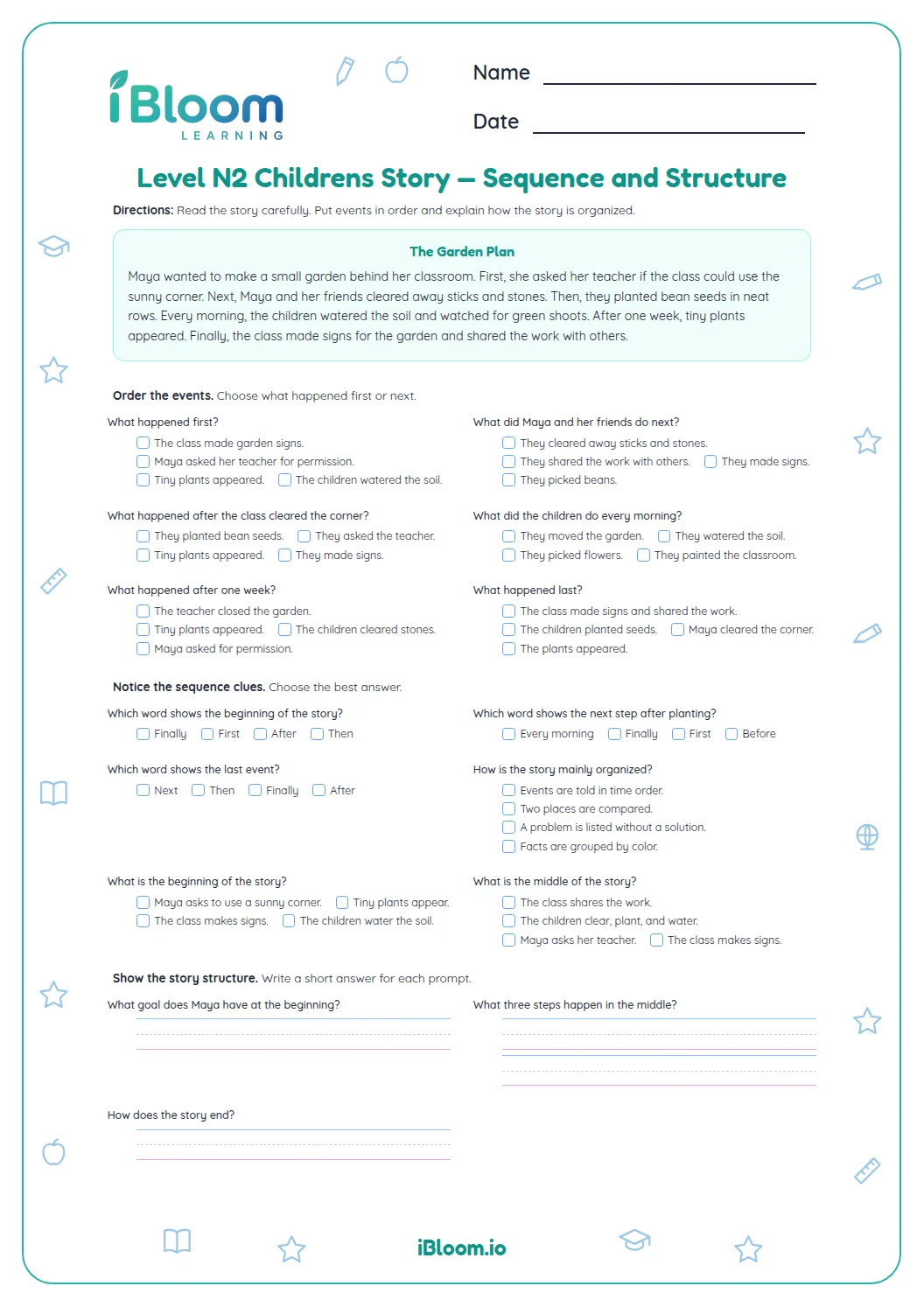
There are 14 multiple-choice questions. The first group checks key details, and the next group asks about a sign, the plant supports, event order, and what the children’s actions suggest. The answer key gives the intended choice for each item.
Can students use the passage while answering?
Yes. The passage is the source for the answers, so students should reread it when needed. Encourage them to locate the sentence that gives a detail or supports their explanation instead of relying only on memory. Students may underline or point to evidence before writing an answer.
How can students support an inference?
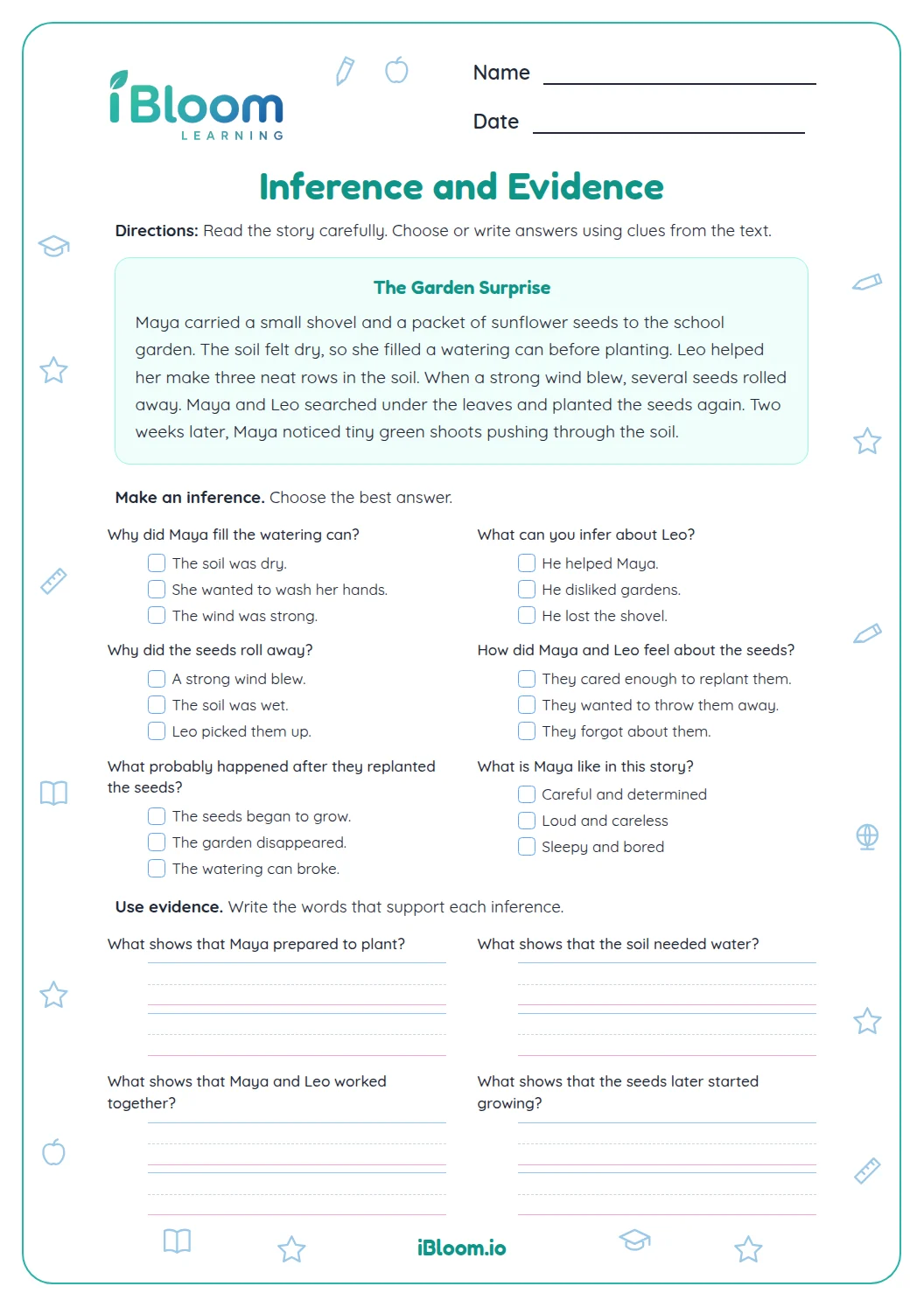
Students should choose an inference that fits a story detail. For example, they can infer that Maya and Leo care for the garden because they support bent stems and check the ties the next morning. The passage is available to reread while they decide.
What does the final question practice?
The final question asks students to infer what kind of helpers Maya and Leo are and support that idea with a story detail. A response might call them careful and point to the way they gently supported the bent stems.
How many pages are included?
The passage and questions use three worksheet pages, and the answer key is on three separate pages. Students read the Garden Sign story, work through two groups of multiple-choice questions, and can return to the story whenever they need to confirm a detail.