


About this worksheet
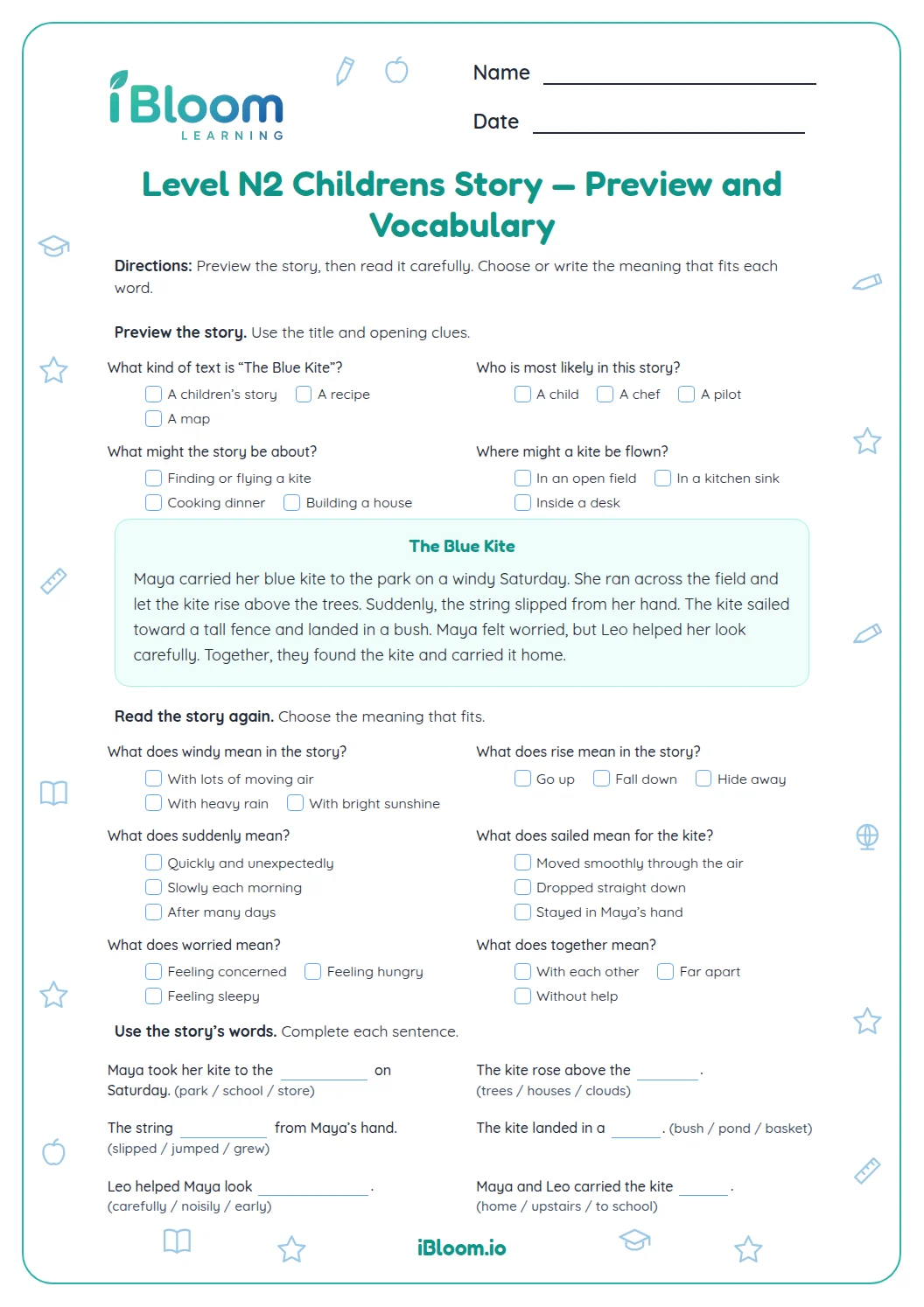
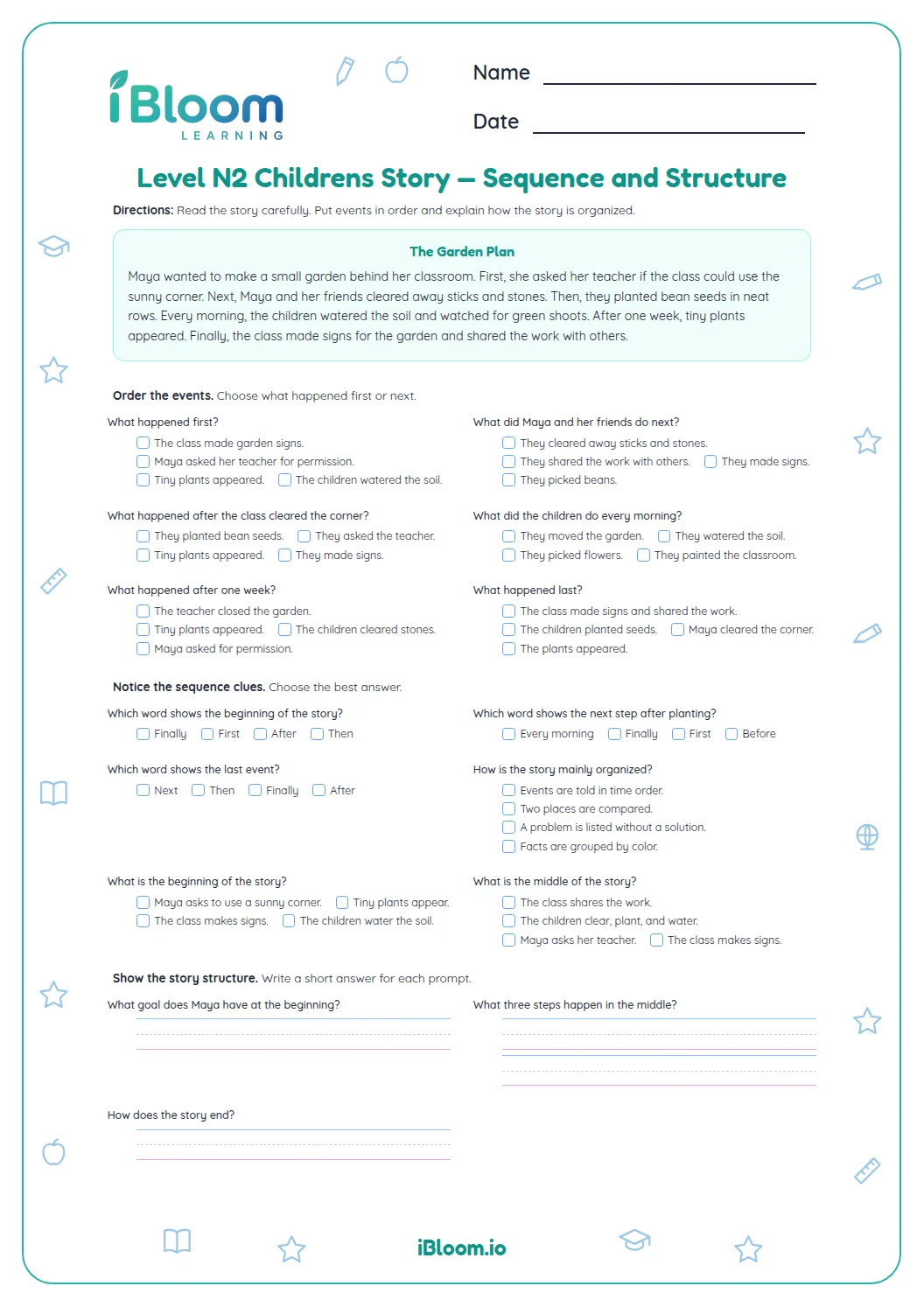
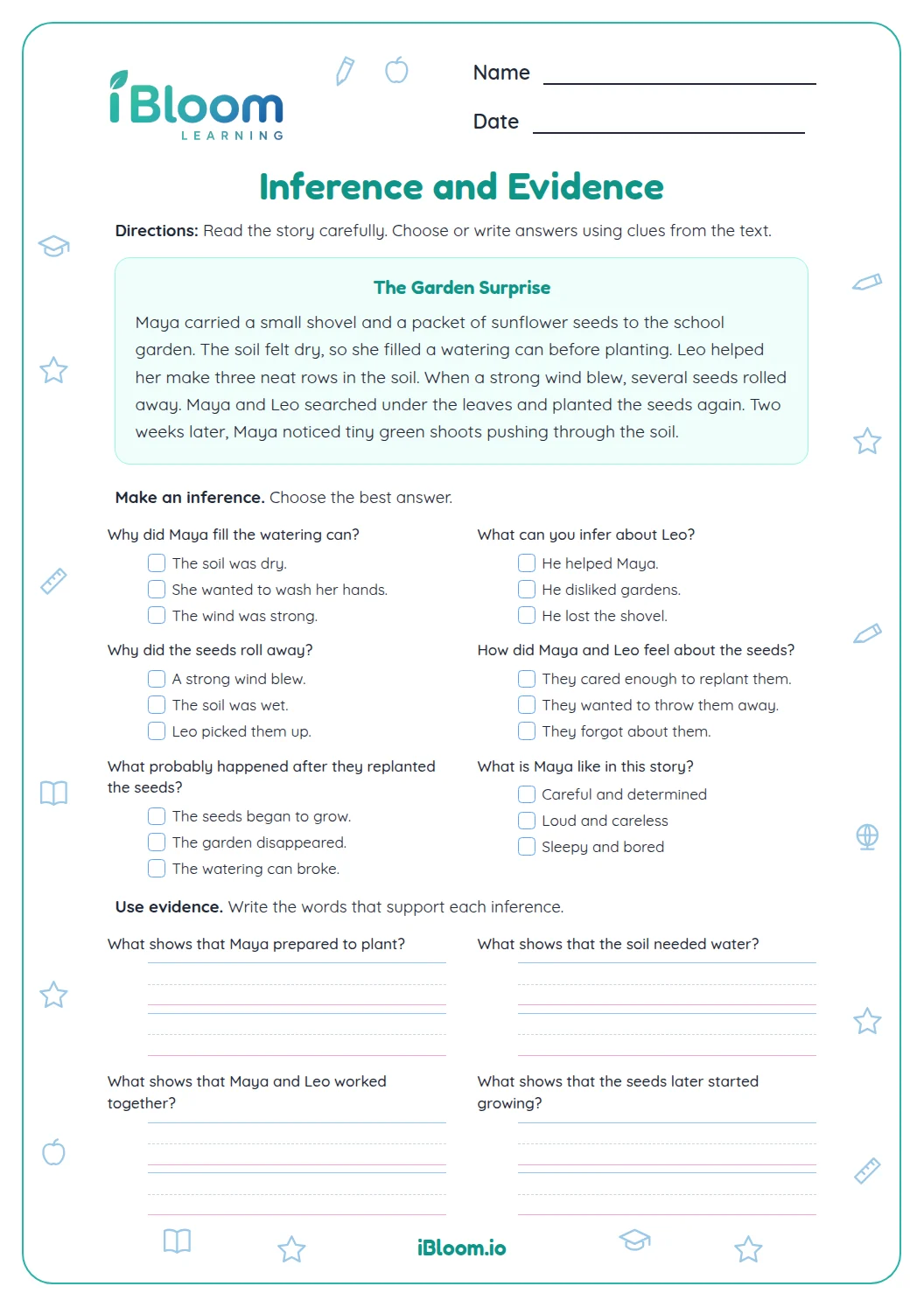
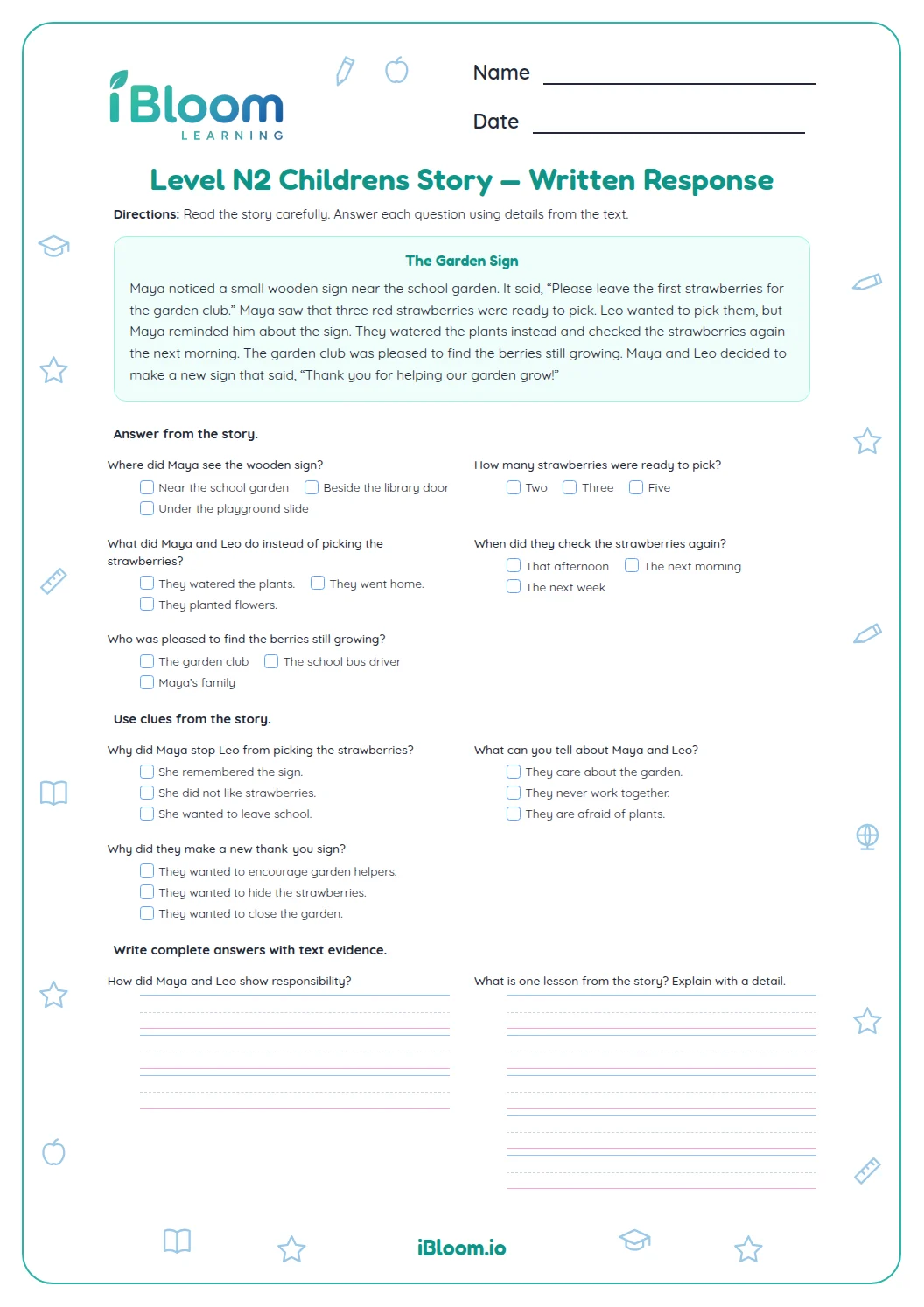
This Grade 3 reading worksheet pairs an original 156-word story, “The Library Seed Cart,” with 14 comprehension questions. Readers find details about Maya, Eli, and the seed cart, explain events and vocabulary, and make inferences supported by the passage. The questions practice CCSS RL.3.1 by asking children to refer to the text when answering. Three worksheet pages and a separate three-page answer key are included.
Aligned to RL.3.1
Which story details should readers notice?
Maya helps Mr. Lee set up a seed cart outside the library. Eli chooses bean seeds, a family takes sunflower seeds, and an older neighbor chooses basil. Keep these details in view when answering the first questions.
How does the story change by noon?
After people take most of the packets, Maya gives the last one to a younger child. Mr. Lee gives Maya a bean sprout in a small pot. For example, the family choosing sunflower seeds happens before Maya gives away the final packet.
How can a reader support an inference?
An inference combines a story clue with a reasonable idea. The neighbor choosing basil suggests that the neighbor wants to grow basil; the passage supplies the choice, while the reader explains what it may mean.
How to work through it
- 1Read the story once to understand who is there and what they do.
- 2For a detail question, return to the sentence that names the event.
- 3For a sequence question, compare when each event happened.
- 4Use nearby words and actions to explain unfamiliar meanings.
- 5For an inference, name the clue and connect it to your idea.
Mistakes to watch for
The mistake
Choosing a detail that appears in a different part of the story.
The fix
Reread the sentence that answers the exact question.
The mistake
Treating “remained” as something Maya picked.
The fix
Use the surrounding sentence: one packet was still left.
The mistake
Giving an inference without a story clue.
The fix
Name the character’s action first, then explain what it suggests.
Curriculum alignment
This worksheet gives learners practice with the standard below.
Answer story questions with explicit text details.
On this sheet: Readers return to the passage for details and support their inferences.
Show the official wordingHide the official wording
Ask and answer questions to demonstrate understanding of a text, referring explicitly to the text as the basis for the answers.
What to practice next
Make more practice
Further reading
Questions parents and teachers ask
What is the passage about?
Maya helps Mr. Lee set up a seed cart outside a library. People choose bean, sunflower, and basil seeds, and Maya gives the last packet to a younger child. The story ends with Mr. Lee giving Maya a bean sprout.
How many questions are included?
The worksheet has 14 questions on three pages. They cover story details, event order, a vocabulary word, character actions, inference, and a response about the story’s lesson. Each written response can be compared with its matching entry in the separate key after the child finishes working independently.
Can students look back at the passage?
Yes. The questions are designed for readers to return to the passage and use its details. Looking back helps children distinguish an explicit fact, such as which seeds Eli chose, from an inference about a character. Each written response can be compared with its matching entry in the separate key after the child finishes working independently.
What does “remained” mean in the story?
“Remained” means was left. The passage says that by noon only one packet remained, so one packet was still available after the others had been taken. Each written response can be compared with its matching entry in the separate key after the child finishes working independently.
What is one example of sequencing in the questions?
Readers compare the family choosing sunflower seeds with Maya giving away the last packet. The family chooses seeds earlier; Maya gives the final packet to the younger child later. Each written response can be compared with its matching entry in the separate key after the child finishes working independently.
Is there an answer key?
Yes. A separate three-page key includes answers and sample responses for questions that allow more than one reasonable answer. For written responses, check that the child’s answer matches the passage, even if the wording differs from the sample. Each written response can be compared with its matching entry in the separate key after the child finishes working independently.