


About this worksheet
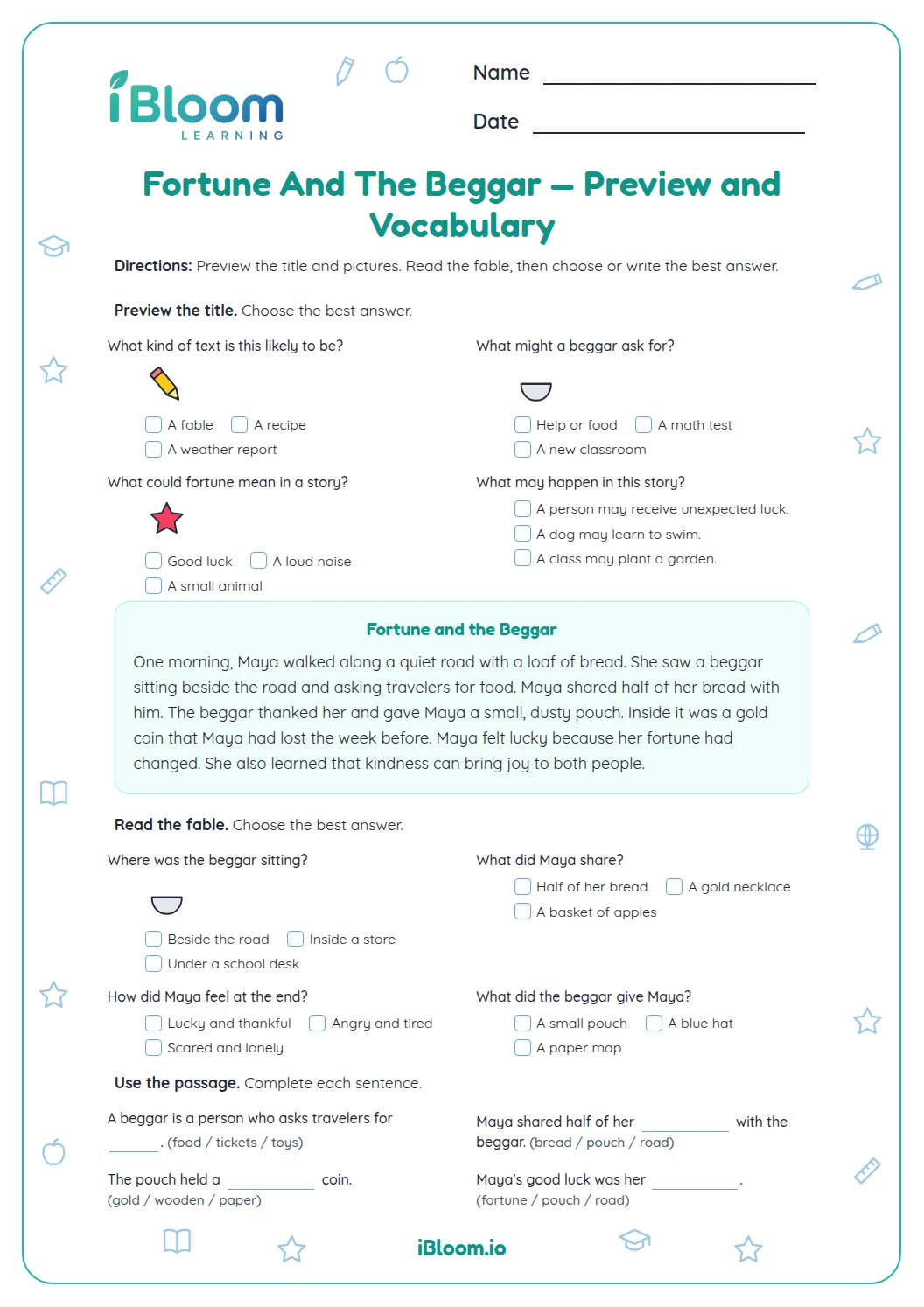
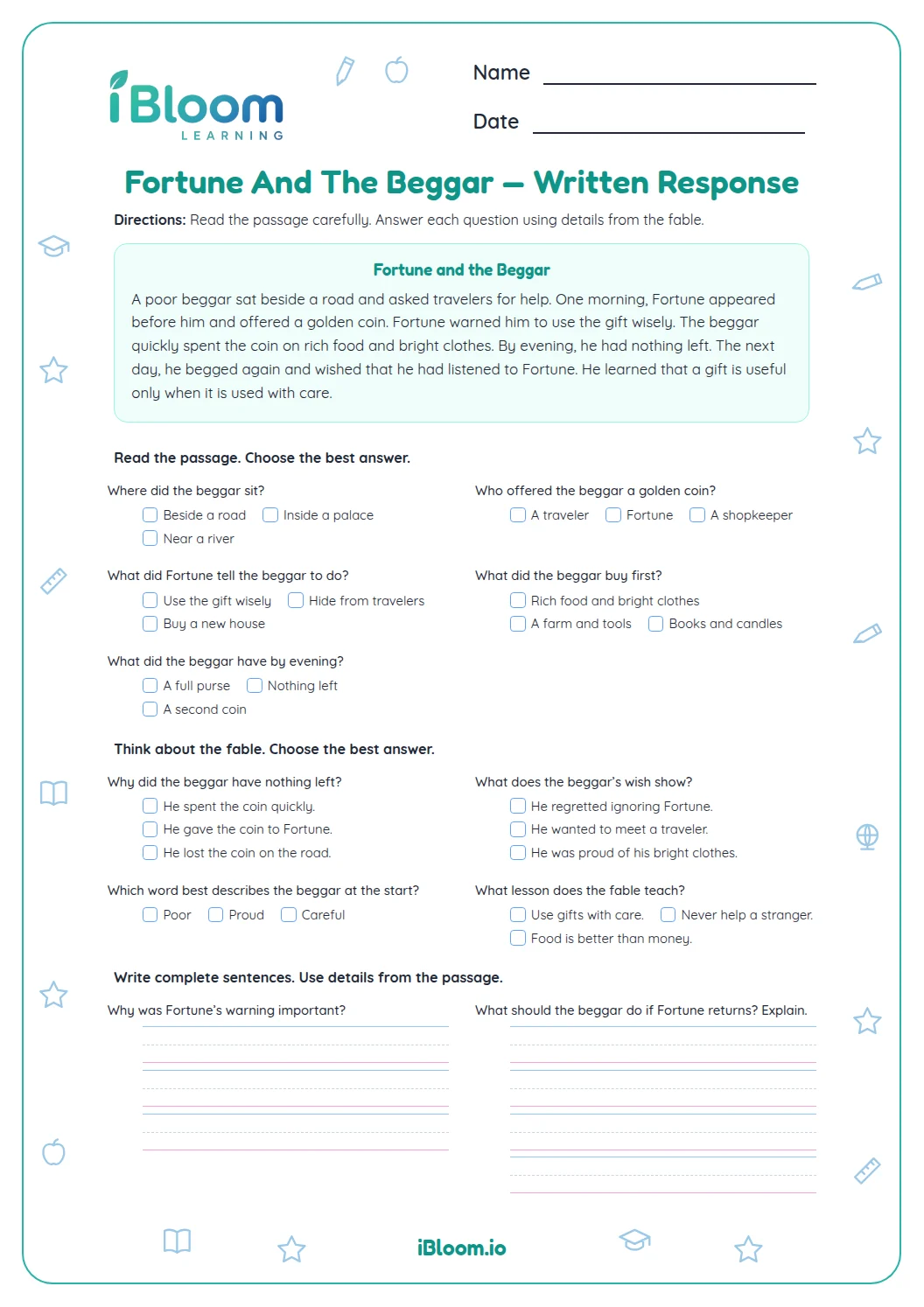
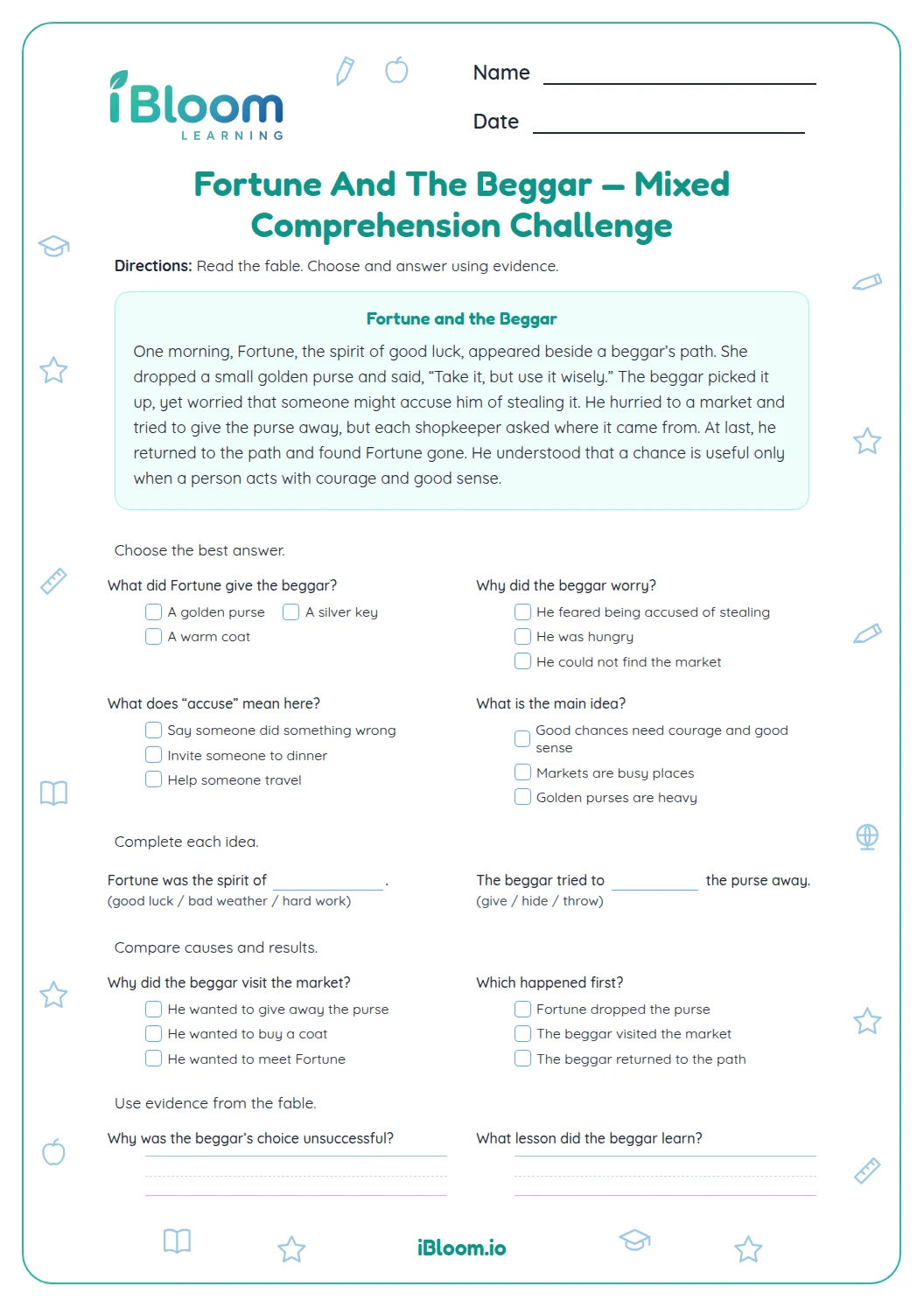
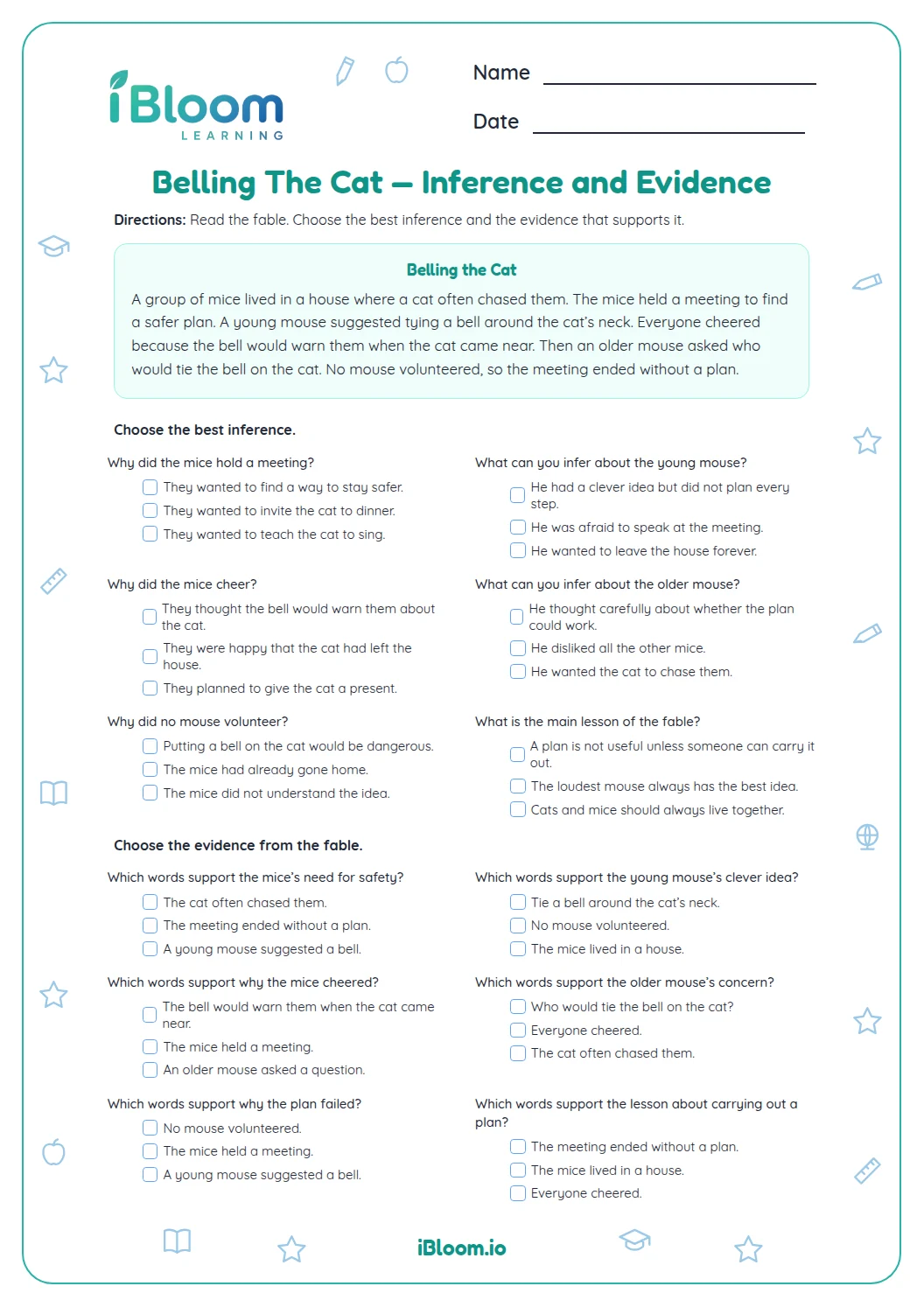
This free Grade 3 reading worksheet pairs the fable “Fortune and the Beggar” with 14 questions about inference and text evidence. Children infer what the beggar’s choices reveal, locate details about the child, and connect the outcome to the fable’s lesson. It aligns with CCSS RL.3.1 and RL.3.2. The passage and questions fit three worksheet pages, with an answer key.
Aligned to RL.3.1 and RL.3.2
What counts as evidence for an inference?
Evidence is a specific word, action, or event in the passage. An inference explains what that detail suggests. In the fable, the beggar gives his only coin to a hungry child, a clue that supports an idea about his patience.
How can a reader connect a clue to an idea?
Notice an action, then ask what it reveals. The beggar gives his coin to the child and expects nothing back. Those details suggest he is hopeful and willing to work toward a future benefit.
- 1Clue: The beggar gives away his only coin.
- 2Inference: He is generous and cares about helping others.
- 3His action from the fable supports the idea.
What does this fable help students practice?
The questions move from selecting a supported inference to locating exact evidence. Students return to one passage to distinguish what the text states from what the reader concludes.
- 6 multiple-choice inference questions
- 8 short-answer evidence questions
- All answers refer to the same fable
How to use this worksheet
- 1Read the passage once to follow the events.
- 2Read the question and find a sentence or action that gives a clue.
- 3For an inference, explain what the clue suggests.
- 4For a detail question, return to the text and answer briefly.
- 5Check that each answer matches a story event.
- 6Use the key to review any answer that needs another look.
Common mistakes and quick fixes
The mistake
Giving a guess without a text clue.
The fix
Point to a word, action, or event that supports the idea.
The mistake
Repeating a detail without explaining what it suggests.
The fix
Add a short statement that connects the detail to the inference.
The mistake
Mixing up what the text states and what the reader infers.
The fix
Name the clue first, then explain the conclusion it supports.
Common Core alignment
This worksheet gives children focused practice with the stated grade-level skill.
Answer from the story and point to details that support each answer.
On this sheet: Questions ask readers to use story details as evidence for their answers.
Show the official wordingHide the official wording
Ask and answer questions to demonstrate understanding of a text, referring explicitly to the text as the basis for the answers.
Explain the fable’s lesson and how its details show that lesson.
On this sheet: Readers determine a fable’s message and connect it to events and details.
Show the official wordingHide the official wording
Recount stories, including fables, folktales, and myths from diverse cultures; determine the central message, lesson, or moral and explain how it is conveyed through key details in the text.
What to practice next
Questions parents and teachers ask
What is the difference between a detail and an inference?
A detail is stated in the passage, such as the beggar giving his coin to a hungry child. An inference is an idea supported by details, such as the beggar caring about others. The questions ask children to locate actions and explain what those actions suggest.
Does the passage keep the old Fortune and the Beggar story?
Yes. Fortune gives the beggar a gold coin, and he passes it to a hungry child instead of keeping it. The child later returns with bread and fruit from the family. Questions ask students to connect those actions with the fable’s message about kindness.
How long is the passage?
The Grade 3 fable is told in three short paragraphs. It includes Fortune’s offer, the beggar’s decision to help a child, and the family’s later gift of food. These events give children clear actions and details to use as evidence for their inferences.
Can I help a child who finds inference questions difficult?
Ask the child to point to an action in the passage first, then ask what it suggests. For example, the beggar gives away his only coin even though he could buy food for himself. That detail supports the inference that he is generous and cares about helping others.
What does the answer key include?
The answer key lists the correct choices and short passage details for each question. A child can use a different phrase if it points to the same event or idea in the fable and clearly answers the question. The key also allows another brief response that uses the same evidence.