
About this worksheet
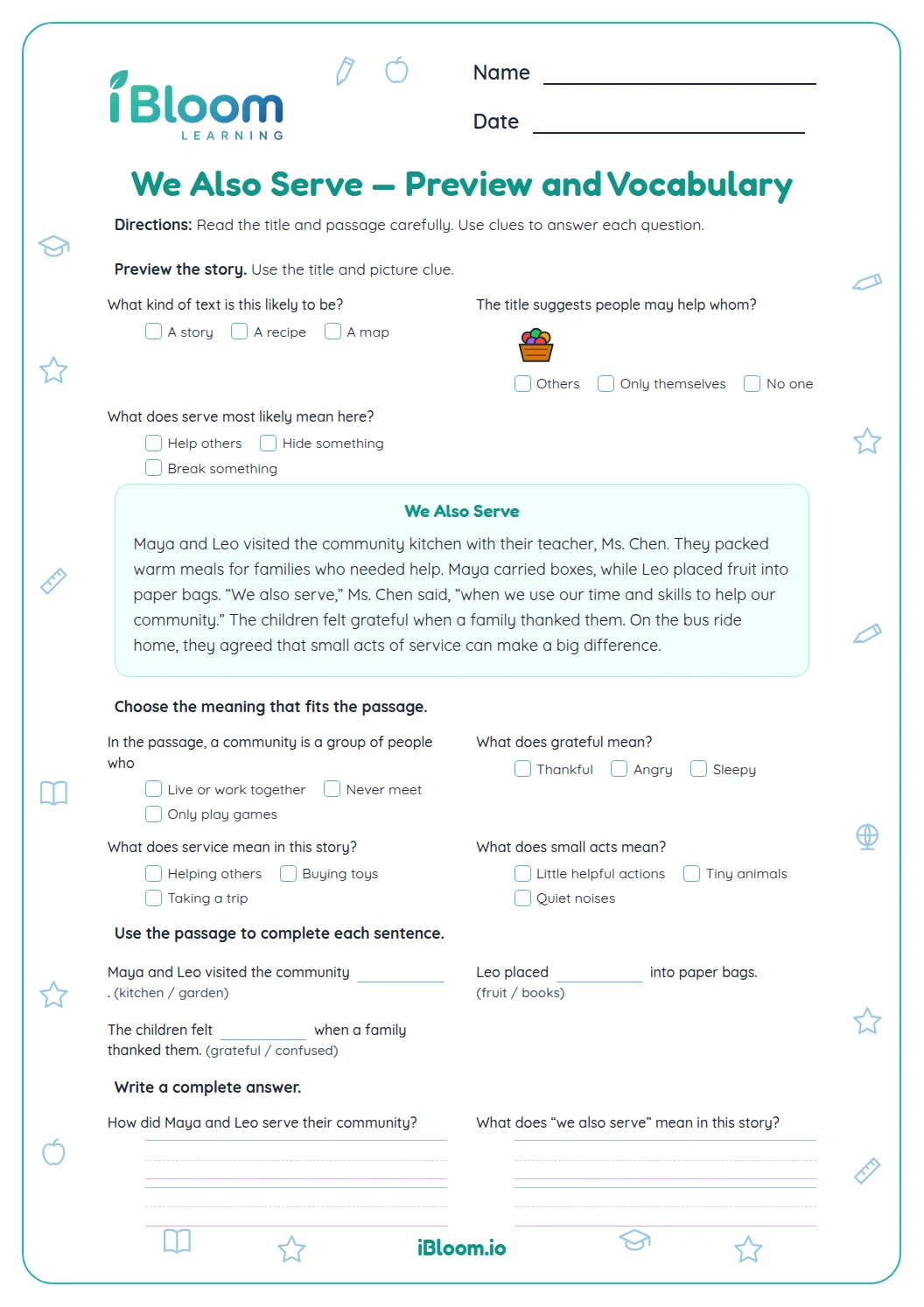
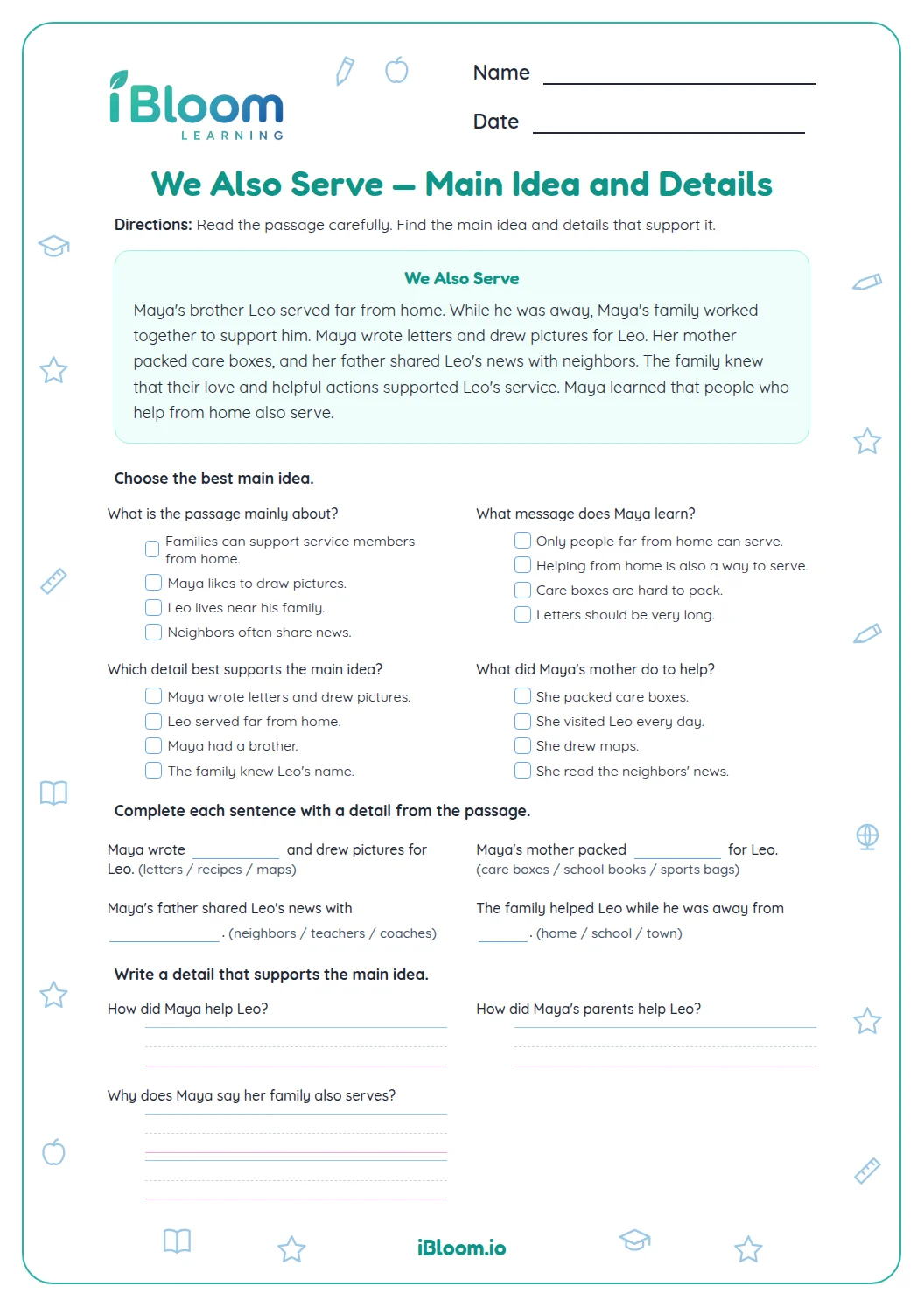
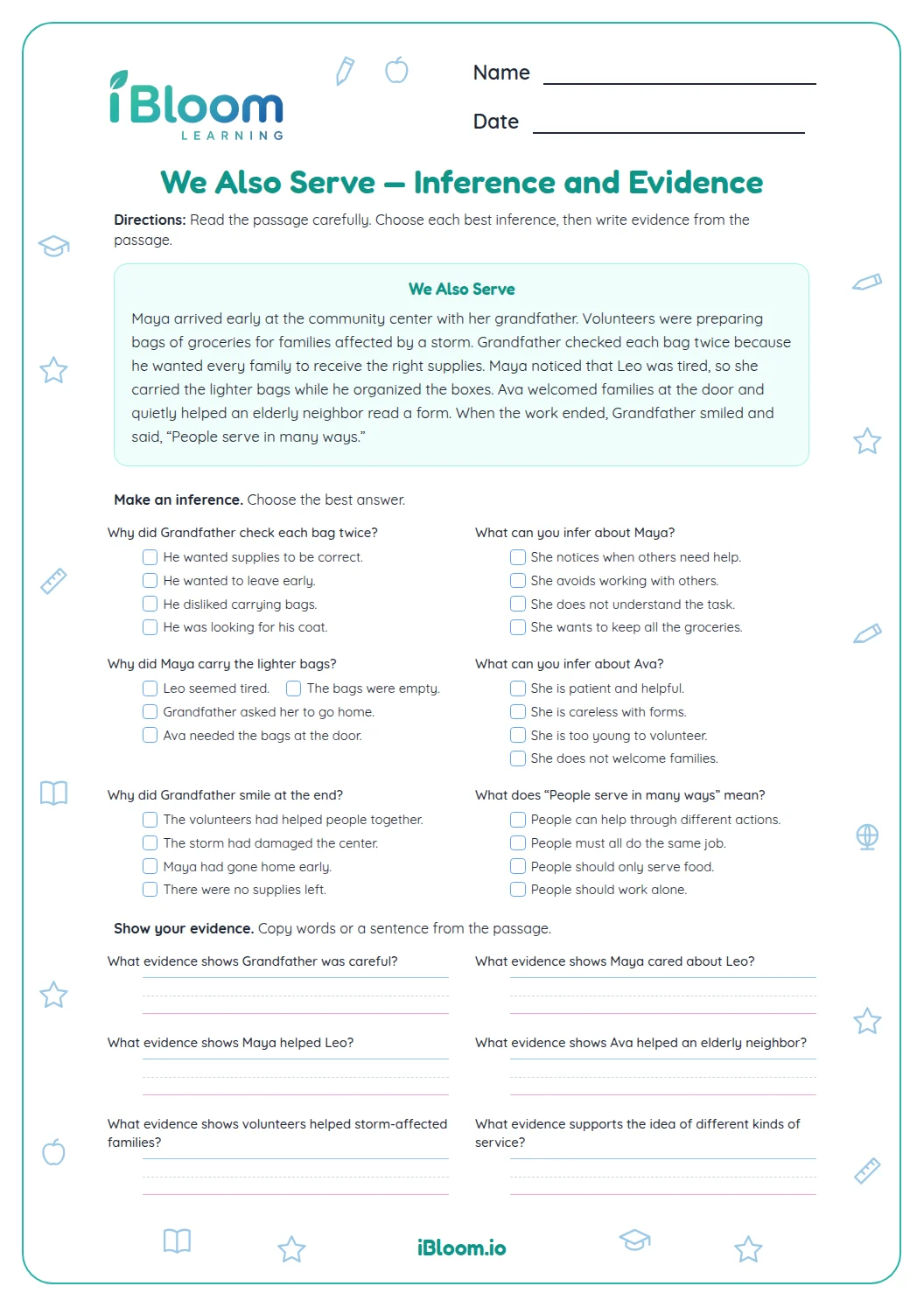
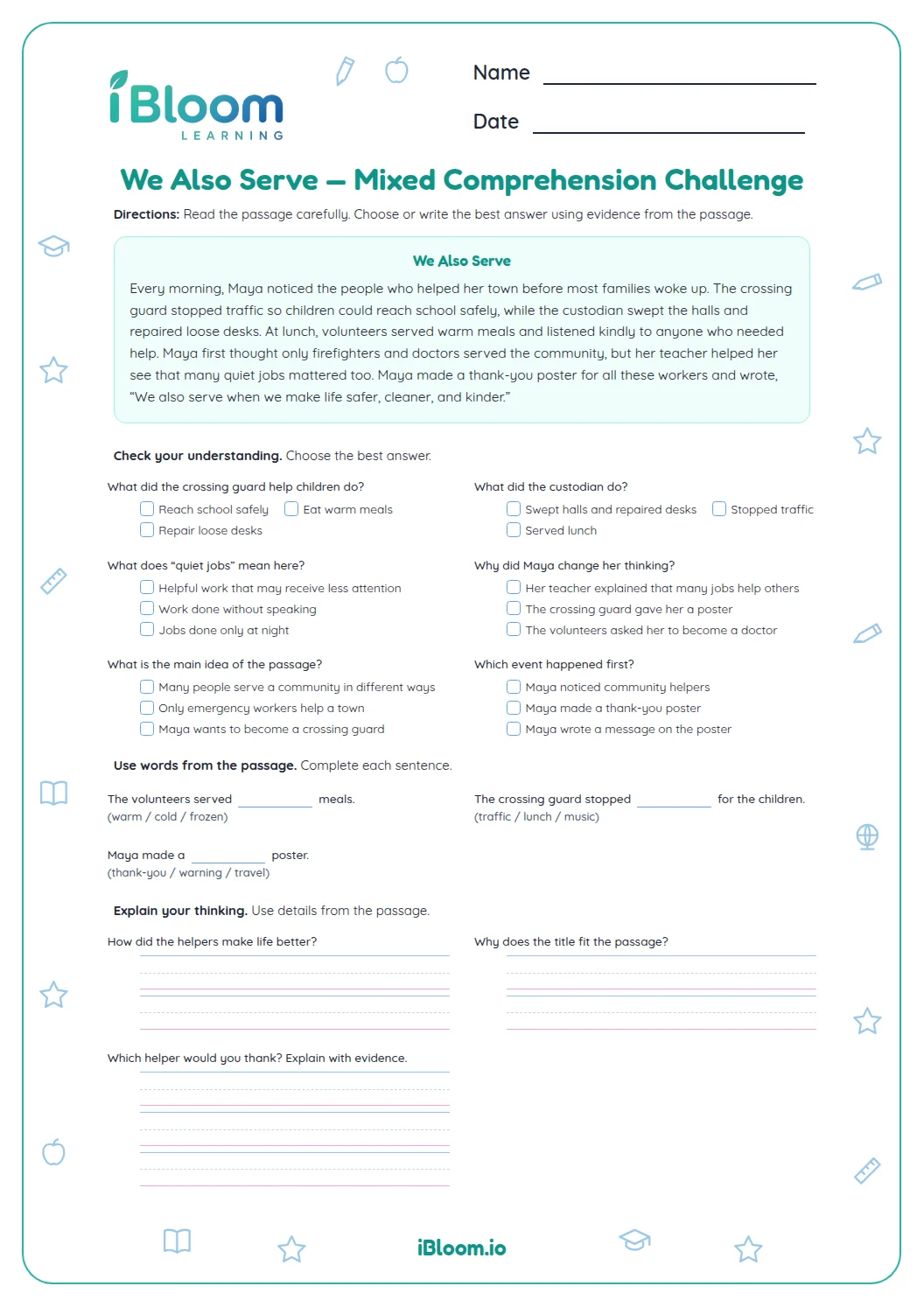
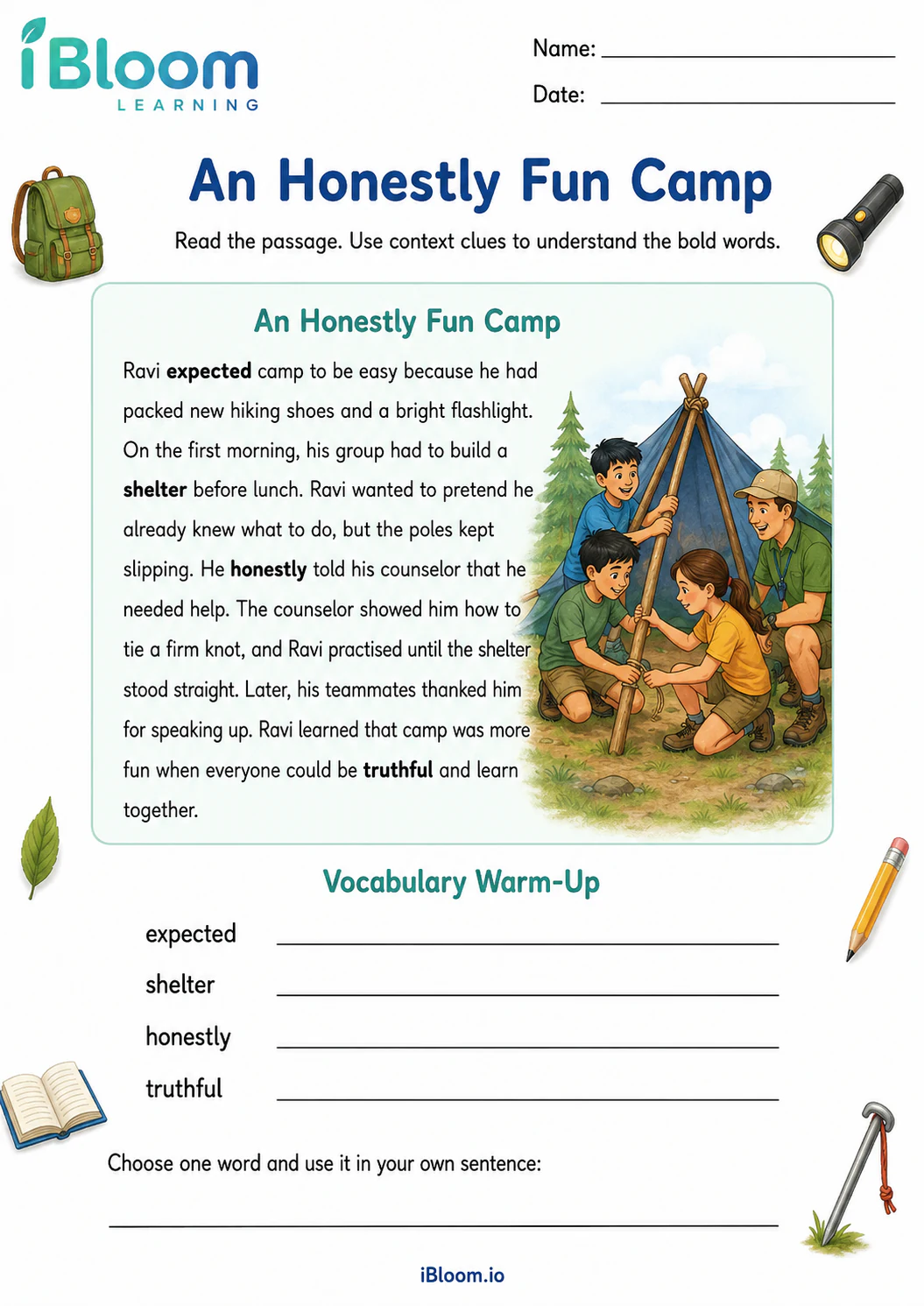
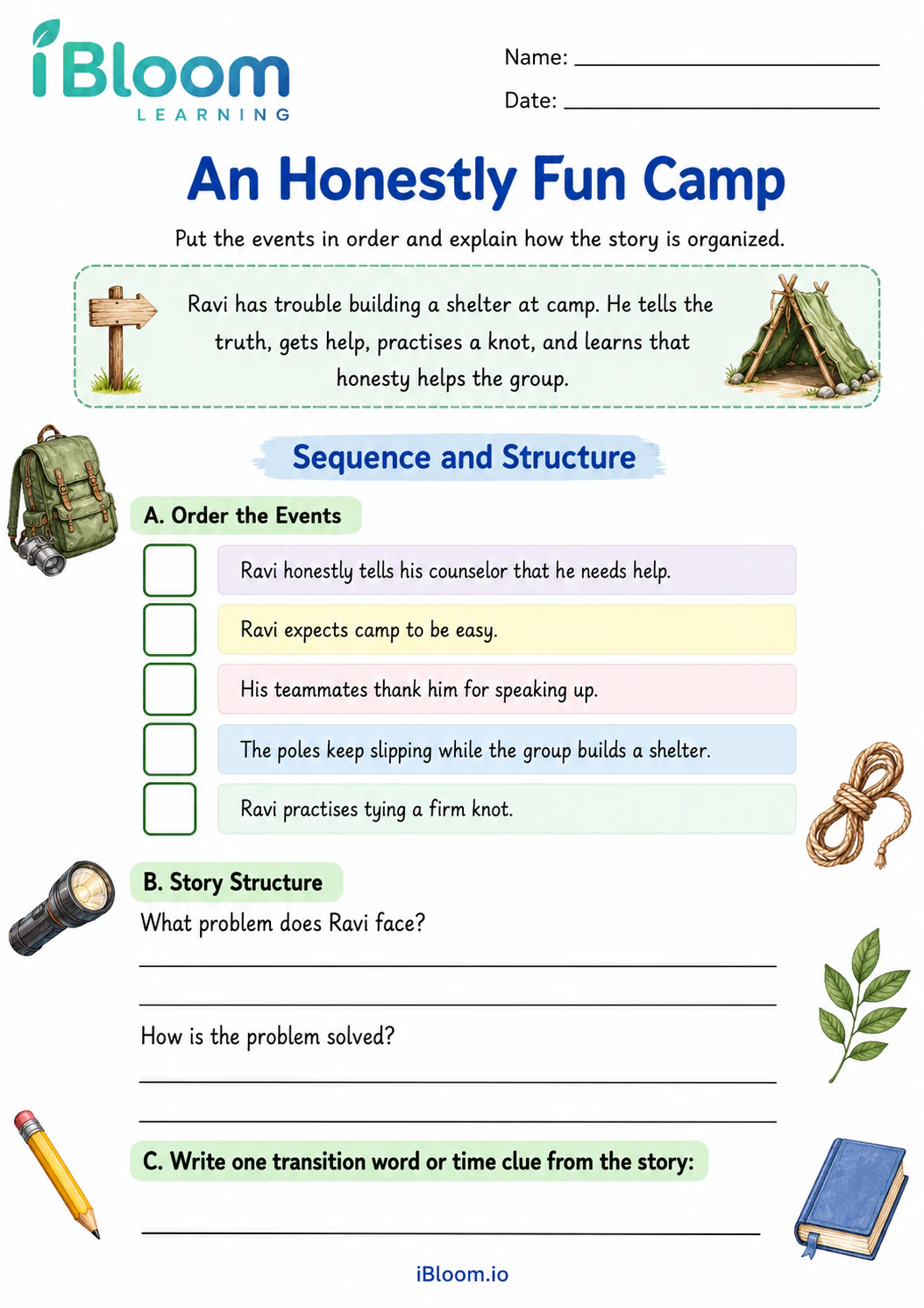
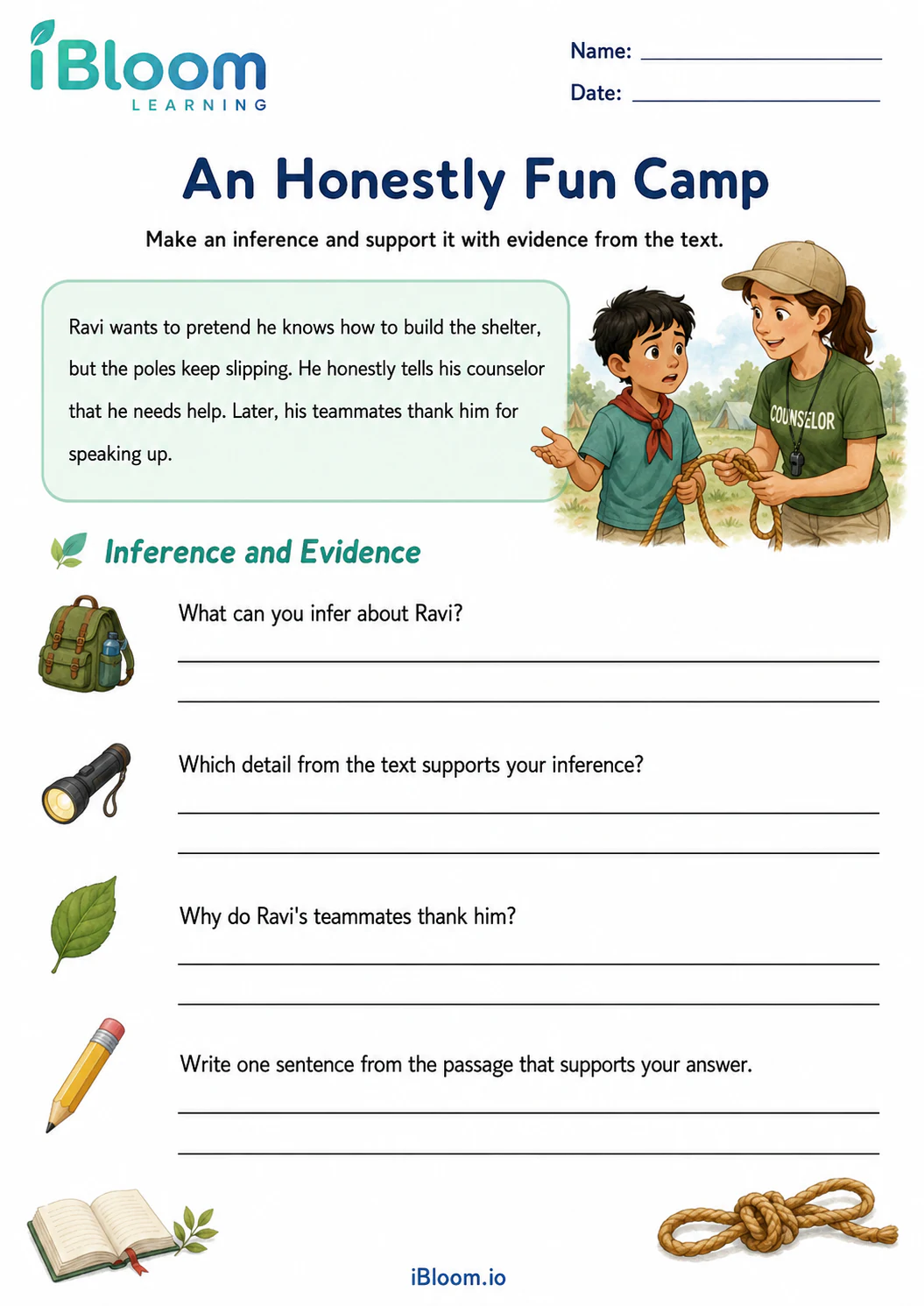
This free printable Grade 4 reading worksheet uses an original story about Maya helping her brother and family during wartime. Students follow events from the brother’s departure through Maya’s garden work, weekly notes and a letter that changes how she sees those efforts. Five rank-the-event questions build a clear timeline; five multiple-choice questions examine order and overall structure; four written responses ask students to connect details to the sequence. The work practices CCSS RL.4.3 by describing an event in depth with specific details from a story. A separate answer key includes sample responses for open-ended questions.
Aligned to RL.4.3
What does the worksheet ask students to do?
The passage follows Maya’s family as they find practical ways to support her brother. Students first put five events in order, then answer questions about what happens before and after the letter and how the story is arranged.
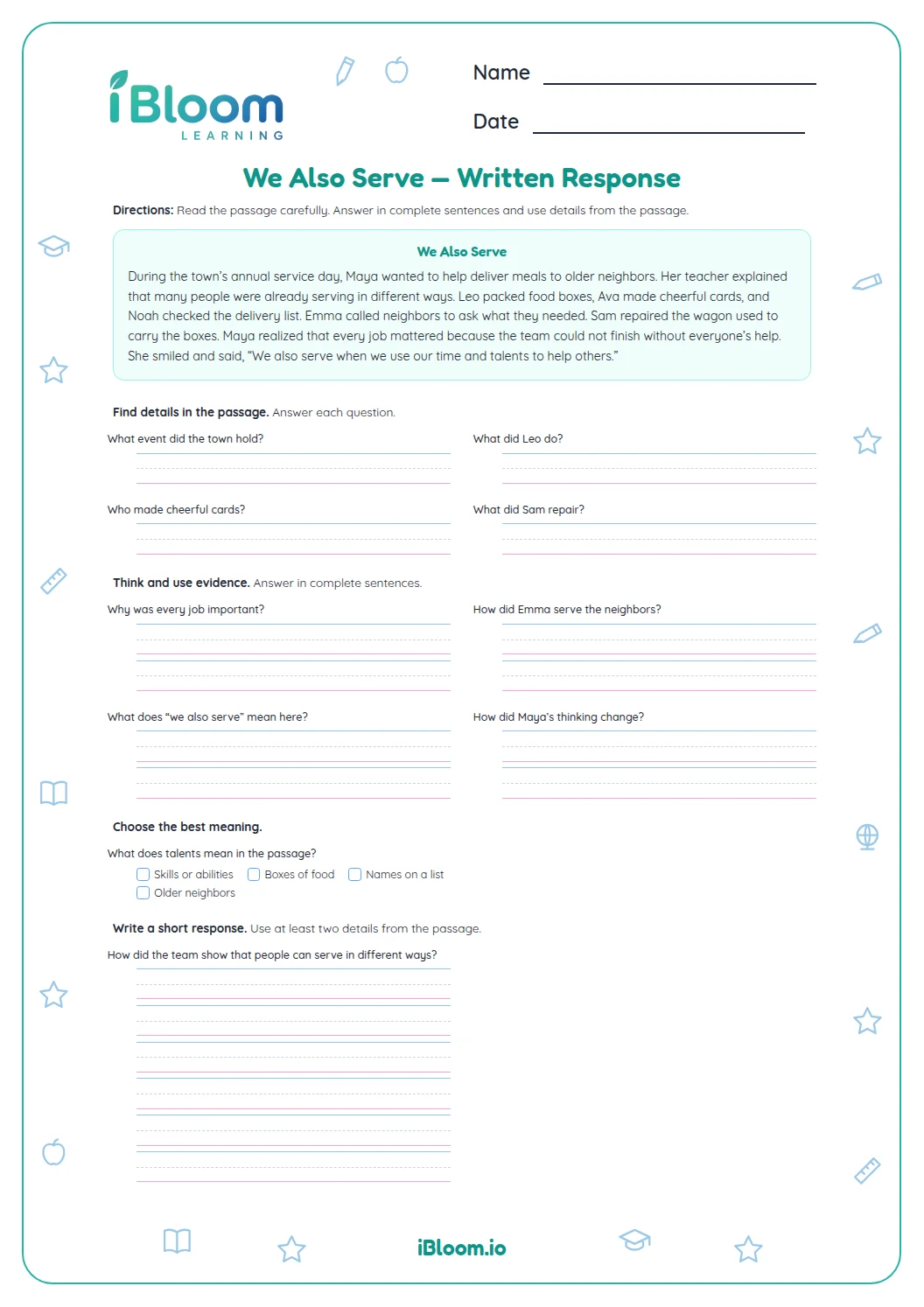
The final four questions ask students to use details to explain how one event leads to another and why the ending feels complete. The answer key gives sample responses; other clear answers supported by the passage can also work.
- Part A: Read “We Also Serve.”
- Part B: Rank five events from first to last.
- Part C: Choose answers about event order and structure.
- Part D: Explain with details from the story.
How can a reader keep the events in order?
Notice time clues such as “first,” “each week,” “then” and “at the end.” Also watch for changes in what a character knows: Maya wonders if the chores matter before the letter arrives, then understands their effect afterward.
- 1The brother leaves before the family plants vegetables, so “Her brother leaves to serve” is rank 1.
- 2The letter arrives after weeks of sorting books and writing notes, so those weekly acts come before Maya reads the letter aloud.
What does the passage’s structure help readers understand?
The passage is told mostly in time order. Its beginning introduces the problem and the family’s first actions. The middle shows their steady help and the letter’s arrival. The ending looks back on the work and shows Maya’s new understanding.
A useful check is to ask what changes from one part to the next. Here, Maya moves from wondering whether her family’s actions matter to recognizing that they reached her brother.
How do details support an explanation?
A strong response names an event and explains its place or effect. “The letter comes after the family starts helping” gives sequence; adding that the brother says the books helped him explains why the letter matters to Maya.
For written questions, students can answer in their own words as long as the detail matches the passage and supports the idea.
How can I use the worksheet?
- 1Read the passage once to understand Maya’s problem and the family’s choices.
- 2Reread and mark time words or events that signal a change.
- 3For Part B, number events by checking what must happen before each one.
- 4For Part C, return to the passage to confirm the event order and structure.
- 5For Part D, name a specific detail and explain what it shows.
- 6Compare responses with the answer key, accepting accurate wording in students’ own words.
Common sequence and structure mistakes
The mistake
Putting the vegetable planting before the brother leaves because it appears earlier in the first paragraph.
The fix
Follow the opening sentence: his departure is what leads the family to decide how they can help.
The mistake
Treating the letter as the first act of help.
The fix
Check what Maya and her family did before it arrived: planting, gathering supplies, sorting books and writing notes.
The mistake
Retelling the ending without explaining why it belongs there.
The fix
Connect the last detail to the sequence: the letter helps Maya understand the effect of the family’s earlier actions.
Common Core alignment
This story-based practice asks students to describe events with details from the text.
Explain how story details describe events and show their effects.
On this sheet: Students trace the family’s actions and use the letter and Maya’s response to explain how events affect her understanding.
Show the official wordingHide the official wording
Describe in depth a character, setting, or event in a story or drama, drawing on specific details in the text (e.g., a character’s thoughts, words, or actions).
What to practice next
Make more practice
Further reading
Questions parents and teachers ask
How many questions are on this worksheet?
There are 14 questions in three practice parts after the passage: five event-ranking items, five multiple-choice items, and four written responses. The separate key lists every answer and sample wording for open responses, making review straightforward for families and teachers.
What is the story about?
Maya’s family looks for ways to help her older brother after he leaves to serve as a soldier. They plant vegetables, gather supplies, and send books and notes; a letter from her brother helps Maya see that these acts matter.
What does “sequence” mean here?
Sequence means the order in which events happen. Students rank five events, then use the passage to check what came first, what followed, and how the later letter connects to the family’s earlier actions. Time clues and changes in Maya’s understanding help confirm the order.
How is the passage structured?
It is mostly chronological. The beginning introduces the brother’s departure and the family’s response, the middle follows their continuing help and the letter, and the ending shows Maya reflecting on what their actions meant. This structure lets readers see how one event leads to the next.
Can students use their own wording for the written responses?
Yes. The key gives sample answers, but students can phrase ideas differently when their response is accurate and supported by a detail from the passage. Encourage them to name the event and explain its place or effect. A clear explanation matters more than matching the sample word for word.
How long should this worksheet take?
Plan for about 20 minutes, including reading and written responses. Students who need more time can read the passage twice and mark the time clues before answering. The answer key makes it easy to review the event order together afterward.