Free printable practice
Food Groups Practice Activities
First graders sort everyday foods into five groups, build balanced plates, and learn why variety fuels growing bodies.
Free printable worksheet PDFs
Preview every available page, then download the free worksheet PDF for home, homeschool, tutoring, or classroom practice.
Preview the exact activity before downloading it.
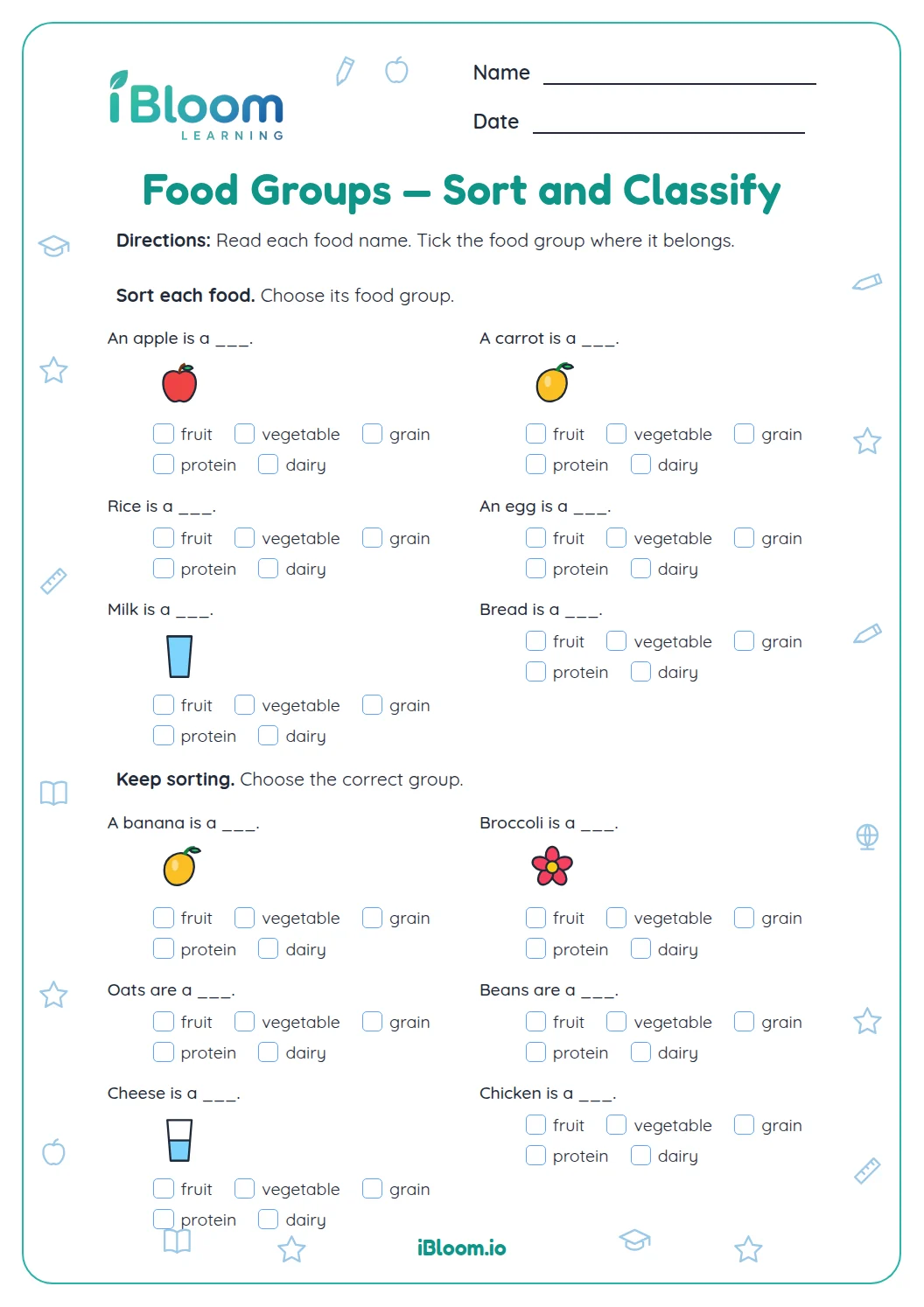 Food Groups — Sort and ClassifyFirst graders sort everyday foods into five groups, build balanced plates, and learn why variety fuels growing bodies. This sort and classify worksheet provides a distinct, age-appropriate way to practise the same lesson.Grade 1Free PDF preview
 Food Groups — Label and ModelFirst graders sort everyday foods into five groups, build balanced plates, and learn why variety fuels growing bodies. This label and model worksheet provides a distinct, age-appropriate way to practise the same lesson.Grade 1Free PDF preview
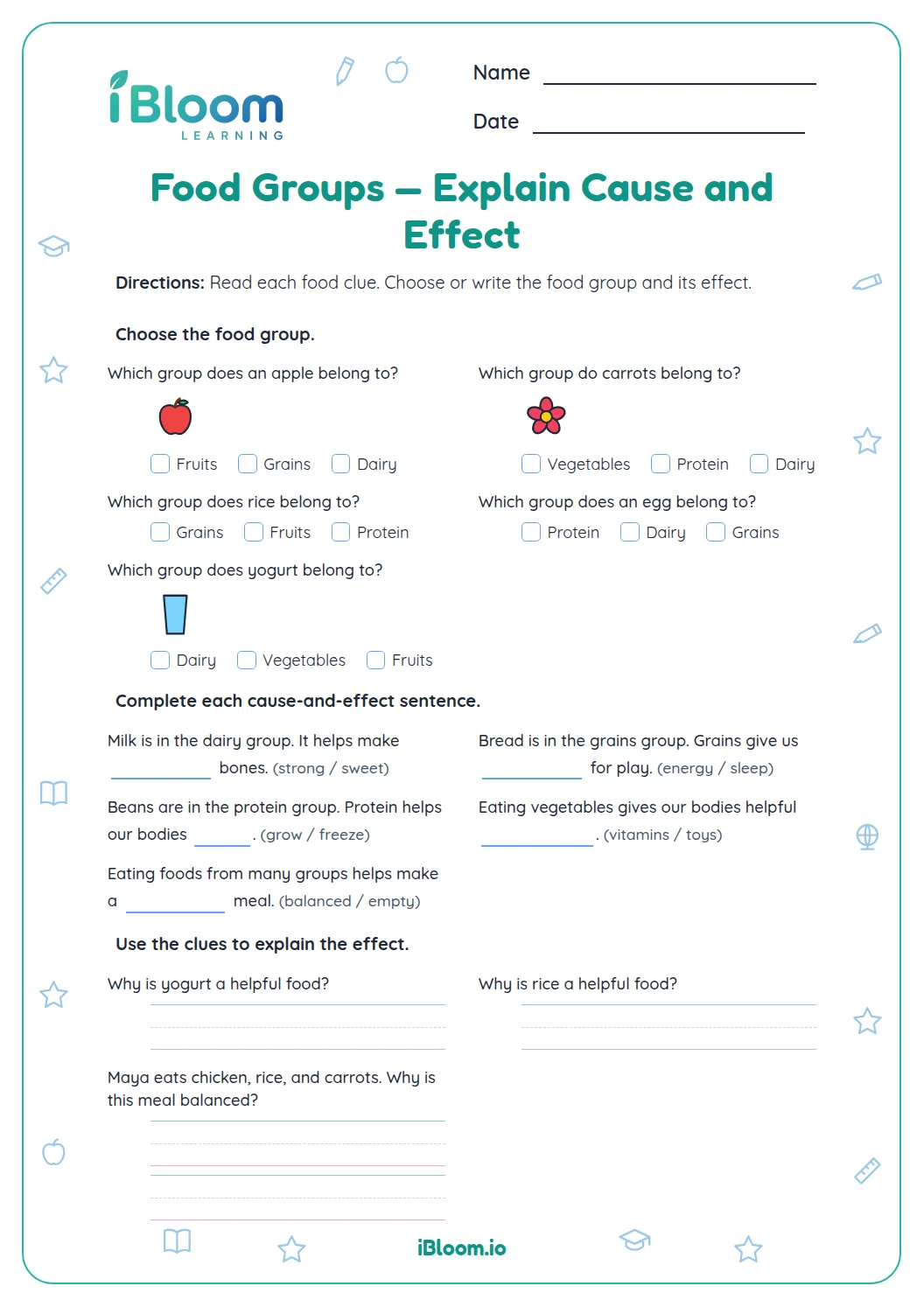 Food Groups — Explain Cause and EffectFirst graders sort everyday foods into five groups, build balanced plates, and learn why variety fuels growing bodies. This explain cause and effect worksheet provides a distinct, age-appropriate way to practise the same lesson.Grade 1Free PDF preview
 Food Groups — Apply Science IdeasFirst graders sort everyday foods into five groups, build balanced plates, and learn why variety fuels growing bodies. This apply science ideas worksheet provides a distinct, age-appropriate way to practise the same lesson.Grade 1Free PDF preview
 Food Groups — Science Reasoning ReviewFirst graders sort everyday foods into five groups, build balanced plates, and learn why variety fuels growing bodies. This science reasoning review worksheet provides a distinct, age-appropriate way to practise the same lesson.Grade 1Free PDF preview
Practice that builds confidence
Recognizing the Five Groups
Children practice identifying which food group common items belong to — fruits, vegetables, grains, protein, and dairy — using colorful picture cards and simple sorting mats. The printable activities include cut-and-paste sorting sheets, draw-your-own-plate templates, and matching games that reinforce group names and examples.
Each worksheet set progresses from recognition to application: kids first name foods in isolation, then combine them into balanced meals, and finally explain why a body needs foods from every group. Visual cues like the MyPlate icon keep the science concrete for six- and seven-year-olds.
First graders learn the five food groups by name and by sight. Worksheets show photographs of apples, carrots, bread, chicken, milk, and yogurt alongside illustrated icons. Children circle, color, or glue each item into the correct column, building vocabulary like protein and dairy without abstract definitions.
Building a Balanced Plate
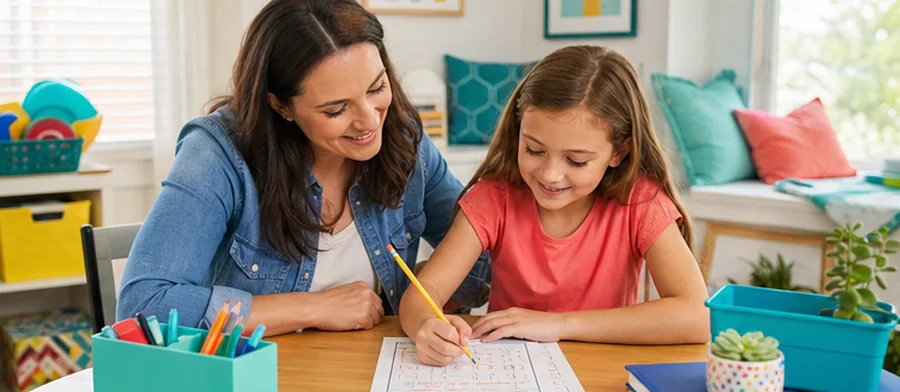
Once groups are familiar, activities shift to meal planning. A blank plate divided into four sections plus a dairy circle lets kids design breakfast, lunch, or dinner. They draw or paste at least one food from each group, then tell a partner why their plate is balanced. This moves learning from sorting to synthesis.
Parent Routine: Grocery Store Sort
Turn a shopping trip into practice. Hand your child a mini clipboard with the five group headings. As you place items in the cart, they tally marks under fruit, vegetable, grain, protein, or dairy. Back home, they transfer totals to a bar-graph worksheet, reinforcing both nutrition and early data skills.
Classroom Centers and Small Groups
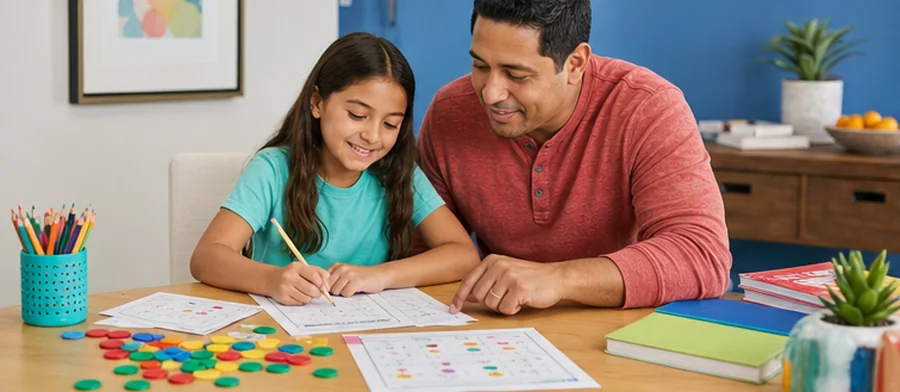
Teachers can laminate sorting mats and food cards for a reusable science center. In guided groups, use the draw-your-plate sheet as a formative check: ask each student to name their choices and explain one way each food helps their body. The visual plate also supports English learners by reducing language load.
Common Errors to Watch For
Children often place beans only in vegetables, missing their protein role, or put butter in dairy instead of fats. Gently redirect by noting that some foods fit two groups — beans give protein and fiber — while oils and butter belong to a separate fats category not shown on the basic plate.
Child-Friendly Strategy: "Color Your Plate"
Teach the rhyme: "Red, green, brown, and white — eat them all to feel just right." Red for fruit, green for veggies, brown for grains and protein, white for dairy. Kids crayon a quick dot on their plate drawing for each color present, instantly seeing gaps.
Free printable PDF download
Use this grade 1 food groups worksheet page to preview the activity, print it, or download it as a PDF for quick practice. It works well for homework, homeschool lessons, tutoring, morning work, revision, and classroom centers.
Answers and answer key support
After the child completes the worksheet independently, parents and teachers can use the answer support or answer key information to check the work, review mistakes, and choose the next practice step.
Why iBloom Worksheets Help
Our food-group collection uses real-food photography, not cartoons, so children transfer learning to actual meals. The progression from sort → build → explain mirrors how young scientists construct concepts, and every page includes a low-prep extension for home or center use.
Helpful answers
Frequently asked questions
Do these worksheets follow the USDA MyPlate model?
Yes. The plate template mirrors the current MyPlate graphic with sections for fruits, vegetables, grains, protein, and a dairy circle, so classroom language stays consistent with school nutrition programs.
Are the food images photographs or illustrations?
We use high-resolution photographs of real foods — apple slices, broccoli florets, whole-grain bread, grilled chicken, milk — so children recognize items on their actual lunch trays.
Can I use these with a mixed-age homeschool group?
Absolutely. The sorting mats work for kindergarteners learning group names, while the draw-and-explain plate sheet challenges second graders to justify choices in writing.
Is there a version that includes the oils/fats group?
The core set focuses on the five MyPlate groups. A one-page extension sheet introduces oils and fats as a 'small amounts' category for teachers who want to add it.
How much prep is required for the grocery-store tally activity?
Zero. Print the tally sheet, clip it to a board, and hand your child a pencil. The sheet fits on a half-letter clipboard and uses checkboxes instead of writing numbers.
Is this grade 1 food groups worksheet free?
Yes. You can preview it for free and use the printable worksheet for home or classroom practice.
Can I download this grade 1 food groups worksheet as a PDF?
Yes. Use the worksheet download option to save a printable PDF, or print the worksheet directly from the page.
Does this grade 1 food groups worksheet include answers or an answer key?
When the activity has fixed answers, iBloom includes answer support so parents and teachers can check the completed worksheet.