Free printable practice
Five Senses Practice Activities
Grade 1 science worksheets that help children identify sight, hearing, smell, taste, and touch through everyday body and observation activities.
Free printable worksheet PDFs
Preview every available page, then download the free worksheet PDF for home, homeschool, tutoring, or classroom practice.
Preview the exact activity before downloading it.
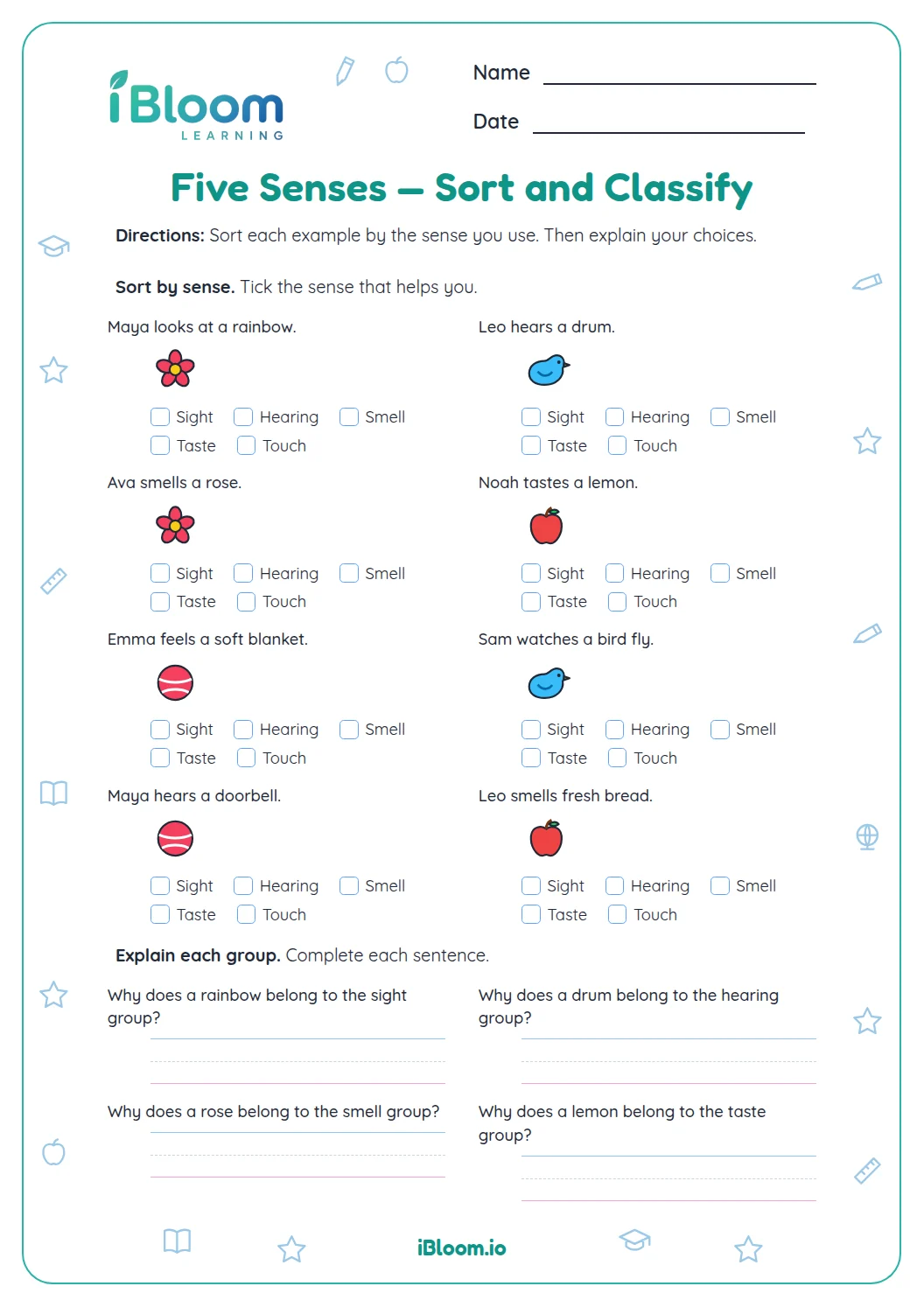 Five Senses — Sort and ClassifyGrade 1 science worksheets that help children identify sight, hearing, smell, taste, and touch through everyday body and observation activities. This sort and classify worksheet provides a distinct, age-appropriate way to practise the same lesson.Grade 1Free PDF preview
 Five Senses — Label and ModelGrade 1 science worksheets that help children identify sight, hearing, smell, taste, and touch through everyday body and observation activities. This label and model worksheet provides a distinct, age-appropriate way to practise the same lesson.Grade 1Free PDF preview
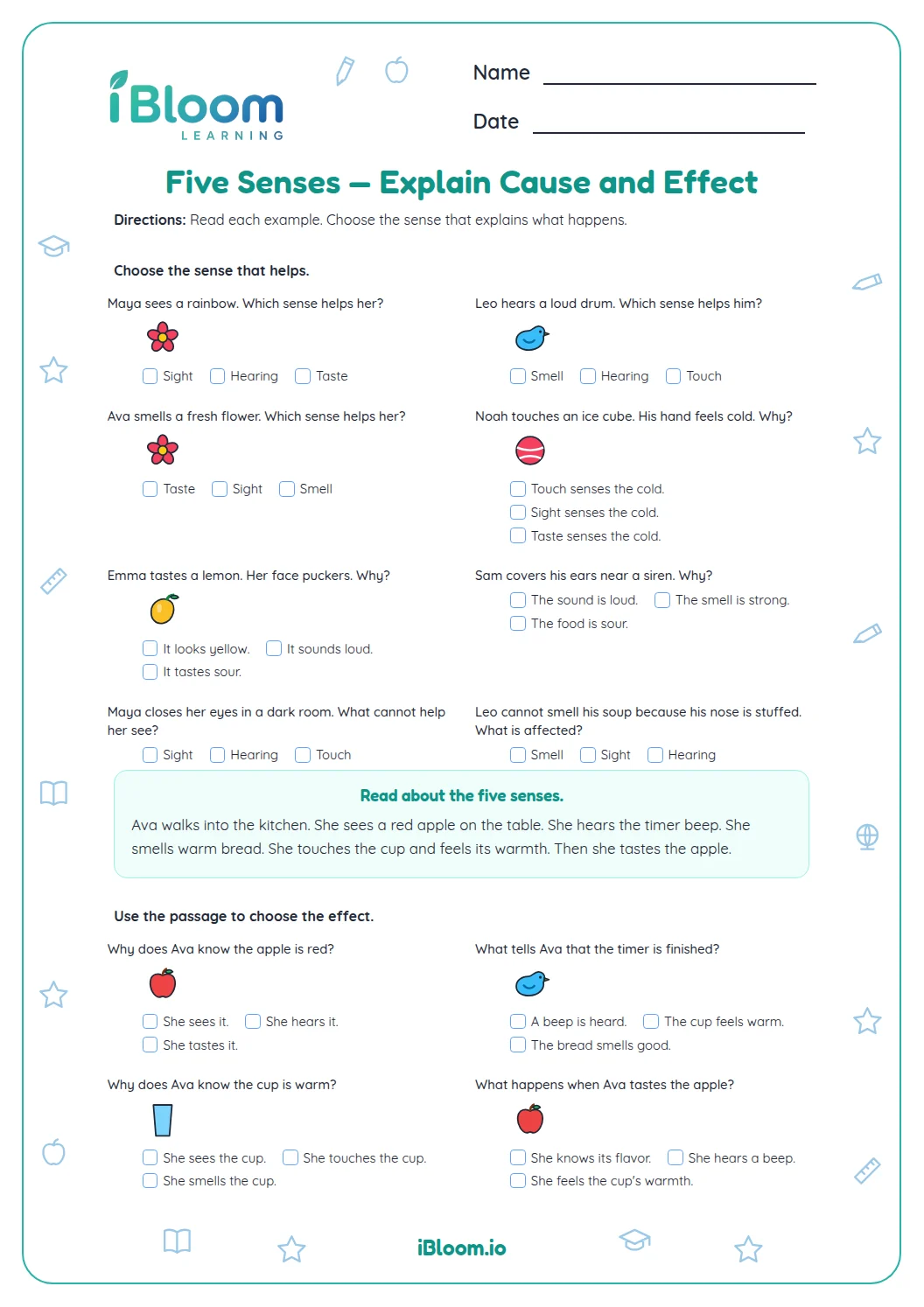 Five Senses — Explain Cause and EffectGrade 1 science worksheets that help children identify sight, hearing, smell, taste, and touch through everyday body and observation activities. This explain cause and effect worksheet provides a distinct, age-appropriate way to practise the same lesson.Grade 1Free PDF preview6 pages
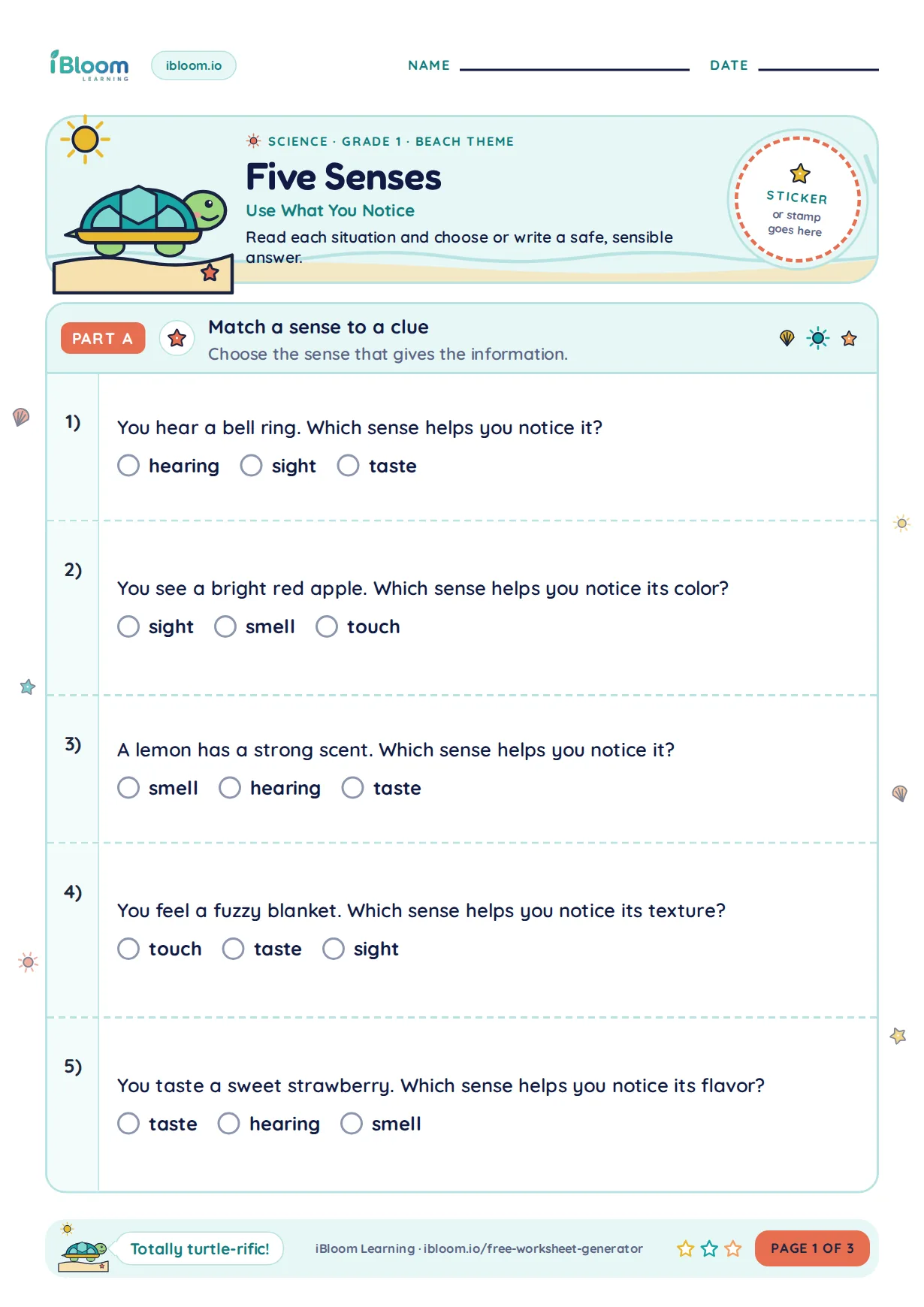 Five Senses — Apply Science IdeasGrade 1 science worksheets that help children identify sight, hearing, smell, taste, and touch through everyday body and observation activities. This apply science ideas worksheet provides a distinct, age-appropriate way to practise the same lesson.Grade 1Free PDF preview4 pages
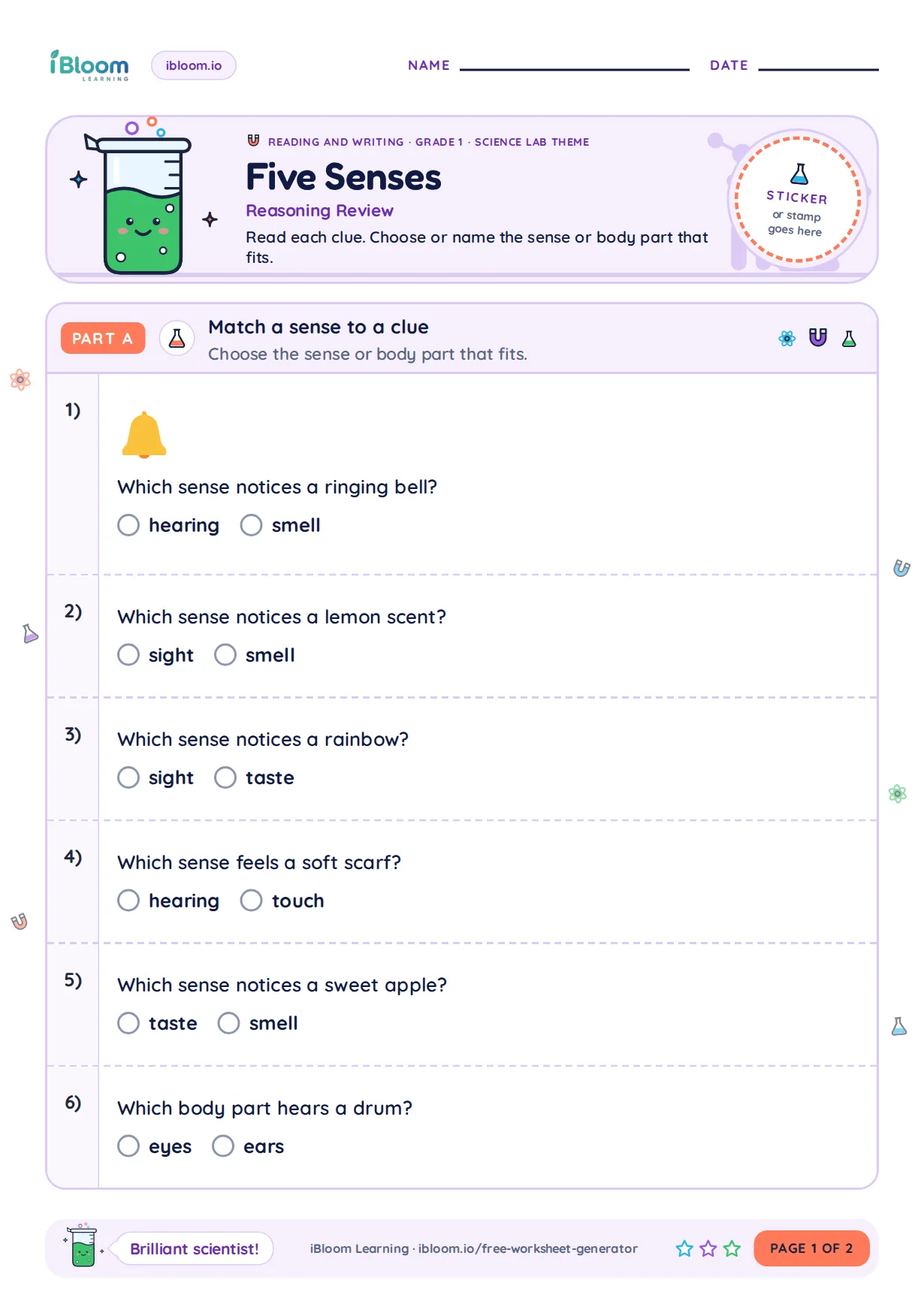 Five Senses — Science Reasoning ReviewGrade 1 science worksheets that help children identify sight, hearing, smell, taste, and touch through everyday body and observation activities. This science reasoning review worksheet provides a distinct, age-appropriate way to practise the same lesson.Grade 1Free PDF preview
Practice that builds confidence
Understanding the five senses
These Grade 1 science worksheets help children explore the five senses as part of learning about the human body. Students practise naming sight, hearing, smell, taste, and touch, then connect each sense to the body part that helps them notice the world.
The printable activities include clear picture-based tasks, matching, sorting, labeling, and simple observation prompts. Children work with familiar examples such as sounds, textures, flavors, colors, and smells so the science feels concrete and easy to discuss.
Children learn that the body gathers information through five main senses: sight with the eyes, hearing with the ears, smell with the nose, taste with the tongue, and touch with the skin or hands. The worksheets keep the focus on real experiences, such as seeing a bright color, hearing a bell, smelling flowers, tasting something sweet, or feeling something rough.

How the practice progresses
Activities begin with naming and recognizing each sense. Students then match senses to body parts, choose which sense is used in a situation, and sort examples into the correct category. Picture clues support early readers while still encouraging science vocabulary such as observe, sound, texture, scent, flavor, smooth, loud, sour, and soft.
A simple parent routine
At home, use one worksheet with a quick “sense hunt.” Ask your child to find one thing they can see, one thing they can hear, one thing they can touch, and, when safe and appropriate, one thing they can smell or taste. After the activity, have them explain their choices in a full sentence: “I use my ears to hear the music.” This builds both science understanding and oral language.

Classroom uses for teachers
Teachers can use these printables during a Grade 1 human body unit, in science centers, as follow-up after a read-aloud, or before a hands-on observation station. They also work well for small-group vocabulary review because students can point to images, name the sense, and justify their answer. For assessment, a completed sorting or matching page shows whether a child understands both the sense and the related body part.

Common mix-ups to watch for
Some children confuse the sense with the body part, saying “nose” instead of “smell.” Others overuse sight because many worksheet pictures are visual. Encourage them to think about the actual information being gathered: Is it a sound, a taste, a texture, a scent, or something seen? Remind students that touch can happen with skin on many body parts, not only the fingers.
Free printable PDF download
Use this grade 1 five senses worksheet page to preview the activity, print it, or download it as a PDF for quick practice. It works well for homework, homeschool lessons, tutoring, morning work, revision, and classroom centers.
Answers and answer key support
After the child completes the worksheet independently, parents and teachers can use the answer support or answer key information to check the work, review mistakes, and choose the next practice step.
Why iBloom worksheets help
The activities are designed for young learners who need concrete examples, uncluttered visuals, and repeated language. A child-friendly strategy is: “Name the clue, name the body part, name the sense.” For example, “The drum makes a sound. I use my ears. The sense is hearing.” This simple pattern helps children explain their thinking instead of guessing from the picture alone.
Helpful answers
Frequently asked questions
What do Grade 1 students learn in five senses worksheets?
They learn to name the five senses, connect each sense to a body part, and identify which sense is used in everyday situations such as hearing a sound or feeling a texture.
Are these worksheets mostly picture-based?
Yes. The activities use familiar pictures, matching, sorting, and labeling so early readers can focus on the science idea while still practising key vocabulary.
How can I make five senses practice hands-on at home?
Pair a worksheet with a simple sense hunt. Ask your child to find examples they can see, hear, smell, taste when safe, and touch, then describe each one in a sentence.
What common mistakes should I watch for?
Children may name the body part instead of the sense, such as saying “ears” instead of “hearing.” Prompt them to say both: “I use my ears for hearing.”
Can teachers use these in science centers?
Yes. The printables work well in centers, small groups, unit review, or as a follow-up to hands-on observation activities about the human body.
Is this grade 1 five senses worksheet free?
Yes. You can preview it for free and use the printable worksheet for home or classroom practice.
Can I download this grade 1 five senses worksheet as a PDF?
Yes. Use the worksheet download option to save a printable PDF, or print the worksheet directly from the page.
Does this grade 1 five senses worksheet include answers or an answer key?
When the activity has fixed answers, iBloom includes answer support so parents and teachers can check the completed worksheet.