






About this worksheet
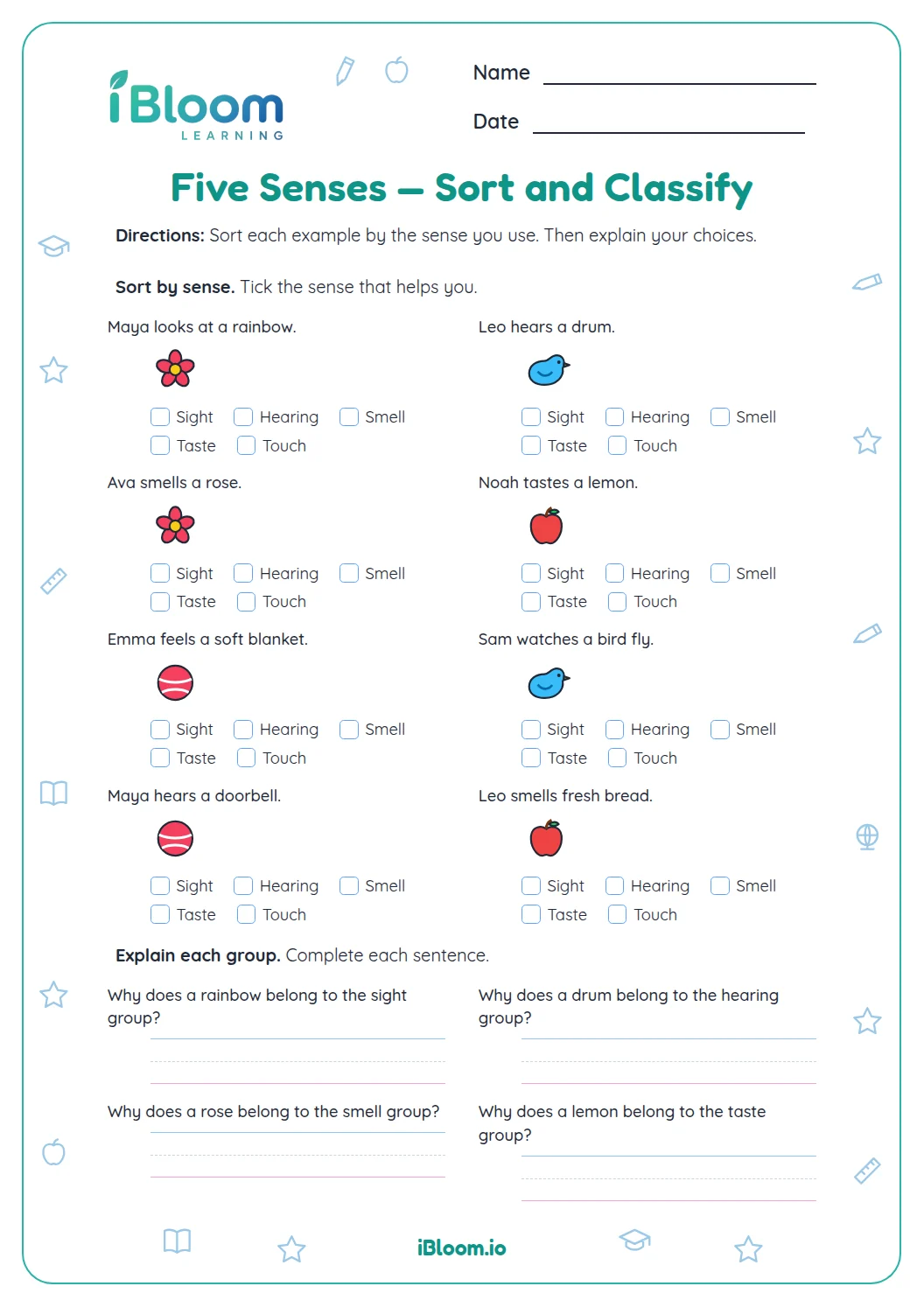
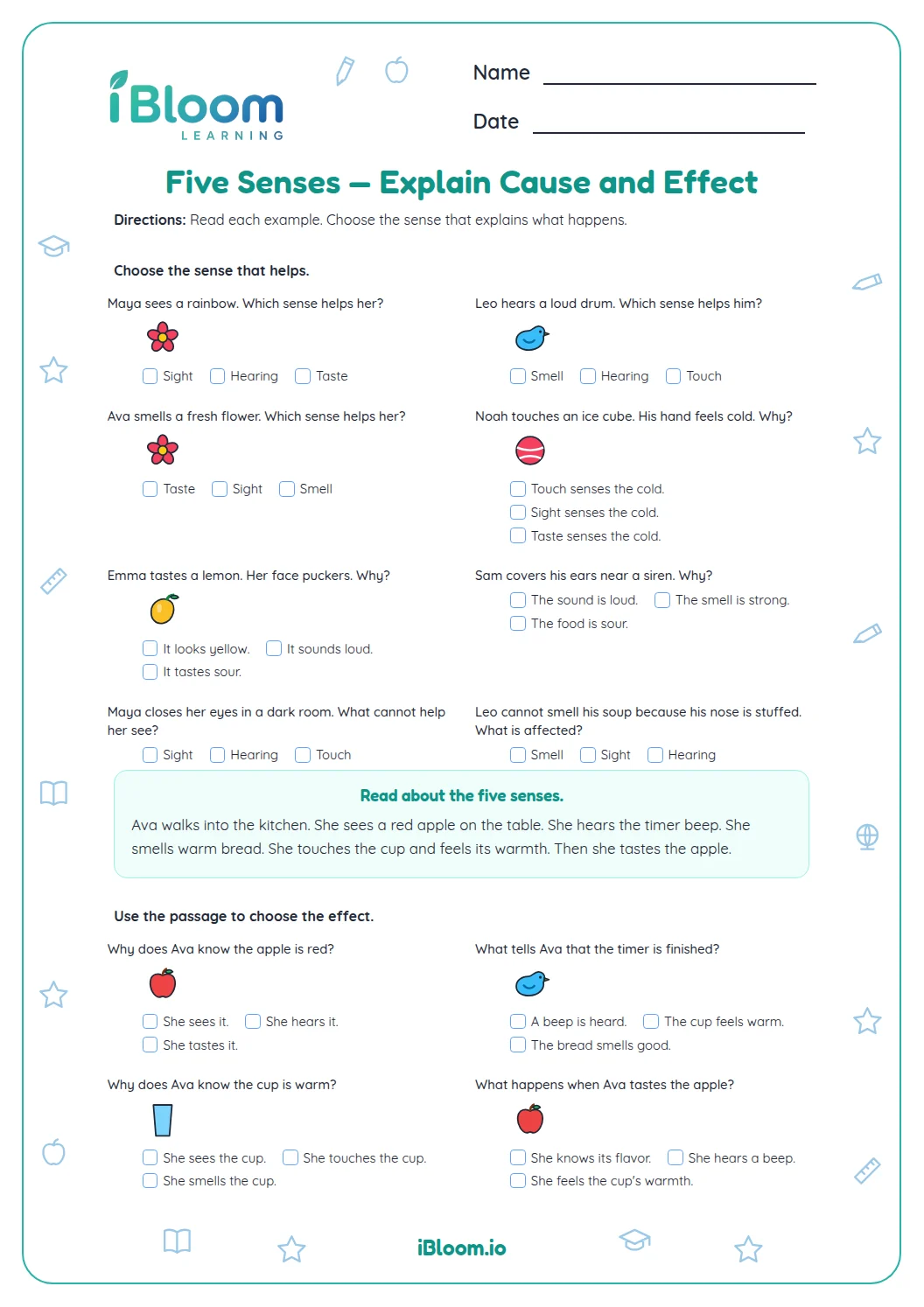
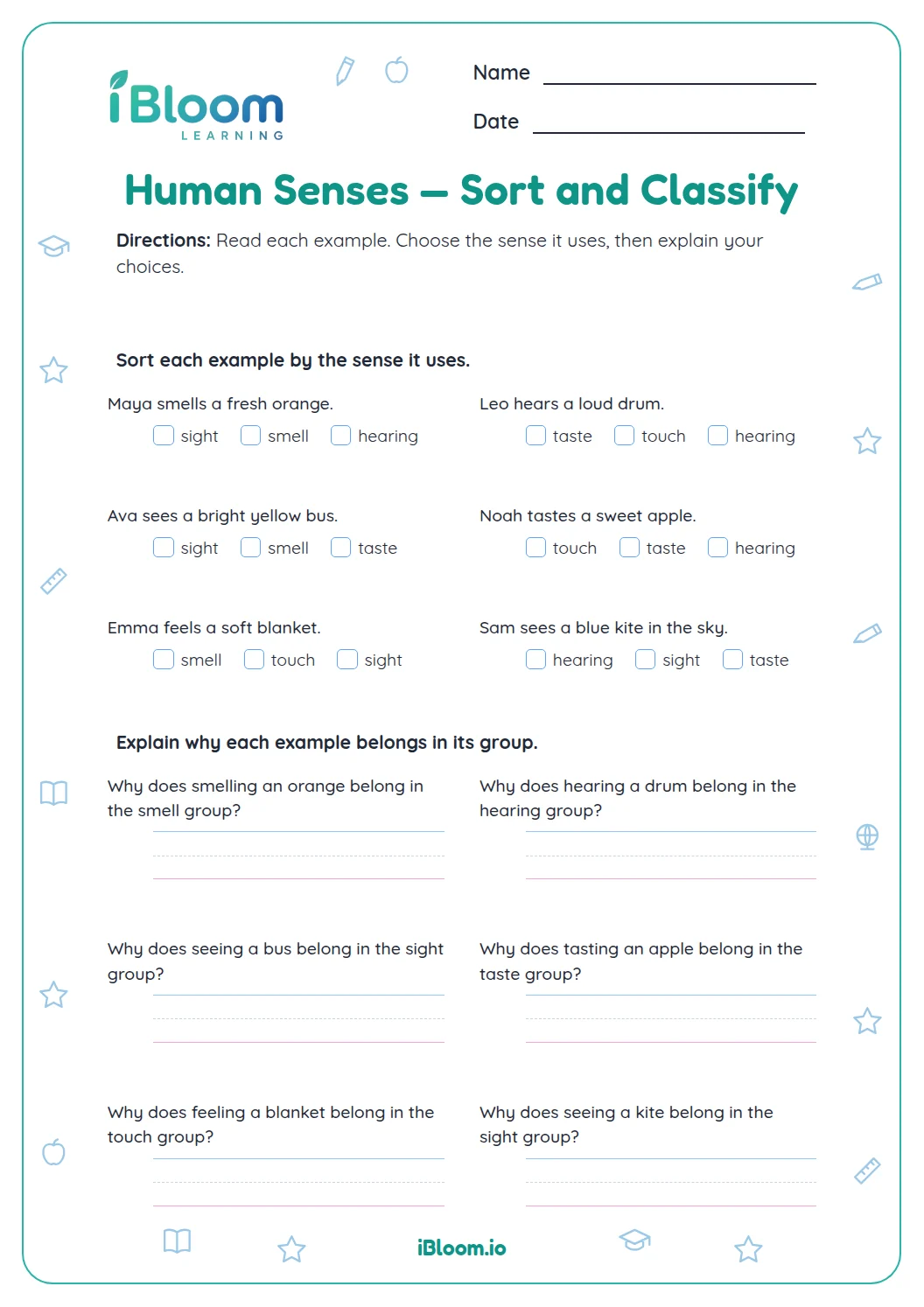
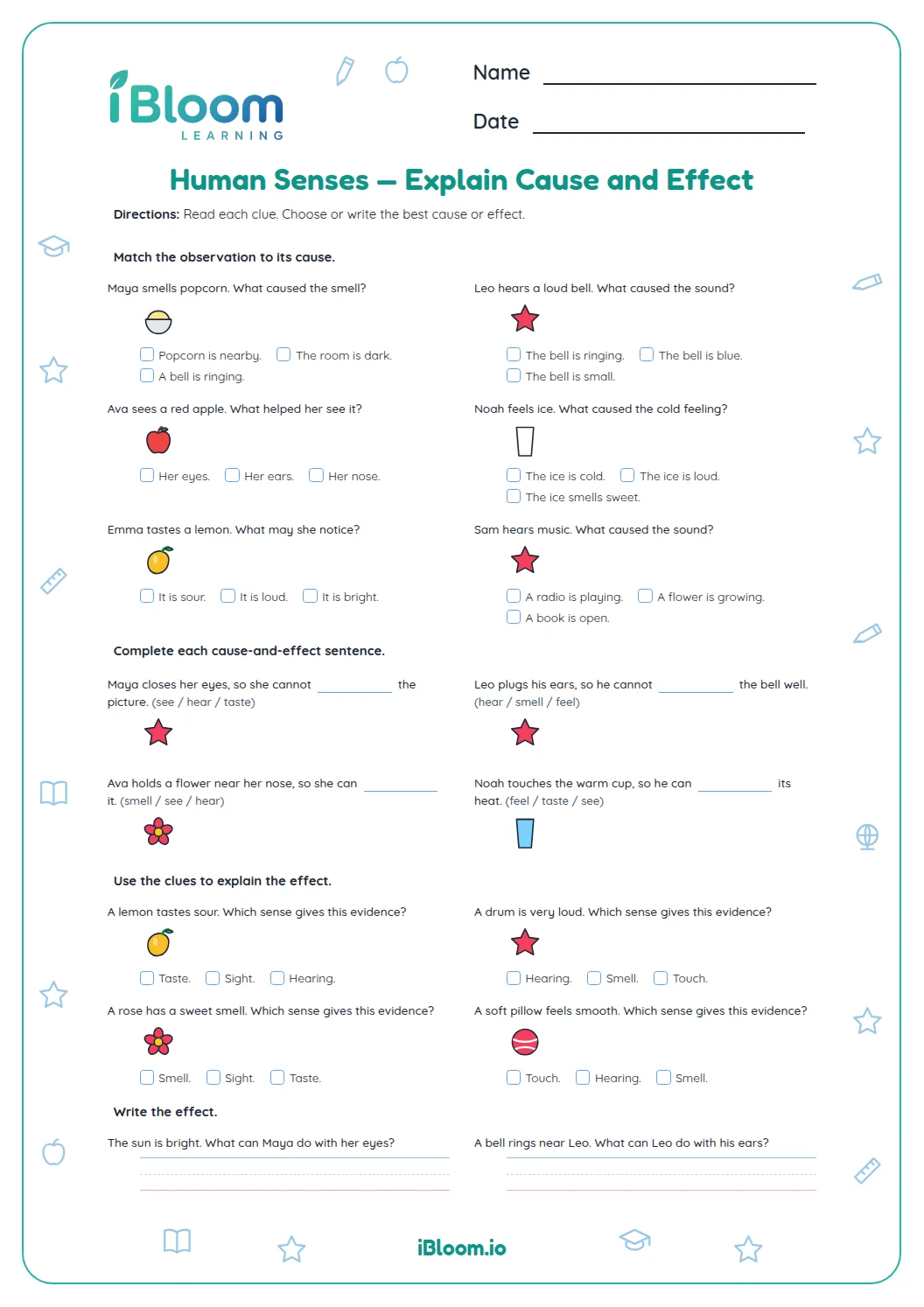
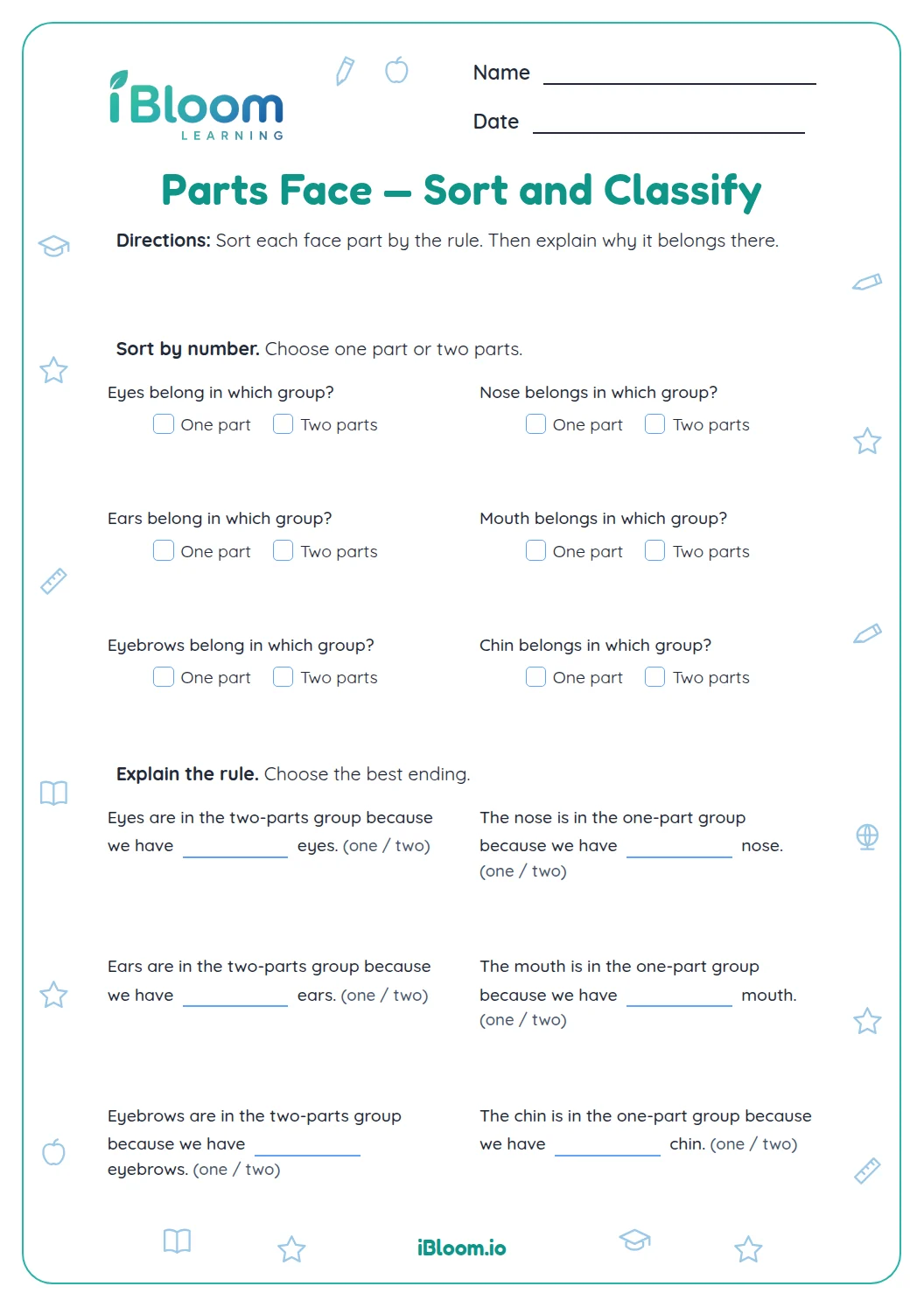
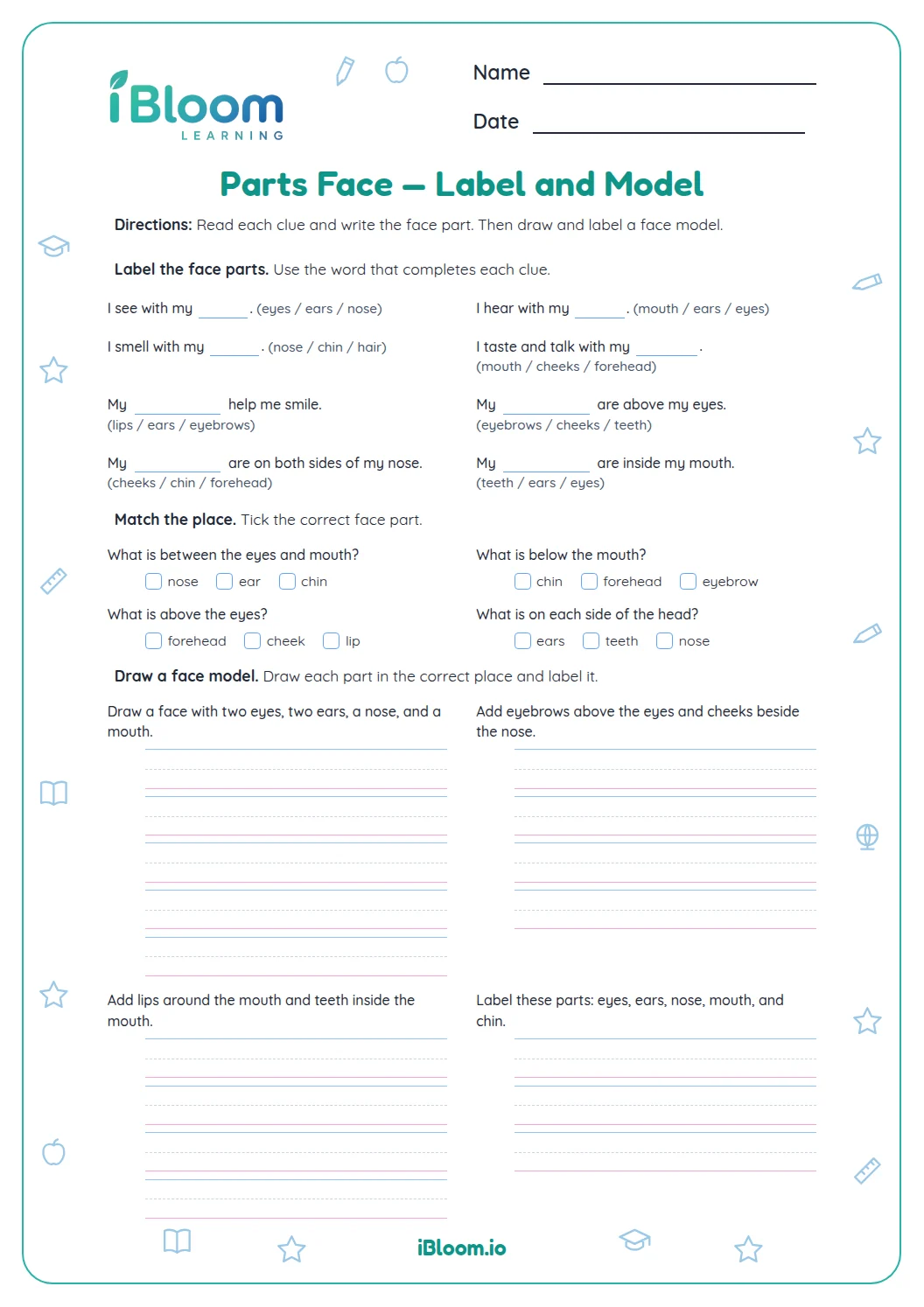
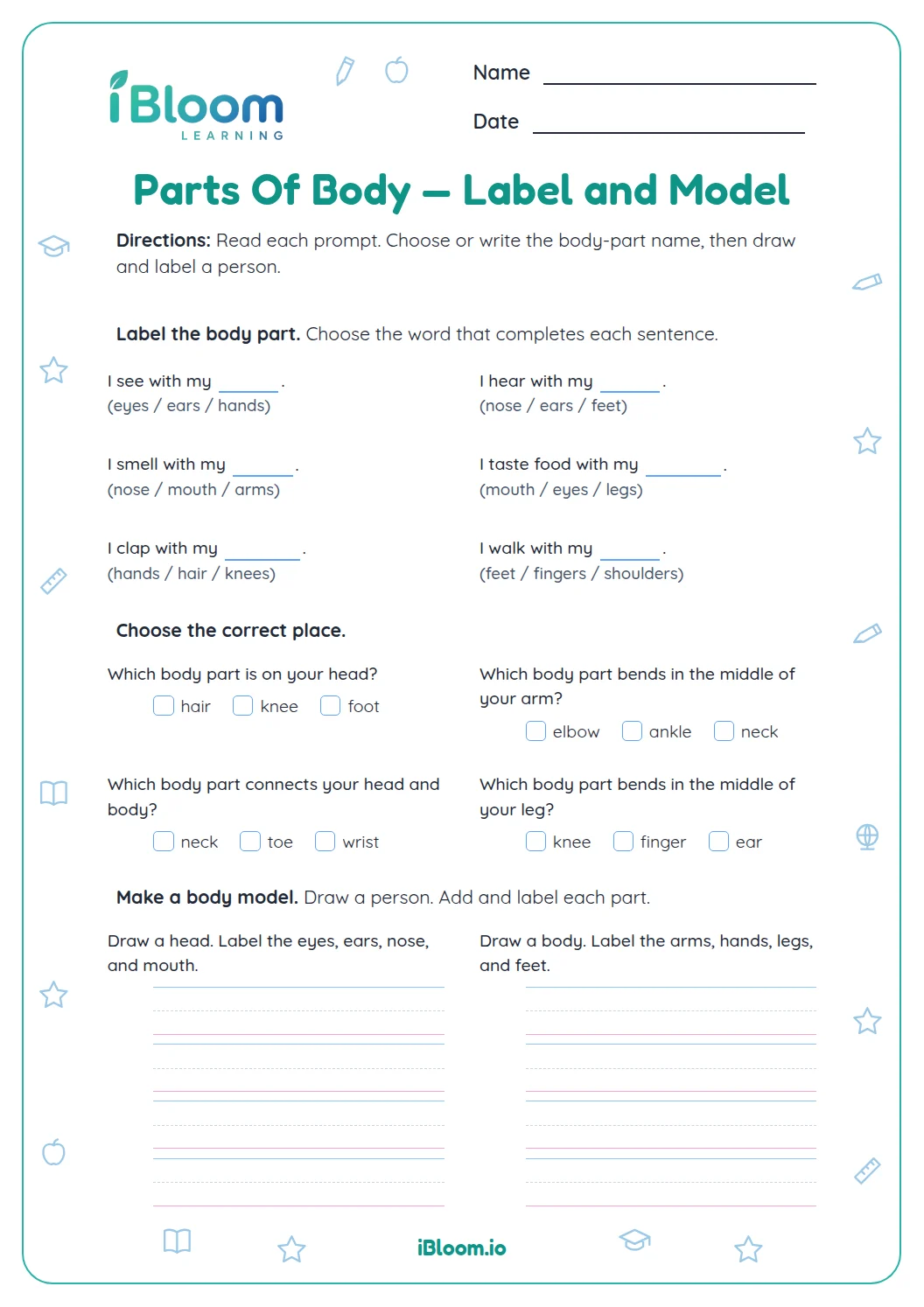
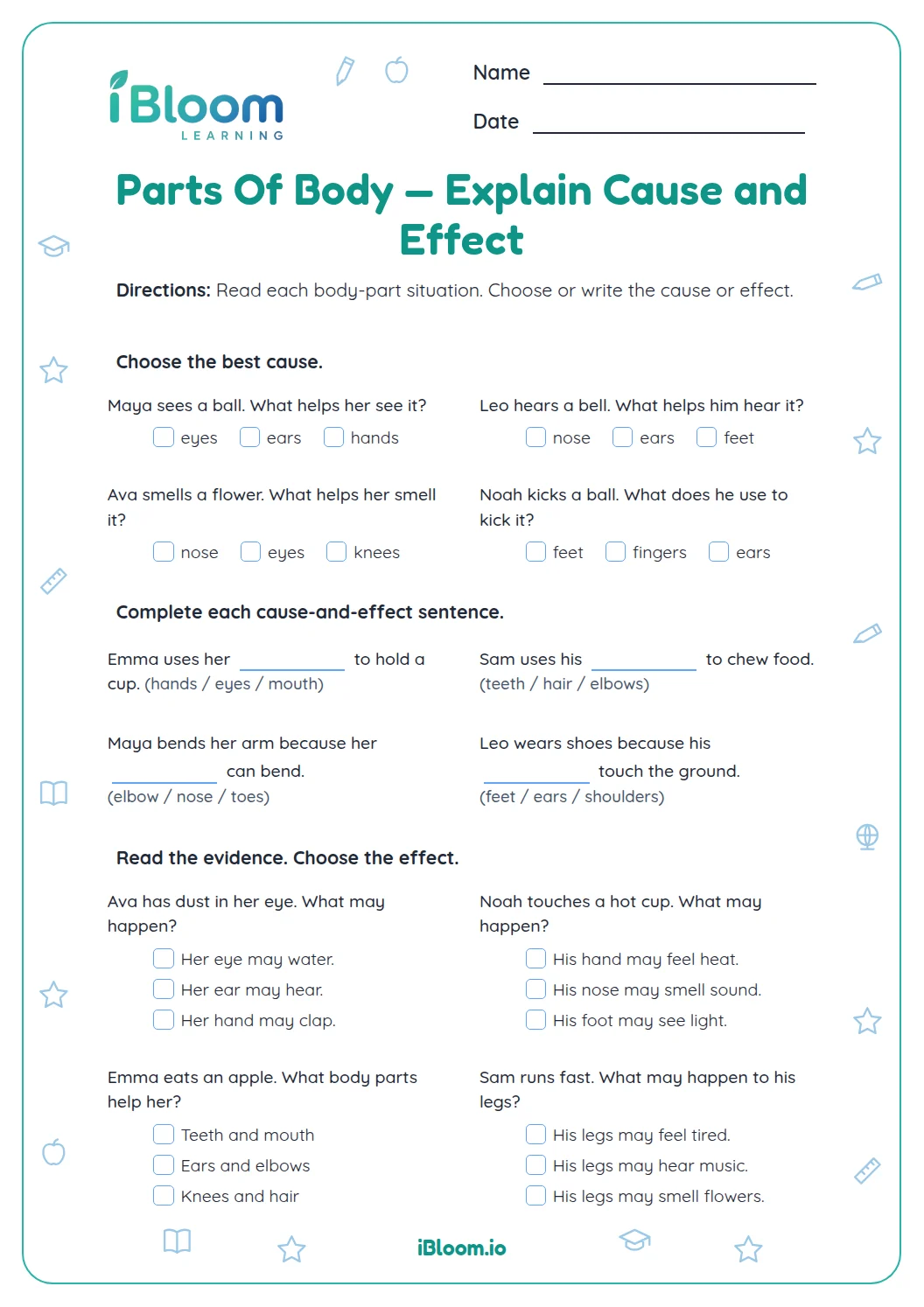
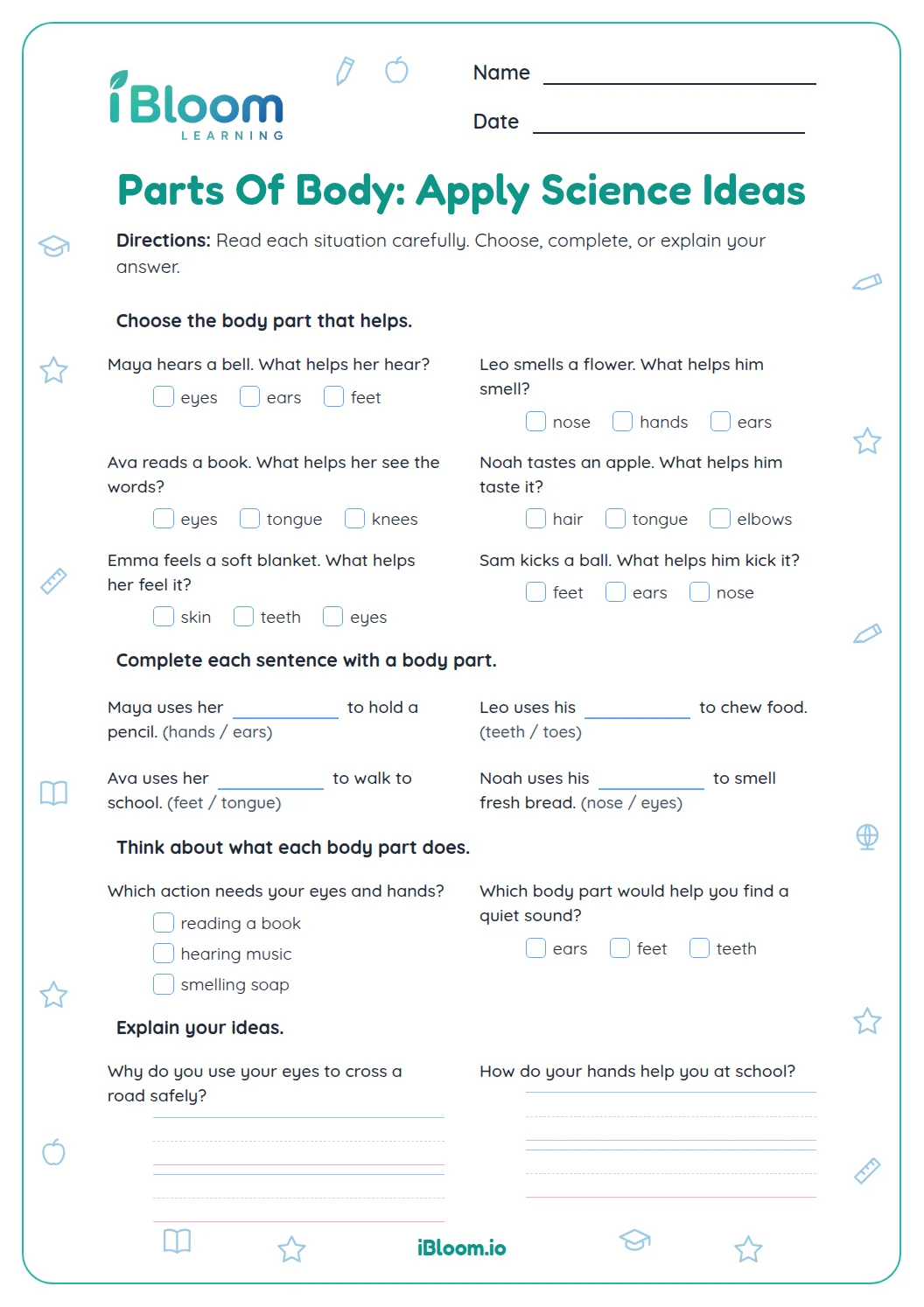
This Grade 1 science worksheet gives children practice reasoning about sight, hearing, smell, taste, and touch. Part A has seven two-choice questions, including a bell picture clue. Part B adds seven everyday clues with two choices each. A separate answer key lists the answer for every item. An adult can read the prompts aloud as needed.
How do senses help us notice things?
Senses help people learn about the world. Eyes help us see, ears help us hear, the nose helps us smell, the tongue helps us taste, and skin helps us notice touch.
- 1[pic:bell] Which sense notices a ringing bell?
- 2A bell makes a sound.
- 3Answer: hearing
What will children practice?
Part A has seven two-choice items, including a bell picture clue. Part B has seven more choices connecting everyday clues to a sense or body part. The clues include a sweet taste, a soft texture, and a nearby sound.
- 1[pic:cookie] A cookie tastes sweet. Which sense notices flavor?
- 2Sweet describes a flavor.
- 3Answer: taste
How can I help a learner explain an answer?
Ask what the child would notice first: a sound, scent, color, feeling, or flavor. Naming that evidence helps connect the clue to the matching sense.
How to use this worksheet
- 1Look at the picture and read the clue.
- 2Name what is being noticed: sound, scent, sight, touch, or flavor.
- 3Choose the best answer in Part A.
- 4Write a sense or body part for each Part B clue.
- 5Check the answer key and explain which clue supports the answer.
What mistakes can I help with?
The mistake
Choosing a body part before checking what the clue describes.
The fix
Name the clue first, such as a sound or scent, then connect it to the body part that helps notice it.
The mistake
Mixing up taste and smell when a clue names flavor.
The fix
Ask whether the clue describes how food tastes or how it smells. The word sweet describes flavor, so it points to taste.
The mistake
Naming an object instead of the sense that notices it.
The fix
For a clue about a bell, name hearing rather than the bell. Ask, “What kind of information does the object give?”
What to practice next
Make more practice
Questions parents and teachers ask
What are the five senses?
The five senses are sight, hearing, smell, taste, and touch. Each helps a person notice information about the surroundings. This worksheet asks children to match everyday clues, such as a bell or a flower scent, with the sense that notices it.
Which body parts help with the senses?
Eyes help us see, ears help us hear, the nose helps us smell, the tongue helps us taste, and skin helps us feel touch. The worksheet includes questions about senses and body parts. Have a child name the clue before choosing.
Can an adult read the worksheet aloud?
Yes. An adult can read each clue and choice while the child looks at the picture. Ask what the clue tells them: a sound, scent, color, feeling, or flavor. This keeps the focus on connecting evidence with a sense.
Why does the cookie question ask about taste?
The prompt says the cookie is sweet, which describes flavor. Taste is the sense that notices flavor. A cookie may also have a smell, but the clue sweet points directly to taste. Ask the child to name that clue.
What is in the answer key?
The separate answer key gives the correct sense or body part for all 14 questions. Each question has two choices, and the first item includes a bell picture clue. Review the clue together if an answer needs another try, and ask what detail points to that answer.