




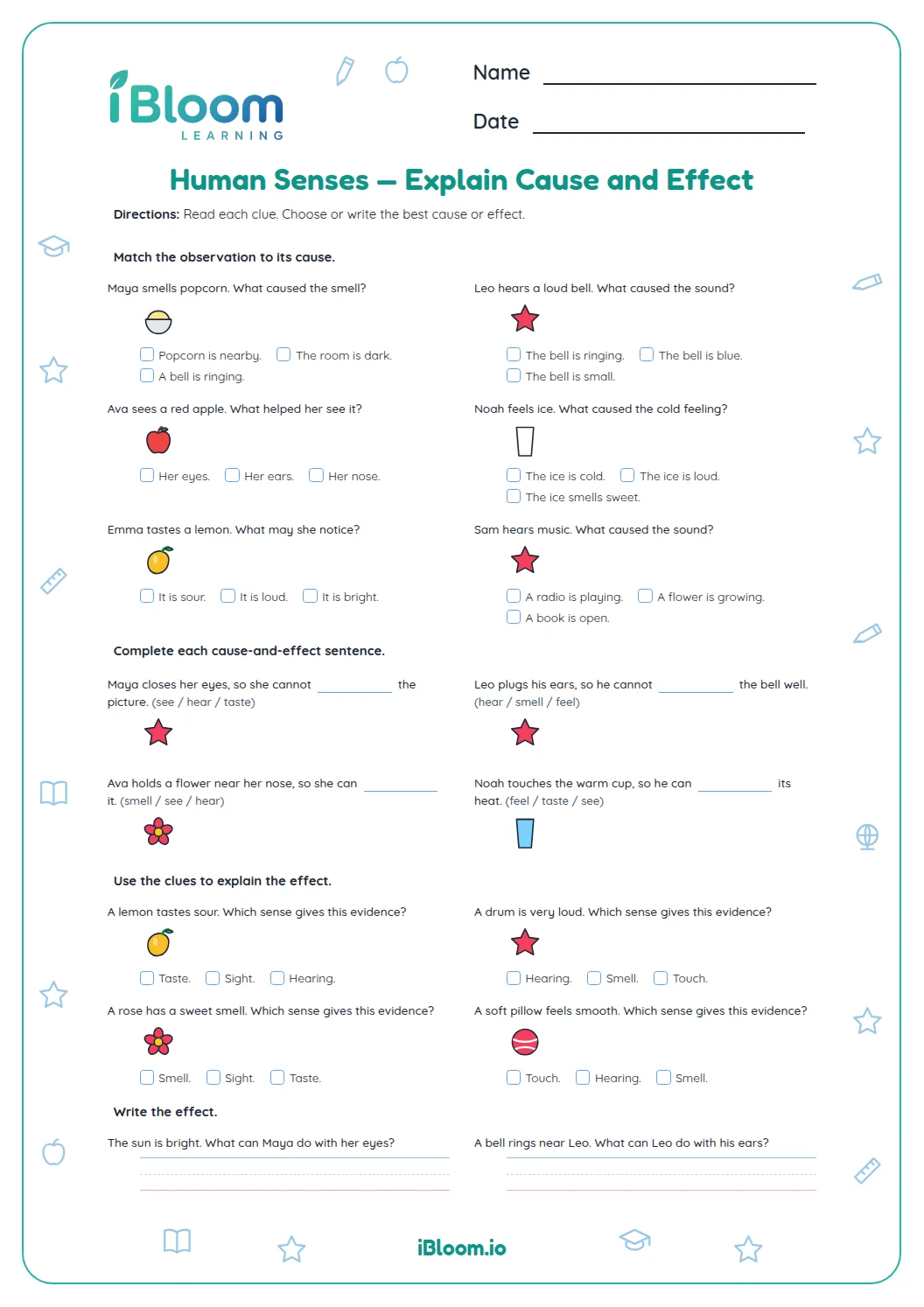

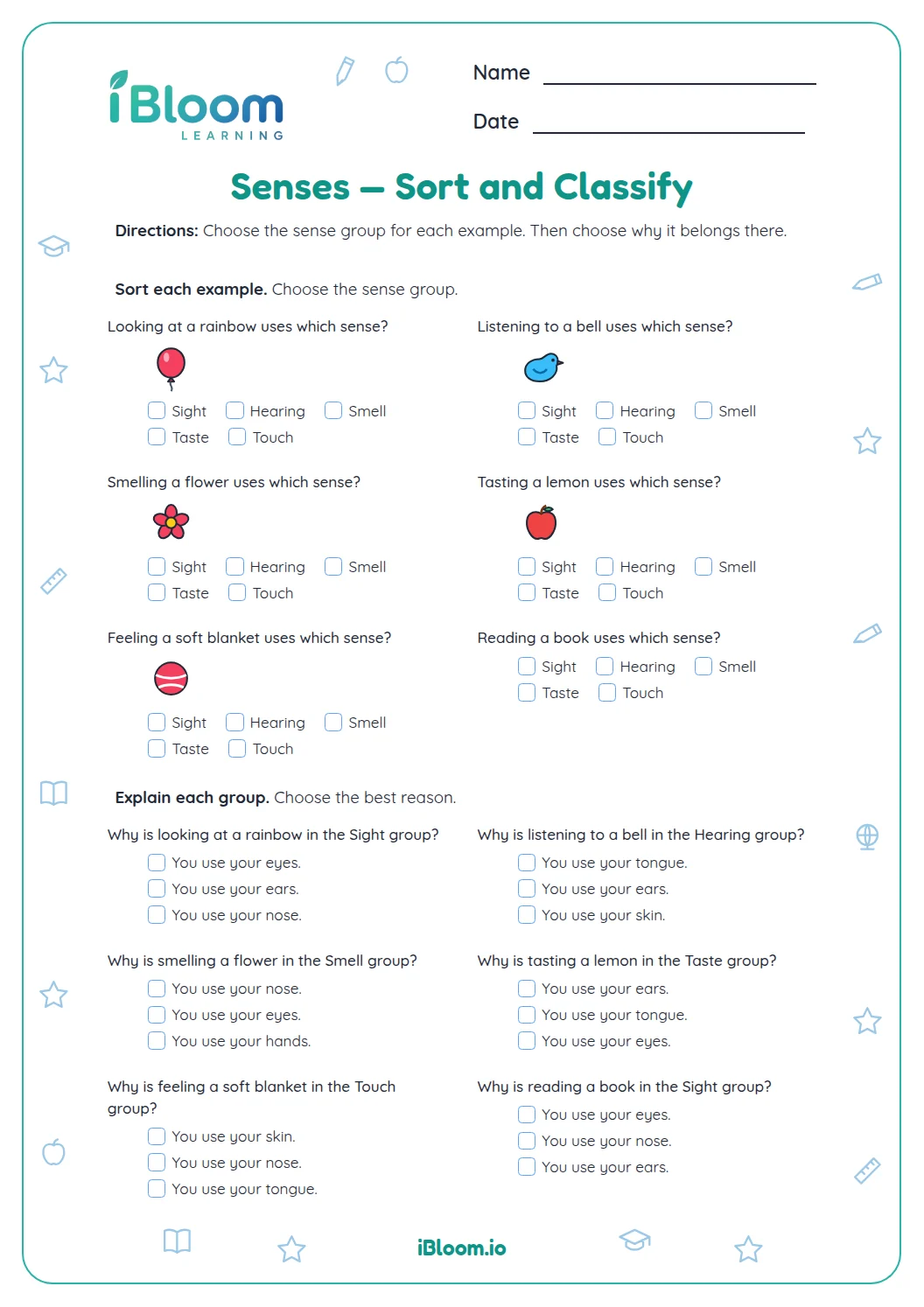
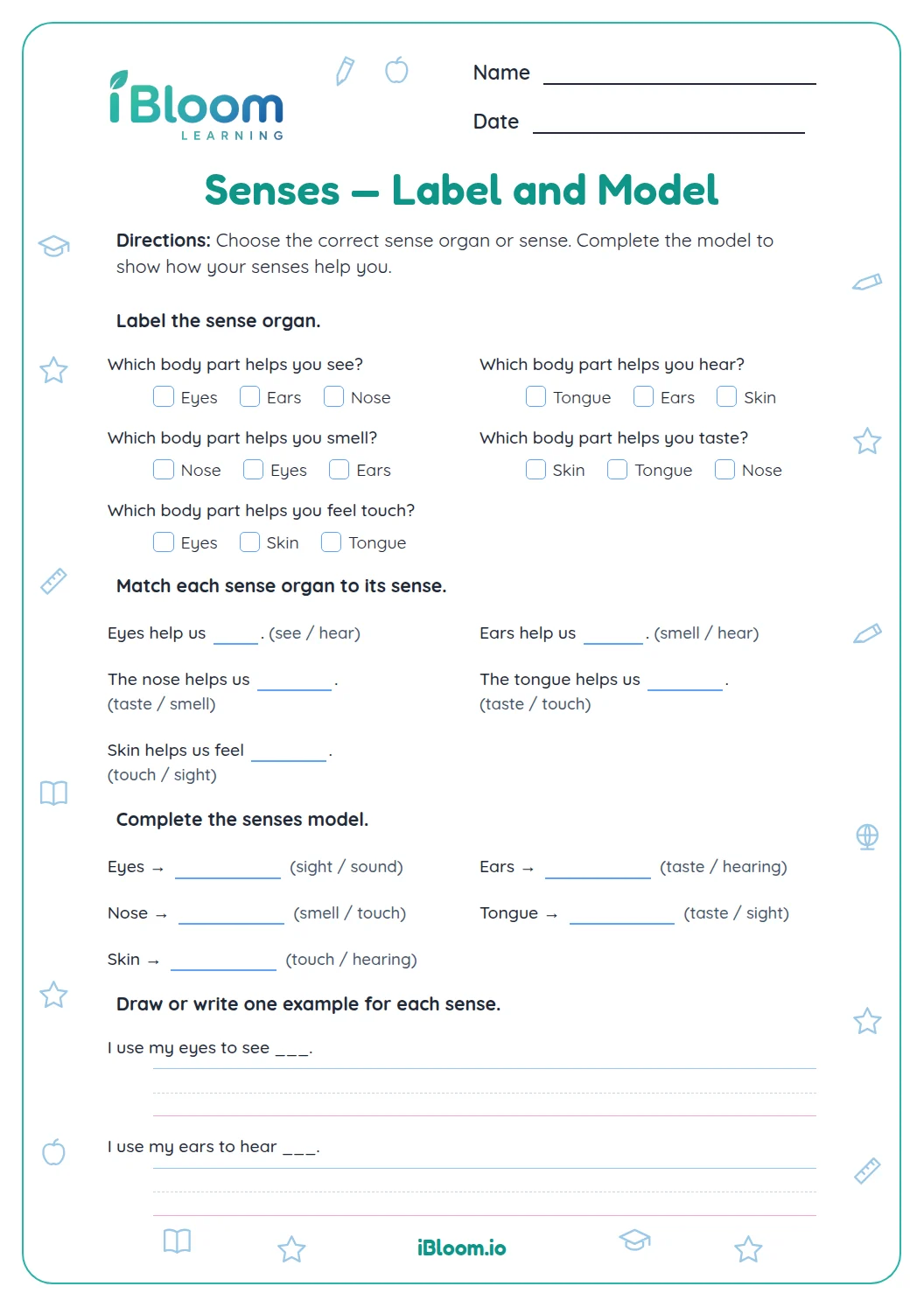
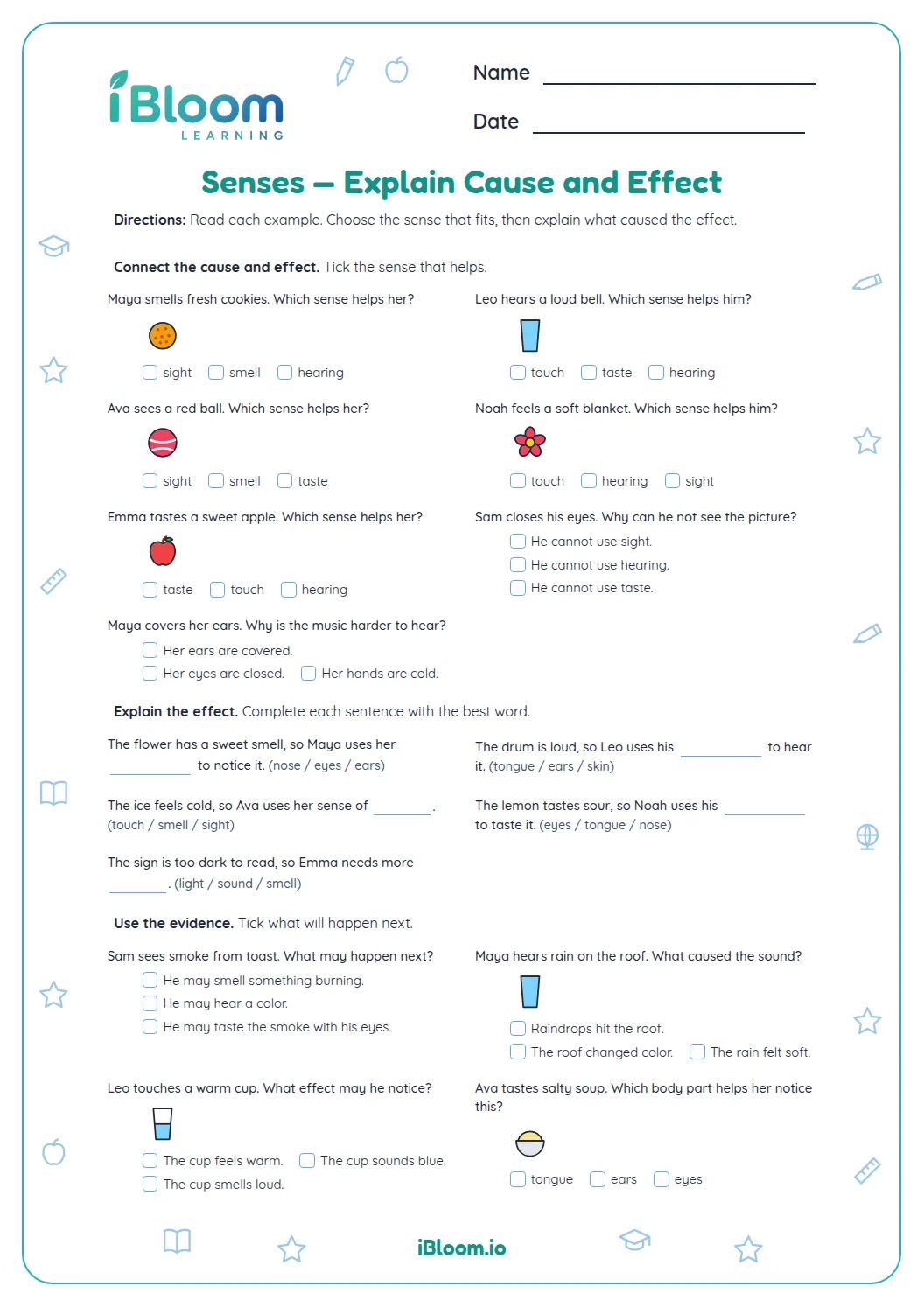
About this worksheet
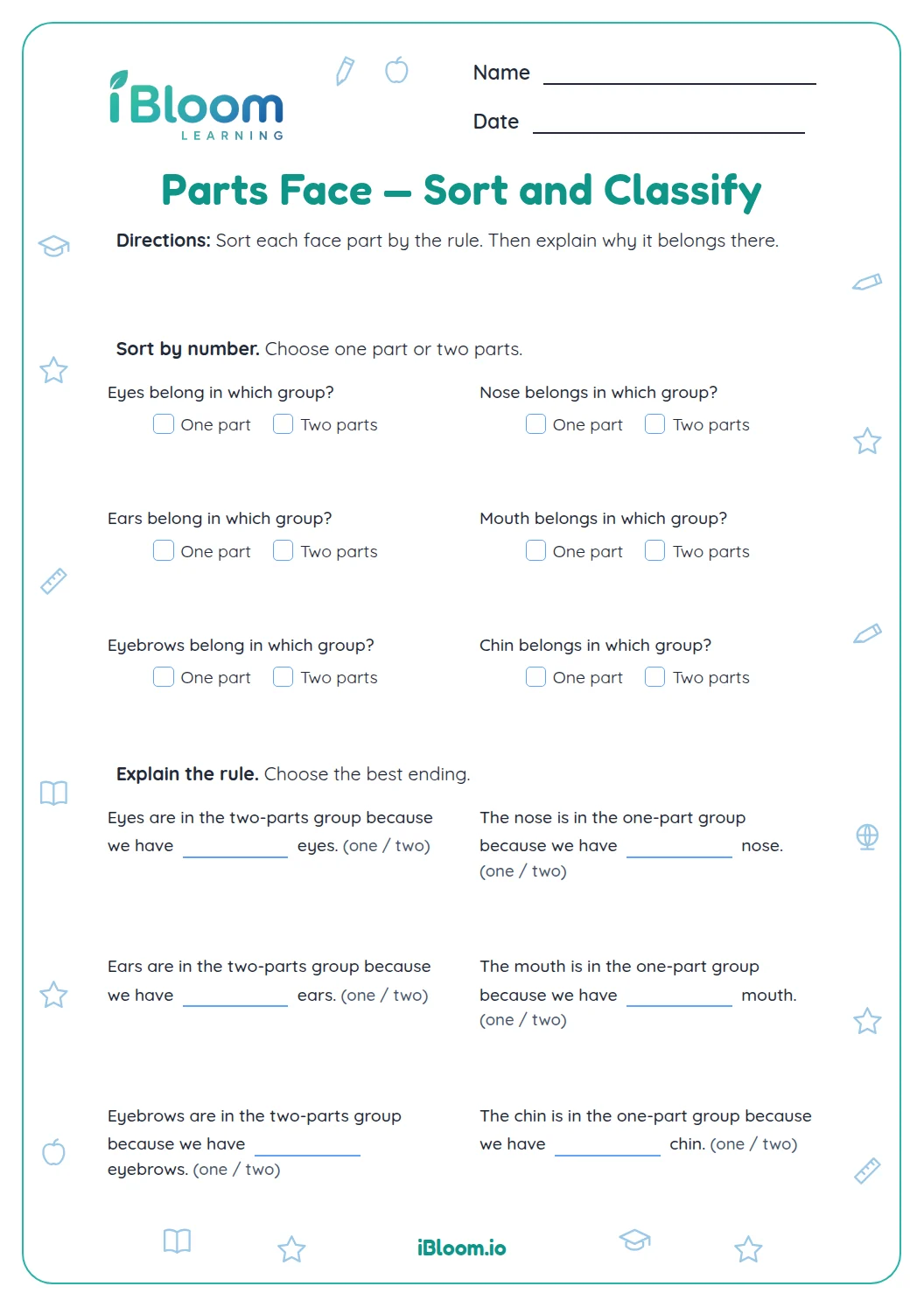
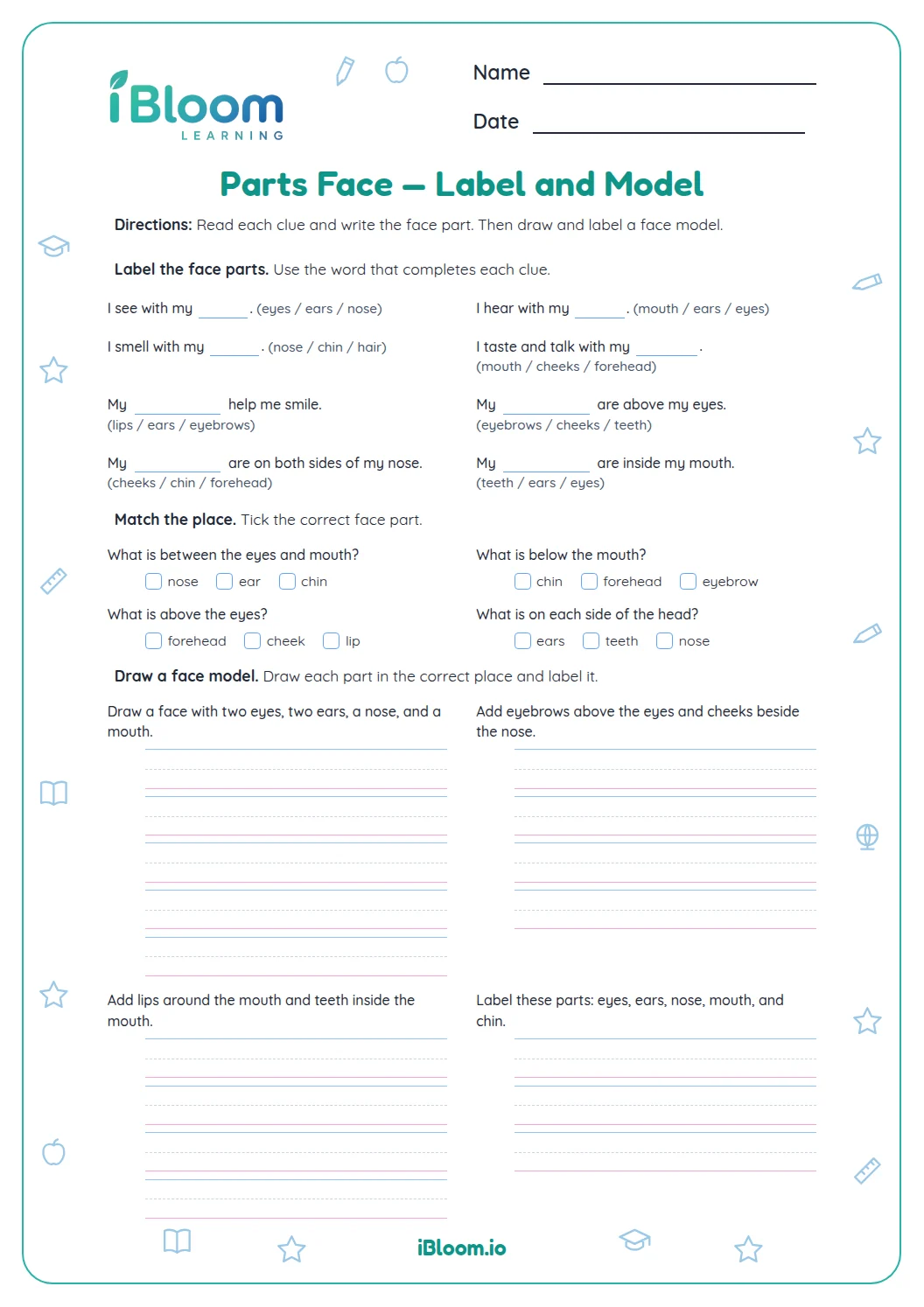
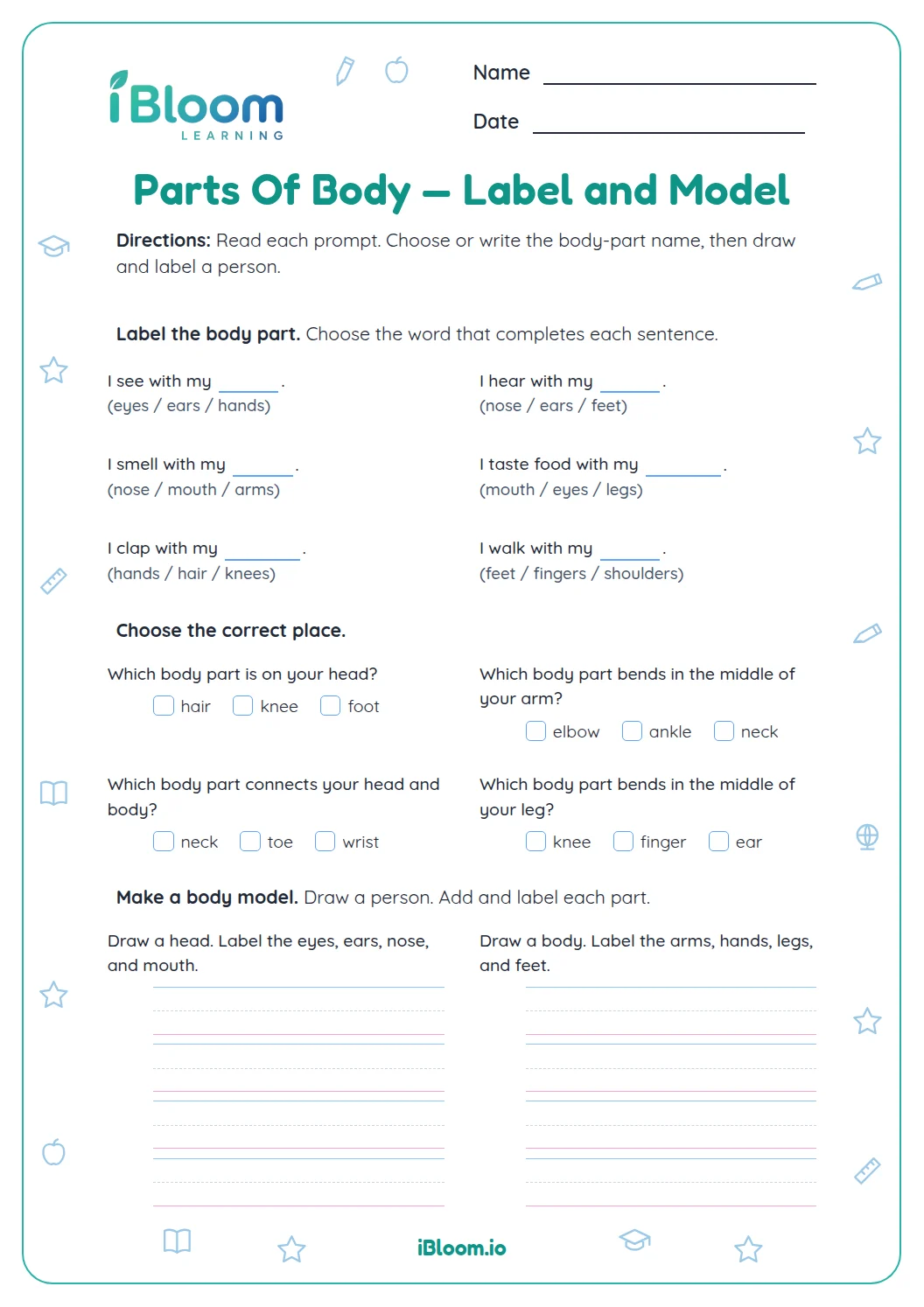
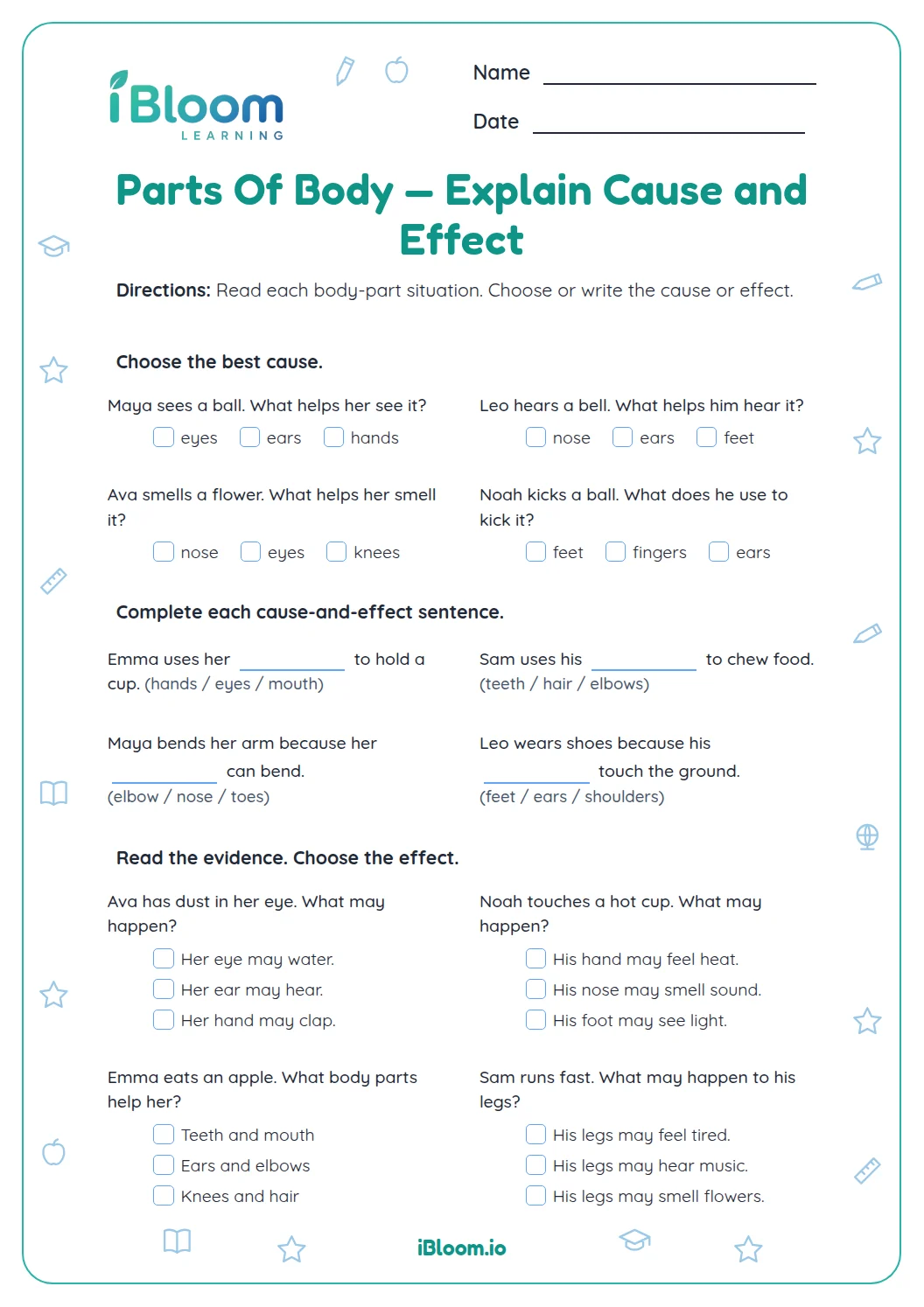
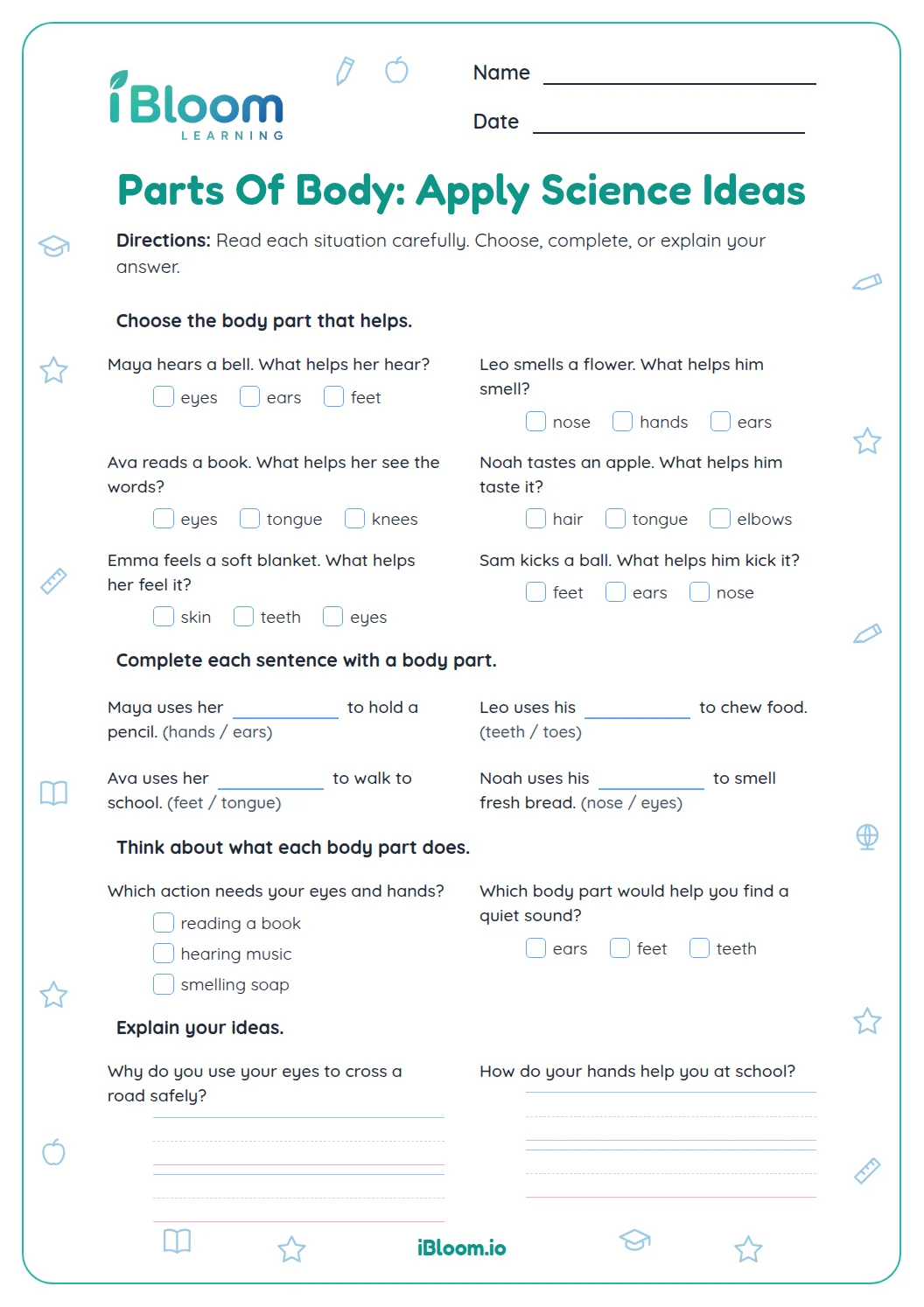
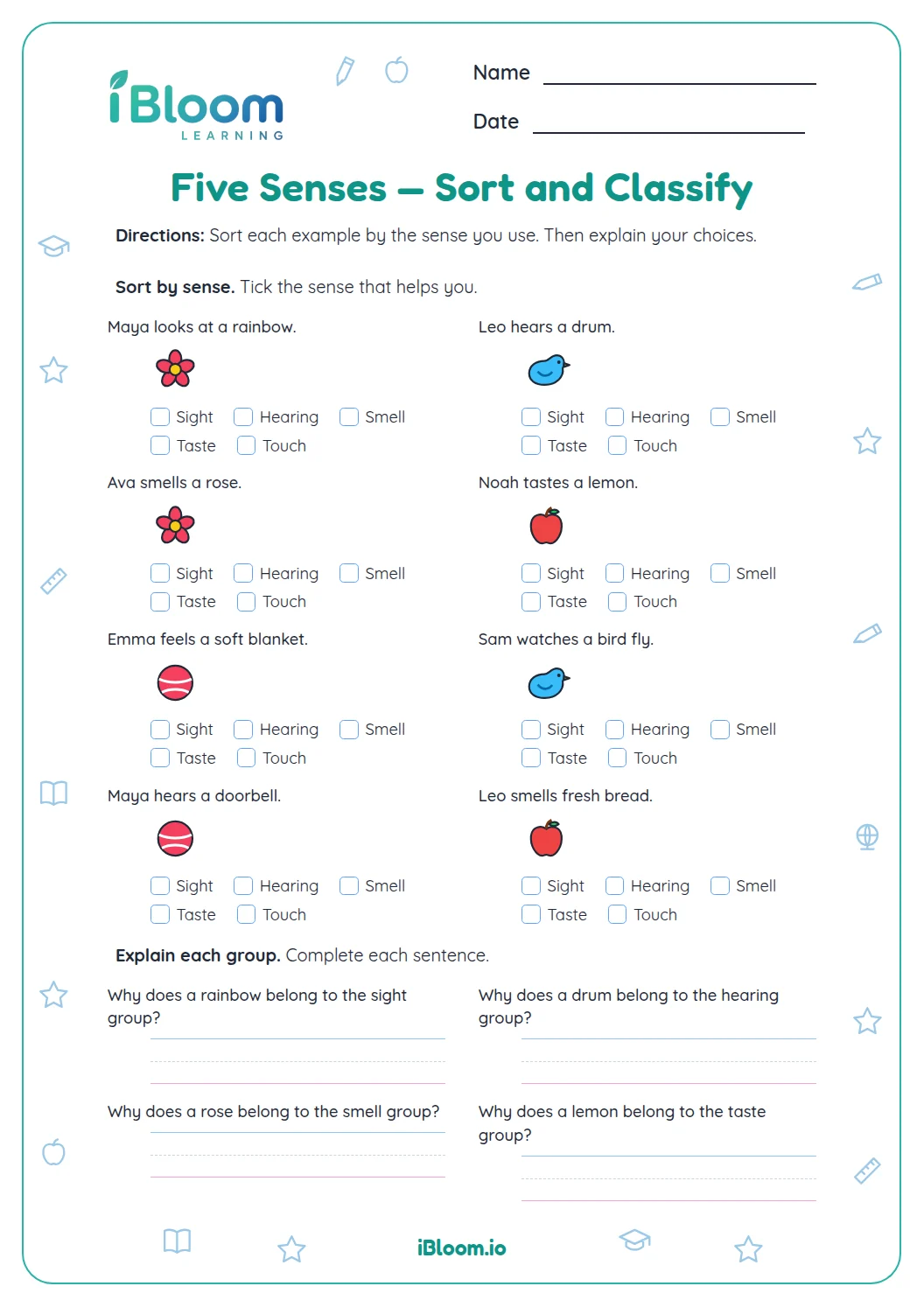
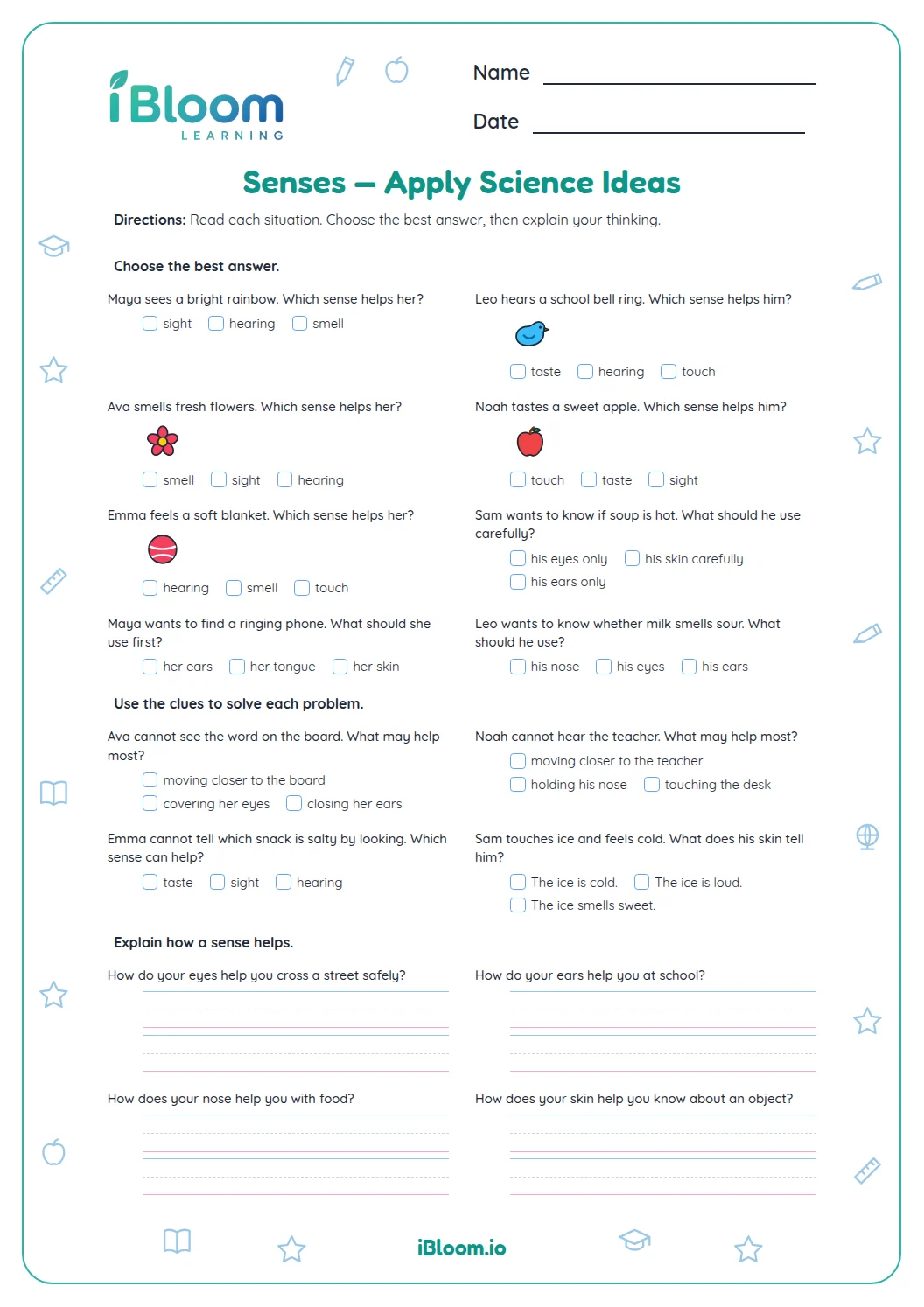
This Grade 1 science worksheet helps children connect face parts with the information they help us notice. Students match eyes, ears, nose, tongue and skin with seeing, hearing, smelling, tasting and touch, then use the same ideas in familiar situations. Fourteen choice questions move from simple matches to everyday applications. A separate answer key lists the answers for checking.
Which body parts help us use the senses?
Eyes help us see, ears help us hear, the nose helps us smell, the tongue helps us taste, and skin helps us feel touch. The worksheet asks children to connect each clue with the part or sense that fits.
For question 4, tasting soup points to the tongue. The clue is about flavor, not smell or touch.
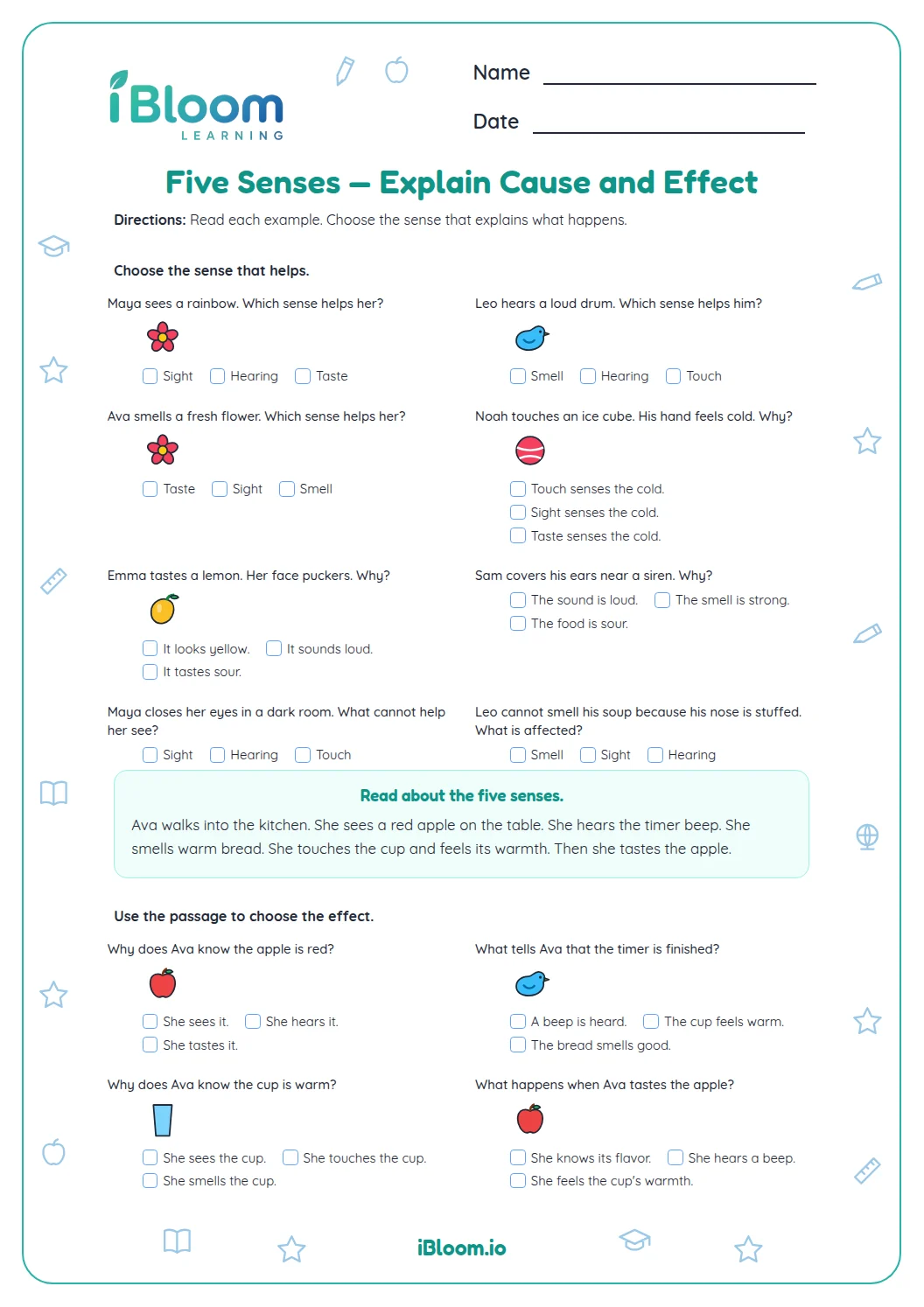
How does a situation give a sense clue?
Name what the person notices first. A ringing bell is a sound, so question 6 calls for ears. A cool breeze is felt on the skin, while a bright sign is seen with the eyes.
How can students apply the same idea?
Questions 11 and 12 apply body-part knowledge to safe actions. Rinsing an eye with clean water is safer than rubbing it or bringing a pencil near it; a flashing alert can help someone who cannot hear a timer. The last two questions apply sense knowledge to reading and conversation.
How to use this worksheet
- 1Read the clue and name the information the person notices.
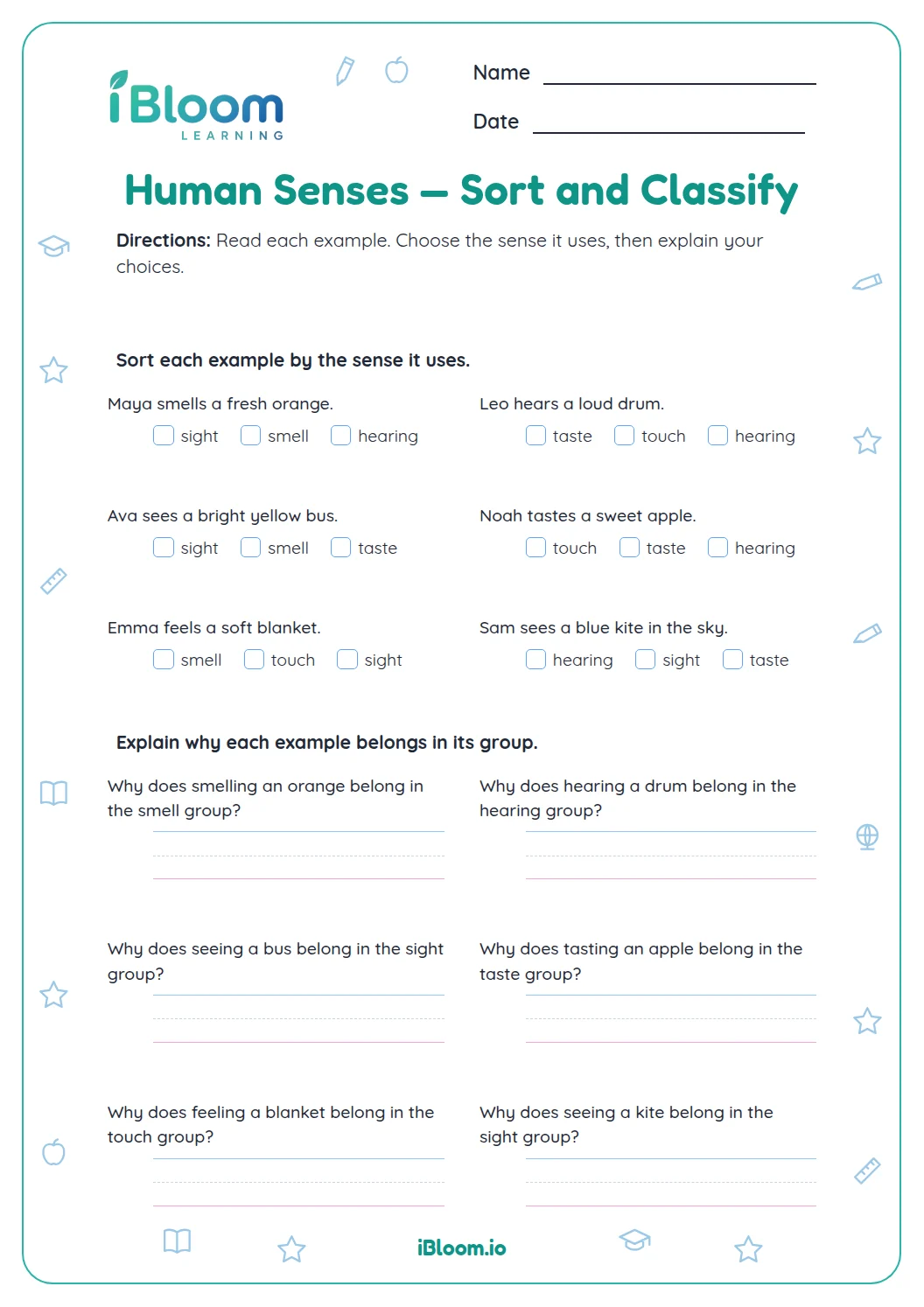
- 2Match a sound, sight, smell, taste or touch clue to its sense.
- 3Choose the body part that helps with that sense.
- 4Choose a safe action for the situations and match parts to the final clues.
- 5Use the key to check choices and revisit any missed clue.
Common mistakes and quick fixes
The mistake
Mixing up taste and smell
The fix
Ask whether the clue names a flavor or an odor; the tongue helps taste and the nose helps smell.
The mistake
Choosing eyes for a sound clue
The fix
Name the kind of information first. Ears help us notice sounds.
The mistake
Forgetting that skin senses touch
The fix
Use a gentle example, such as noticing a soft scarf or a cool breeze.
What to practice next
Make more practice
Questions parents and teachers ask
Which body parts appear in the questions?
The worksheet uses eyes, ears, nose, tongue and skin. Children connect them with sight, hearing, smell, taste and touch, then use those connections in short situations. Skin is included because it helps us notice touch on the face and across the rest of the body.
Why does the worksheet include skin on a face-parts page?
Skin covers the face as well as the rest of the body, and it helps us feel touch. A cool breeze on a cheek is one example. The question keeps the focus on what a body part helps a person notice.
What is one example of matching a clue to a sense?
A ringing bell gives a sound clue, so ears help a person hear it. A red sign gives a visual clue, so eyes help a person see it. Students use the same kind of clue in the matching and situation choices.
How can I help if my child confuses taste and smell?
Use a familiar food and separate its flavor from its odor. Ask which clue is about smelling and which is about tasting. The nose helps detect smells, while the tongue helps notice taste. Then reread the worksheet sentence and look for that clue.
What do the last questions ask children to do?
Questions 11 and 12 ask children to choose a safe action for a body-related situation. Questions 13 and 14 ask which parts help a child see words and which parts help people listen and speak. The key lists the correct choices.