




About this worksheet
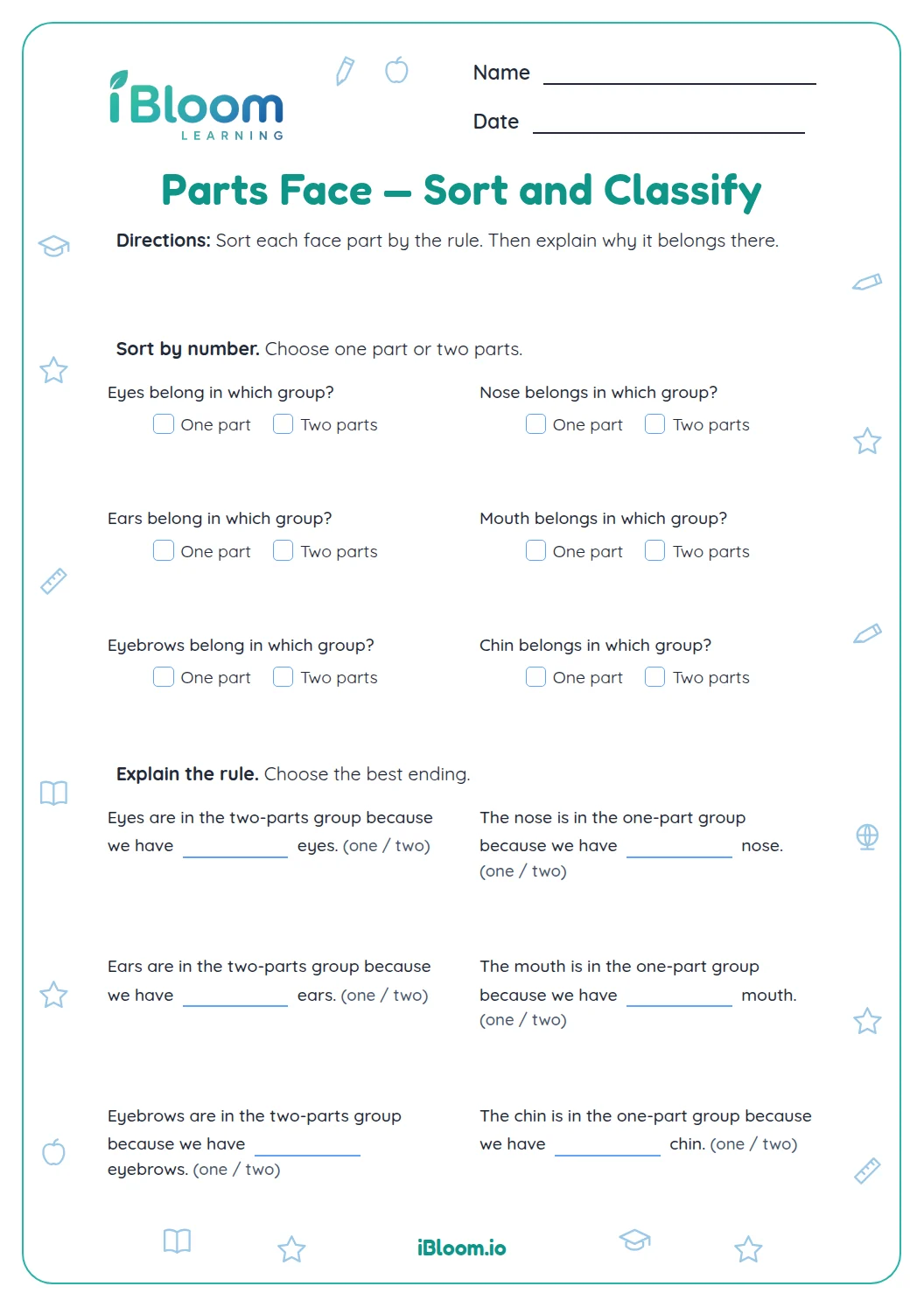
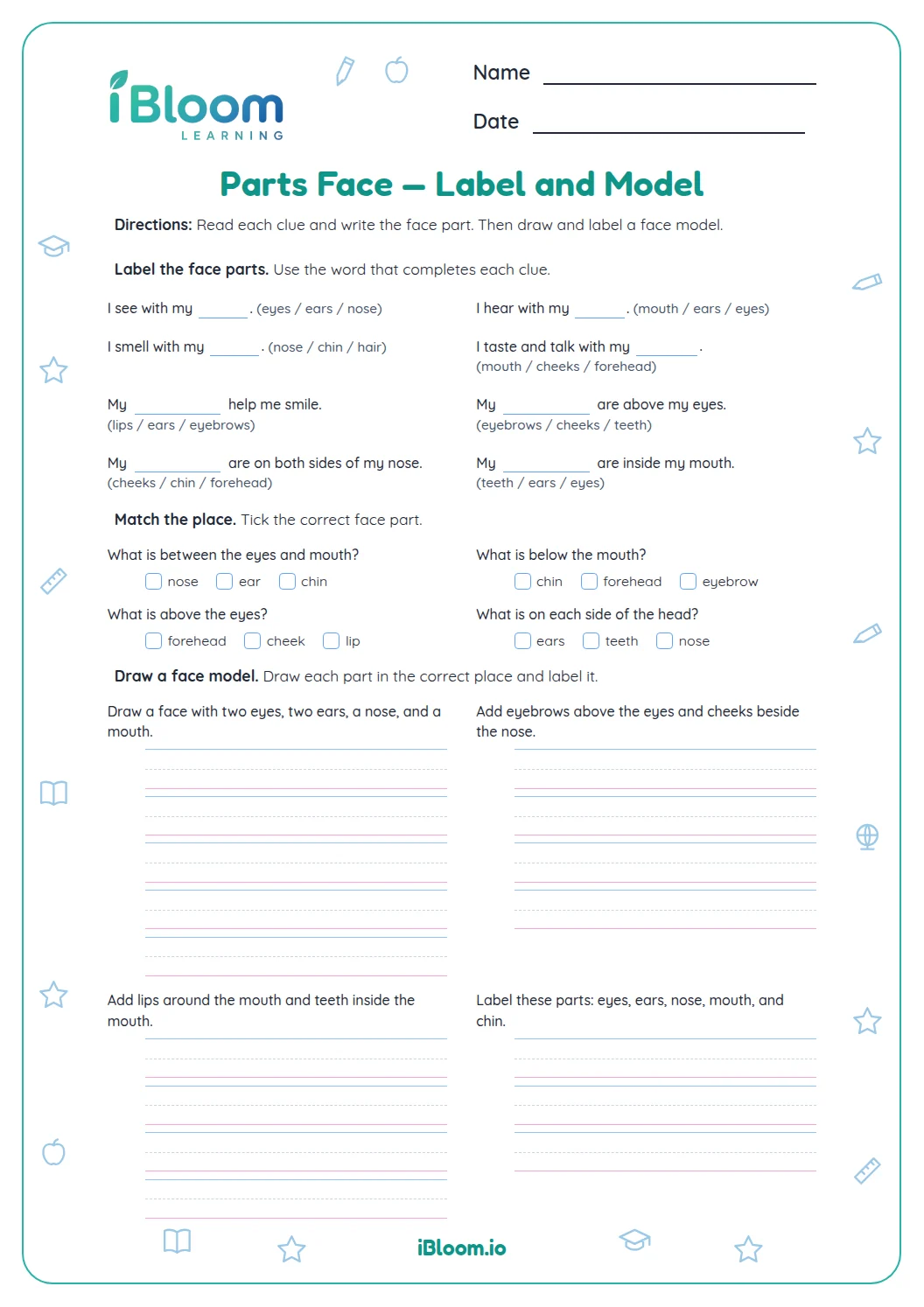
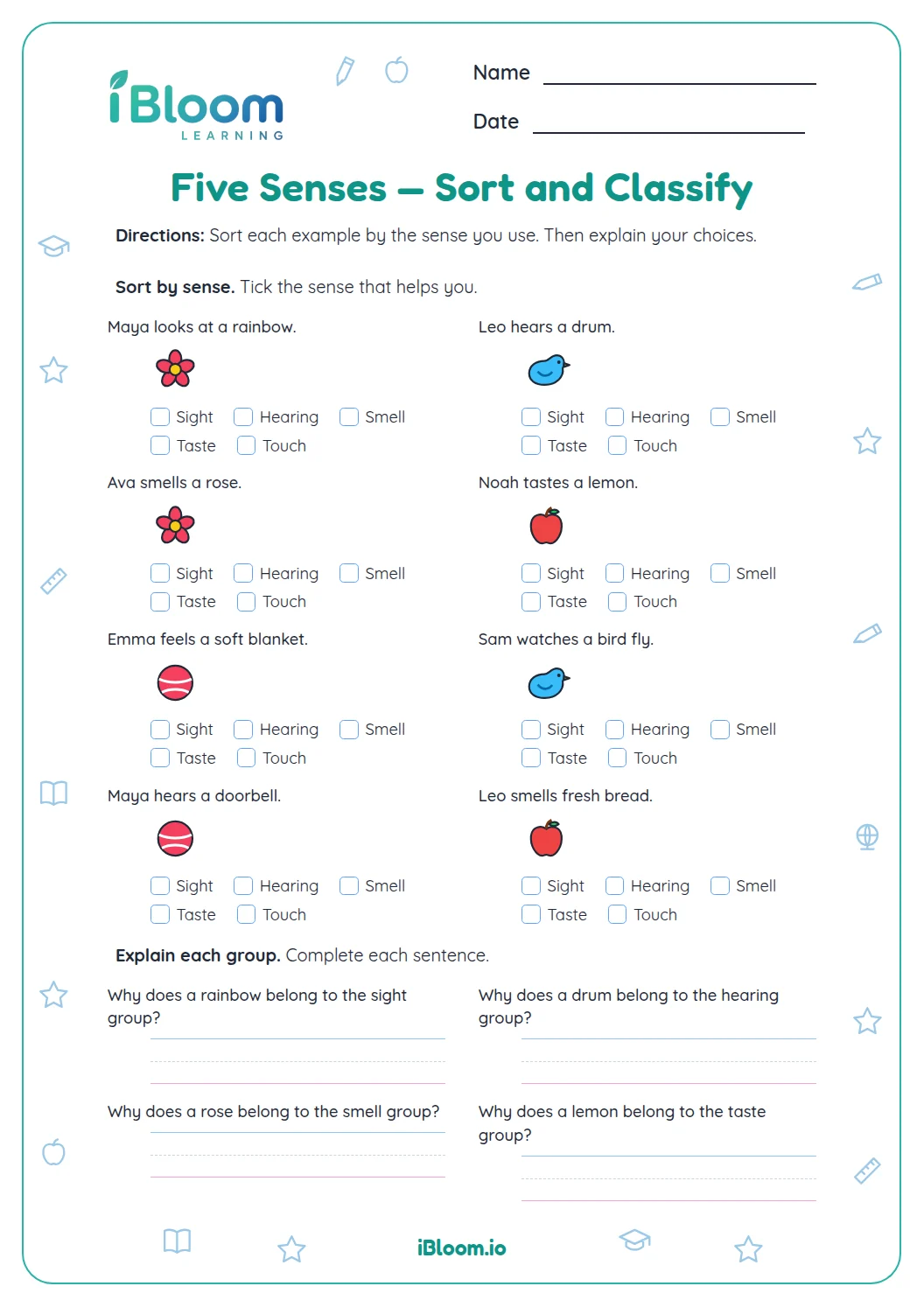
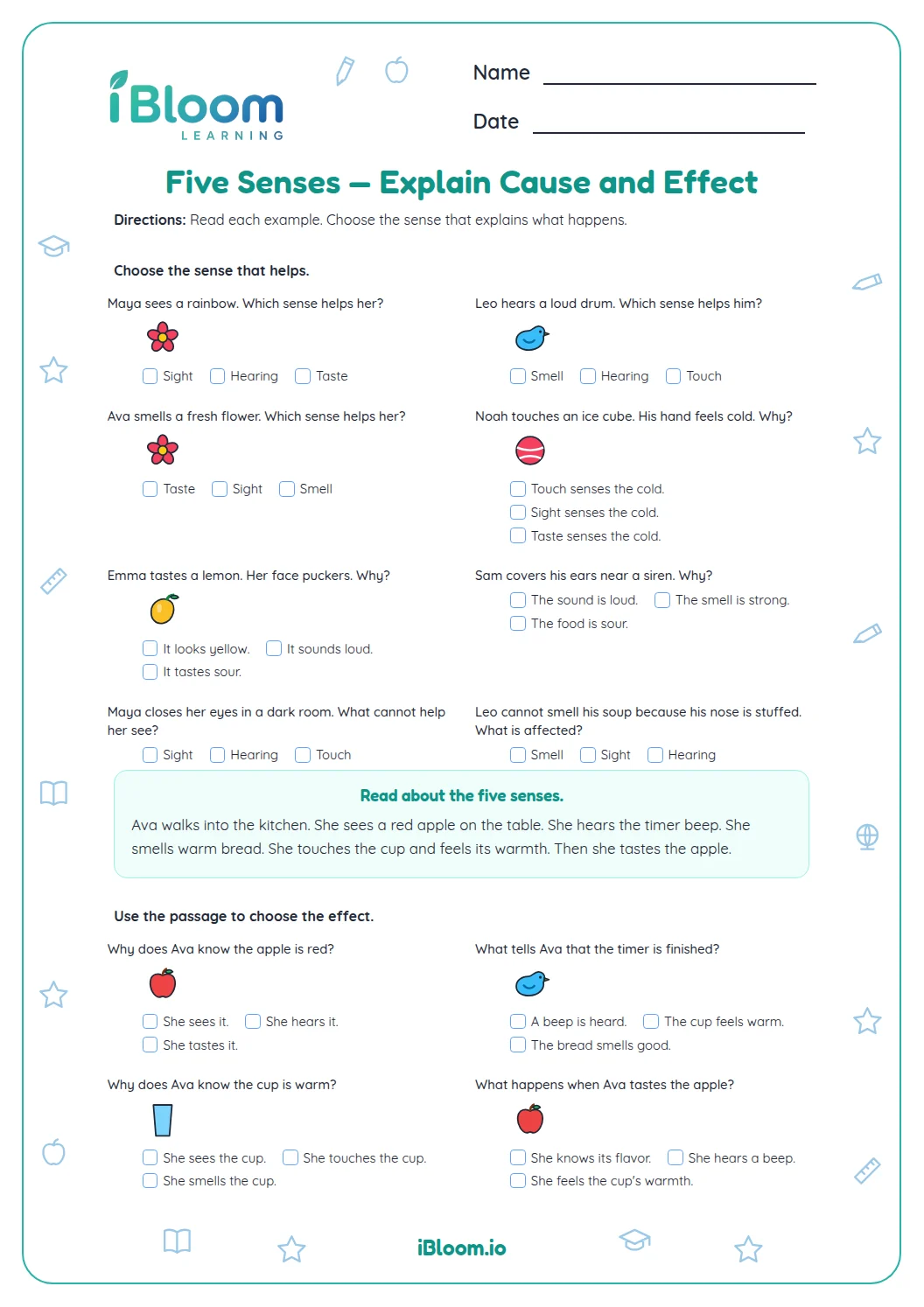
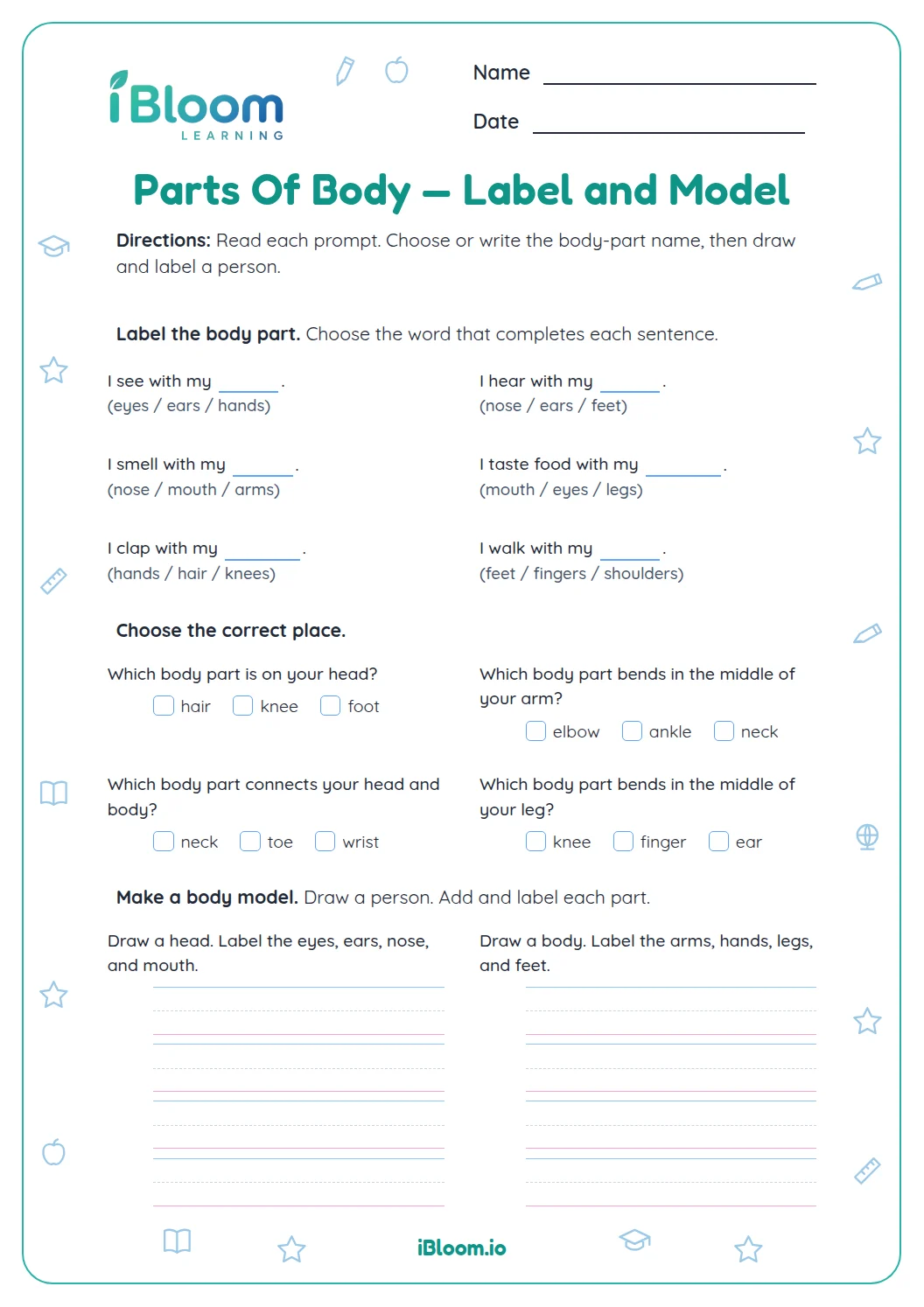
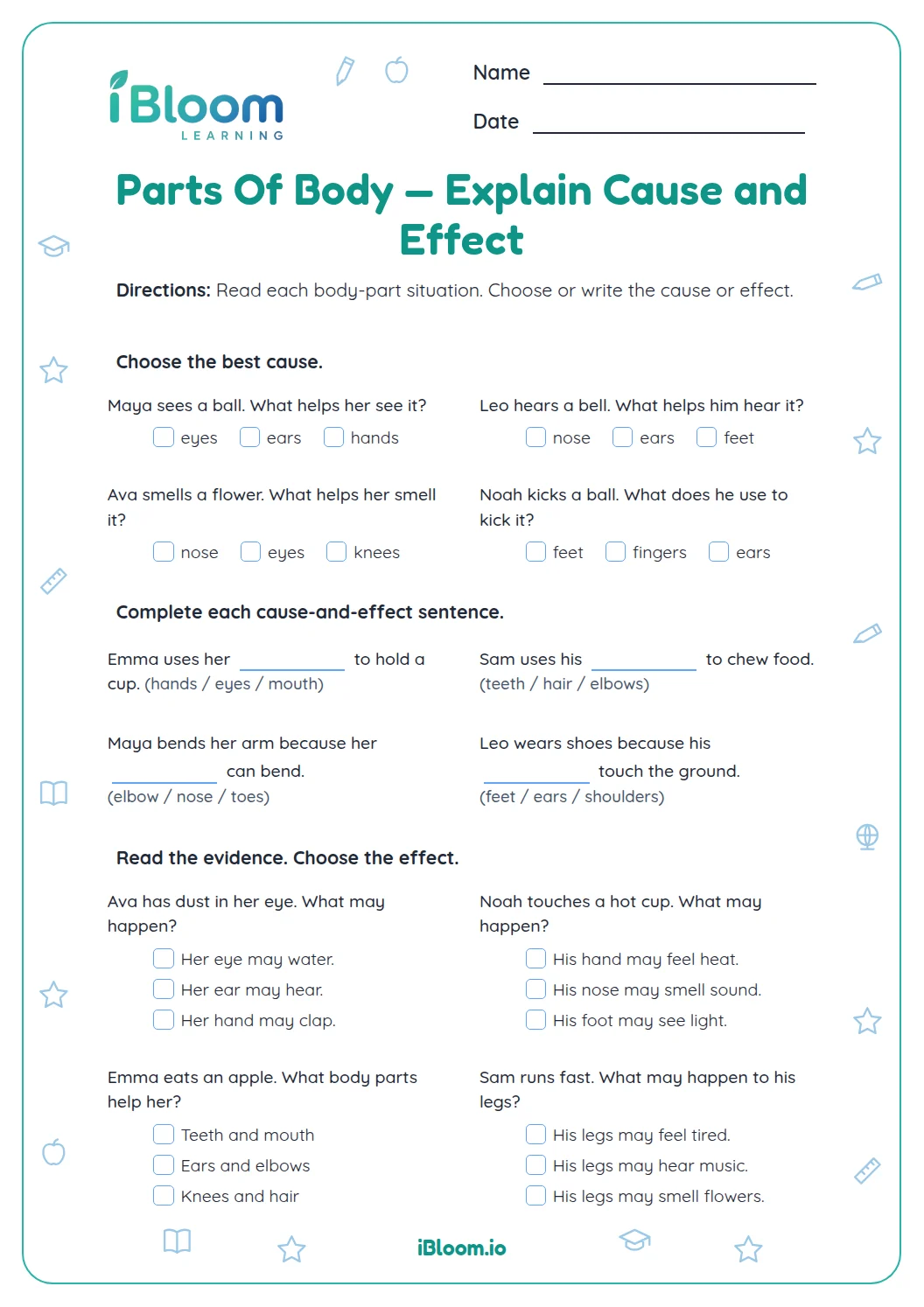
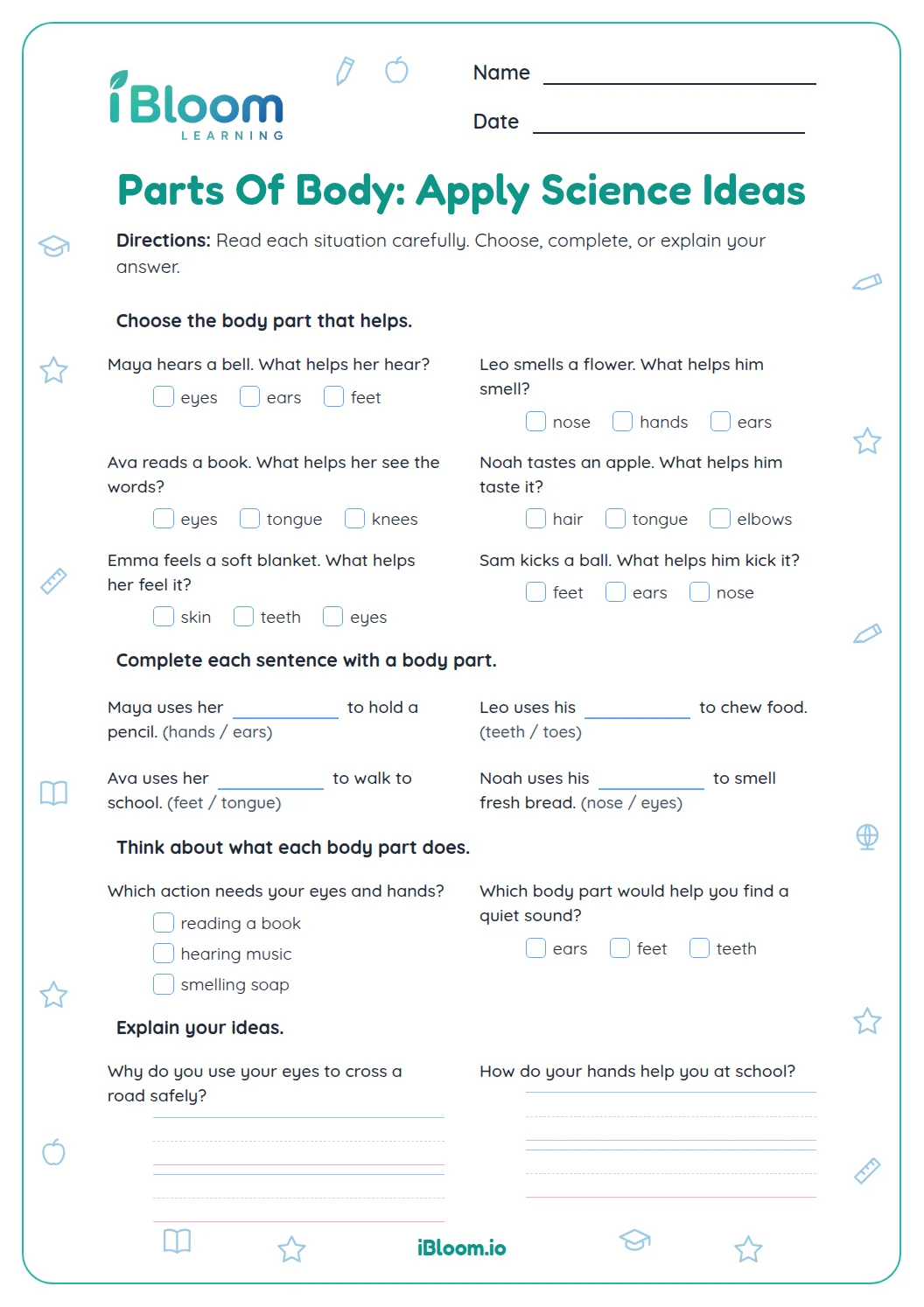
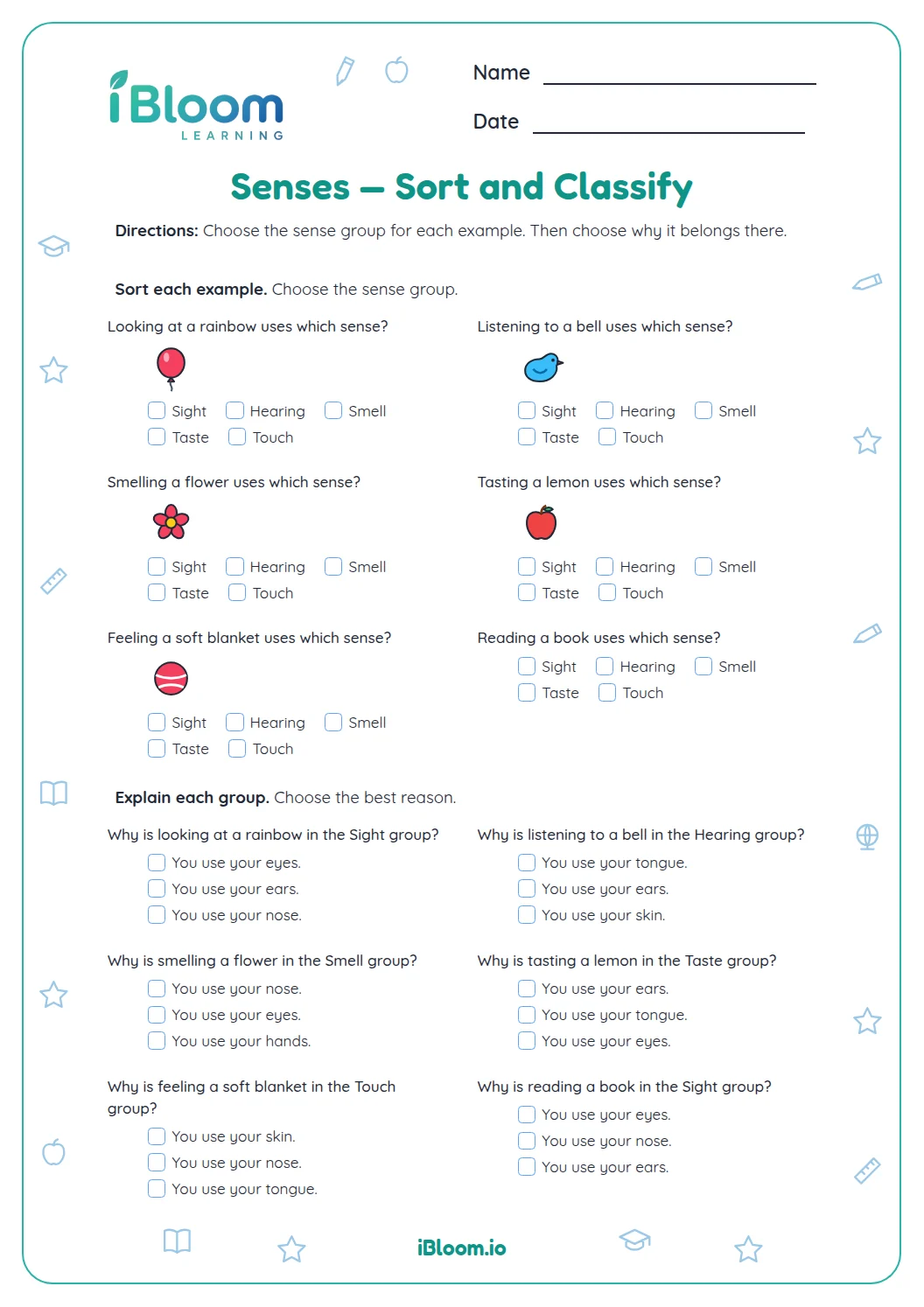
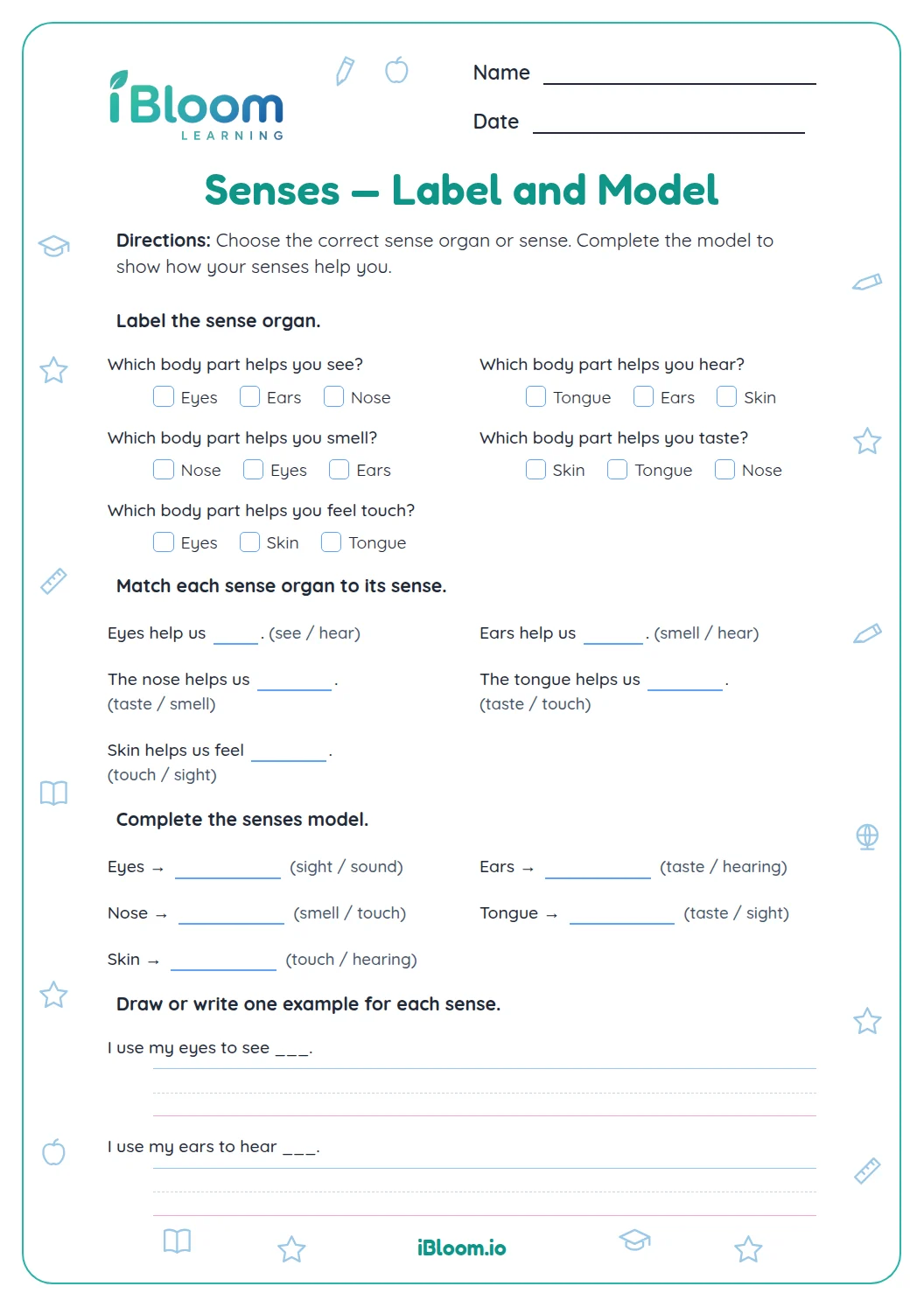
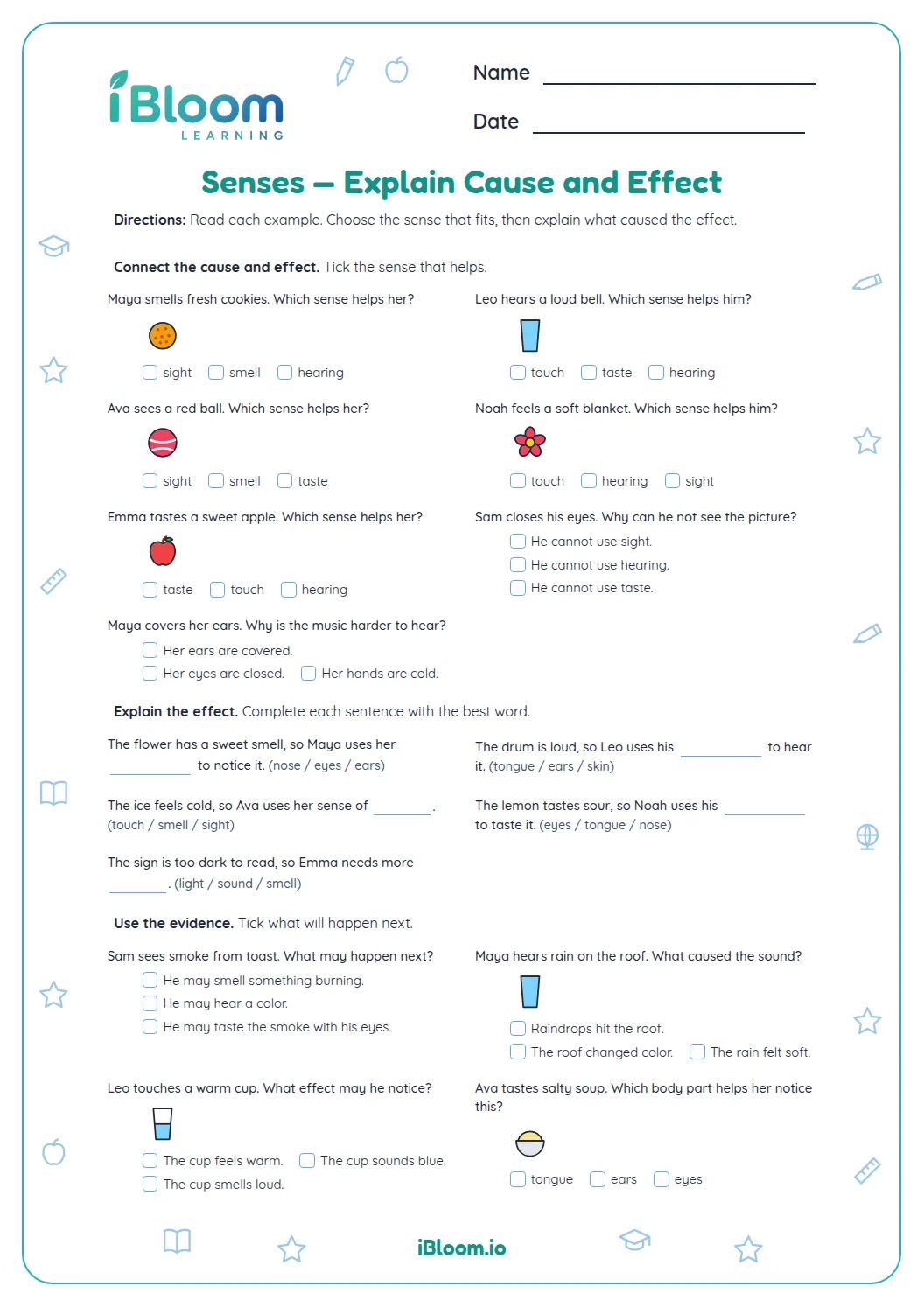
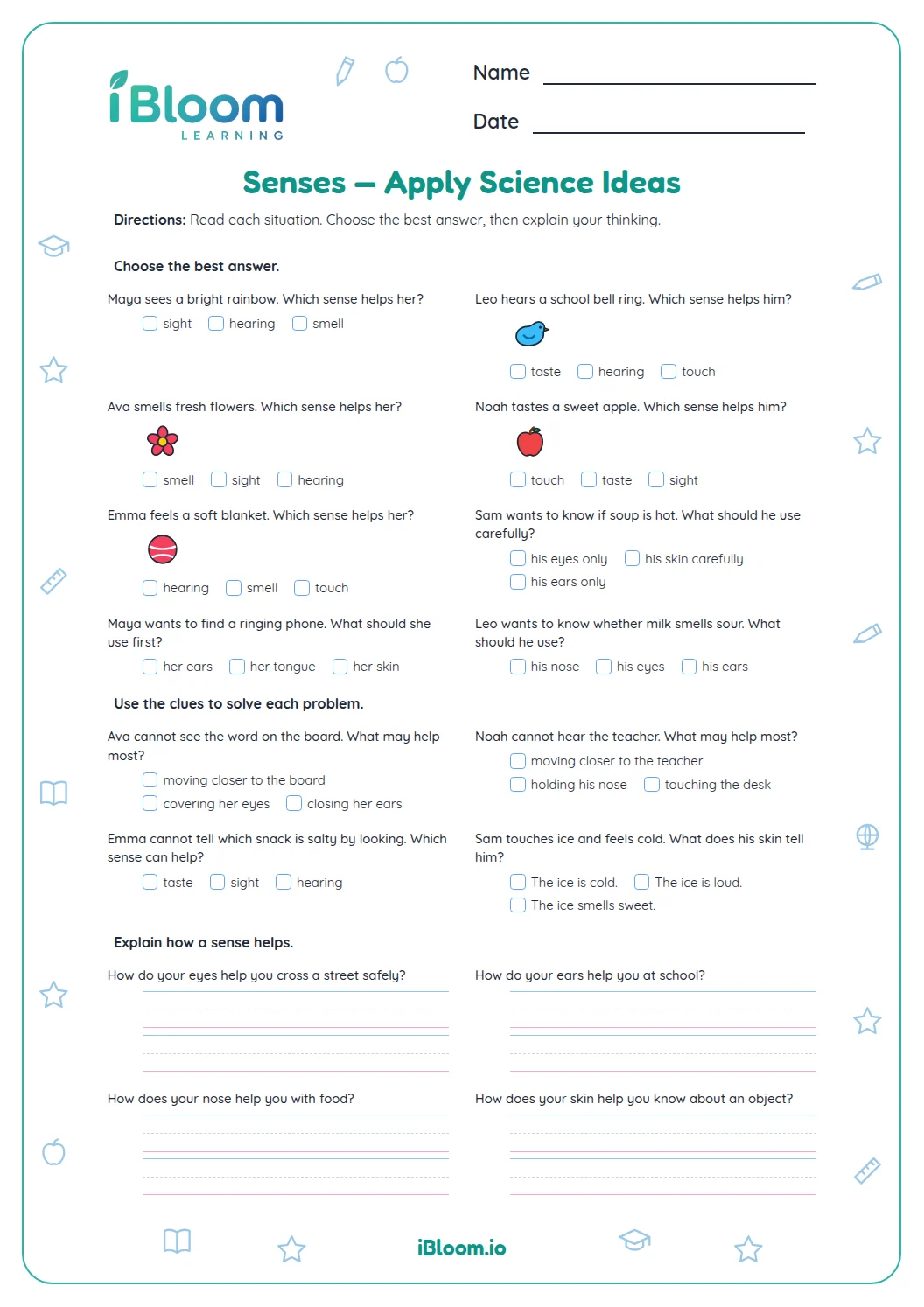
This Grade 1 science worksheet connects familiar face parts with the jobs they help people do. Children identify parts used for seeing, hearing, smelling, and tasting, then apply those ideas to situations such as noticing dust or a timer. The 14 questions move from choosing a part to choosing a simple result. A separate answer key is included.
What will children practice?
Children match face parts with their jobs, then apply those ideas in simple situations. Question 10 asks why people blink when dust comes near the eyes; blinking helps protect the eyes.
- 1Which part helps you see a rainbow?
How can children check their thinking?
Match the sense in the question with the part that receives it. For application questions, connect the part’s job to what the person notices or does.
How is the worksheet arranged?
Part A reviews parts and functions, followed by two parts applying them to everyday situations. All 14 questions use answer choices.
How to connect a face part with its job
- 1Read the whole situation before answering.
- 2Identify the sense or action named in the question.
- 3Match it to a face part that helps with that job.
- 4For a situation, explain what the part helps the person notice.
- 5Check the answer key after completing the questions.
Common mistakes and quick fixes
The mistake
Choosing a part linked to a different sense.
The fix
Match seeing, hearing, smelling, or tasting to its organ.
The mistake
Thinking the nose only smells.
The fix
Remember that air also moves through the nose.
The mistake
Naming a part without explaining its job.
The fix
Add what the part helps a person do.
What to practice next
Questions parents and teachers ask
How many questions are included?
There are 14 questions across the activity pages, and a separate answer key. The first questions connect face parts with their jobs, and later items use those ideas in everyday situations. Children may explain some application answers in a short phrase.
Which face parts appear in the practice?
There are 14 questions across the activity pages, and a separate answer key. The first questions connect face parts with their jobs, and later items use those ideas in everyday situations. Children may explain some application answers in a short phrase.
Does the worksheet include questions about the senses?
The questions include eyes, ears, nose, tongue, teeth, lips, and eyebrows. Children connect these parts with jobs such as seeing, hearing, smelling, tasting, chewing, smiling, and helping protect the eyes. Several prompts ask them to apply a job in a familiar situation.
How can an adult support a child who is unsure?
Read the situation aloud and ask which sense or action it names. Then invite the child to match that clue with a face part and describe its job. The key can help check the answer after the child has tried, and gives an example of a clear response.
Is an answer key provided?
Yes. A separate answer-key page follows the activity pages and lists the expected face part or explanation for each question. Some situation questions allow a short answer that expresses the same science idea in different words, such as noticing a timer by its light.