







About this worksheet
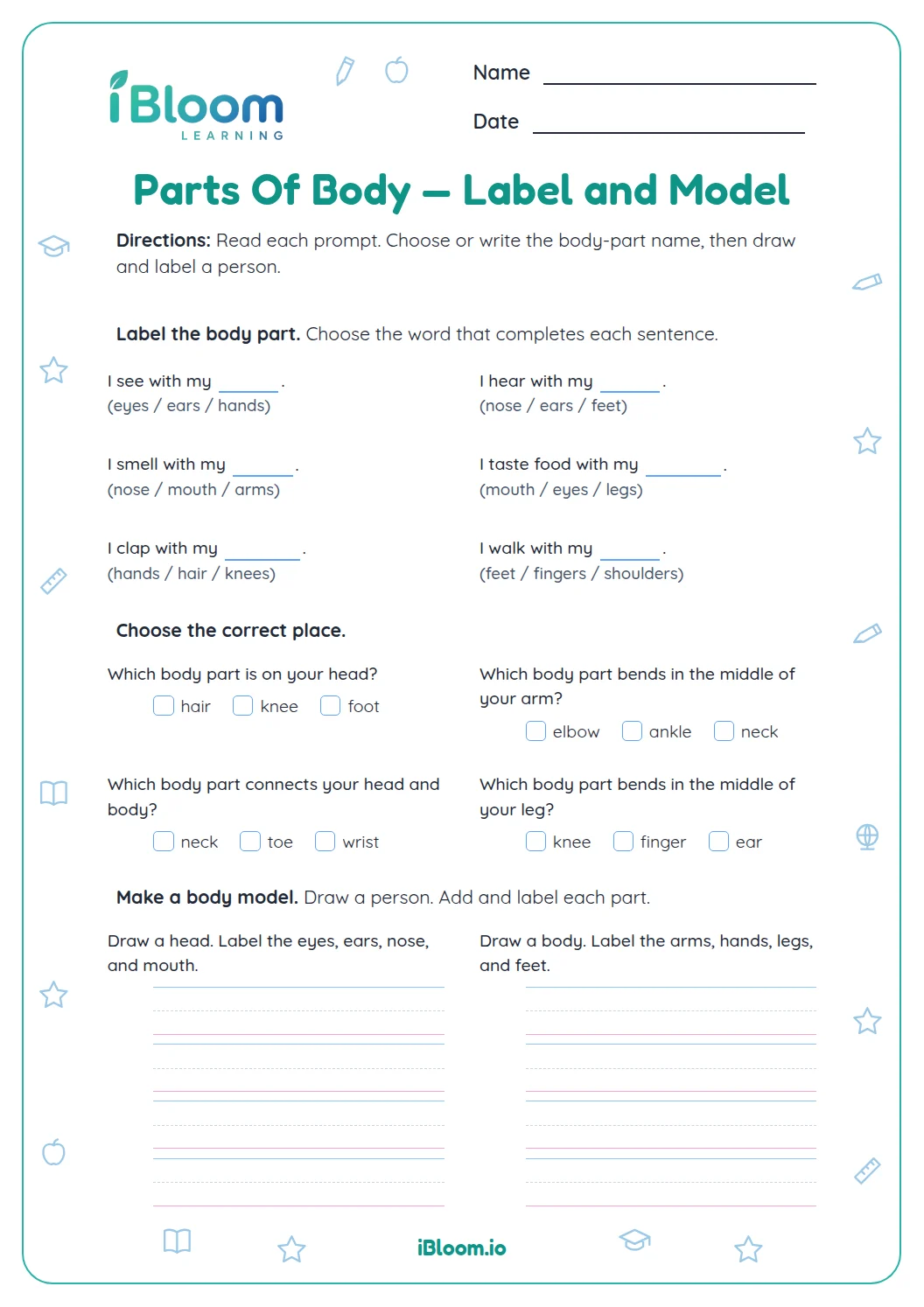
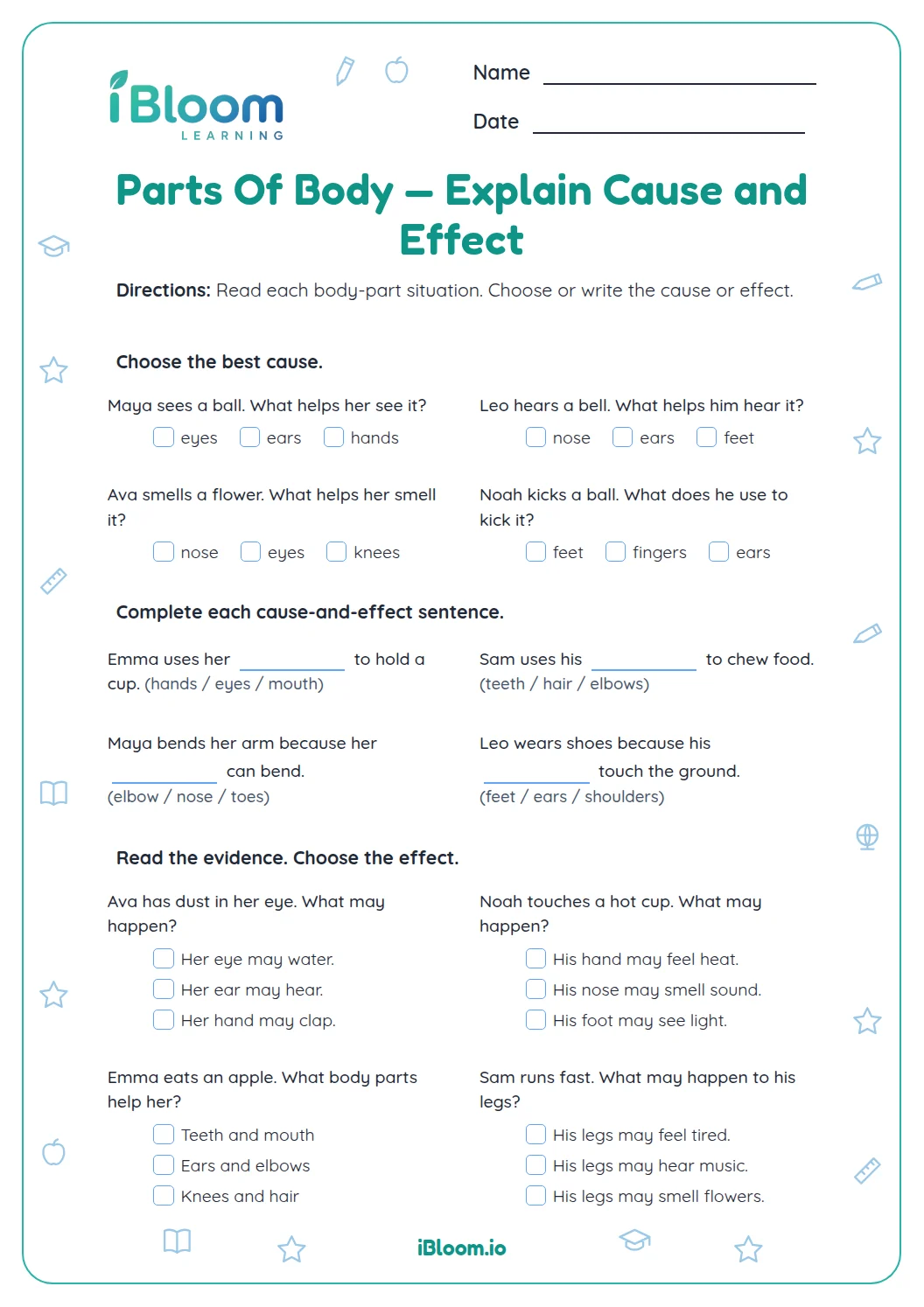
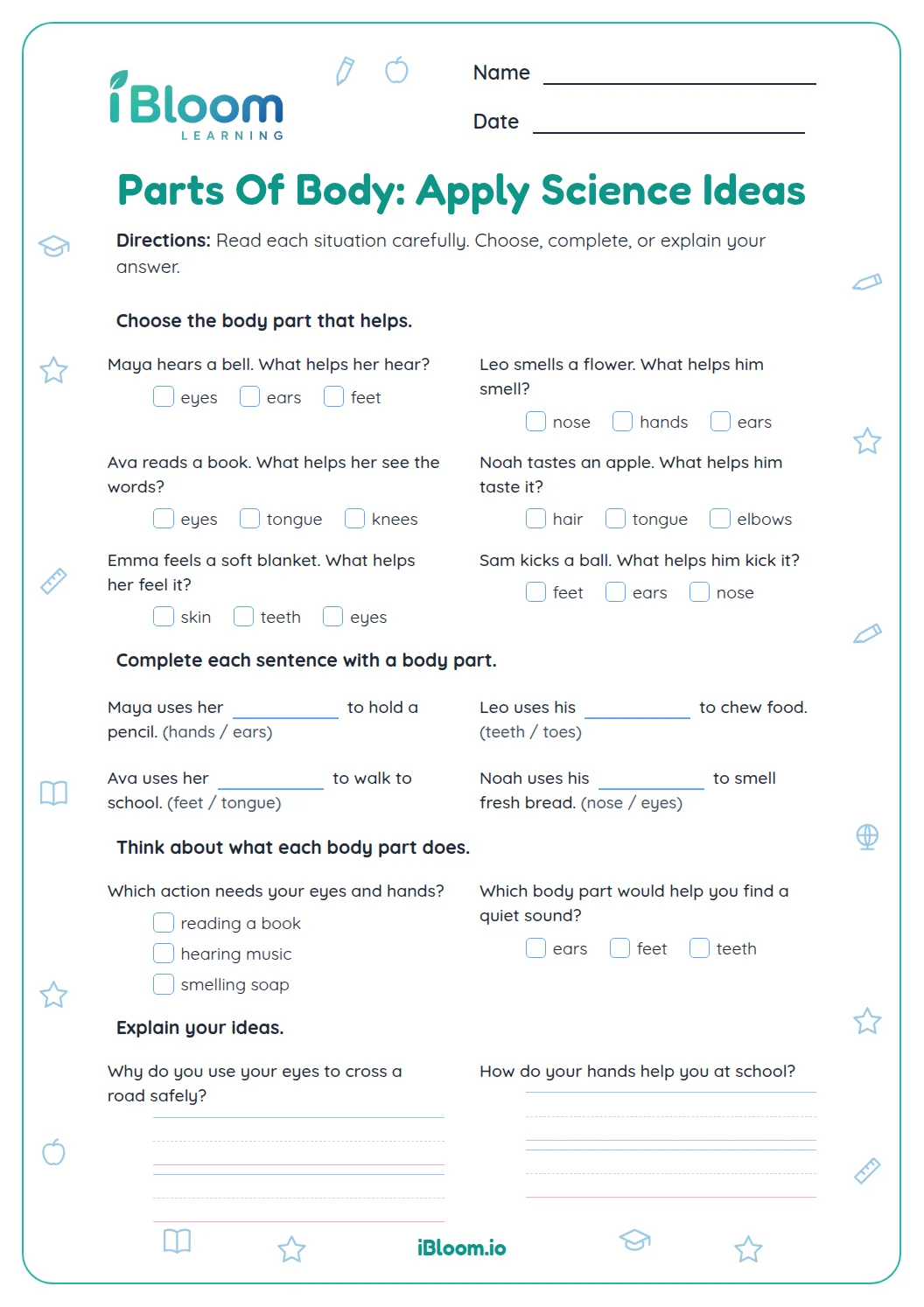
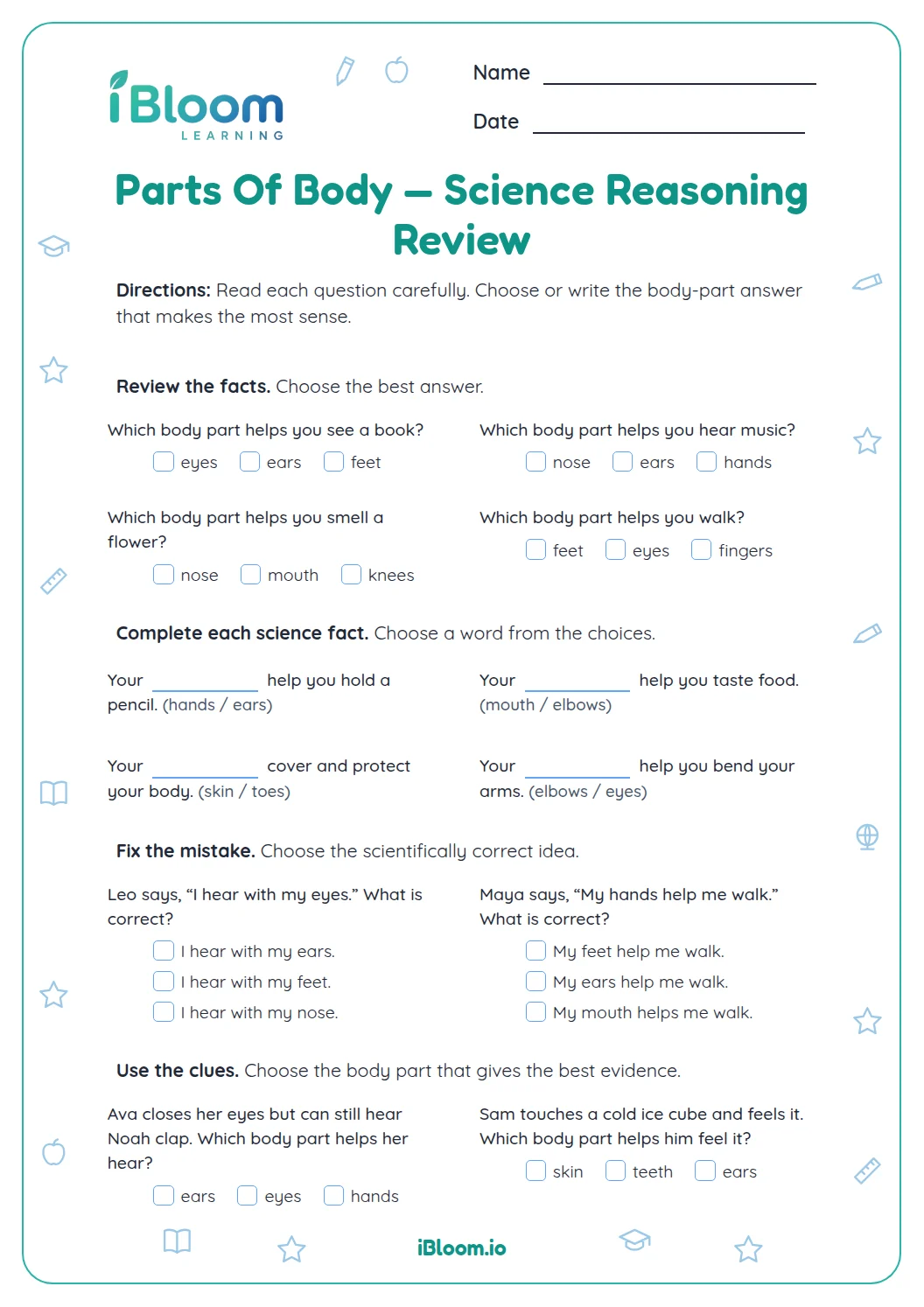
This free Grade 1 worksheet asks children to classify body parts by what they help us do. Part A sorts eight body-part words into job groups, including seeing, hearing, smelling, tasting, feeling touch, holding, walking and running, and chewing. Part B asks children to choose a reason for six of those groupings. Four small pictures support the body-part words, and an adult can read the choices aloud. The fourteen questions practice vocabulary classification in Common Core L.1.5.a. A separate answer key marks every correct choice.
Aligned to L.1.5.a
Which body parts and jobs are included?
Part A covers eyes, ears, nose, tongue, skin, hands, legs, and teeth. Children connect each word with a familiar job. The choices keep the categories distinct within each question: eyes go with seeing, while ears go with hearing.
Four small pictures show an eye, an ear, a hand, and a tooth. Their prompts use the plural words eyes, ears, hands, and teeth. Read the words together so children connect the pictured example with the body-part category.
How do children explain why a part belongs?
Part B asks children to select a reason, rather than write an explanation. For teeth, the reason is that they break food apart. For skin, it is sensing touch. Encourage children to say the complete connection aloud after choosing.
The eight job groups describe familiar functions. A body part can help with more than one job; for each question, children choose the one offered answer that fits.
- 1Body-part word: teeth
- 2Choose the group: Chewing
- 3Choose the reason: They break food apart.
- 4Say it together: Teeth help us chew by breaking food apart.
How can adults support the sorting?
Read the body-part word and all three choices before the child answers. Ask for a familiar example, such as hearing a bell or holding a cup. Then connect that example with the printed job group.
Keep the task focused on matching words with functions. Children may answer orally first and then color a circle. No spelling, cutting, or writing of body-part names is required.
How to use this worksheet
- 1Read the body-part names and name the four picture clues.
- 2Choose a job group for each of the eight Part A words.
- 3Ask the child to give an everyday example of one chosen job.
- 4Read each Part B question and select the reason the part belongs.
- 5Check all fourteen choices with the key and say the corrected connection aloud.
Mistakes to check and ways to help
The mistake
Putting ears in the seeing group.
The fix
Use a familiar example: eyes help us see a bell; ears help us hear its sound.
The mistake
Choosing smelling as the job of hands.
The fix
Hands can hold a flower, while the nose senses its smell. Match the body part to the named job.
The mistake
Choosing a true fact about a different body part in Part B.
The fix
Reread the named part before choosing. Teeth break food apart; hearing sounds describes the job of ears.
Common Core alignment
Sort body-part words into categories based on their jobs.
On this sheet: Children classify eight body-part words by function and choose reasons for six group memberships.
Show the official wordingHide the official wording
Sort words into categories (e.g., colors, clothing) to gain a sense of the concepts the categories represent.
What to practice next
Make more practice
Further reading
Questions parents and teachers ask
Which body parts are sorted?
The worksheet sorts eyes, ears, nose, tongue, skin, hands, legs, and teeth. Children choose a job group for all eight in Part A, then select reasons for six groups in Part B. The fourteen questions connect familiar body-part words with functions such as seeing, tasting, holding, and chewing.
Does the worksheet use pictures?
Yes, four small picture clues show an eye, an ear, a hand, and a tooth in Part A. The prompts use the matching plural body-part words. The remaining questions use words and choices, which an adult can read aloud so children can concentrate on the job groups.
Do children write explanations?
No, Part B gives three reasons to choose from for each group. Children color the circle beside the reason that fits the named body part. You can also ask for an oral explanation, such as “Teeth belong in the chewing group because they break food apart.”
Can a body part have more than one job?
Yes, body parts can help with more than one job. This sheet asks children to choose the matching function from the three choices in each question. For example, hands are placed in the holding-things group, while skin is placed in the group for feeling touch.
How can I check understanding after marking the choices?
Ask for an everyday example of one body part doing its job. A child might name ears for hearing a bell or hands for holding a cup. Then ask the child to explain one Part B choice using both the body-part name and the matching job.