Free printable practice
Human Body Practice Activities
Grade 1 science worksheets for naming body parts, exploring the five senses, and sorting healthy foods such as fruits and vegetables.
Explore Human Body
Free printable worksheet PDFs
Preview every available page, then download the free worksheet PDF for home, homeschool, tutoring, or classroom practice.
Preview the exact activity before downloading it.
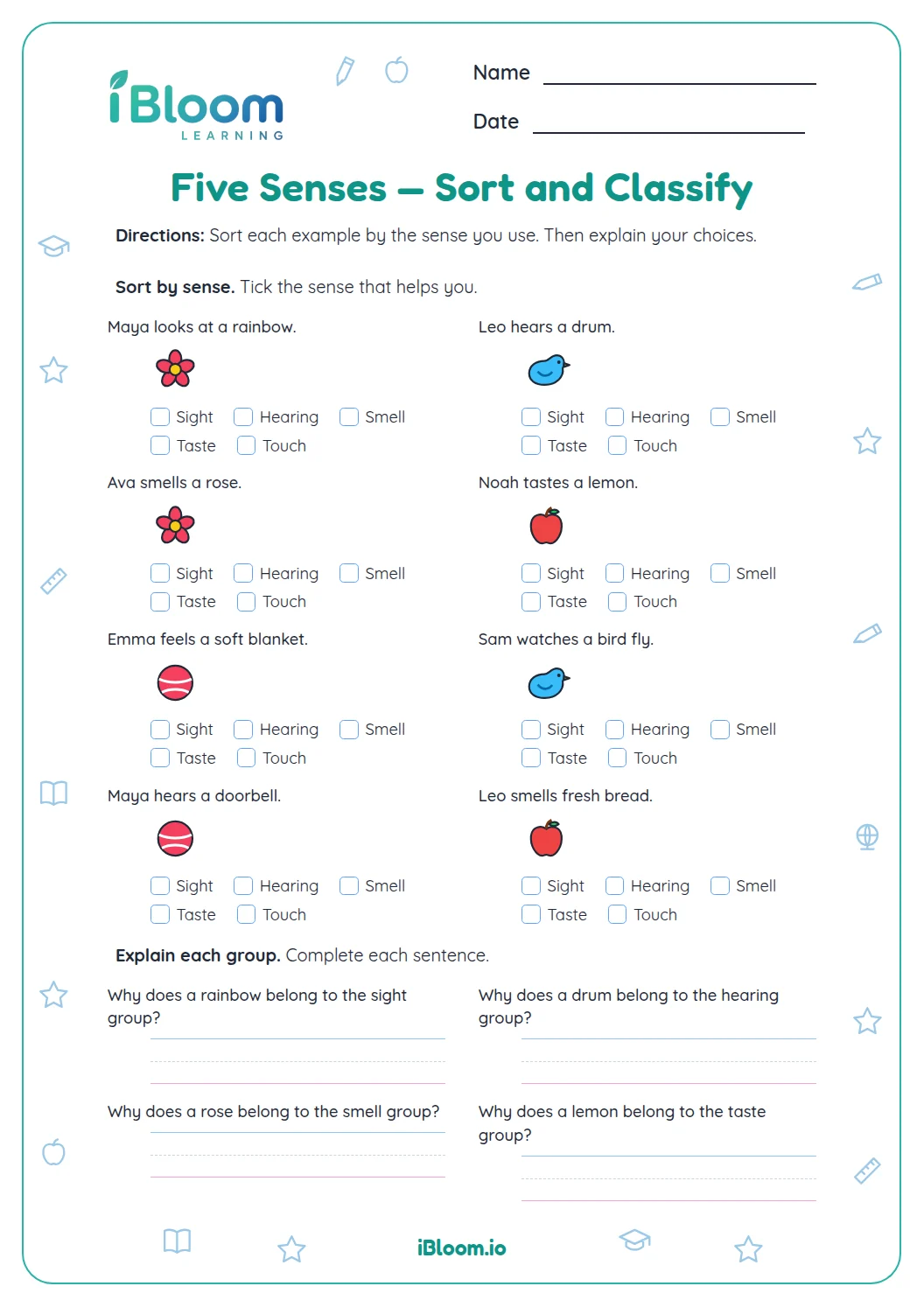 Five Senses — Sort and ClassifyGrade 1 science worksheets that help children identify sight, hearing, smell, taste, and touch through everyday body and observation activities. This sort and classify worksheet provides a distinct, age-appropriate way to practise the same lesson.Grade 1Free PDF preview
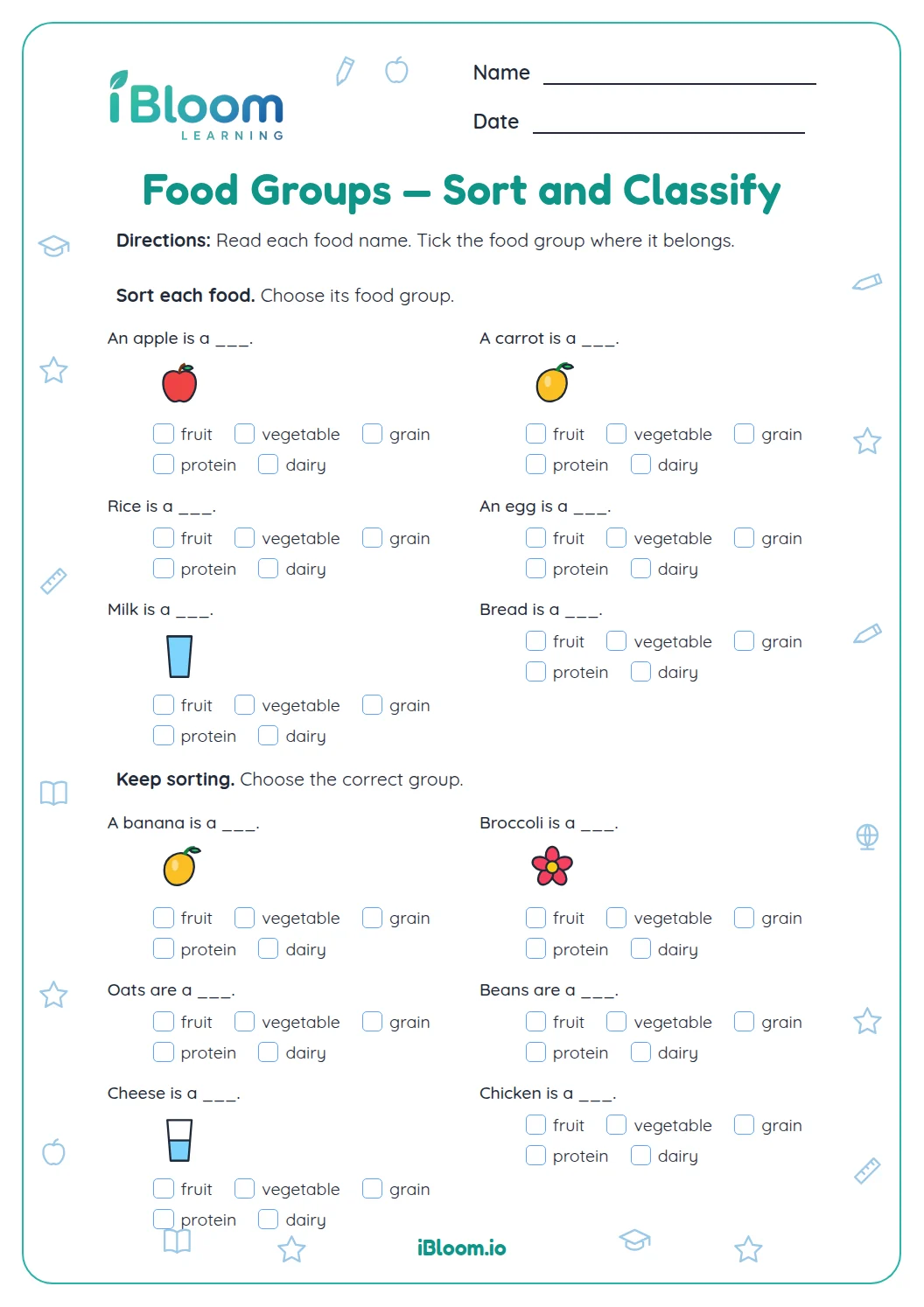 Food Groups — Sort and ClassifyFirst graders sort everyday foods into five groups, build balanced plates, and learn why variety fuels growing bodies. This sort and classify worksheet provides a distinct, age-appropriate way to practise the same lesson.Grade 1Free PDF preview4 pages
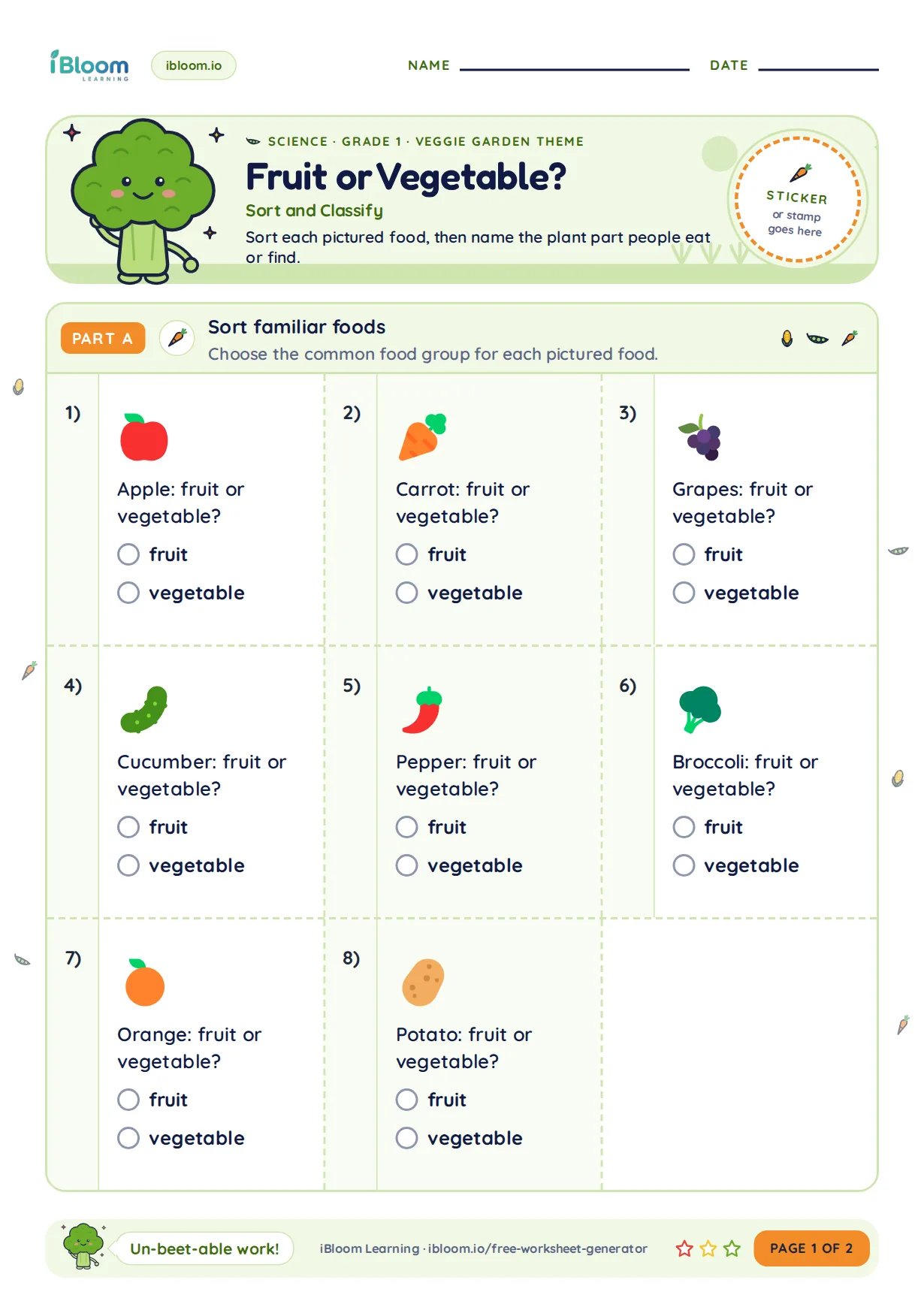 Fruits Vegetables — Sort and ClassifyPrintable Grade 1 science activities help children identify fruits and vegetables while connecting food choices to the human body. This sort and classify worksheet provides a distinct, age-appropriate way to practise the same lesson.Grade 1Free PDF preview
 Healthy Eating — Sort and ClassifyGrade 1 science worksheets help children sort foods, notice balanced choices, and connect healthy eating with caring for the human body. This sort and classify worksheet provides a distinct, age-appropriate way to practise the same lesson.Grade 1Free PDF preview
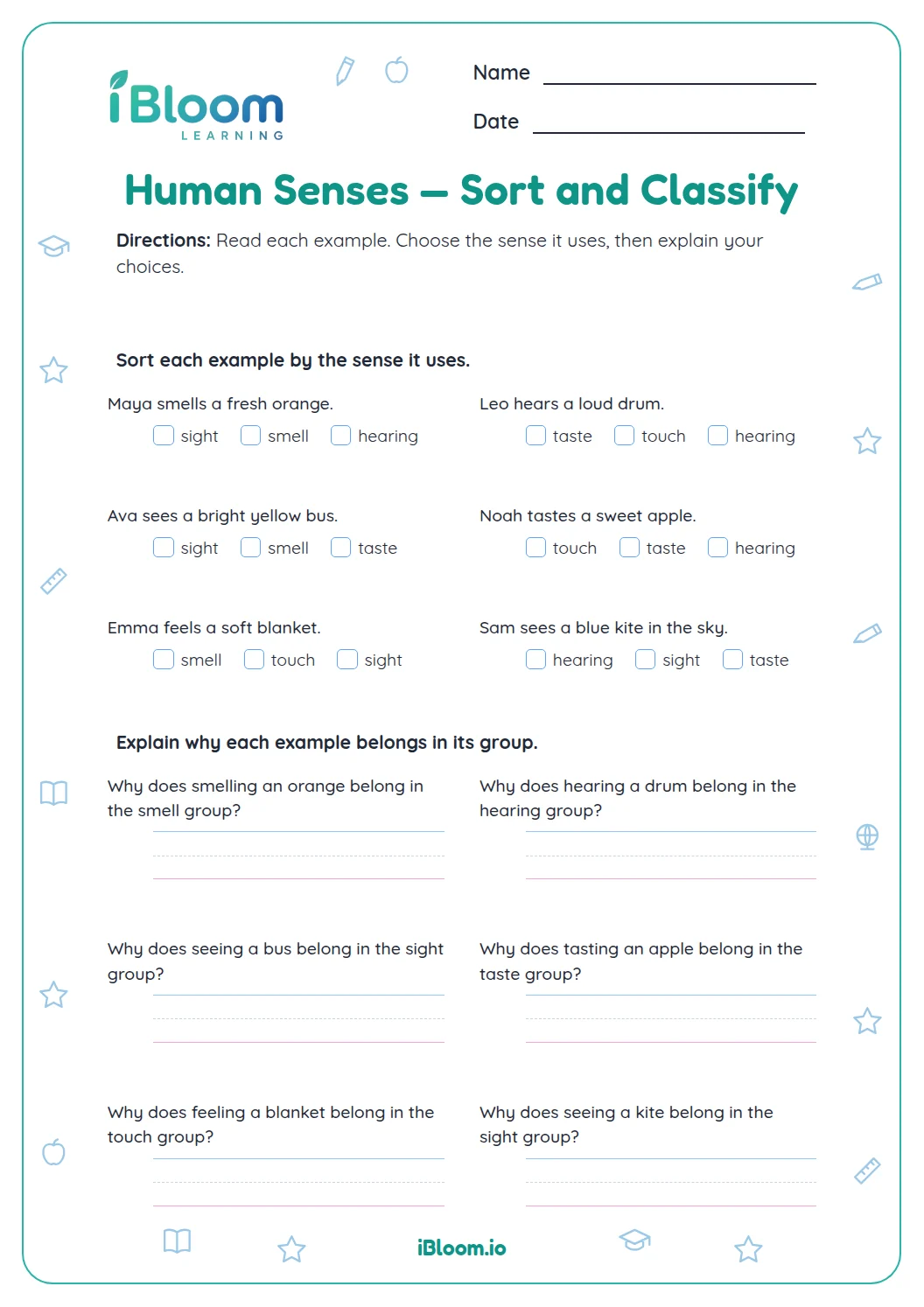 Human Senses — Sort and ClassifyExplore human senses practice activities within Human Body Practice Activities, organised so children, families, and elementary teachers can move from broad learning areas to focused printable practice. This sort and classify worksheet provides a distinct, age-appropriate way to practise the same lesson.Grade 1Free PDF preview
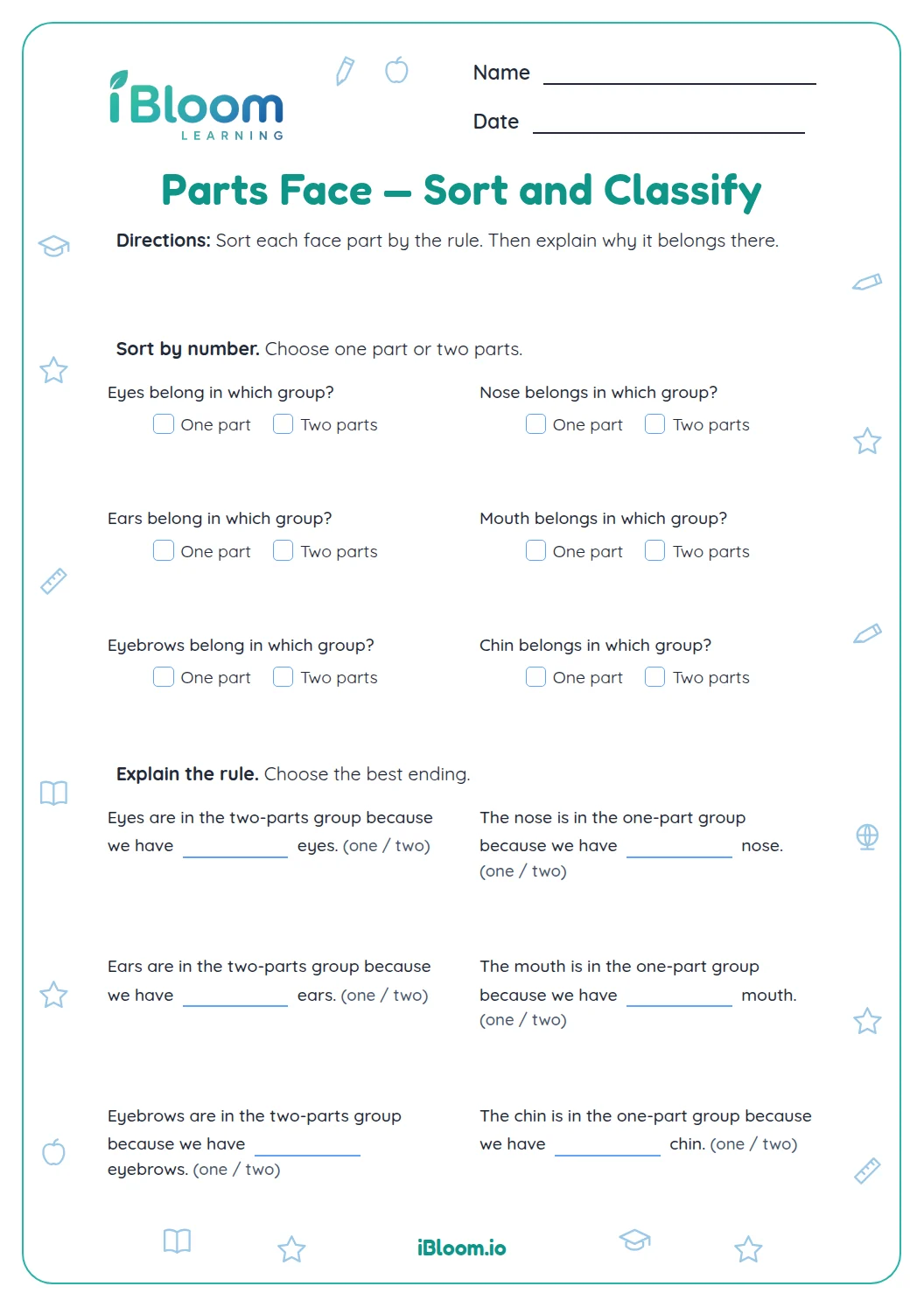 Parts Face — Sort and ClassifyGrade 1 science worksheets for naming, locating, and describing face parts through labeling, matching, drawing, and observation activities. This sort and classify worksheet provides a distinct, age-appropriate way to practise the same lesson.Grade 1Free PDF preview4 pages
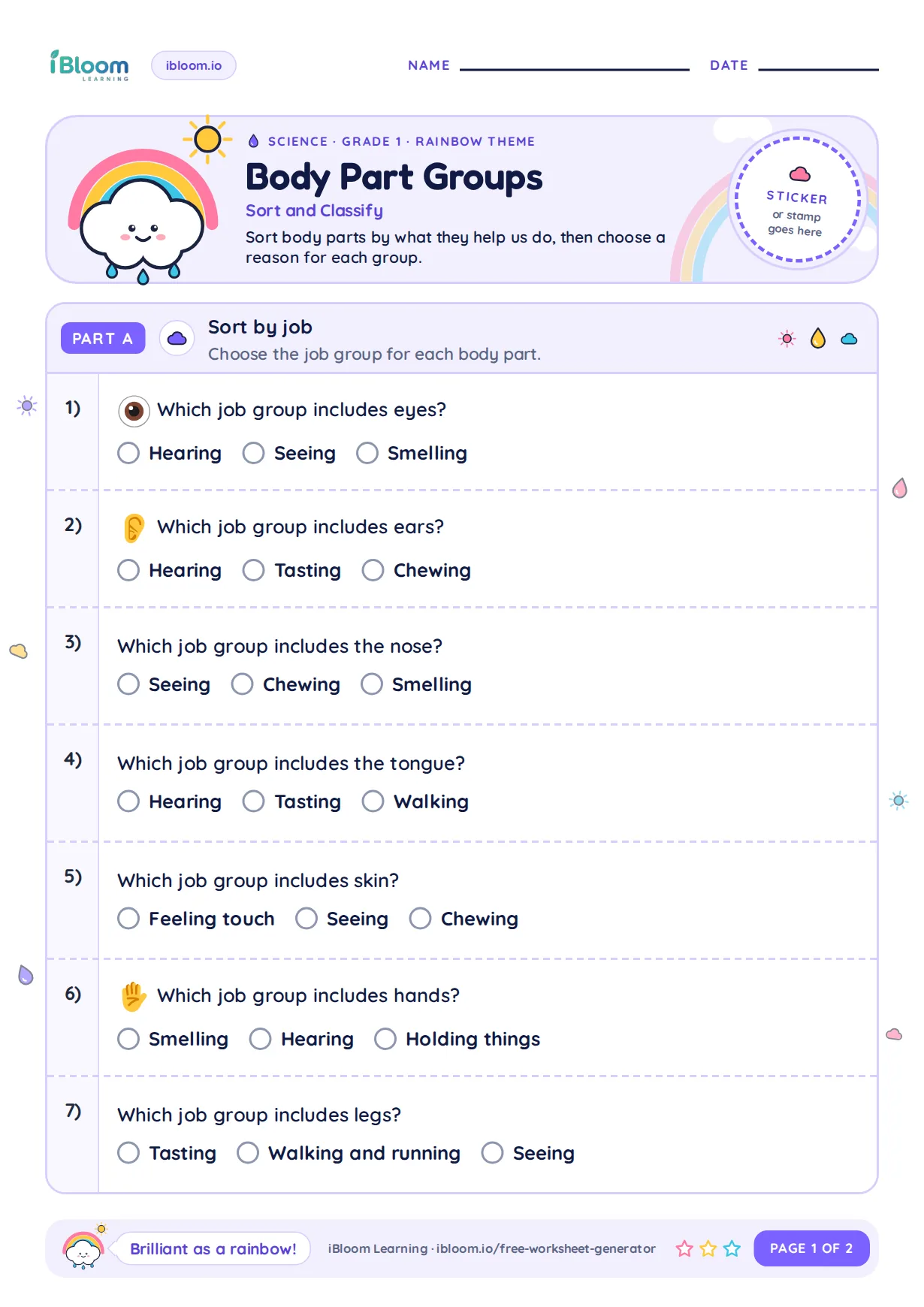 Parts Of Body — Sort and ClassifyGrade 1 science worksheets help children name, locate, label, and describe common external body parts through simple printable activities. This sort and classify worksheet provides a distinct, age-appropriate way to practise the same lesson.Grade 1Free PDF preview
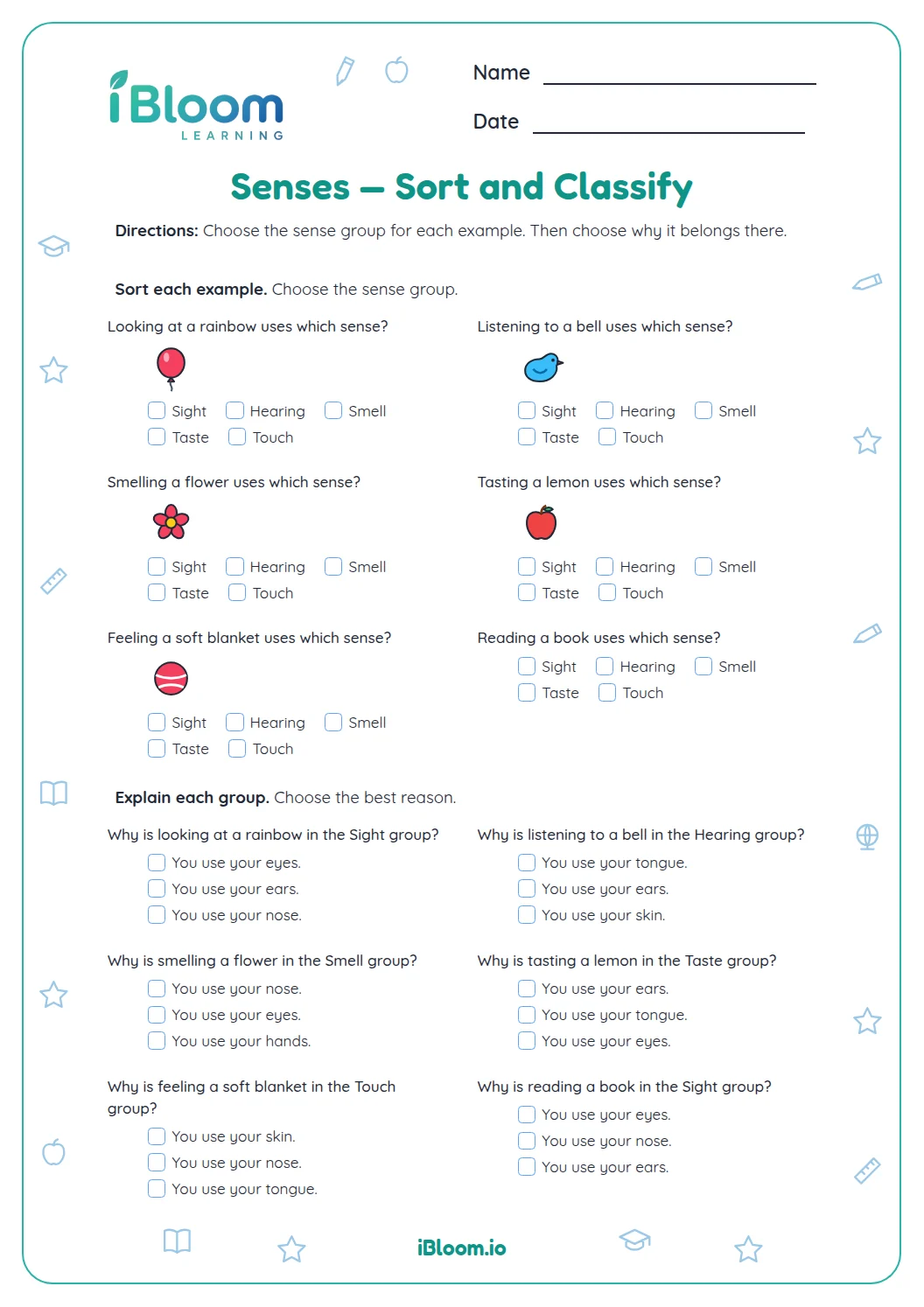 Senses — Sort and ClassifyExplore senses practice activities within Human Body Practice Activities, organised so children, families, and elementary teachers can move from broad learning areas to focused printable practice. This sort and classify worksheet provides a distinct, age-appropriate way to practise the same lesson.Grade 1Free PDF preview
 Five Senses — Label and ModelGrade 1 science worksheets that help children identify sight, hearing, smell, taste, and touch through everyday body and observation activities. This label and model worksheet provides a distinct, age-appropriate way to practise the same lesson.Grade 1Free PDF preview
 Food Groups — Label and ModelFirst graders sort everyday foods into five groups, build balanced plates, and learn why variety fuels growing bodies. This label and model worksheet provides a distinct, age-appropriate way to practise the same lesson.Grade 1Free PDF preview
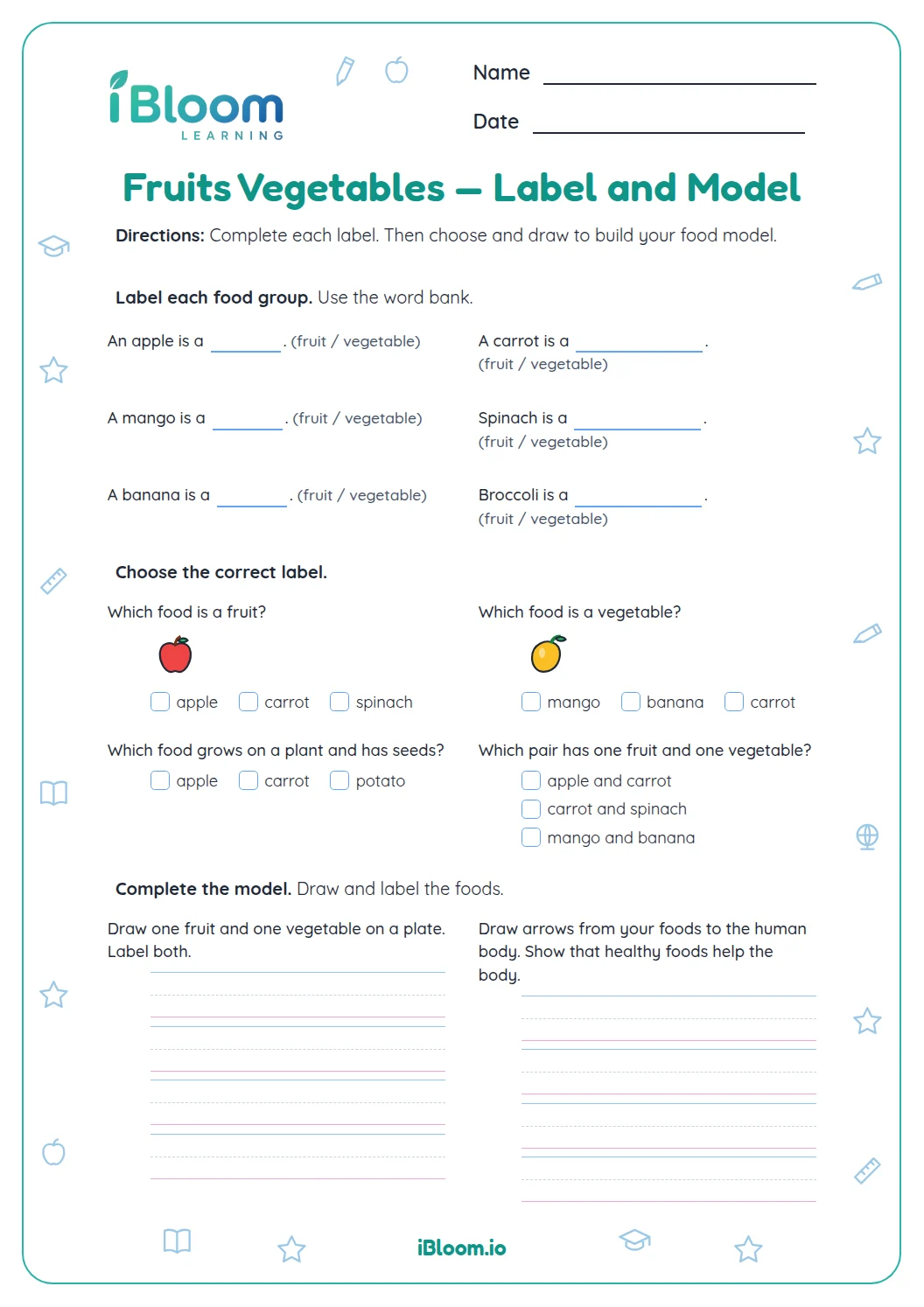 Fruits Vegetables — Label and ModelPrintable Grade 1 science activities help children identify fruits and vegetables while connecting food choices to the human body. This label and model worksheet provides a distinct, age-appropriate way to practise the same lesson.Grade 1Free PDF preview4 pages
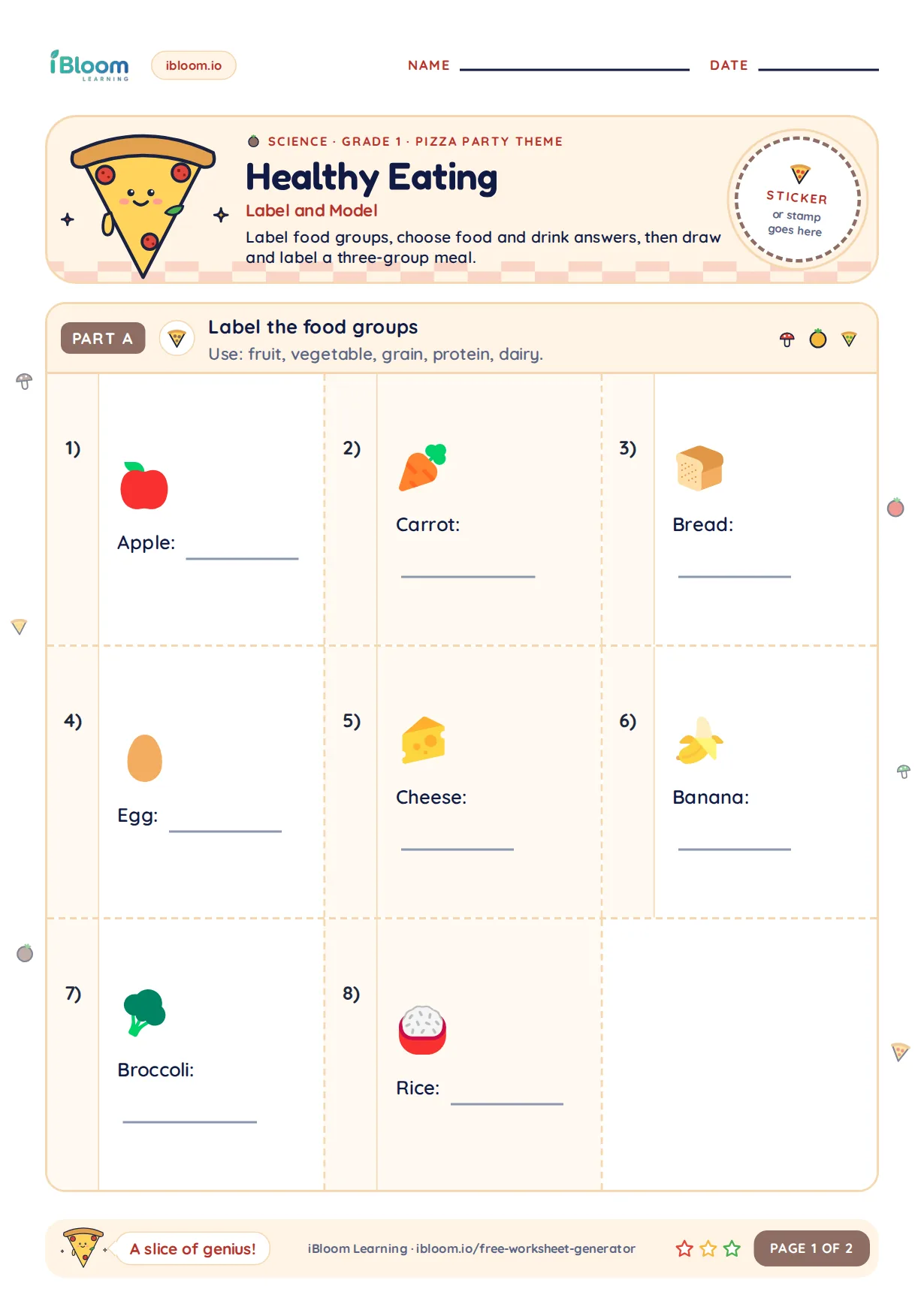 Healthy Eating — Label and ModelGrade 1 science worksheets help children sort foods, notice balanced choices, and connect healthy eating with caring for the human body. This label and model worksheet provides a distinct, age-appropriate way to practise the same lesson.Grade 1Free PDF preview
 Human Senses — Label and ModelExplore human senses practice activities within Human Body Practice Activities, organised so children, families, and elementary teachers can move from broad learning areas to focused printable practice. This label and model worksheet provides a distinct, age-appropriate way to practise the same lesson.Grade 1Free PDF preview
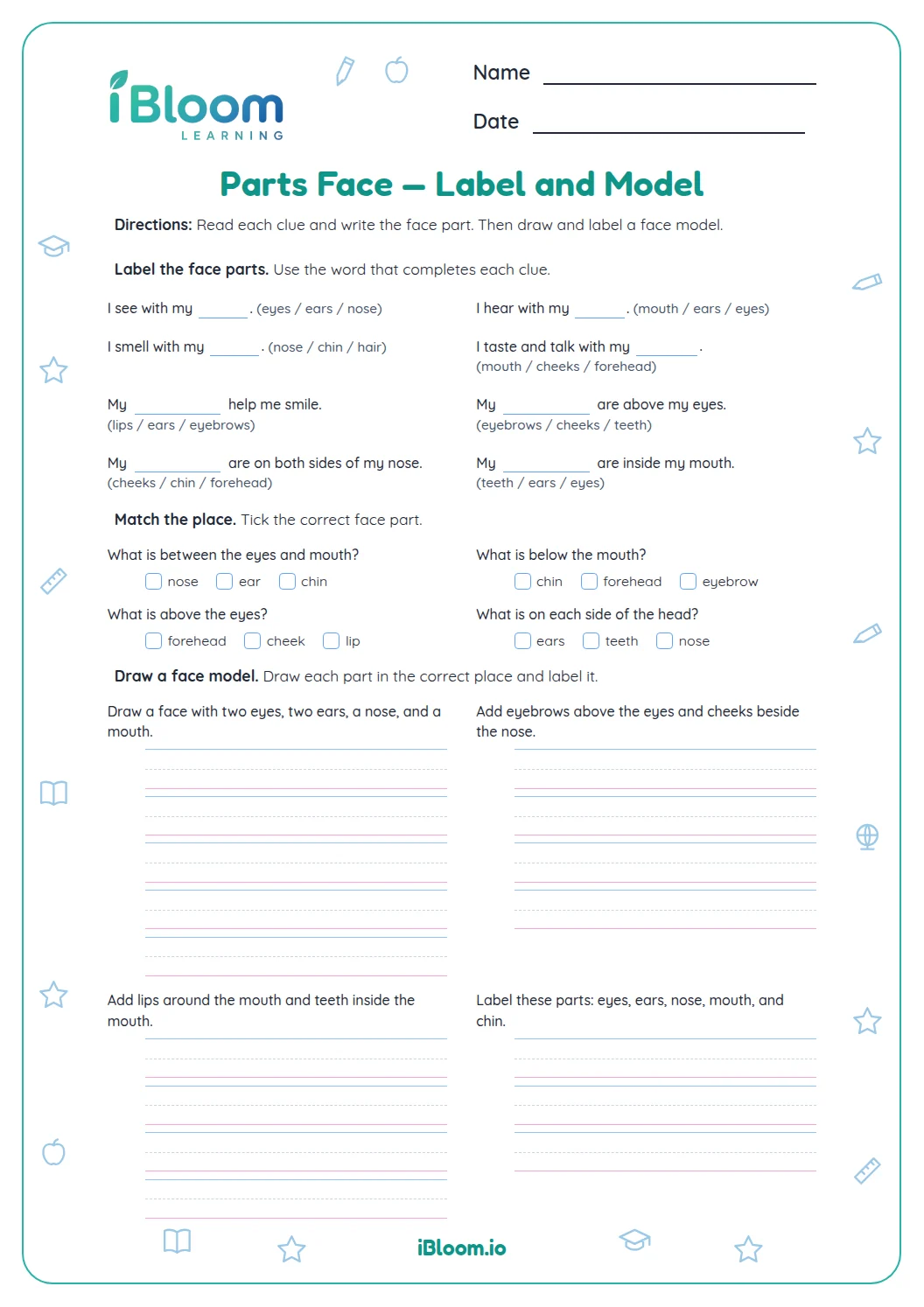 Parts Face — Label and ModelGrade 1 science worksheets for naming, locating, and describing face parts through labeling, matching, drawing, and observation activities. This label and model worksheet provides a distinct, age-appropriate way to practise the same lesson.Grade 1Free PDF preview
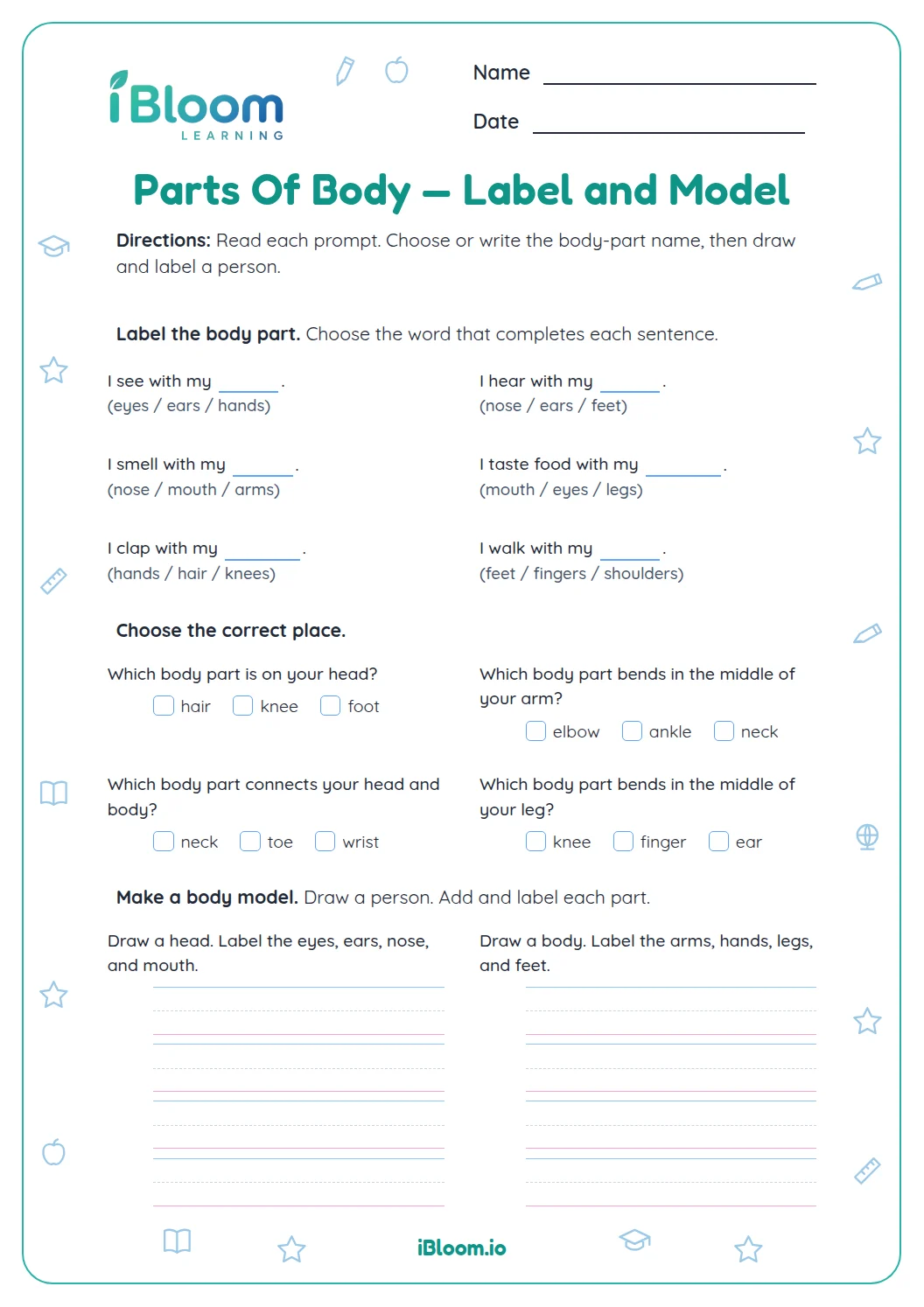 Parts Of Body — Label and ModelGrade 1 science worksheets help children name, locate, label, and describe common external body parts through simple printable activities. This label and model worksheet provides a distinct, age-appropriate way to practise the same lesson.Grade 1Free PDF preview
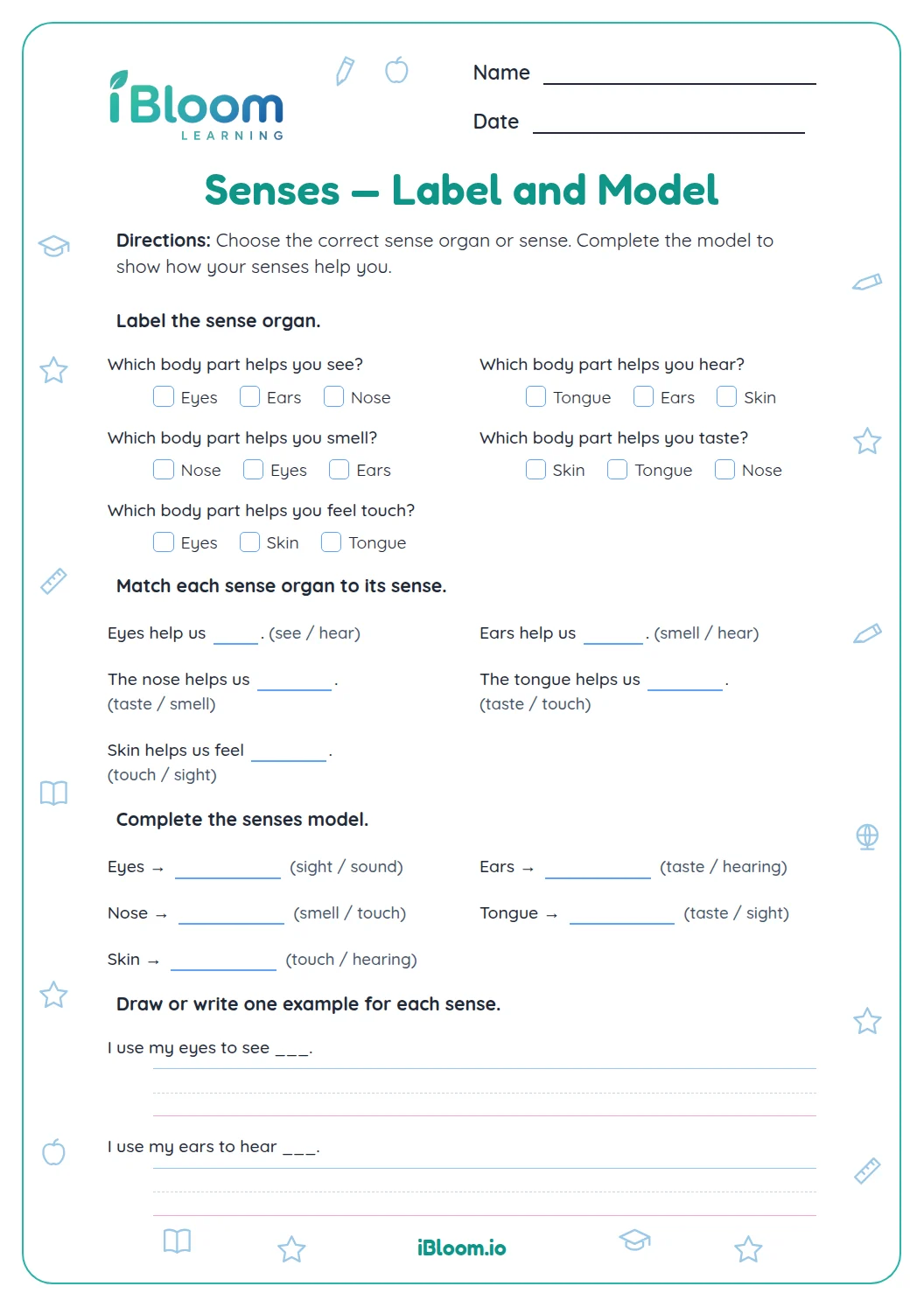 Senses — Label and ModelExplore senses practice activities within Human Body Practice Activities, organised so children, families, and elementary teachers can move from broad learning areas to focused printable practice. This label and model worksheet provides a distinct, age-appropriate way to practise the same lesson.Grade 1Free PDF preview
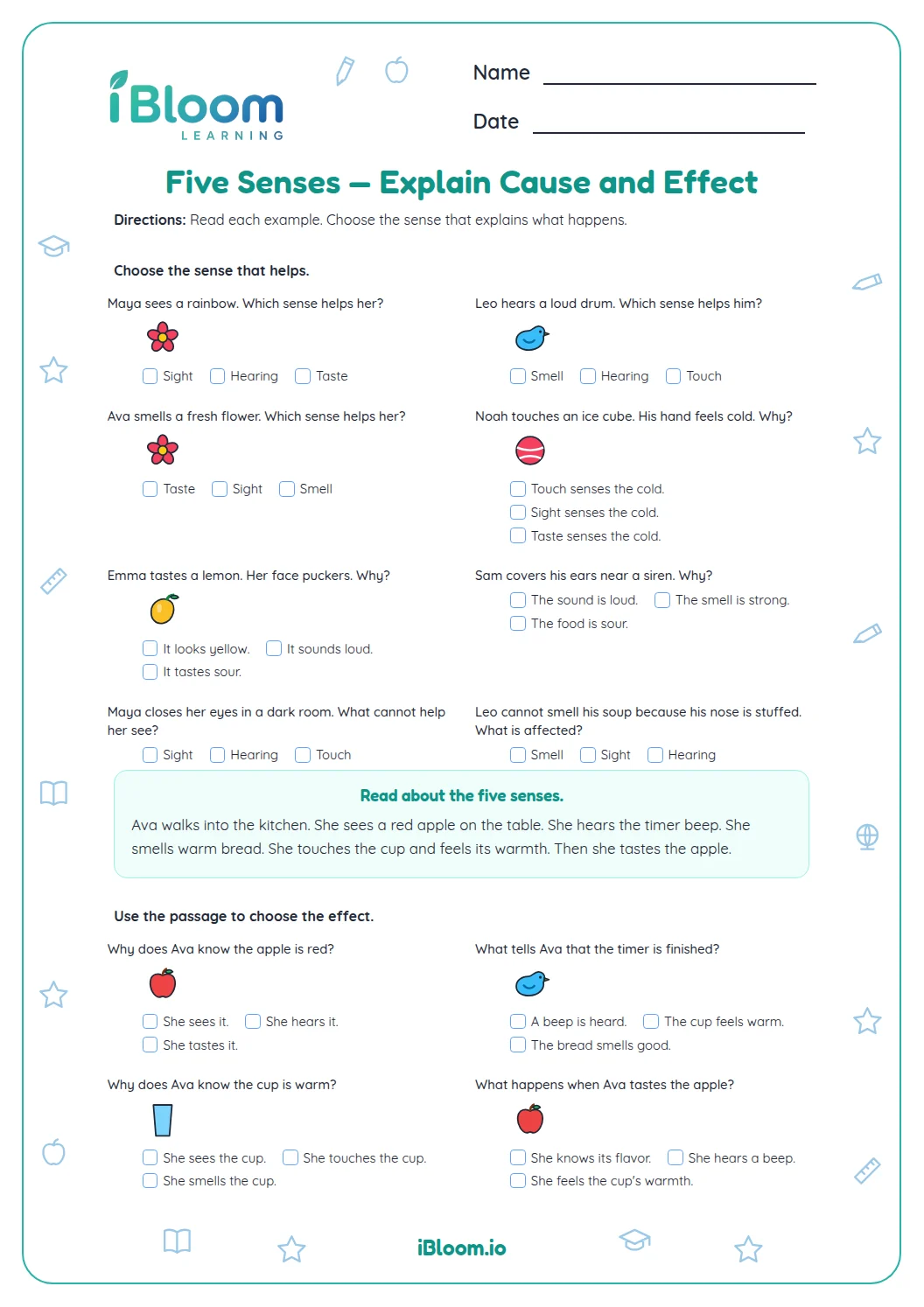 Five Senses — Explain Cause and EffectGrade 1 science worksheets that help children identify sight, hearing, smell, taste, and touch through everyday body and observation activities. This explain cause and effect worksheet provides a distinct, age-appropriate way to practise the same lesson.Grade 1Free PDF preview
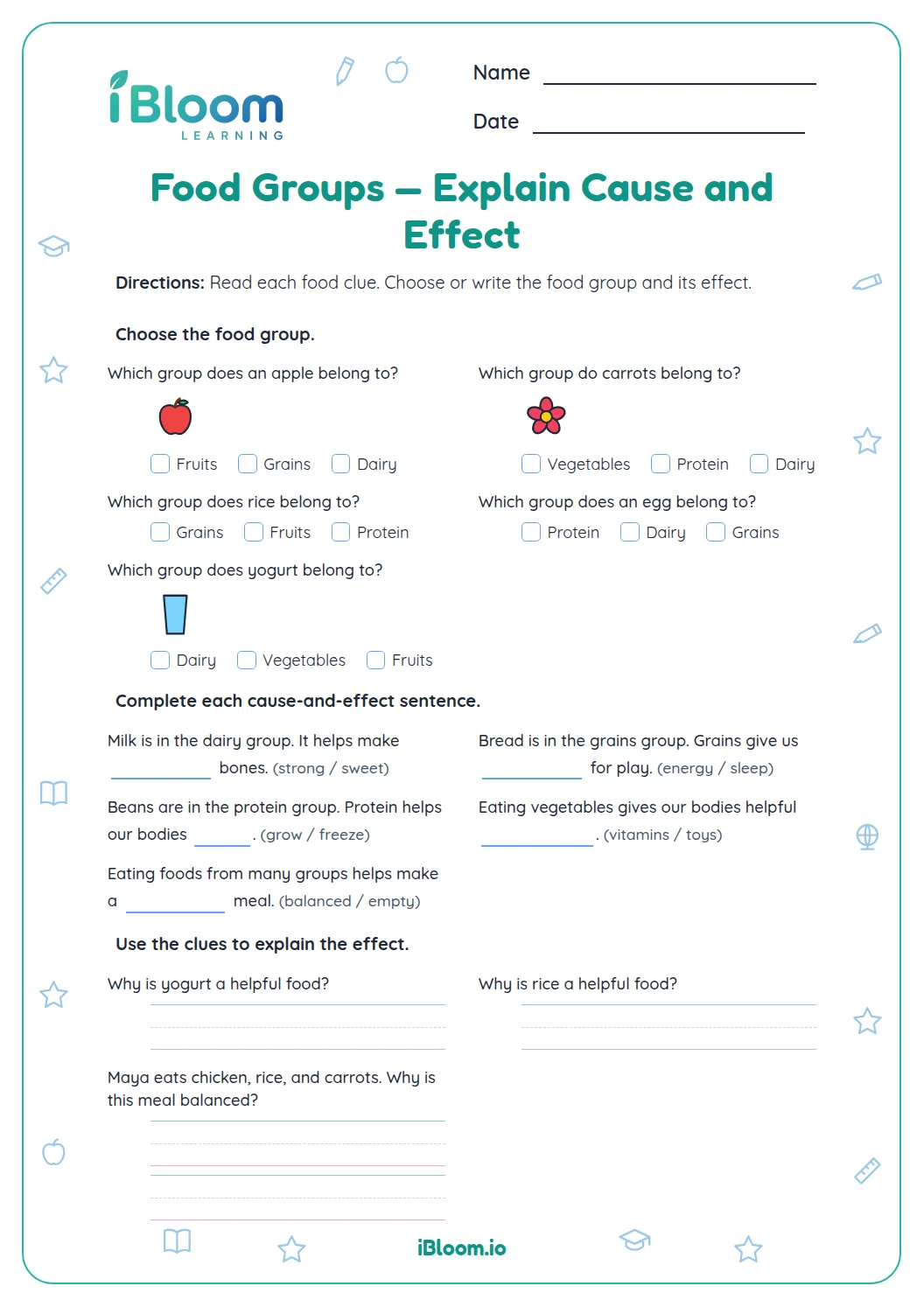 Food Groups — Explain Cause and EffectFirst graders sort everyday foods into five groups, build balanced plates, and learn why variety fuels growing bodies. This explain cause and effect worksheet provides a distinct, age-appropriate way to practise the same lesson.Grade 1Free PDF preview
 Fruits Vegetables — Explain Cause and EffectPrintable Grade 1 science activities help children identify fruits and vegetables while connecting food choices to the human body. This explain cause and effect worksheet provides a distinct, age-appropriate way to practise the same lesson.Grade 1Free PDF preview
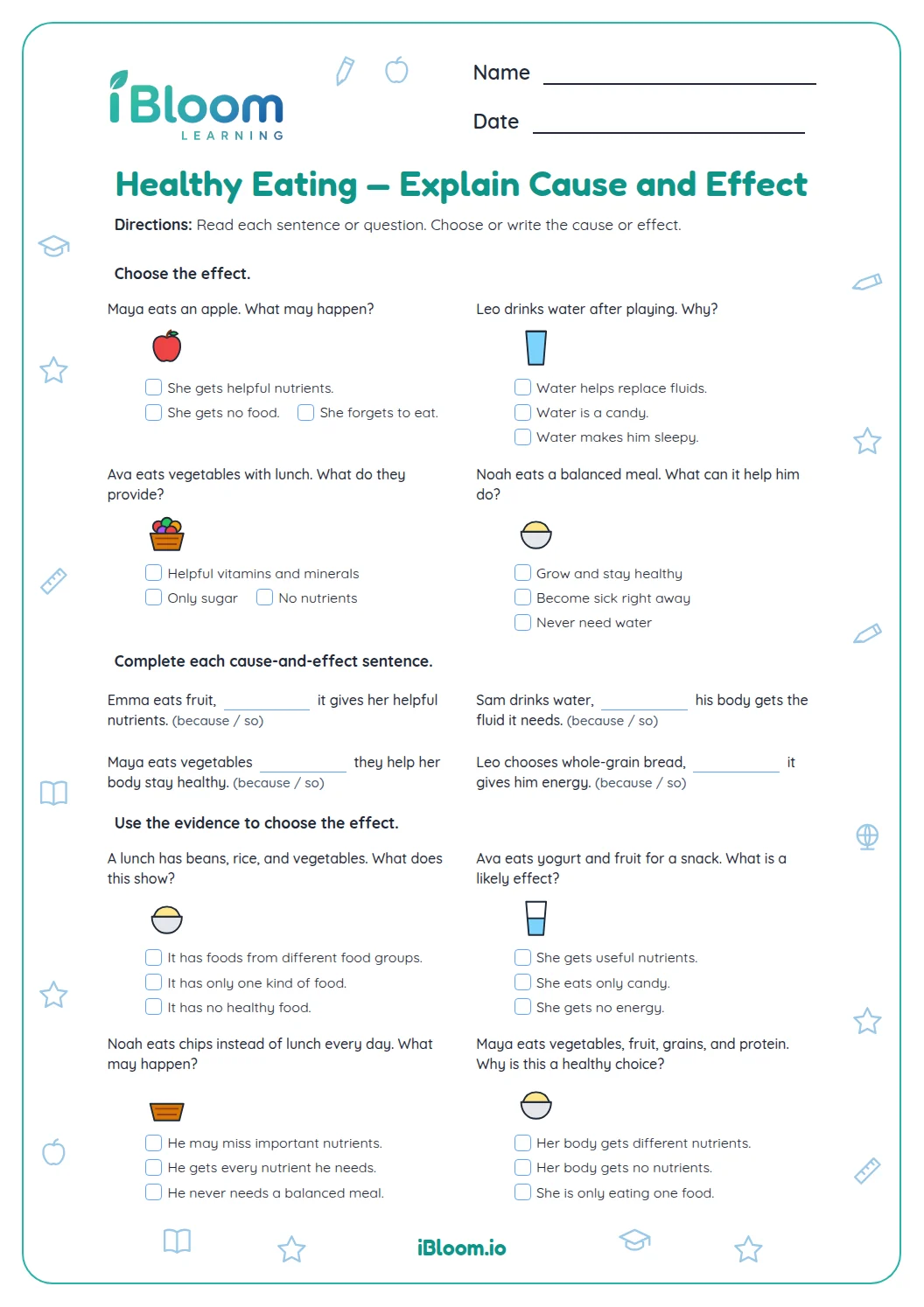 Healthy Eating — Explain Cause and EffectGrade 1 science worksheets help children sort foods, notice balanced choices, and connect healthy eating with caring for the human body. This explain cause and effect worksheet provides a distinct, age-appropriate way to practise the same lesson.Grade 1Free PDF preview
Practice that builds confidence
Building body vocabulary
These Grade 1 human body worksheets help children name visible body parts, identify parts of the face, and connect the five senses to how people learn about the world. Activities also introduce healthy eating through fruits, vegetables, and simple food groups.
Printables include labeling pages, matching tasks, sorting activities, cut-and-paste practice, picture clues, and short science questions. Children practise using words such as eyes, ears, nose, taste, touch, healthy food, fruit, vegetable, and body.
Children begin by recognizing familiar parts of the body and face: head, arms, legs, hands, feet, eyes, ears, nose, and mouth. The worksheets move from picture recognition to simple labeling, so first graders connect spoken words, printed words, and real body parts. This is especially useful for children who can point to a part but are still learning to read and write the label.

Understanding the five senses
The senses pages help children match eyes with seeing, ears with hearing, nose with smelling, tongue with tasting, and skin or hands with touching. Some activities ask children to choose which sense they would use for a flower, bell, apple, soft toy, or bright color. Encourage children to explain their answer in a full sentence: “I use my nose to smell the flower.”
Healthy eating and food groups
Healthy eating worksheets focus on everyday choices rather than rules about dieting. Children sort fruits and vegetables, identify foods that help the body grow and stay active, and notice that meals can include different food groups. Vocabulary may include fruit, vegetable, grain, dairy, protein, healthy, and energy, depending on the page.
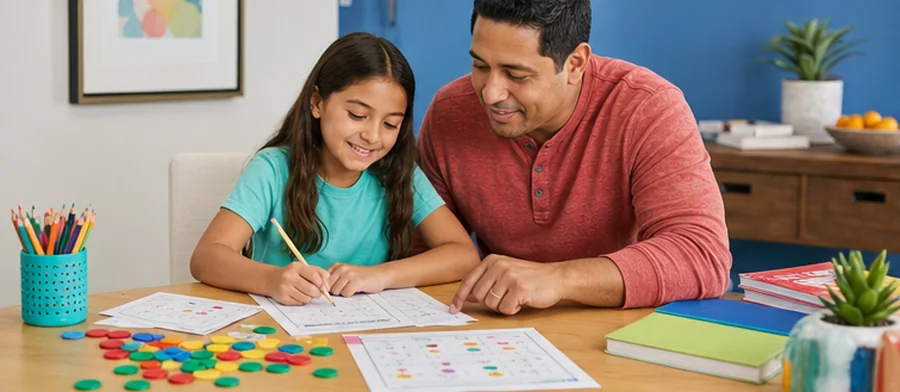
A simple parent routine
At home, choose one worksheet and one real-life connection. Before writing, ask your child to touch or point to the body part named. For senses practice, place a safe object such as an orange, spoon, cotton ball, or bell nearby and ask, “Which sense helps you learn about it?” For food pages, look in the kitchen and sort two items into fruit, vegetable, or another food group.
Classroom uses and common mix-ups
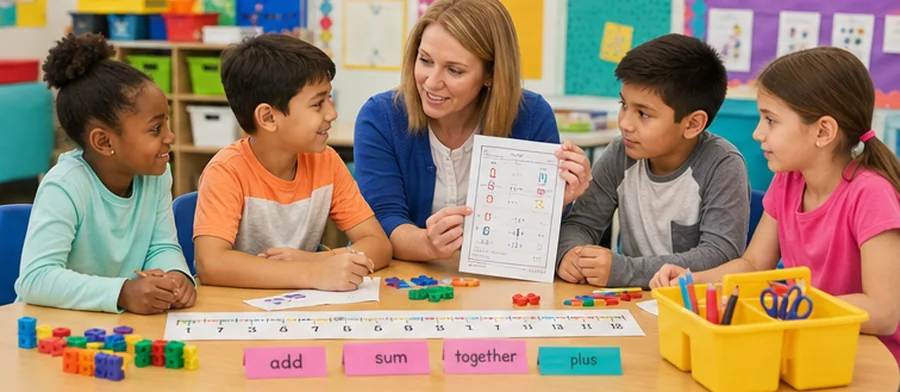
Teachers can use these printables in science centers, morning work, small-group vocabulary practice, or as follow-up after a read-aloud about the body. Watch for children mixing up taste and smell, calling all produce “vegetables,” reversing left and right body parts on a picture, or labeling the whole arm as “hand.” A child-friendly strategy is: look, point, say the word, then write it. This slows children down and makes the science language stick.
Free printable PDF download
Use this grade 1 human body worksheet page to preview the activity, print it, or download it as a PDF for quick practice. It works well for homework, homeschool lessons, tutoring, morning work, revision, and classroom centers.
Answers and answer key support
After the child completes the worksheet independently, parents and teachers can use the answer support or answer key information to check the work, review mistakes, and choose the next practice step.
Why iBloom worksheets help
The collection gives first graders repeated practice without making the topic feel abstract. Pictures support early readers, sorting tasks build reasoning, and short written responses let children use accurate human body and healthy eating vocabulary in context.
Helpful answers
Frequently asked questions
What human body skills do these Grade 1 worksheets cover?
They cover naming body parts, identifying parts of the face, matching the five senses to their uses, recognizing fruits and vegetables, and sorting simple healthy food choices.
Are these worksheets suitable for children who are still learning to read?
Yes. Many pages use clear pictures, matching, labeling, and sorting so children can practise science vocabulary even while their reading skills are still developing.
How can I teach the five senses with these printables?
Use the worksheet pictures along with safe real objects. Ask your child which sense helps them learn about each object, then have them match or write seeing, hearing, smelling, tasting, or touching.
Do the healthy eating pages teach food groups?
Yes, at a simple Grade 1 level. Children identify fruits and vegetables and may sort foods into basic groups such as fruits, vegetables, grains, dairy, and protein.
What mistakes should I watch for during body parts worksheets?
Common mistakes include mixing up arm and hand, leg and foot, or eyes and ears in labels. Ask children to point to the part on themselves before writing the word.
Is this grade 1 human body worksheet free?
Yes. You can preview it for free and use the printable worksheet for home or classroom practice.
Can I download this grade 1 human body worksheet as a PDF?
Yes. Use the worksheet download option to save a printable PDF, or print the worksheet directly from the page.
Does this grade 1 human body worksheet include answers or an answer key?
When the activity has fixed answers, iBloom includes answer support so parents and teachers can check the completed worksheet.