








About this worksheet
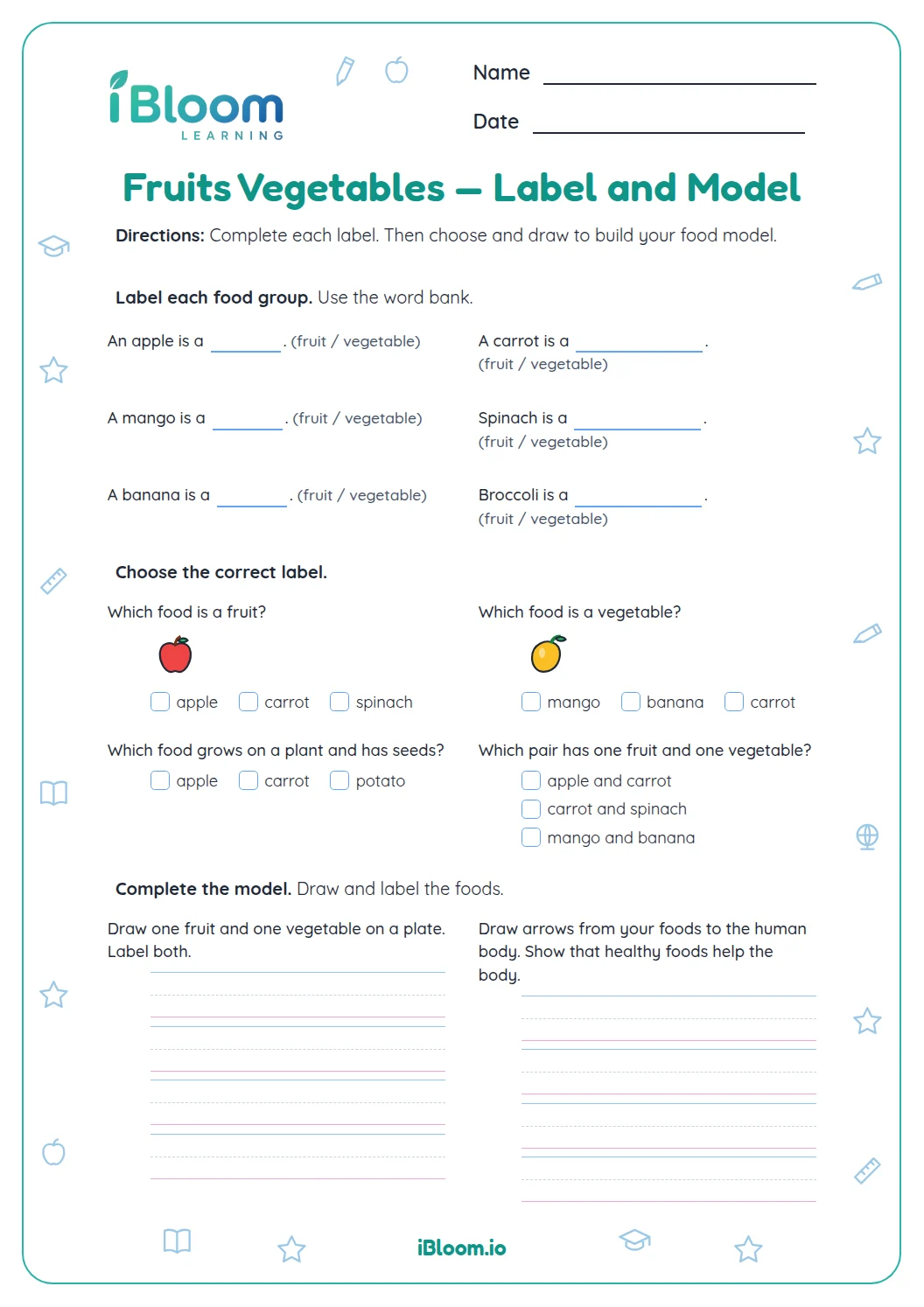
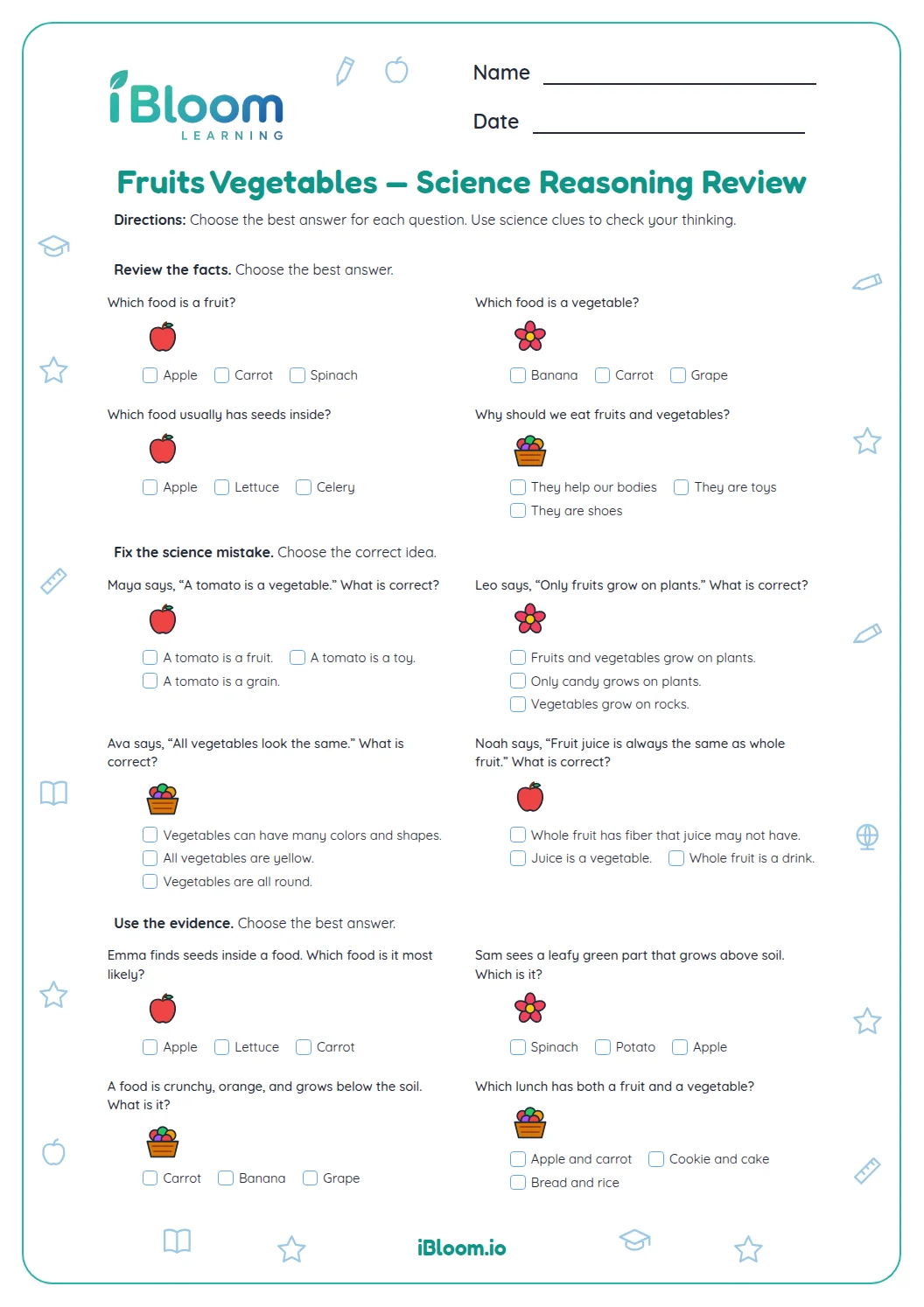
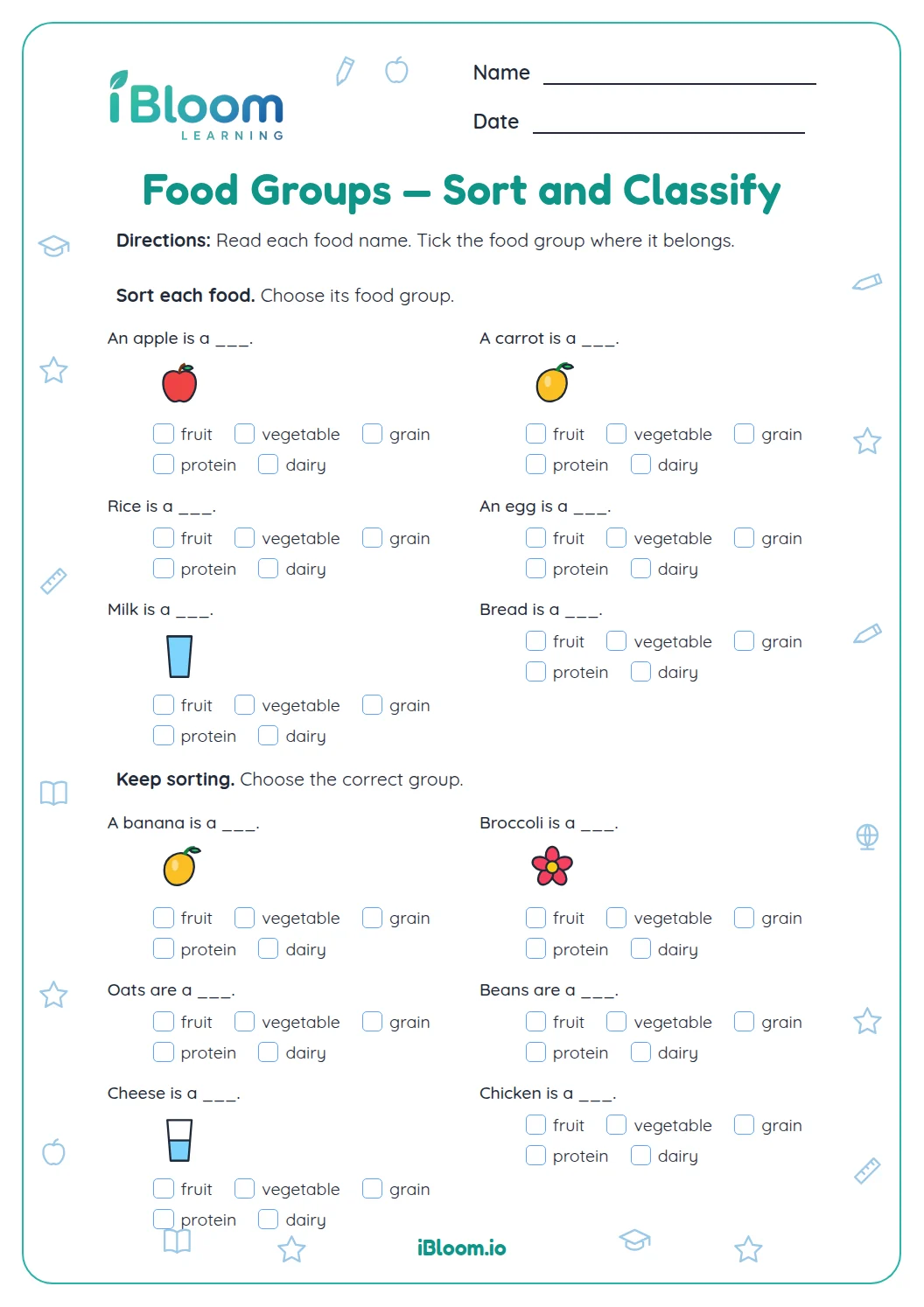
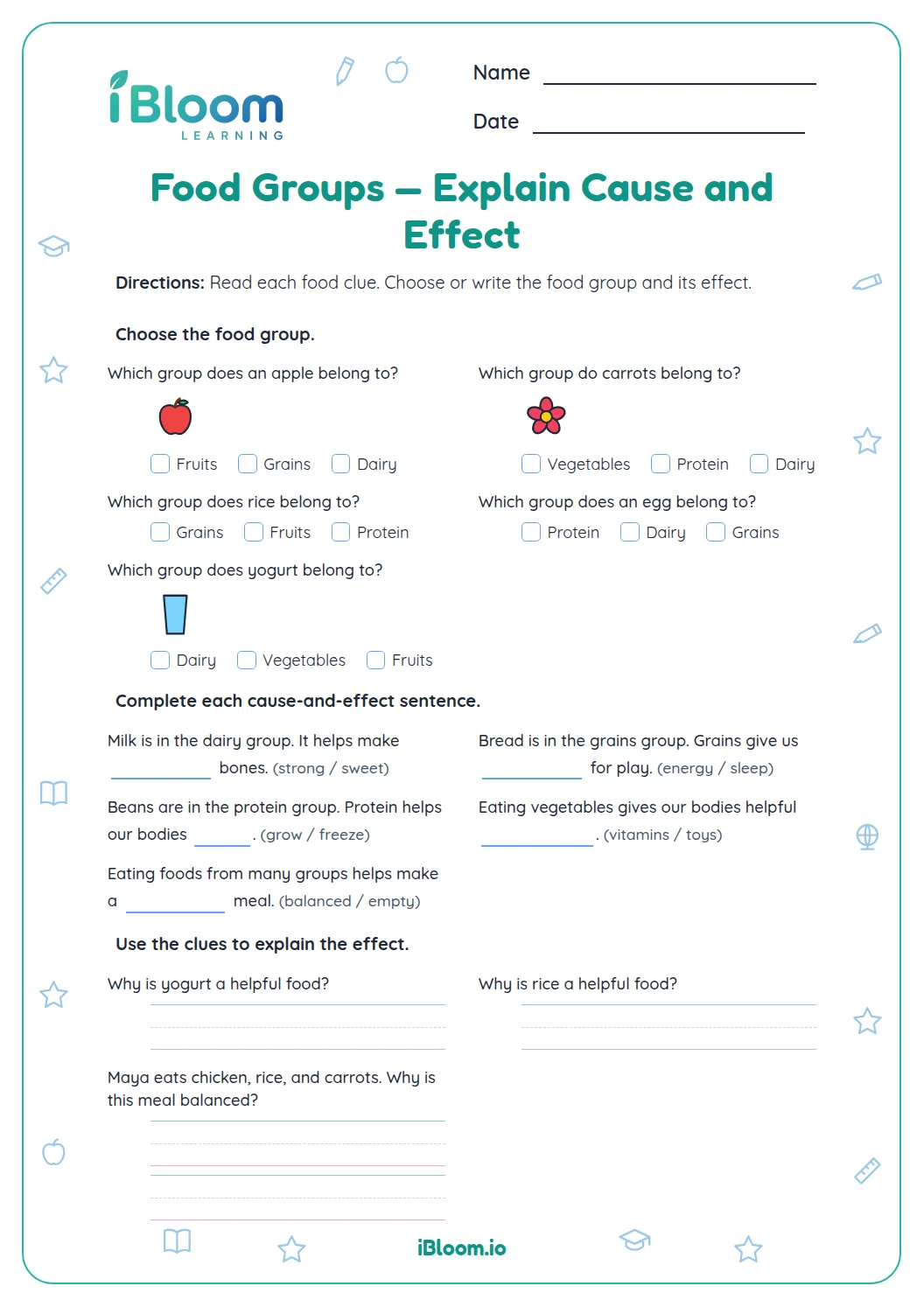
This Grade 1 science worksheet pairs two activities: sorting eight pictured foods as fruits or vegetables, then identifying plant parts in six short questions. Learners connect familiar foods with roots, leaves, stems, flowers, seeds, and fruits. Food groups follow everyday meal use, while plant-part words describe structures. A separate answer key supports discussion of each choice.
How can we sort familiar produce?
People commonly group foods as fruits or vegetables in meals. The worksheet uses familiar examples and pictures to practice those everyday food groups.
- 1The picture shows a carrot.
- 2A carrot is commonly served as a vegetable.
- 3Choose vegetable.
Which plant parts can become food?
People eat many plant parts. Carrots are roots, lettuce and spinach are leaves, celery is a stem, and broccoli is a flower. Apples and mangoes are fruits that contain seeds.
What can we notice about each food?
Name the food first, then decide whether the prompt asks about an everyday food group or a plant part. A food can be described by both: an apple is commonly served as fruit, and it contains seeds.
How to use this worksheet
- 1Name the pictured food.
- 2Read the question and choices aloud if needed.
- 3Choose the familiar food group or plant part.
- 4Say one reason for the choice.
- 5Check answers and talk about the plant part.
Common mistakes and quick fixes
The mistake
Calling every edible plant part a fruit
The fix
Use the plant-part clue: root, leaf, stem, flower, bulb, or fruit.
The mistake
Mixing everyday food labels with plant anatomy
The fix
Notice whether the question asks how people serve it or which part it is.
The mistake
Guessing from color alone
The fix
Name the food and recall which plant part people eat.
What to practice next
Make more practice
Questions parents and teachers ask
What is the difference between a fruit and a vegetable?
In everyday meals, people commonly serve apples as fruit and foods such as carrots as vegetables. This sheet also asks learners to identify plant parts, such as a root or leaf. Use the pictures to compare familiar foods and explain each choice.
Which plant parts appear on the worksheet?
The six plant-part questions include roots, leaves, stems, flowers, seeds, and fruits. Examples include carrots, lettuce, celery, broccoli, and apples. Ask the learner to name the food and then say which plant part the question describes. The key uses familiar food examples so children can check both the food name and the plant-part word.
Why does the sheet include pictures?
Each of the eight sorting questions shows one familiar food with fruit and vegetable choices. Grade 1 learners can name the food before selecting a group. The later plant-part questions connect these examples with words for plant structures. Review the key together after the child finishes all 14 items.
Is there an answer key?
Yes. The separate two-page answer key lists the right choice or plant-part answer for all 14 questions. Use it to check the food sorting and talk about where each edible plant part grows. Ask the learner to explain one choice before checking the rest together, and revisit any words that were unfamiliar.
Why learn about plant parts?
Plants have different parts, and people eat roots, stems, leaves, flowers, seeds, and fruits. Naming these parts helps children notice that familiar foods come from different parts of plants. Compare two foods and ask what part people eat.