








About this worksheet
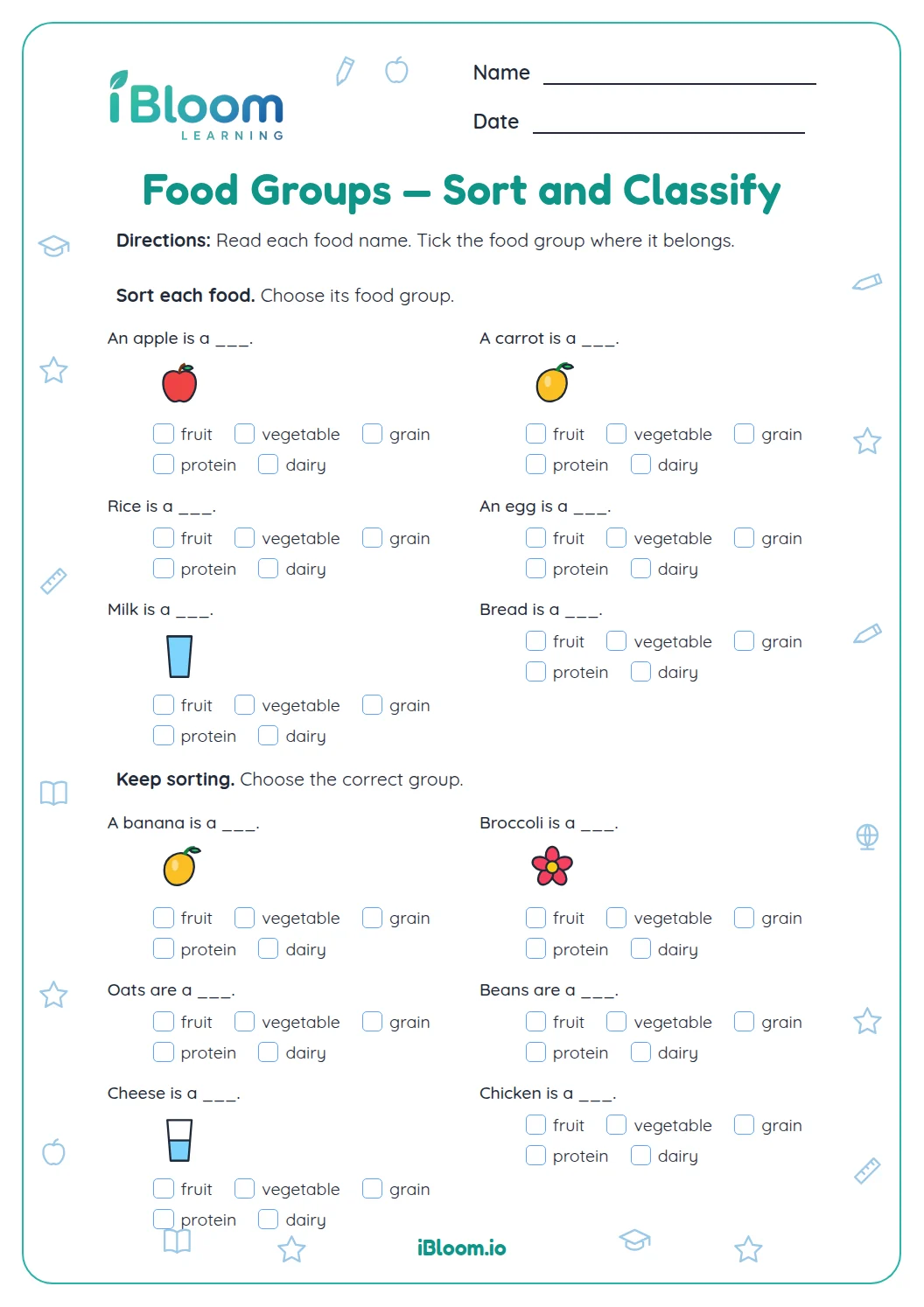
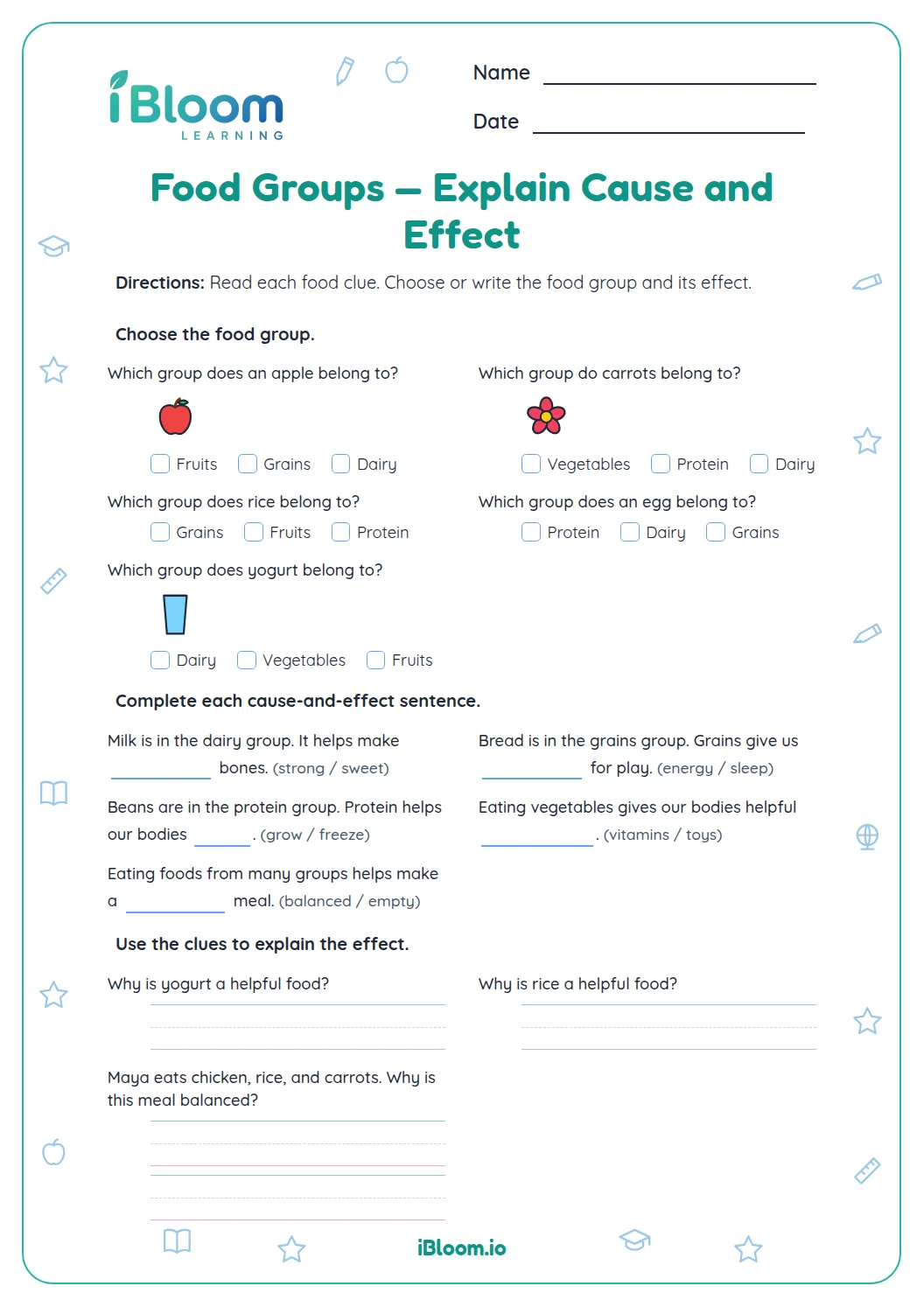
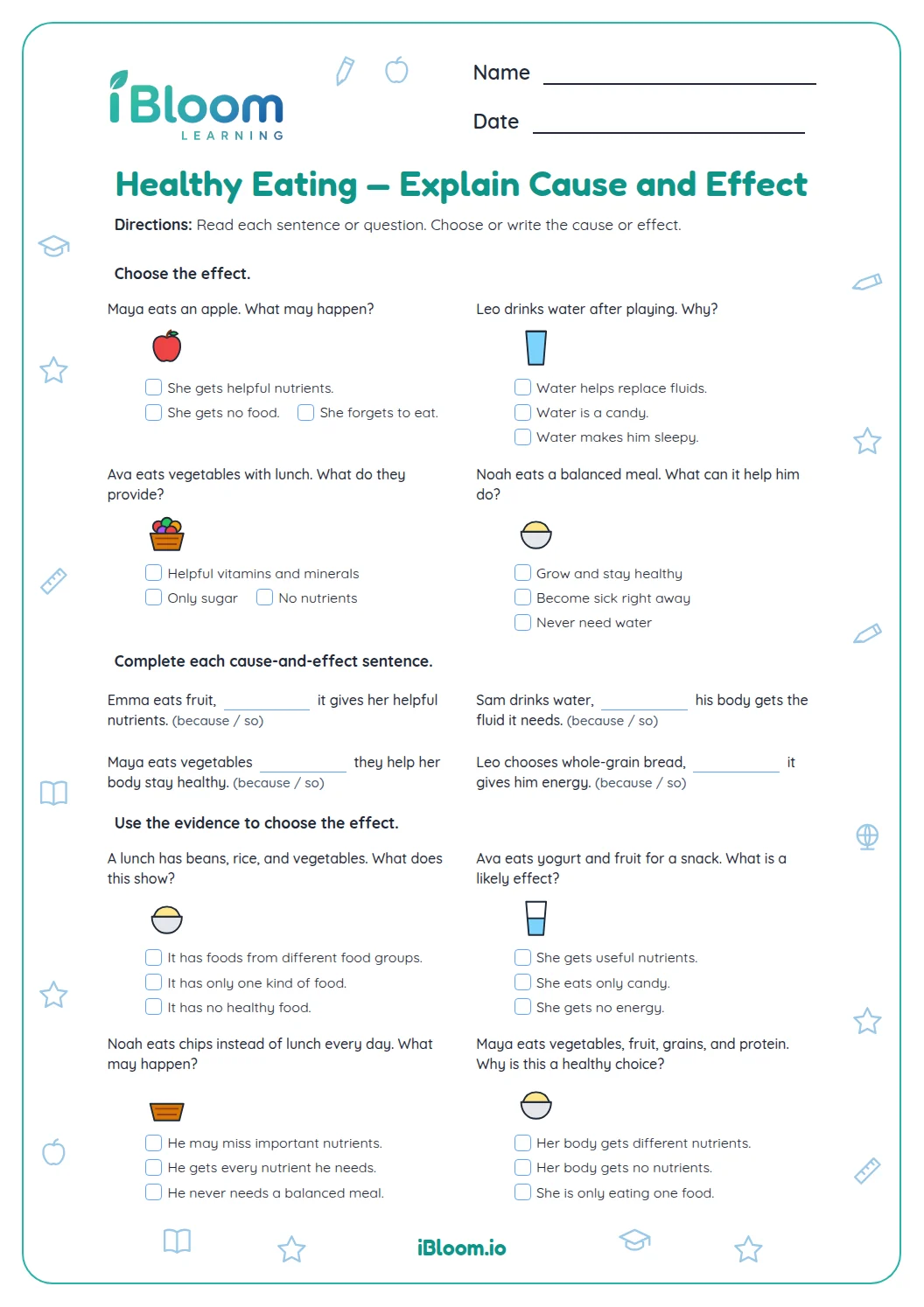
This Grade 1 printable uses a short informational passage about apples, carrots, lettuce, and lunch choices. Eighteen questions ask learners to identify plant parts, find details, and apply those ideas to simple food situations. A separate answer key includes sample wording for open responses. The passage questions practice answering about key details in a text.
Aligned to RI.1.1
Which plant parts do the foods come from?
The passage names a carrot as a root, lettuce as leaves, and an apple as a fruit from a tree. In question 1, the correct plant part for a carrot is root.
How does food help our bodies?
The text says food gives our bodies energy and helps us grow. Question 7 asks learners to recall both ideas, then other questions apply them to choices for a lunch or snack.
How can children apply the passage?
Use the facts in a new example. A carrot is still a root even when it is packed for lunch, and washing it is a sensible step before eating fresh produce.
How to use this worksheet
- 1Read all directions before beginning.
- 2Complete each question in order and show the requested unit or evidence.
- 3Check each response against the separate key.
Common mistakes and quick fixes
The mistake
Calling a carrot a leaf because it is a plant food.
The fix
Remember that the carrot is a root; lettuce is the leaf example.
The mistake
Thinking only fruit comes from plants.
The fix
The passage also gives carrots and lettuce as plant foods.
The mistake
Saying food only helps us grow.
The fix
Recall both uses named in the passage: energy and growth.
Curriculum alignment
This worksheet practices the standard through the reading and response tasks on the page.
Answer questions about details in the informational passage.
On this sheet:
Show the official wordingHide the official wording
Ask and answer questions about key details in a text.
What to practice next
Further reading
Questions parents and teachers ask
What science ideas appear in the passage?
The passage names plant parts used as food: an apple grows on a tree, a carrot is a root, and lettuce leaves grow above the ground. Questions ask learners to identify those parts and use the information in simple lunch examples.
Why is the carrot called a root?
The passage explains that the carrot is the root part of a plant and grows under the soil. Lettuce is described as leaves that grow above the ground, giving learners a direct comparison to use in their answers. Learners can look back at the named foods and their plant parts to support a response.
What does the worksheet say about food and the body?
The passage says our bodies use food for energy and growth, and that different kinds of foods provide different nutrients. The questions ask learners to recall those details and connect them to the foods named in the passage. Learners can look back at the named foods and their plant parts to support a response.
How many questions are included?
There are 18 questions in three question groups after the passage. They include multiple-choice and short written responses about the text and everyday food examples, with a separate answer key. Learners can look back at the named foods and their plant parts to support a response.
Is an answer key included?
Yes. The answer key lists the direct answers and sample wording for open-response items. For questions with more than one reasonable response, it gives an example that matches the passage. Learners can look back at the named foods and their plant parts to support a response.