Free printable practice
Fruits Vegetables Practice Activities
Printable Grade 1 science activities help children identify fruits and vegetables while connecting food choices to the human body.
Free printable worksheet PDFs
Preview every available page, then download the free worksheet PDF for home, homeschool, tutoring, or classroom practice.
Preview the exact activity before downloading it.
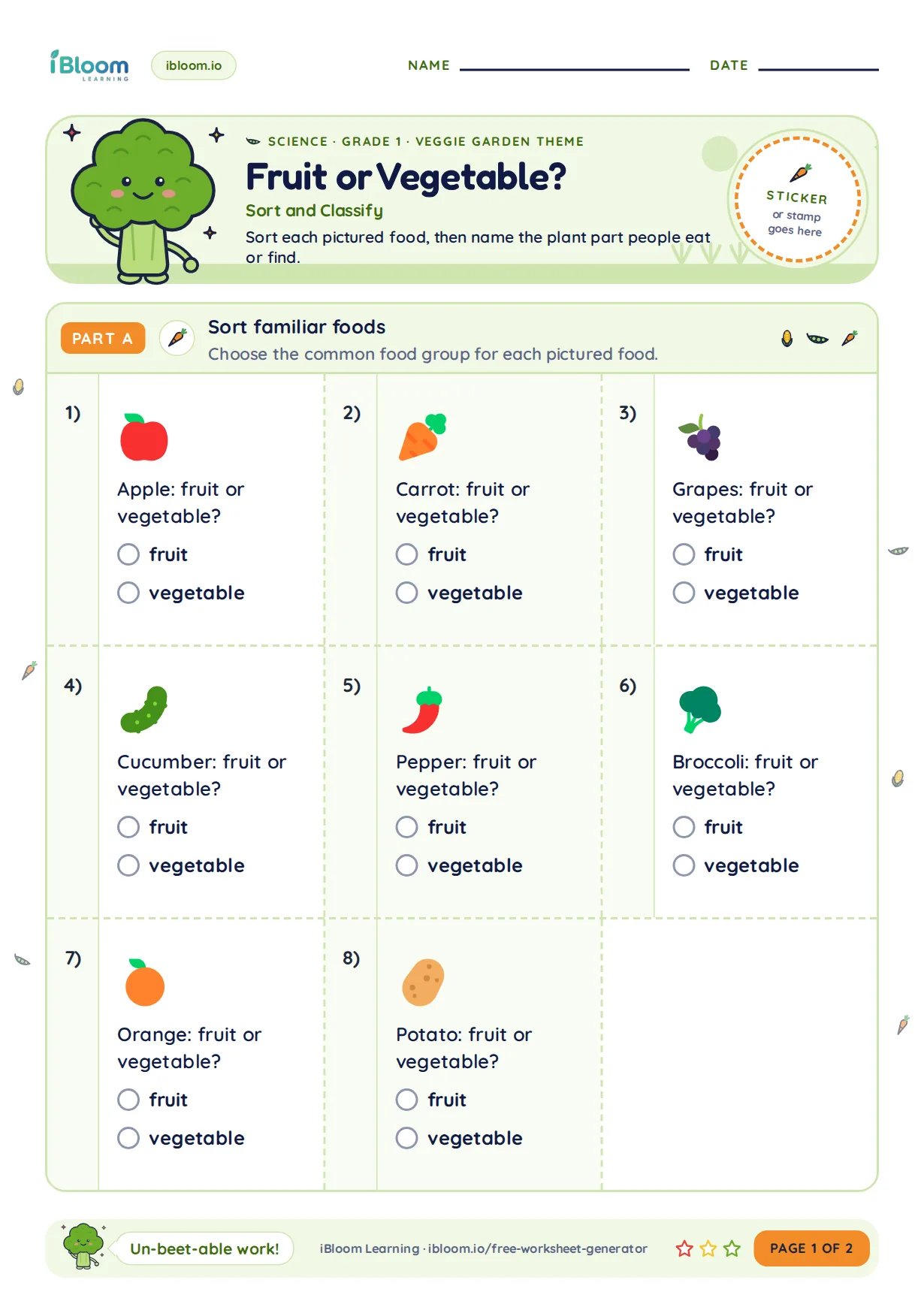 Fruits Vegetables — Sort and ClassifyPrintable Grade 1 science activities help children identify fruits and vegetables while connecting food choices to the human body. This sort and classify worksheet provides a distinct, age-appropriate way to practise the same lesson.Grade 1Free PDF preview
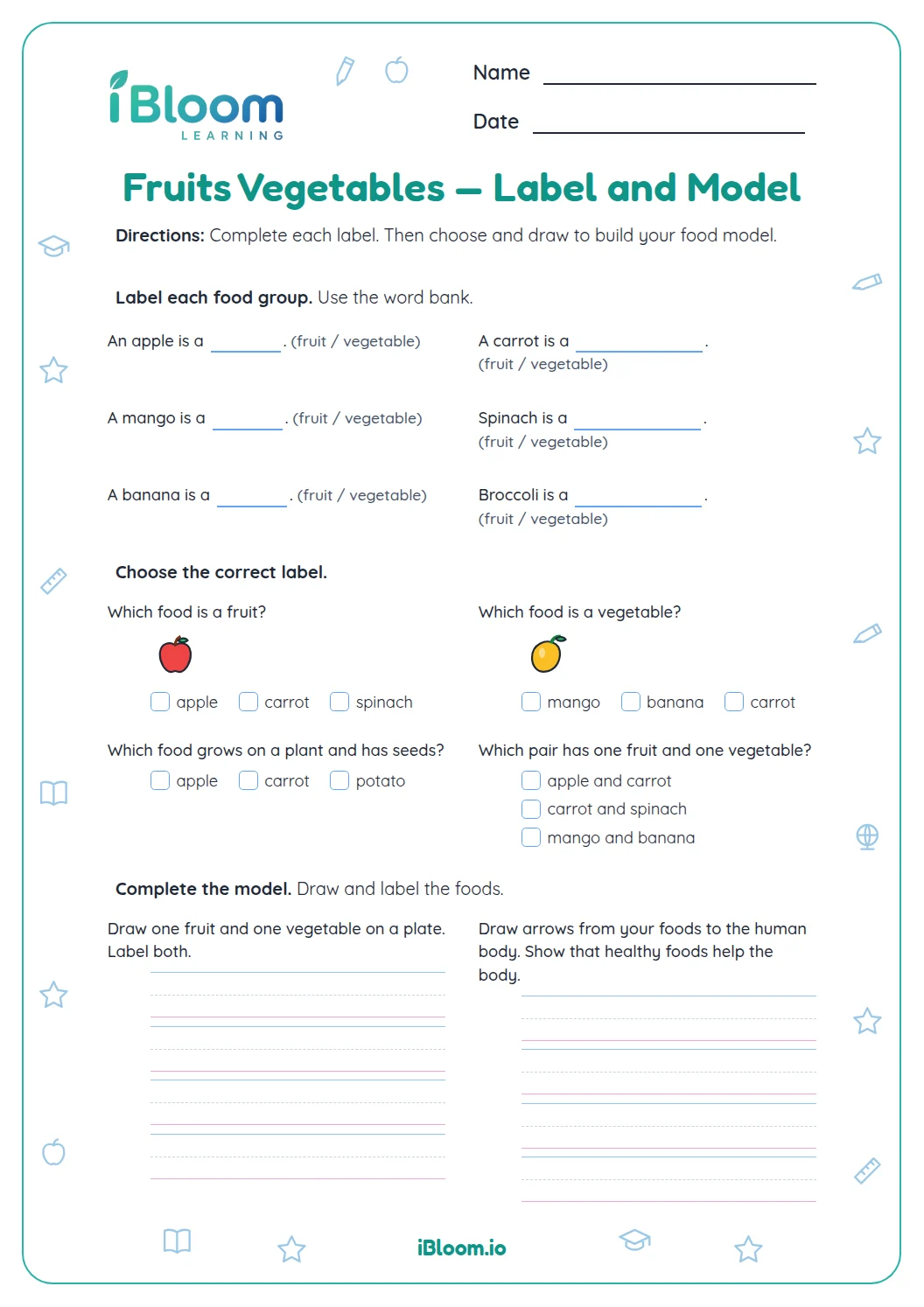 Fruits Vegetables — Label and ModelPrintable Grade 1 science activities help children identify fruits and vegetables while connecting food choices to the human body. This label and model worksheet provides a distinct, age-appropriate way to practise the same lesson.Grade 1Free PDF preview
 Fruits Vegetables — Explain Cause and EffectPrintable Grade 1 science activities help children identify fruits and vegetables while connecting food choices to the human body. This explain cause and effect worksheet provides a distinct, age-appropriate way to practise the same lesson.Grade 1Free PDF preview8 pages
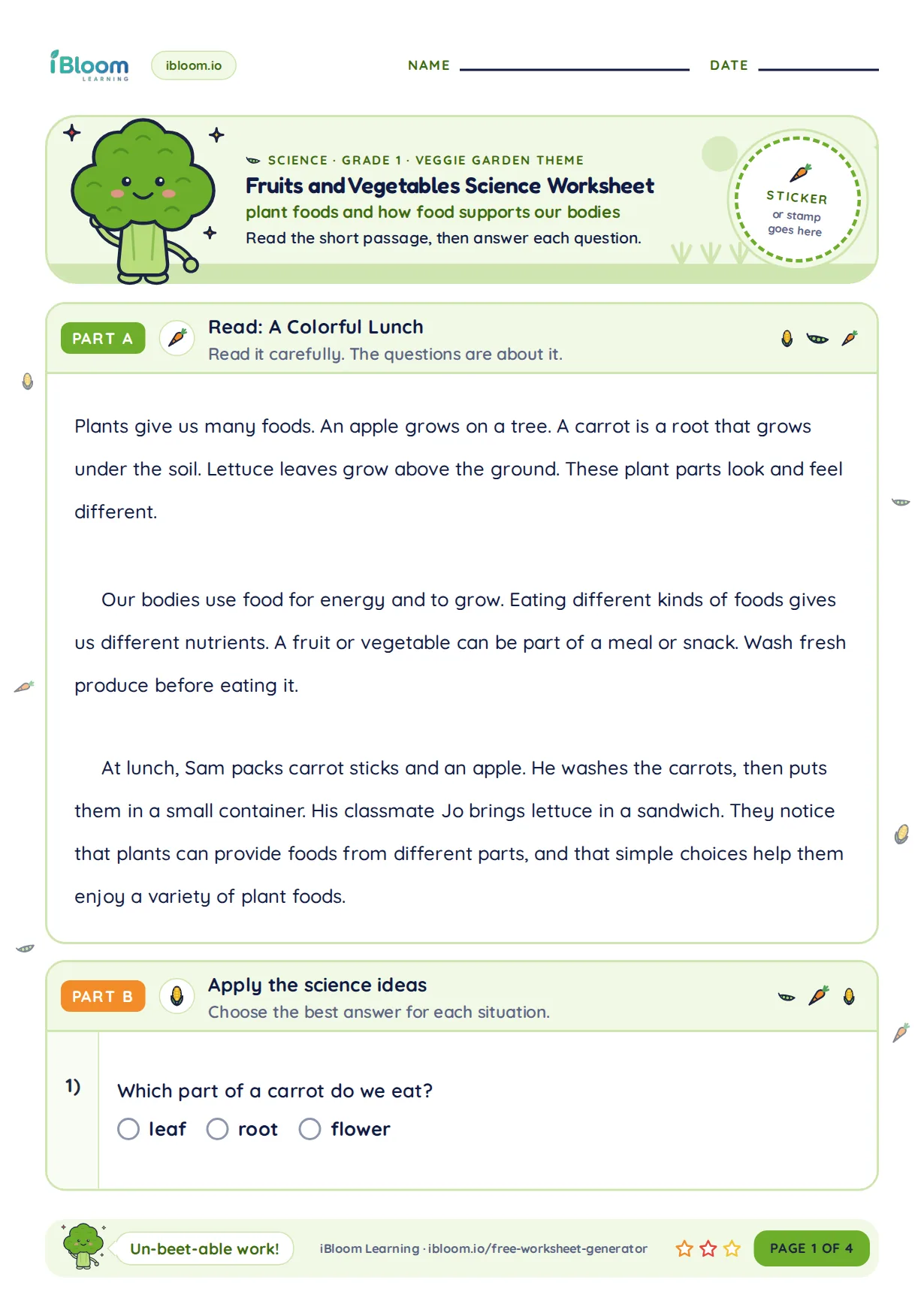 Fruits Vegetables — Apply Science IdeasPrintable Grade 1 science activities help children identify fruits and vegetables while connecting food choices to the human body. This apply science ideas worksheet provides a distinct, age-appropriate way to practise the same lesson.Grade 1Free PDF preview
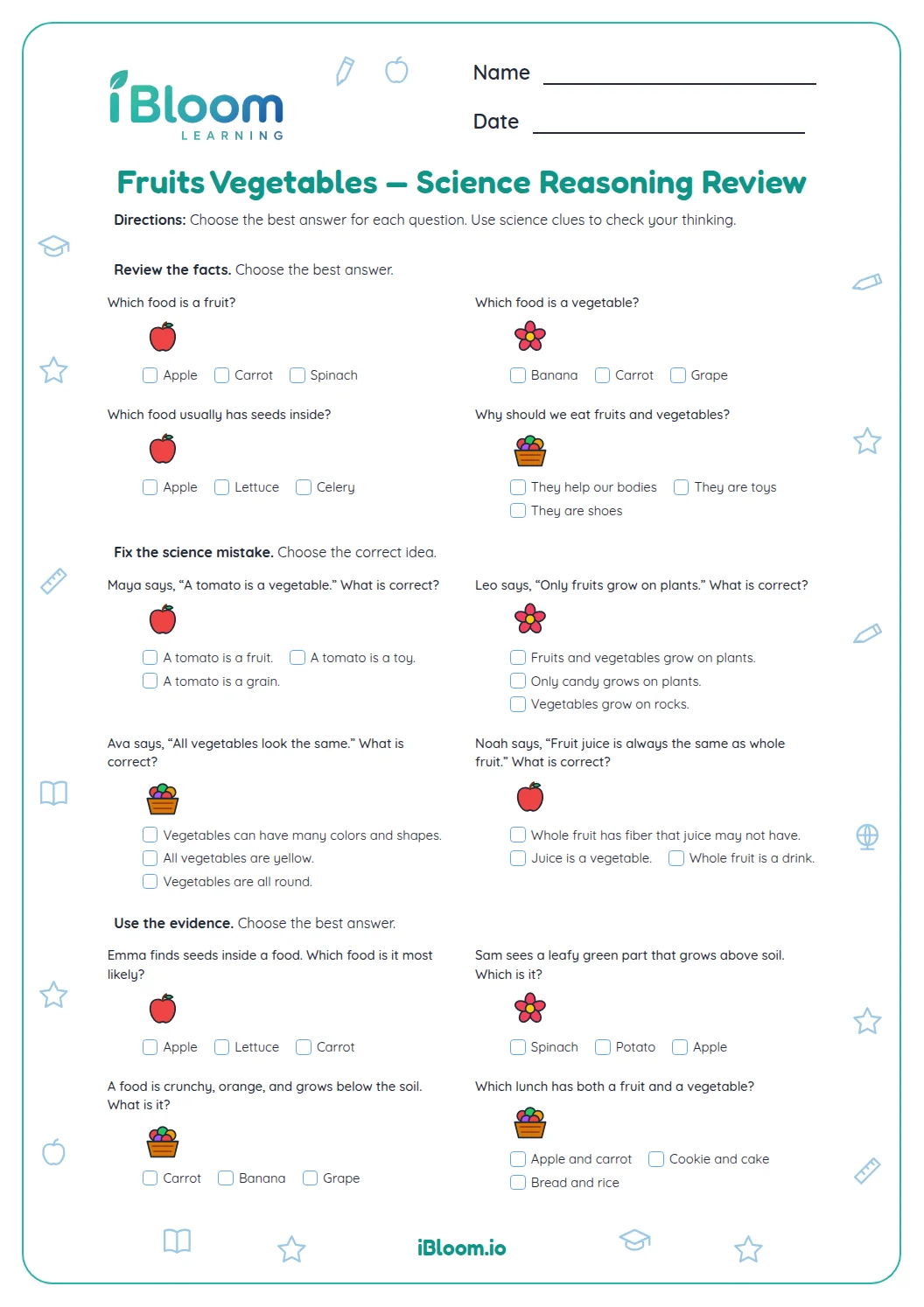 Fruits Vegetables — Science Reasoning ReviewPrintable Grade 1 science activities help children identify fruits and vegetables while connecting food choices to the human body. This science reasoning review worksheet provides a distinct, age-appropriate way to practise the same lesson.Grade 1Free PDF preview
Practice that builds confidence
Food groups in simple Grade 1 science
These Grade 1 science worksheets help children recognize common fruits and vegetables as foods that support a healthy body. Learners practise naming foods, sorting them into groups, and noticing simple features such as seeds, leaves, roots, colour, shape, and where the edible part grows.
The printable activities include picture-based tasks, matching, circling, sorting, labeling, and short response prompts. They are designed for early readers, so children can build food vocabulary and science thinking without needing long written explanations.
At this level, children are not memorizing nutrition charts. They are learning that the body needs a variety of foods and that fruits and vegetables are important everyday choices. Worksheets may ask children to identify an apple, banana, carrot, pea pod, tomato, potato, or leafy green, then decide whether it is usually called a fruit or a vegetable.

Observing fruits and vegetables
The skill grows from naming familiar foods to using observable clues. Fruits often have seeds and may grow from flowers, while vegetables may be roots, stems, leaves, or other plant parts. Grade 1 children can compare smooth and bumpy skins, bright colours, round and long shapes, and edible parts. This connects human body learning with plant-based foods children see at home, in lunch boxes, and at the grocery store.
Parent routine for home practice
Choose one worksheet and place one real fruit or vegetable beside it if available. Ask, “What do you notice?” before naming the food. Let your child point to clues: seeds, peel, leaves, stem, or root. After the page, invite your child to find two fruits and two vegetables in the kitchen or draw a healthy plate with at least one of each.

Classroom uses for teachers
Teachers can use these printables during a human body unit, a healthy habits lesson, morning work, or science centers. They also work well after a read-aloud about food, a class snack discussion, or a sorting activity with plastic food models. For quick assessment, ask students to justify one answer orally: “I think this is a vegetable because we eat the root.”

Common mix-ups and a kid-friendly strategy
Children may call every sweet food a fruit or every green food a vegetable. Tomato, corn, cucumber, and pea examples can also be confusing because everyday language and plant science do not always match neatly. Teach the strategy: “Name it, notice it, sort it.” First say the food name, then notice one clue, then choose the group that best fits the worksheet question.
Free printable PDF download
Use this grade 1 fruits and vegetables worksheet page to preview the activity, print it, or download it as a PDF for quick practice. It works well for homework, homeschool lessons, tutoring, morning work, revision, and classroom centers.
Answers and answer key support
After the child completes the worksheet independently, parents and teachers can use the answer support or answer key information to check the work, review mistakes, and choose the next practice step.
Why iBloom worksheets help
These activities use clear pictures and short directions so children focus on the science idea: identifying, sorting, and describing healthy foods. The pages vary the task type, so a child might match words to pictures on one page, circle vegetables in a mixed group on another, and explain a favorite fruit or vegetable using simple words. This keeps practice purposeful rather than repetitive.
Helpful answers
Frequently asked questions
What do Grade 1 children practise in these fruits and vegetables worksheets?
They practise identifying common fruits and vegetables, sorting food pictures, using simple food vocabulary, and connecting healthy food choices to the human body.
Are these worksheets mainly science or reading practice?
They are science worksheets with light reading support. Children use pictures, labels, and simple prompts to understand food groups and healthy eating ideas.
How can I help my child if they confuse fruits and vegetables?
Ask your child to name the food and notice a clue, such as seeds, leaves, roots, peel, or shape. Then discuss how the food is commonly grouped on the worksheet.
Can these pages be used during a human body unit?
Yes. They fit well in a Grade 1 human body unit because they show how fruits and vegetables are part of healthy habits that help the body grow and work well.
Do children need to know detailed nutrition facts before using these worksheets?
No. The activities are designed for early learners and focus on recognition, sorting, observation, and simple healthy food language.
Is this grade 1 fruits and vegetables worksheet free?
Yes. You can preview it for free and use the printable worksheet for home or classroom practice.
Can I download this grade 1 fruits and vegetables worksheet as a PDF?
Yes. Use the worksheet download option to save a printable PDF, or print the worksheet directly from the page.
Does this grade 1 fruits and vegetables worksheet include answers or an answer key?
When the activity has fixed answers, iBloom includes answer support so parents and teachers can check the completed worksheet.