Free printable practice
Parts Of Body Practice Activities
Grade 1 science worksheets help children name, locate, label, and describe common external body parts through simple printable activities.
Free printable worksheet PDFs
Preview every available page, then download the free worksheet PDF for home, homeschool, tutoring, or classroom practice.
Preview the exact activity before downloading it.
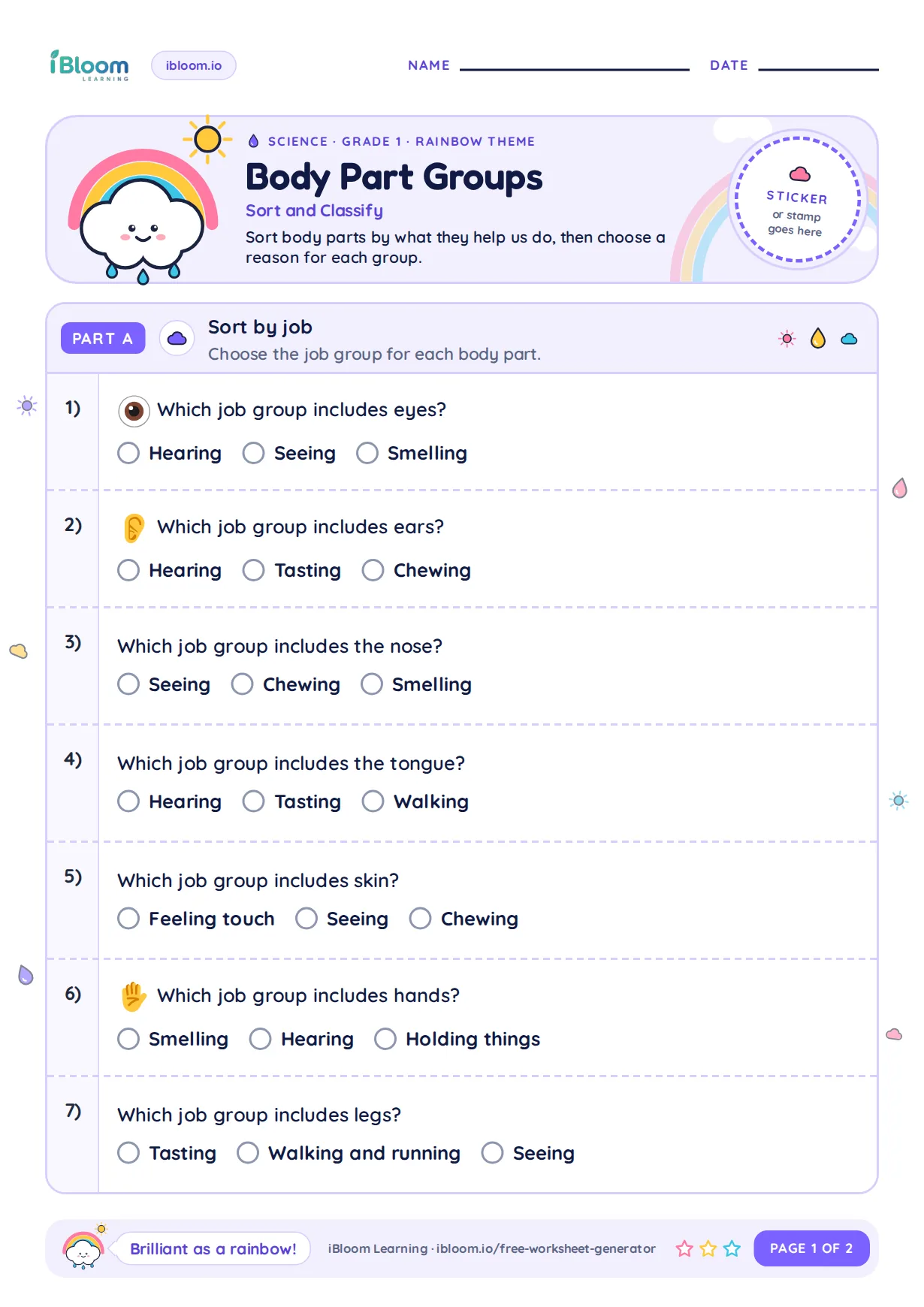 Parts Of Body — Sort and ClassifyGrade 1 science worksheets help children name, locate, label, and describe common external body parts through simple printable activities. This sort and classify worksheet provides a distinct, age-appropriate way to practise the same lesson.Grade 1Free PDF preview
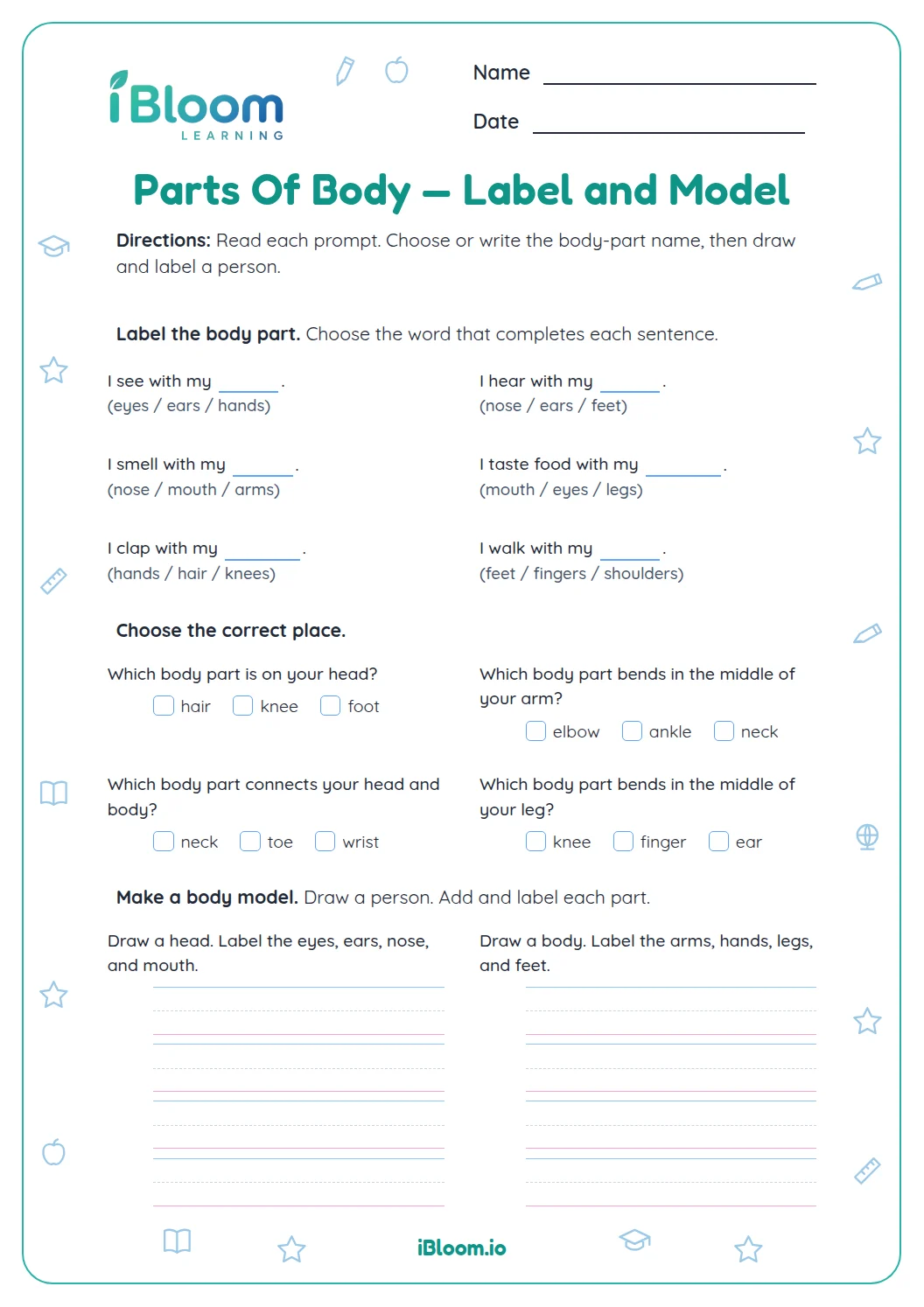 Parts Of Body — Label and ModelGrade 1 science worksheets help children name, locate, label, and describe common external body parts through simple printable activities. This label and model worksheet provides a distinct, age-appropriate way to practise the same lesson.Grade 1Free PDF preview
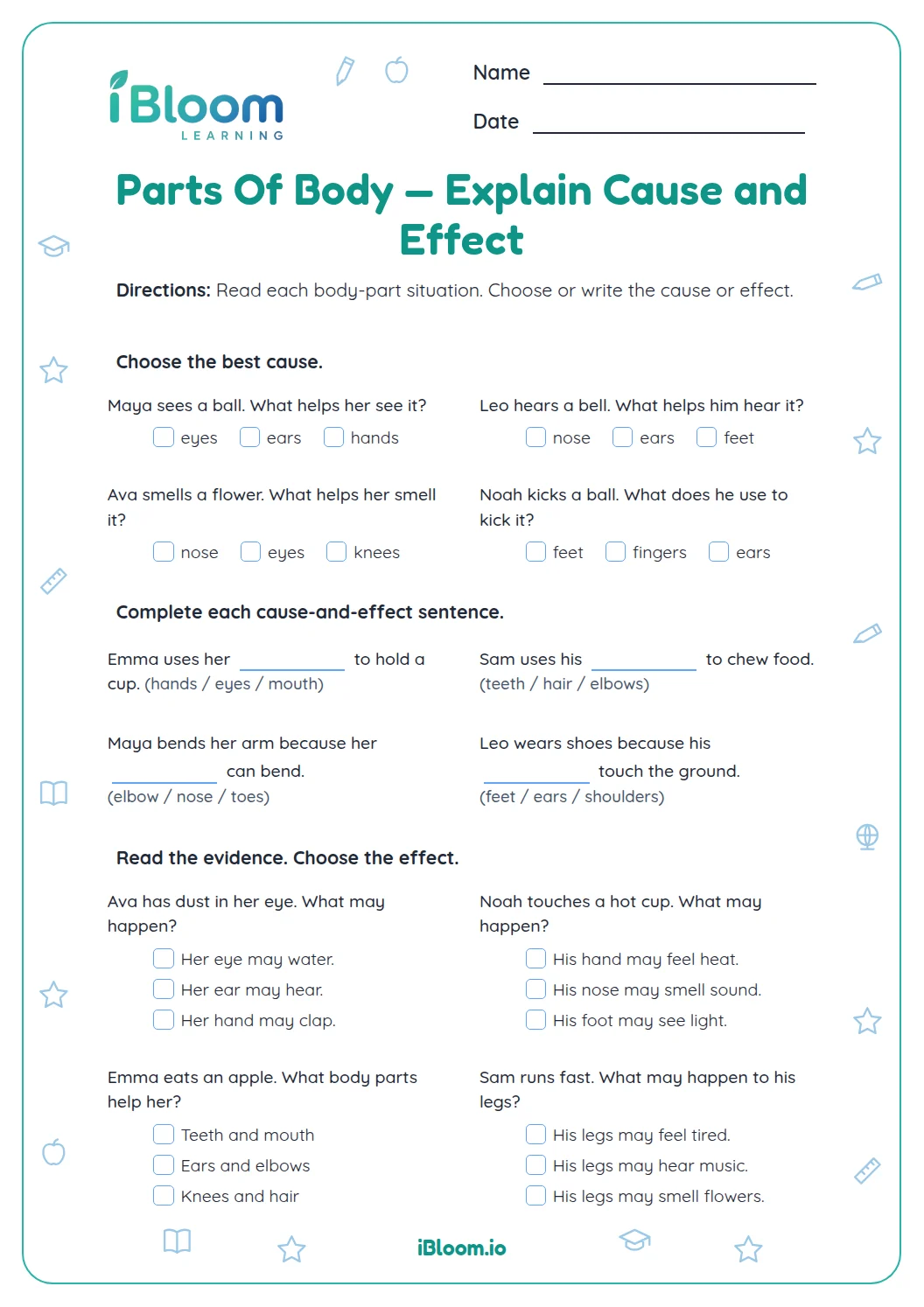 Parts Of Body — Explain Cause and EffectGrade 1 science worksheets help children name, locate, label, and describe common external body parts through simple printable activities. This explain cause and effect worksheet provides a distinct, age-appropriate way to practise the same lesson.Grade 1Free PDF preview
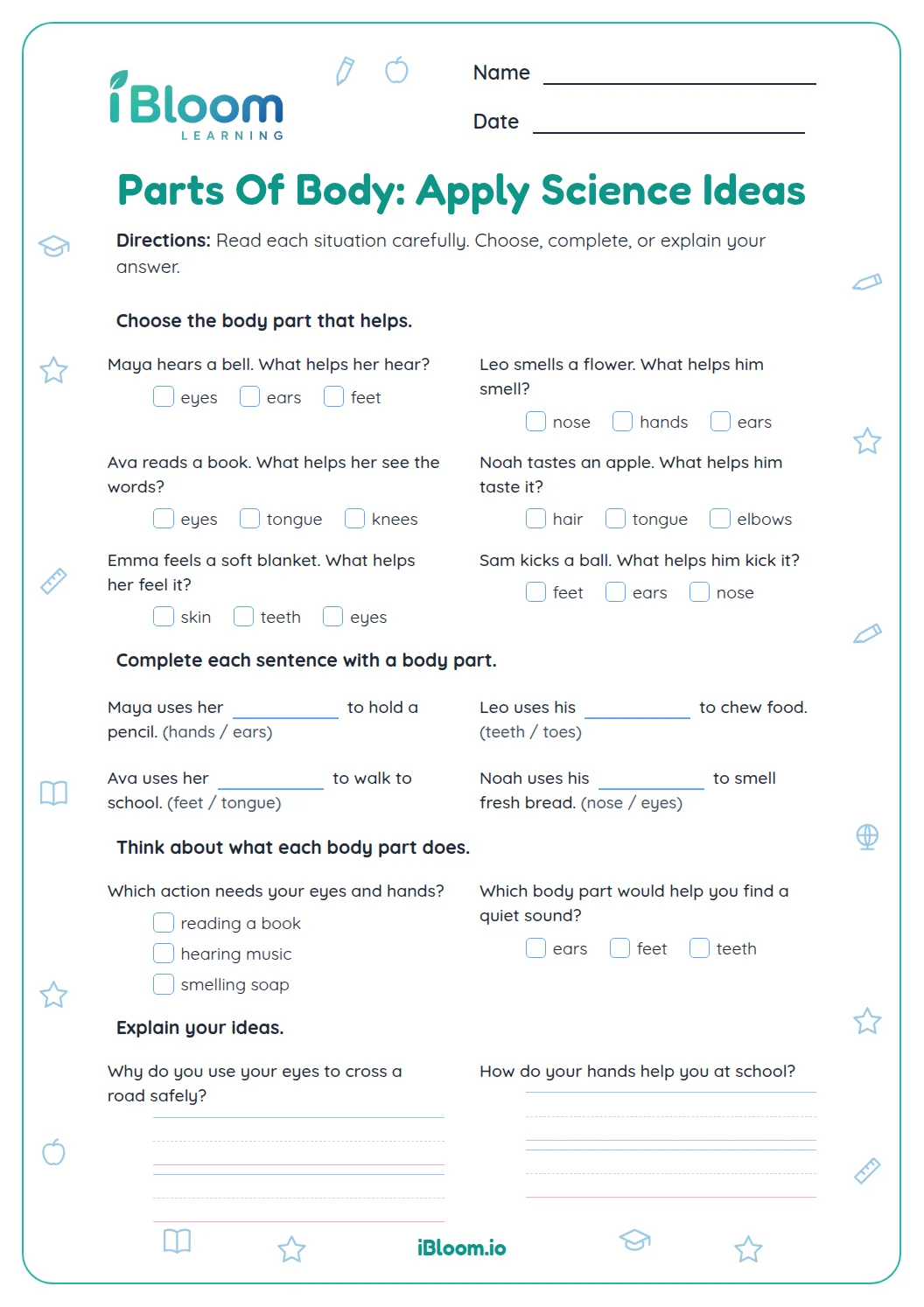 Parts Of Body — Apply Science IdeasGrade 1 science worksheets help children name, locate, label, and describe common external body parts through simple printable activities. This apply science ideas worksheet provides a distinct, age-appropriate way to practise the same lesson.Grade 1Free PDF preview
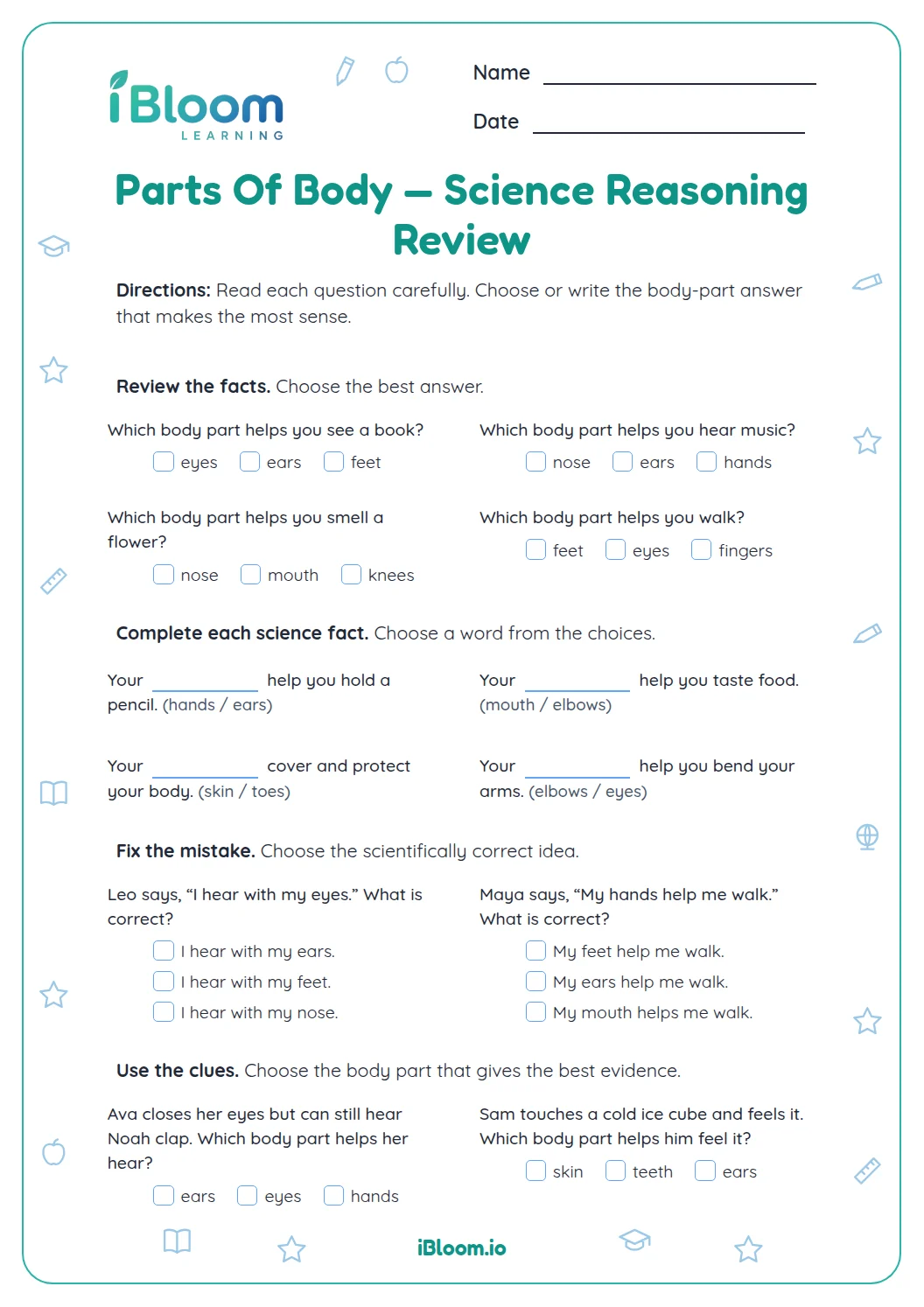 Parts Of Body — Science Reasoning ReviewGrade 1 science worksheets help children name, locate, label, and describe common external body parts through simple printable activities. This science reasoning review worksheet provides a distinct, age-appropriate way to practise the same lesson.Grade 1Free PDF preview
Practice that builds confidence
Naming and locating body parts
These Grade 1 science worksheets help children identify common parts of the human body and connect each part with its place and purpose. Learners practise words such as head, eyes, ears, nose, mouth, arms, hands, legs, and feet through clear, age-appropriate tasks.
The printable activities include labeling pictures, matching body-part names to images, tracing or writing vocabulary, and answering simple observation questions. They are designed for children who are building early science vocabulary while also strengthening reading and fine-motor skills.
Children begin by recognizing visible body parts on a simple human figure. Activities may ask them to point to, circle, color, or label parts such as the head, shoulders, arms, hands, legs, feet, eyes, ears, nose, and mouth. This supports the important Grade 1 idea that the human body has different parts, and each part can be named and described.

Connecting parts with what they do
After naming body parts, learners start making simple function connections: eyes help us see, ears help us hear, legs help us walk, and hands help us hold things. These worksheets keep the language concrete so children can use everyday examples from their own lives instead of memorizing long definitions.
A simple parent routine
At home, use one worksheet page with a quick “point and say” warm-up. Ask your child to point to a body part on themselves, find the same part on the picture, and say one thing it helps them do. For example: “These are my hands. I use my hands to draw.” Then complete the labeling or matching task together, encouraging careful reading of each word.

Classroom uses for teachers
Teachers can use these printables during a human body lesson, in science centers, for vocabulary review, or as a follow-up to a class discussion. They also work well with movement: children can touch their knees, raise their arms, blink their eyes, or stamp their feet before completing the worksheet. This makes the vocabulary memorable for young learners.

Common errors to watch for
Some children mix up arm and hand, leg and foot, or shoulder and neck because the parts are close together. Others may label a picture based on where the word appears rather than where the arrow points. Encourage learners to trace the arrow or line with a finger before writing the answer. A child-friendly strategy is: “Look, point, say, then label.”
Free printable PDF download
Use this grade 1 parts of body worksheet page to preview the activity, print it, or download it as a PDF for quick practice. It works well for homework, homeschool lessons, tutoring, morning work, revision, and classroom centers.
Answers and answer key support
After the child completes the worksheet independently, parents and teachers can use the answer support or answer key information to check the work, review mistakes, and choose the next practice step.
Why iBloom worksheets help
The iBloom activities move from recognition to labeling to simple use-based thinking. Clean pictures, familiar vocabulary, and varied task types help Grade 1 children practise body-part words without feeling overwhelmed. The pages also give adults a clear way to see whether a child can name the part, locate it correctly, and explain its basic purpose.
Helpful answers
Frequently asked questions
What body parts are covered in these Grade 1 worksheets?
The worksheets focus on common external body parts such as head, eyes, ears, nose, mouth, arms, hands, legs, and feet. Some activities may also include nearby parts like shoulders or knees when shown in the picture.
Are these worksheets mainly for science or vocabulary practice?
They support both. The science focus is recognizing parts of the human body and their simple functions, while the activities also build reading, spelling, and labeling vocabulary.
How can I help my child if they confuse hand and arm or foot and leg?
Use the child’s own body as a model. Point to the larger part first, such as the arm or leg, then point to the end part, such as the hand or foot. Have your child say the two words aloud before labeling the worksheet.
Can these pages be used in a classroom center?
Yes. Teachers can place the worksheets in a science or vocabulary center with crayons, word cards, or a body-part poster. Students can complete matching, labeling, or coloring tasks independently or with a partner.
Do the worksheets include body-part functions?
Some activities encourage children to connect body parts with simple uses, such as eyes for seeing, ears for hearing, hands for holding, and legs for walking.
Is this grade 1 parts of body worksheet free?
Yes. You can preview it for free and use the printable worksheet for home or classroom practice.
Can I download this grade 1 parts of body worksheet as a PDF?
Yes. Use the worksheet download option to save a printable PDF, or print the worksheet directly from the page.
Does this grade 1 parts of body worksheet include answers or an answer key?
When the activity has fixed answers, iBloom includes answer support so parents and teachers can check the completed worksheet.