










About this worksheet
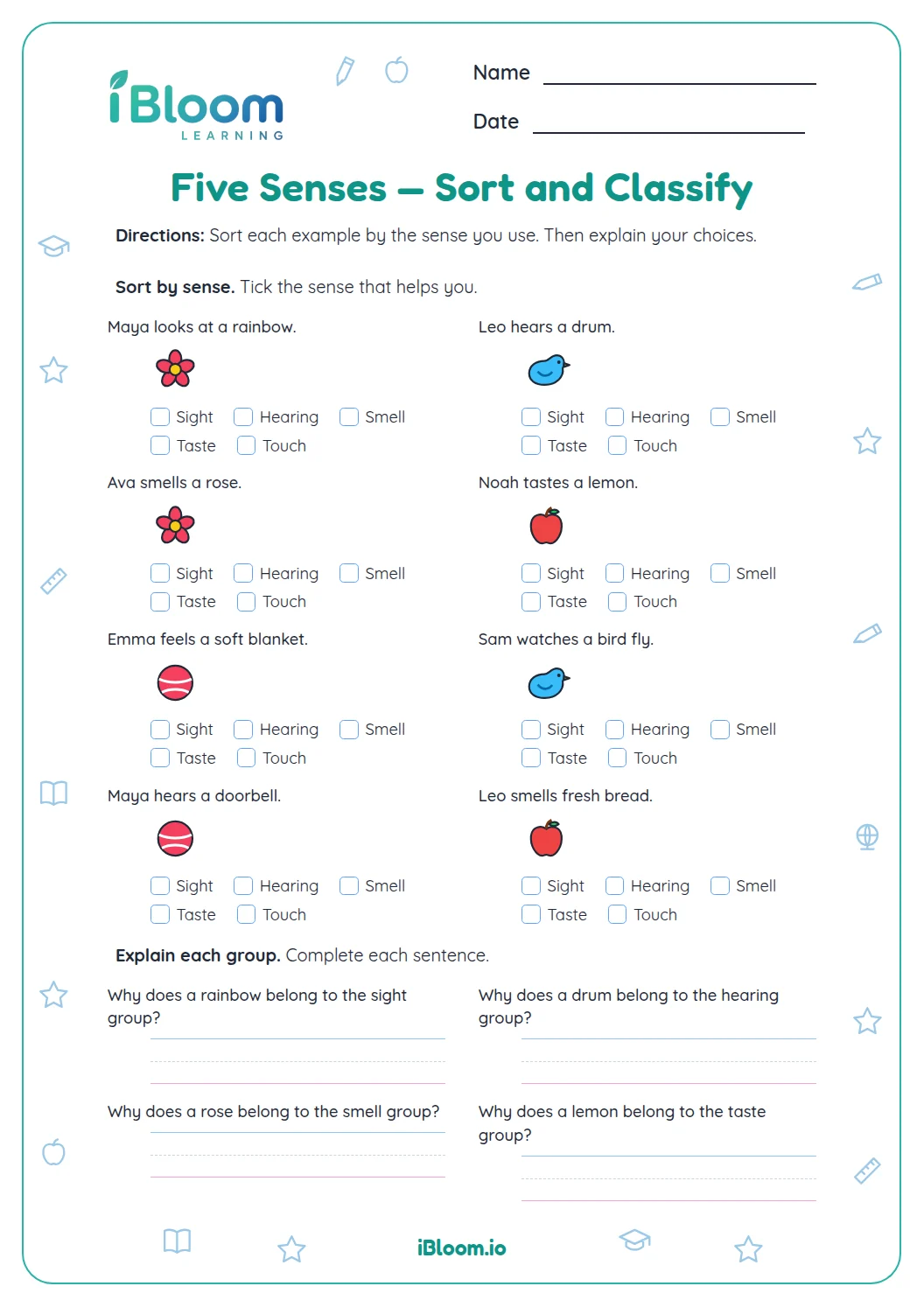
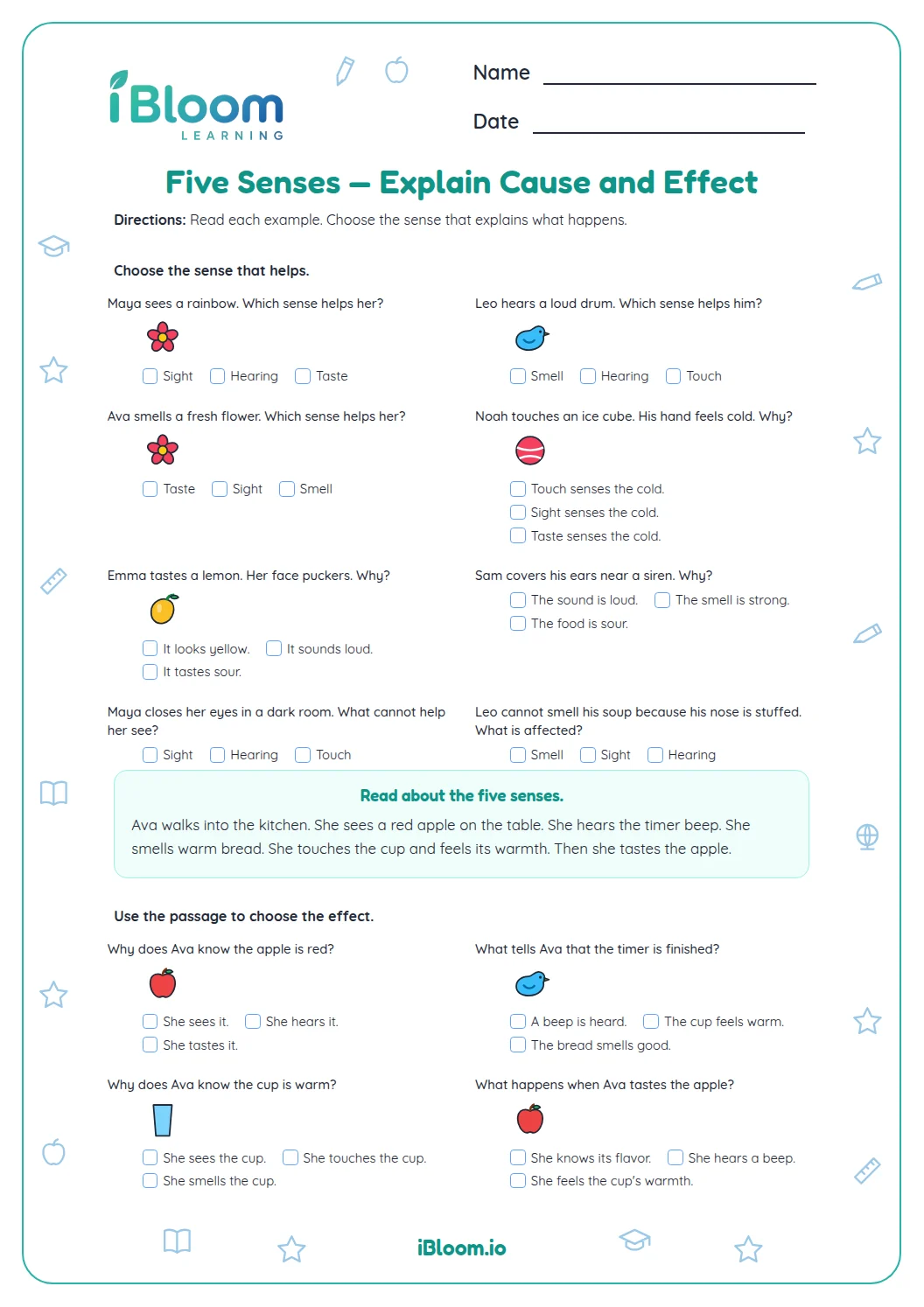
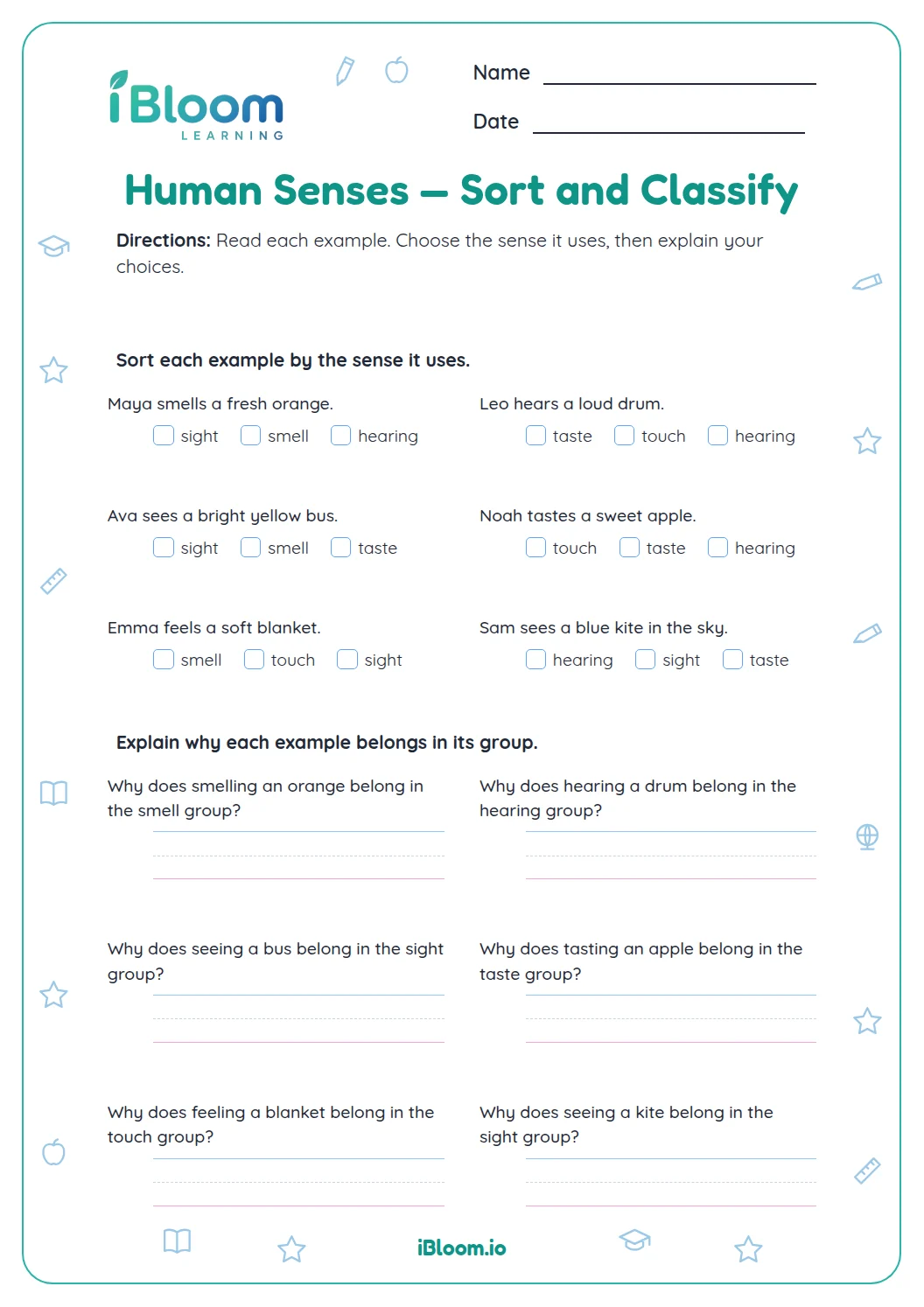
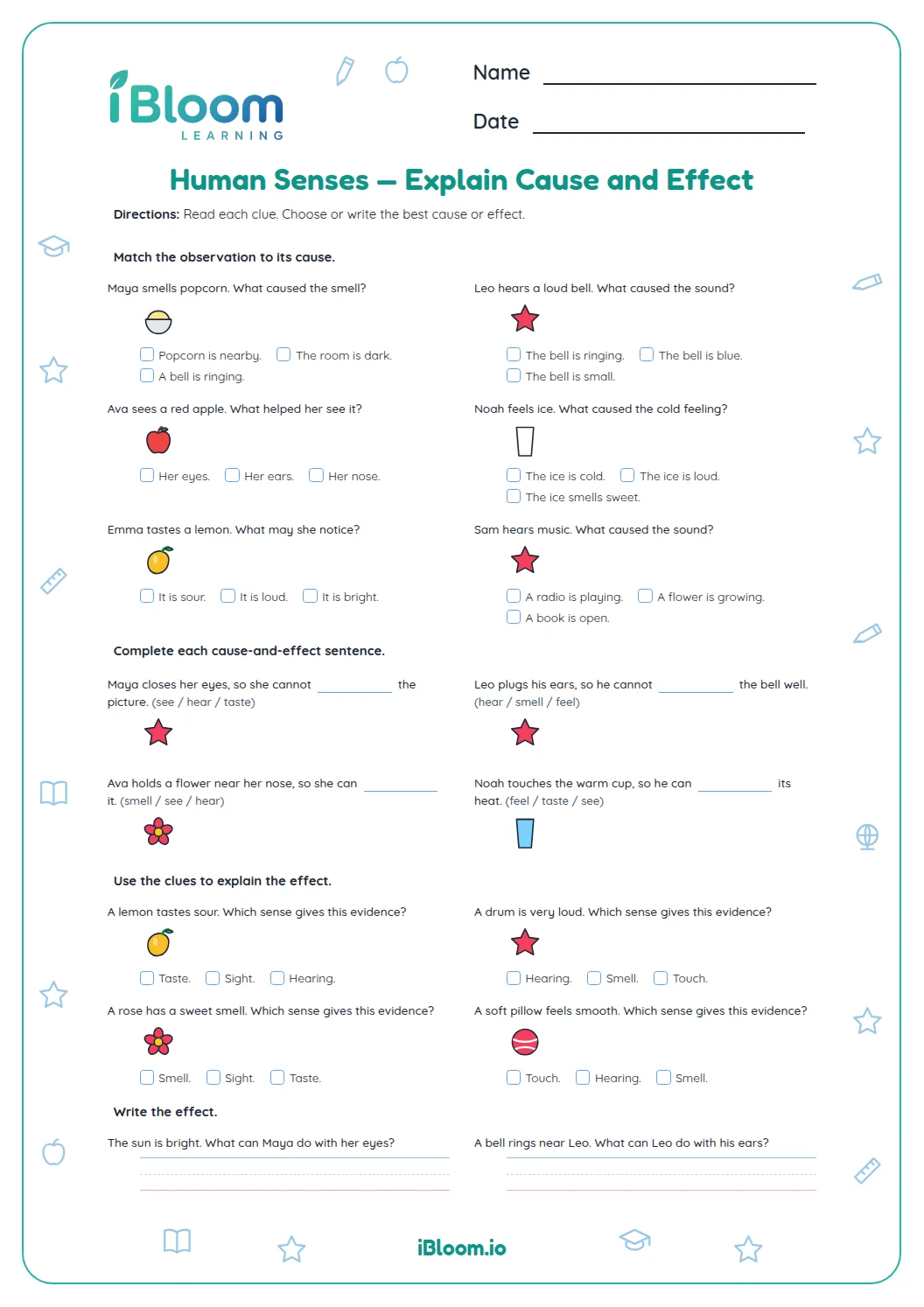
This free Grade 1 science worksheet has 17 multiple-choice questions about sight, hearing, smell, taste, and touch. Students first match a sense to a clue, then use sensory information in everyday situations such as noticing smoke, checking whether a mug is hot, and listening in a noisy room. A separate three-page answer key marks the correct choices. The sheet focuses on applying what the senses can tell us and making careful choices.
What information can each sense give?
Part A matches a clue with the sense that notices it: eyes see color, ears hear a bell, a nose notices a scent, skin feels texture, and the tongue tastes flavor. Part B then asks children to use the clue in a practical situation.
- 1You hear a bell ring. Which sense helps you notice it?
- 2Hearing notices the sound, so choose hearing.
How can a sense help with a choice?
A sense can provide useful evidence. Looking both ways helps a child see whether traffic is coming. Feeling that a mug is hot is a reason to set it down and tell an adult. Smelling smoke can be a clue that something may be burning.
What should children do with an uncertain clue?
Use safe choices when a clue could signal danger. Do not taste an unknown plant; tell a trusted adult if you smell smoke; and do not hold a hot mug tightly. The worksheet asks students to match clues to sensible responses, not to investigate risky objects themselves.
How to work through the sense clues
- 1Read the situation and identify the information being noticed.
- 2Name the sense that provides that information.
- 3For a safety question, choose the careful action that follows from the clue.
- 4Read each answer choice before marking one.
- 5Use the separate key to review all 17 responses.
Common sense-matching slips
The mistake
Choosing taste for a lemon’s scent.
The fix
Ask whether the clue is about smell or flavor; a scent is noticed with smell.
The mistake
Confusing the object with the sense, such as choosing sight for a bell.
The fix
Focus on the clue: a bell’s sound is noticed by hearing.
The mistake
Ignoring a safety clue, such as smoke or a hot mug.
The fix
Pick a response that avoids contact with a possible hazard and gets adult help when needed.
What to practice next
Make more practice
Questions parents and teachers ask
How many questions are on the five-senses worksheet?
There are 17 multiple-choice questions across four parts, printed on three worksheet pages. A separate three-page key gives the correct answer to each question. Students can complete the worksheet before turning to the key. Read a question aloud if the student needs help interpreting a clue.
Which senses appear in the worksheet?
It practices all five: sight, hearing, smell, taste, and touch. Students identify information such as color, sound, scent, flavor, or texture, then use those clues to choose a sensible response in familiar situations. The scenarios use these clues in everyday contexts.
What kinds of situations do the application questions use?
The questions use familiar situations involving traffic, smoky soup, a hot mug, an unknown plant, a noisy room, and a warm coat. Students connect the clue with the sense that can notice it or choose a careful next step, with safety in view.
Does the worksheet teach safety choices too?
Yes. Students choose safe responses to clues such as a hot mug or possible smoke, and learn not to taste an unknown plant. The situations point children toward setting something down or telling a trusted adult when help is needed. Adults can review the choices afterward.
How should I use the answer key?
Let the student complete the 17 questions first, then use the three-page key to check the choices. For a missed item, reread the situation and ask what information the sense provides or what safe action fits the clue. This builds careful reading.