



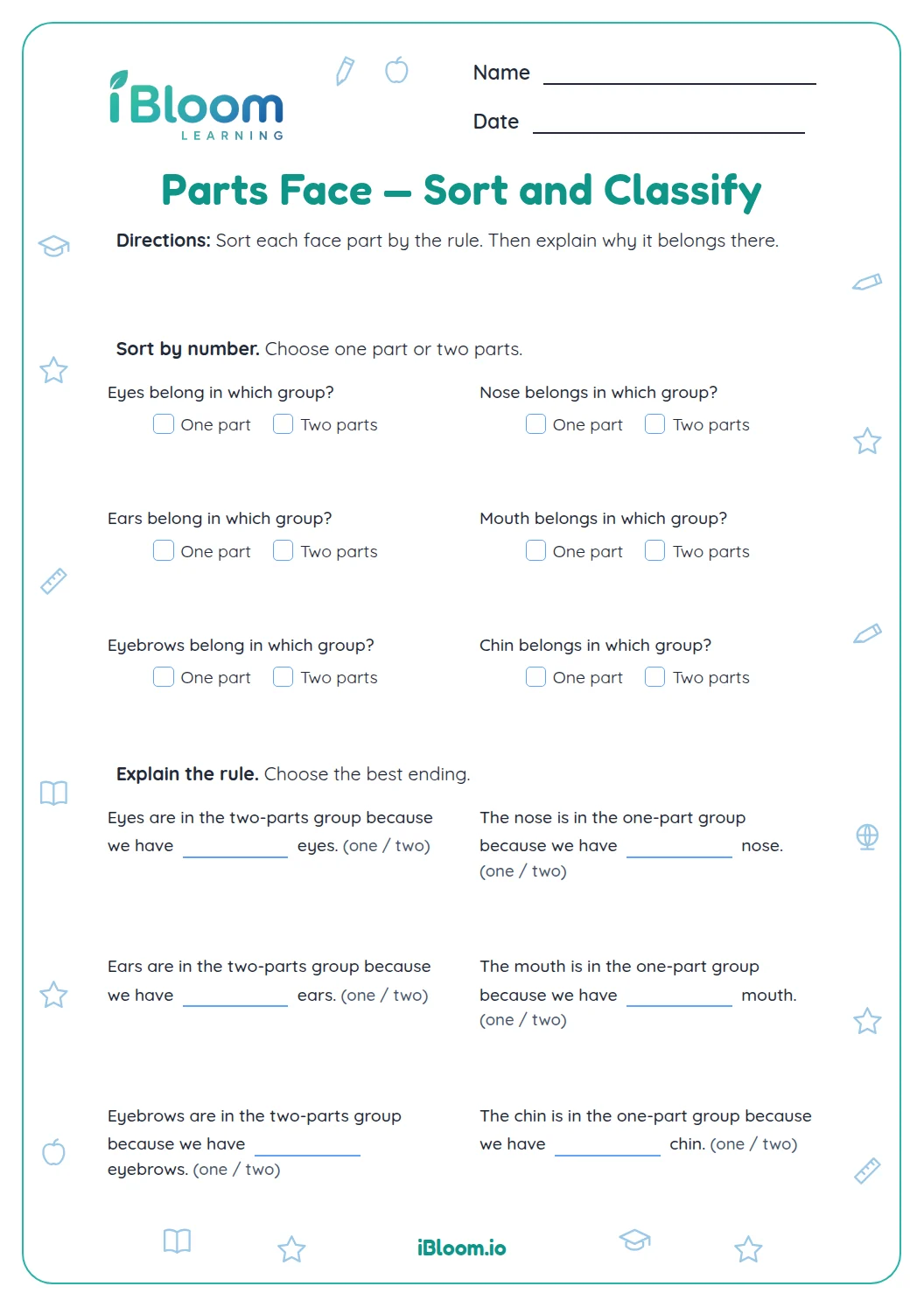
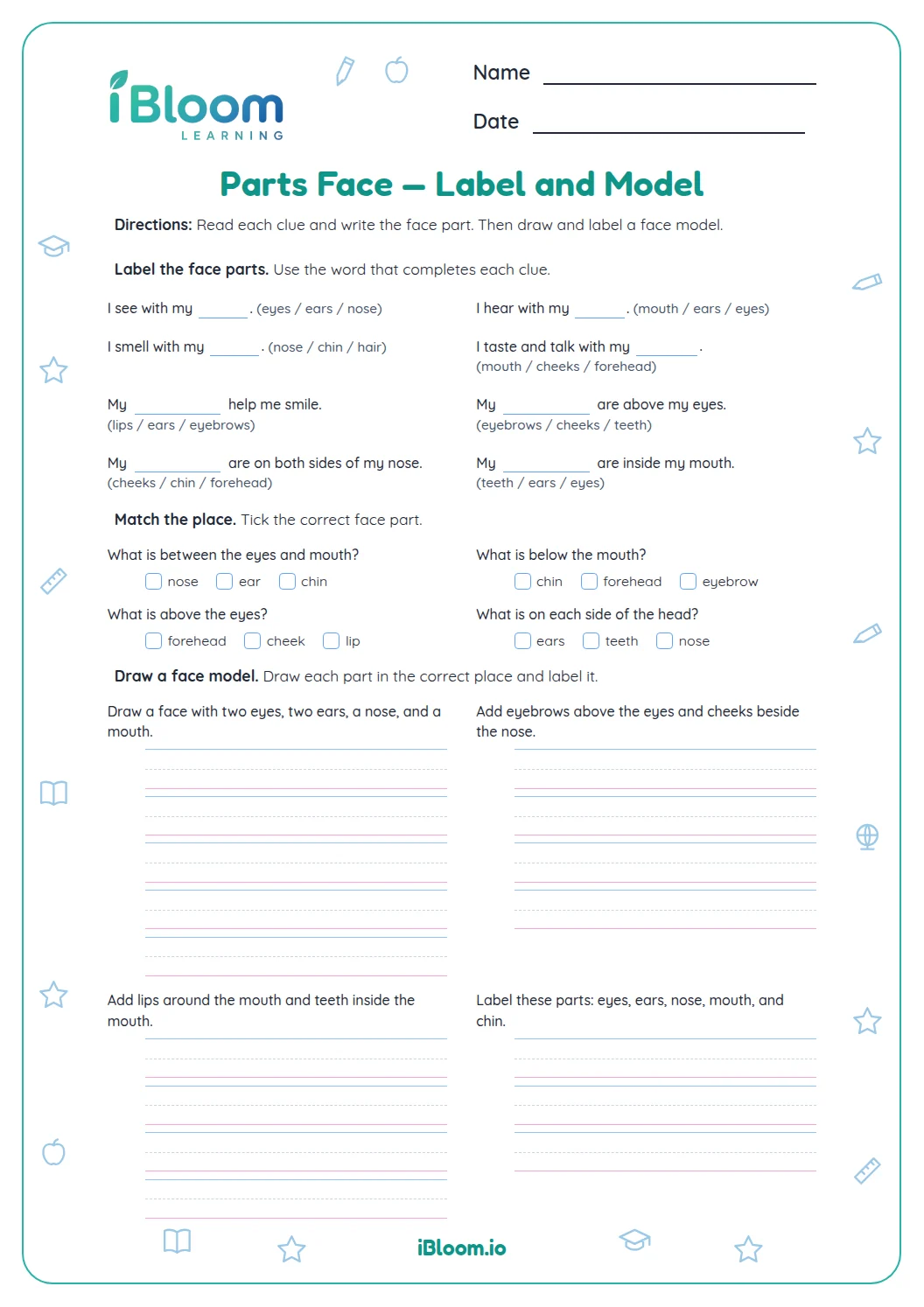

About this worksheet
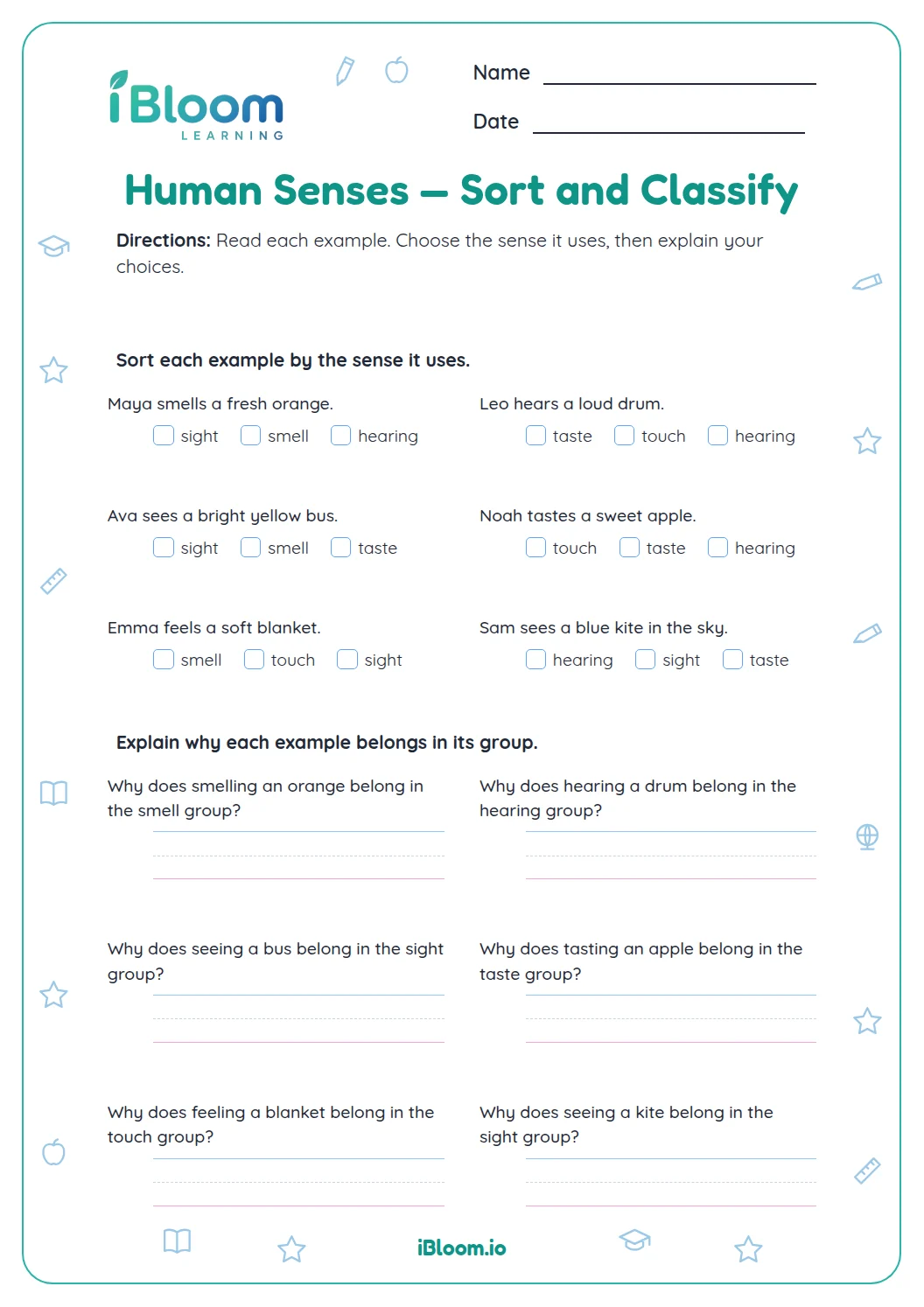
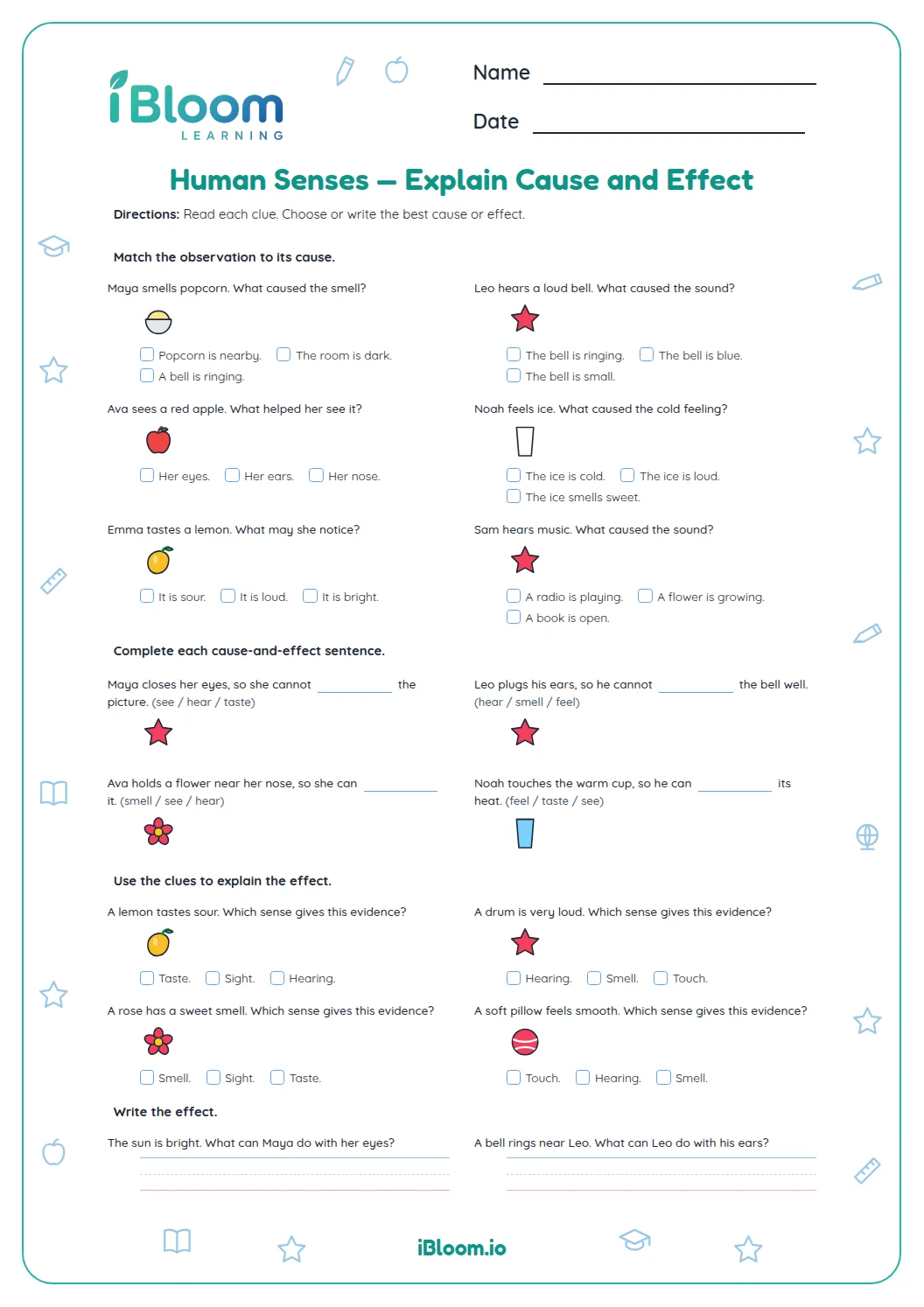
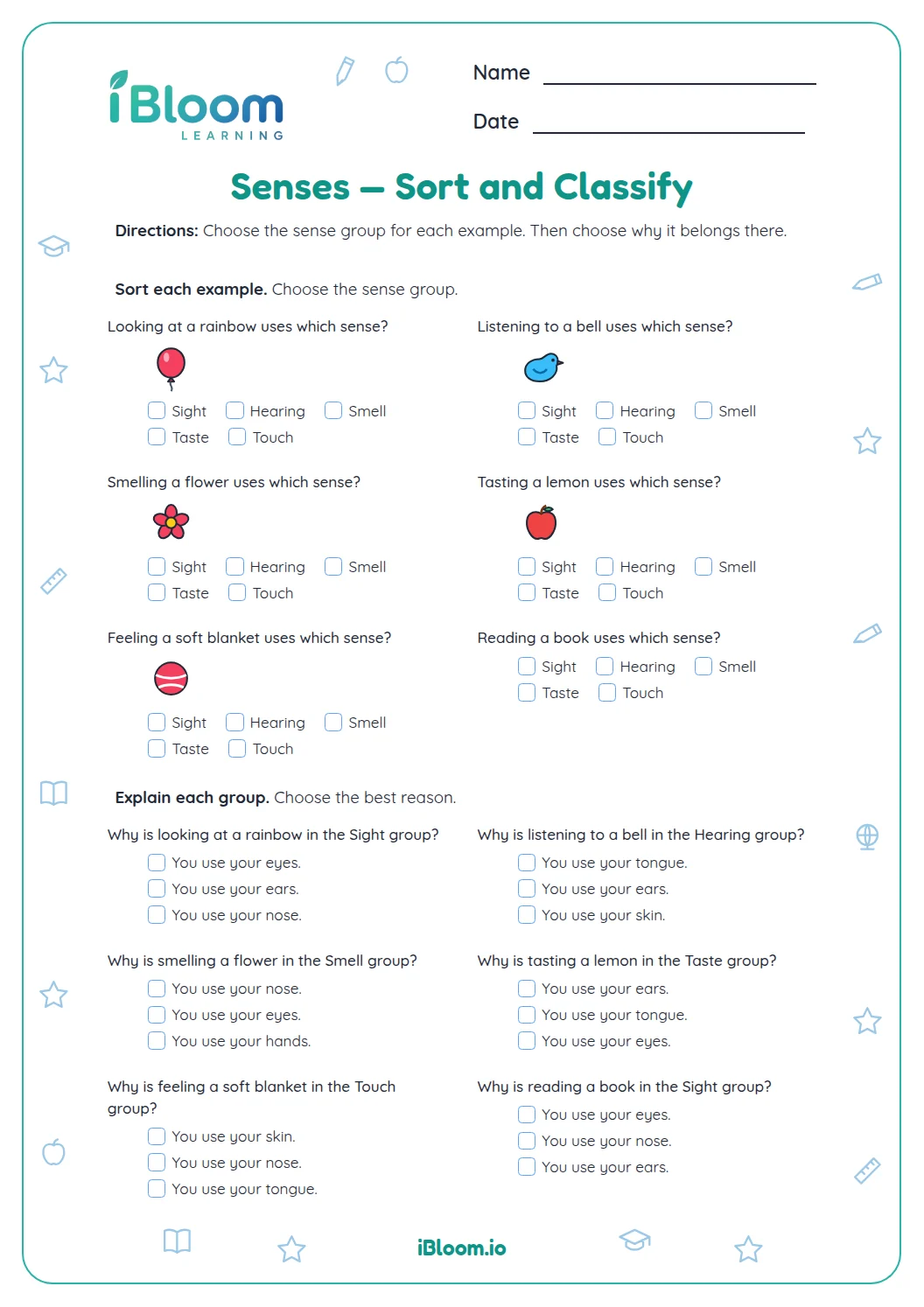
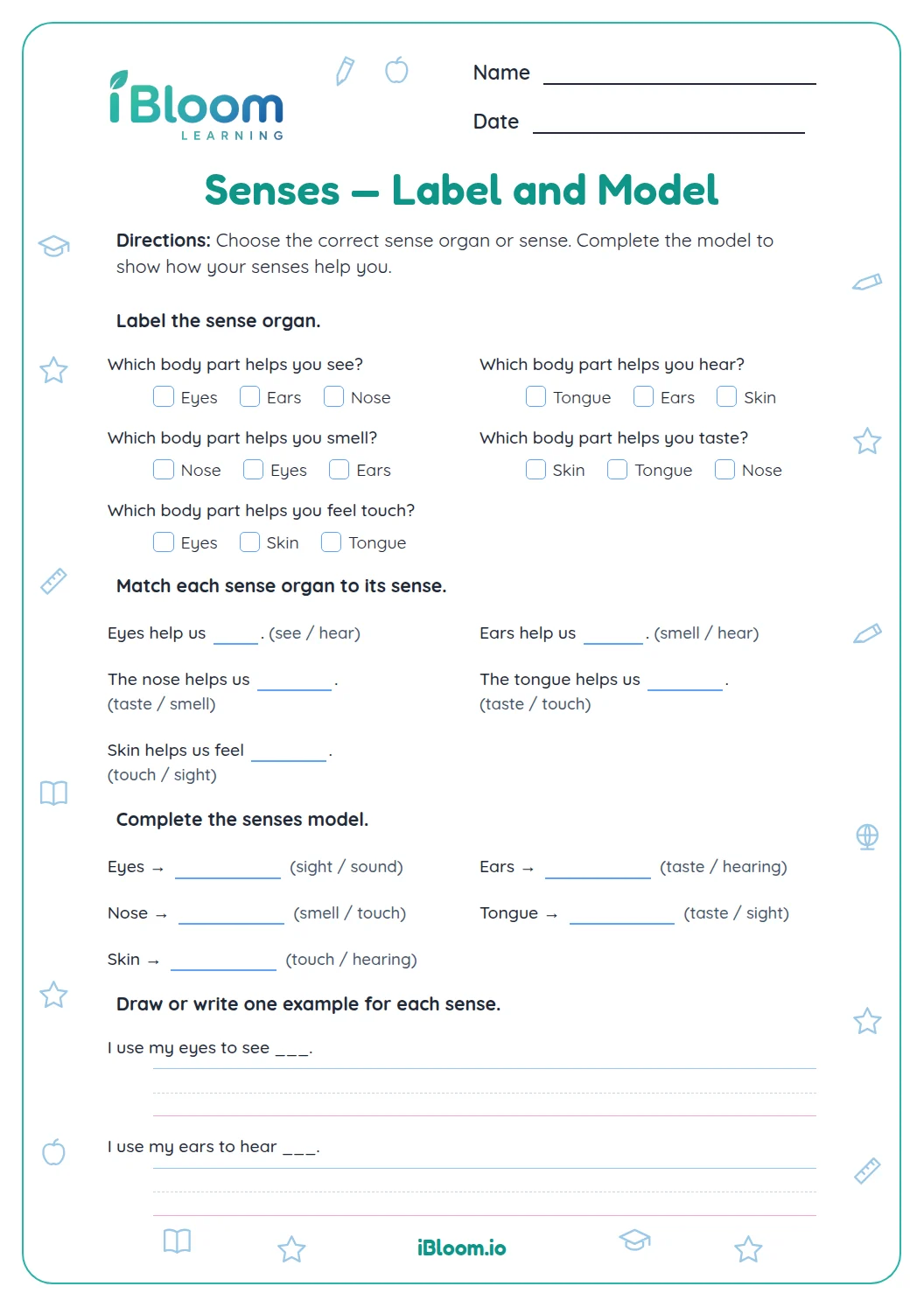
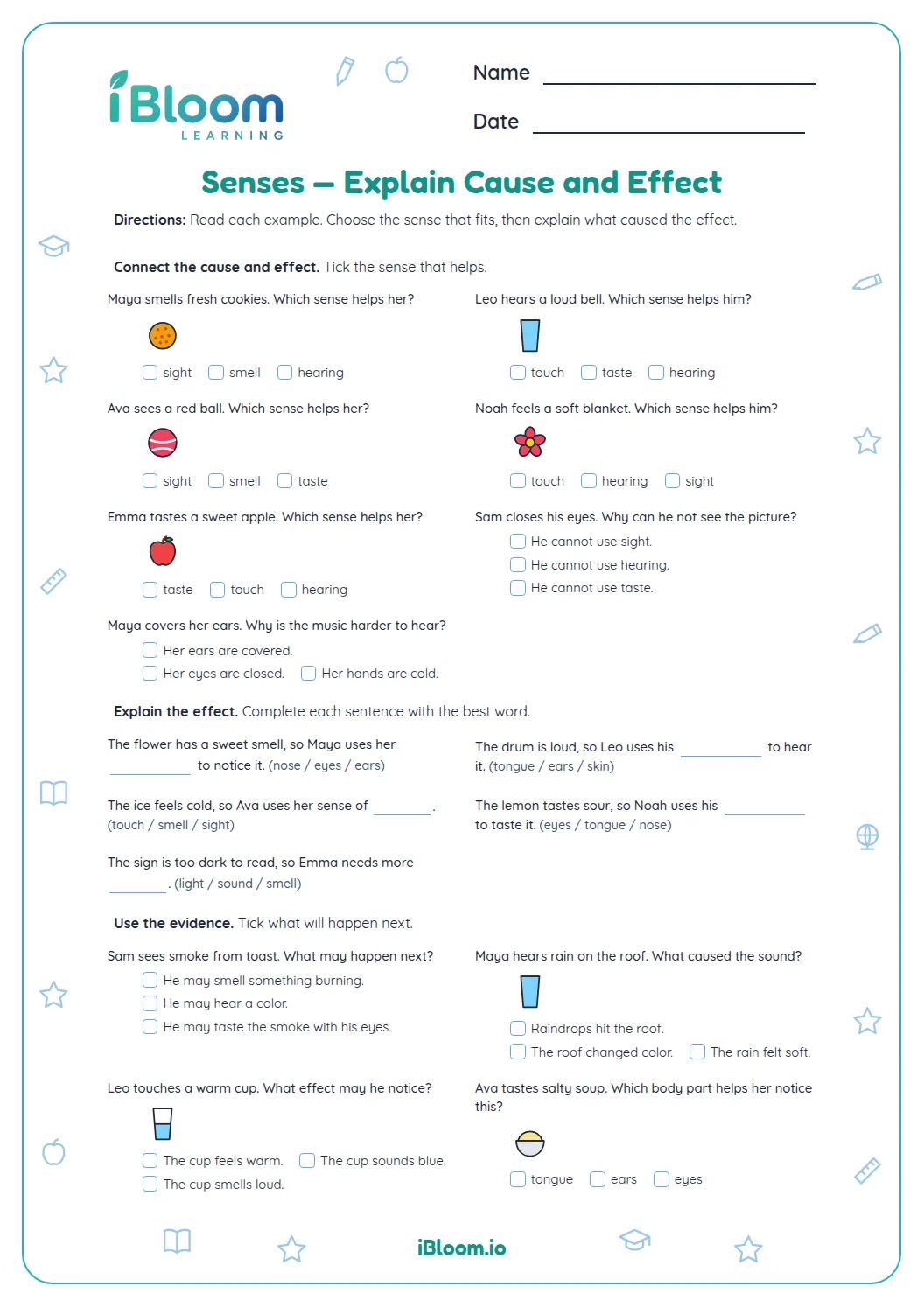
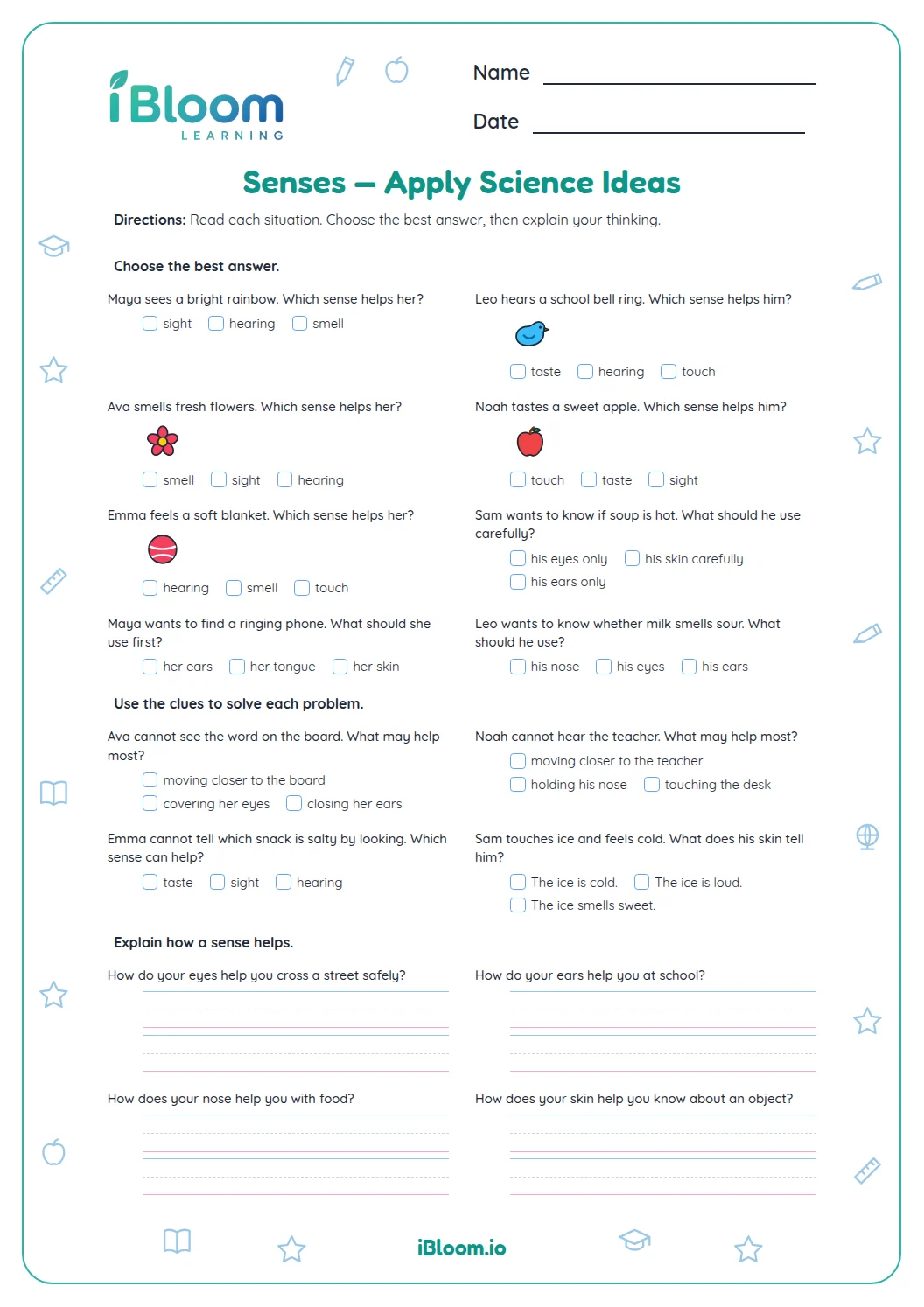
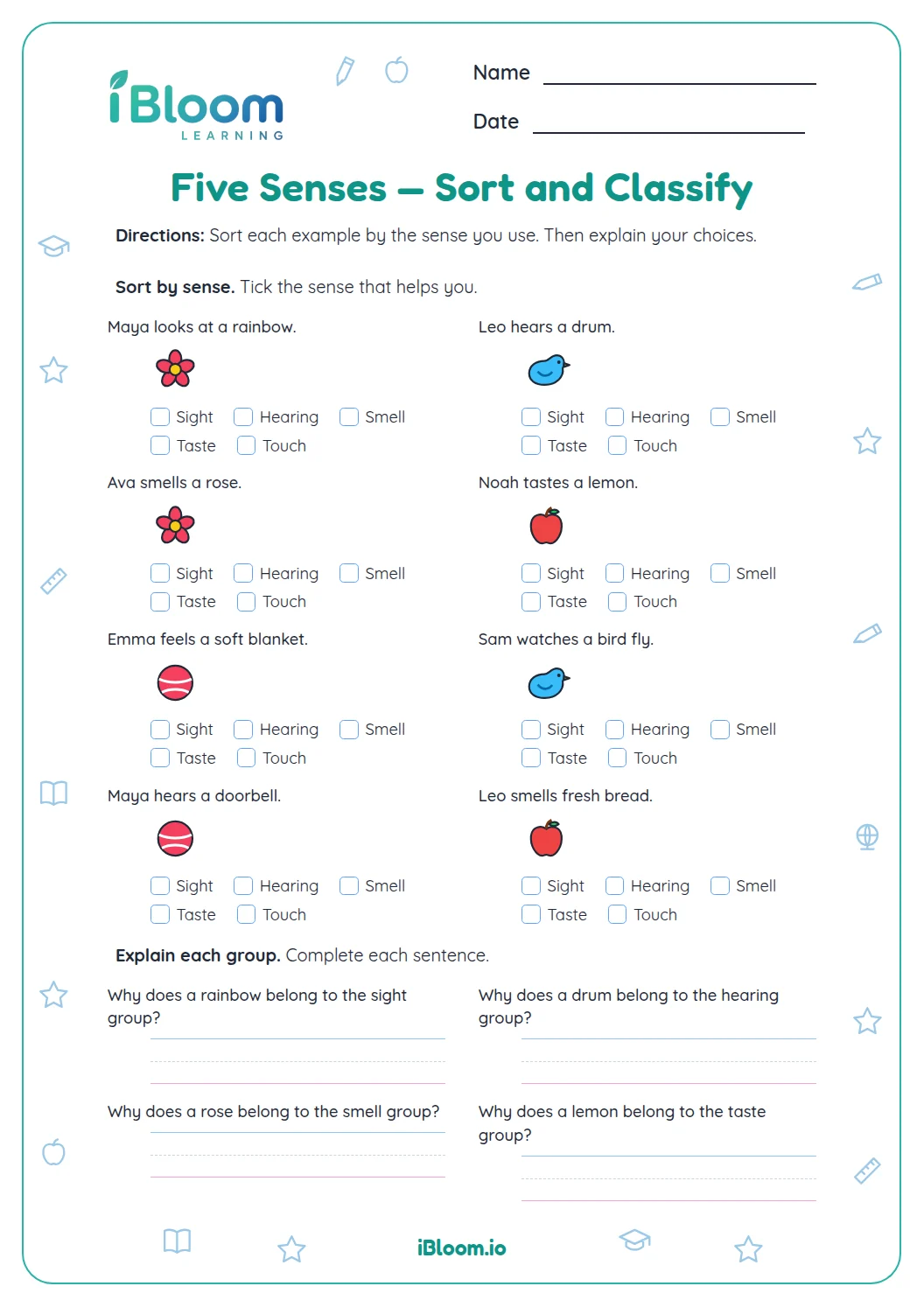
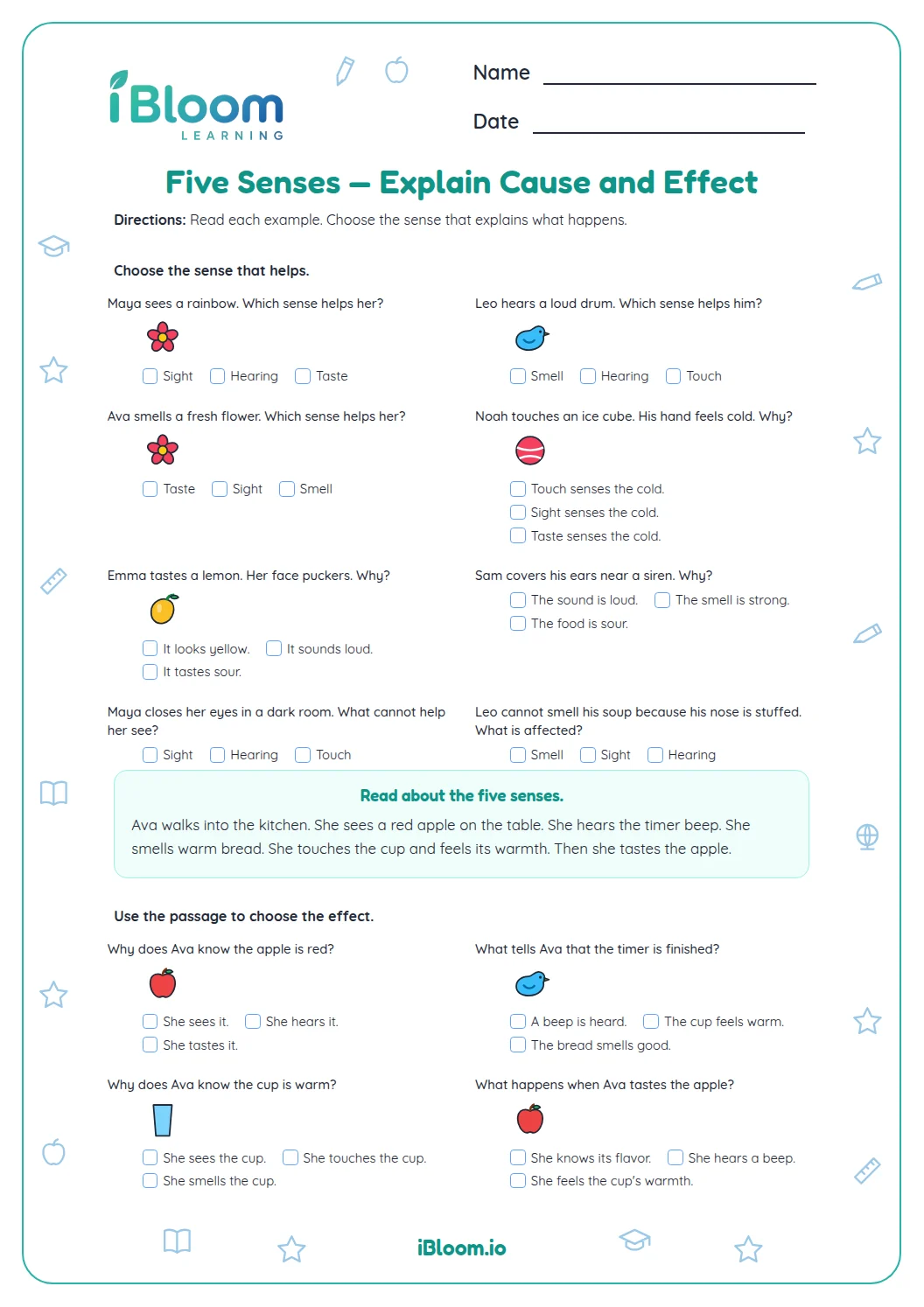
This Grade 1 science worksheet reviews how body parts gather information through the five senses. Fourteen short questions ask children to match familiar clues with eyes, ears, nose, skin, or tongue, name a sense, and use evidence from everyday situations. The separate answer key gives the matching body part or sense.
Which body part gathers each kind of information?
Part A uses familiar clues to match an event with eyes, ears, nose, skin, or tongue. A bell points to ears; a warm bowl points to skin.
For question 3, a flower’s scent is gathered by the nose.
Which sense matches each clue?
Part B asks for the sense word that names the information: sight, hearing, smell, touch, or taste.
A stop sign is seen, so question 6 uses sight. A timer beep is heard, so question 7 uses hearing.
How can you check a sense answer?
Connect the information with the body part that gathers it. Seeing colors points to eyes and sight; feeling a rough rock points to skin and touch.
In question 11, Maya hears a dog bark. Hearing is the sense, and ears are the body part that gathers the sound.
- 1A timer makes a beep.
- 2A beep is a sound, so the sense is hearing.
- 3The body part that notices it is the ears.
How to use this worksheet
- 1Read the clue and identify the information being noticed.
- 2For questions 1–5, name the body part that gathers the information.
- 3For questions 6–10, write the sense word.
- 4For questions 11–14, use the evidence in each situation to name a sense or body part.
- 5Check a sense answer against the body part that gathers it.
Mistakes to watch for
The mistake
Writing “ears” when the blank asks for a sense.
The fix
Use “hearing” for the sense and “ears” for the body part.
The mistake
Mixing up smell and taste when food is involved.
The fix
Ask whether the clue is a scent in the air or a flavor in the mouth.
The mistake
Naming a body part without explaining its job.
The fix
Add what information it detects, such as “ears hear the timer.”
What to practice next
Make more practice
Questions parents and teachers ask
What does this worksheet cover?
It reviews the five senses and the body parts people use to gather information. Children write eyes, ears, nose, skin, or tongue for familiar clues, name all five senses, and apply those ideas to short situations such as hearing an alarm or tasting a lemon.
What is the difference between a sense and a body part?
A sense names the kind of information a person notices, such as hearing or smell. A body part gathers that information: ears hear and the nose smells. Questions 1–5 and 12 ask for body parts, while questions 6–11 and 13–14 ask for a sense.
How does question 12 work?
Question 12 says Ava smells soap but does not touch it. The body part that gathers a smell is the nose. The question asks for a body part, while a question about noticing the smell would ask for the sense, smell.
Why does the worksheet ask about both parts and senses?
Naming the body part and naming the sense are related but different tasks. A child can say “ears” for the body part and “hearing” for the sense. The two parts of the worksheet give practice with each kind of answer.
Is an answer key included?
Yes. The separate answer key gives the expected body part or sense for all 14 questions. For extra practice, ask a child to explain how the body part gathers that kind of information, such as ears noticing a bell. It helps with quick checking.