




About this worksheet
This Grade 2 science worksheet connects body parts, health, and the senses. Children circle four sense-organ names, match body structures to functions, identify a healthy handwashing habit, and follow sensory information through the brain to a response. The final prompt asks children to draw and label that sequence. A separate answer key includes the choices and a sample model.
Aligned to 4-LS1-2
How do body parts help us sense and stay healthy?
Sense organs gather information from the world. Eyes help us see, ears help us hear, the nose helps us smell, and the tongue helps us taste. Other structures have different jobs: the heart pumps blood, the lungs move air, and the brain processes information.
Part A asks children to circle sense-organ names. Part B connects structures to jobs and includes a handwashing question about limiting germ spread.
How does a sense-and-response model work?
A simple model follows information through three steps: a sense organ detects a signal, the brain processes it, and the body responds. For example, skin senses heat from a hot object, the brain processes that information, and a hand may move away.
- 1A hot pan touches skin.
- 2Skin senses heat.
- 3The brain processes the information.
- 4The hand moves away.
- 5Model: skin → brain → hand moves away.
What will children label and draw?
The first four questions are short sentences in which children circle the named sense organ. Part B uses nine choices to connect body structures, a healthy habit, and sensory sequences. Part C asks children to draw and label a sense organ, the brain, and an action in the right order.
The template does not include a human-body outline, so the old outline-labeling format is replaced with body-part clues and a supported sensory model.
How to use this worksheet at home or in class
- 1Name the body part or health habit in each question.
- 2Match each body structure with its job.
- 3For a model, find the sense organ, the brain, and the response.
- 4Read the arrows in order from information to action.
- 5Draw and label a simple sequence, then check the key.
Common mistakes and quick fixes
The mistake
Saying that the brain detects every signal directly.
The fix
Name the sense organ first, then show the brain processing the information.
The mistake
Mixing up a structure and its job.
The fix
Pair each body part with one clear action, such as lungs moving air or the heart pumping blood.
The mistake
Drawing arrows in the response-to-signal order.
The fix
Start with what the sense organ detects, place the brain next, and finish with the body’s response.
Next Generation Science Standards alignment
The model questions focus on how sensory information leads to a response.
Model how animals sense information, process it in the brain, and respond.
On this sheet: Part C traces sensory information through the brain to a response and asks children to draw that sequence.
Show the official wordingHide the official wording
Use a model to describe that animals receive different types of information through their senses, process the information in their brain, and respond to the information in different ways.
What to practice next
Make more practice
Further reading
Questions parents and teachers ask
What body parts are named on the worksheet?
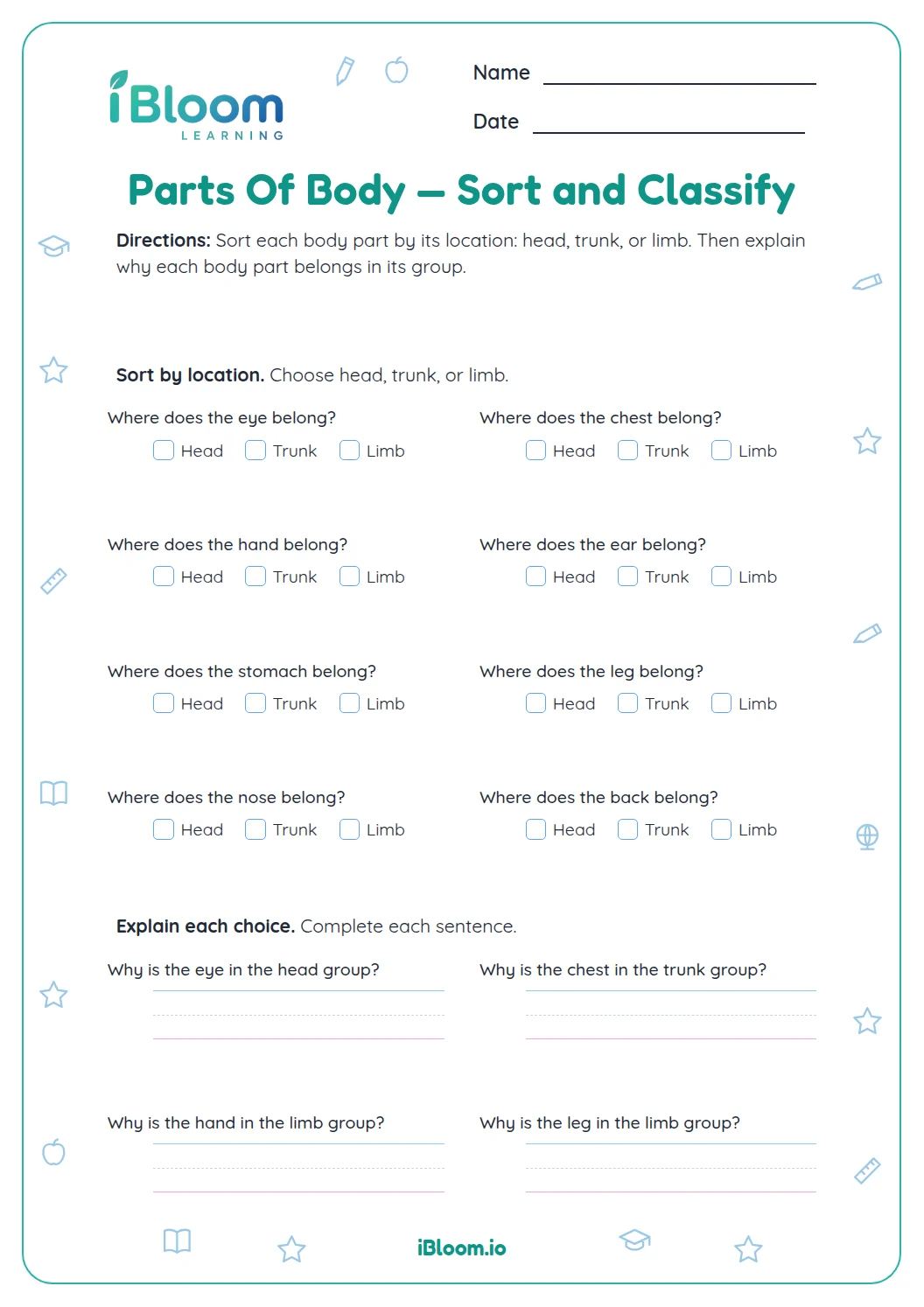
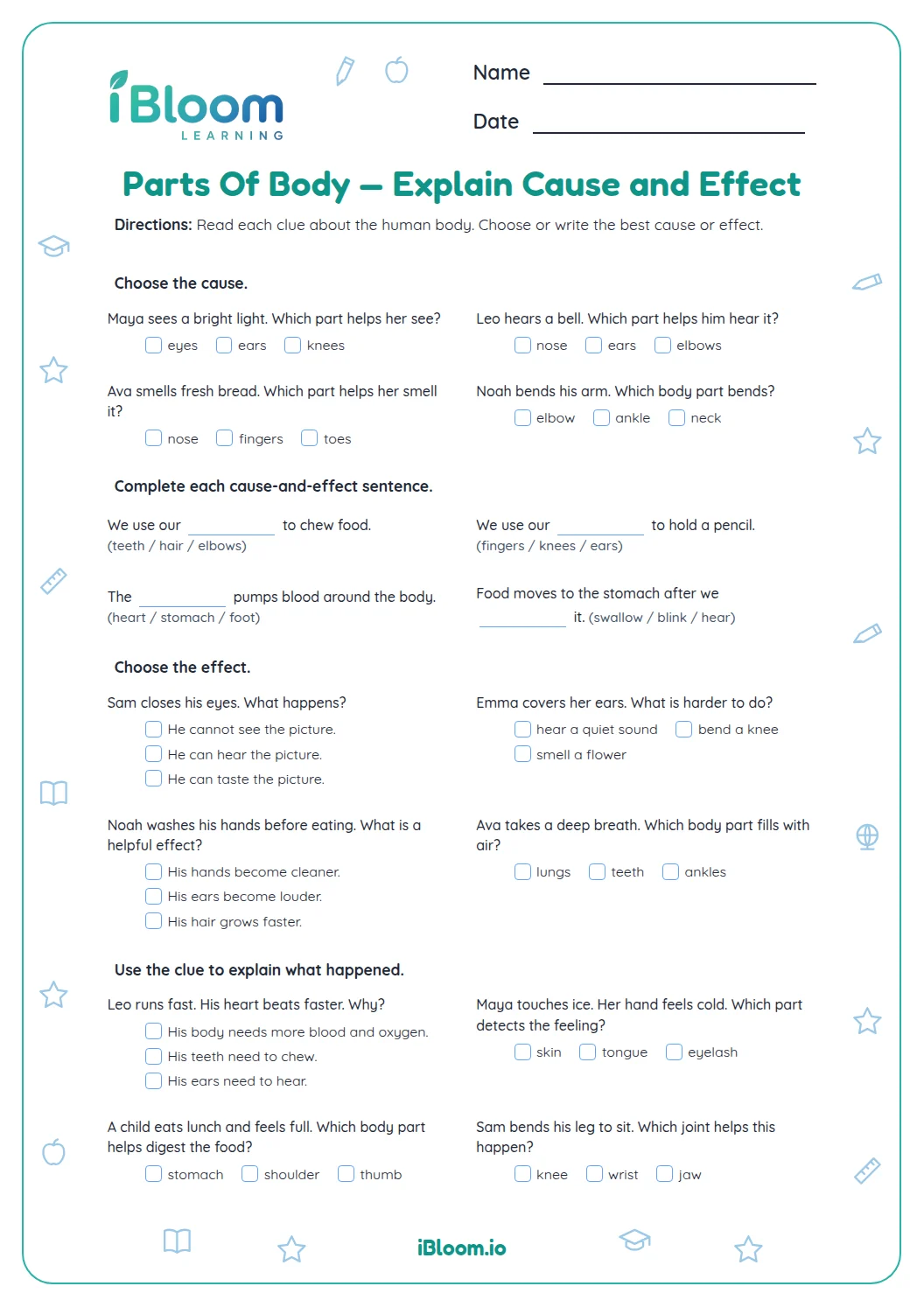
Children circle eyes, ears, the nose, and the tongue in short sentences. They also connect the heart, brain, and lungs with simple jobs. These examples keep the focus on body structures and how their functions support sensing and everyday life.
What does the model in Part C show?
The model shows information moving from a sense organ to the brain and then to a response. For example, skin senses heat, the brain processes the signal, and a hand moves away. Children draw another labeled sequence in the final question.
The page labels sense organs in sentences and asks children to connect body parts with their jobs. The final activity adds a model of a sense signal, the brain, and a response, so the practice focuses on function and information flow.
The worksheet template does not include a human-body outline drawing. Instead, children circle body-part names in sentences, connect structures with functions, and draw a sense-to-brain-to-action model. The new format keeps body structures central while using drawings the template supports. This keeps the labels easy to see.
Does this worksheet include a health habit?
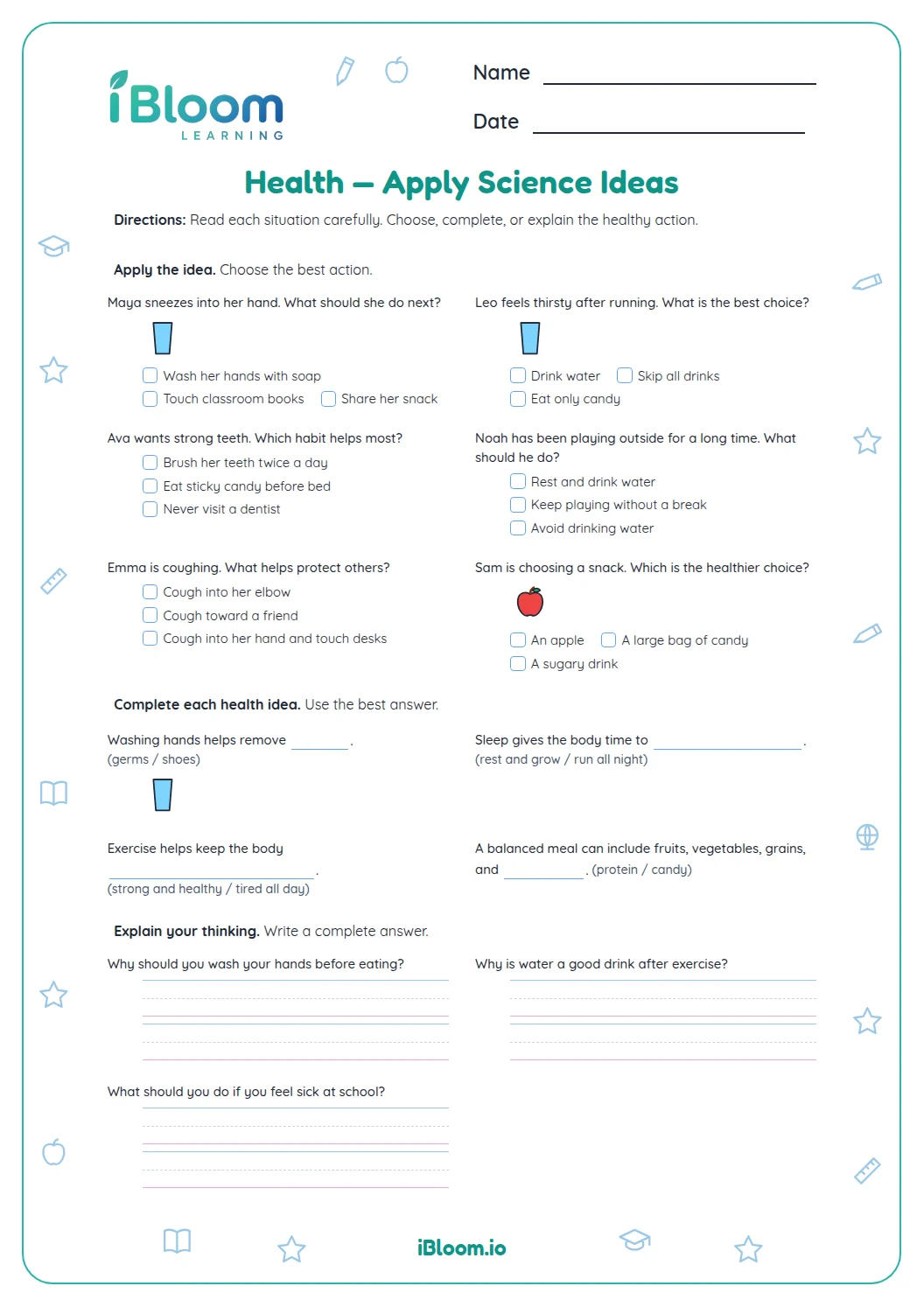
Yes. One question asks which habit helps limit germs before eating, and the correct choice is washing hands. The remaining questions connect body structures with their jobs and show how sensory information can lead to a response. It fits the body-part theme.
Is an answer key included?
Yes. The answer key is on two pages and lists the correct choices for nine multiple-choice questions, the four words to circle, and a sample for the drawing prompt. Another accurate model is acceptable if it labels a sense organ, the brain, and an action in order.