




About this worksheet
This Grade 2 worksheet gives students 14 questions for sorting familiar body parts by job and recognizing everyday health choices. Students match senses and movement, choose habits that support health, and classify body parts by shared roles. A separate answer key lists the correct choices.
How can you sort body parts by their jobs?
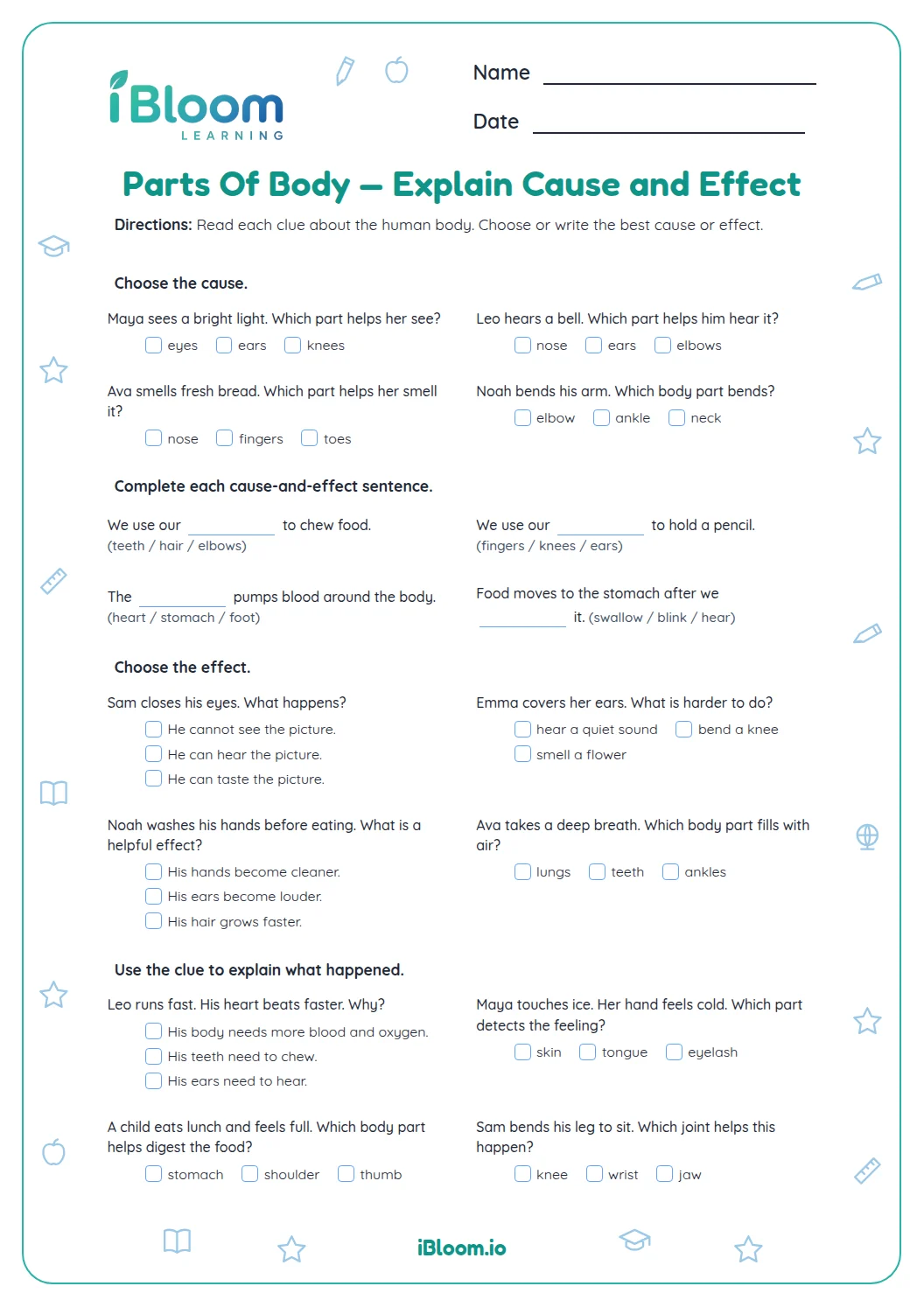
Body parts can be grouped by what they help us do. Eyes help us see, ears help us hear, and teeth help us chew. Question 1 asks which body part helps you hear a bell; the matching answer is ear.
- 1Job: hear a bell
- 2Matching part: ear
What makes a health choice helpful?
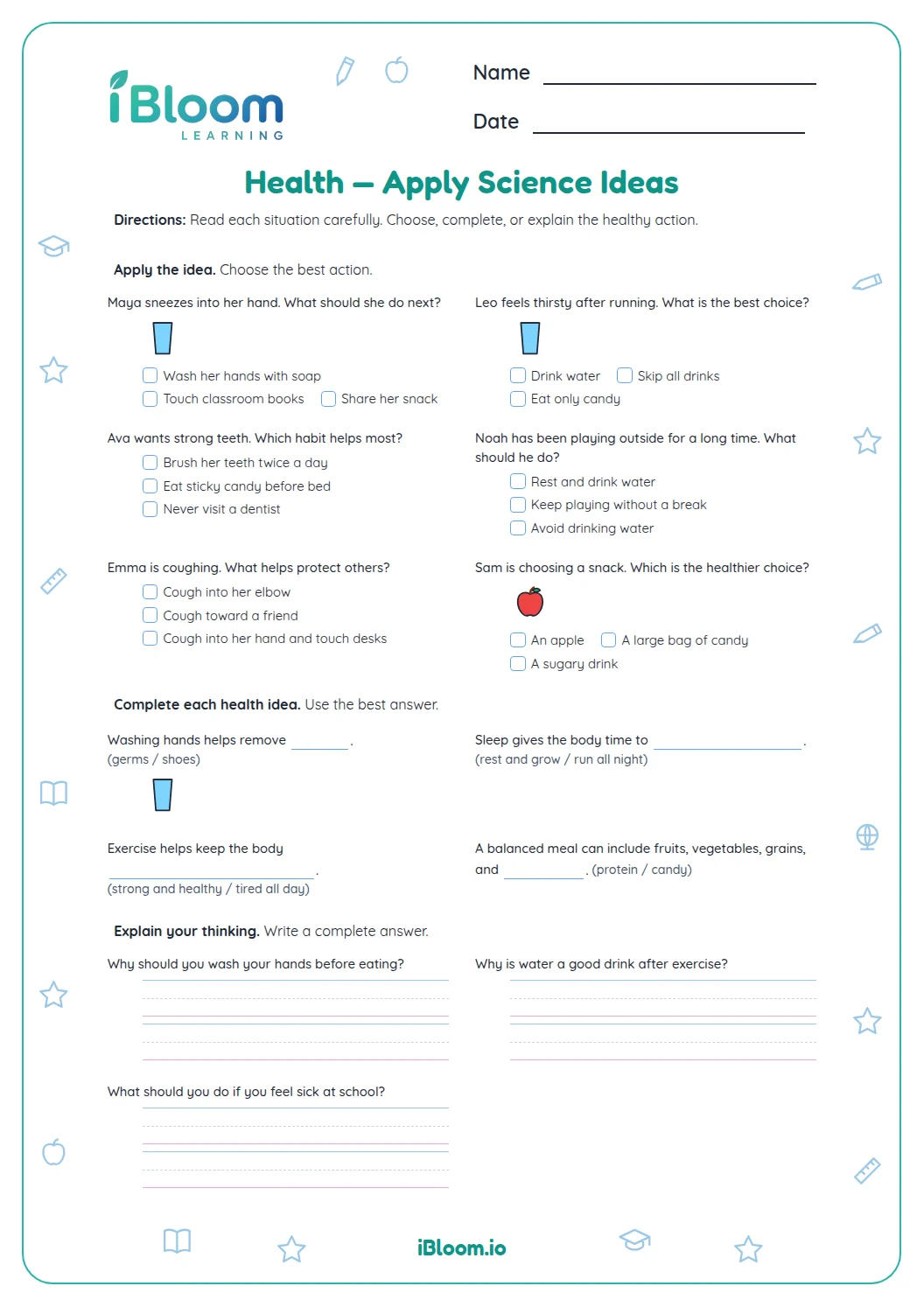
Some choices support care of the body, such as washing hands with soap, brushing teeth, sleeping, and choosing nourishing foods. A category is useful when its members share a clear feature.
What kinds of groups will I identify?
Part A matches body parts to jobs. Part B sorts healthy choices, and Part C identifies sense organs and body parts that help with movement.
How to use this worksheet
- 1Read the job or health example in each question.
- 2For body-part jobs, choose the part that performs the job.
- 3For health choices, decide whether the action supports everyday care.
- 4For the final group questions, look for a shared body role.
- 5Check each choice with the answer key and name the clue you used.
Common mistakes and quick fixes
The mistake
Choosing a body part that is near the body area but does a different job.
The fix
Match the question’s action to the part that senses or moves.
The mistake
Treating one healthy habit as the only way to care for the body.
The fix
Choose the option that fits the specific example in the question.
The mistake
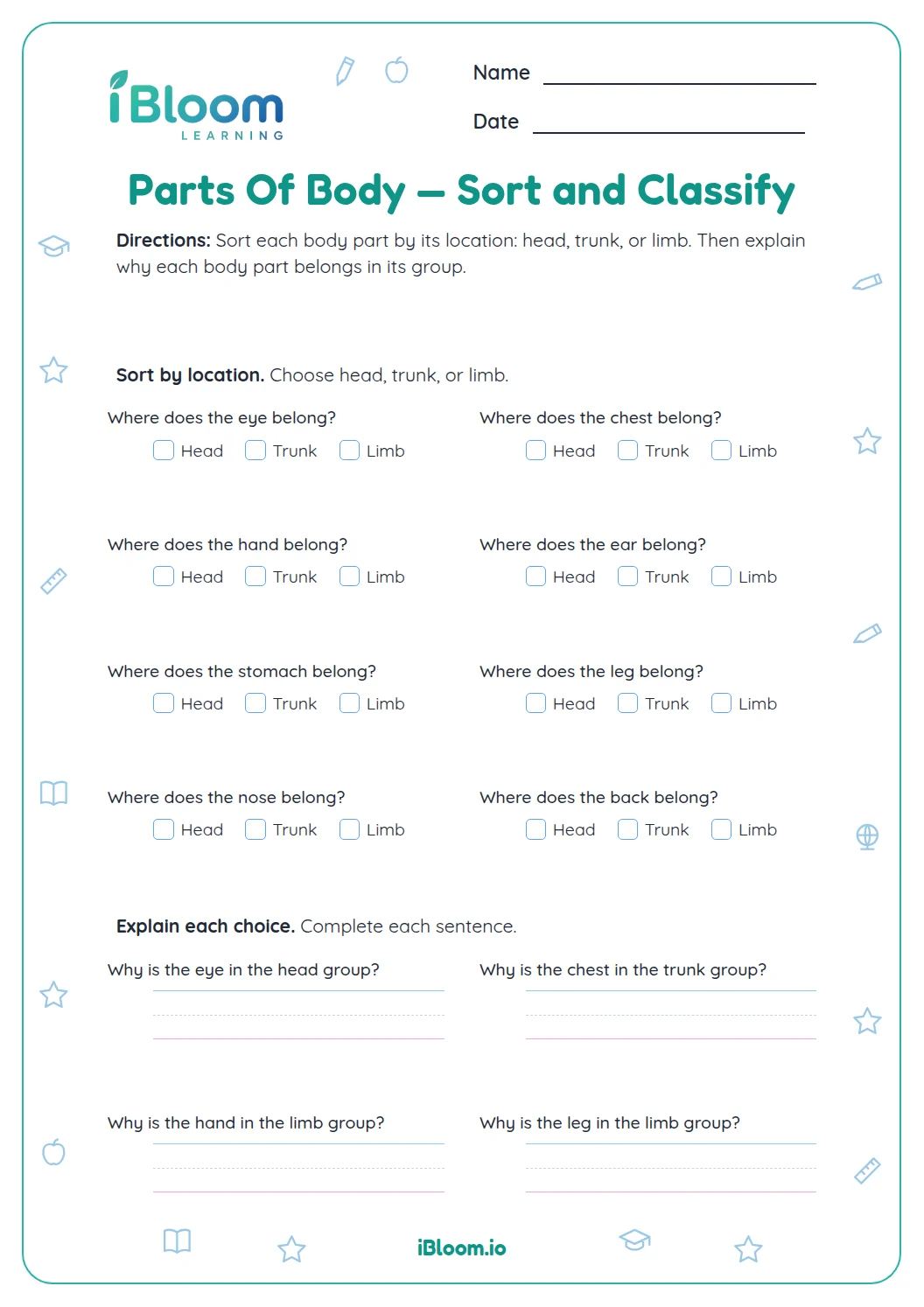
Grouping parts by where they are instead of what they help us do.
The fix
Use the shared job, such as sensing or movement, as the group rule.
What to practice next
Make more practice
Questions parents and teachers ask
What body parts does this worksheet ask about?
Students match familiar parts such as ears, nose, eyes, teeth, and elbows with jobs or groups. They also identify sense organs and parts that help with movement. Ask the learner to name another part that shares one of these jobs.
How many questions are on the worksheet?
There are 14 questions in three parts. Students match body parts to jobs, choose healthy choices, and identify body parts that belong in a group. The answer key follows the same order as the questions. Its final question asks which pair helps a person move.
What does sort and classify mean here?
To sort and classify is to place examples in groups based on a shared feature. This worksheet uses jobs such as sensing or movement and choices that support everyday health. Ask what feature links a selected answer to its group.
Which health choices appear on the sheet?
The examples include handwashing, brushing teeth, sleep, wearing a hat in strong sun, and choosing apple slices for a snack. Students select the choice that fits each question and can explain the health group it belongs to. These are concrete examples for classroom health sorting.
How can students group body parts?
They can group parts by a job they share. For example, a leg and foot help with movement, while the nose is a sense organ. The last two questions check these shared roles. Question 12 supplies the leg-and-foot example.
Is there an answer key?
Yes. The separate answer key lists the correct choice for each of the 14 questions. Review the job or group named in the question when checking an answer, and ask the student to say why that choice fits.