



About this worksheet
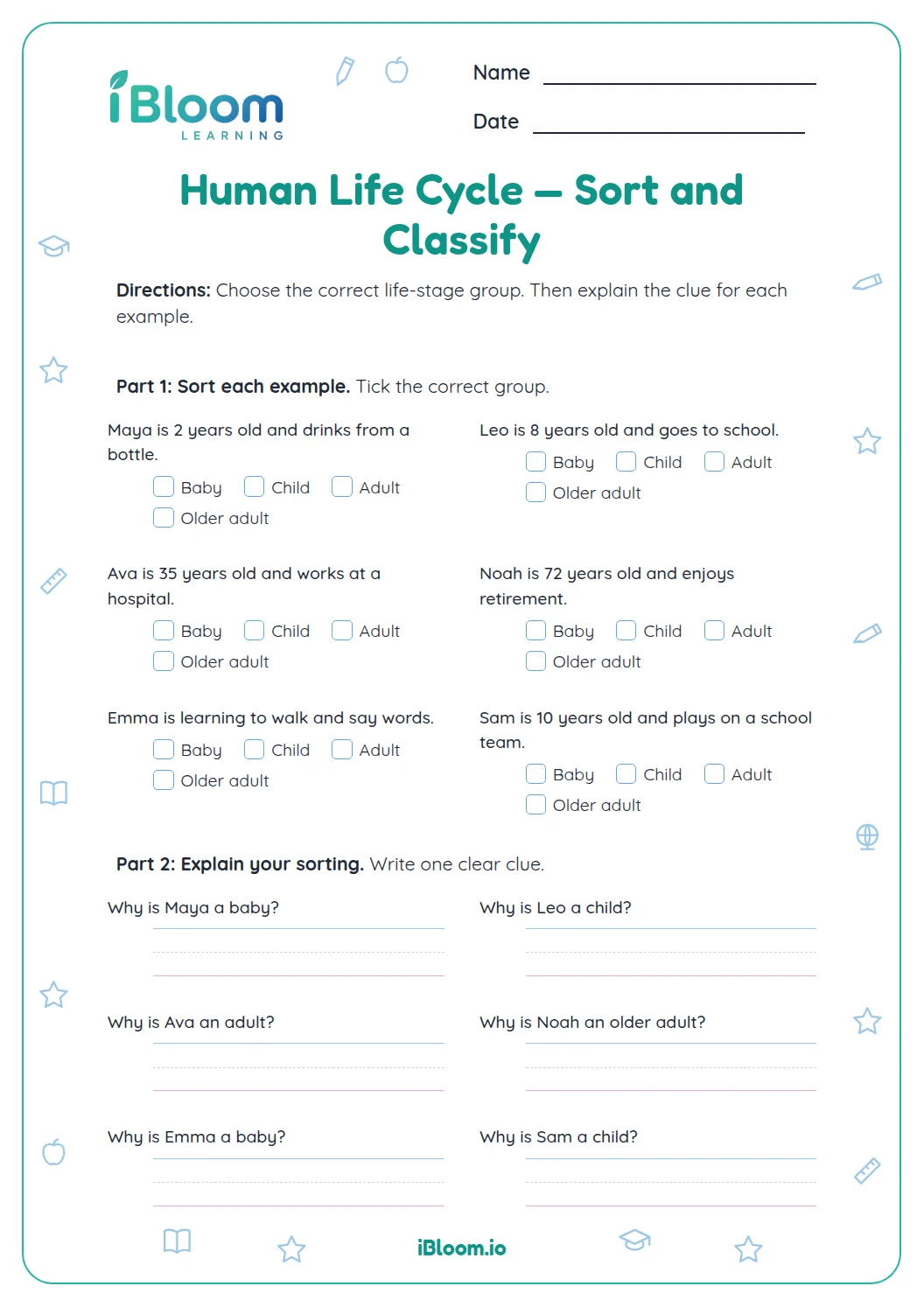
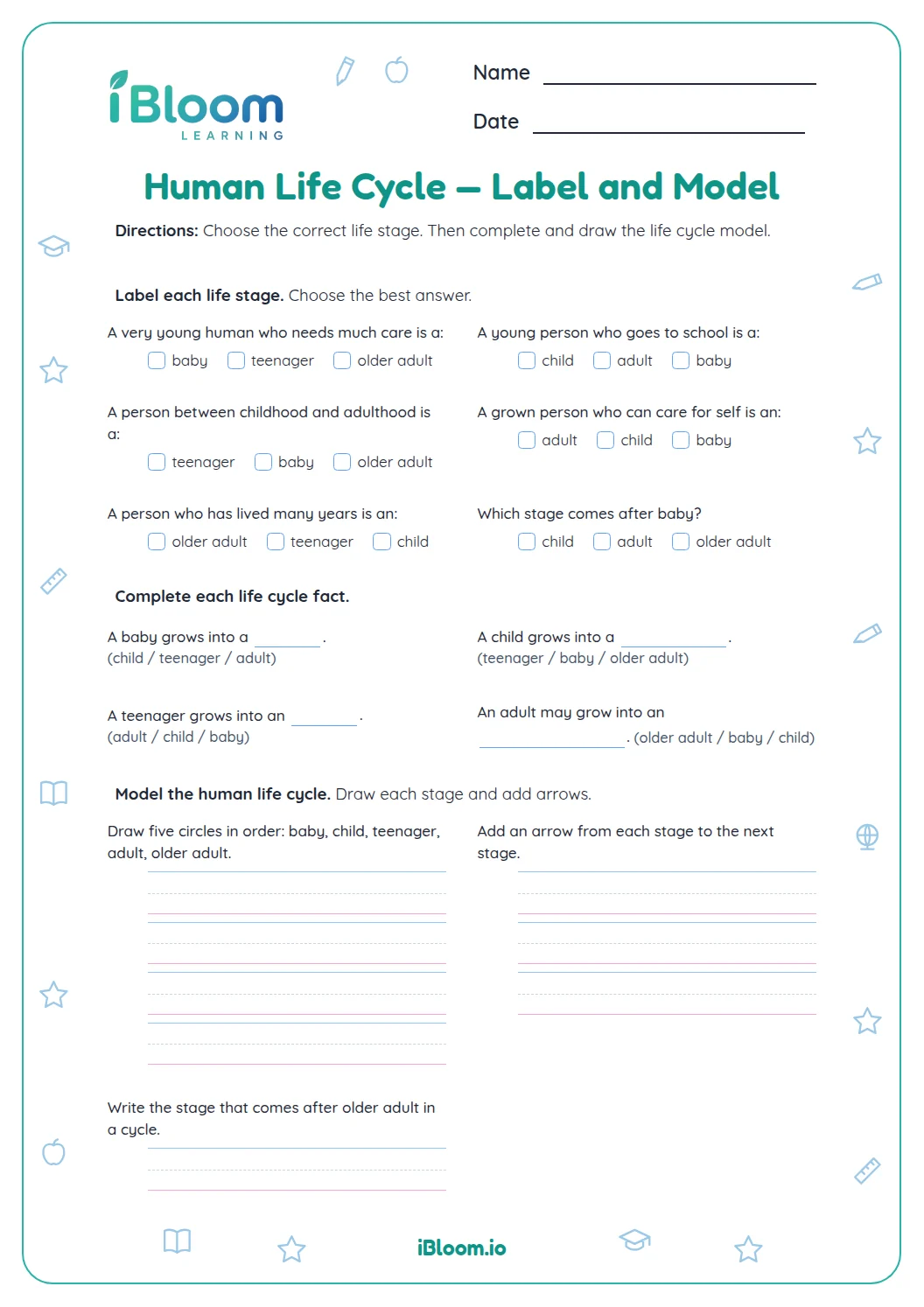
This Grade 2 science worksheet explores human growth and development through familiar examples. Students identify life stages, distinguish body changes from learned skills, and consider needs that continue as people age. Fourteen completion and short-answer questions use concrete examples such as learning to speak, changing clothes sizes, and gaining independence. The answer key gives brief responses for checking ideas.
What does this page ask students to do?
Students apply life-cycle ideas to human growth, development, stage order, and continuing needs. They consider body changes such as growing taller alongside skills such as learning to speak or tie shoes.
Fourteen items include short blanks and two brief written responses. The answer key gives a sample for the open-ended question.
- Part A: identify growth, care, and life-stage order
- Part B: distinguish body changes from learned skills
- Part C: connect time, needs, and increasing independence
What changes as a human grows?
People grow and develop over many years. Growth includes changes in body size; development includes changes in abilities and skills. A child may grow taller and learn to walk, talk, or tie shoes.
People at every stage need food, water, rest, safety, and care. What changes is the kind of help someone may need and the tasks they can do independently.
How to use this worksheet
- 1Read each example and decide whether it describes body growth, a learned skill, or a continuing need.
- 2Put the life stages in order from youngest to oldest.
- 3For the final response, name one task a child can learn to do more independently.
- 4Use the answer key’s sample as one possible response, not the only one.
Common mistakes and quick fixes
The mistake
Thinking growth means every person changes at exactly the same rate.
The fix
Explain that people grow over time, but individual timing and size can differ.
The mistake
Assuming adults no longer need help or care.
The fix
Separate growing independence from continuing needs such as food, water, safety, and rest.
The mistake
Calling every new ability physical growth.
The fix
Separate body-size changes from skills a person learns through development.
What to practice next
Questions parents and teachers ask
What does the human life cycle describe?
It describes how people grow and develop through stages such as baby, child, and adult. Bodies and abilities change over time. Students use examples such as learning to walk, growing taller, and becoming able to do more tasks independently.
Do people stop needing care as adults?
No. People continue to need food, water, safety, rest, and care. The kind of help a person needs can change over time, and growing independence does not mean that all needs disappear. Children and adults can both need support.
What is one way a child develops?
A child may learn a new skill, such as tying shoes or riding a bike, while also growing physically. These are different kinds of change: growth describes body changes, while development includes changes in abilities and skills. The worksheet asks students to tell these examples apart.
What grade is this worksheet for?
This worksheet is written for Grade 2 science. It has 14 completion and short-answer questions about human life stages, growth, learned skills, basic needs, and independence. A two-page answer key includes a sample response for its open-ended item.
What is the difference between growth and development?
Growth describes physical changes, such as getting taller or growing out of clothes. Development includes changes in what a person can do, such as learning to talk, walk, or tie shoes. A single child can experience both kinds of change while growing up.