Free printable practice
Basic Needs Practice Activities
Grade 3 science worksheets that help children identify the basic needs of living things and connect those needs to ecosystems.
Free printable worksheet PDFs
Preview every available page, then download the free worksheet PDF for home, homeschool, tutoring, or classroom practice.
Preview the exact activity before downloading it.
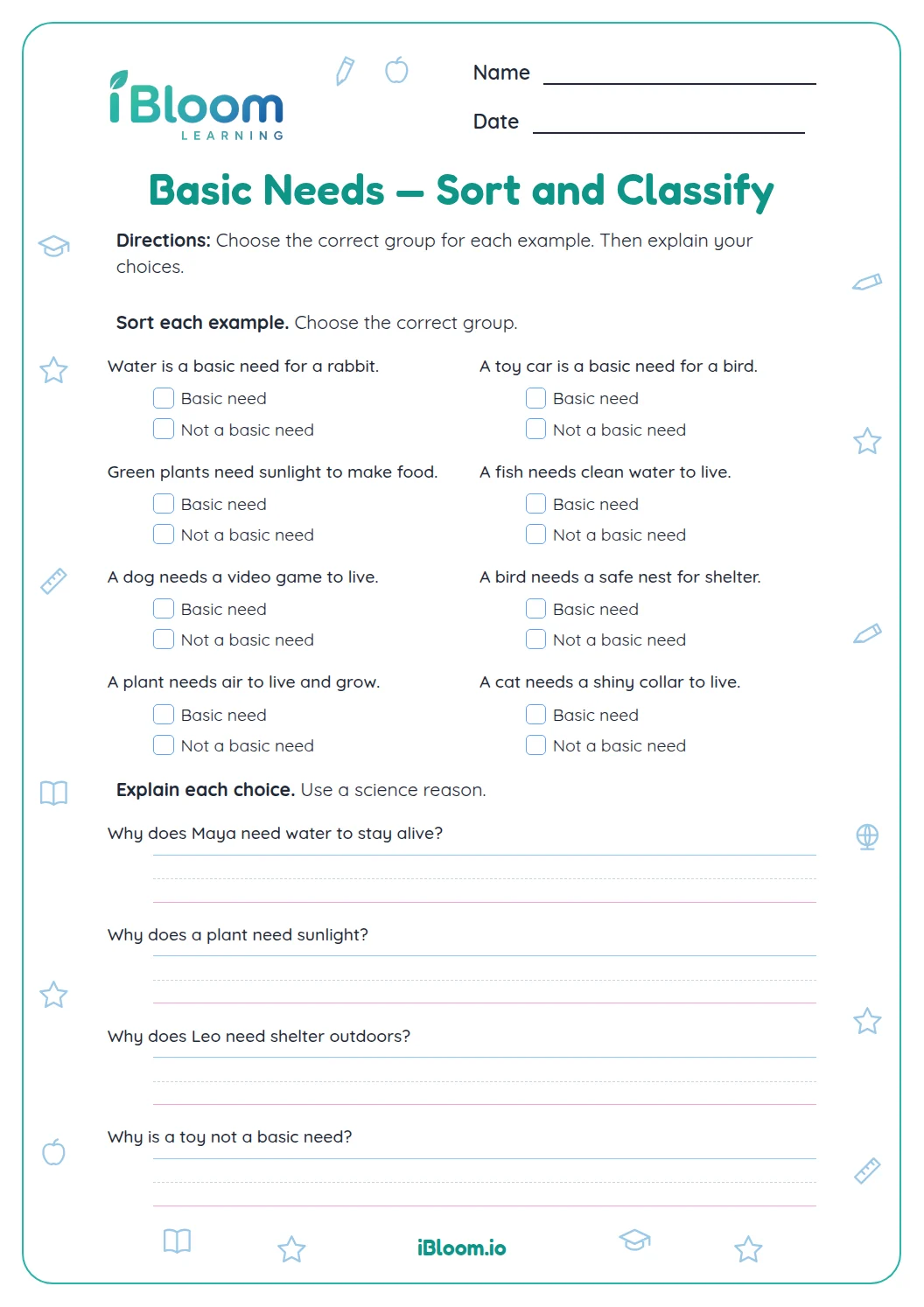 Basic Needs — Sort and ClassifyGrade 3 science worksheets that help children identify the basic needs of living things and connect those needs to ecosystems. This sort and classify worksheet provides a distinct, age-appropriate way to practise the same lesson.Grade 3Free PDF preview
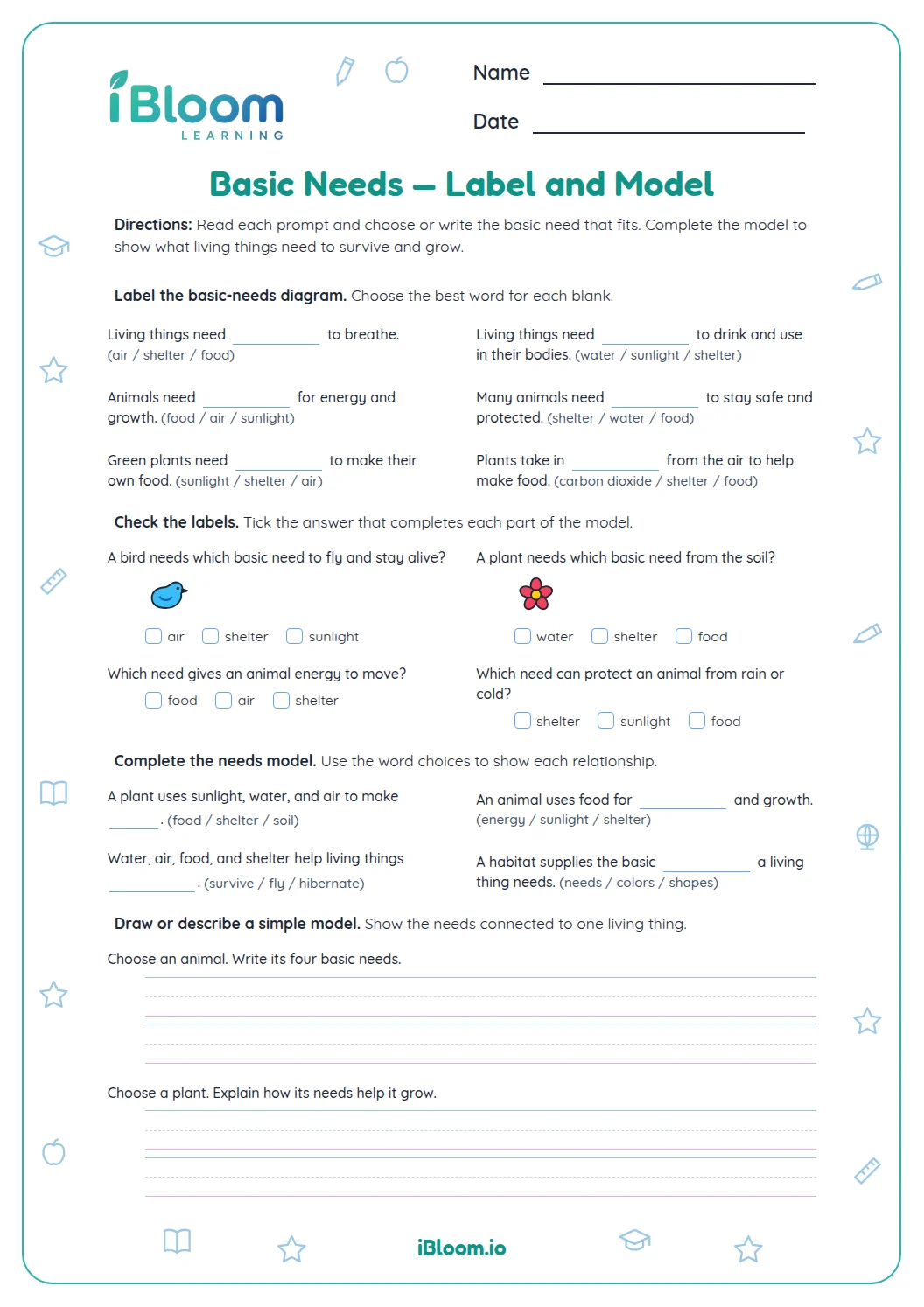 Basic Needs — Label and ModelGrade 3 science worksheets that help children identify the basic needs of living things and connect those needs to ecosystems. This label and model worksheet provides a distinct, age-appropriate way to practise the same lesson.Grade 3Free PDF preview
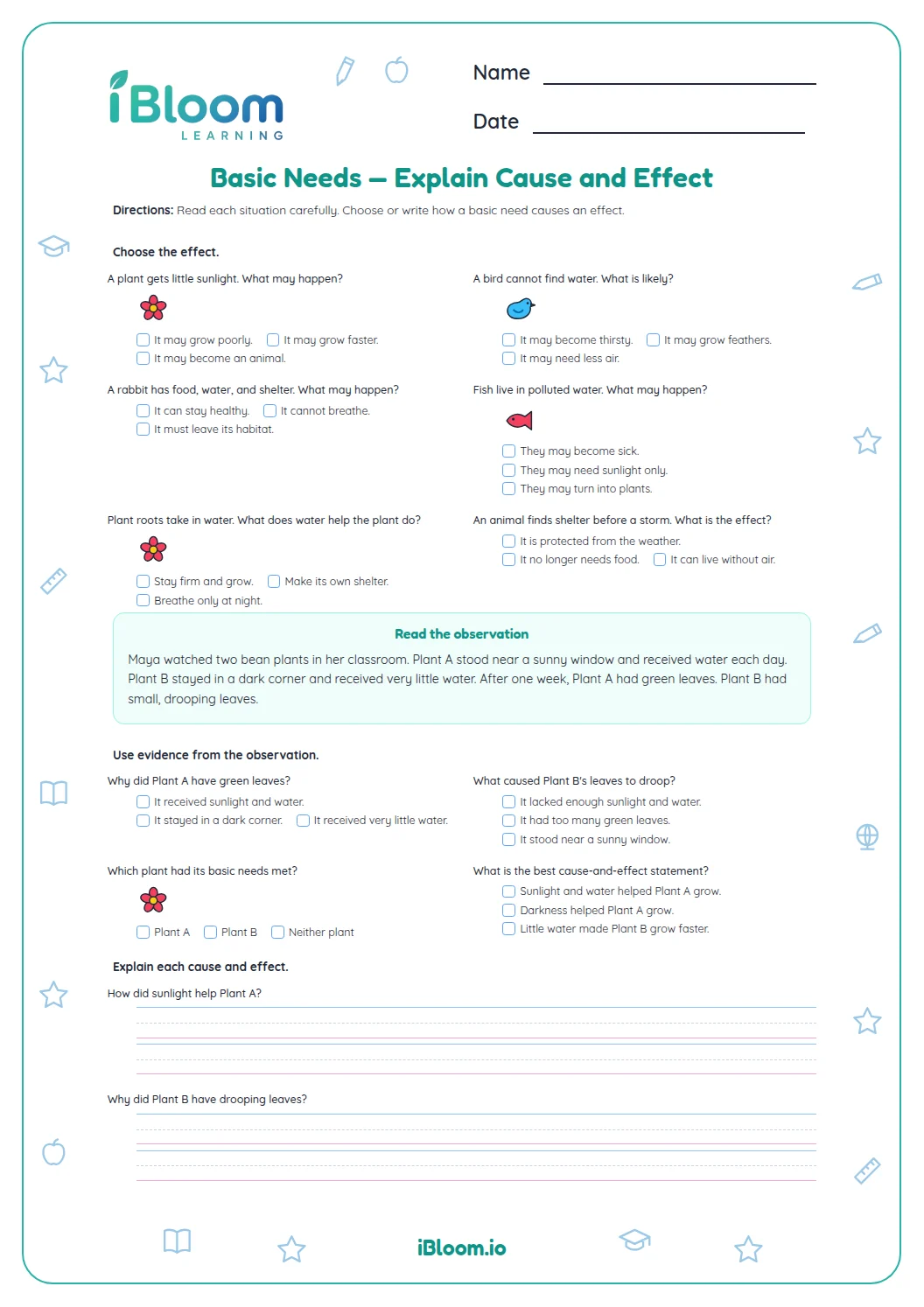 Basic Needs — Explain Cause and EffectGrade 3 science worksheets that help children identify the basic needs of living things and connect those needs to ecosystems. This explain cause and effect worksheet provides a distinct, age-appropriate way to practise the same lesson.Grade 3Free PDF preview
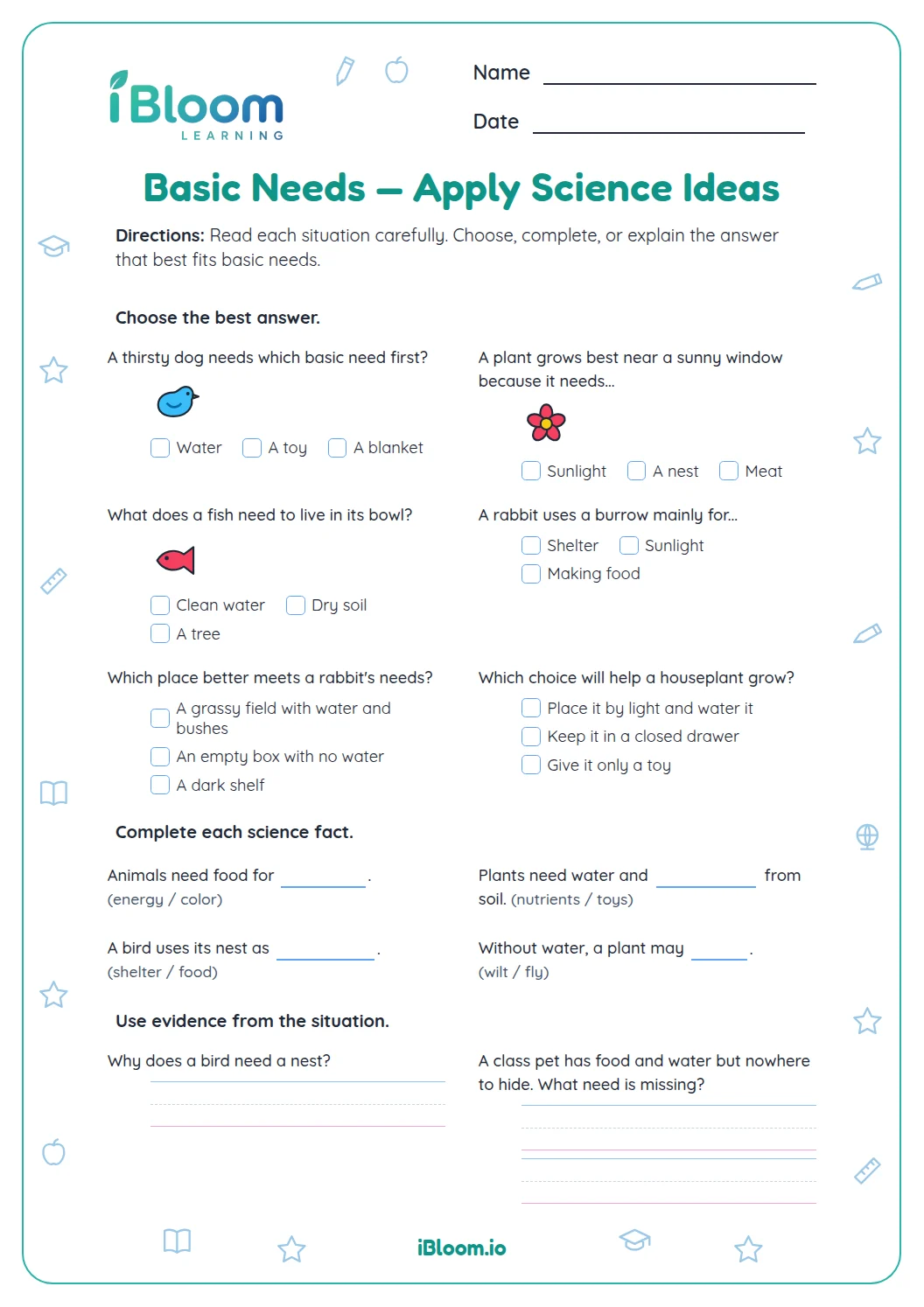 Basic Needs — Apply Science IdeasGrade 3 science worksheets that help children identify the basic needs of living things and connect those needs to ecosystems. This apply science ideas worksheet provides a distinct, age-appropriate way to practise the same lesson.Grade 3Free PDF preview
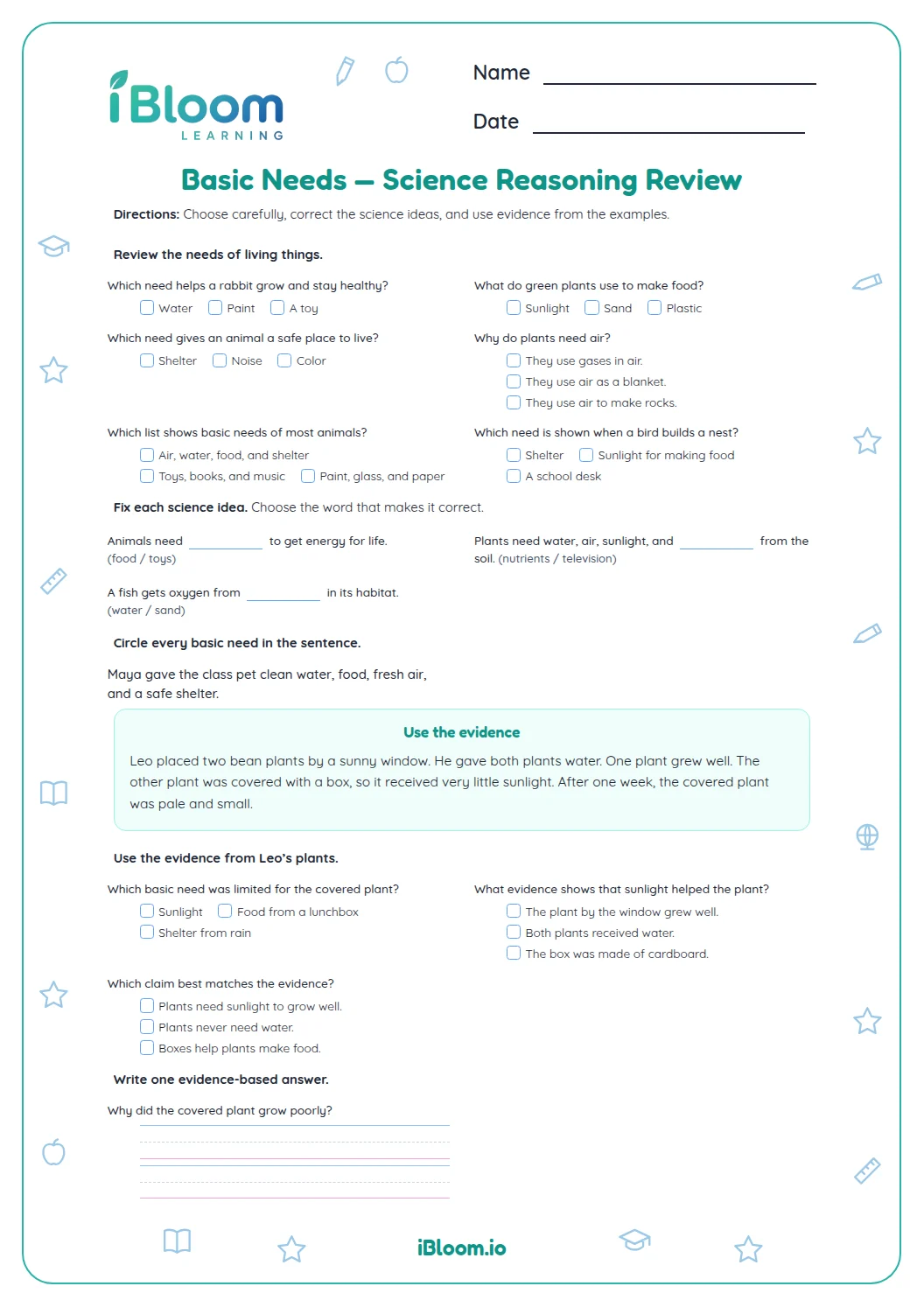 Basic Needs — Science Reasoning ReviewGrade 3 science worksheets that help children identify the basic needs of living things and connect those needs to ecosystems. This science reasoning review worksheet provides a distinct, age-appropriate way to practise the same lesson.Grade 3Free PDF preview
Practice that builds confidence
From needs to ecosystems
These Grade 3 science worksheets help children understand that plants, animals, and other living things survive by meeting basic needs such as food, water, air, shelter, space, and suitable conditions. Students practise noticing how those needs are met in different ecosystem settings.
The printable activities include observation-based questions, sorting tasks, short-response prompts, and ecosystem examples that ask children to connect a living thing with what it needs to live and grow. Each page builds careful science vocabulary without making the topic feel abstract.
Basic needs are more than a list to memorize. In Grade 3 ecosystems work, children begin to see that a frog, cactus, bird, fish, tree, or insect depends on its surroundings for survival. A pond may provide water, food, and shelter for some animals, while a desert plant may need sunlight, air, space, and very little water. These worksheets guide students from naming needs to explaining how an ecosystem helps meet them.

Build a simple home routine
At home, choose one familiar living thing each day: a pet, houseplant, tree, squirrel, or bird. Ask, “What does it need?” and “Where does it get that need?” Have your child say one complete sentence, such as, “A plant needs sunlight and gets it near the window.” Then use a worksheet question to record or check the idea. This routine helps children move from quick answers to evidence-based thinking.

Classroom science uses
Teachers can use these printables during an ecosystems unit, as a science center, or after a read-aloud about habitats. Students can sort needs, label examples, compare two organisms, or explain why a living thing might not survive if one need is missing. The pages also support partner discussion because many questions invite students to justify their choices.

Common mix-ups to watch for
Some children say that all animals need the same shelter or the same food. Others confuse wants with needs, such as thinking a pet “needs” a toy in the same way it needs water. Plant needs can also be tricky: students may remember water and sunlight but forget air, space, and suitable temperature. Encourage children to ask whether the living thing could live and grow without it.
Child-friendly strategy
Use the phrase “Need it to live, need a place to get it.” First name the need, then point to where it comes from in the ecosystem. This two-step strategy keeps answers clear: need plus source.
Free printable PDF download
Use this grade 3 basic needs worksheet page to preview the activity, print it, or download it as a PDF for quick practice. It works well for homework, homeschool lessons, tutoring, morning work, revision, and classroom centers.
Answers and answer key support
After the child completes the worksheet independently, parents and teachers can use the answer support or answer key information to check the work, review mistakes, and choose the next practice step.
Why iBloom worksheets help
iBloom activities keep the focus on real ecosystem connections rather than isolated vocabulary. Children practise with varied examples, simple visuals, and prompts that require observation, sorting, and short explanations, helping them build accurate science language and stronger reasoning.
Helpful answers
Frequently asked questions
What basic needs do Grade 3 students practise on these worksheets?
Students practise identifying needs such as food, water, air, shelter, space, sunlight for plants, and suitable conditions, then connecting those needs to ecosystem examples.
Are these worksheets only about animals?
No. The activities include both plants and animals so children can compare how different living things meet their needs in an ecosystem.
How can I help my child explain answers instead of guessing?
Ask your child to name the living thing, name one need, and tell where that need comes from. For example: “A bird needs food and may find insects or seeds in its habitat.”
What is a common misunderstanding in this topic?
Children often mix up wants and needs. Remind them that a basic need is something a living thing must have to live, grow, and stay healthy.
Can teachers use these pages in an ecosystems unit?
Yes. They work well for science centers, partner discussions, review, early-finisher work, or follow-up practice after lessons on habitats and living things.
Is this grade 3 basic needs worksheet free?
Yes. You can preview it for free and use the printable worksheet for home or classroom practice.
Can I download this grade 3 basic needs worksheet as a PDF?
Yes. Use the worksheet download option to save a printable PDF, or print the worksheet directly from the page.
Does this grade 3 basic needs worksheet include answers or an answer key?
When the activity has fixed answers, iBloom includes answer support so parents and teachers can check the completed worksheet.