Free printable practice
Animal Groups Practice Activities
Grade 3 ecosystem worksheets help children identify animal groups and explain how living together can support survival.
Free printable worksheet PDFs
Preview every available page, then download the free worksheet PDF for home, homeschool, tutoring, or classroom practice.
Preview the exact activity before downloading it.
 Animal Groups — Sort and ClassifyGrade 3 ecosystem worksheets help children identify animal groups and explain how living together can support survival. This sort and classify worksheet provides a distinct, age-appropriate way to practise the same lesson.Grade 3Free PDF preview
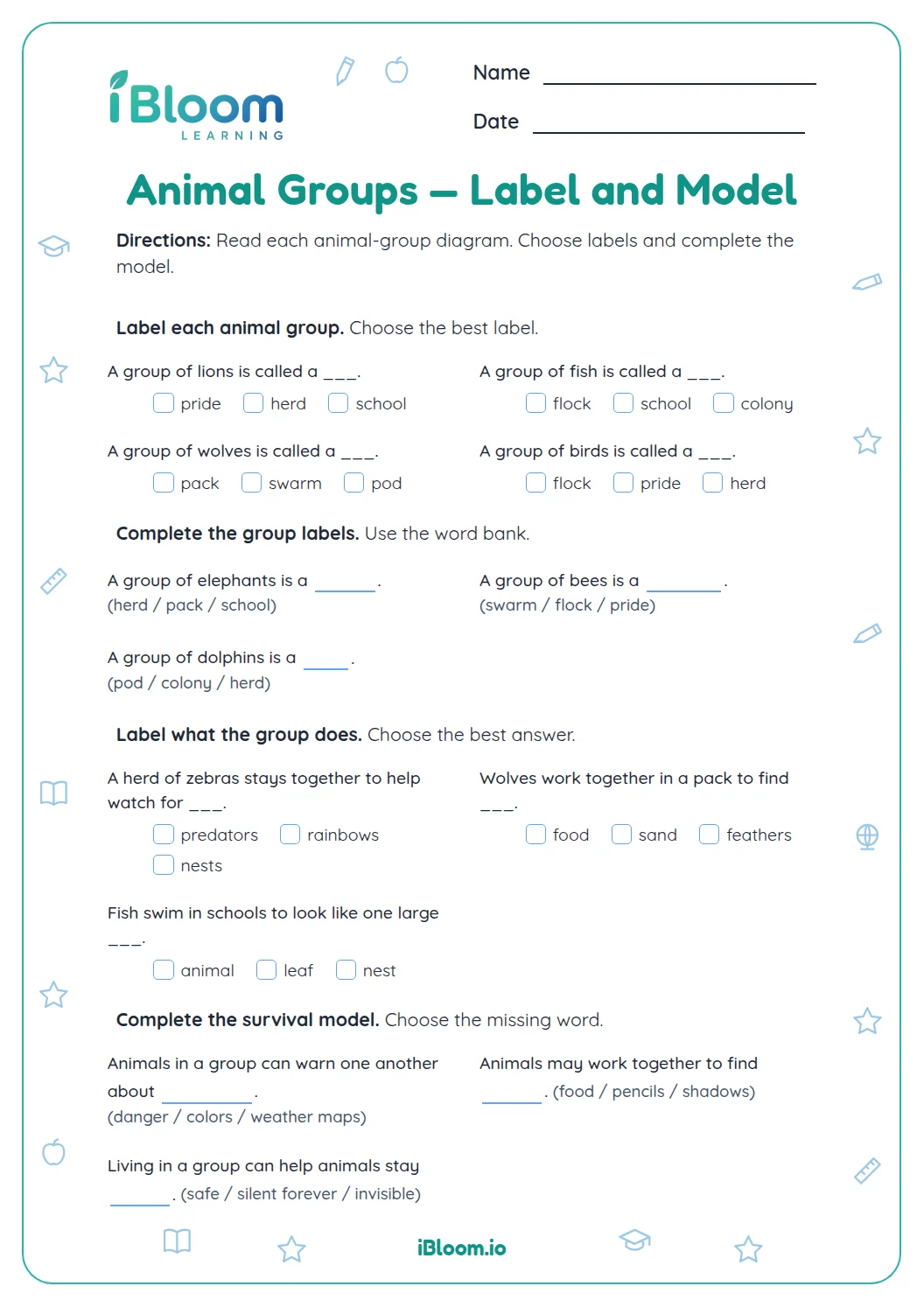 Animal Groups — Label and ModelGrade 3 ecosystem worksheets help children identify animal groups and explain how living together can support survival. This label and model worksheet provides a distinct, age-appropriate way to practise the same lesson.Grade 3Free PDF preview6 pages
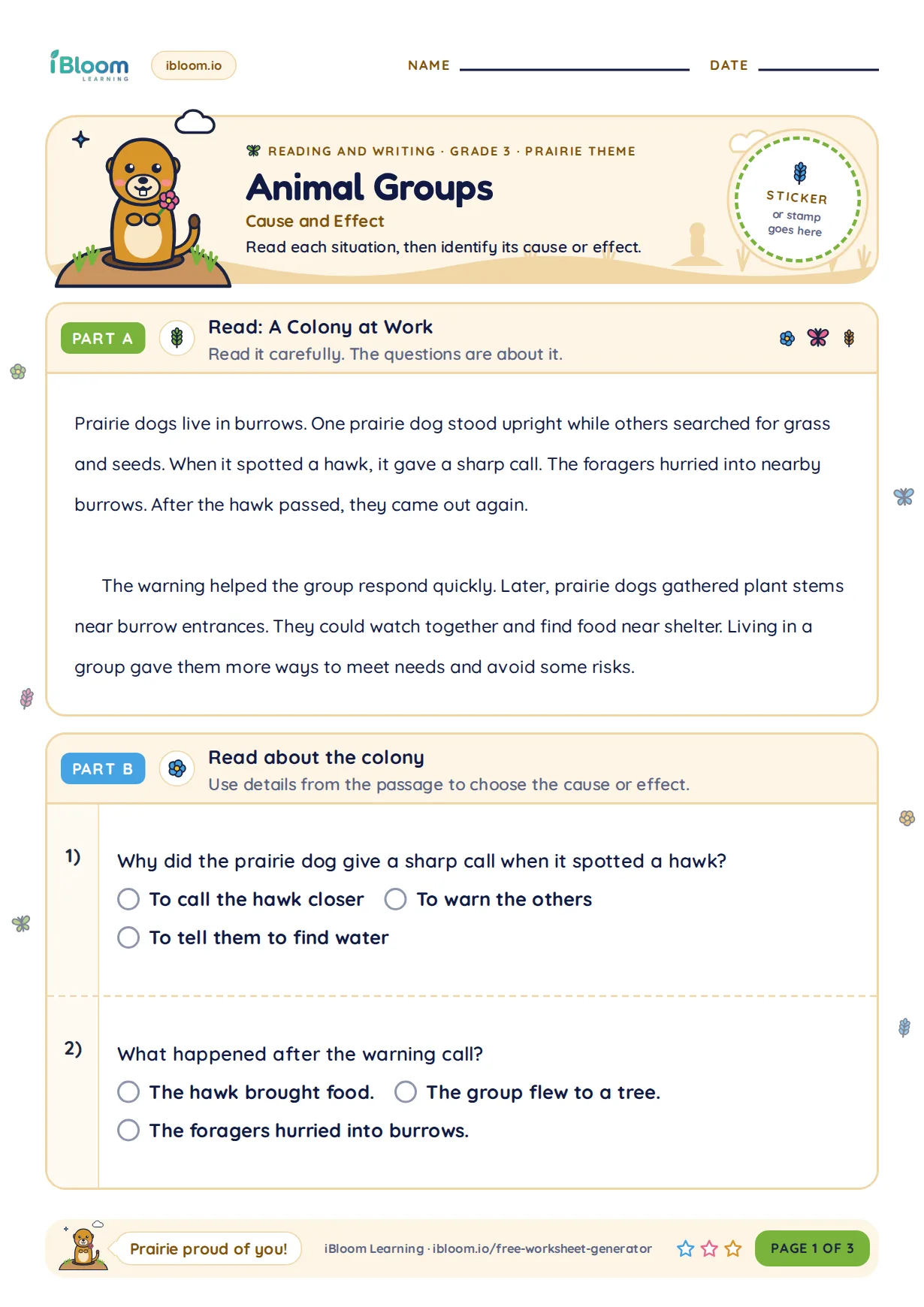 Animal Groups — Explain Cause and EffectGrade 3 ecosystem worksheets help children identify animal groups and explain how living together can support survival. This explain cause and effect worksheet provides a distinct, age-appropriate way to practise the same lesson.Grade 3Free PDF preview
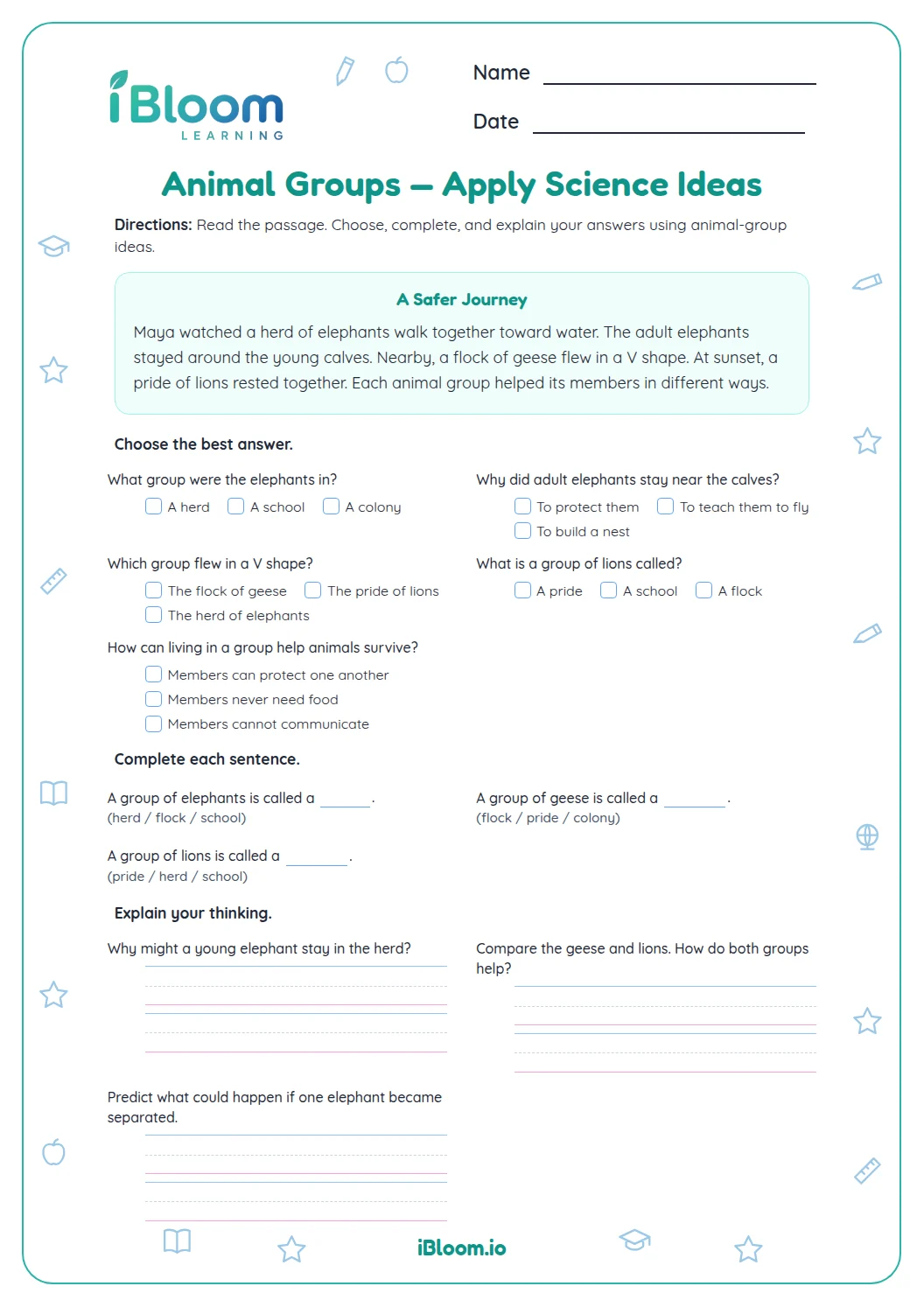 Animal Groups — Apply Science IdeasGrade 3 ecosystem worksheets help children identify animal groups and explain how living together can support survival. This apply science ideas worksheet provides a distinct, age-appropriate way to practise the same lesson.Grade 3Free PDF preview
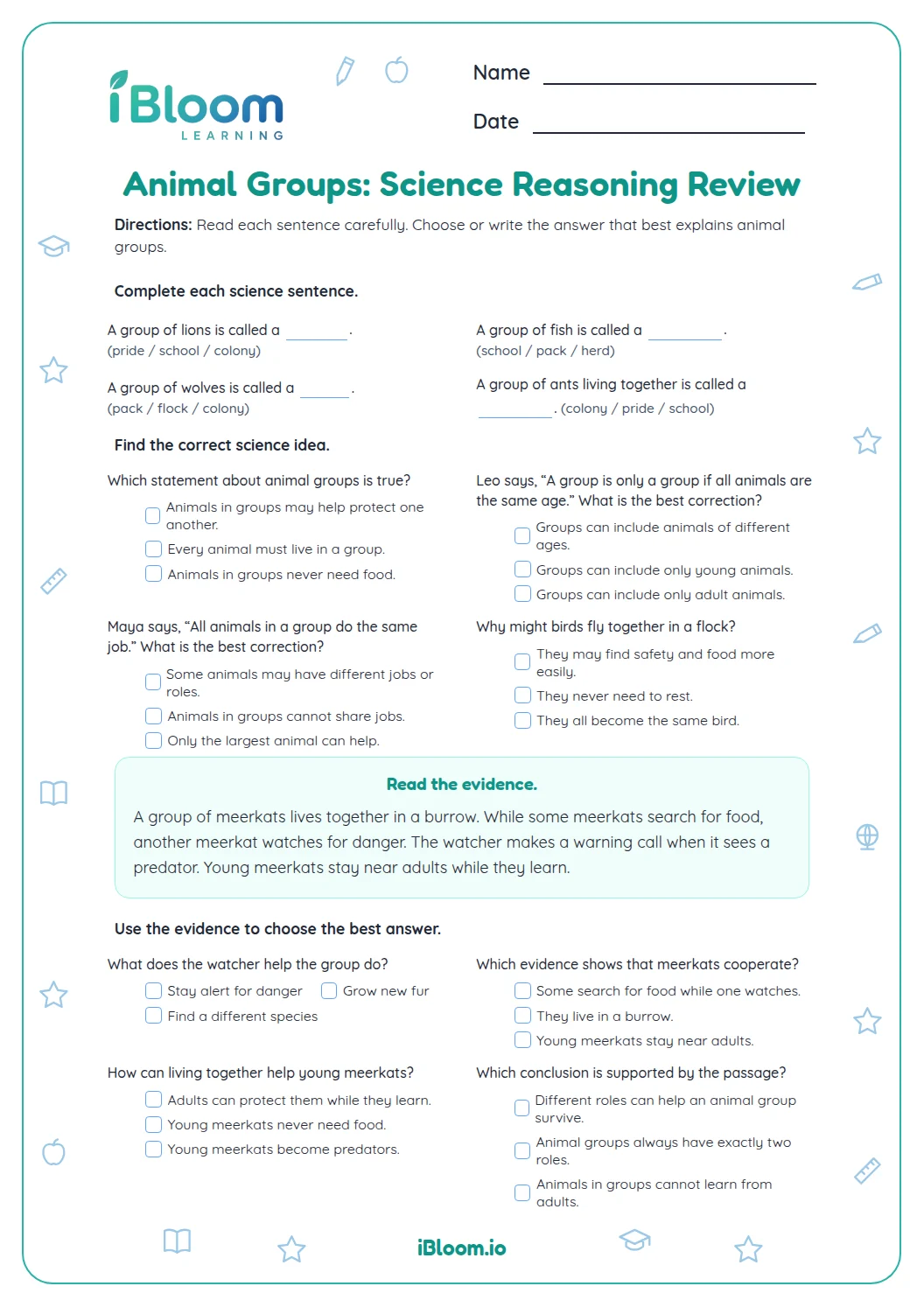 Animal Groups — Science Reasoning ReviewGrade 3 ecosystem worksheets help children identify animal groups and explain how living together can support survival. This science reasoning review worksheet provides a distinct, age-appropriate way to practise the same lesson.Grade 3Free PDF preview
Practice that builds confidence
What children learn about animal groups
These Grade 3 science worksheets help children explore why some animals live, move, feed, or raise young in groups. Students practise using ecosystem vocabulary such as herd, pack, flock, school, colony, protection, cooperation, and survival.
The printable activities include matching, sorting, short explanations, picture-based questions, and simple scenario tasks. Children connect animal group names with real examples and explain how group behavior can help animals find food, avoid danger, migrate, or care for offspring.
Animal groups are an important part of ecosystem study because they show how living things interact with each other. In these activities, children look at familiar group names such as a herd of elephants, a pack of wolves, a flock of birds, a school of fish, and a colony of ants or penguins. The focus is not only naming the group, but also explaining why the group matters.

From naming to explaining survival
The worksheets move from recognition to reasoning. A child may first match an animal to its group name, then decide whether the group helps with protection, hunting, migration, warmth, or raising young. For example, fish in a school may confuse predators, while wolves in a pack can work together to hunt. This progression helps students move beyond memorizing labels and toward cause-and-effect science thinking.
A simple parent routine
At home, start with one animal picture or fact. Ask, “Does this animal usually live alone or in a group?” Then ask, “How might the group help it survive?” Encourage your child to answer in a full sentence: “A flock helps birds stay together during migration.” After a worksheet page, invite your child to draw one animal group and label both the group name and the benefit.

Classroom uses for teachers
Teachers can use these printables during an ecosystems unit, science centers, early-finisher work, or small-group review. They also work well for discussion: students can compare two animal groups and decide whether they help in the same way or different ways. The short written responses support science vocabulary while giving teachers a quick check of whether students understand cooperation and survival.

Common errors to watch for
Some children mix up group names, such as using flock for fish or school for birds. Others can name the group but cannot explain the purpose. Watch for answers that say only “they stay together” without a reason. Prompt students to add a survival benefit: safer from predators, easier to find food, better care for babies, or help during travel.
Free printable PDF download
Use this Grade 3 animal groups worksheet page to preview the activity, print it, or download it as a PDF for quick practice. It works well for homework, homeschool lessons, tutoring, morning work, revision, and classroom centers.
Answers and answer key support
After the child completes the worksheet independently, parents and teachers can use the answer support or answer key information to check the work, review mistakes, and choose the next practice step.
Why iBloom worksheets help
iBloom worksheets give children repeated, varied practice with the same core idea: animal groups have names and functions. A child-friendly strategy is “Name it, notice it, explain it.” First name the group, then notice what the animals are doing, and finally explain how that behavior helps them in their ecosystem.
Helpful answers
Frequently asked questions
What animal group names are practised in these worksheets?
Children practise common group names such as herd, pack, flock, school, and colony, using examples like elephants, wolves, birds, fish, ants, and penguins where appropriate.
Do these worksheets only ask students to memorize group names?
No. Students also explain why animals live in groups, such as for protection, finding food, hunting together, migrating, staying warm, or caring for young.
How do these activities connect to ecosystems?
They show how animals interact with others of their own kind within an ecosystem. Children learn that group behavior can affect survival and how animals meet their needs.
What should I do if my child confuses flock, school, and herd?
Use picture clues and repeated oral practice. Ask your child to say, “Birds move in a flock,” “Fish swim in a school,” and “Large grazing mammals may form a herd,” then match each phrase to a picture.
Are these worksheets useful for classroom science centers?
Yes. The pages can be used for independent science centers, partner sorting, vocabulary review, small-group reteaching, or quick checks during a Grade 3 ecosystems unit.
Is this Grade 3 animal groups worksheet free?
Yes. You can preview it for free and use the printable worksheet for home or classroom practice.
Can I download this Grade 3 animal groups worksheet as a PDF?
Yes. Use the worksheet download option to save a printable PDF, or print the worksheet directly from the page.
Does this Grade 3 animal groups worksheet include answers or an answer key?
When the activity has fixed answers, iBloom includes answer support so parents and teachers can check the completed worksheet.