






About this worksheet
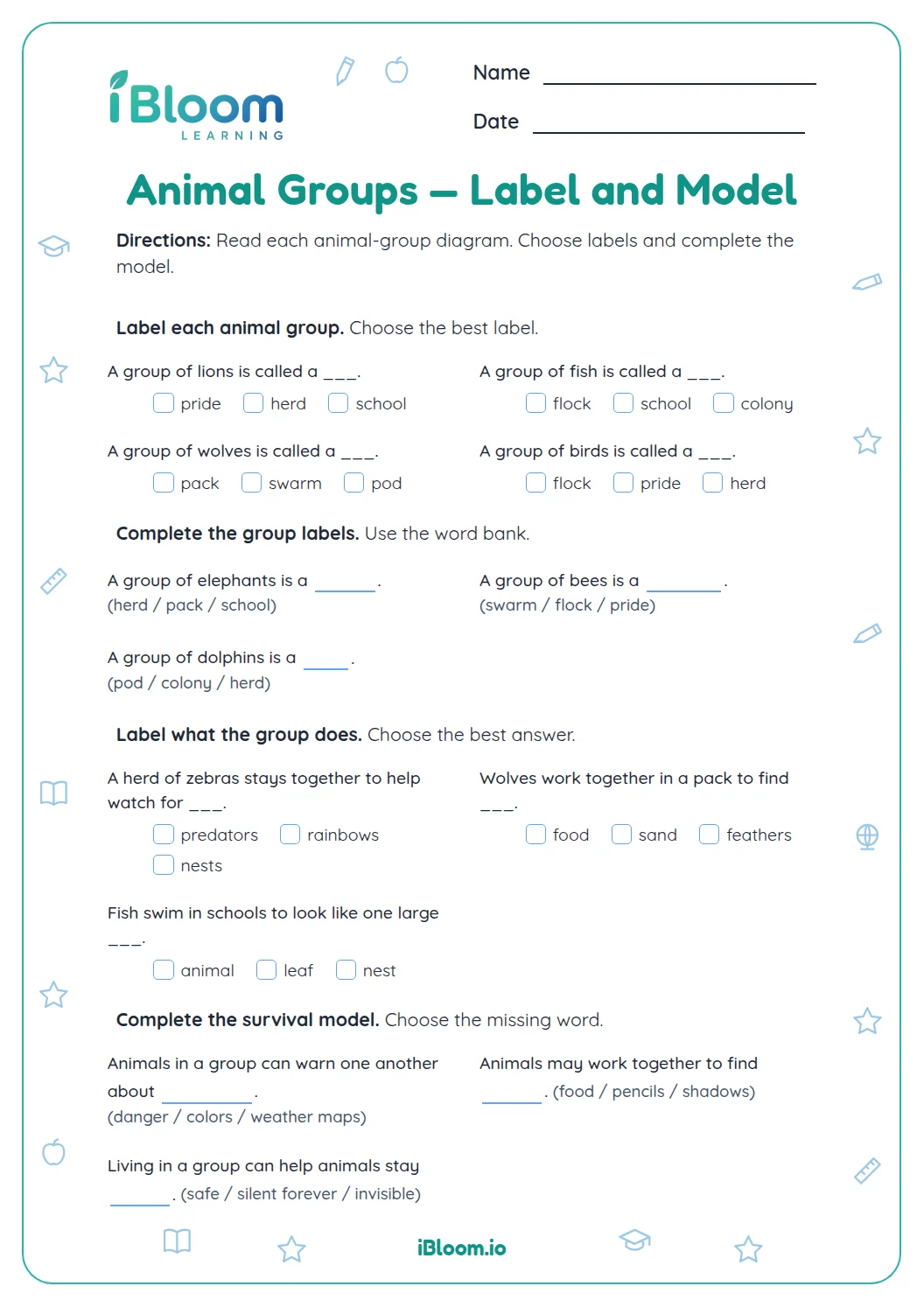
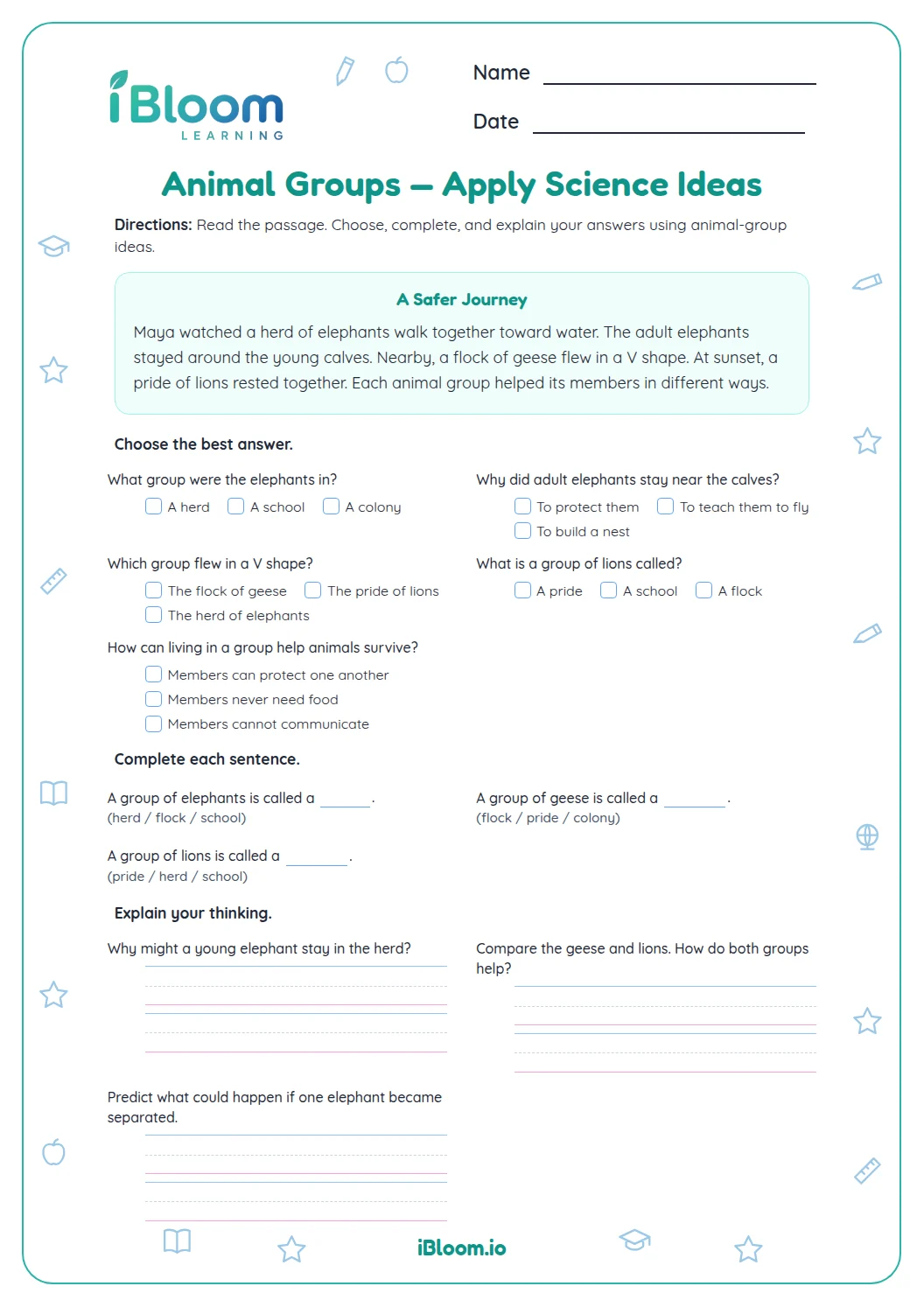
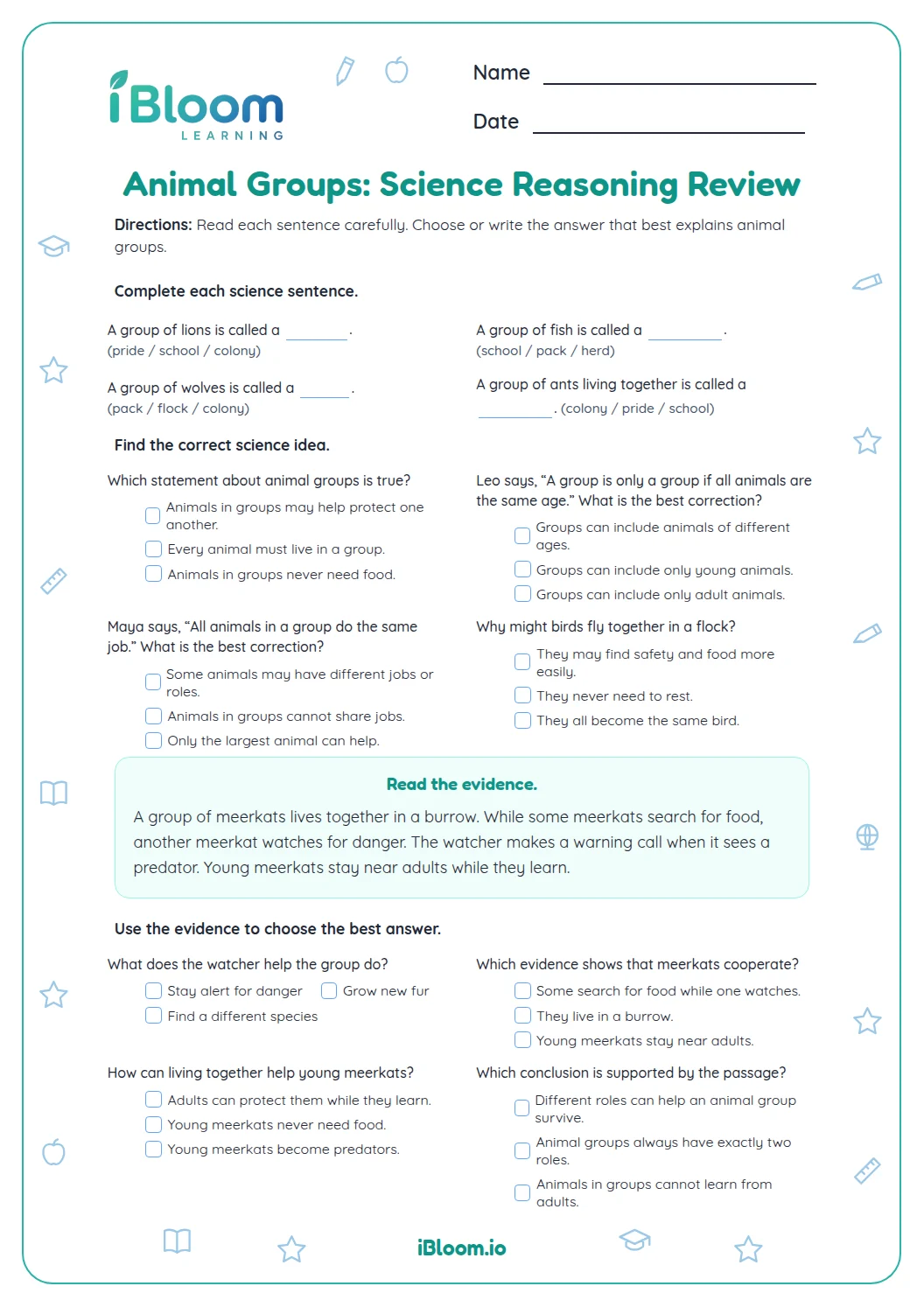
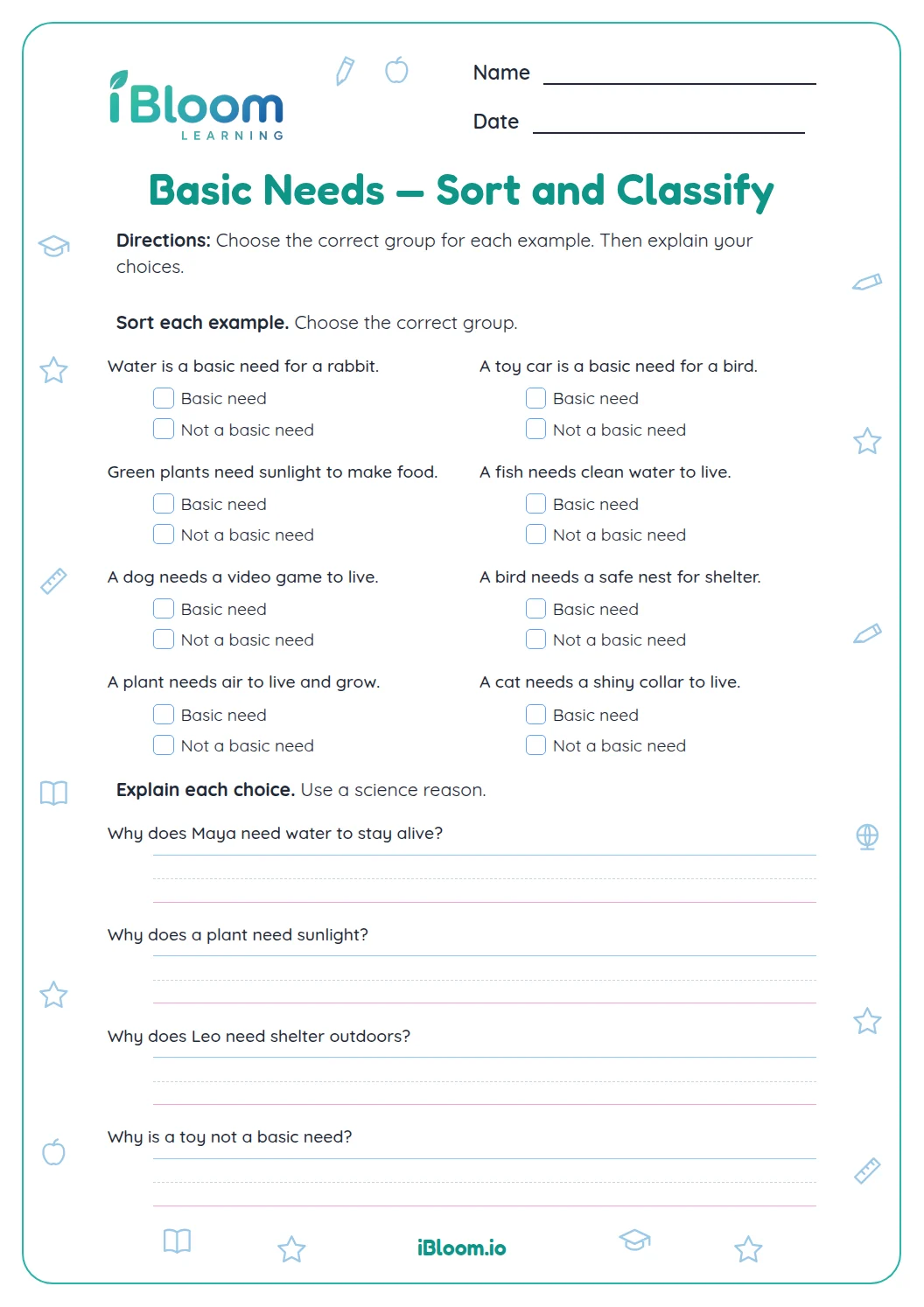
This free printable Grade 3 worksheet practices animal groups through 15 carefully varied questions. Learners work from clear examples toward independent practice, then use the separate answer key to check their thinking. It is designed for the skill and grade named on the sheet.
Aligned to 3-LS2-1
How does the prairie dog warning help its group?
The passage gives one clear chain: a prairie dog spots a hawk, calls out, and the foragers hurry into burrows. The call is the cause of their quick response.
For question 1, the hawk is the clue: the call warns the group about danger.
- 1A prairie dog sees a hawk and gives a sharp call.
- 2Cause: the animal spots danger.
- 3Effect: the call warns the other prairie dogs.
How can groups help animals?
Questions 5–11 apply cause-and-effect reasoning to familiar animal group behaviors. Match the stated behavior with one plausible result or reason.
How can a learner explain the idea?
Question 12 asks for a short explanation. A strong response names a group behavior and says how it helps members find food, stay safe, or care for young.
How to use this worksheet
- 1Read the direction for the first part before starting.
- 2Work one item at a time and mark the clue that matters.
- 3For a missed item, explain the rule or relationship in your own words.
- 4Check the answer key after completing a part.
- 5Try one corrected item again without looking at the key.
Common mistakes and quick fixes
The mistake
Mixing up the cause and effect.
The fix
Ask which event happened first and which event followed.
The mistake
Choosing an answer that sounds possible but is not supported.
The fix
Point to the behavior or detail that supports the answer.
The mistake
Naming a group behavior without saying how it helps.
The fix
Add the result, such as finding food or avoiding danger.
The page practices the following standard.
Use animal group behaviors as evidence for how groups can help members survive.
On this sheet:
Show the official wordingHide the official wording
Construct an argument that some animals form groups that help members survive.
What to practice next
Further reading
Questions parents and teachers ask
What skill does this worksheet practice?
This Grade 3 page practices cause and effect in animal groups. Learners read a short prairie dog passage, answer questions about several group behaviors, and write an explanation supported by evidence. The key gives answers for each item and supports review after practice.
How many questions are included?
The worksheet has 12 questions: 11 multiple-choice items and one short written explanation. Four questions use the prairie dog passage, while the rest apply cause-and-effect reasoning to other animals. The final item asks learners to connect group behavior with survival.
Is an answer key included?
Yes. A separate answer key is included with the printable pages. Have the learner complete a section first, then compare responses and discuss any item that needs another look. This keeps practice and checking easy to do at home or in class.
How should I help if an answer is incorrect?
Ask the learner to point to the clue or step they used. Then revisit the relevant rule, solve a similar example together, and let the learner correct the original item independently. A short explanation helps reveal whether the idea is clear.
Can this be used for independent practice?
Yes. Clear directions and answer choices support independent work, and the separate key helps with checking. For the final response, ask the learner to name a group behavior, explain its benefit, and review whether the example supports that idea during discussion.