






About this worksheet
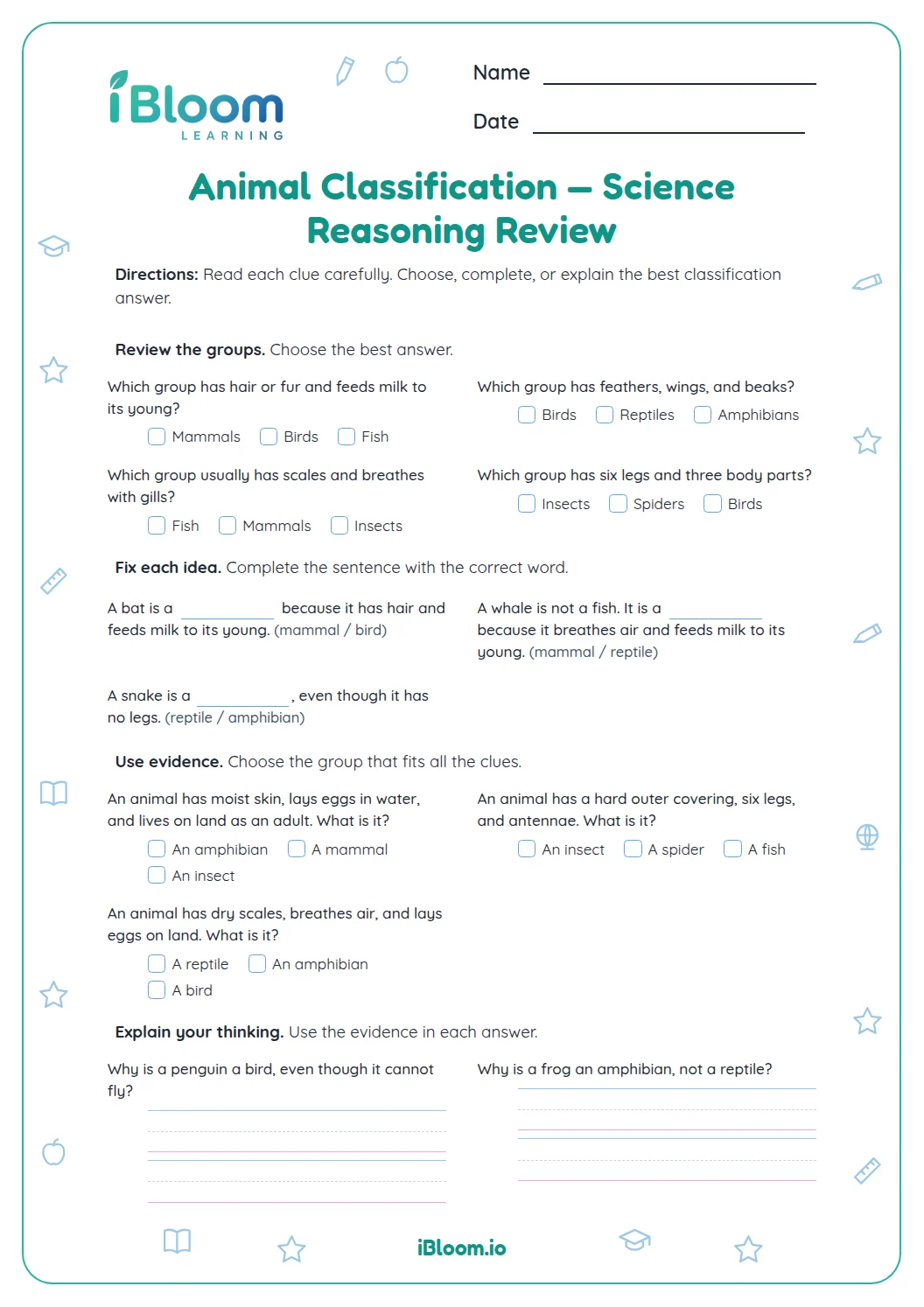
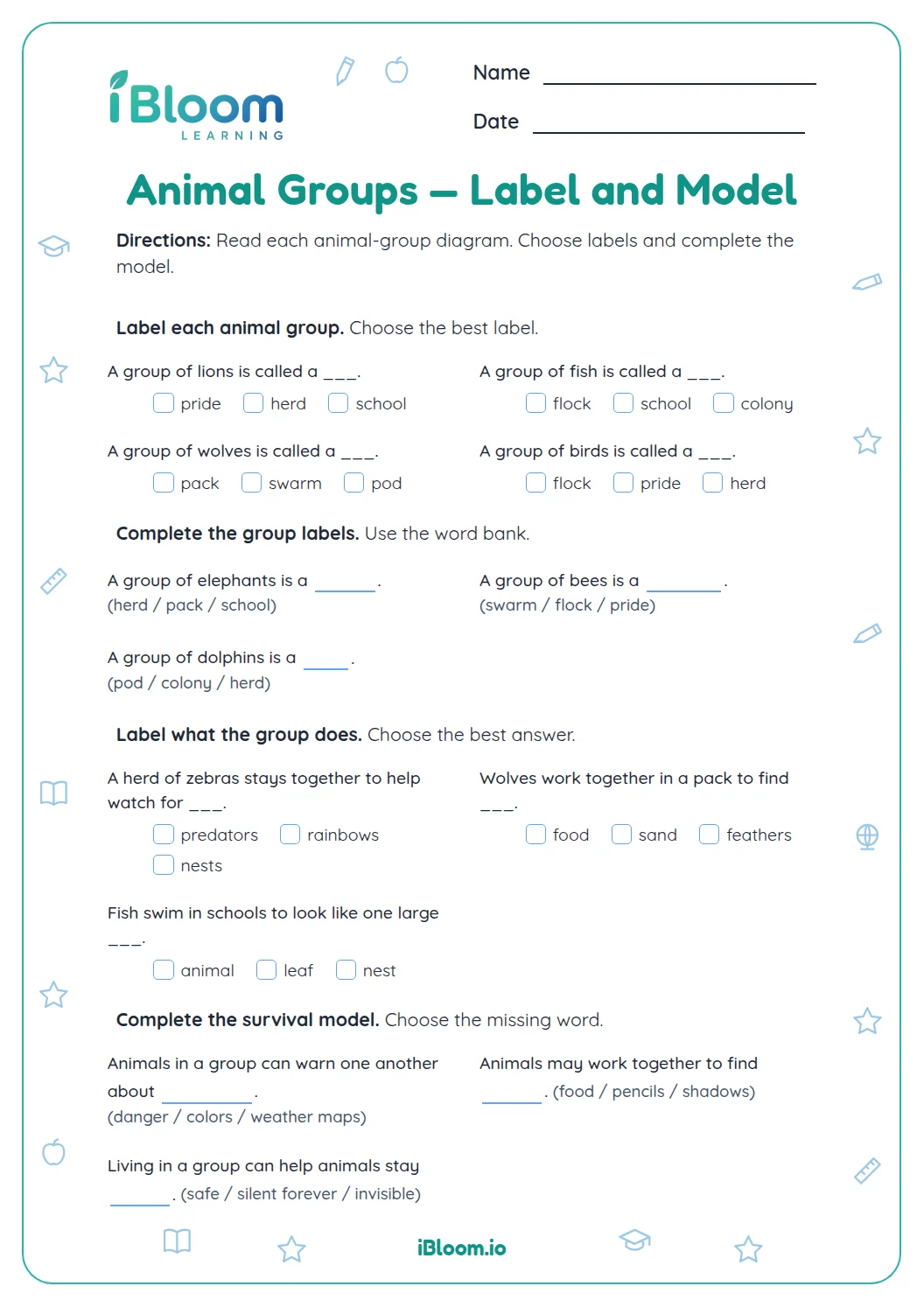
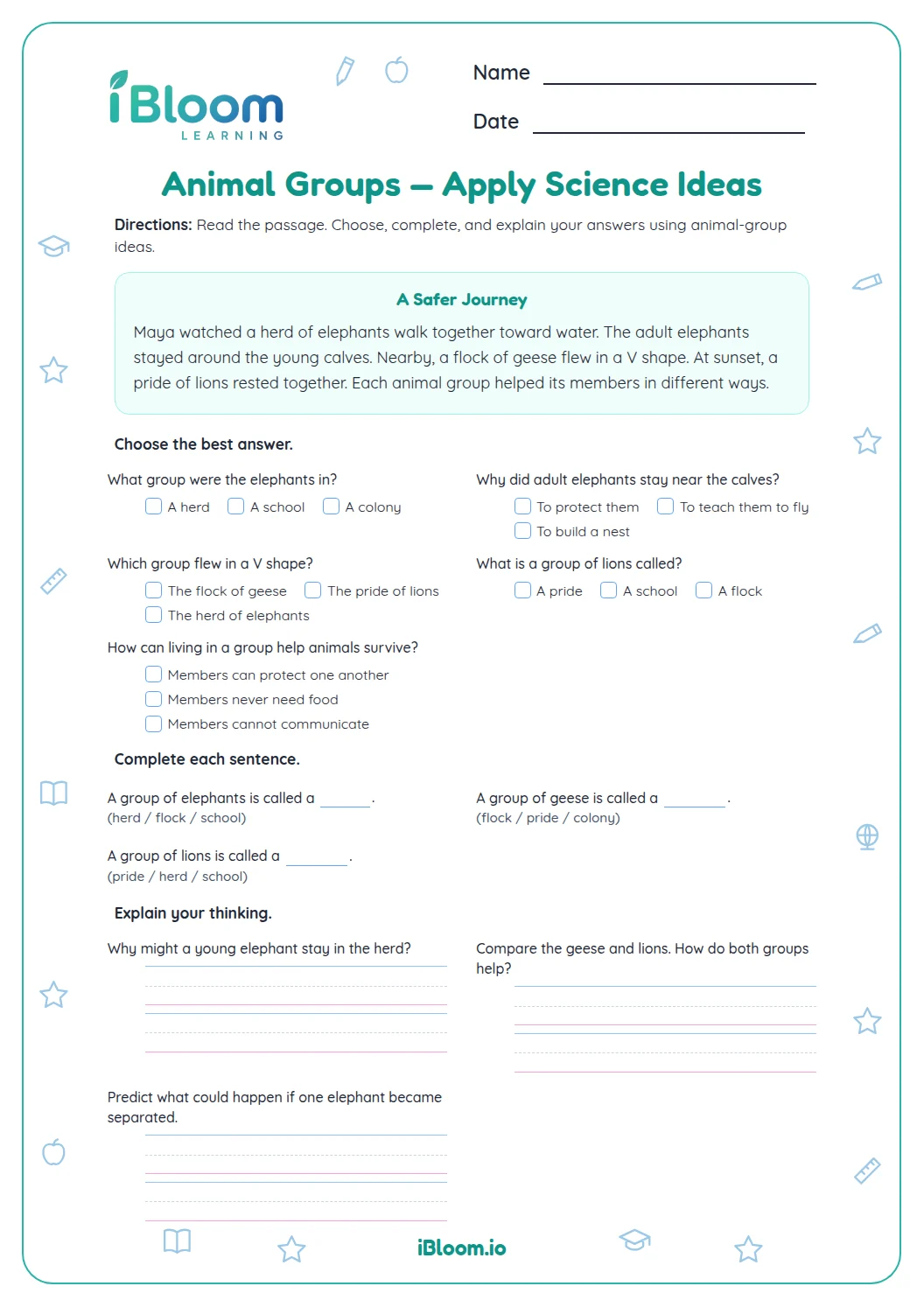
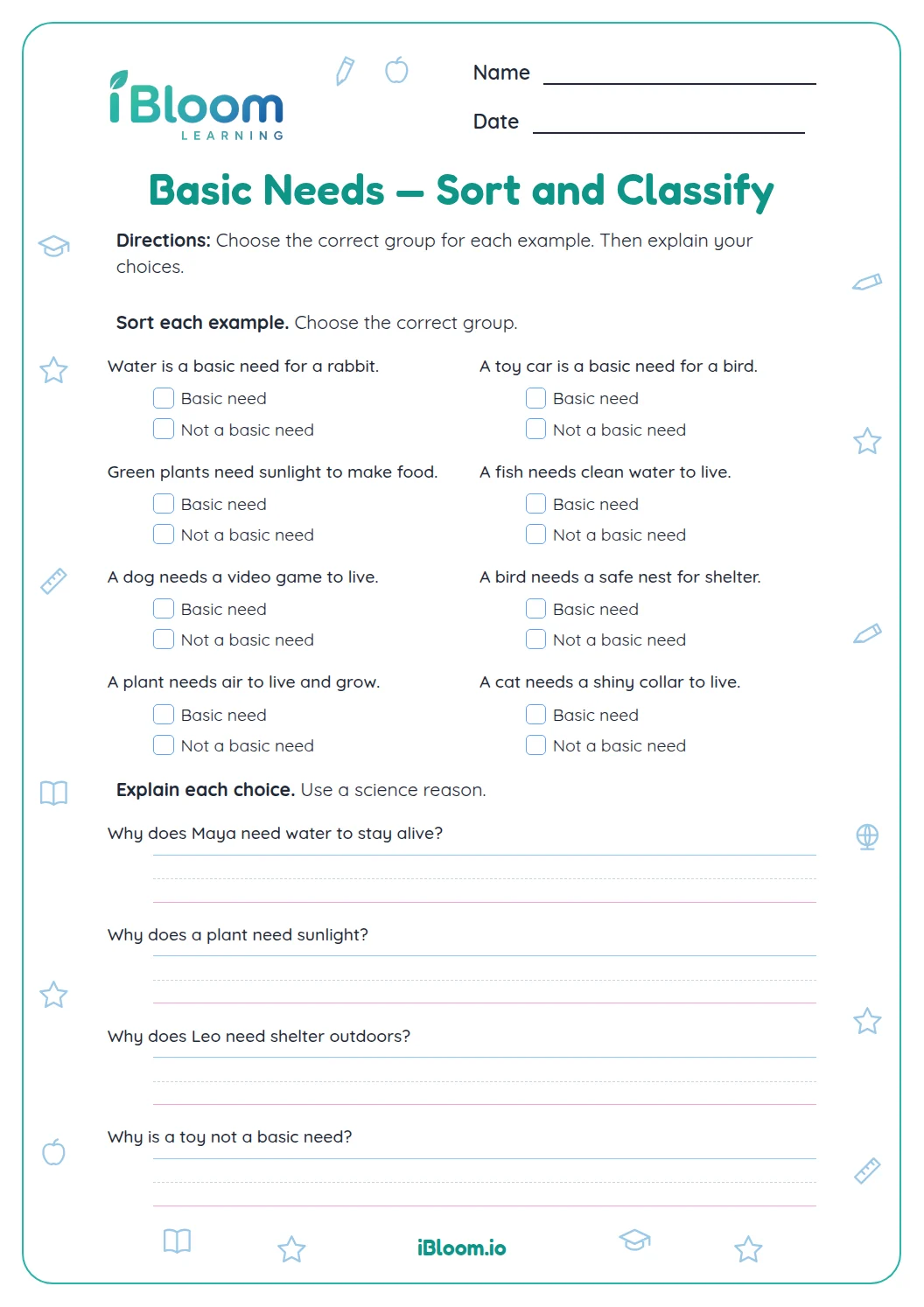
This free Grade 3 science worksheet asks students to classify animals from observable traits and apply those ideas to habitats. They identify birds, mammals, reptiles, amphibians, and fish, then explain how traits such as webbed feet, fur, and gills help animals meet needs where they live. The 16 questions include multiple choice and short written explanations, followed by a separate answer key.
Which traits help identify an animal group?
Look at body coverings and how animals care for their young. Feathers identify birds; fur and feeding milk to young are mammal traits. Fish have gills and fins, while reptiles commonly have dry scales.
Question 2 describes a whale that breathes air. Even though it lives in water, it is a mammal. Classify by its traits, not by the place it swims.
- 1Clue: whale lives in water and breathes air
- 2Living in water alone does not make it a fish
- 3A whale breathes air and is a mammal
How can a body trait help in a habitat?
A trait can help an animal get food, move, stay safe, or meet another need. Webbed feet help a duck push through water. Thick fur can help a polar bear stay warm in a cold place.
In question 14, a strong answer names the trait and tells how it helps the duck move in water. Students should connect both parts rather than only naming the trait.
What will students practice on the page?
The 16 questions move from identifying animal groups to explaining how a trait works in a habitat. The sheet uses familiar animal examples and short, focused written responses.
- Part A: identify groups from traits
- Part B: connect traits with animal needs
- Part C: explain trait and habitat relationships
How can students reason from animal traits?
- 1Read the whole clue before naming a group.
- 2Underline the body trait or behavior that gives evidence.
- 3Do not classify an animal only by where it lives.
- 4For a habitat question, name the trait first.
- 5Explain what the trait helps the animal do or meet.
- 6Check written answers against the specific clue.
Animal classification mistakes to address
The mistake
Calling a whale a fish because it lives in water.
The fix
Use body traits: whales breathe air and feed milk to their young, so they are mammals.
The mistake
Naming a trait without saying how it helps.
The fix
Add the action or need, such as webbed feet helping the duck swim.
The mistake
Assuming every animal in one habitat belongs to the same group.
The fix
Classify each animal from its own traits, then consider its habitat.
What to practice next
Make more practice
Questions parents and teachers ask
What traits help identify mammals?
Mammals breathe air and feed milk to their young; many also have hair or fur. Question 2 describes a whale that breathes air, so it is a mammal even though it lives in water. The clue about how it breathes matters more than its habitat.
Why is a whale not classified as a fish?
A whale breathes air and feeds milk to its young, which are mammal traits. Fish use gills to take oxygen from water. Where an animal lives can be a useful clue, but students should classify it using its body traits and life processes.
How should a student explain how a trait helps?
Name the body feature and connect it to an action or need. For example, webbed feet help a duck push through water as it swims. A strong answer includes both parts: the trait and what it helps the animal do.
What does habitat mean on this worksheet?
A habitat is the place where an organism lives and finds what it needs. The questions connect traits such as fur, gills, and webbed feet to conditions or activities in an animal’s habitat, including staying warm, breathing, and moving through water.
How many questions are included?
There are 16 questions: 12 selected-response questions and 4 short written explanations. Students first identify animal groups from clues, then apply ideas about traits and habitats. The key gives sample explanations; another accurate link between a trait and its use can also work.
Is an answer key included?
Yes. A separate answer key lists the group choices and sample explanations for the written questions. Student wording may vary when it correctly names an animal trait and explains what the feature helps the animal do or meet in its habitat.