




About this worksheet
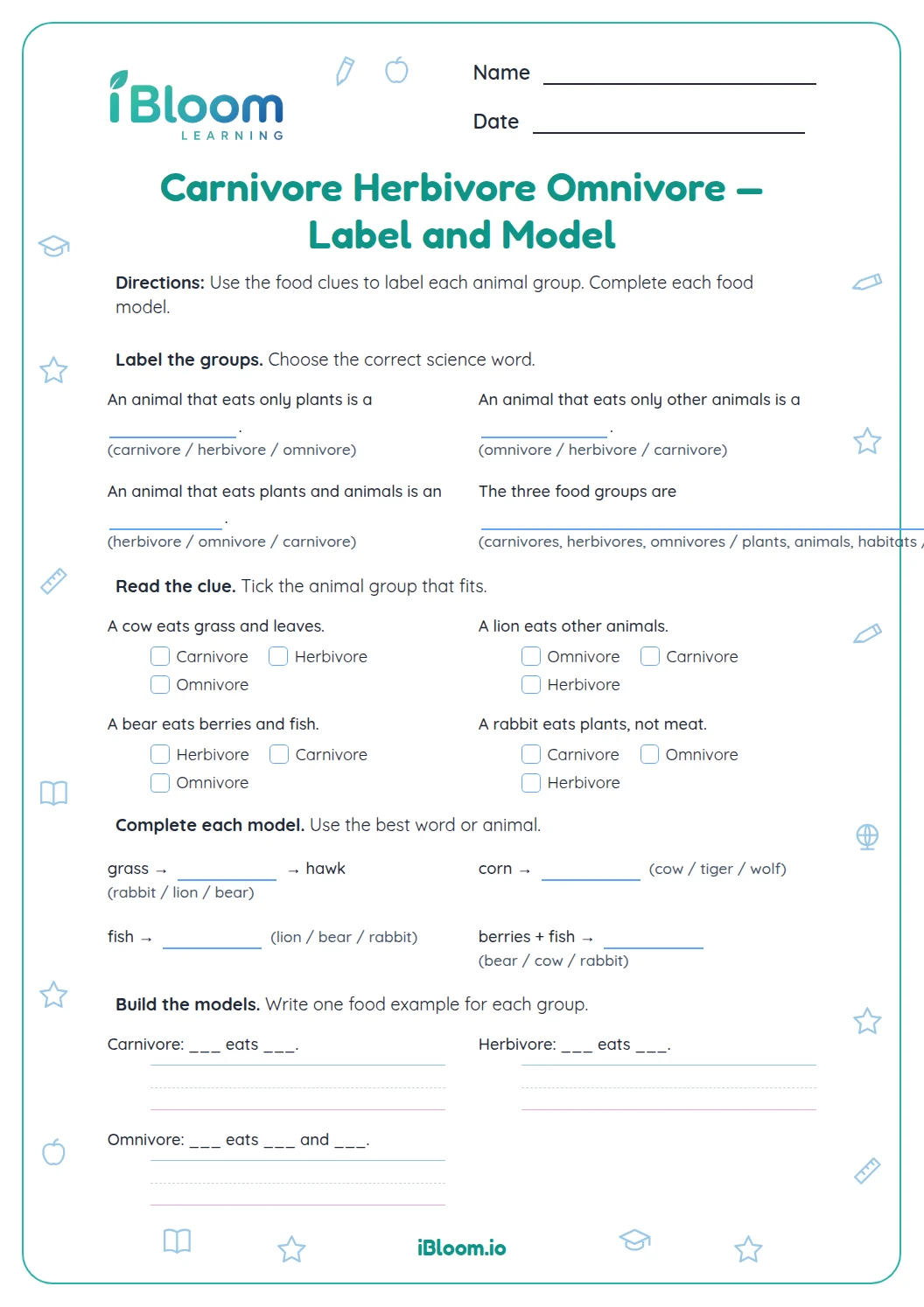
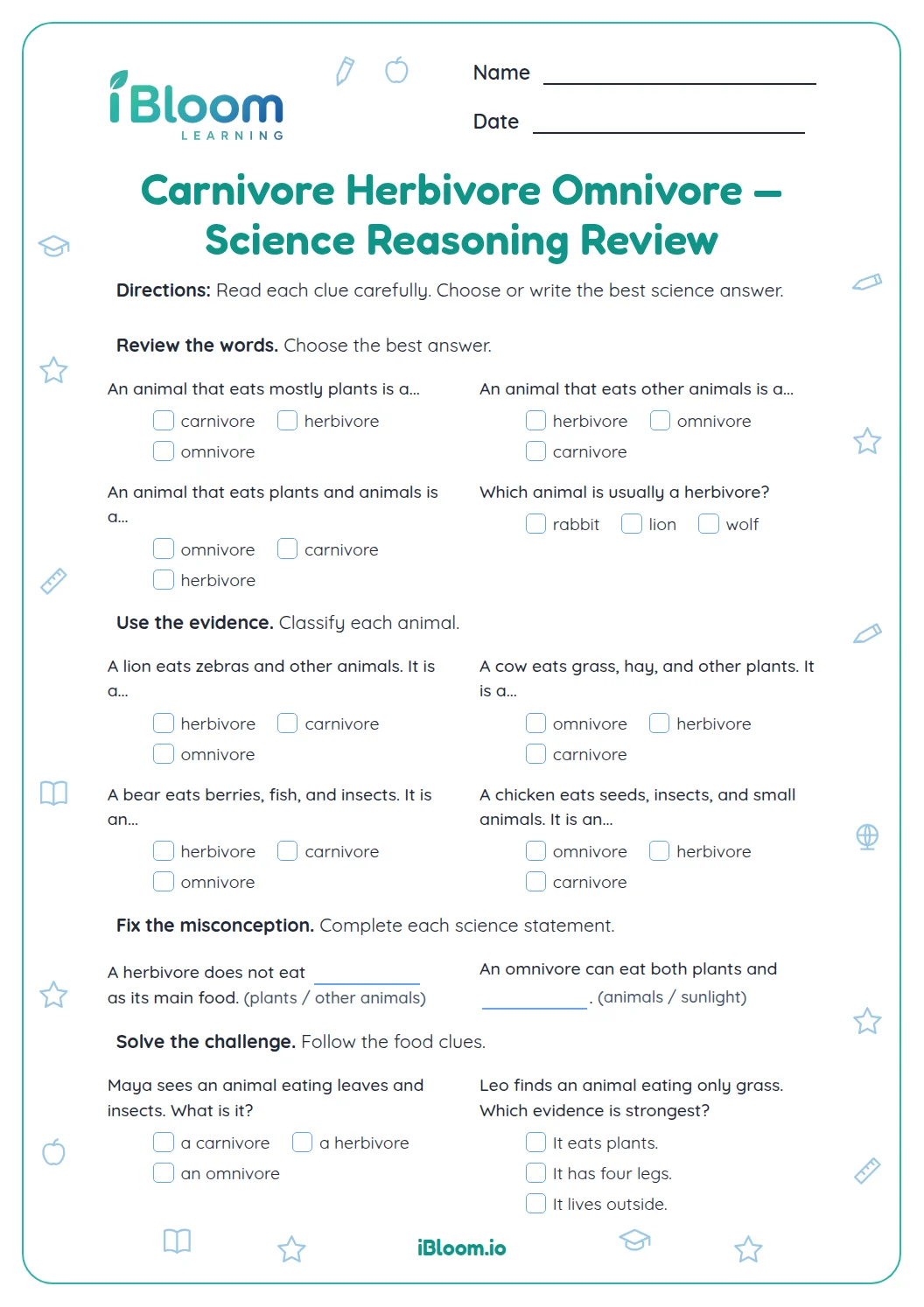
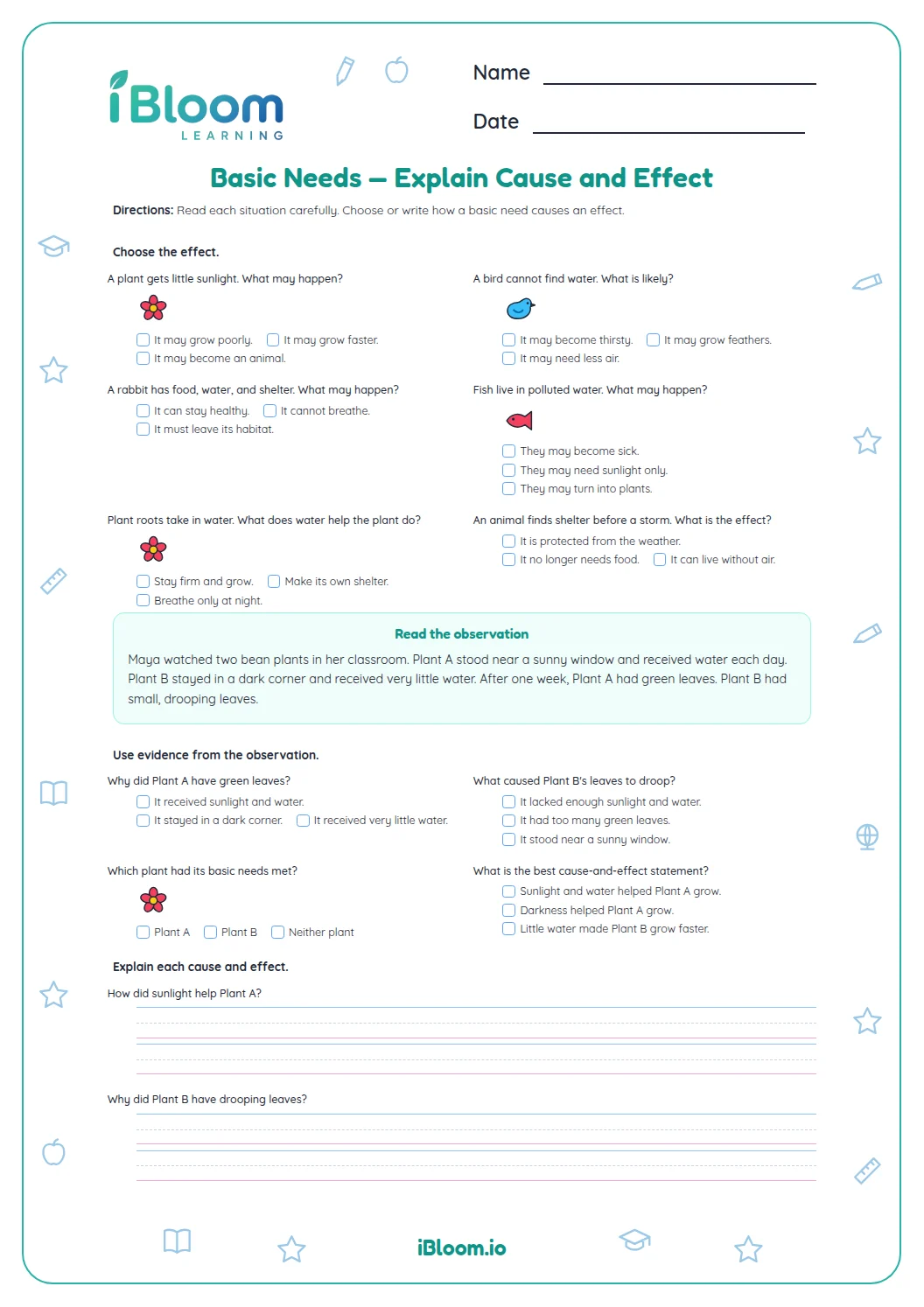
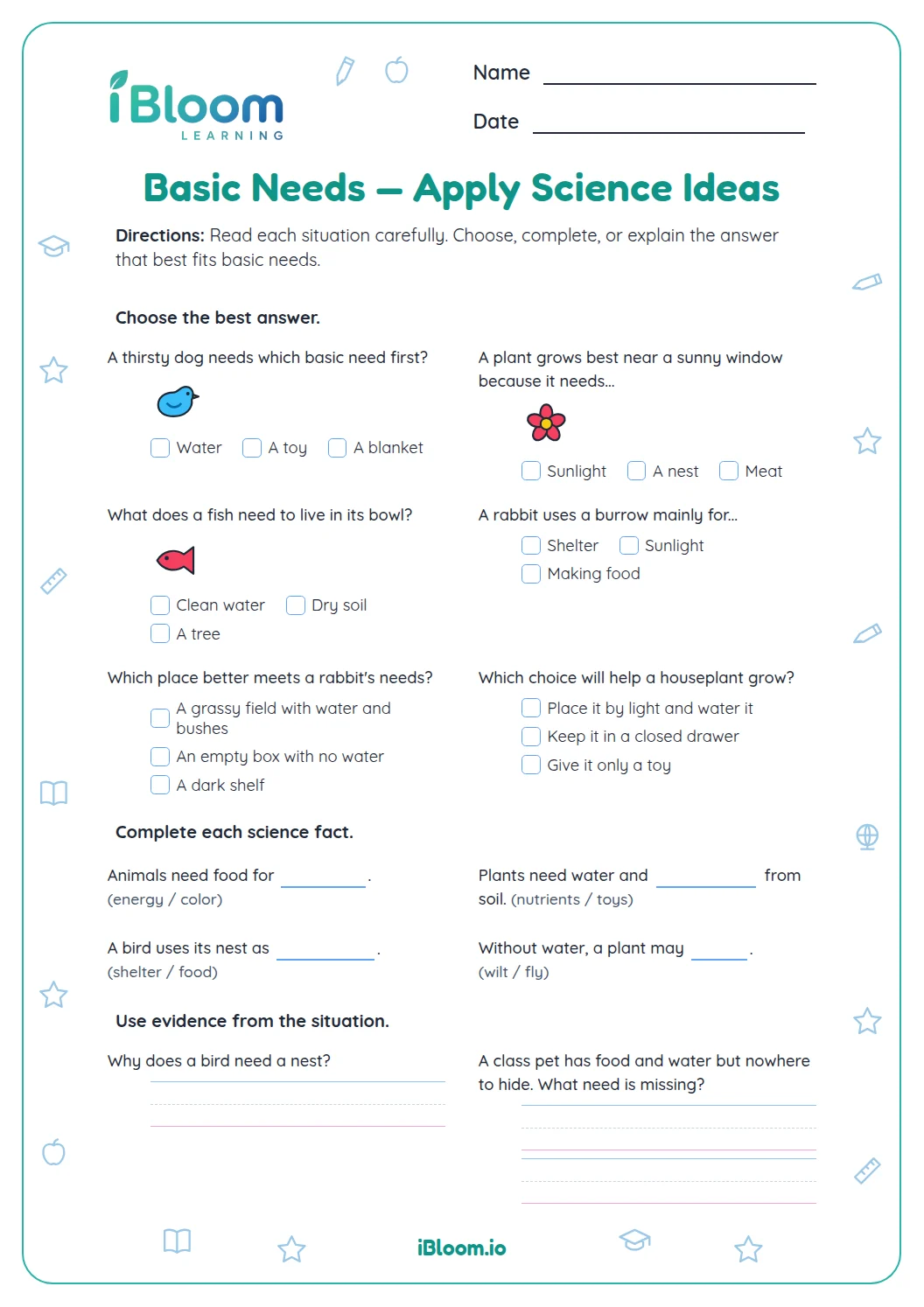
This Grade 3 science worksheet uses animal food clues to practice the words carnivore, herbivore, and omnivore, then applies those ideas to habitat changes. Students answer 14 questions: six diet classifications and eight food and habitat choices. A separate answer key lists the correct answers.
What do carnivore, herbivore, and omnivore mean?
A herbivore eats plants, a carnivore eats other animals, and an omnivore eats both. Use the food named in the clue rather than an animal’s size or appearance.
In question 2, the fox eats mice and berries. Mice are animals and berries are plants, so the fox is an omnivore.
- 1Mice are animal food
- 2Berries are plant food
- 3Both kinds: omnivore
How can a habitat change affect food access?
A habitat provides food and other resources. If a food source becomes scarce, an animal that depends on it may have less access to something it needs. In question 7, a dry season leaves little grass, so a deer that eats grass may have less food than before.
What is on the worksheet?
The 14 prompts move from naming diet groups to applying food and habitat clues. The final choices ask whether an animal can still find a listed food after one source disappears.
- Part A: classify 6 diets
- Part B: apply food evidence in 6 fill-ins
- Part C: explain 2 answers with evidence
How to use this worksheet
- 1Read the foods named in the clue.
- 2Decide whether the foods are plants, animals, or both.
- 3Choose the diet group that matches the evidence.
- 4In a habitat scenario, identify which food source changed.
- 5For written responses, state a claim and quote the relevant food clue.
Common mistakes and quick fixes
The mistake
Calling any large animal a carnivore.
The fix
Use what the animal eats as evidence; size alone does not identify its diet.
The mistake
Calling an animal an omnivore because it lives in a forest.
The fix
Check whether the clue names both plant and animal foods.
The mistake
Naming a habitat change without linking it to food.
The fix
Explain which organism uses the missing food source.
What to practice next
Make more practice
Questions parents and teachers ask
What is the difference between a herbivore and an omnivore?
A herbivore eats plants, while an omnivore eats plants and animals. In question 5, the bear eats fish and berries, so it is an omnivore. Both foods are evidence for the classification, even though they come from different sources. Read each clue carefully and use the answer key to check the specific example and the idea it represents.
How can a food clue identify an animal’s diet group?
Look at whether the clue names plants, other animals, or both. A lion that eats other animals is a carnivore; a deer that eats leaves and grass is a herbivore. Question 2 shows an omnivore because its fox eats mice and berries.
Why does a habitat change matter to an animal?
A habitat change can reduce or remove a food source. Question 7 asks which animal may have less food when grass becomes scarce; later questions ask whether food remains after a resource disappears. The key matches each choice to the clue in the question.
How many questions are on the worksheet?
There are 14 questions: six diet classifications and eight applications. The answer key covers every prompt. The questions move from identifying an animal’s food group to using food clues when a habitat resource changes. Each choice has one answer supported by the stated scenario.
How do the habitat questions use food clues?
Read which foods are available and which food disappears. For example, a deer that eats grass and leaves can still find food when grass is scarce because leaves remain. The final questions ask learners to apply the same reasoning to a bird and a deer.
How do children tell the three diet groups apart?
A herbivore eats plants, a carnivore eats other animals, and an omnivore eats both. The classification questions name the foods an animal eats, so children can compare the clue with each group. The answer key lists the matching group for all six examples.