



About this worksheet
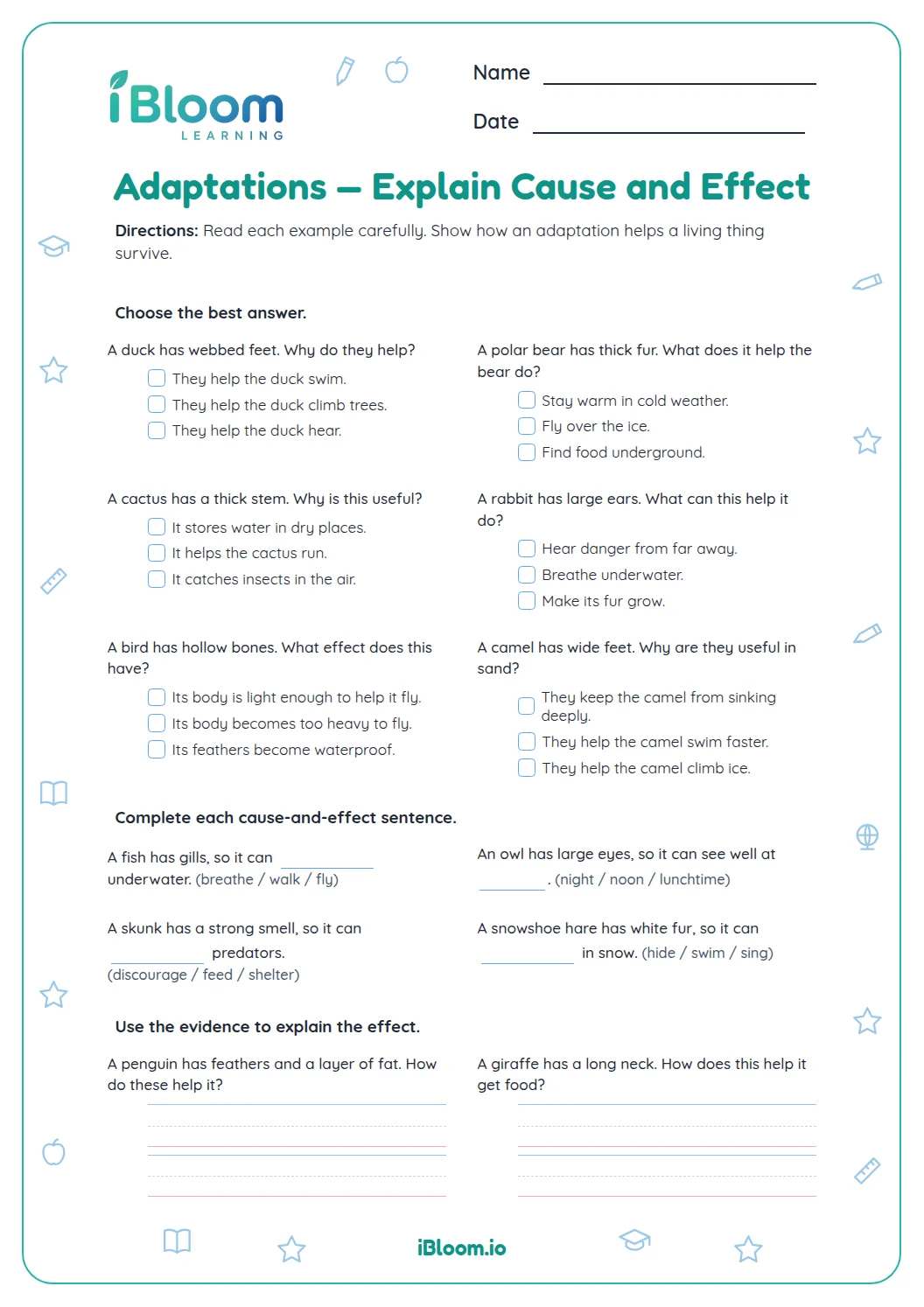
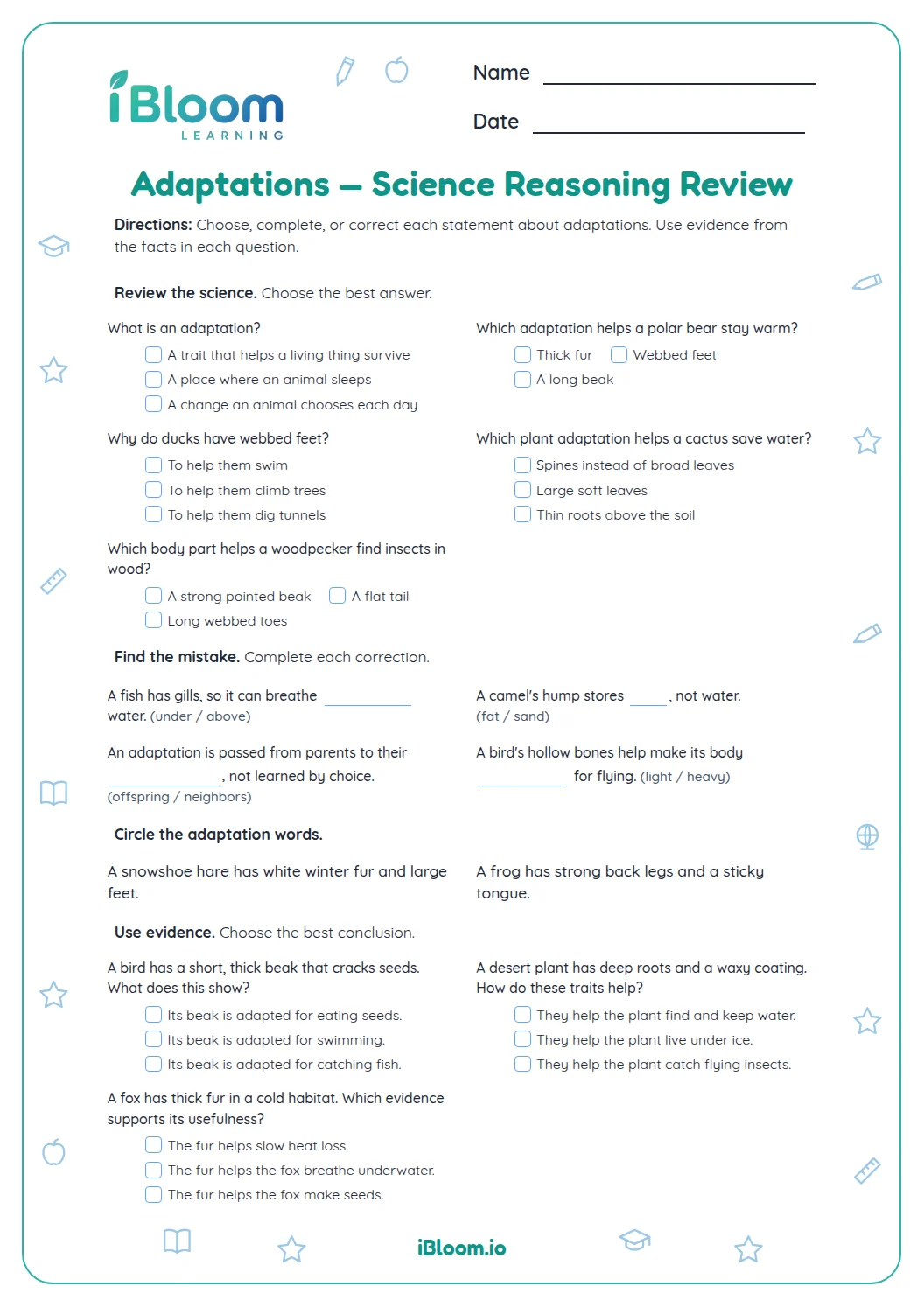
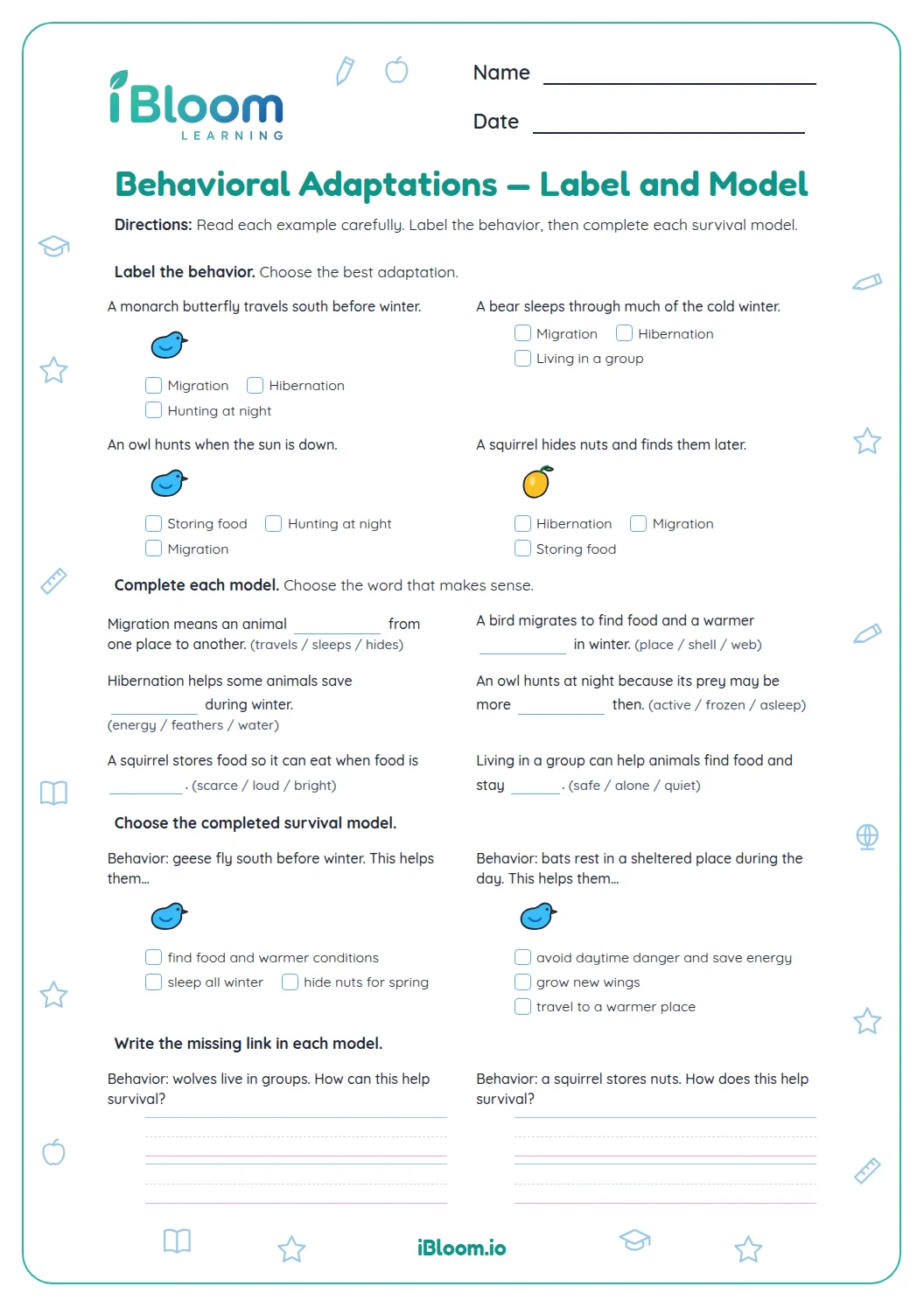
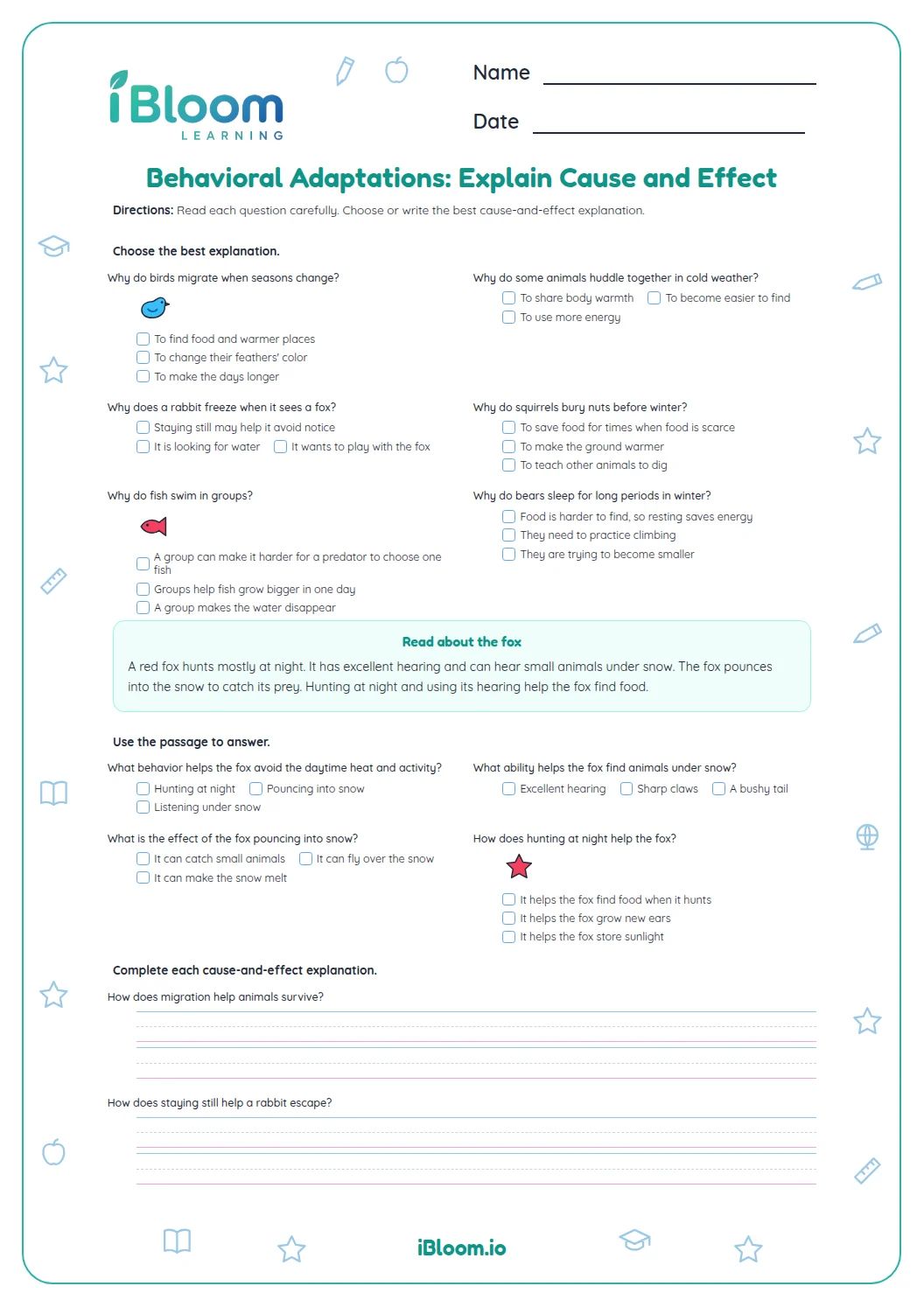
This Grade 3 science worksheet asks students to connect adaptations to survival needs. Short questions cover webbed feet, beaks, gills, fur, shells, leaves, and helpful behaviors such as migration. Students identify features, complete short labels, and draw a simple model of a duck moving through water. A separate answer key includes sample responses.
How can a body feature help an organism?
A body feature can help with a need such as getting food or moving. Question 1 connects webbed feet with swimming. The feature helps push against water.
- 1Duck: webbed feet
- 2Need: move through water
- 3Effect: feet push water to help the duck swim
Can an adaptation be a behavior?
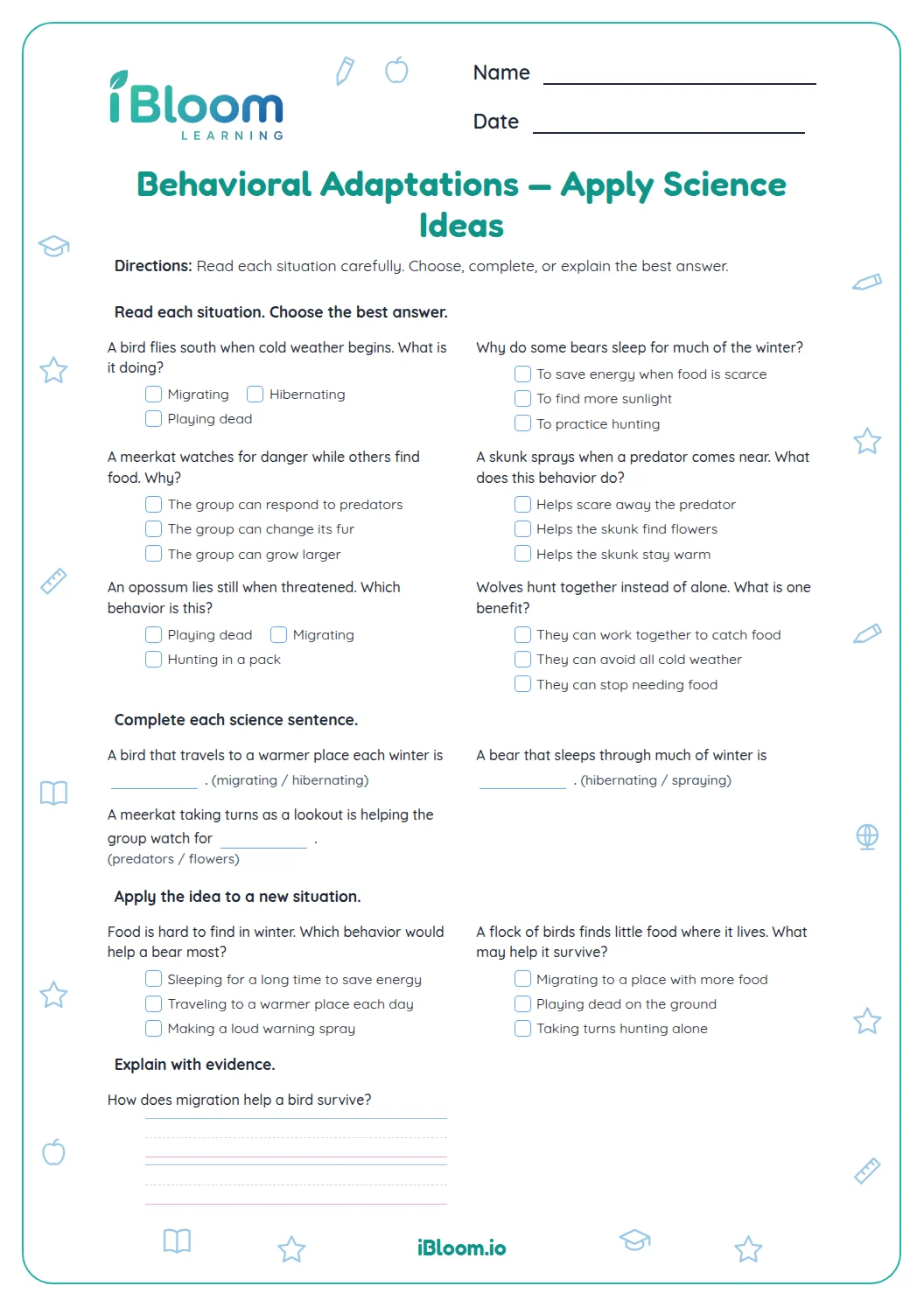
Some adaptations are behaviors. Migration is an action that can help some birds reach a place with suitable conditions. Question 6 asks students to connect a helpful behavior with a need.
What should the drawing model show?
Question 14 asks students to model how webbed feet help a duck move. Arrows can represent water pushed backward and the duck moving forward.
How to use this worksheet
- 1Name the organism and the feature or behavior.
- 2Identify the need, such as movement, food, warmth, or safety.
- 3Explain how the trait helps meet that need.
- 4Use arrows or labels to show movement in the model.
- 5Check that the example fits the organism and habitat.
Common mistakes and quick fixes
The mistake
Naming a trait without saying what it helps do.
The fix
Add the need and result: webbed feet push water and help a duck swim.
The mistake
Calling every adaptation a body part.
The fix
Some adaptations are behaviors, such as migration.
The mistake
Saying a trait is helpful everywhere.
The fix
Describe the habitat or condition in which the trait is useful.
What to practice next
Further reading
Questions parents and teachers ask
What is an adaptation in this worksheet?
An adaptation is an inherited body feature or behavior that can help an organism meet a need in its environment. The questions connect webbed feet with swimming, fur with warmth, and migration with reaching a suitable place. Children name the trait and its helpful effect.
What should a strong written answer include?
Name the organism and the trait, then explain the need and effect. For example, a duck’s webbed feet push against water and help it swim. A short answer can be checked by asking whether it says both what the feature is and how it helps.
What should the drawing model show?
Question 14 asks for a duck with webbed feet and arrows showing movement through water. A clear model labels or shows the feet pushing water backward and the duck moving forward. Students can add a short caption explaining how the feature helps the animal move.
Can an adaptation be a behavior instead of a body part?
Yes. Migration is a behavior, while a beak or shell is a body feature. Question 6 asks students to identify migration; other items connect structures such as gills, a shell, and webbed feet to functions. Both kinds of traits can help an organism meet needs.