





About this worksheet
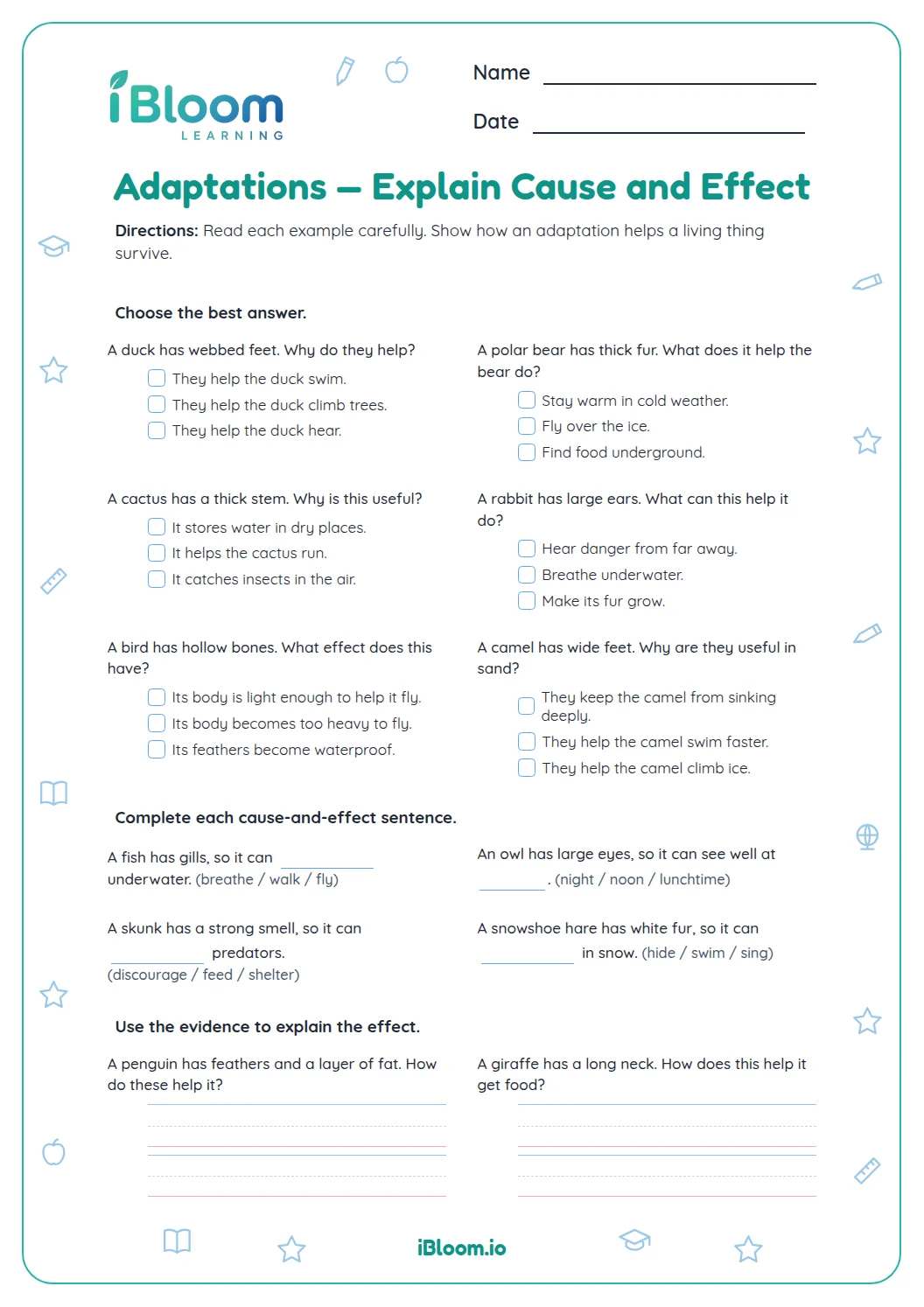
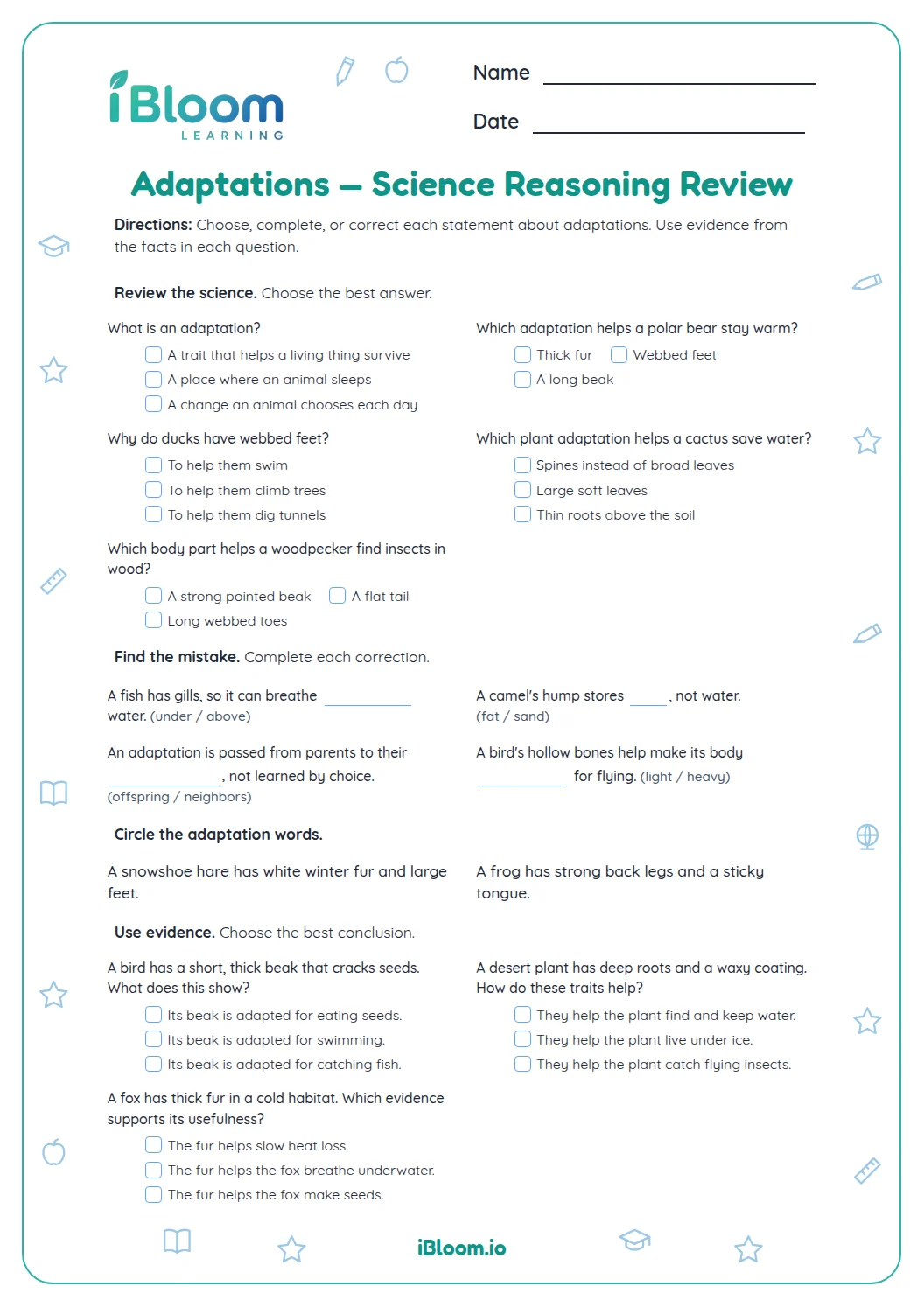
This Grade 3 science worksheet helps children connect adaptations with the needs of organisms in different habitats. Fourteen multiple-choice questions sort six examples as body features or behaviors, compare six habitat situations, and apply facts about fur and gills. The practice supports NGSS 3-LS4-3 by using evidence about how organisms fit particular habitats.
Aligned to 3-LS4-3
What is the difference between a feature and a behavior?
A body feature is a physical part or covering, such as webbed feet or thick fur. A behavior is an action, such as flying south or huddling. Part A asks children to sort six examples.
- 1A duck has webbed feet for swimming.
- 2Webbed feet are a body feature.
How does an adaptation fit a habitat?
Part B gives a need and asks which feature or behavior fits it. For example, broad feet spread a hare’s weight on deep snow, while webbed feet help a duck paddle. Match the adaptation to the condition named in the prompt.
How can a fact support an adaptation choice?
The final two questions use supplied facts: thick fur holds heat better than thin fur, and fish gills take oxygen from water. Choose the answer that follows from each fact.
How to use this worksheet
- 1Read the two sorting labels aloud: body feature and behavior.
- 2For each Part A example, underline the part or action being classified.
- 3Compare the conditions with the feature or action in Part B.
- 4For question 13, use the fur fact as evidence for your claim.
- 5For question 14, use the fact about gills to explain whether they take oxygen from dry air.
Mistakes to discuss
The mistake
Calling huddling a body feature because bodies touch.
The fix
Ask what the animals are doing. Moving together is a behavior.
The mistake
Choosing a useful feature without connecting it to the habitat.
The fix
Name the condition first: cold water calls for keeping warm.
The mistake
Writing that a fish cannot live on dry land because it belongs in water.
The fix
Use the supplied fact: its gills take oxygen from water.
NGSS alignment
Use habitat clues to explain why an organism can survive there.
On this sheet: Children classify adaptations, compare habitat fits, and support two survival claims with supplied evidence.
Show the official wordingHide the official wording
Construct an argument with evidence that in a particular habitat some organisms can survive well, some survive less well, and some cannot survive at all.
What to practice next
Make more practice
Further reading
Questions parents and teachers ask
What adaptations do children sort?
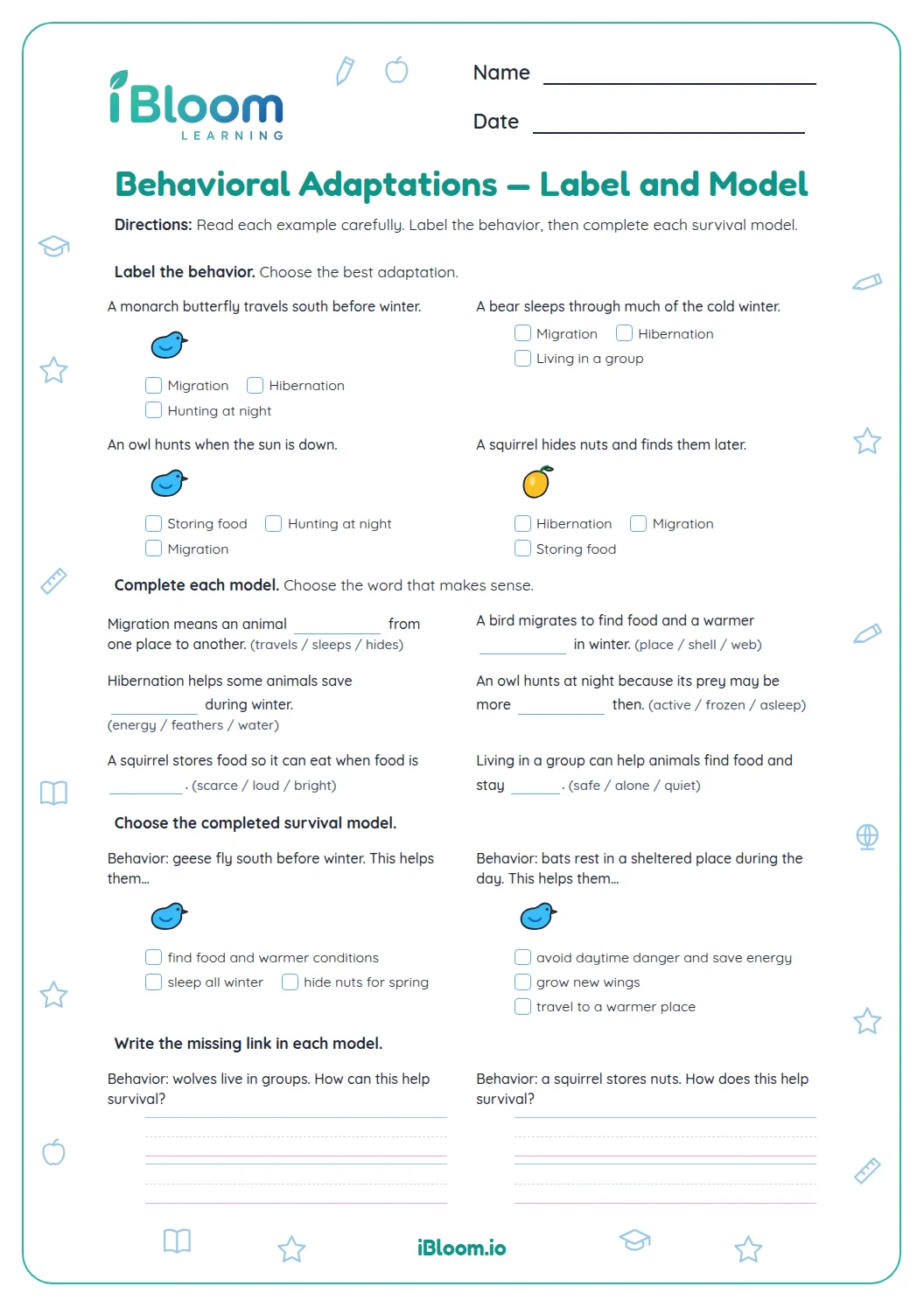
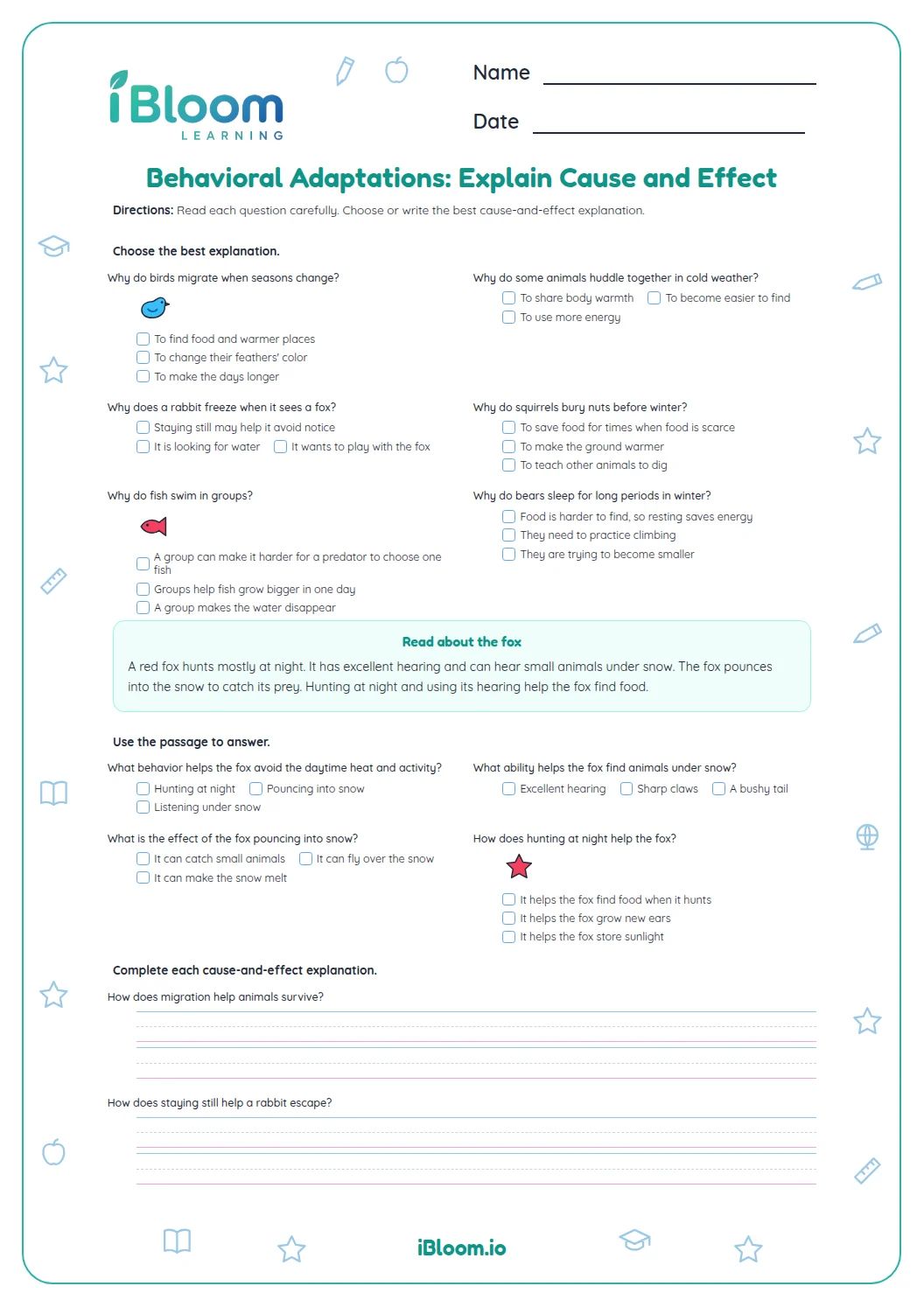
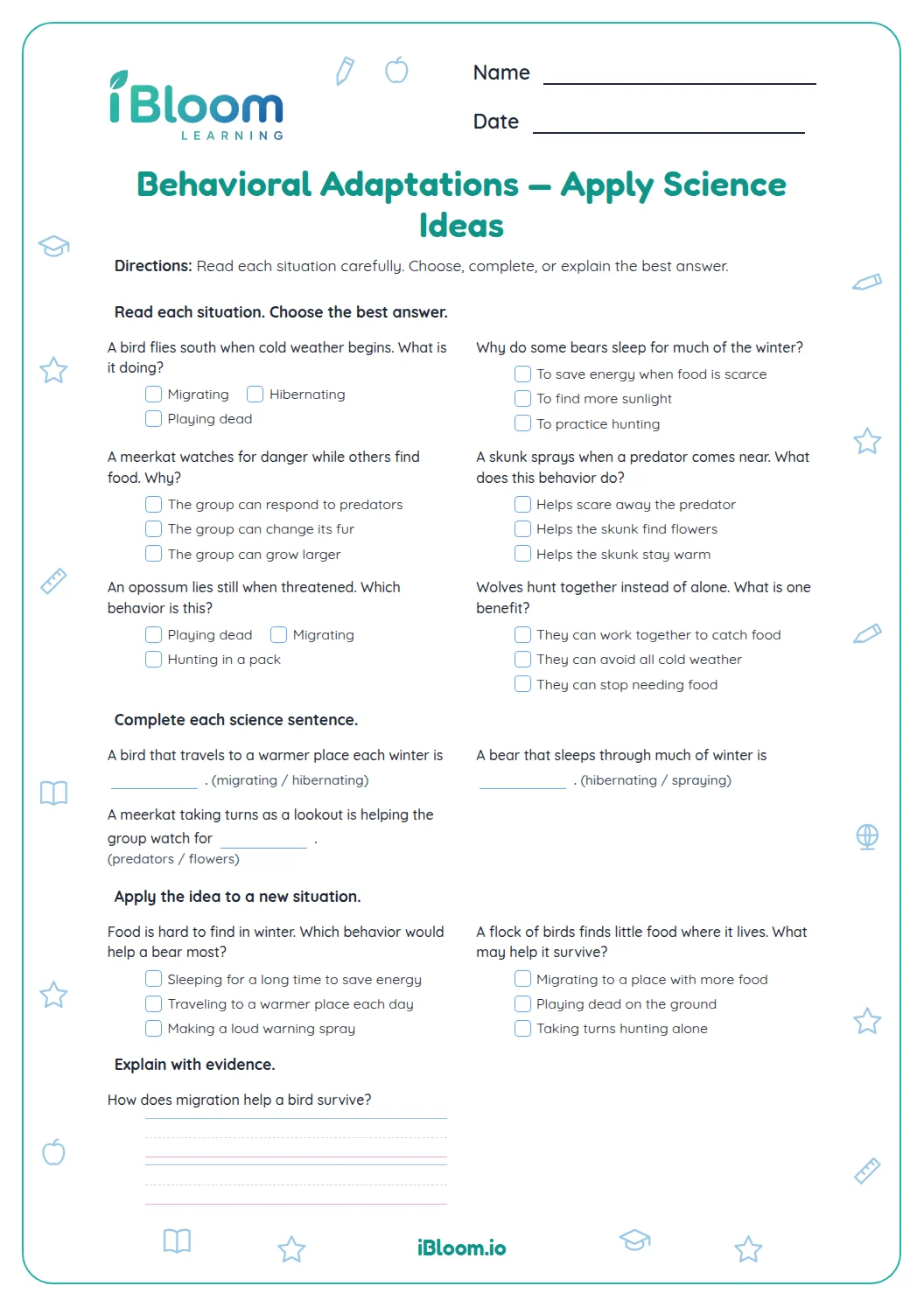
The first six items describe webbed feet, geese flying south, a turtle’s shell, penguins huddling, thick fur, and a desert animal resting underground by day. Three are body features and three are behaviors. Children choose the category that fits each example.
Does a body feature have to appear in a picture?
No. Each example is described in words. A body feature can be a physical part or covering, such as a seal’s layer of fat or a hare’s broad feet. Children read the habitat or need in the prompt and choose which feature fits.
How do habitat clues help with the choices?
The prompts name a condition or need, such as cold water, deep snow, or daytime heat. Children select a feature or behavior that helps in that situation. For example, being active at night helps a desert animal avoid the hottest part of the day.
What facts appear in the last questions?
One question says thick fur holds heat better than thin fur. Another says fish gills take oxygen from water. Children choose which fur helps a fox in winter and where those gills can take oxygen. The answer key marks the choice supported by each fact.
Can I read the adaptation questions aloud?
Yes. Read the prompt and choices without emphasizing an answer. Invite the child to name the need or habitat condition, then compare the choices. For a body-feature or behavior item, ask whether the example describes a physical part or an action.