Free printable practice
Living Things Practice Activities
Printable Grade 3 science activities for exploring living things, including traits, plant and animal life cycles, plant parts, and adaptations.
Explore Living Things
Free printable worksheet PDFs
Preview every available page, then download the free worksheet PDF for home, homeschool, tutoring, or classroom practice.
Preview the exact activity before downloading it.
 Adaptations — Sort and ClassifyExplore adaptations practice activities within Living Things Practice Activities, organised so children, families, and elementary teachers can move from broad learning areas to focused printable practice. This sort and classify worksheet provides a distinct, age-appropriate way to practise the same lesson.Grade 3Free PDF preview6 pages
 Animal Lifecycle — Sort and ClassifyPrintable Grade 3 science activities help children compare animal life cycles, sequence stages, and use evidence from diagrams and vocabulary. This sort and classify worksheet provides a distinct, age-appropriate way to practise the same lesson.Grade 3Free PDF preview
 Behavioral Adaptations — Sort and ClassifyGrade 3 science worksheets that help children identify, explain, and compare animal behaviors that support survival. This sort and classify worksheet provides a distinct, age-appropriate way to practise the same lesson.Grade 3Free PDF preview
 Inherited Acquired Traits — Sort and ClassifyGrade 3 science worksheets help children tell inherited traits from acquired traits using clear examples from living things. This sort and classify worksheet provides a distinct, age-appropriate way to practise the same lesson.Grade 3Free PDF preview
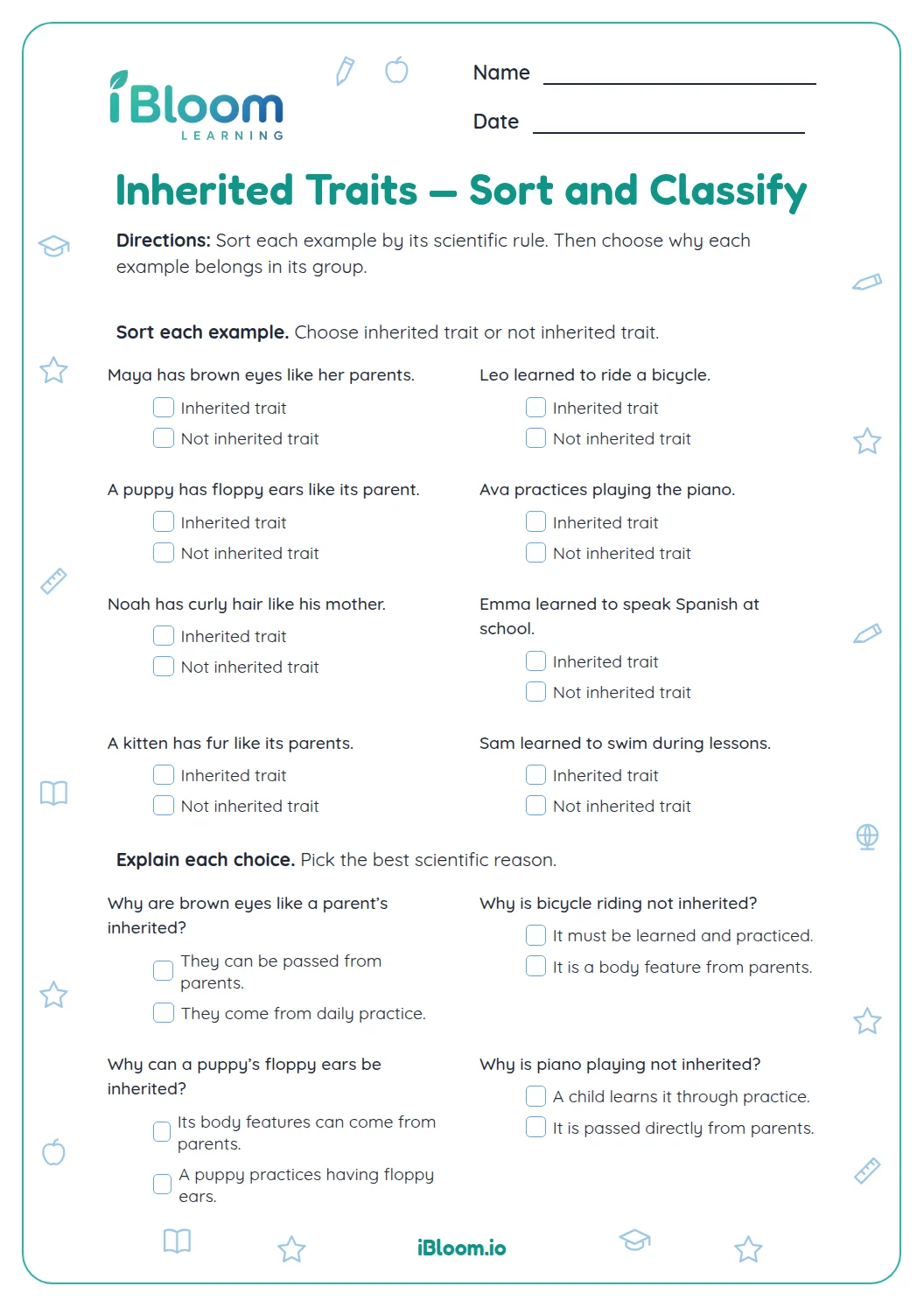 Inherited Traits — Sort and ClassifyGrade 3 science worksheets help children identify inherited traits in animals, plants, and people and separate them from learned or acquired characteristics. This sort and classify worksheet provides a distinct, age-appropriate way to practise the same lesson.Grade 3Free PDF preview
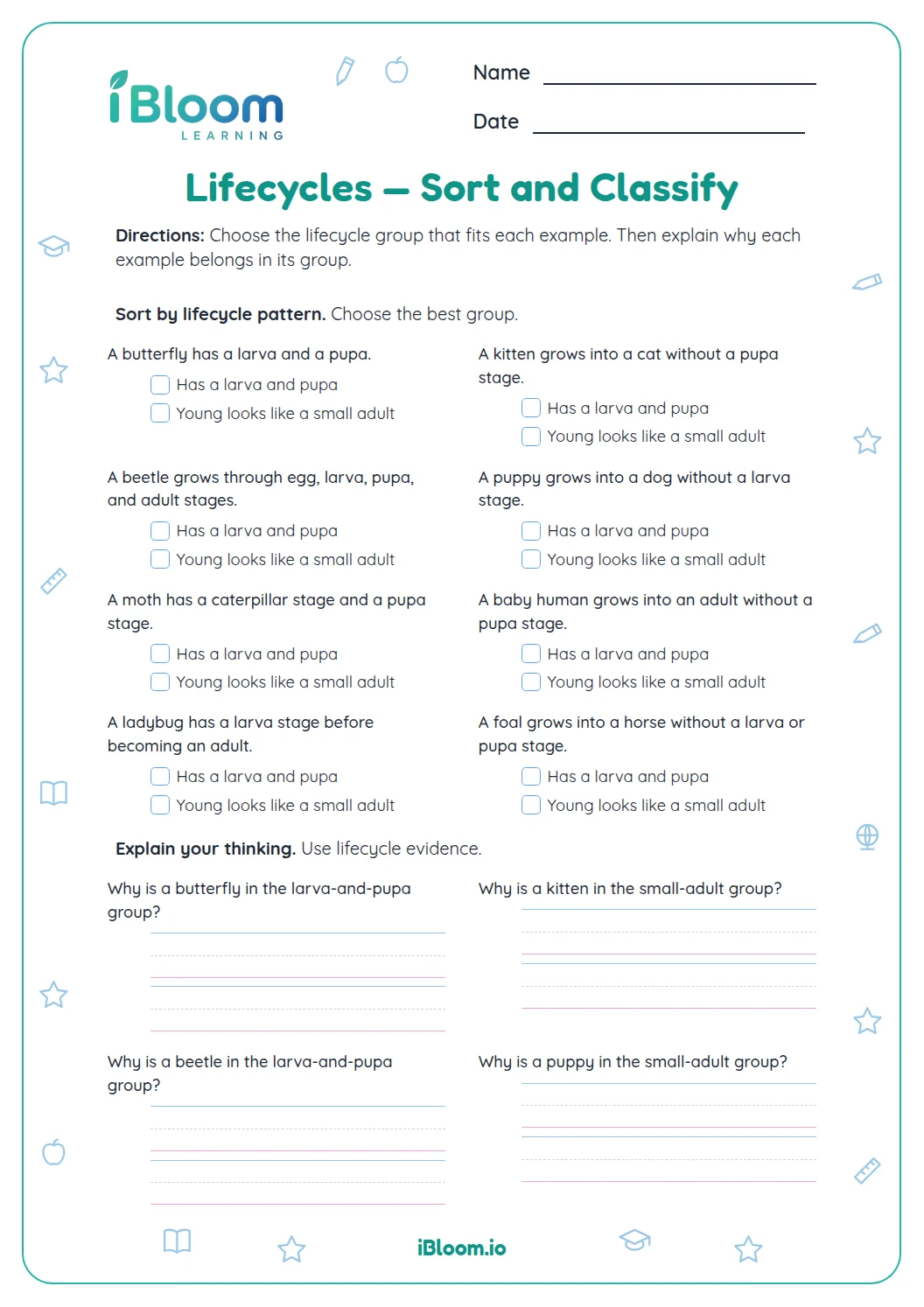 Lifecycles — Sort and ClassifyGrade 3 science worksheets for practicing how plants and animals grow, change, reproduce, and repeat their life cycles. This sort and classify worksheet provides a distinct, age-appropriate way to practise the same lesson.Grade 3Free PDF preview
 Parts Of Plant — Sort and ClassifyGrade 3 science worksheets for identifying plant parts and explaining how roots, stems, leaves, flowers, fruits, and seeds help a plant live. This sort and classify worksheet provides a distinct, age-appropriate way to practise the same lesson.Grade 3Free PDF preview6 pages
 Plant Lifecycle — Sort and ClassifyGrade 3 plant lifecycle worksheets help children sequence, label, compare, and explain how flowering plants grow and reproduce. This sort and classify worksheet provides a distinct, age-appropriate way to practise the same lesson.Grade 3Free PDF preview4 pages
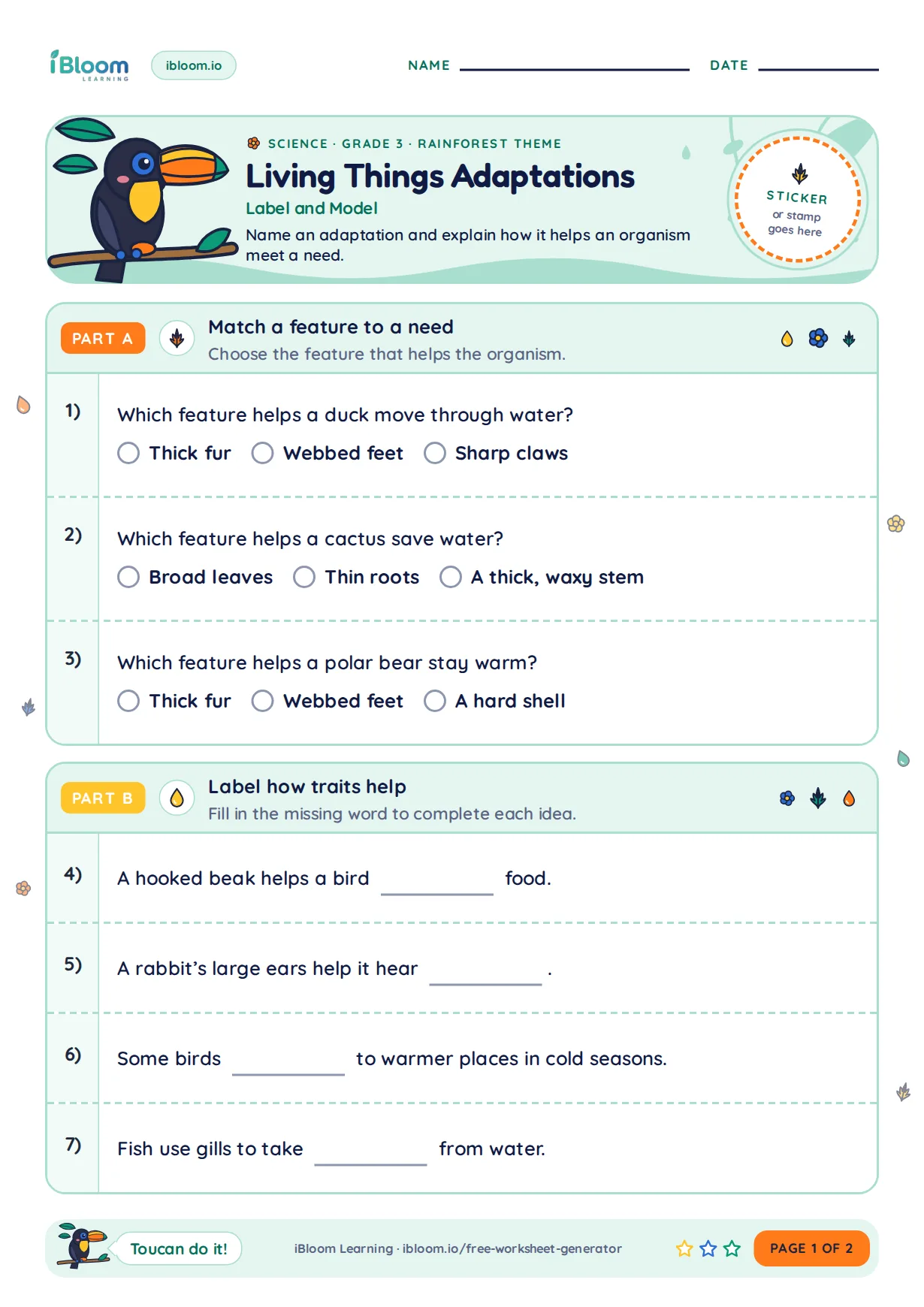 Adaptations — Label and ModelExplore adaptations practice activities within Living Things Practice Activities, organised so children, families, and elementary teachers can move from broad learning areas to focused printable practice. This label and model worksheet provides a distinct, age-appropriate way to practise the same lesson.Grade 3Free PDF preview4 pages
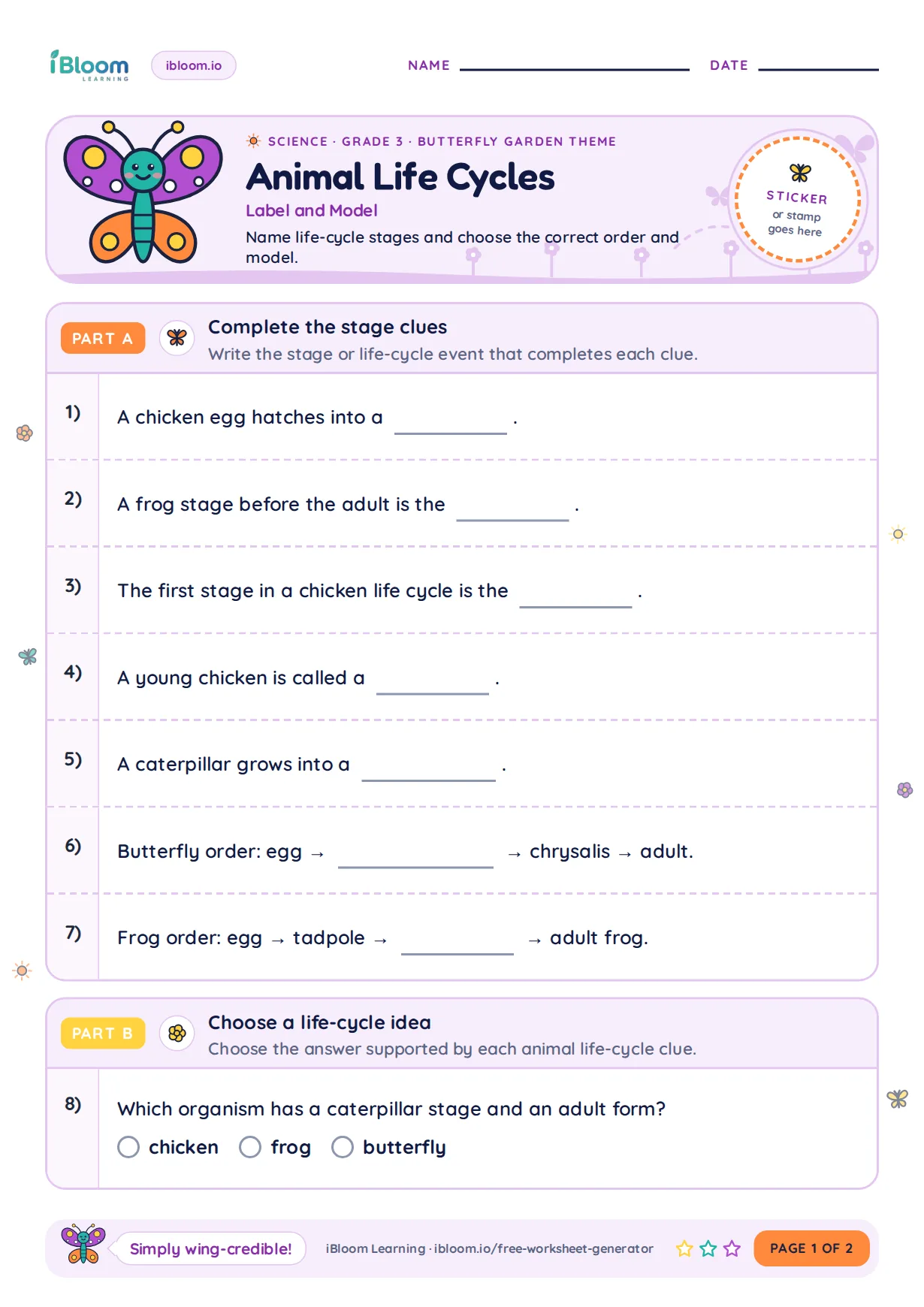 Animal Lifecycle — Label and ModelPrintable Grade 3 science activities help children compare animal life cycles, sequence stages, and use evidence from diagrams and vocabulary. This label and model worksheet provides a distinct, age-appropriate way to practise the same lesson.Grade 3Free PDF preview
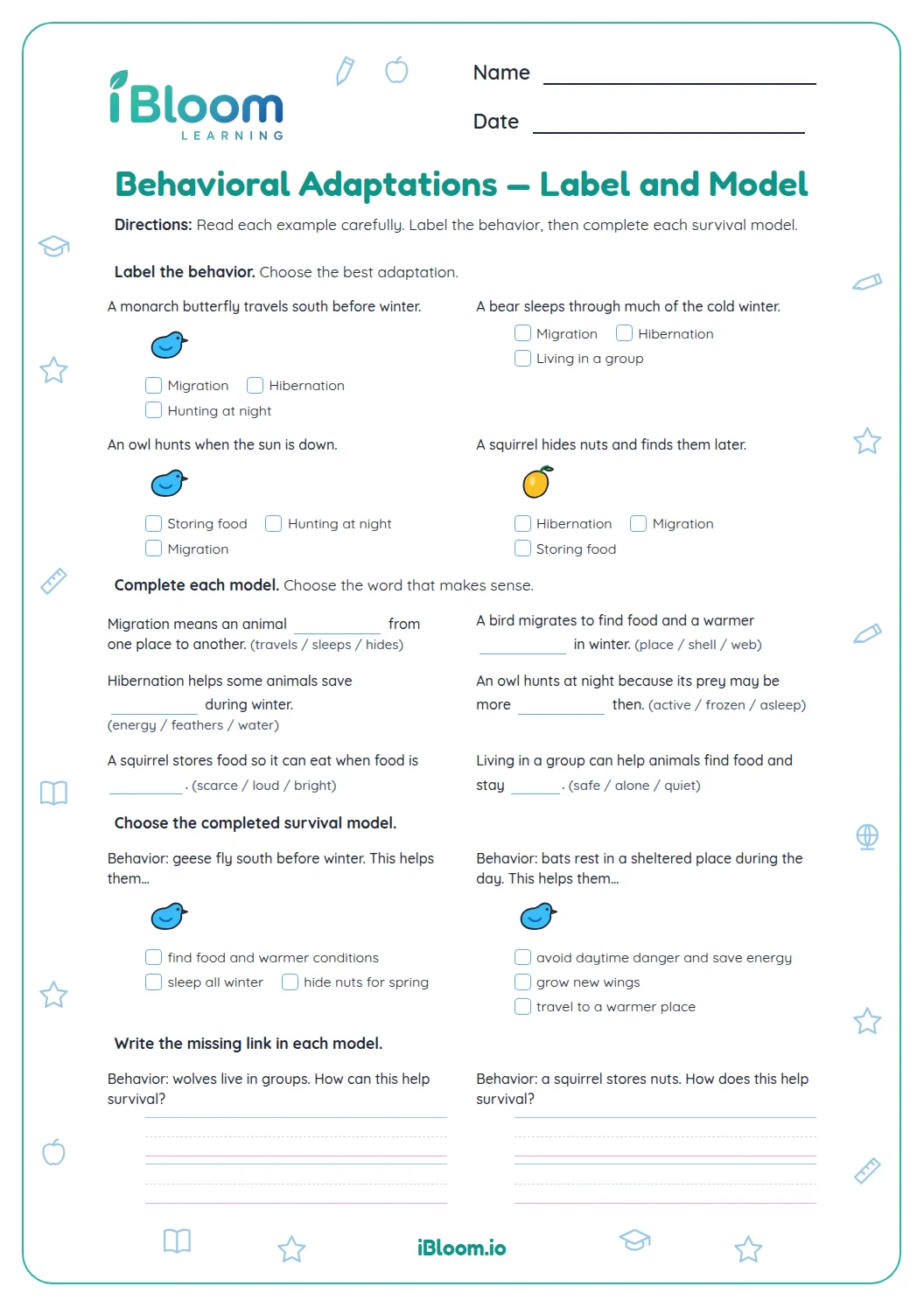 Behavioral Adaptations — Label and ModelGrade 3 science worksheets that help children identify, explain, and compare animal behaviors that support survival. This label and model worksheet provides a distinct, age-appropriate way to practise the same lesson.Grade 3Free PDF preview4 pages
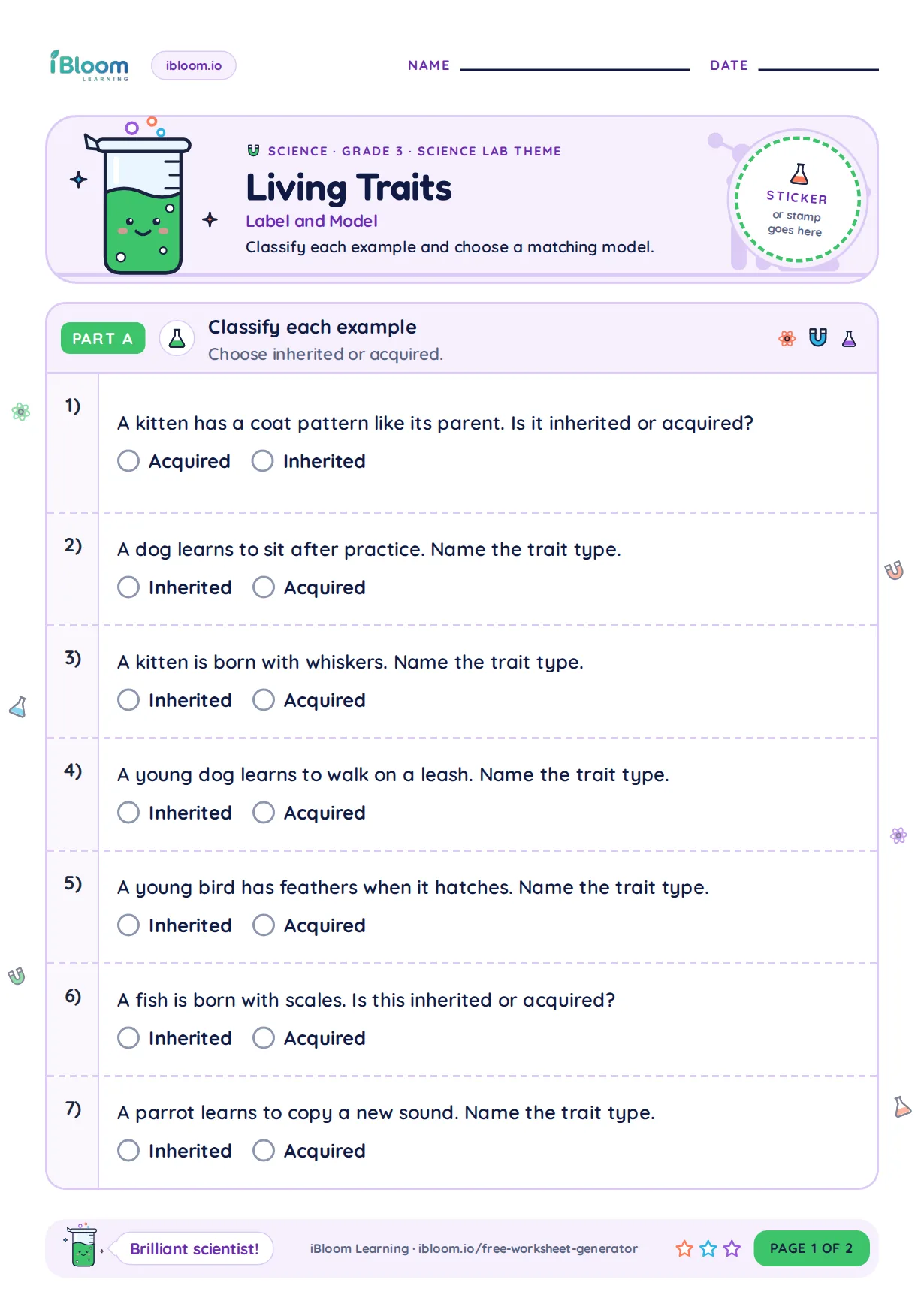 Inherited Acquired Traits — Label and ModelGrade 3 science worksheets help children tell inherited traits from acquired traits using clear examples from living things. This label and model worksheet provides a distinct, age-appropriate way to practise the same lesson.Grade 3Free PDF preview4 pages
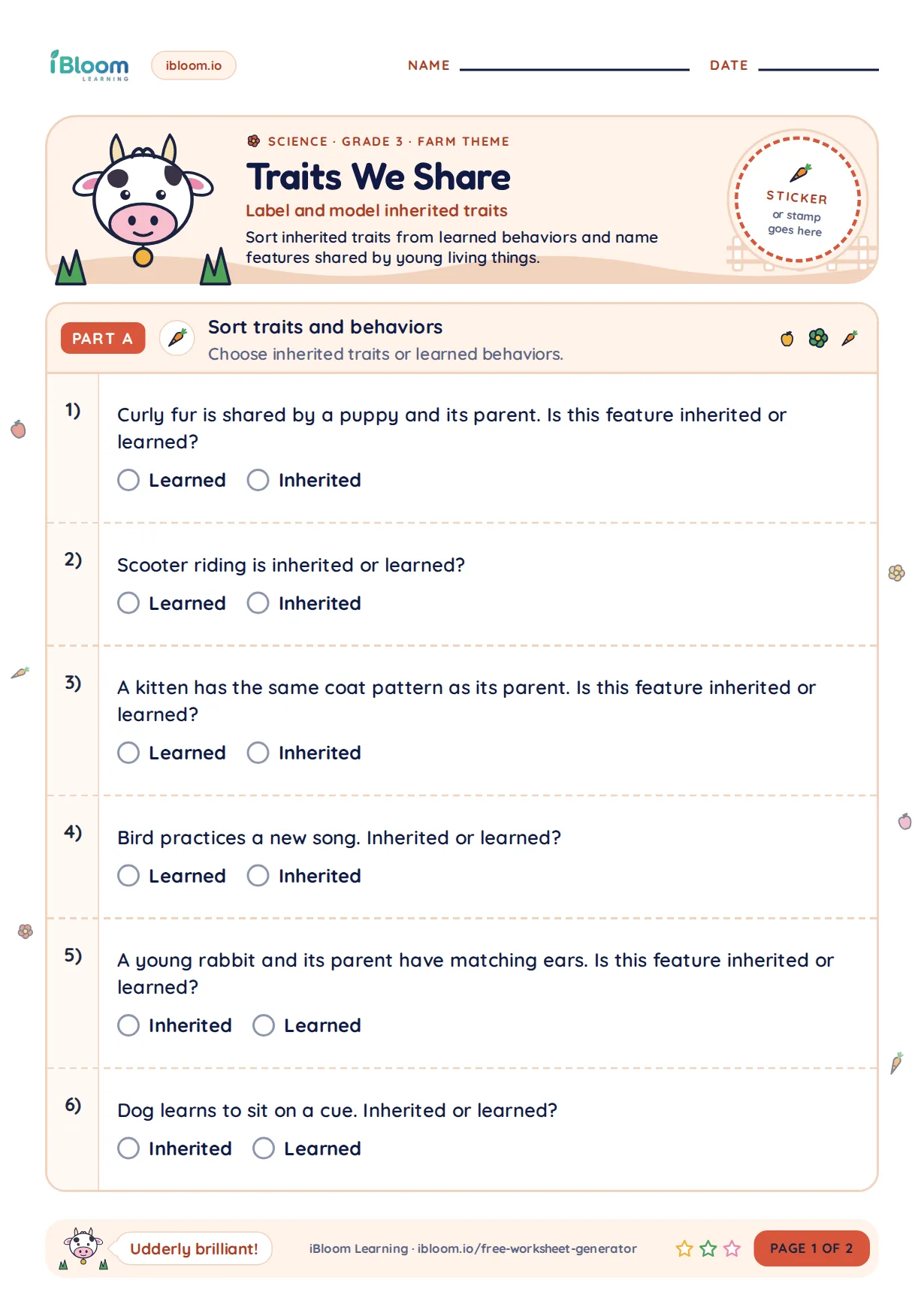 Inherited Traits — Label and ModelGrade 3 science worksheets help children identify inherited traits in animals, plants, and people and separate them from learned or acquired characteristics. This label and model worksheet provides a distinct, age-appropriate way to practise the same lesson.Grade 3Free PDF preview
 Lifecycles — Label and ModelGrade 3 science worksheets for practicing how plants and animals grow, change, reproduce, and repeat their life cycles. This label and model worksheet provides a distinct, age-appropriate way to practise the same lesson.Grade 3Free PDF preview
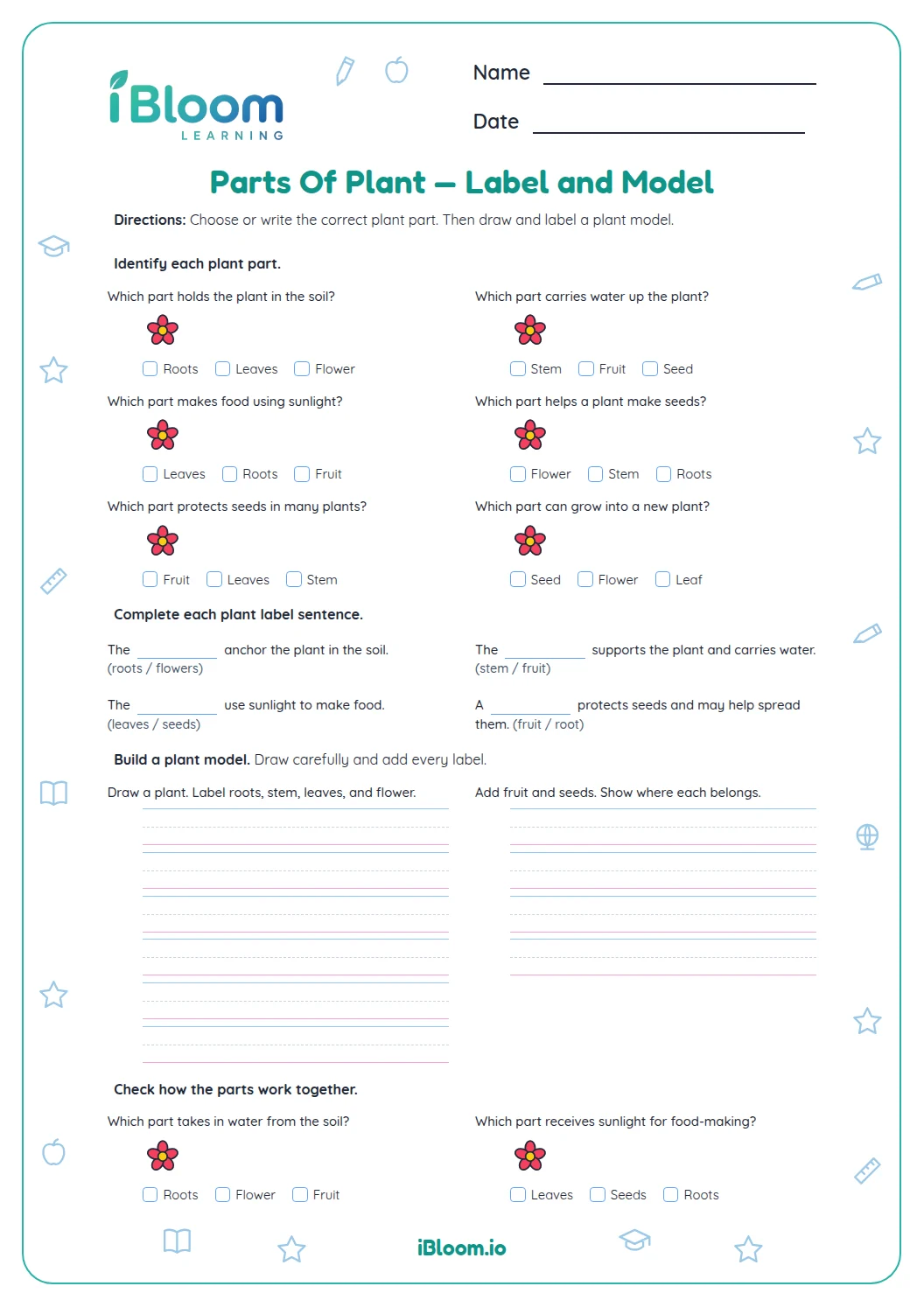 Parts Of Plant — Label and ModelGrade 3 science worksheets for identifying plant parts and explaining how roots, stems, leaves, flowers, fruits, and seeds help a plant live. This label and model worksheet provides a distinct, age-appropriate way to practise the same lesson.Grade 3Free PDF preview
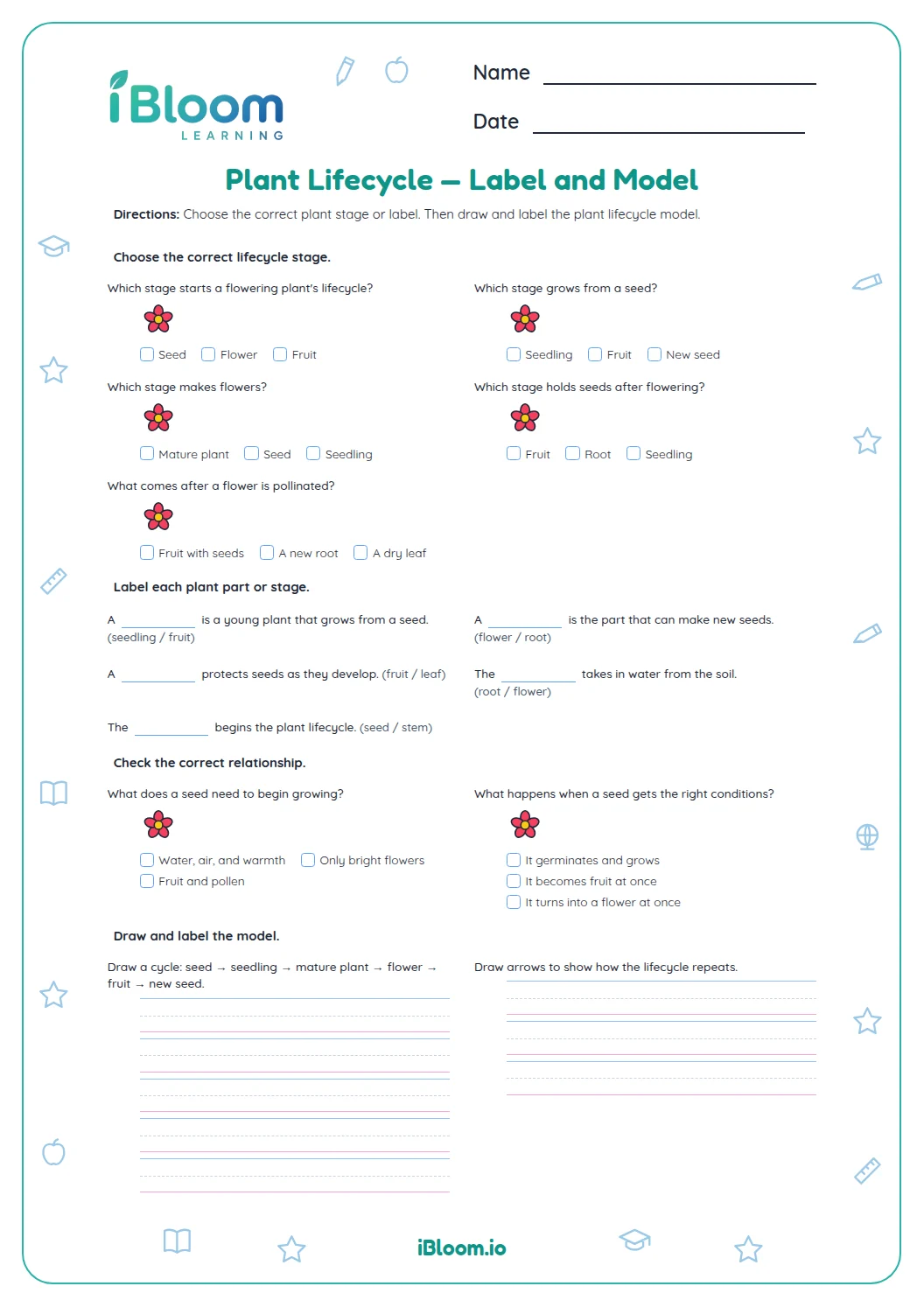 Plant Lifecycle — Label and ModelGrade 3 plant lifecycle worksheets help children sequence, label, compare, and explain how flowering plants grow and reproduce. This label and model worksheet provides a distinct, age-appropriate way to practise the same lesson.Grade 3Free PDF preview
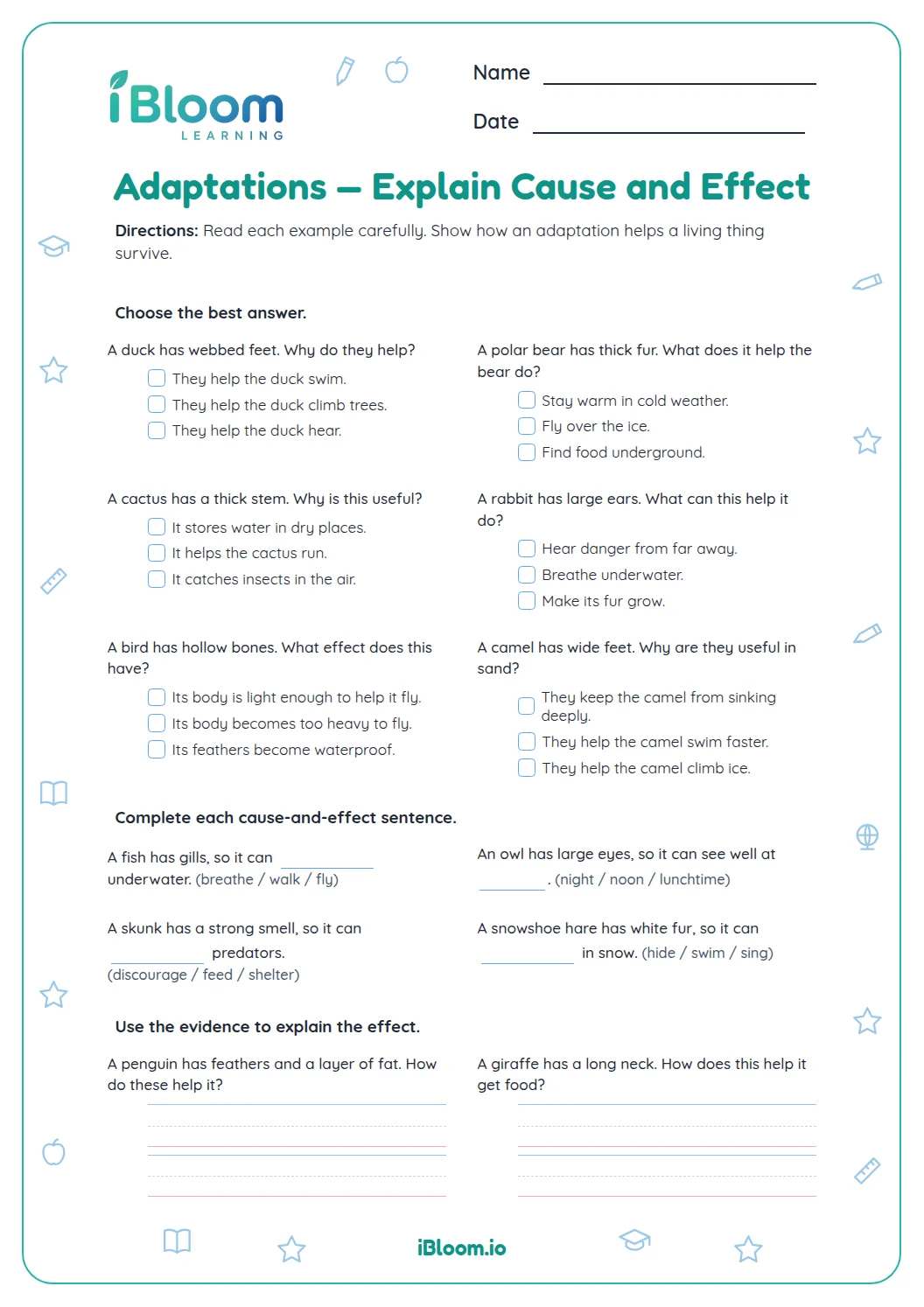 Adaptations — Explain Cause and EffectExplore adaptations practice activities within Living Things Practice Activities, organised so children, families, and elementary teachers can move from broad learning areas to focused printable practice. This explain cause and effect worksheet provides a distinct, age-appropriate way to practise the same lesson.Grade 3Free PDF preview
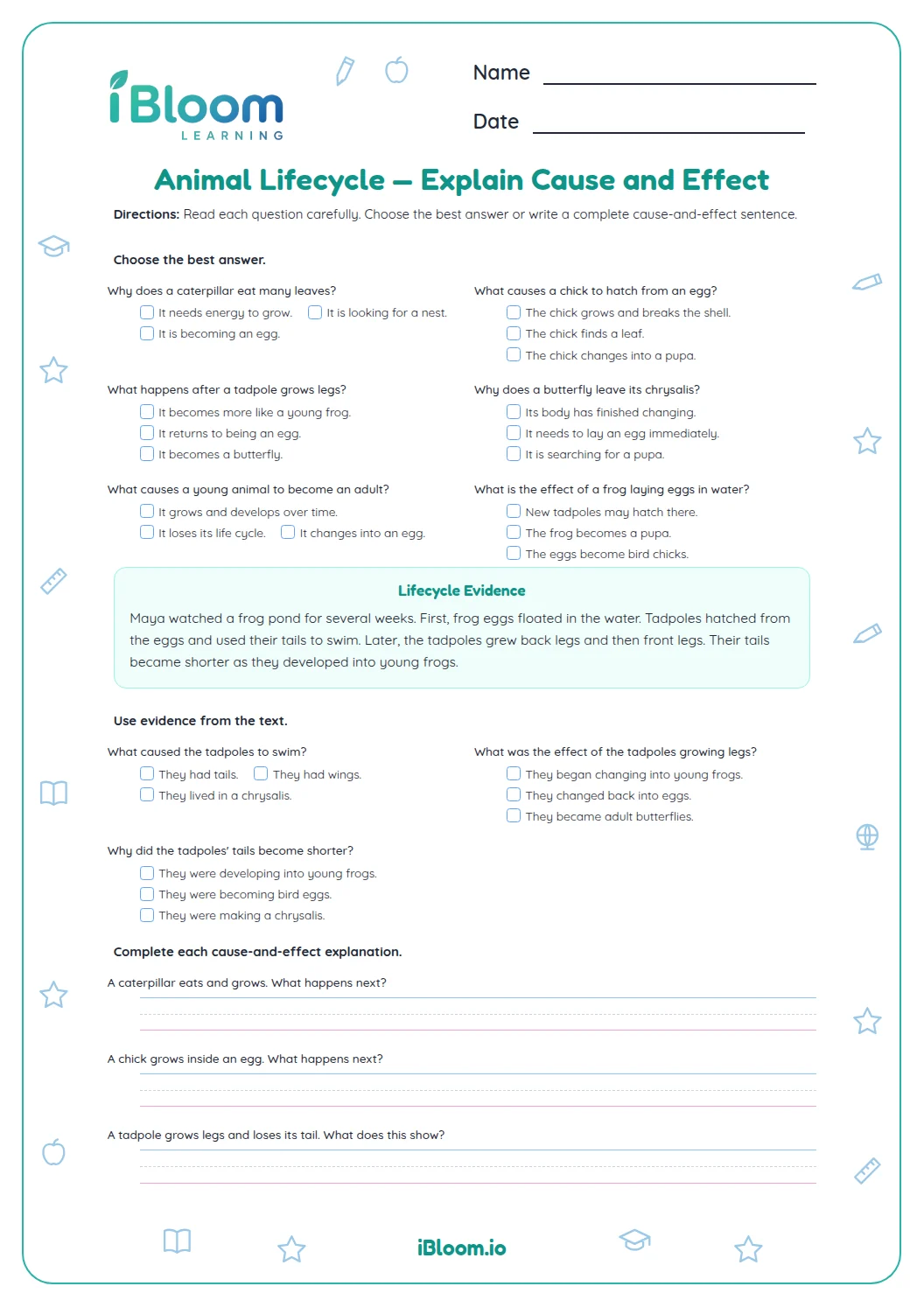 Animal Lifecycle — Explain Cause and EffectPrintable Grade 3 science activities help children compare animal life cycles, sequence stages, and use evidence from diagrams and vocabulary. This explain cause and effect worksheet provides a distinct, age-appropriate way to practise the same lesson.Grade 3Free PDF preview
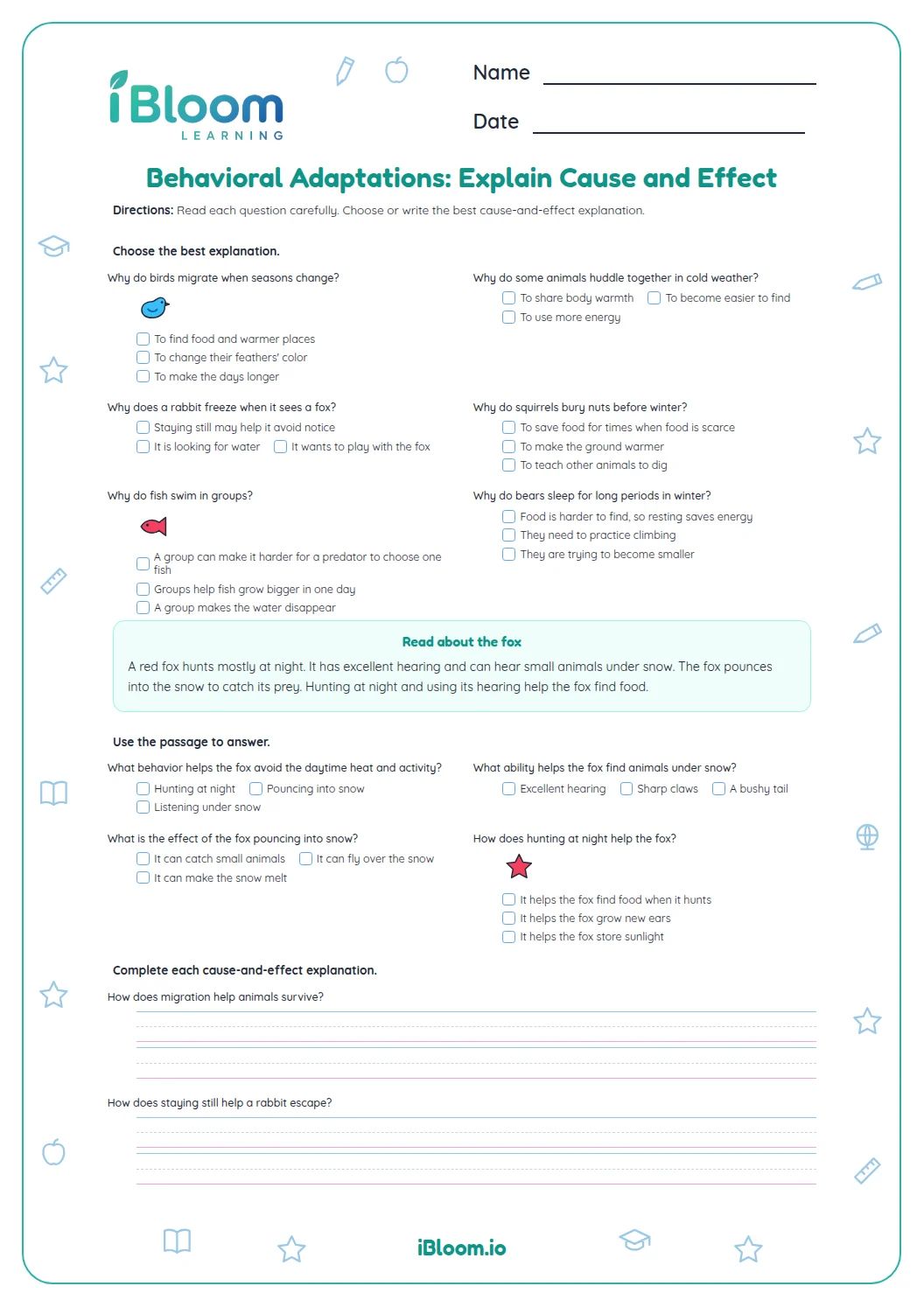 Behavioral Adaptations — Explain Cause and EffectGrade 3 science worksheets that help children identify, explain, and compare animal behaviors that support survival. This explain cause and effect worksheet provides a distinct, age-appropriate way to practise the same lesson.Grade 3Free PDF preview4 pages
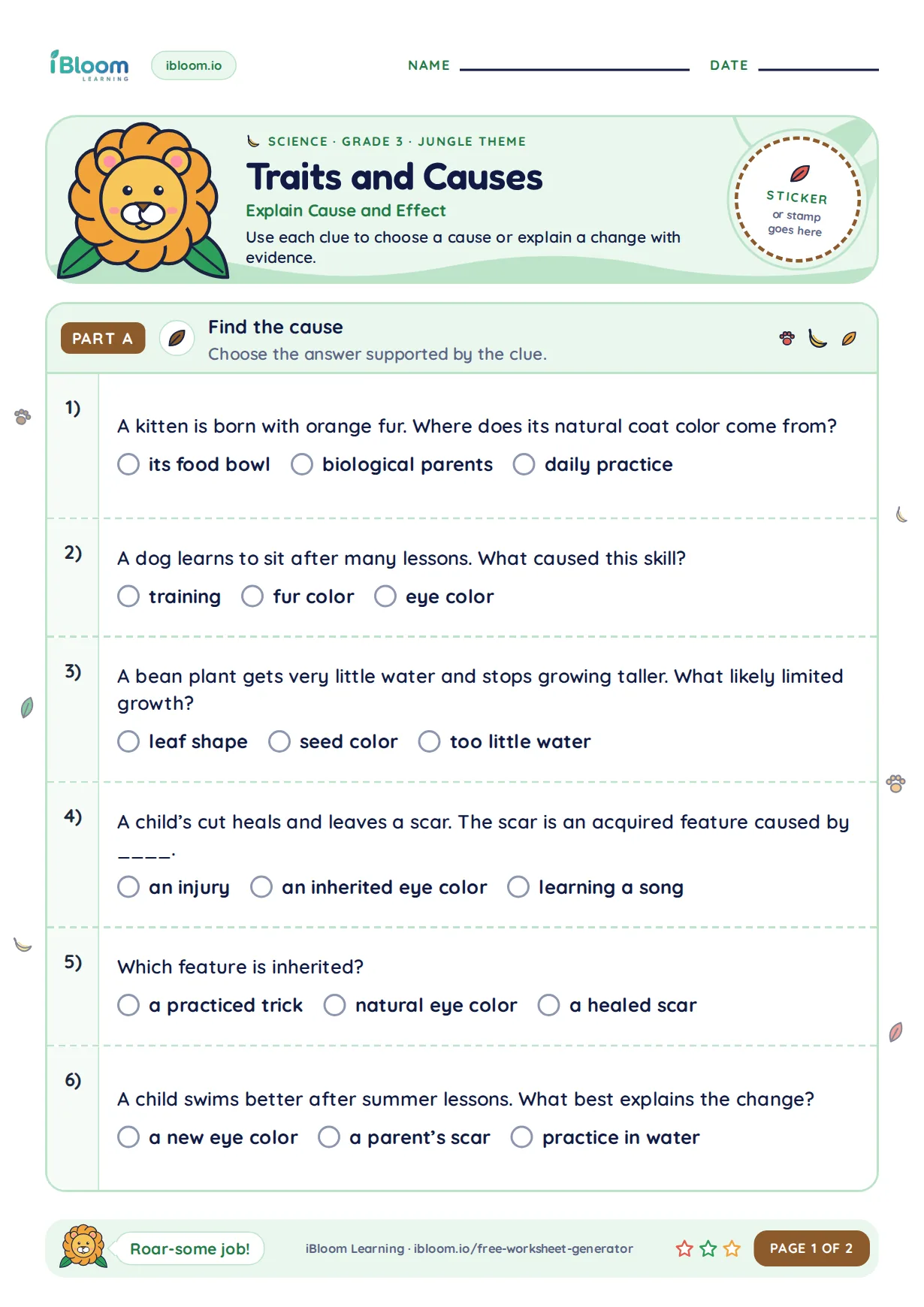 Inherited Acquired Traits — Explain Cause and EffectGrade 3 science worksheets help children tell inherited traits from acquired traits using clear examples from living things. This explain cause and effect worksheet provides a distinct, age-appropriate way to practise the same lesson.Grade 3Free PDF preview
Practice that builds confidence
From Traits to Life Cycles
These Grade 3 living things worksheets help children observe how plants and animals grow, survive, and pass on traits. Students practise identifying inherited and acquired traits, comparing life cycles, naming parts of a plant, and describing adaptations.
The printable activities include clear diagrams, sorting tasks, short-response questions, labeling practice, and real-world examples. Children connect science vocabulary to familiar organisms while building careful reading, classification, and explanation skills.
This collection moves across the big ideas in Grade 3 life science: living things have structures, grow through life cycles, inherit traits, and use adaptations to meet their needs. Children may compare a puppy to its parents, sequence the stages of a butterfly or frog, label roots and leaves, or decide whether a skill such as riding a bike is acquired rather than inherited.

What Children Practise
The pages support topics such as Inherited Traits, Inherited and Acquired Traits, Animal Lifecycle, Lifecycles, Plant Lifecycle, Parts of Plant, Behavioral Adaptations, and Adaptations. Activities encourage students to use words like offspring, seed, germination, larva, adult, stem, flower, camouflage, migration, and habitat in context instead of memorizing definitions alone.
A Simple Parent Routine
At home, choose one worksheet and begin with a quick observation: look at a houseplant, a pet photo, or a picture of an animal in its habitat. Ask, “What helps it live?” and “What changed as it grew?” After the worksheet, have your child explain one answer aloud using because. This short science talk builds reasoning, not just recall.

Classroom Uses
Teachers can use these printables for science centers, notebook inserts, small-group reteaching, or quick checks after a lesson on plants, animals, or ecosystems. Sorting inherited versus acquired traits works well as a partner activity, while life cycle sequencing pages help reveal whether students understand order and change over time.

Common Errors to Watch For
Some third graders confuse inherited traits with learned behaviors, such as calling swimming lessons inherited. Others mix up plant parts and their jobs, or think every animal has the same life cycle stages. Encourage students to look for evidence in the picture or sentence before choosing an answer.
Free printable PDF download
Use this grade 3 living things worksheet page to preview the activity, print it, or download it as a PDF for quick practice. It works well for homework, homeschool lessons, tutoring, morning work, revision, and classroom centers.
Answers and answer key support
After the child completes the worksheet independently, parents and teachers can use the answer support or answer key information to check the work, review mistakes, and choose the next practice step.
Why iBloom Worksheets Help
The worksheets use varied representations—diagrams, labels, examples, and short explanations—so children meet the same concept in more than one way. A child-friendly strategy is: observe, name, explain. First notice the feature or stage, then name it with a science word, then explain how it helps the living thing grow, survive, or reproduce.
Helpful answers
Frequently asked questions
What living things topics are included in these Grade 3 worksheets?
They cover inherited traits, acquired traits, animal life cycles, plant life cycles, general life cycles, parts of a plant, behavioral adaptations, and other survival adaptations.
How can I help my child understand inherited and acquired traits?
Use familiar examples. Eye color, fur color, or leaf shape can be inherited, while learning to fetch, speak, or ride a bike is acquired. Ask your child whether the trait was passed from parents or learned during life.
Do the worksheets include plant and animal diagrams?
Yes. Activities may use diagrams for labeling plant parts, sequencing plant growth, or following animal life cycle stages such as egg, young, and adult forms.
Are these worksheets useful after a classroom science lesson?
Yes. Teachers can use them as follow-up practice, science centers, quick checks, small-group review, or homework connected to living things units.
What vocabulary should Grade 3 students know for this topic?
Helpful words include trait, inherited, acquired, offspring, life cycle, germination, root, stem, leaf, flower, adaptation, habitat, camouflage, migration, and survival.
Is this grade 3 living things worksheet free?
Yes. You can preview it for free and use the printable worksheet for home or classroom practice.
Can I download this grade 3 living things worksheet as a PDF?
Yes. Use the worksheet download option to save a printable PDF, or print the worksheet directly from the page.
Does this grade 3 living things worksheet include answers or an answer key?
When the activity has fixed answers, iBloom includes answer support so parents and teachers can check the completed worksheet.