




About this worksheet
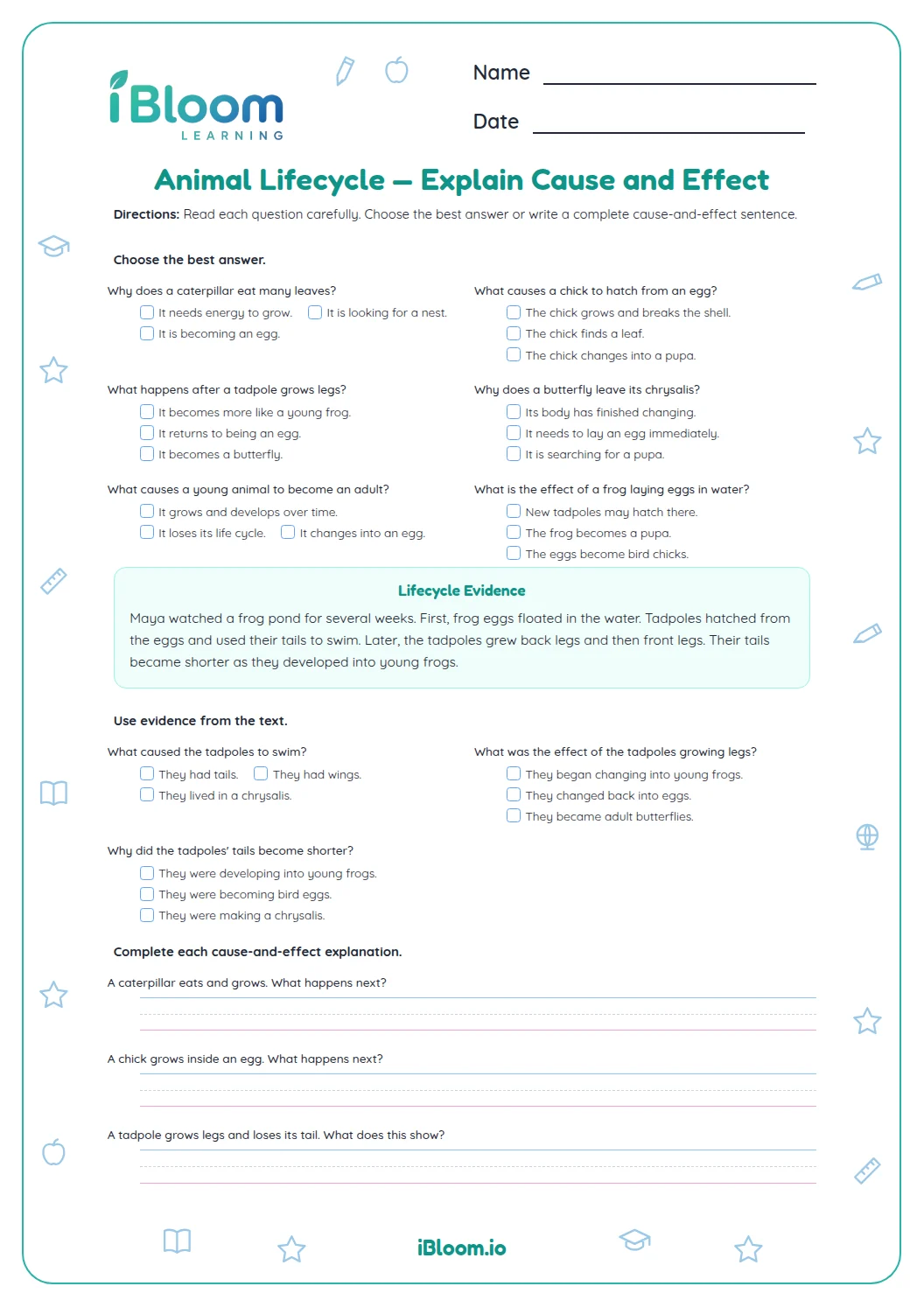
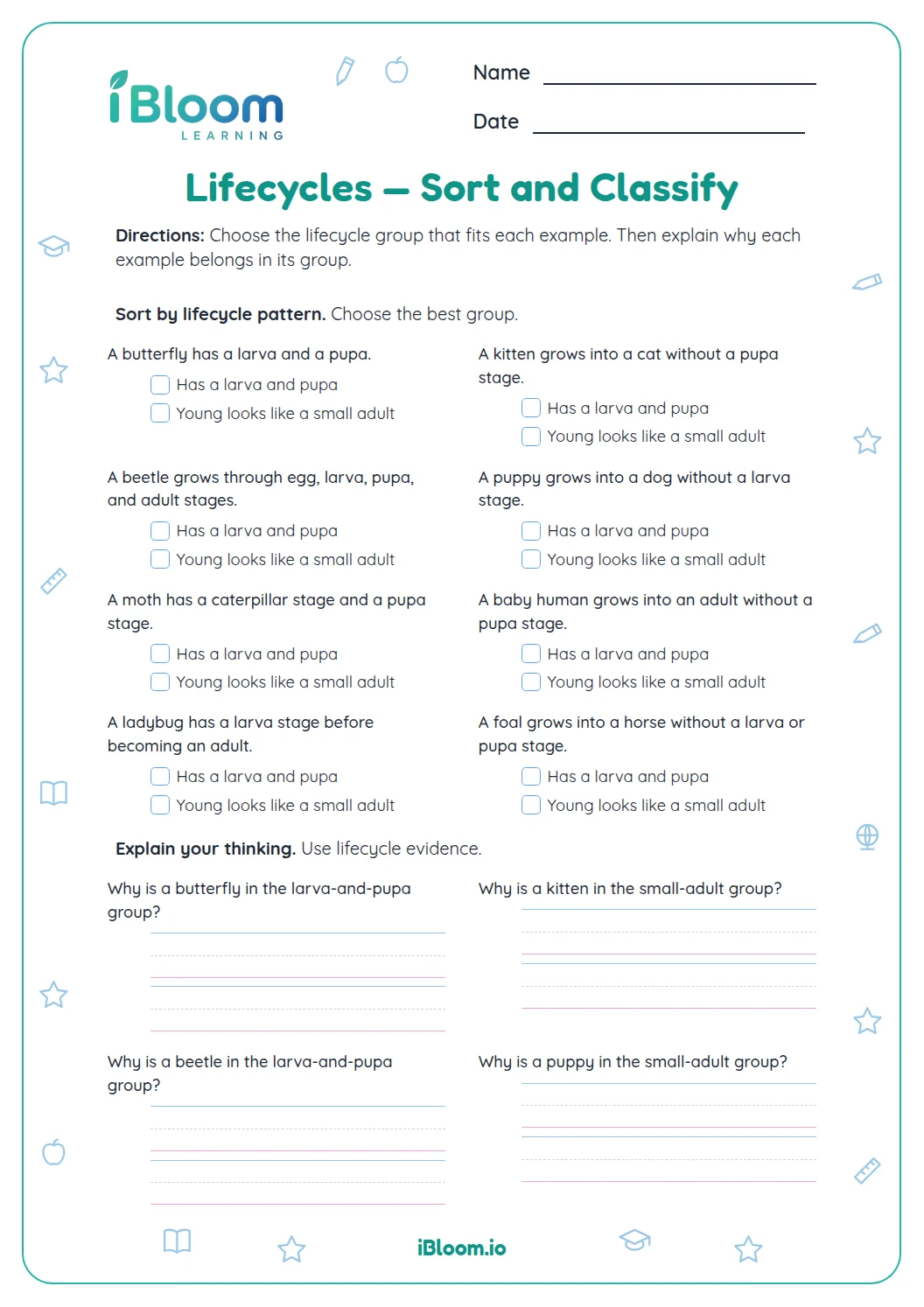
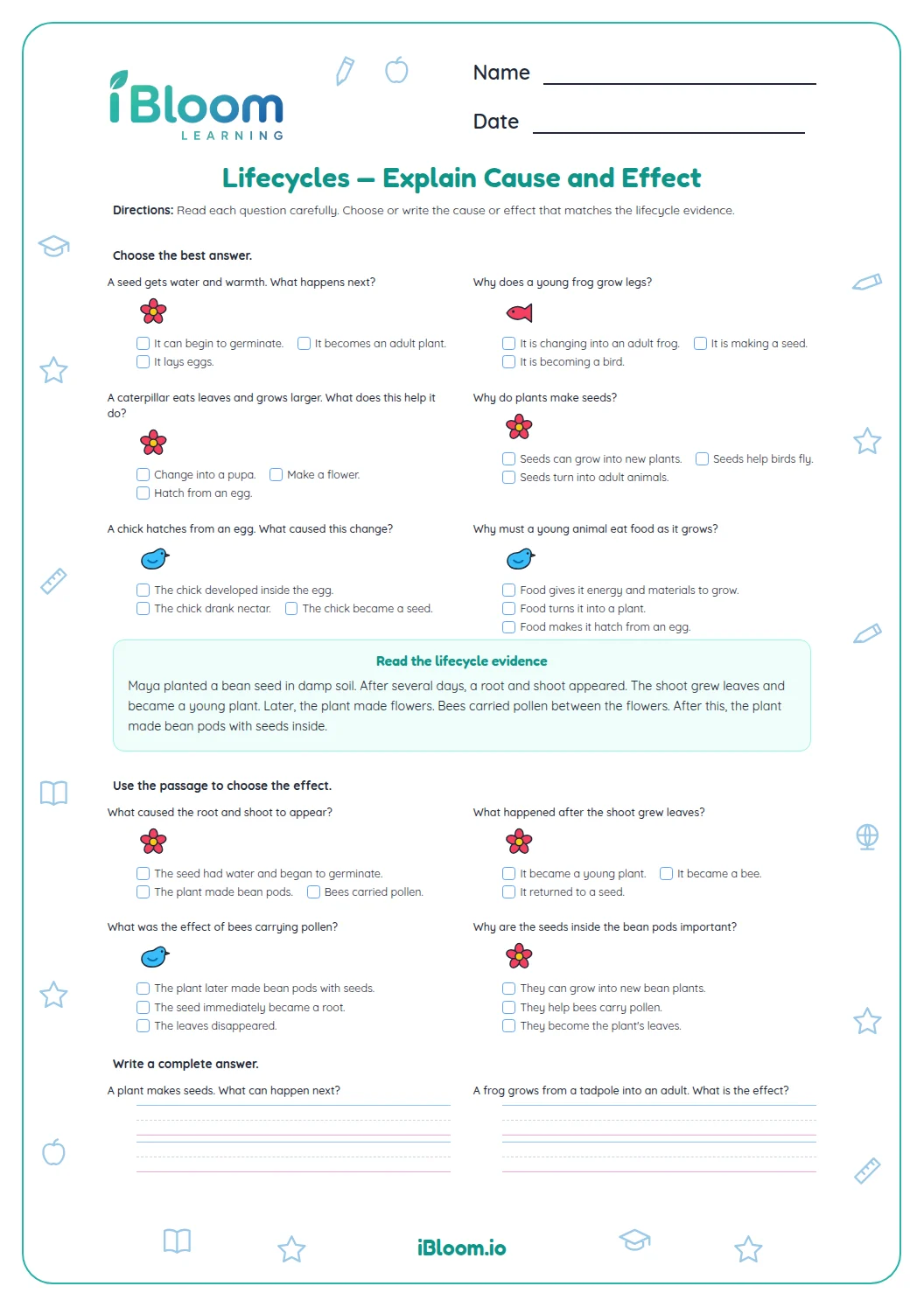
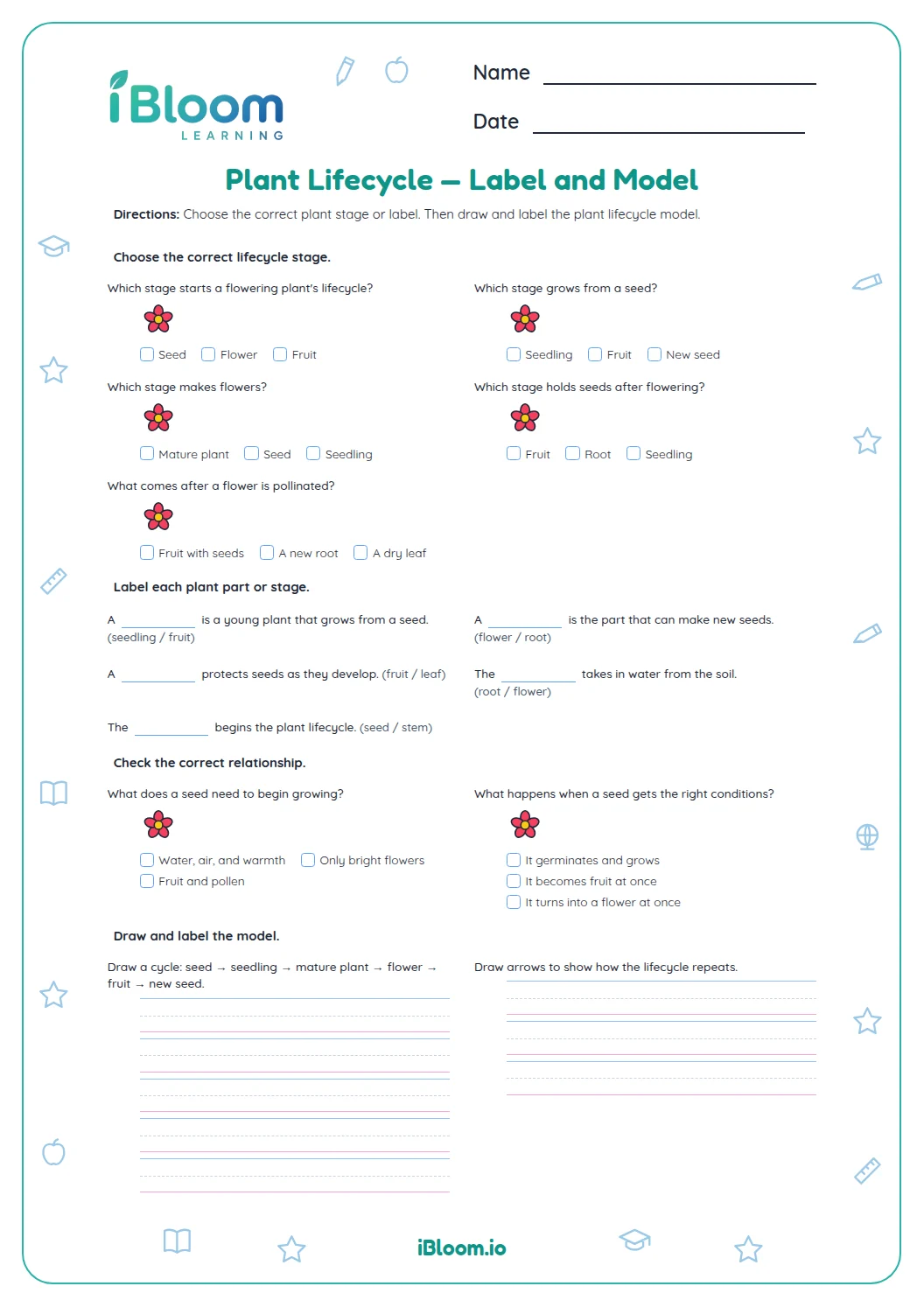
This Grade 3 science printable helps learners identify and model animal life-cycle stages. Children work with butterflies, frogs, and chickens, identify stages, complete sequences, and compare life-cycle patterns. The separate answer key gives stage names and sequence answers. It practices NGSS 3-LS1-1 by using models to describe life cycles.
Aligned to 3-LS1-1
How do children identify life-cycle stages?
Each animal has its own stage names. A chicken hatches as a chick; a frog develops through tadpole and froglet stages; and a butterfly passes through egg, caterpillar, chrysalis, and adult stages.
Question 1 gives a chicken egg clue. The child names what hatches from it, then uses other clues to identify frog and butterfly stages.
- 1Egg → caterpillar → chrysalis → adult butterfly
What patterns can a life-cycle model show?
A model shows an organism’s stages and how it changes as it grows. Animals have different stages, and the stages can lead to an adult that reproduces. Question 10 asks which event appears in every animal life cycle alongside birth, growth, and reproduction.
How can a model show a life cycle?
A life-cycle model shows stages and how they connect. Question 11 asks what a model represents, while the sequence questions put butterfly and frog stages in order.
How to work through the life-cycle models
- 1Read the animal name before choosing a stage.
- 2Use the clue to identify what happens before or after.
- 3Put each sequence in order from the beginning toward the adult.
- 4Use the model question to think about what stages represent.
- 5Check stage names and sequences with the answer key.
Common life-cycle mix-ups
The mistake
Calling a butterfly pupa a tadpole.
The fix
A tadpole is a young frog; a butterfly’s stages include caterpillar and chrysalis.
The mistake
Putting the adult before the egg in a sequence.
The fix
Start at the beginning of the cycle, then follow the growth stages.
The mistake
Drawing stages without showing their order.
The fix
Add arrows or numbers so the progression is clear.
Next Generation Science Standards alignment
This activity uses simple models to describe patterns in animal life cycles.
Model the shared pattern in diverse animal life cycles.
On this sheet: Learners label and build simple animal life-cycle models and identify shared stages.
Show the official wordingHide the official wording
Develop models to describe that organisms have unique and diverse life cycles but all have in common birth, growth, reproduction, and death.
What to practice next
Further reading
Questions parents and teachers ask
Which animals appear on the worksheet?
The worksheet includes butterfly, frog, and chicken life cycles. Questions use these animals for stage names, sequence practice, and a frog stage clue. The examples let learners compare life-cycle stages while keeping each animal’s stages in a clear order.
What is the butterfly life-cycle order?
The stages are egg, caterpillar, chrysalis, and adult butterfly. Question 4 asks learners to arrange these four stages, and the key confirms the sequence. A model can use arrows to show that the stages follow one another through the cycle.
What should a frog life-cycle drawing include?
The frog sequence begins with an egg, then a tadpole, then a froglet, and finally an adult frog. One question asks which stage follows the tadpole. The key confirms froglet as the next stage in that sequence. Learners can check each stage label against its animal.
What does a life-cycle model show?
A life-cycle model represents stages an organism goes through as it develops. This worksheet asks children to identify stages, complete sequences, and recognize what a model shows. The butterfly and frog examples place the stages in order from early development toward the adult.
Is an answer key included?
Yes. The key lists the correct stage choices and sequences, plus answers for the stage clues. Most items have a specific answer, such as chick or froglet, so an adult can compare responses directly with the key. It also explains the expected order for the sequence questions.