Free printable practice
Plant Lifecycle Practice Activities
Grade 3 plant lifecycle worksheets help children sequence, label, compare, and explain how flowering plants grow and reproduce.
Free printable worksheet PDFs
Preview every available page, then download the free worksheet PDF for home, homeschool, tutoring, or classroom practice.
Preview the exact activity before downloading it.
 Plant Lifecycle — Sort and ClassifyGrade 3 plant lifecycle worksheets help children sequence, label, compare, and explain how flowering plants grow and reproduce. This sort and classify worksheet provides a distinct, age-appropriate way to practise the same lesson.Grade 3Free PDF preview
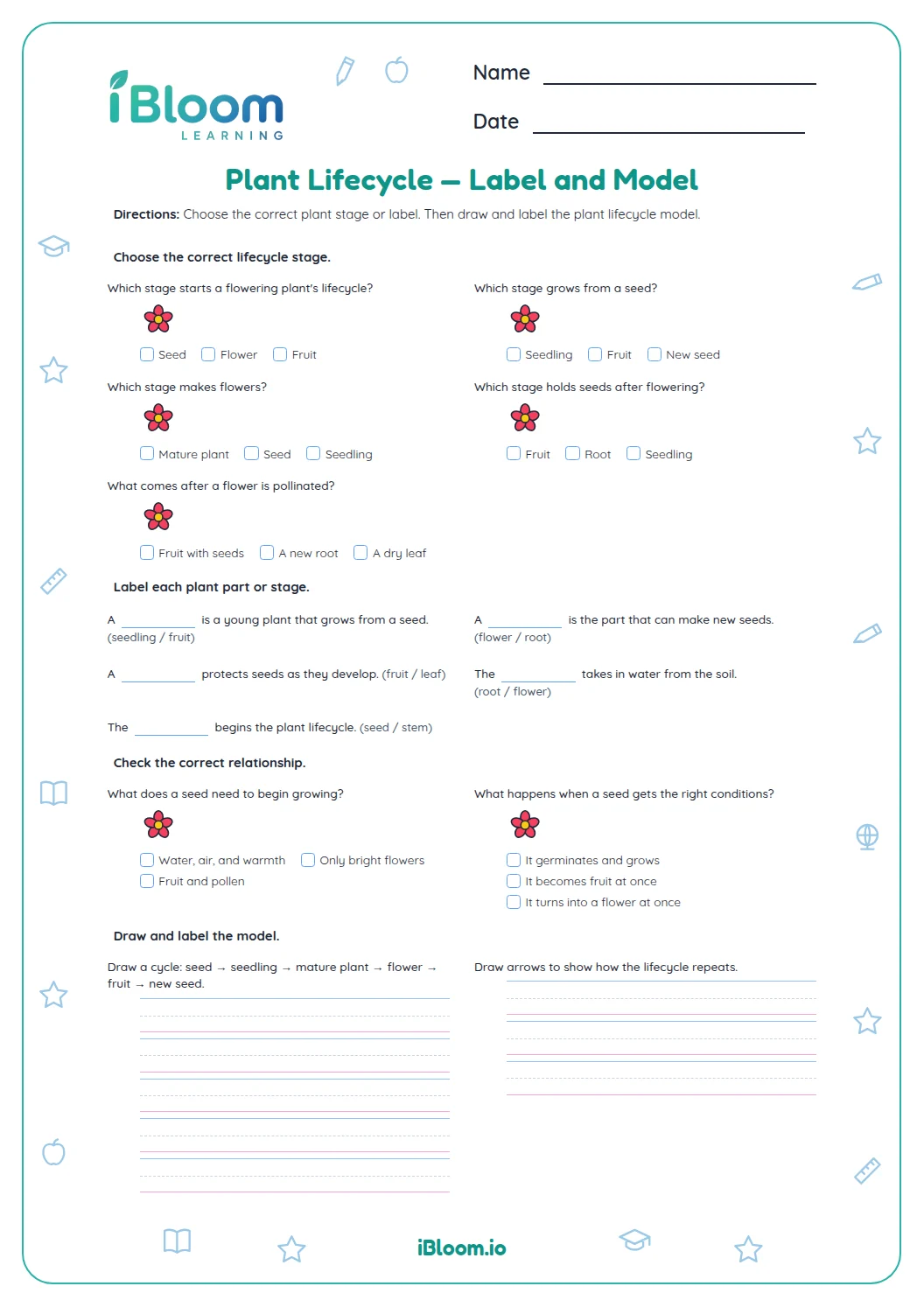 Plant Lifecycle — Label and ModelGrade 3 plant lifecycle worksheets help children sequence, label, compare, and explain how flowering plants grow and reproduce. This label and model worksheet provides a distinct, age-appropriate way to practise the same lesson.Grade 3Free PDF preview
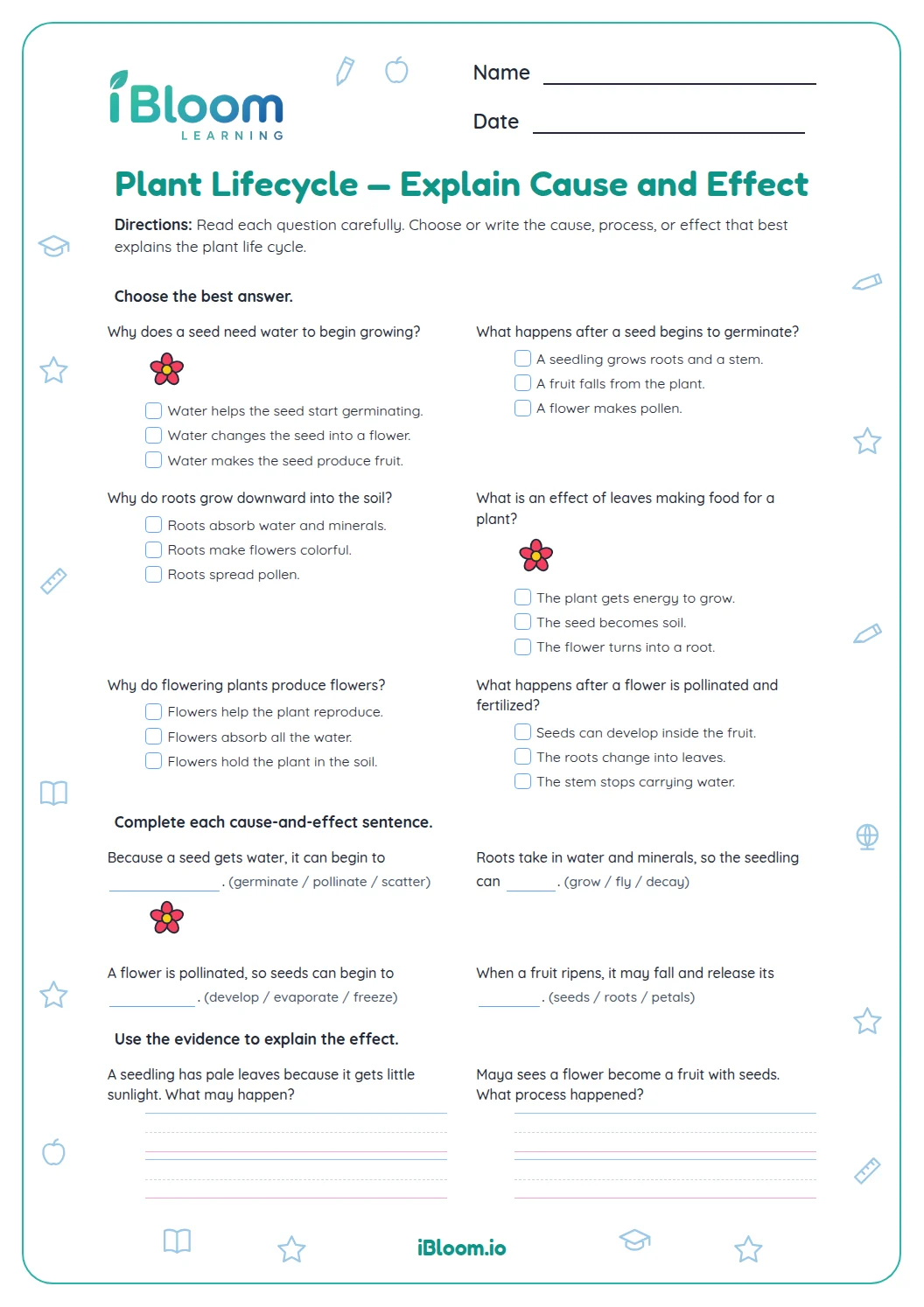 Plant Lifecycle — Explain Cause and EffectGrade 3 plant lifecycle worksheets help children sequence, label, compare, and explain how flowering plants grow and reproduce. This explain cause and effect worksheet provides a distinct, age-appropriate way to practise the same lesson.Grade 3Free PDF preview
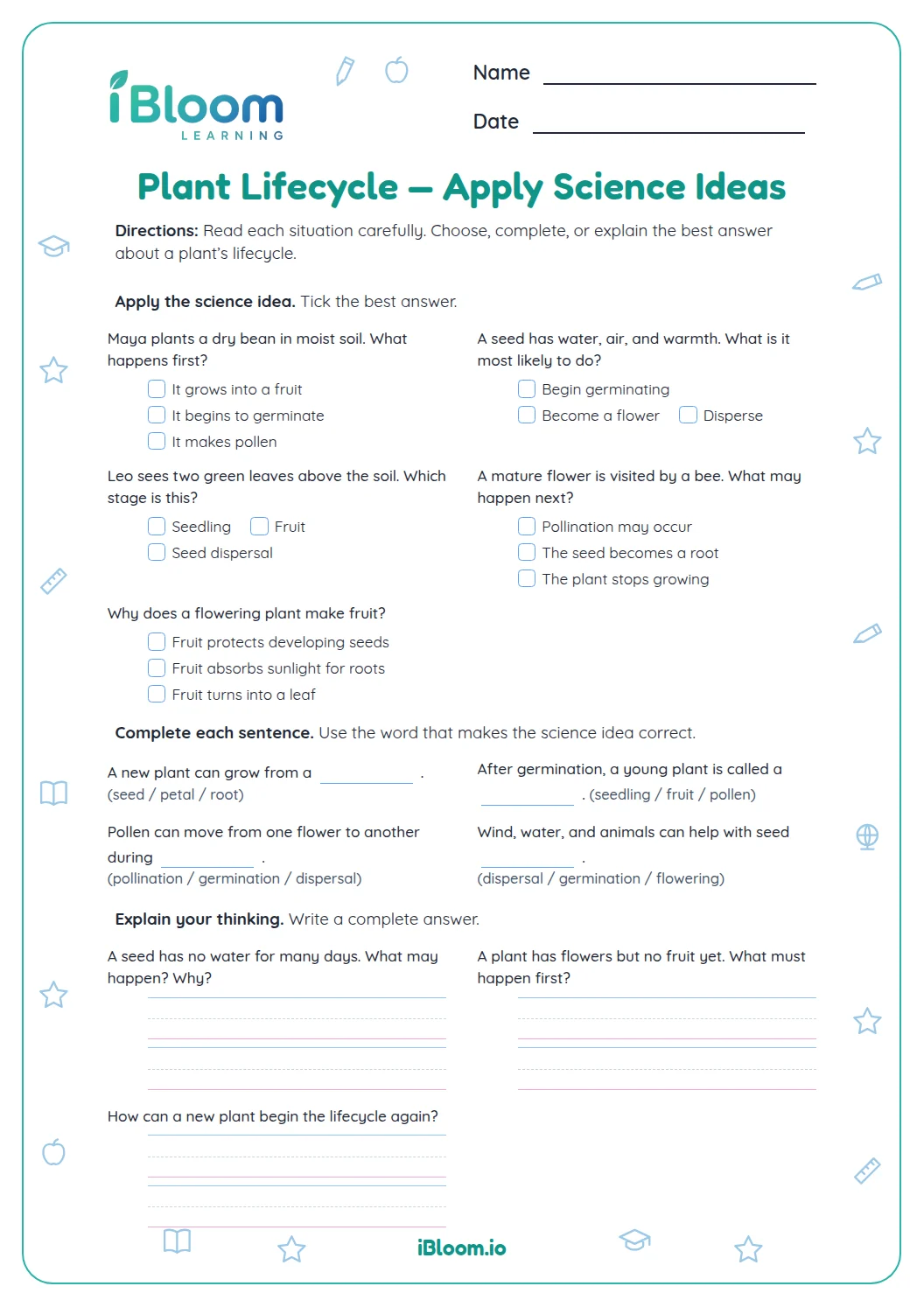 Plant Lifecycle — Apply Science IdeasGrade 3 plant lifecycle worksheets help children sequence, label, compare, and explain how flowering plants grow and reproduce. This apply science ideas worksheet provides a distinct, age-appropriate way to practise the same lesson.Grade 3Free PDF preview
 Plant Lifecycle — Science Reasoning ReviewGrade 3 plant lifecycle worksheets help children sequence, label, compare, and explain how flowering plants grow and reproduce. This science reasoning review worksheet provides a distinct, age-appropriate way to practise the same lesson.Grade 3Free PDF preview
Practice that builds confidence
Understanding the plant lifecycle
These Grade 3 science worksheets help children understand the plant lifecycle as a repeating pattern of growth, change, and reproduction. Students practise identifying stages such as seed, germination, seedling, mature plant, flower, fruit, and new seeds.
The printable activities include lifecycle diagrams, sequencing tasks, labeling pages, short-response prompts, and observation-style questions. Children build vocabulary while connecting each stage to what a plant needs to survive and continue its lifecycle.
In Grade 3, children move beyond simply naming plant parts and begin explaining how each stage supports the next. A seed can sprout when conditions are suitable, a seedling grows roots and leaves, a mature plant may produce flowers, and flowers can lead to fruits that contain seeds. The key idea is that the cycle continues when those seeds grow into new plants.

Building science vocabulary
These worksheets reinforce words students need for clear explanations: lifecycle, germination, seedling, mature plant, flower, fruit, seed dispersal, roots, stem, leaves, and reproduce. Activities may ask children to match a word to a picture, complete a diagram, or use vocabulary in a sentence such as, “Germination begins when a seed starts to grow.”
From pictures to explanations
The progression starts with visual recognition and sequencing, then moves into reasoning. Children may number stages in order, draw arrows to show a cycle, label parts of a flowering plant, and answer why seeds are important. This helps them see that a lifecycle is not just a list, but a process with cause-and-effect connections.
A simple parent routine
At home, choose one worksheet and ask your child to say the lifecycle aloud before writing. Use a real fruit, dried bean, or seed packet if available. Ask: “Where are the seeds?” “What would happen next?” and “What does the young plant need?” After the page is complete, have your child retell the cycle using first, next, then, and finally.

Classroom uses and common errors
Teachers can use these pages for science centers, notebook inserts, small-group review, or quick checks after a plant investigation. Common errors include placing flowers before seedlings, thinking fruit and seeds are unrelated, or describing the cycle as ending with a mature plant. Encourage students to add arrows and explain how new seeds make the cycle repeat.

Free printable PDF download
Use this grade 3 plant lifecycle worksheet page to preview the activity, print it, or download it as a PDF for quick practice. It works well for homework, homeschool lessons, tutoring, morning work, revision, and classroom centers.
Answers and answer key support
After the child completes the worksheet independently, parents and teachers can use the answer support or answer key information to check the work, review mistakes, and choose the next practice step.
Why iBloom worksheets help
The activities combine diagrams, vocabulary practice, sequencing, and short explanations so children practise the concept in more than one way. A child-friendly strategy is: “Name it, order it, explain it.” First name each stage, then put it in order, then tell how it helps the next stage happen.
Helpful answers
Frequently asked questions
What plant lifecycle stages are covered in these Grade 3 worksheets?
The worksheets focus on common flowering plant stages such as seed, germination, seedling, mature plant, flower, fruit, and new seeds.
Do these worksheets include both labeling and sequencing?
Yes. Children practise labeling plant lifecycle diagrams and placing stages in the correct order, often using arrows to show the cycle repeats.
How can I help my child understand germination?
Use a bean or seed example and explain that germination is when a seed begins to grow. Ask your child what the seed needs and what part appears first.
Are these activities suitable after a classroom plant experiment?
Yes. Teachers can use them after seed-growing observations to help students connect what they saw to science vocabulary and lifecycle diagrams.
What mistakes should students watch for in plant lifecycle work?
Common mistakes include skipping the seedling stage, treating fruit as separate from seeds, or forgetting that the lifecycle repeats when new seeds grow.
Is this grade 3 plant lifecycle worksheet free?
Yes. You can preview it for free and use the printable worksheet for home or classroom practice.
Can I download this grade 3 plant lifecycle worksheet as a PDF?
Yes. Use the worksheet download option to save a printable PDF, or print the worksheet directly from the page.
Does this grade 3 plant lifecycle worksheet include answers or an answer key?
When the activity has fixed answers, iBloom includes answer support so parents and teachers can check the completed worksheet.