Free printable practice
Lifecycles Practice Activities
Grade 3 science worksheets for practicing how plants and animals grow, change, reproduce, and repeat their life cycles.
Free printable worksheet PDFs
Preview every available page, then download the free worksheet PDF for home, homeschool, tutoring, or classroom practice.
Preview the exact activity before downloading it.
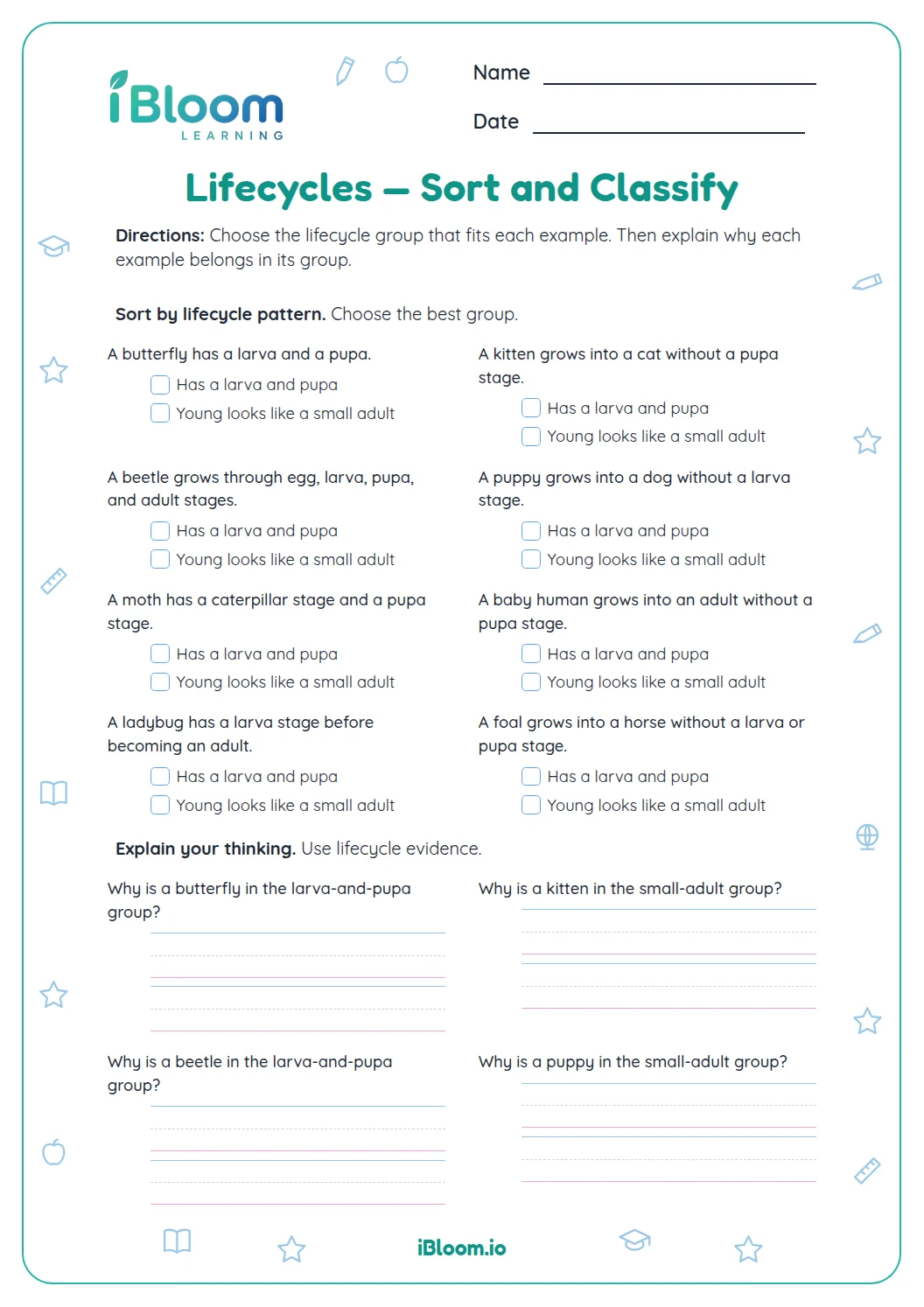 Lifecycles — Sort and ClassifyGrade 3 science worksheets for practicing how plants and animals grow, change, reproduce, and repeat their life cycles. This sort and classify worksheet provides a distinct, age-appropriate way to practise the same lesson.Grade 3Free PDF preview
 Lifecycles — Label and ModelGrade 3 science worksheets for practicing how plants and animals grow, change, reproduce, and repeat their life cycles. This label and model worksheet provides a distinct, age-appropriate way to practise the same lesson.Grade 3Free PDF preview
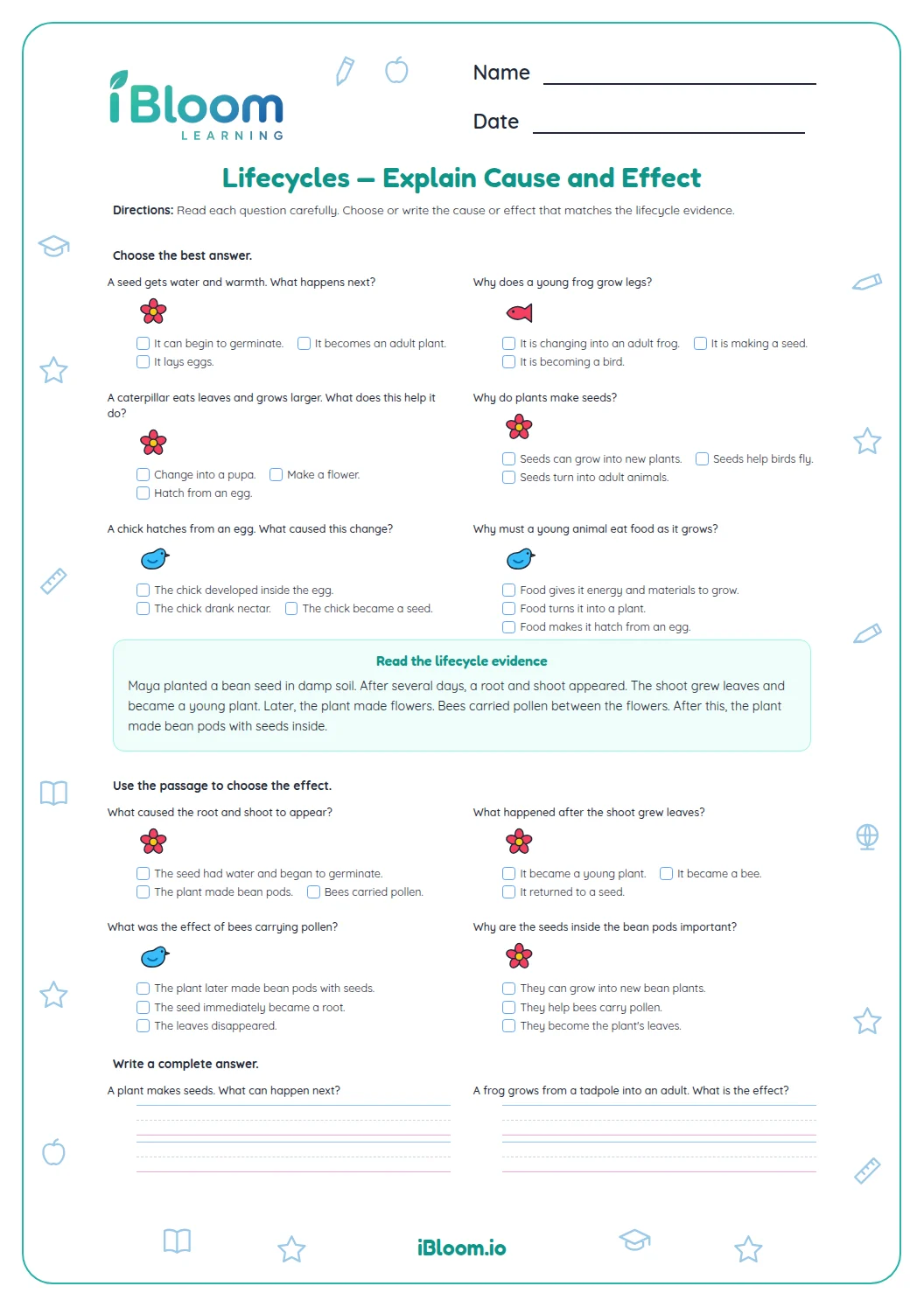 Lifecycles — Explain Cause and EffectGrade 3 science worksheets for practicing how plants and animals grow, change, reproduce, and repeat their life cycles. This explain cause and effect worksheet provides a distinct, age-appropriate way to practise the same lesson.Grade 3Free PDF preview4 pages
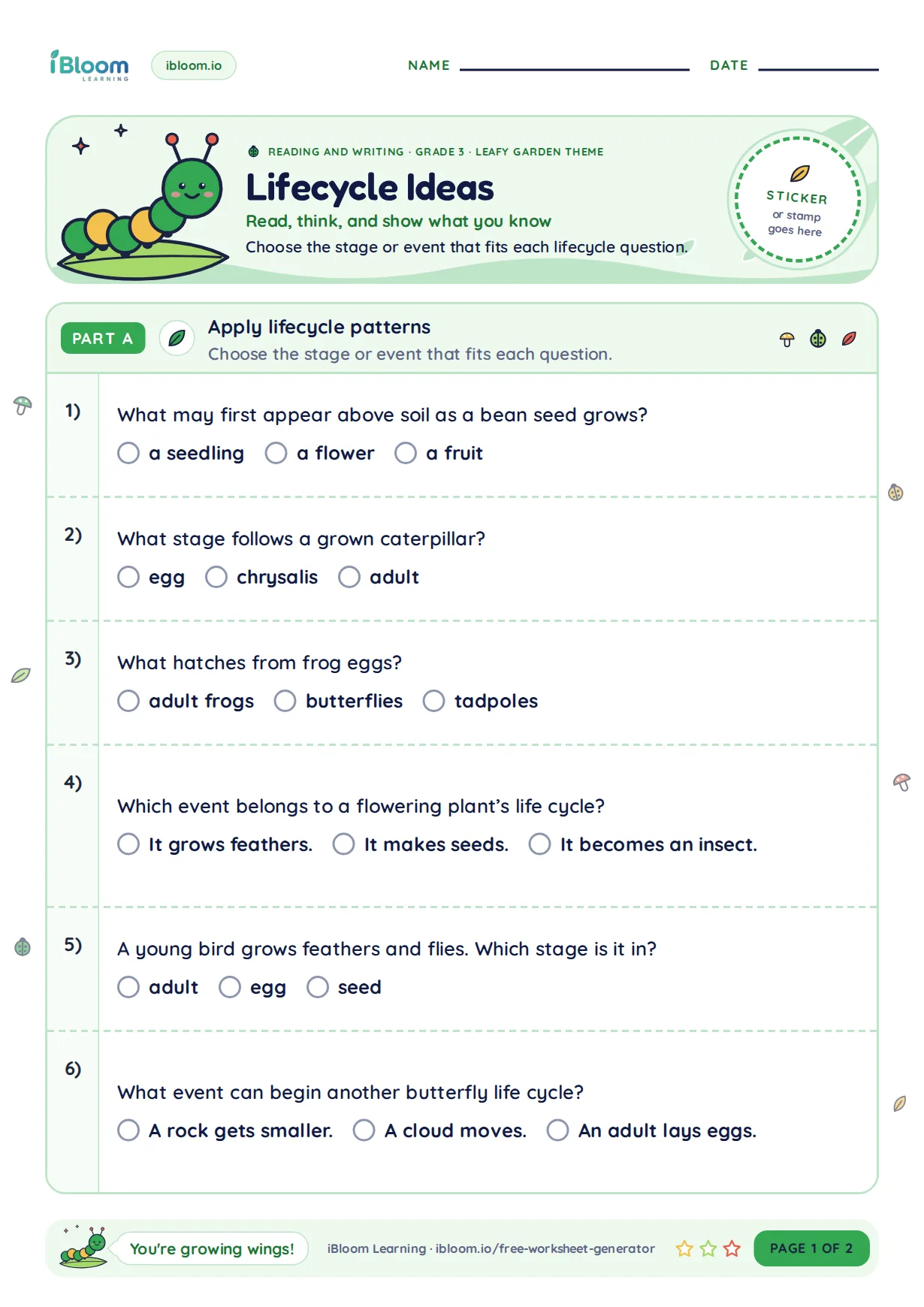 Lifecycles — Apply Science IdeasGrade 3 science worksheets for practicing how plants and animals grow, change, reproduce, and repeat their life cycles. This apply science ideas worksheet provides a distinct, age-appropriate way to practise the same lesson.Grade 3Free PDF preview
 Lifecycles — Science Reasoning ReviewGrade 3 science worksheets for practicing how plants and animals grow, change, reproduce, and repeat their life cycles. This science reasoning review worksheet provides a distinct, age-appropriate way to practise the same lesson.Grade 3Free PDF preview
Practice that builds confidence
Build the idea of a life cycle
These Grade 3 lifecycles practice activities help children understand how living things grow and change through ordered stages. Students work with the idea that a life cycle repeats, from a beginning stage to an adult that can produce young.
The printable worksheets include clear diagrams, sequencing tasks, labeling practice, comparison prompts, and short explanations. They support careful observation of plant and animal life cycles while building science vocabulary for the Living Things unit.
A life cycle is a pattern of growth and change in a living thing. In Grade 3, children move beyond simply naming babies and adults; they learn to describe stages in order and explain that the cycle continues when adults reproduce. Worksheets may show familiar examples such as seeds growing into plants or young animals developing into adults.

From observing to explaining
The activities guide students from matching pictures to using words such as seed, seedling, adult, egg, larva, pupa, young, and offspring where appropriate. They practise reading diagrams, filling missing stages, drawing arrows, and comparing cycles that look different but share the same big idea: living things begin, grow, change, and make more of their kind.
A simple parent routine
At home, choose one worksheet and first ask, “What do you notice?” Let your child point to each stage before writing. Then have them say the cycle aloud using sequence words: first, next, then, finally, and again. Finish with one real-life connection, such as a plant in the yard, a pet, or an insect seen outside. This keeps the science connected to observation, not memorization.

Classroom uses for teachers
Teachers can use these pages during a Living Things lesson, science centers, small-group review, or as a follow-up after reading about plants and animals. Diagram tasks work well for independent practice, while comparison questions are useful for partner talk. Completed sheets can also become part of a science notebook so students can revisit vocabulary across the unit.

Common errors to watch for
Some children treat a life cycle as a straight line that stops at the adult stage. Others mix up growth with habitat, or think every animal changes in the same way. Encourage students to follow the arrows, check whether the adult produces young, and explain what changes from one stage to the next. If a diagram includes metamorphosis, make sure they do not skip the middle stages.
Free printable PDF download
Use this grade 3 lifecycles worksheet page to preview the activity, print it, or download it as a PDF for quick practice. It works well for homework, homeschool lessons, tutoring, morning work, revision, and classroom centers.
Answers and answer key support
After the child completes the worksheet independently, parents and teachers can use the answer support or answer key information to check the work, review mistakes, and choose the next practice step.
Why iBloom worksheets help
iBloom worksheets break the concept into manageable steps: observe, sequence, label, compare, and explain. A child-friendly strategy is “Name it, order it, tell the change.” First name each stage, then place it in order, then say how the living thing changes. This gives children a reliable way to read any life cycle diagram with confidence.
Helpful answers
Frequently asked questions
What do Grade 3 students learn in lifecycles worksheets?
They learn that living things pass through ordered stages of growth and change, and that the cycle repeats when adults produce offspring.
Do these worksheets include both plant and animal life cycles?
The activities support practice with life cycle patterns found in plants and animals, using diagrams, sequencing, labels, and comparison questions.
How can I help my child if they put the stages in the wrong order?
Ask them to follow the arrows, describe what changes at each step, and use sequence words such as first, next, then, finally, and again.
What science vocabulary is useful for this topic?
Helpful words include life cycle, stage, grow, change, adult, offspring, seed, seedling, egg, larva, pupa, and metamorphosis when those stages are shown.
Can teachers use these worksheets for science centers?
Yes. The pages work well for centers, small-group review, independent practice, and science notebooks during a Grade 3 Living Things unit.
Is this grade 3 lifecycles worksheet free?
Yes. You can preview it for free and use the printable worksheet for home or classroom practice.
Can I download this grade 3 lifecycles worksheet as a PDF?
Yes. Use the worksheet download option to save a printable PDF, or print the worksheet directly from the page.
Does this grade 3 lifecycles worksheet include answers or an answer key?
When the activity has fixed answers, iBloom includes answer support so parents and teachers can check the completed worksheet.