





About this worksheet
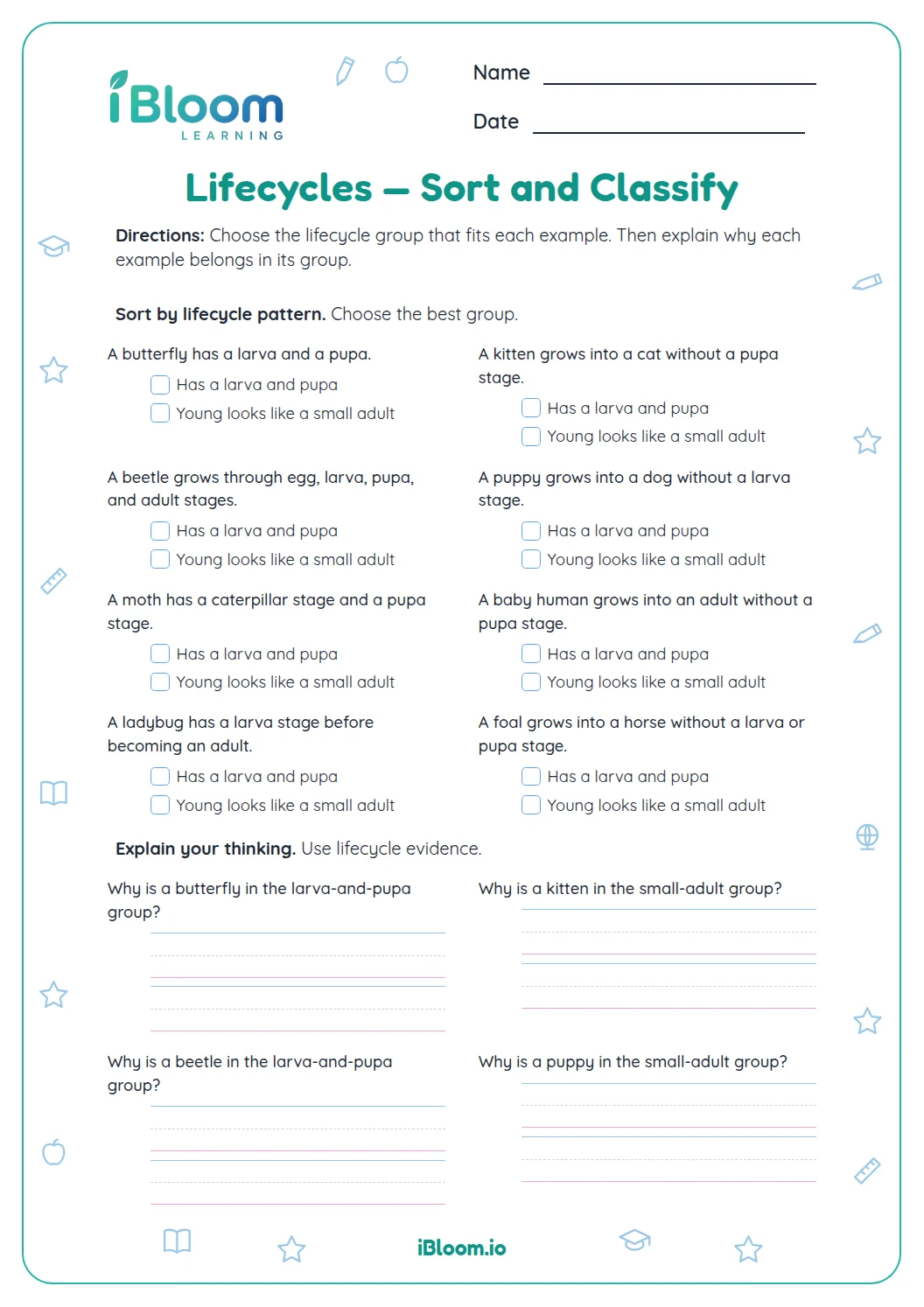
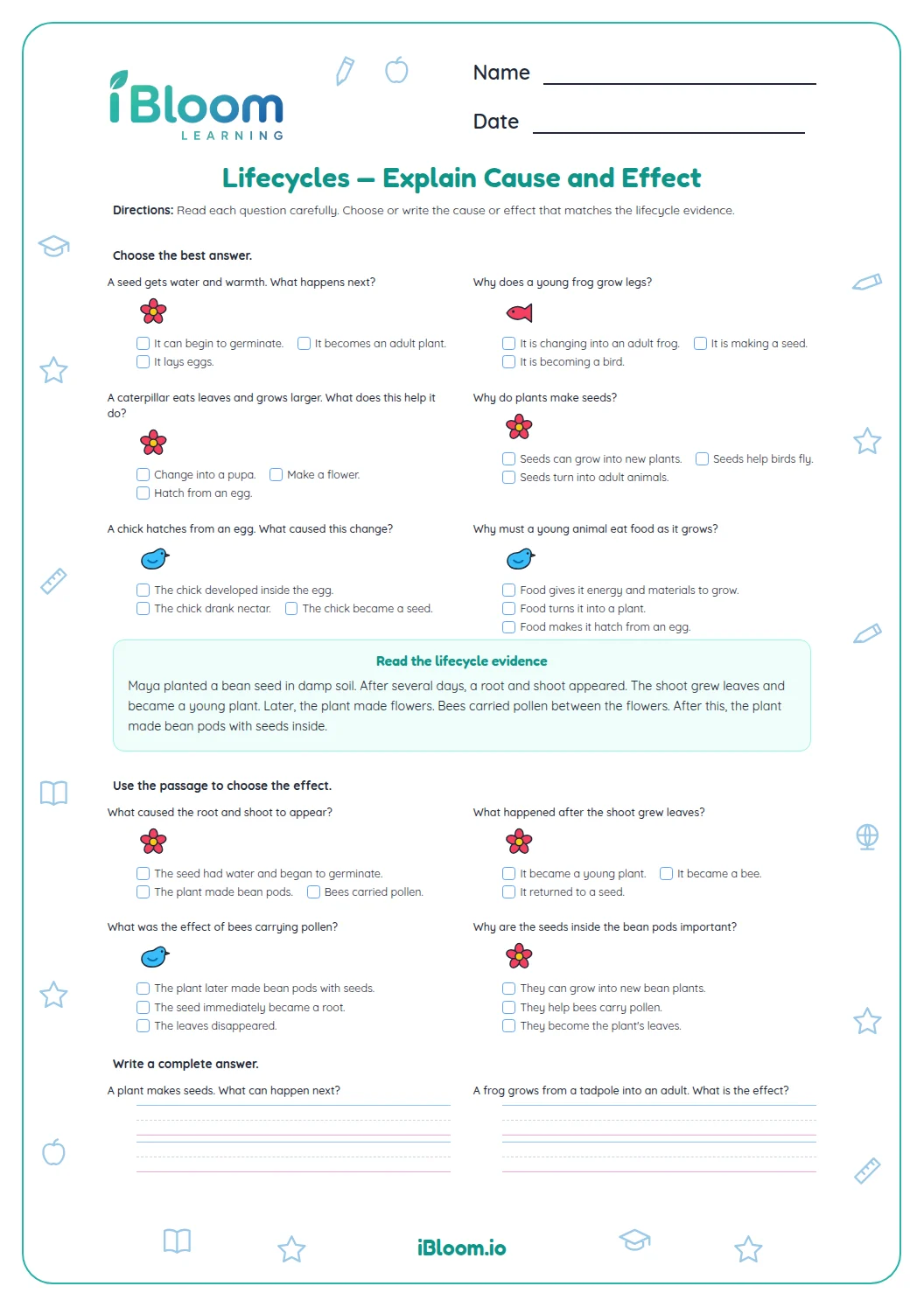
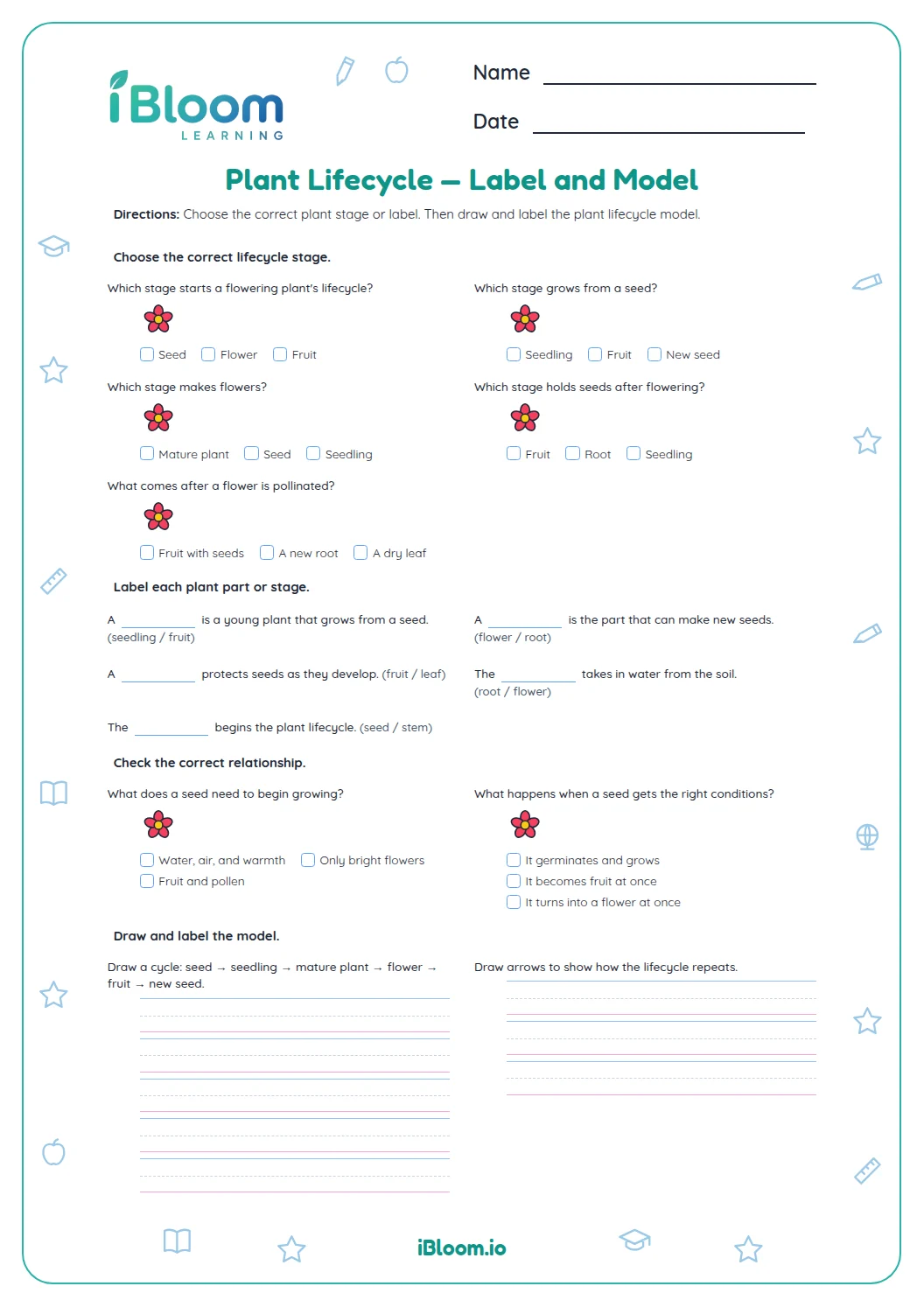
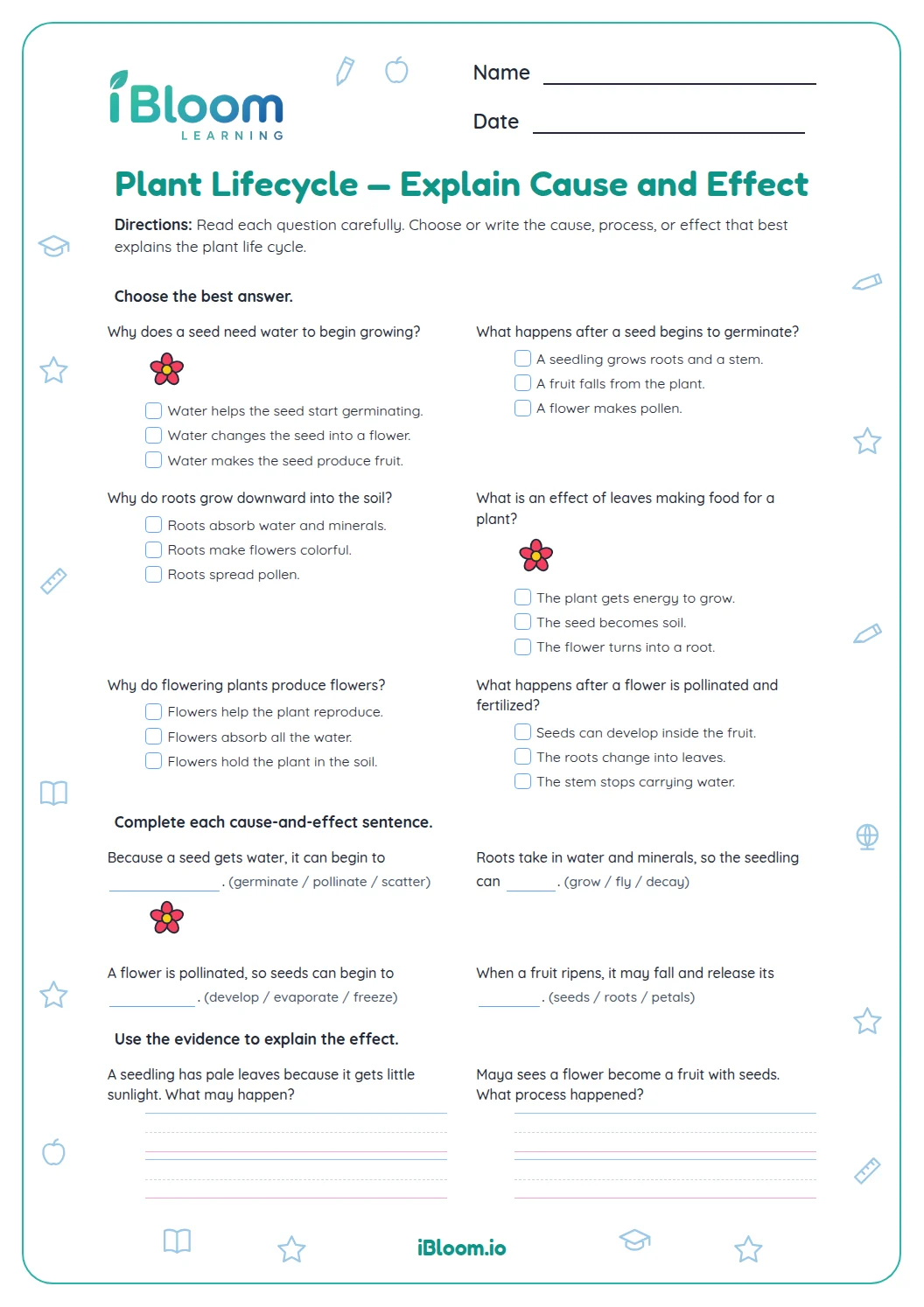
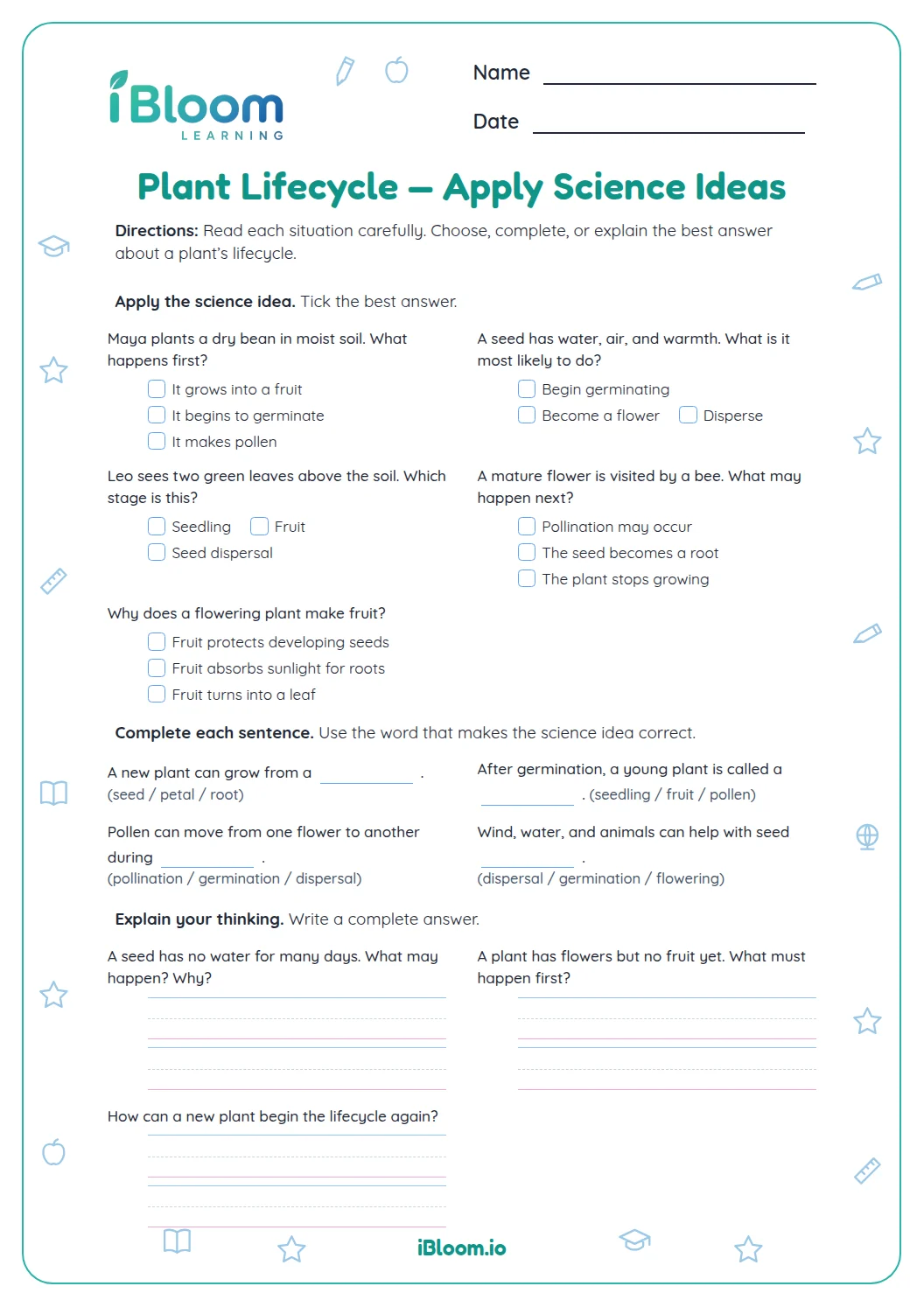
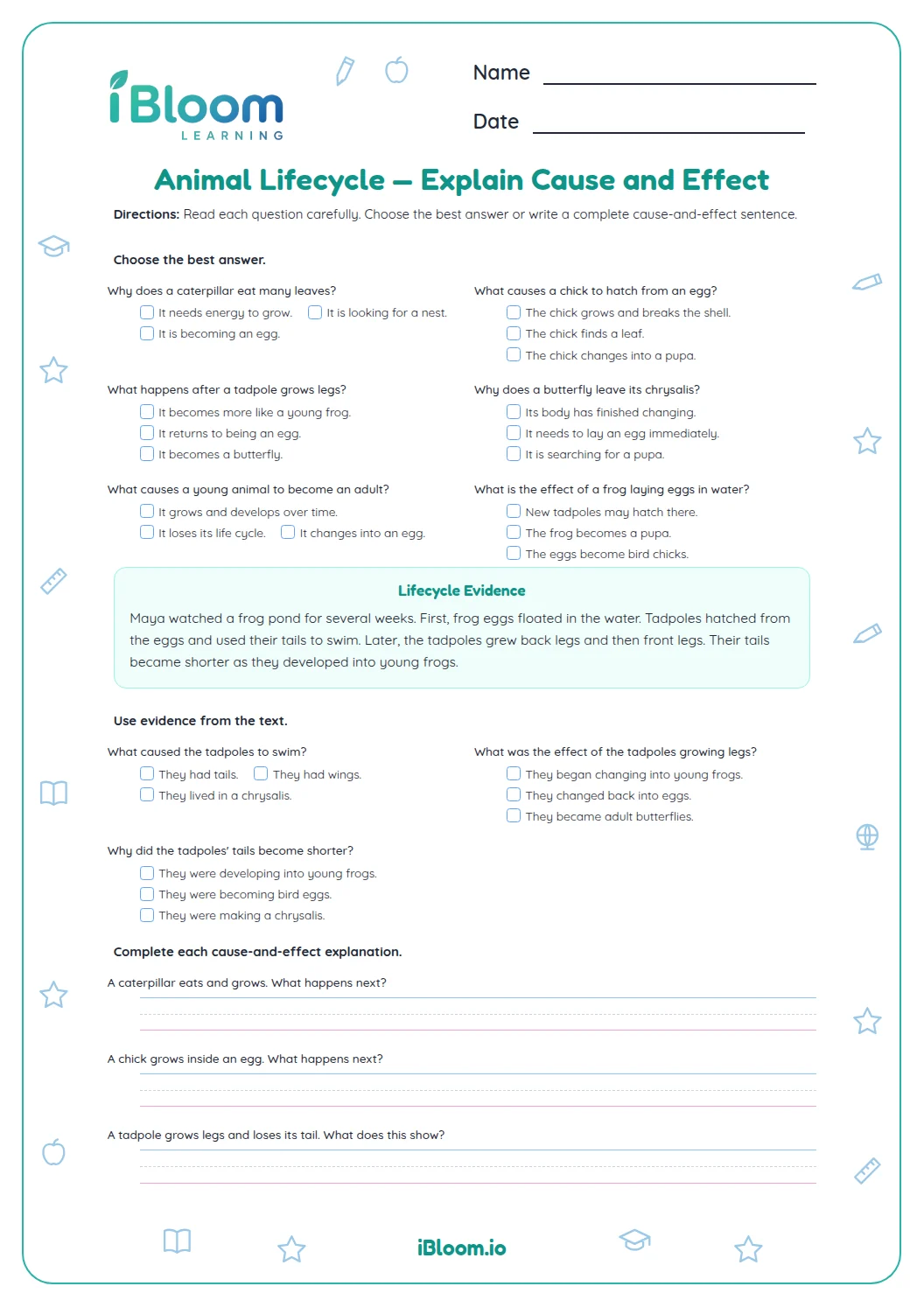
This Grade 3 science worksheet asks children to apply lifecycle ideas to familiar living things. The 14 multiple-choice items identify likely stages, events, and patterns, then use those patterns to predict changes in a plant, frog, or butterfly life cycle. The answer key marks the correct stage or event for each question.
What is a life cycle?
A life cycle is the series of stages in an organism’s life. Plants, frogs, and butterflies have different stages, but each cycle includes growth and reproduction. A stage clue helps a learner choose what may happen next.
How can a stage help predict what happens next?
A prediction uses a pattern rather than a guess. A caterpillar that has grown may enter a chrysalis before becoming an adult butterfly. A bean seed that starts growing may emerge as a seedling.
- 1A caterpillar has grown large. What stage usually comes next?
- 2Recall the butterfly pattern: egg, caterpillar, chrysalis, adult.
- 3Answer: chrysalis.
How can lifecycle patterns guide a prediction?
Name the organism and use a familiar stage pattern to select what could happen next. An adult butterfly can lay eggs; those eggs may hatch into caterpillars, which can grow through later stages.
- 1What stage follows a grown caterpillar?
- 2Recall the butterfly pattern: egg, caterpillar, chrysalis, adult.
- 3Answer: chrysalis.
What kinds of practice are included?
The worksheet uses short choices to move from recognizing a stage to applying a lifecycle pattern. It includes flowering plants, frogs, and butterflies so children use more than one example.
How to use this worksheet
- 1Read the situation and identify the organism first.
- 2Recall the stage pattern that fits that organism.
- 3Use a familiar lifecycle pattern to compare the answer choices.
- 4For a prediction, choose the event that follows the stage or pattern.
- 5Check each choice against the answer key.
Common mistakes and quick fixes
The mistake
Treating every organism as if it has the same stages.
The fix
Name the organism first; a tadpole belongs to a frog cycle, not a butterfly cycle.
The mistake
Stopping the cycle at the adult stage.
The fix
Remember that adults can reproduce, beginning another generation.
The mistake
Making a prediction without a lifecycle clue.
The fix
Point to the stage already described and use its usual next step.
What to practice next
Make more practice
Questions parents and teachers ask
What does a life cycle show?
A life cycle shows stages an organism passes through as it is born or hatches, grows, reproduces, and dies. Different organisms have different stages. This worksheet asks children to apply patterns for flowering plants, frogs, and butterflies, and to choose what may happen next.
Why does the worksheet include several organisms?
Comparing examples helps children see that life cycles are diverse while still showing patterns. A frog has a tadpole stage, while a butterfly has a caterpillar and chrysalis stage. A flowering plant grows from a seed and later makes seeds. The choices review these differences.
How should my child answer a prediction question?
A strong prediction uses both the stage already named and a familiar lifecycle pattern. For example, a chrysalis usually follows a grown caterpillar. The child chooses the answer that fits that pattern, then can explain the choice aloud by naming the stages.
How many questions are on the worksheet?
There are 14 multiple-choice questions across two worksheet pages, followed by a two-page answer key. The items cover lifecycle stages, events, and predictions for plants, frogs, birds, and butterflies. Children choose the stage or event that best fits each clue.
How does this sheet help children make a prediction?
Each prediction starts with a stage or event and asks what may follow in a familiar lifecycle pattern. For example, a bean seed that gets water and warmth may begin growing a root. The answer choices let children connect that clue to a likely next event.