




About this worksheet
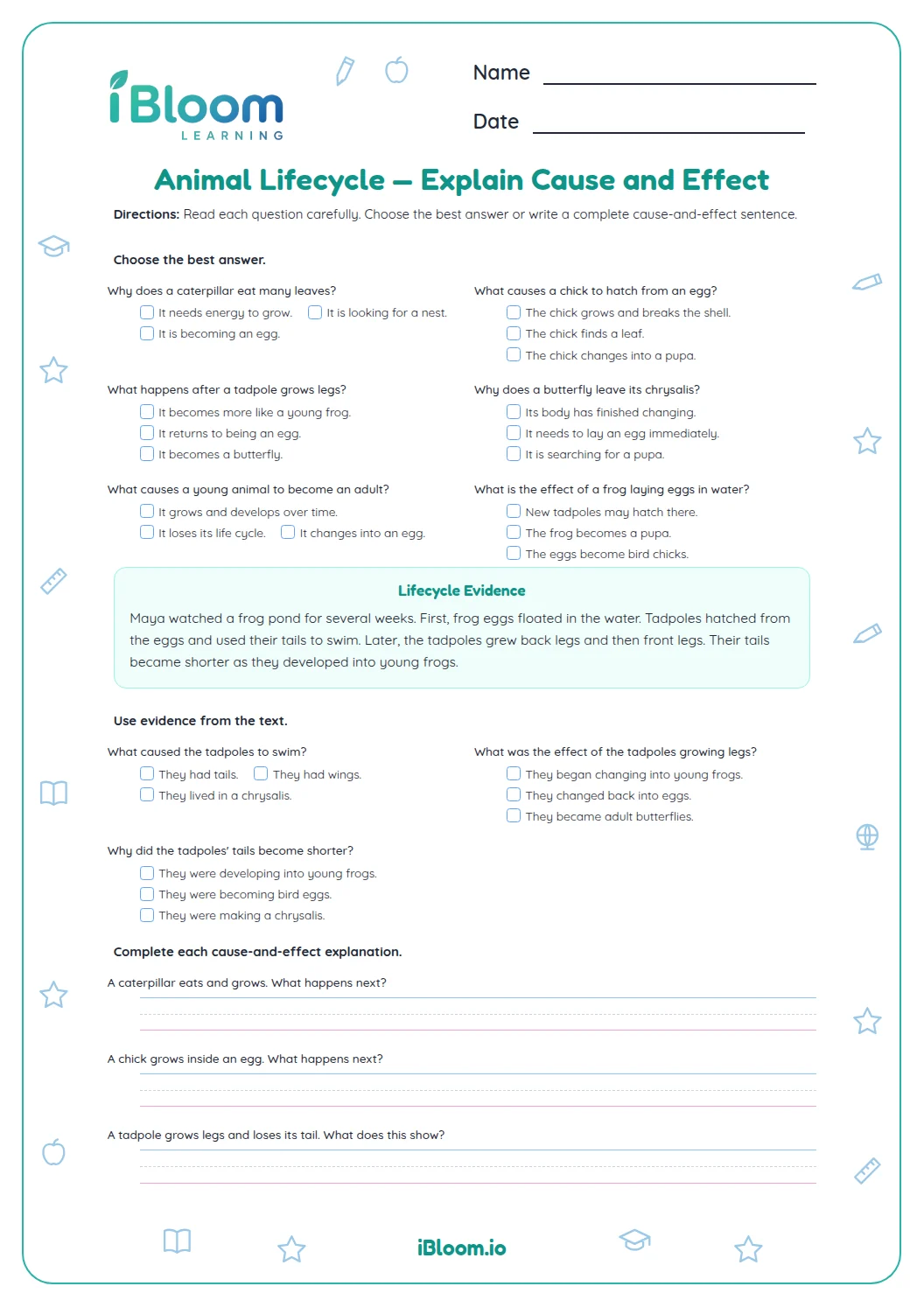
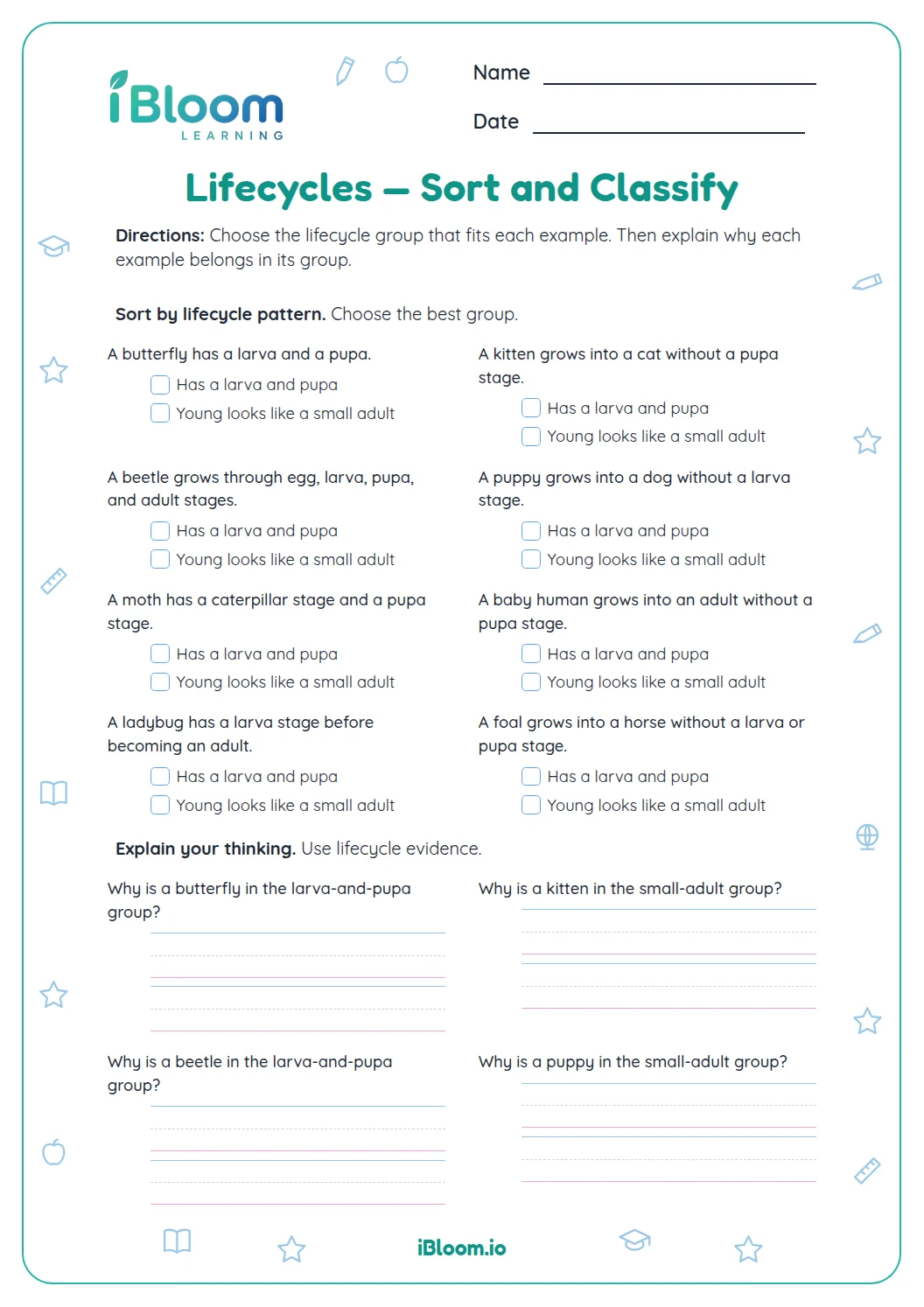
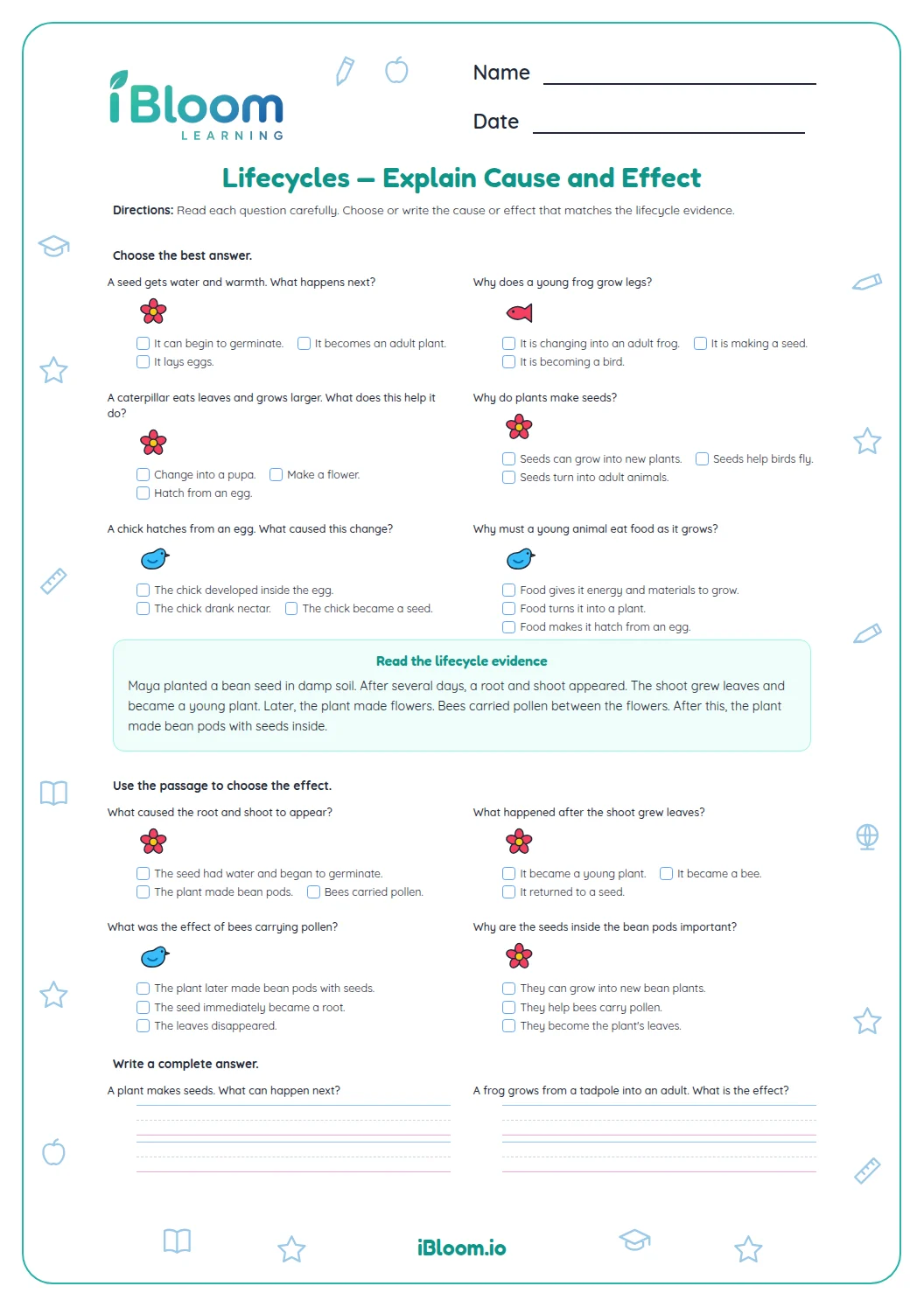
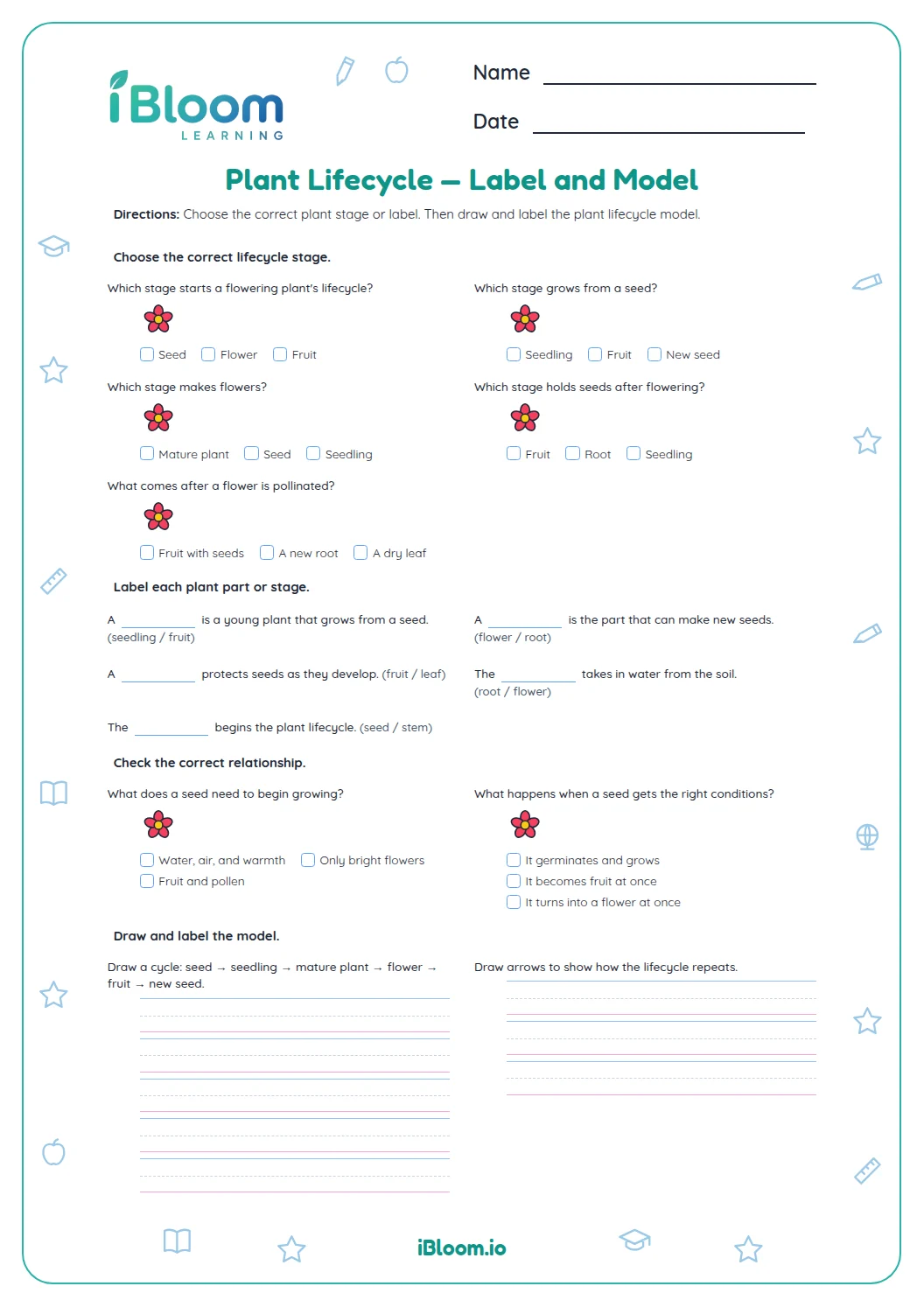
This Grade 3 science worksheet helps students sort and compare animal life cycles. Learners identify stages in butterfly and frog development, order butterfly stages, and compare young animals with adults. The questions use familiar examples to notice that some young animals look unlike adults while others look similar.
What is on this worksheet?
Part A identifies butterfly and frog stages and animals. Part B orders the butterfly stages and names what follows in a frog or butterfly life cycle. Part C compares animals and classifies life-cycle patterns.
How can you solve one carefully?
For the sequence “adult, egg, caterpillar, chrysalis,” begin with the egg. A caterpillar hatches from the egg, becomes a chrysalis, and then becomes an adult butterfly. The adult can lay eggs, beginning the cycle again.
- 1egg → caterpillar → chrysalis → adult butterfly
- 2The adult lays eggs.
- 3The cycle begins again.
How can you check your work?
A life cycle describes changes an organism goes through as it grows and reproduces. Compare the stages for each animal rather than assuming they all look alike.
How to use this worksheet
- 1Read each animal name and stage carefully.
- 2Use the stage clues to identify what comes before or after.
- 3For sequencing, write each stage once in time order.
- 4For comparison questions, state one visible difference or shared feature.
- 5Use the key to discuss sample answers; equivalent accurate science ideas are acceptable.
Common mistakes and quick fixes
The mistake
Calling a chrysalis a caterpillar.
The fix
The caterpillar is the feeding larva; the chrysalis is the stage before the adult butterfly.
The mistake
Assuming every young animal looks like a small adult.
The fix
Compare the tadpole with a frog and a puppy with an adult dog.
The mistake
Starting a sequence with the adult even when asked for the first stage.
The fix
Begin with the egg, then follow the changes through growth.
What to practice next
Make more practice
Questions parents and teachers ask
What animals are included?
The questions focus on butterflies, frogs, chickens, and dogs. Students identify stages, put butterfly stages in order, and compare how young animals change as they grow. The butterfly and chicken examples also ask students to notice shared life-cycle features.
What is the butterfly life-cycle order?
The worksheet uses egg, caterpillar, chrysalis, and adult butterfly as the sequence. The adult lays eggs, so the cycle begins again. The sequence question lists those four stages in mixed order for students to arrange and read aloud.
Do all young animals look different from adults?
No. A tadpole looks different from an adult frog, while a puppy resembles a smaller dog. The worksheet asks students to compare examples instead of assuming every young animal looks alike. A tadpole has a tail and lives in water. These details help distinguish the frog stages.
Does the answer key allow different written answers?
Yes. For open questions, the key gives sample responses. A student can use different wording if the response accurately describes a life-stage change or comparison. For example, a tadpole may be described by its tail or its aquatic habitat.
How can students use the sequencing question?
Have students write one stage at a time, then read the sequence aloud. Ask what the adult does to begin the cycle again. The answer key lists egg, caterpillar, chrysalis, and adult butterfly in order. Encourage students to explain what changes at each stage.