





About this worksheet
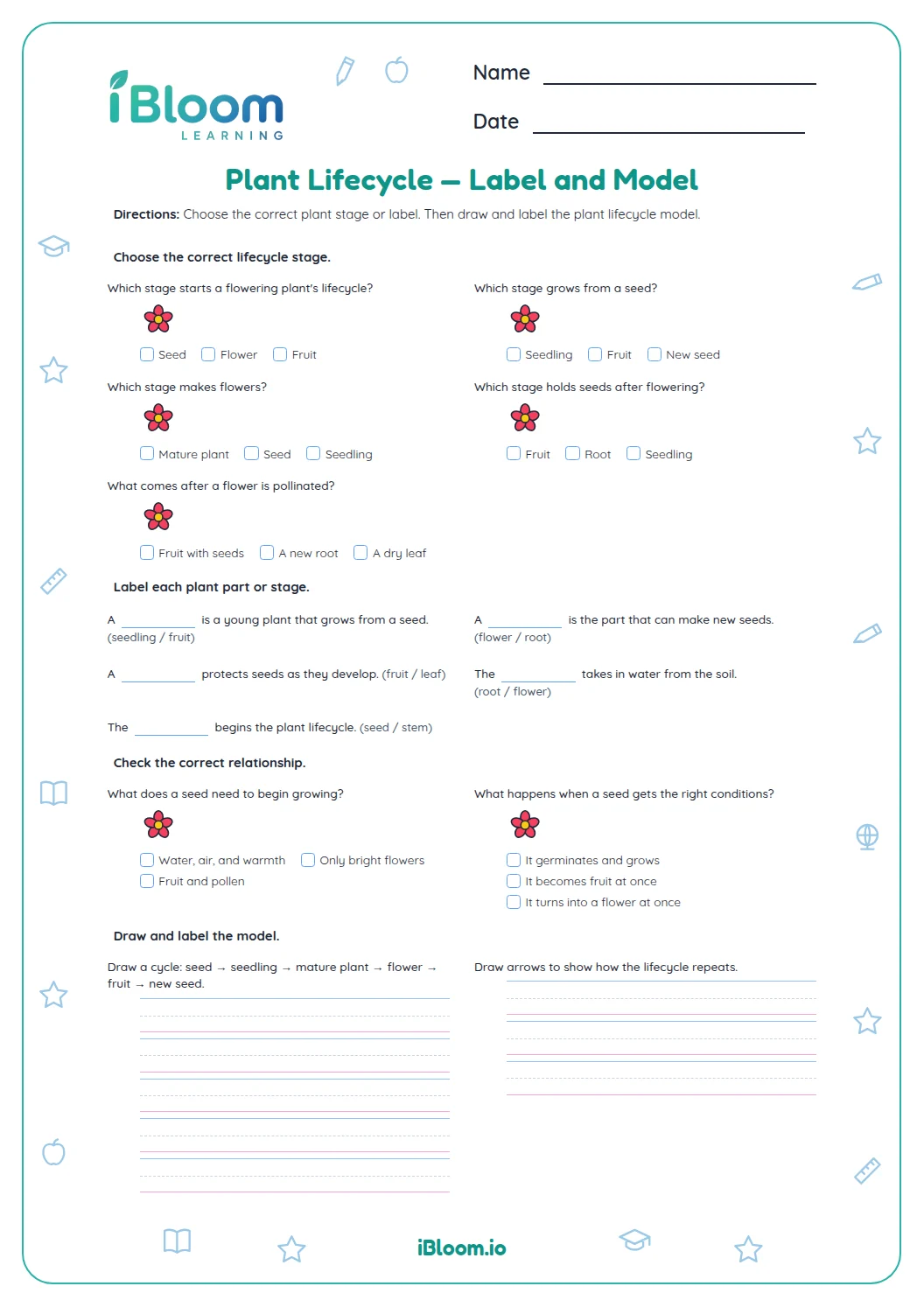
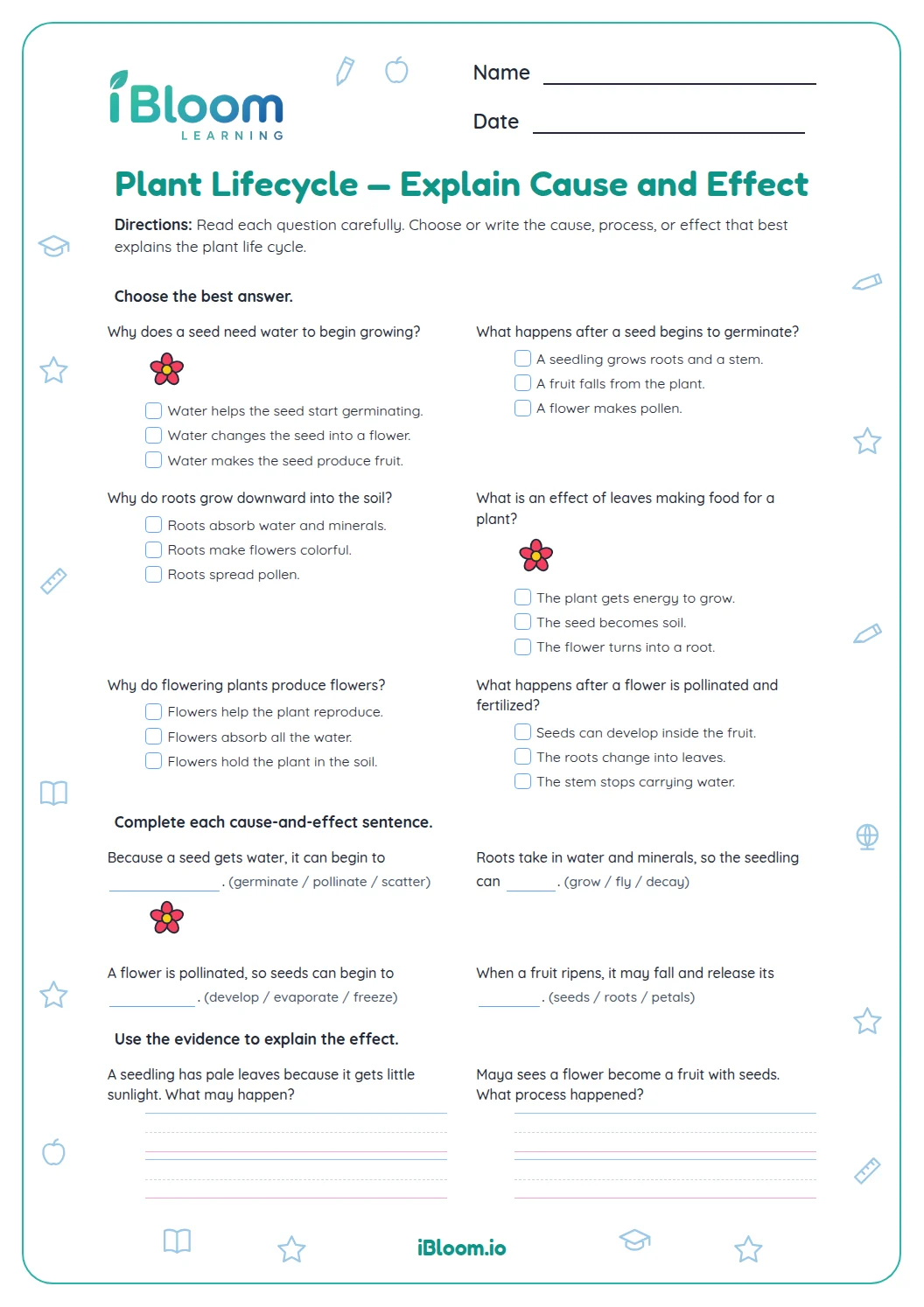
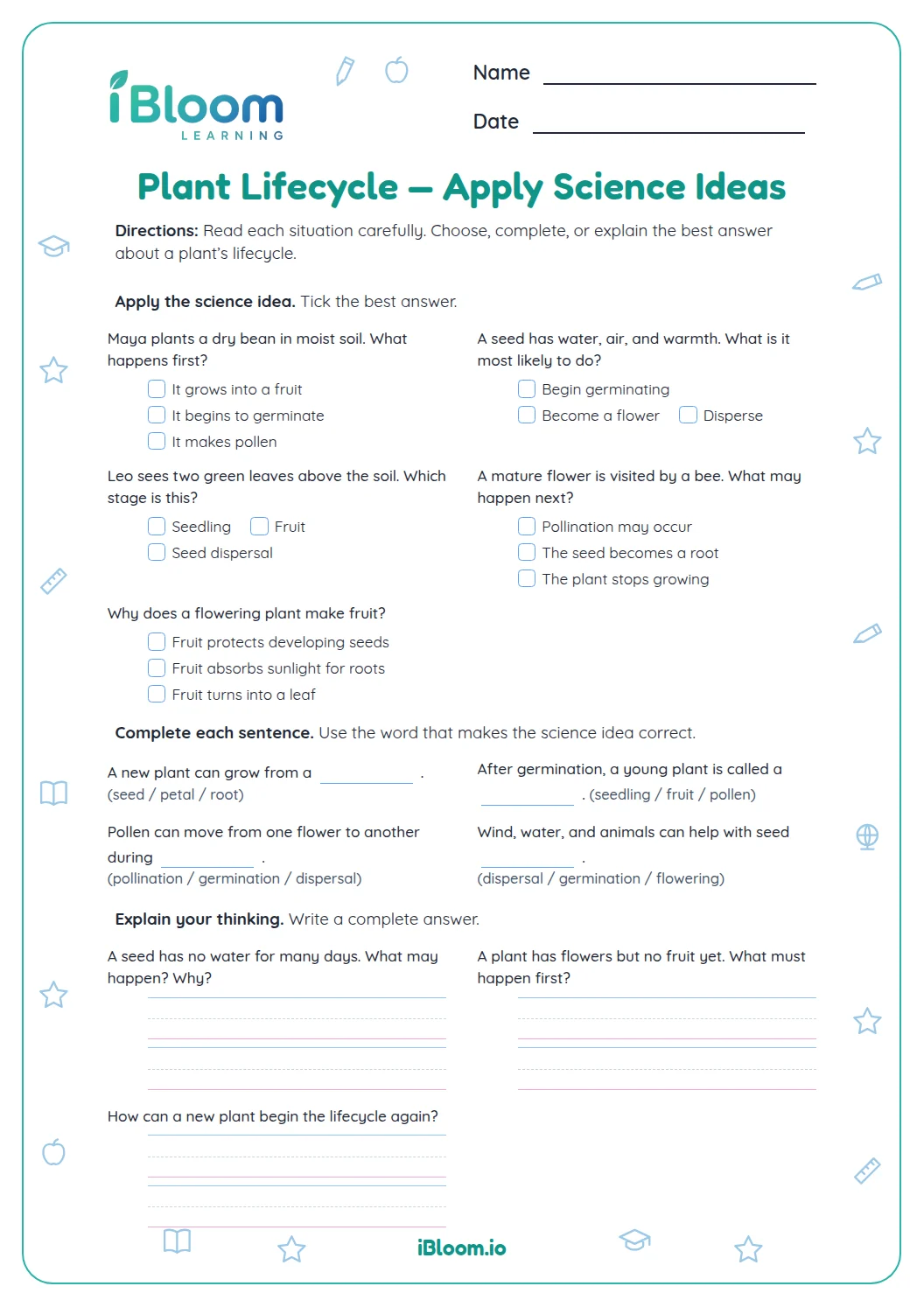
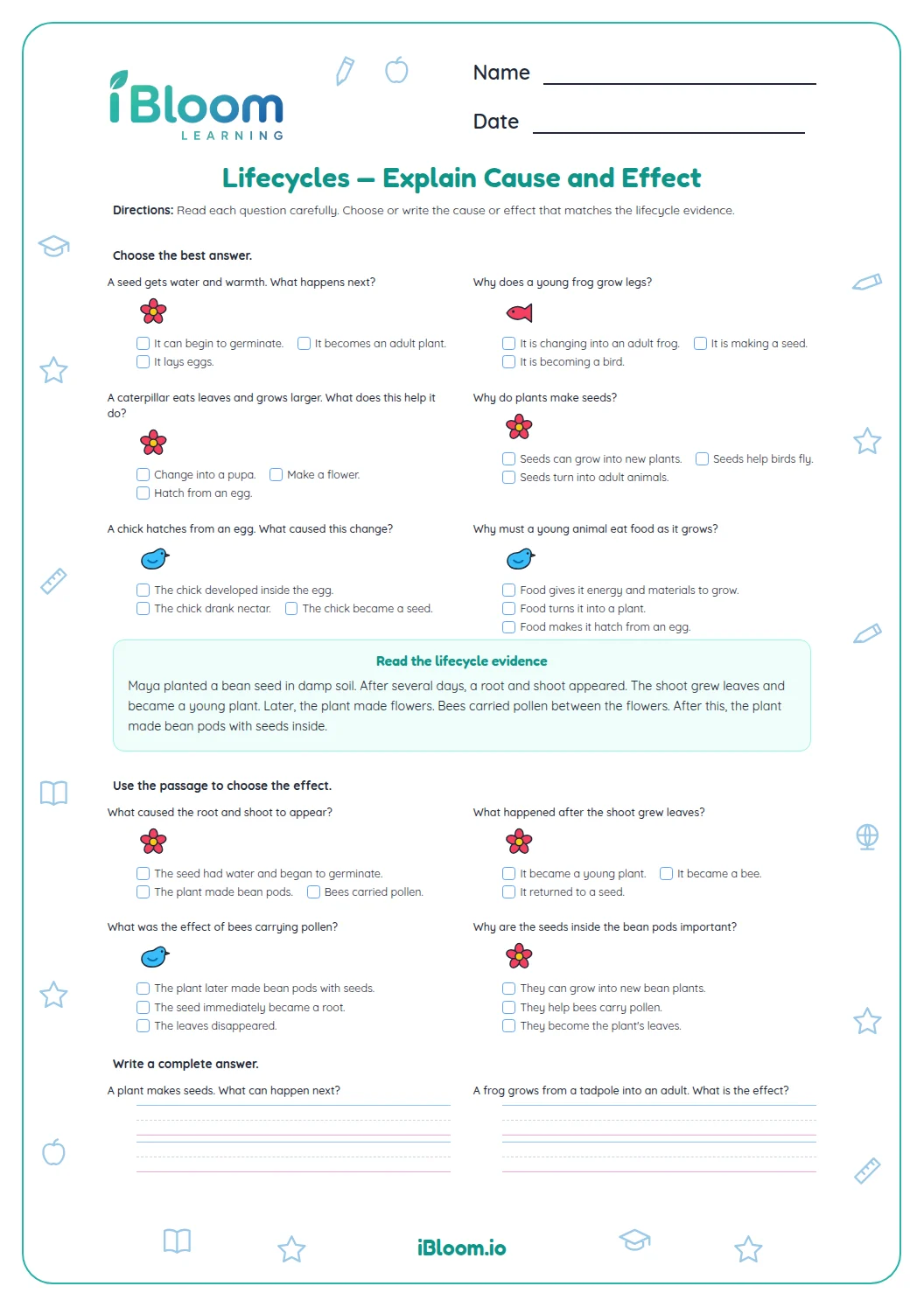
This Grade 3 science worksheet helps students classify stages in the life cycle of a flowering plant and place them in order. Ten multiple-choice clues focus on seeds, seedlings, mature plants, flowers, and fruit; five short answers ask students to sort or sequence stages. It supports NGSS 3-LS1-1 by using a simple model of growth and reproduction in a plant life cycle.
Aligned to 3-LS1-1
How do flowering plants move through a life cycle?
A flowering plant may begin as a seed. When conditions allow, the seed germinates and a seedling emerges. The seedling grows into a mature plant, which can make flowers. Flowers can develop into fruit containing seeds, and the cycle begins again.
- 1A small plant has just emerged from the soil.
- 2That clue describes a young plant.
- 3Answer: seedling
How does sorting help explain the stages?
Classifying means using clues to put something in the right group. A root appearing signals germination; a small plant emerging is a seedling; flowers and fruit are signs of a mature plant reproducing. Students use those clues to identify a stage or event.
What does the sequence show?
Part A asks students to classify stages from short clues. Part B asks them to sequence and connect stages: seed, seedling, mature plant, flower, and fruit with seeds. Together, the questions show how growth links one stage to the next.
How to use this worksheet
- 1Read the whole clue before choosing a plant stage.
- 2Notice whether the clue describes a seed, young plant, or mature plant.
- 3Look for flowers and fruit as clues about reproduction.
- 4For sequence questions, begin with the seed and follow growth.
- 5Check that your order leads to seeds that can start another cycle.
Common mistakes and quick fixes
The mistake
Calling every small plant a seed.
The fix
A seedling has emerged and is growing; a seed has not yet emerged.
The mistake
Putting fruit before flowers.
The fix
Flowers can develop into fruit, so place the flower stage first.
The mistake
Thinking seeds inside fruit are the end of the cycle.
The fix
Those seeds can grow into new plants and begin another cycle.
Next Generation Science Standards alignment
This sheet uses a simple flowering-plant model to classify and sequence life-cycle changes.
Use plant stages to model growth and reproduction in a life cycle.
On this sheet: Students classify and sequence flowering-plant stages, including growth and making seeds.
Show the official wordingHide the official wording
Develop models to describe that organisms have unique and diverse life cycles but all have in common birth, growth, reproduction, and death.
What to practice next
Make more practice
Further reading
Questions parents and teachers ask
What are the stages in a flowering plant life cycle?
A flowering plant can begin as a seed, grow into a seedling, and become a mature plant. The mature plant can make flowers, which may develop into fruit containing seeds. Those seeds can grow into new plants, so the cycle repeats.
What is the difference between a seed and a seedling?
A seed has not yet emerged as a young plant. A seedling is a small plant that has begun growing, often with roots, a stem, and first leaves. In the worksheet, clues about emergence and early growth point to seedling.
How many questions does this worksheet have?
There are 15 questions: ten multiple-choice items and five short answers. The first section asks students to classify clues; the second asks them to sort or sequence stages. A separate answer key lists the expected responses and sequence.
Why do flowers and fruit matter in a plant life cycle?
Flowers can take part in reproduction, and fruit may contain seeds. Those seeds can grow into new plants. The worksheet asks students to use flowers, fruit, and seeds as clues to connect plant growth with the next generation.
How can I help a child put the stages in order?
Start with a seed, then ask what appears after it begins to grow. Follow the young seedling as it becomes a mature plant. From there, flowers may form fruit with seeds. Saying the stages aloud helps children see how one step leads to the next.