




About this worksheet
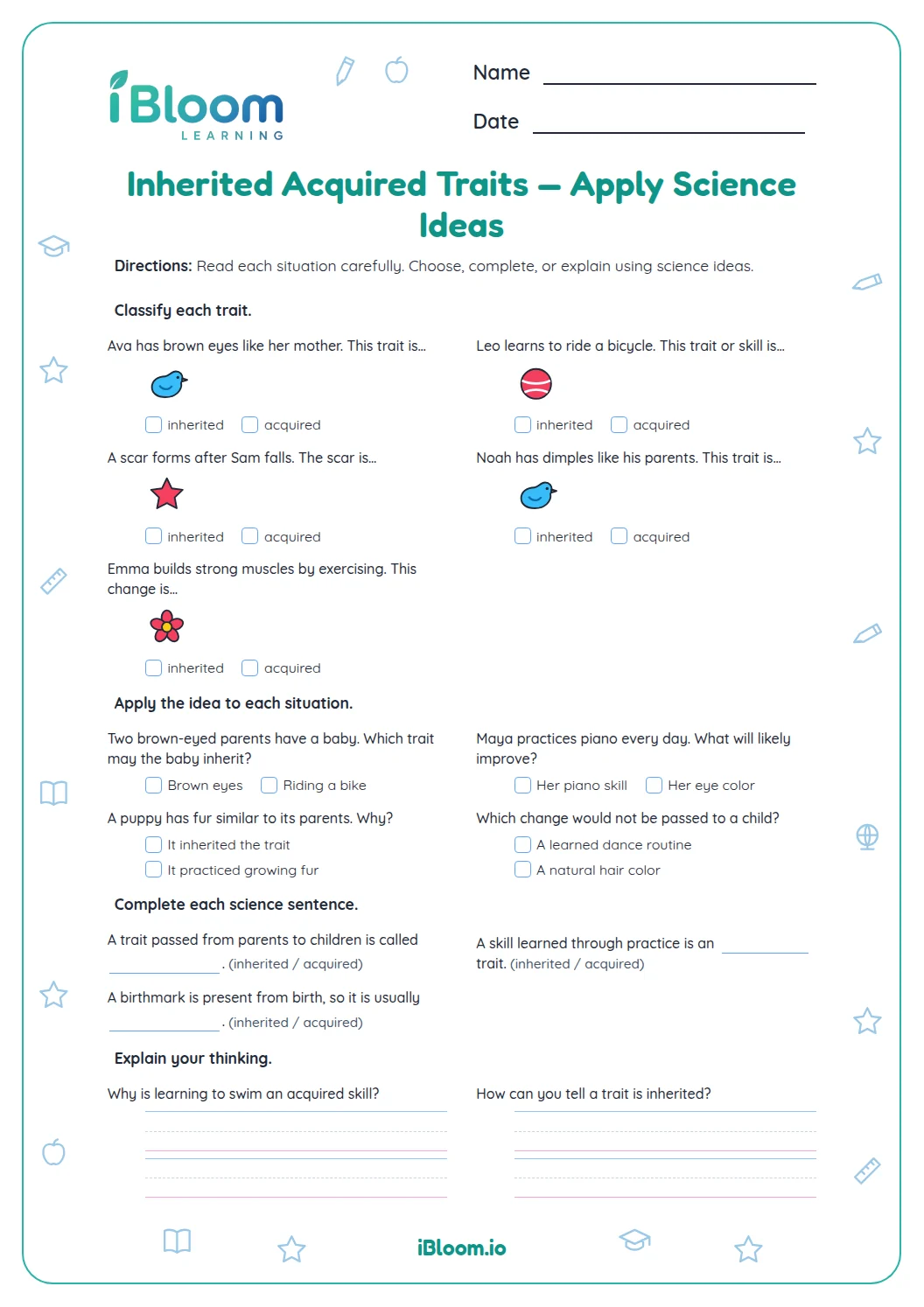
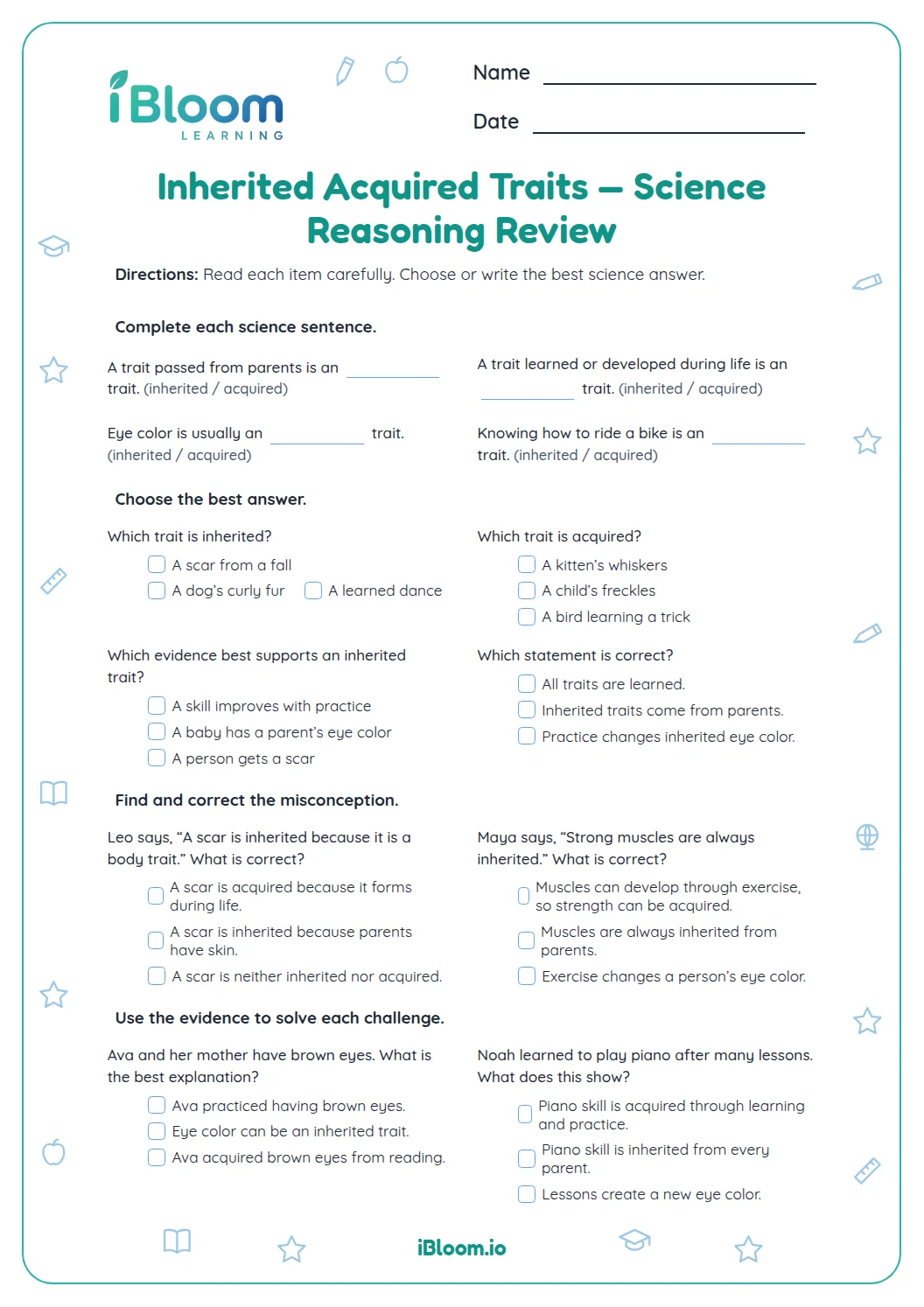
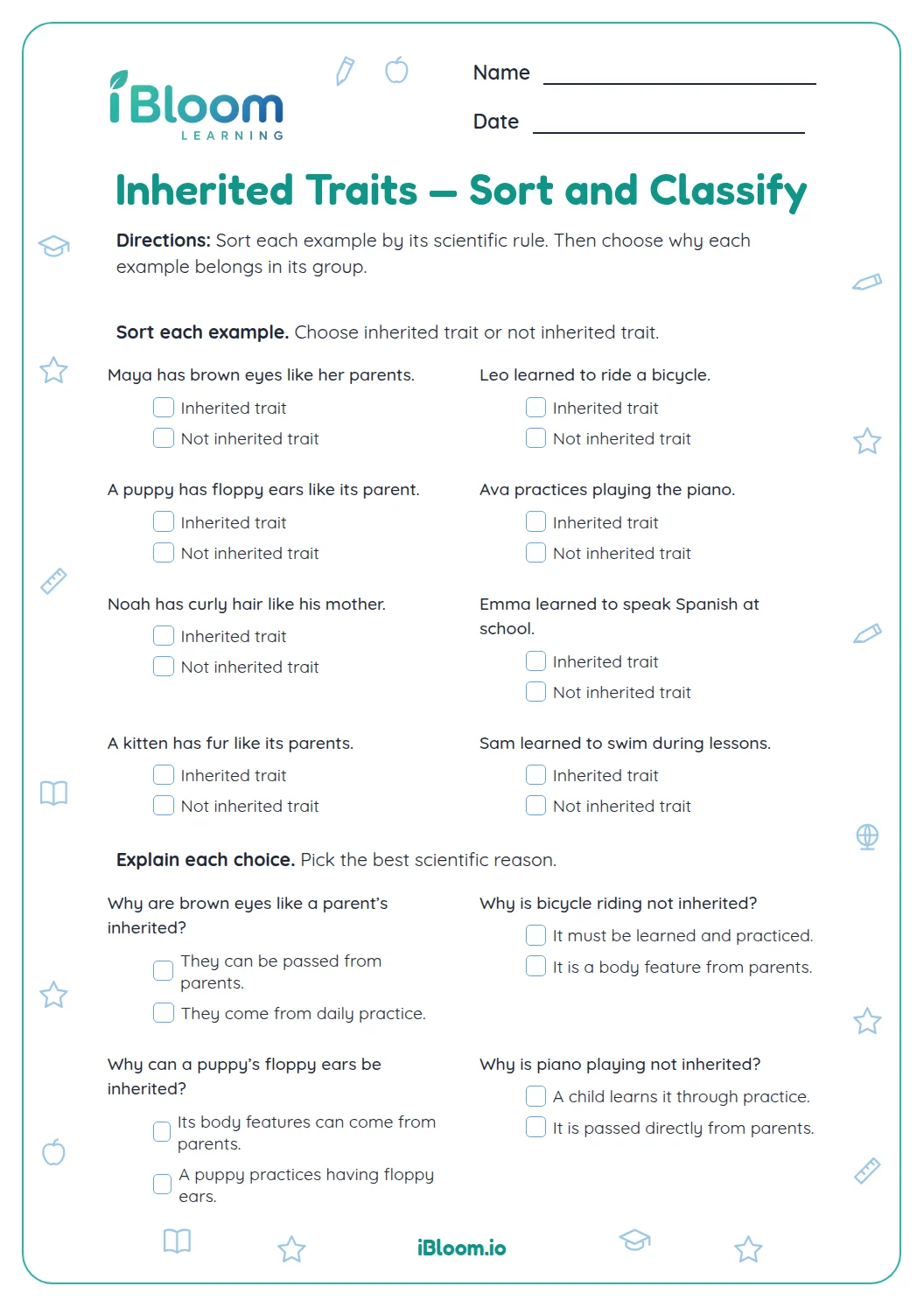
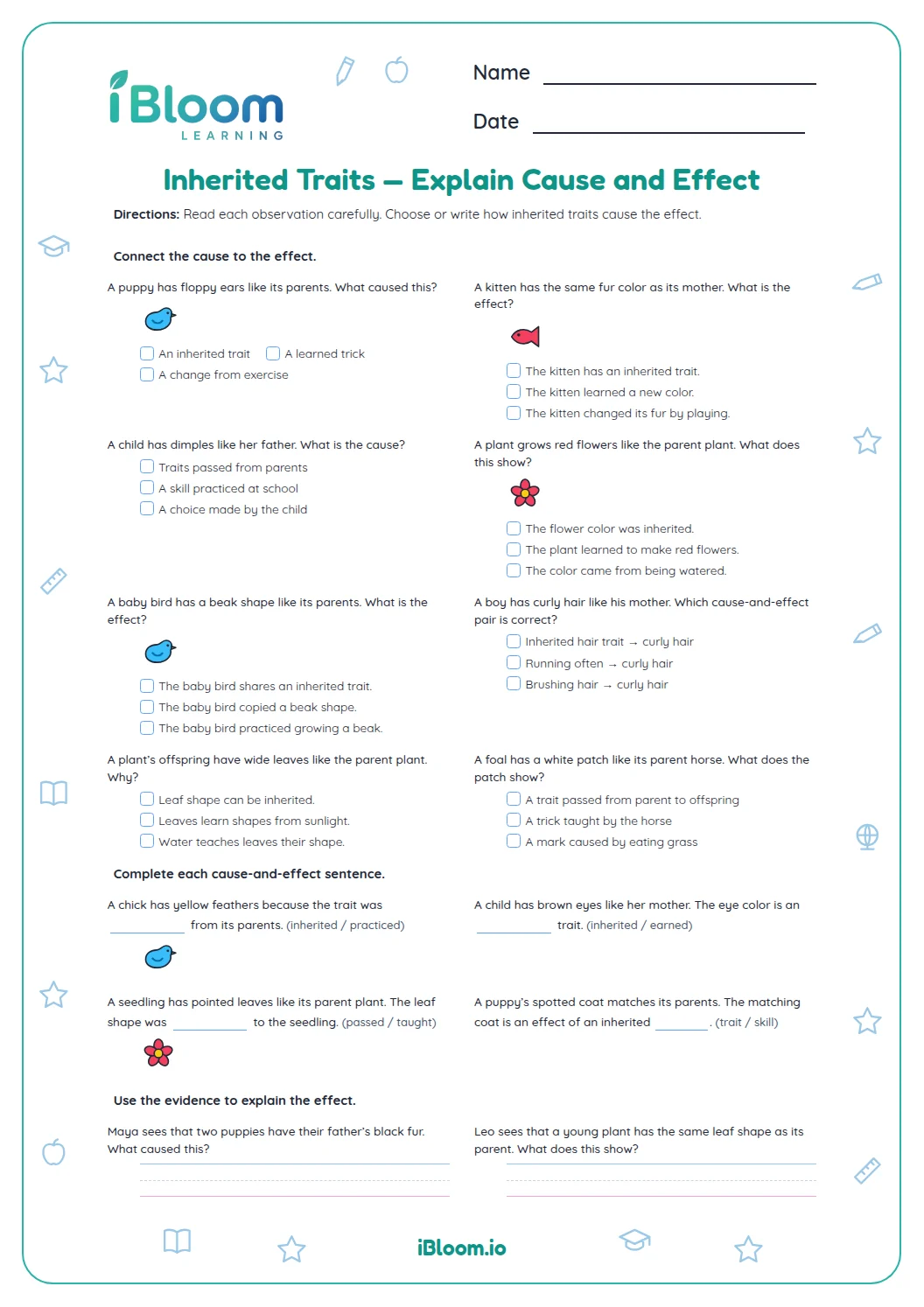
This Grade 3 worksheet helps students distinguish inherited characteristics from acquired behaviors. Learners classify animal examples, complete two models, and identify evidence connecting young organisms with their parents. The answer key includes the classifications and model responses.
How does this sheet practice inherited and acquired traits??
Students classify inherited characteristics and learned behaviors, complete two simple models, and choose which model fits inherited or acquired examples. The examples use animals and observable clues.
- The sheet has 14 questions in two parts.
- The answer key follows the practice pages.
How can you tell an inherited trait from an acquired behavior?
A dog learns to sit after practice. That is an acquired behavior because it develops through learning. A kitten’s coat pattern like its parent is inherited.
What does a trait model show?
In question 13, “Parent bird → chick’s beak shape” links a parent with a trait in its offspring. The arrow helps show the relationship the student should recognize.
How to use this worksheet
- 1Read the directions at the top of the page.
- 2Work through each part in order.
- 3Reread a sentence or example before choosing an answer.
- 4Check the separate answer key and revisit any missed item.
Common mix-ups
The mistake
Calling a learned behavior inherited.
The fix
Ask whether the animal was born with the characteristic or learned it through practice.
The mistake
Calling every change during life acquired.
The fix
Look for learning or experience; ordinary growth is not the same as a learned behavior.
The mistake
Treating a model as proof without matching its labels.
The fix
Check that the parent and young organism are linked by the stated characteristic.
What to practice next
Make more practice
Questions parents and teachers ask
What is an inherited trait?
An inherited trait is a characteristic passed from parents to offspring. A young animal’s coat color or body feature can be inherited. In this worksheet, students use examples and simple models to identify traits that connect parents with their young.
What is an acquired trait?
An acquired behavior develops through learning or experience, such as an animal learning a cue during training. Students compare these examples with characteristics present without being taught. The distinction helps them sort the examples in Part A. The worksheet pairs these descriptions with examples so students can practice identifying the idea in context.
How many questions are on the sheet?
There are 14 questions across two practice pages. They include classification items, two model completions, and model choices. The answer key follows the worksheet so families can check the short responses and selections. The key gives students a way to review each item after completing both parts.
Does the worksheet include an answer key?
Yes. The answer key is included after the two practice pages. It lists the expected classifications and the completed model answers, so an adult or student can compare each response with the example. Check the key after completing both parts, then return to any example that needs another look.
How can students check a tricky example?
Ask whether the example describes a trait passed from a parent or a behavior learned through experience. Then reread the animal example and point to the clue. Comparing the example with a model can help make the relationship clear. Pointing to a clue in the complete sentence helps explain why the answer fits.