




About this worksheet
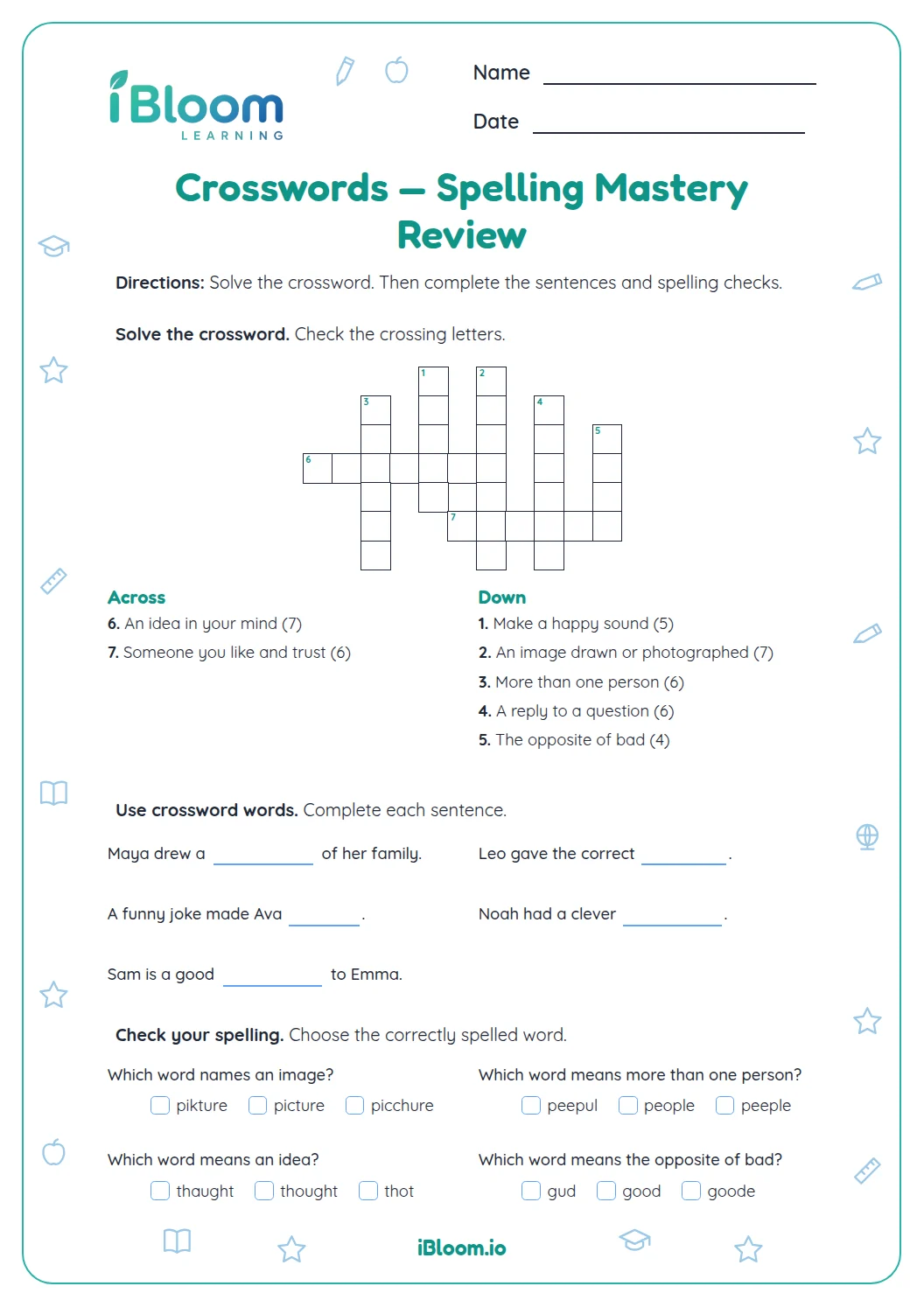
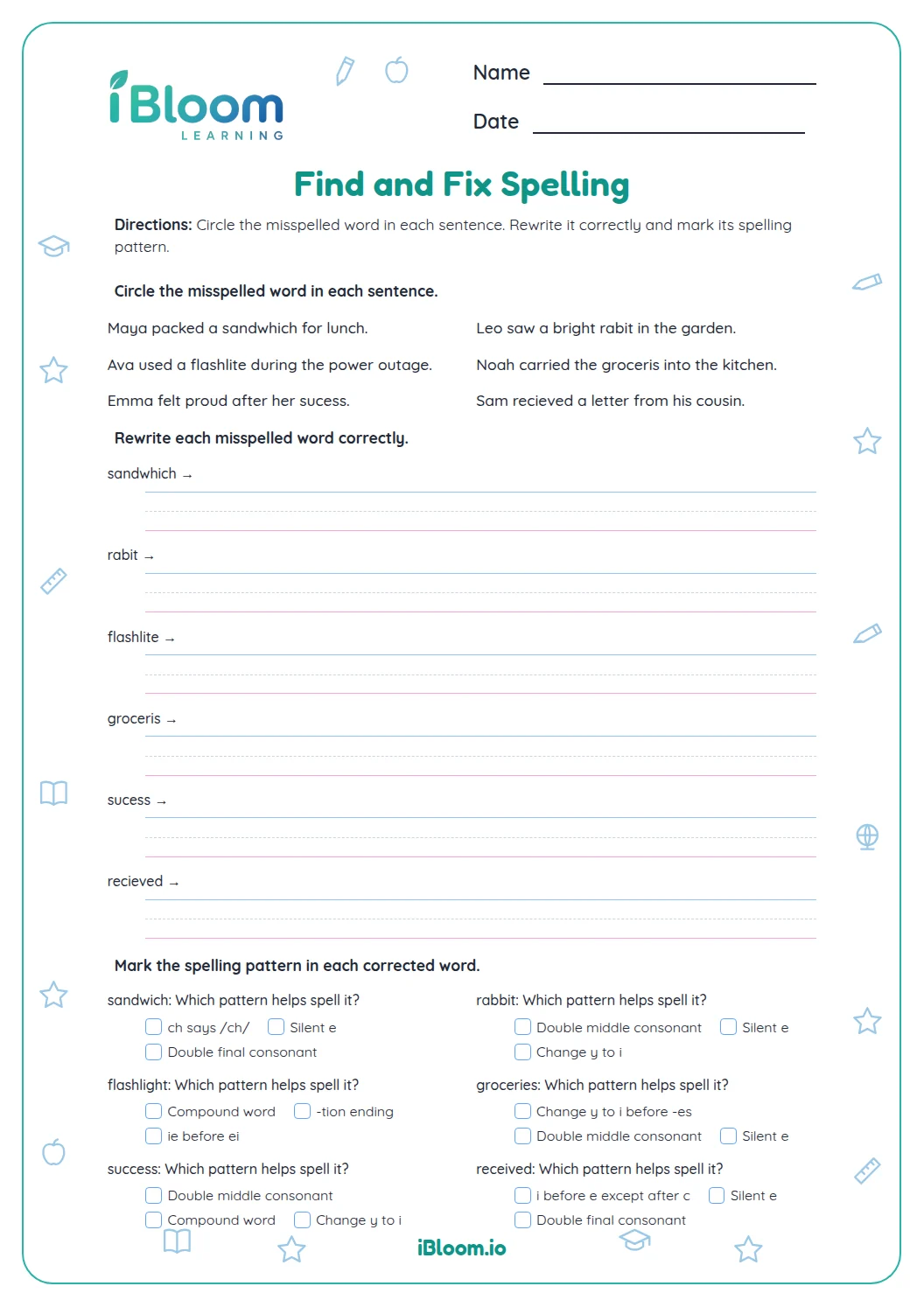
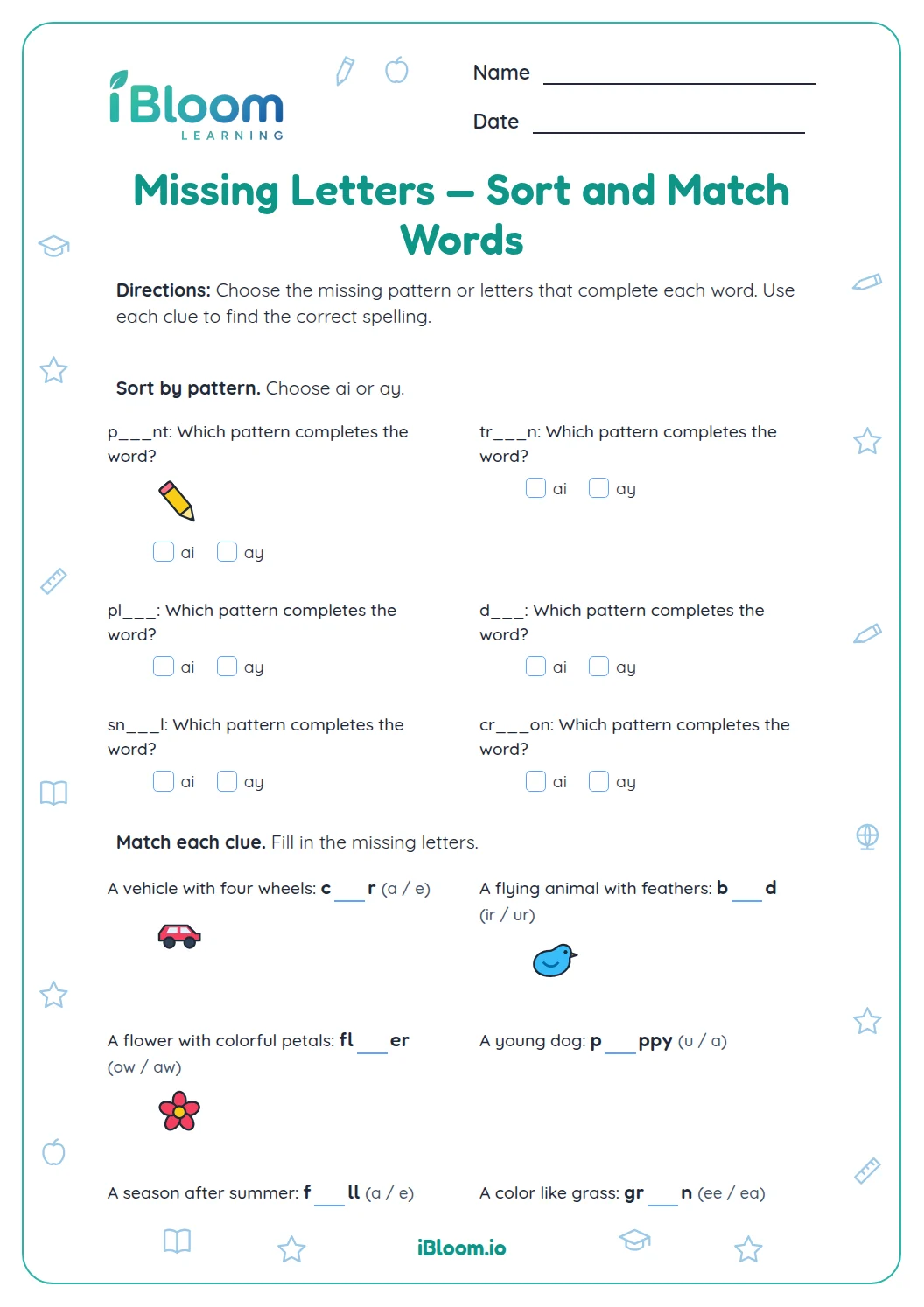
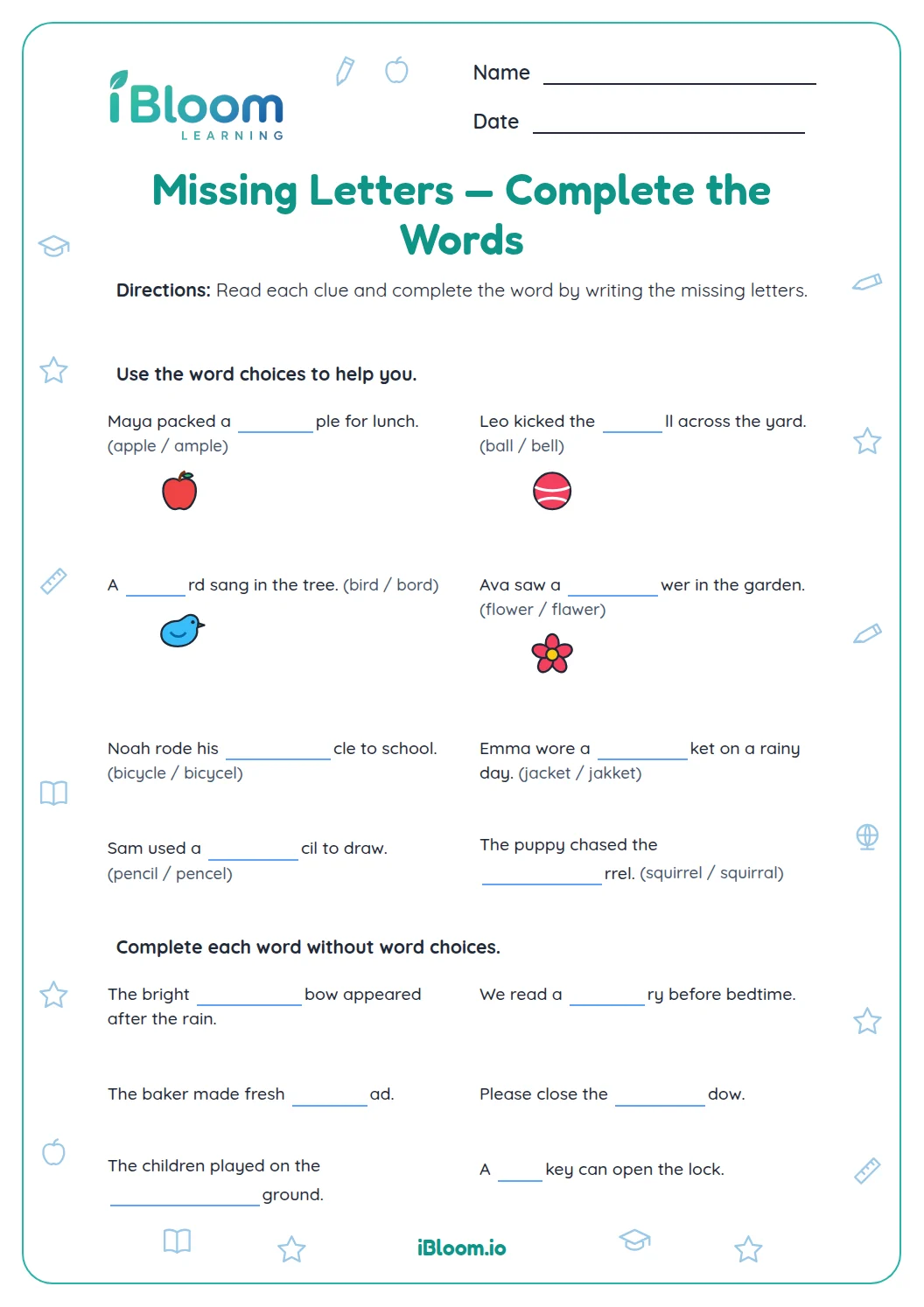
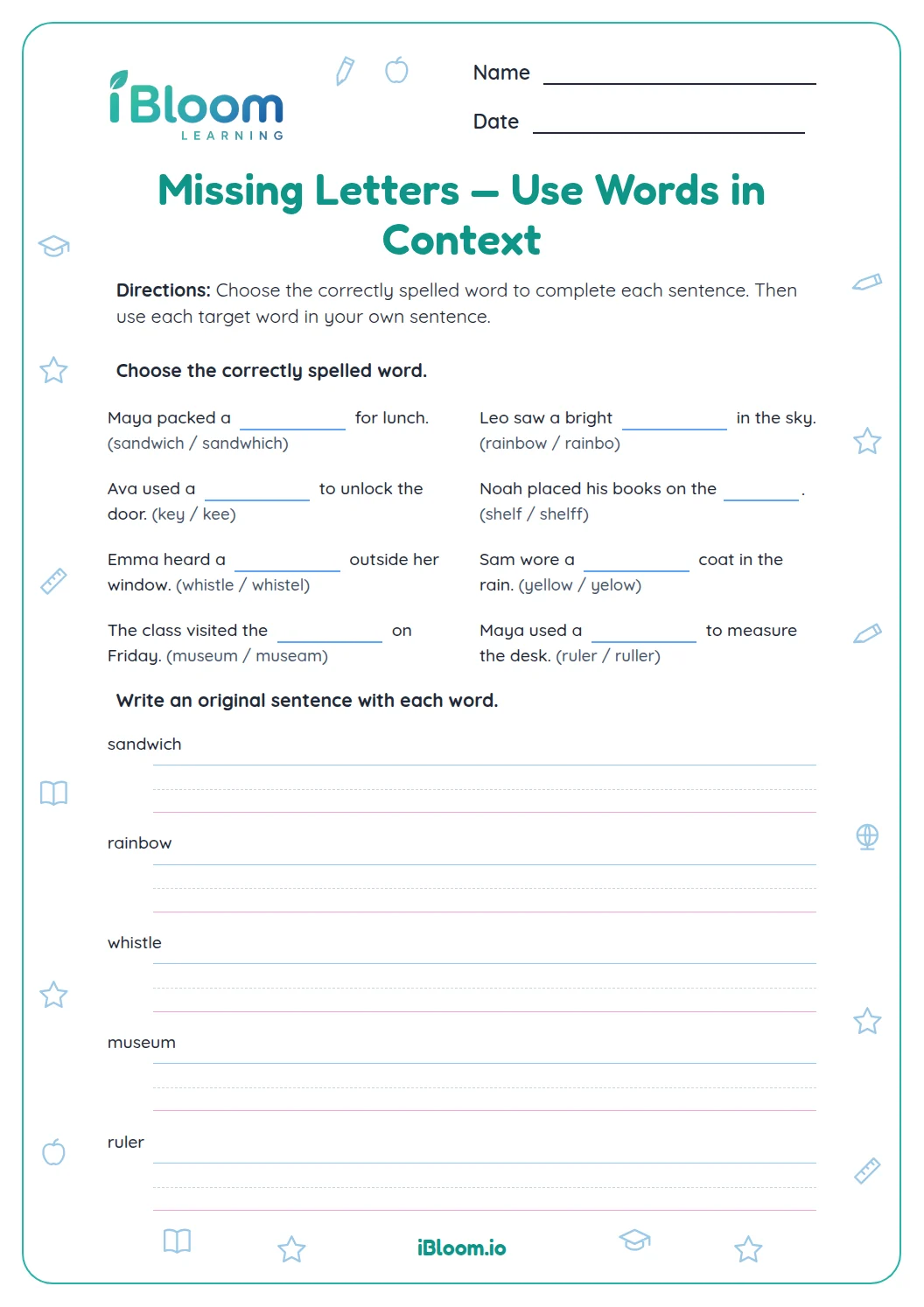
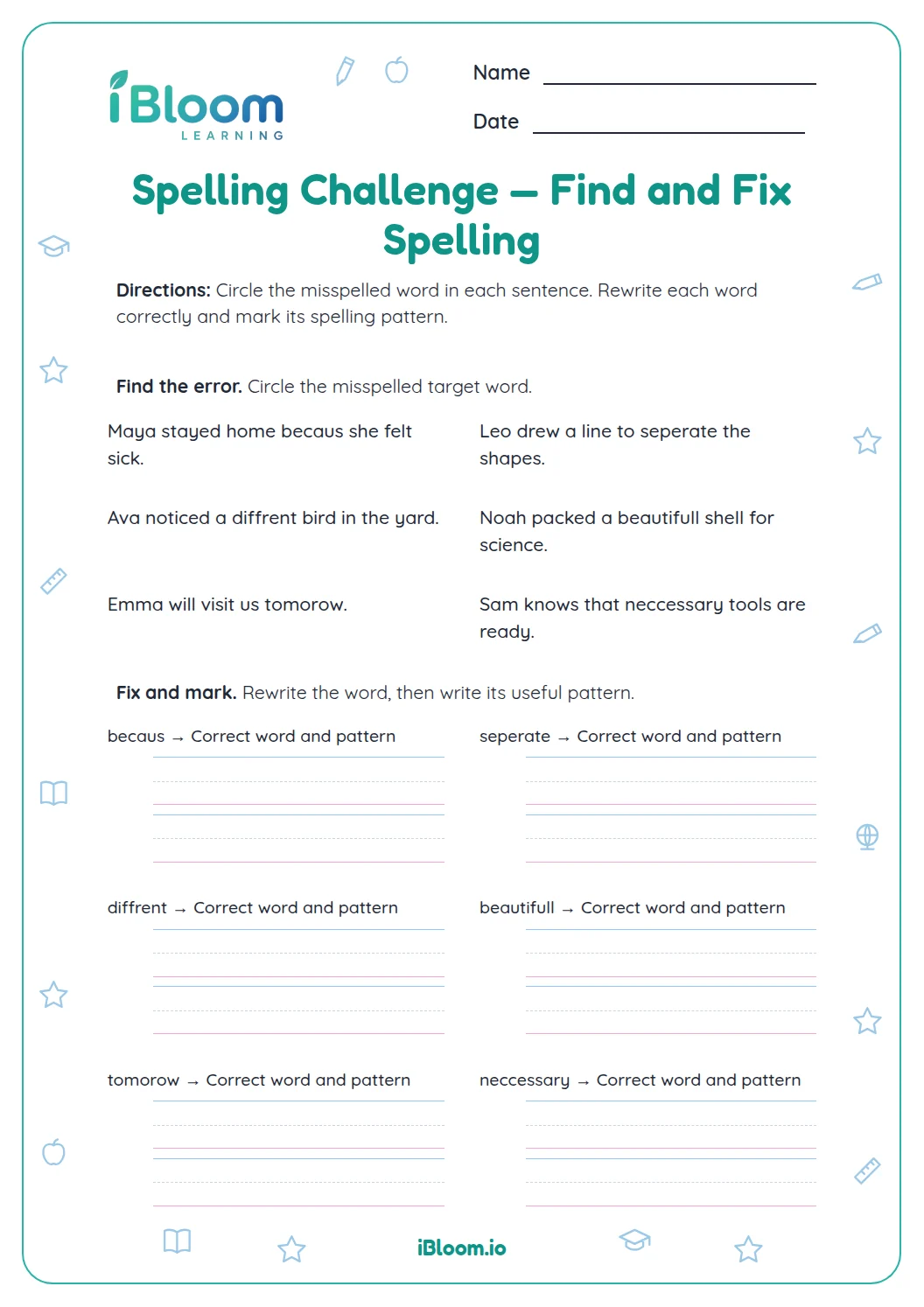
This Grade 3 spelling printable pairs clue solving with careful proofreading. Learners write seven words from short clues, choose conventional spellings in four multiple-choice items, and correct five misspelled words in sentences. Since the page template draws crossword answers as clue entries rather than an interlocking grid, this replacement keeps the crossword clue skill and adds explicit find-and-fix practice. The key shows each expected word.
Aligned to L.3.2.e
How do clue answers build spelling practice?
Each short clue points to one familiar word. Think of the word, then check its letter sequence as you write it.
- 1A place where books are borrowed
- 2Answer: library
- 3Check the sequence: l-i-b-r-a-r-y.
How should learners compare spellings?
Read each option from beginning to end. Look for a missing letter, a letter order swap, or a sound-based spelling that does not match the conventional word.
How does the fix-it part work?
Read the whole sentence, locate the misspelled word, and rewrite that word correctly. For example, rabit needs a second b: rabbit.
How to use this worksheet
- 1Answer each clue aloud before writing it.
- 2Check every letter in the multiple-choice options.
- 3In each sentence, find the word whose spelling needs repair.
- 4Use the answer key only after completing all parts.
Mistakes to watch for
The mistake
Leaving out a doubled consonant, such as one b in rabbit.
The fix
Say the word slowly and check the written consonants against the known spelling.
The mistake
Swapping letters in friend or their.
The fix
Point to each letter while reading the word from left to right.
The mistake
Rewriting the whole sentence when only a word is asked for.
The fix
Write the corrected target word clearly on the answer line.
Common Core alignment
This worksheet practices conventional spelling of studied words.
Use conventional spelling for studied words and suffix forms.
On this sheet: The clue, choice, and correction tasks ask learners to recognize or write conventional spellings.
Show the official wordingHide the official wording
Use conventional spelling for high-frequency and other studied words and for adding suffixes to base words (e.g., sitting, smiled, cries, happiness).
What to practice next
Make more practice
Further reading
Questions parents and teachers ask
Is this an interlocking crossword grid?
Yes. The eight clue answers cross in a letter grid, so each word shares letters with other answers. Learners can use the numbered starting squares and crossing letters to check a guess. The later sections switch to spelling choices and sentence corrections.
How many crossword clues are included?
There are eight clues, including a place where books are borrowed, a person who teaches, and a word for not early. The answer key gives one word for each clue. Crossing letters can help children check the spelling before moving to the next clue.
What does “find and fix” mean here?
Learners read each sentence, locate its misspelled word, and write the conventional spelling. For example, “rabit” needs a second b to become “rabbit.” The five correction items give practice noticing a spelling error in a sentence rather than in an isolated word.
Should learners use a dictionary?
They can try the page first and use a child-friendly dictionary afterward to check an uncertain word. Looking up a word can also help a learner notice its letter sequence. The answer key shows the intended responses for the clues, choices, and corrections.
How can I make the work easier?
Solve one clue together and point out how its letters fit the numbered squares. Then let the learner try a few entries independently, using crossings to confirm guesses. For the correction part, reread the whole sentence after rewriting the word.
What does the key show?
The separate key shows the completed crossword, the correct spelling choice for each item, and the repaired words from all five sentences. Use it after the learner has attempted a section, then review any word whose spelling was surprising.