



About this worksheet
This Grade 3 spelling worksheet pairs a word search with context sentences. Children first find 12 everyday words in the letter grid, then write a spelling word in each of 13 sentences with a matching clue. The examples use familiar places and events. A separate answer key supports a quick spelling check.
How does the word search warm up spelling practice?
The grid contains the same 12 words used in the sentence section. Finding each spelling first gives learners a chance to notice its letter sequence before using sentence meaning to select it.
How do the sentences give context clues?
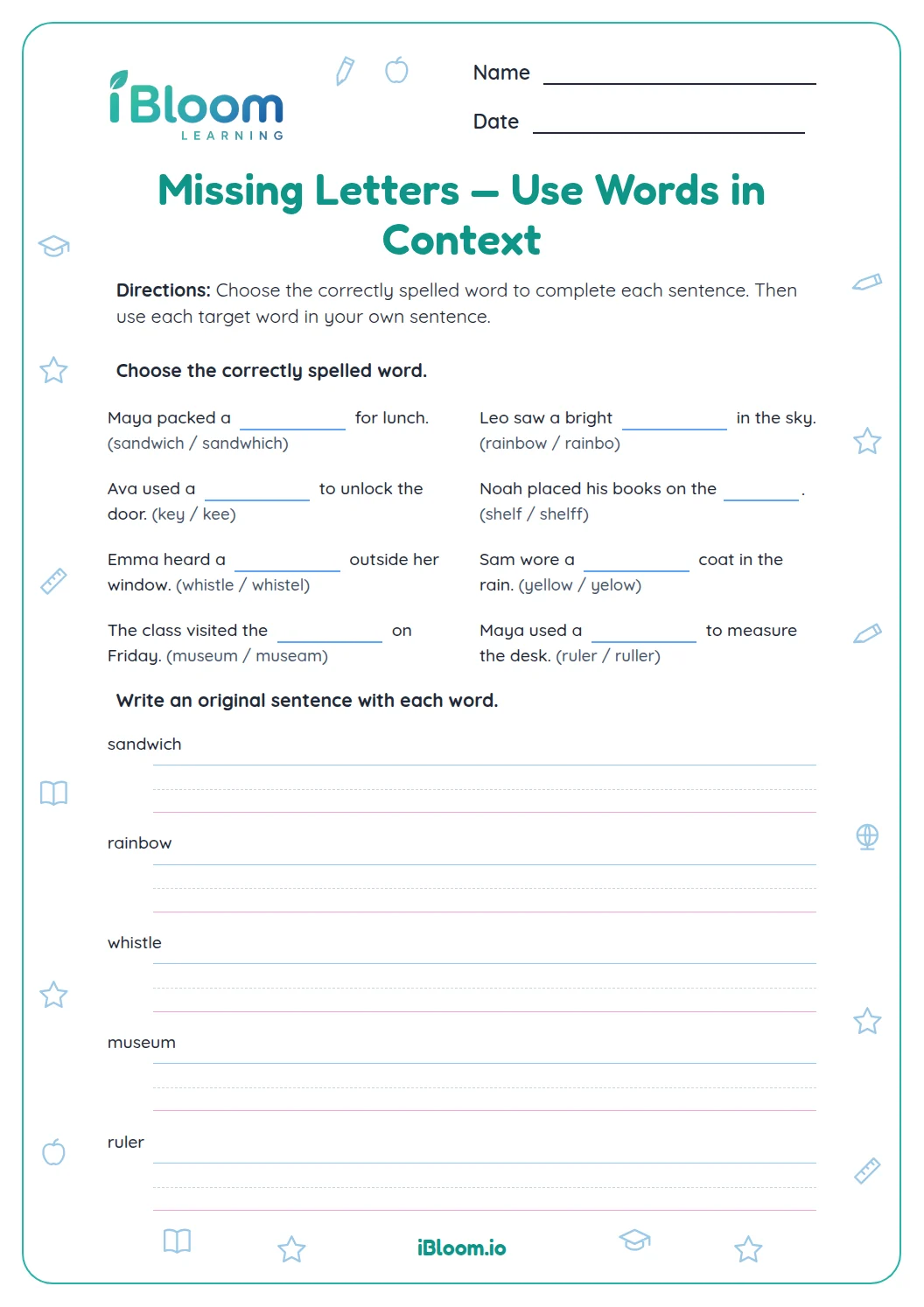
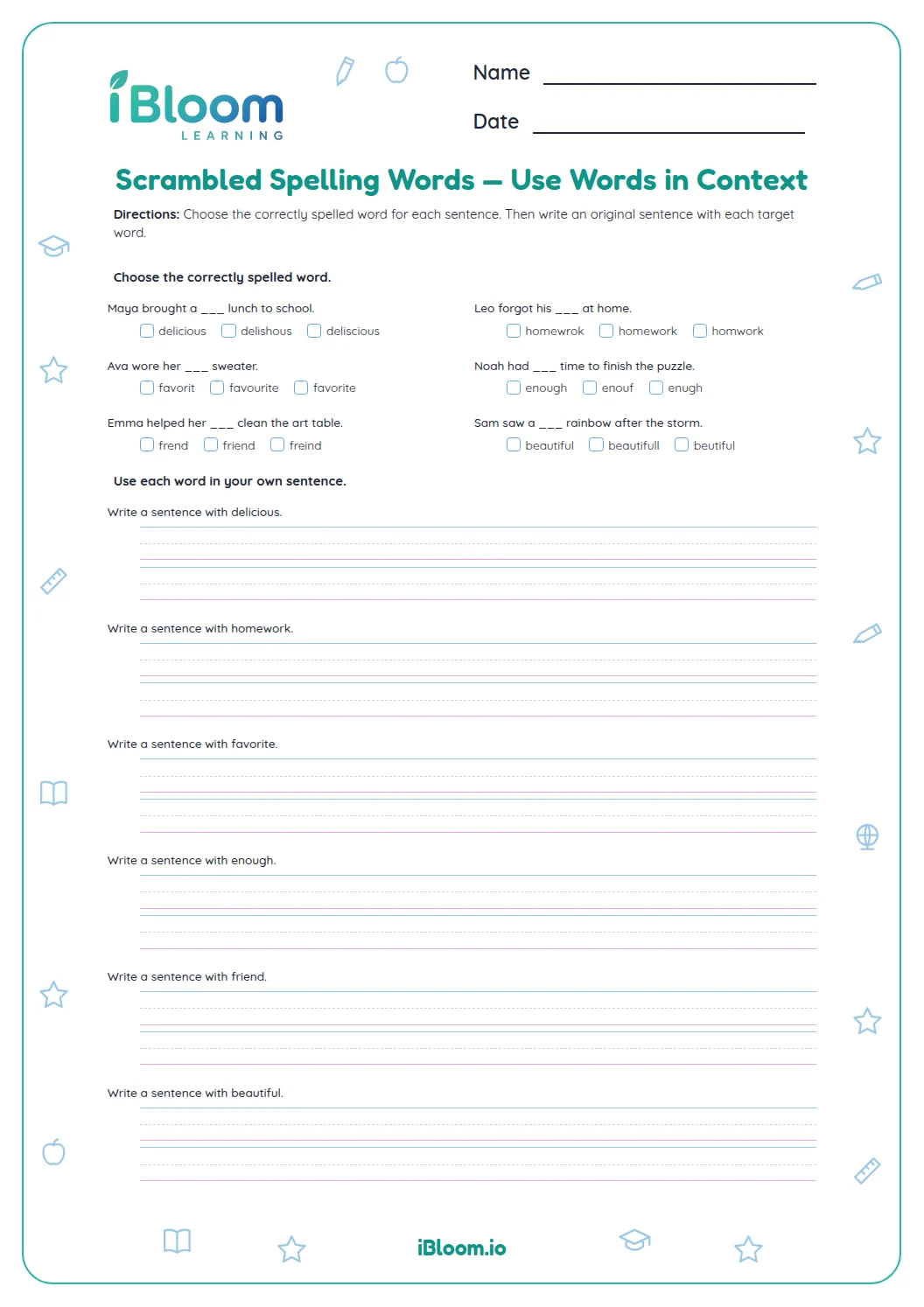
Each blank sits inside a short sentence that points to one target word. For “We planted seeds in the ___ behind our school,” garden fits the setting and the spelling. Learners use the full sentence rather than guessing from the first letter.
How can a child check a spelling choice?
Reread the sentence with the chosen word in place and ask whether it makes sense. Then compare its letters with the spelling list and answer key. If it does not fit, reread the meaning clue and check the word’s full spelling.
How to use this worksheet
- 1Find the ten listed words in the letter grid.
- 2Read each sentence all the way through.
- 3Say a word that fits the meaning of the sentence.
- 4Write the word carefully in the blank.
- 5Reread the sentence with your word in place.
- 6Check spellings with the answer key.
Common mistakes and quick fixes
The mistake
Guessing from the first letter alone.
The fix
Use the sentence meaning to choose a word, then check its spelling.
The mistake
Leaving out a middle letter in a longer word.
The fix
Say the word slowly and compare its letters with the word list.
The mistake
Choosing a related word that does not fit the sentence.
The fix
Reread the whole sentence and make sure the word makes sense in that setting.
What to practice next
Further reading
Questions parents and teachers ask
Which words are in the puzzle?
The grid lists 12 familiar words, including garden, pocket, rabbit, pencil, and ticket. Those spellings appear again in the sentence section. Learners can use the list to check a word after they have found it, then apply its meaning to a context clue.
How does a sentence provide a spelling clue?
The sentence gives a meaning or situation that points to one listed word. “A baby cat is a ___” cues kitten, while a bus fare receipt cues ticket. Read the whole sentence, choose the matching word, and then check its letters against the grid.
Should children fill the sentences before the word search?
The worksheet begins with the search and follows with the sentences, so completing it in order is a natural approach. Finding the words first lets children look closely at their spelling. They can still return to the grid whenever they want to check a letter.
Does the answer key include the word search?
Yes. The key shows the completed grid and gives the intended answer to each of the 13 context sentences. A learner can compare a found word letter by letter, then check that the same word makes sense in its sentence and is spelled correctly.
How can I help without giving away an answer?
Ask the learner to explain which detail in the sentence points to a word on the list. If they are unsure, read the sentence together and compare likely choices by meaning. Let them write the word and check its spelling in the grid afterward.