



About this worksheet
This free Grade 3 spelling worksheet combines eleven missing-letter questions with an eight-word crossword and two sentence prompts. Part A practices ai, ee, and oa, with three or four words for each vowel pair. Part B uses meaning clues and crossing letters to spell rain, train, seed, green, tree, storm, boat, and coat. Part C asks children to use spelling words in sentences. These twenty-one items practice applying spelling patterns when writing words, aligned with Common Core L.3.2f. The separate answer key fills the blanks and crossword and gives sample sentences.
Aligned to L.3.2f
Which spelling patterns come before the crossword?
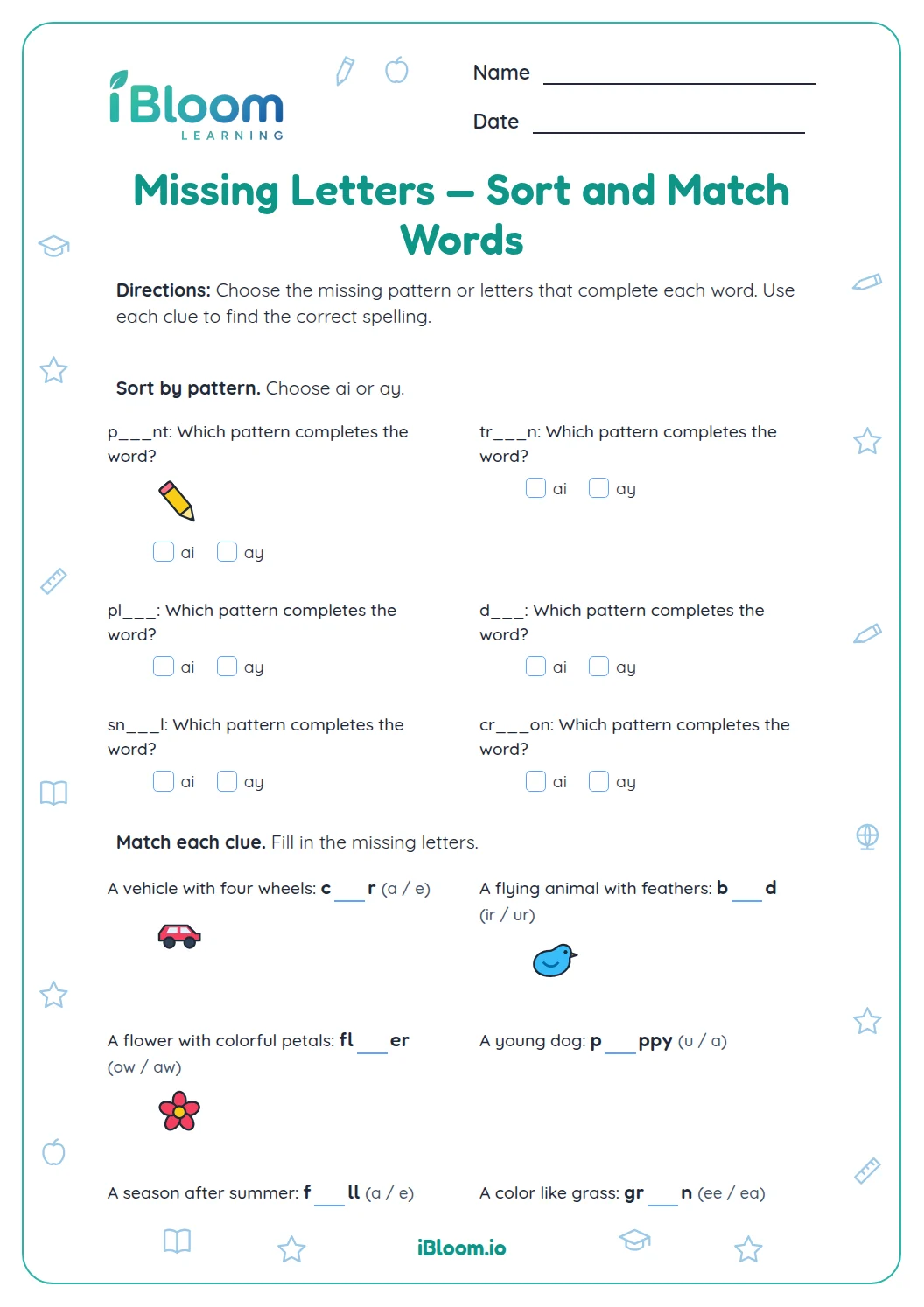
Part A uses rain, train, chain, and brain for ai; seed, green, feet, and sleep for ee; and boat, coat, road, and goat for oa. Each prompt gives a word frame and a meaning clue.
Write only the missing vowel pair on the blank. Then say the completed word and compare it with another word using the same vowel pair.
- 1Word frame: tr___n
- 2Clue: railroad cars
- 3Missing letters: ai
- 4Completed word: train
How should a child begin the crossword?
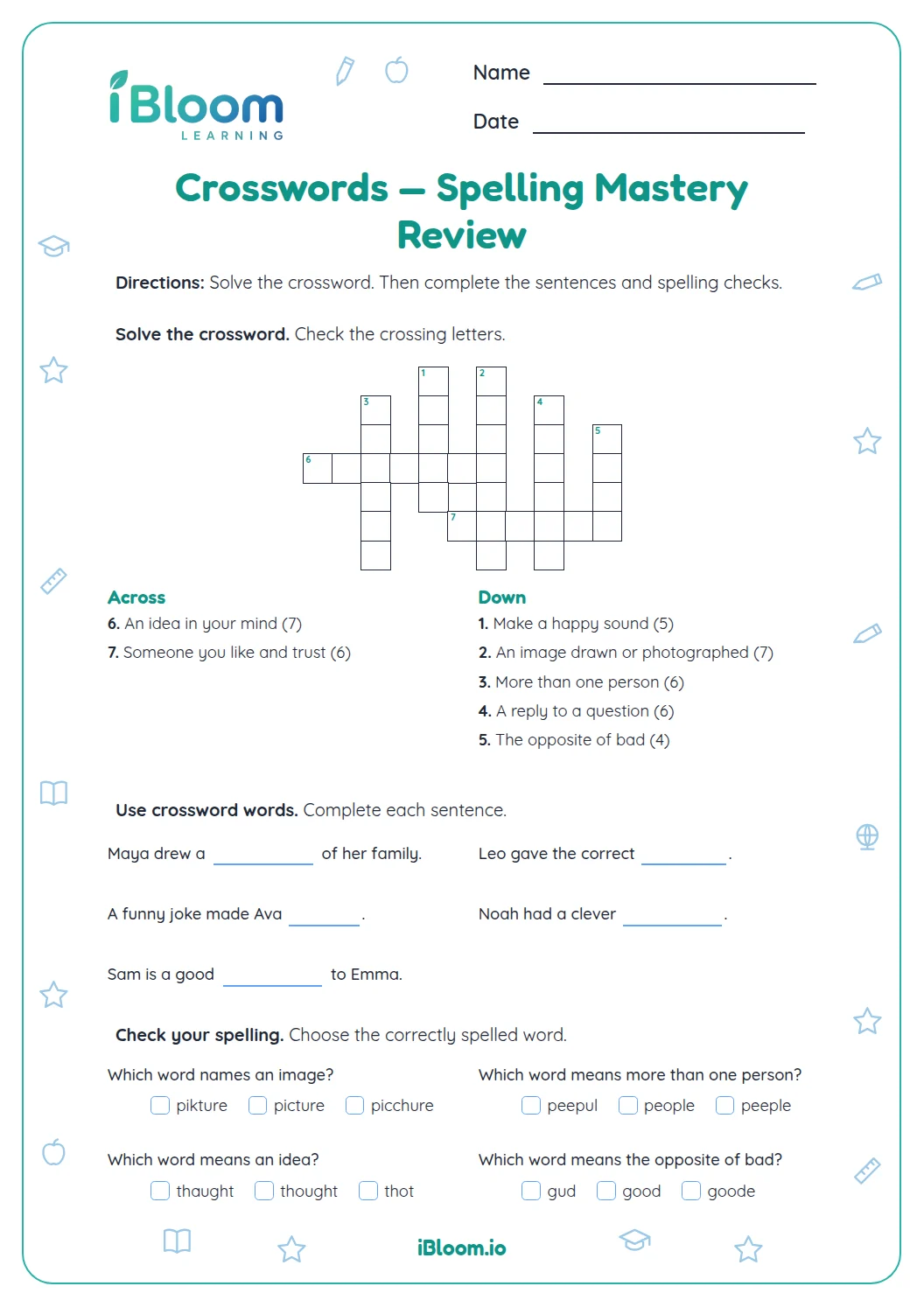
Start with a clue the child knows. Count its boxes, spell the answer aloud, and put one letter in each square. The clues include letter counts to help children check the length before writing.
Continue with a word that crosses an answer already entered. If the letters disagree, reread both clues and check the spelling of each word; either entry may need a correction.
How do the final sentences check spelling?
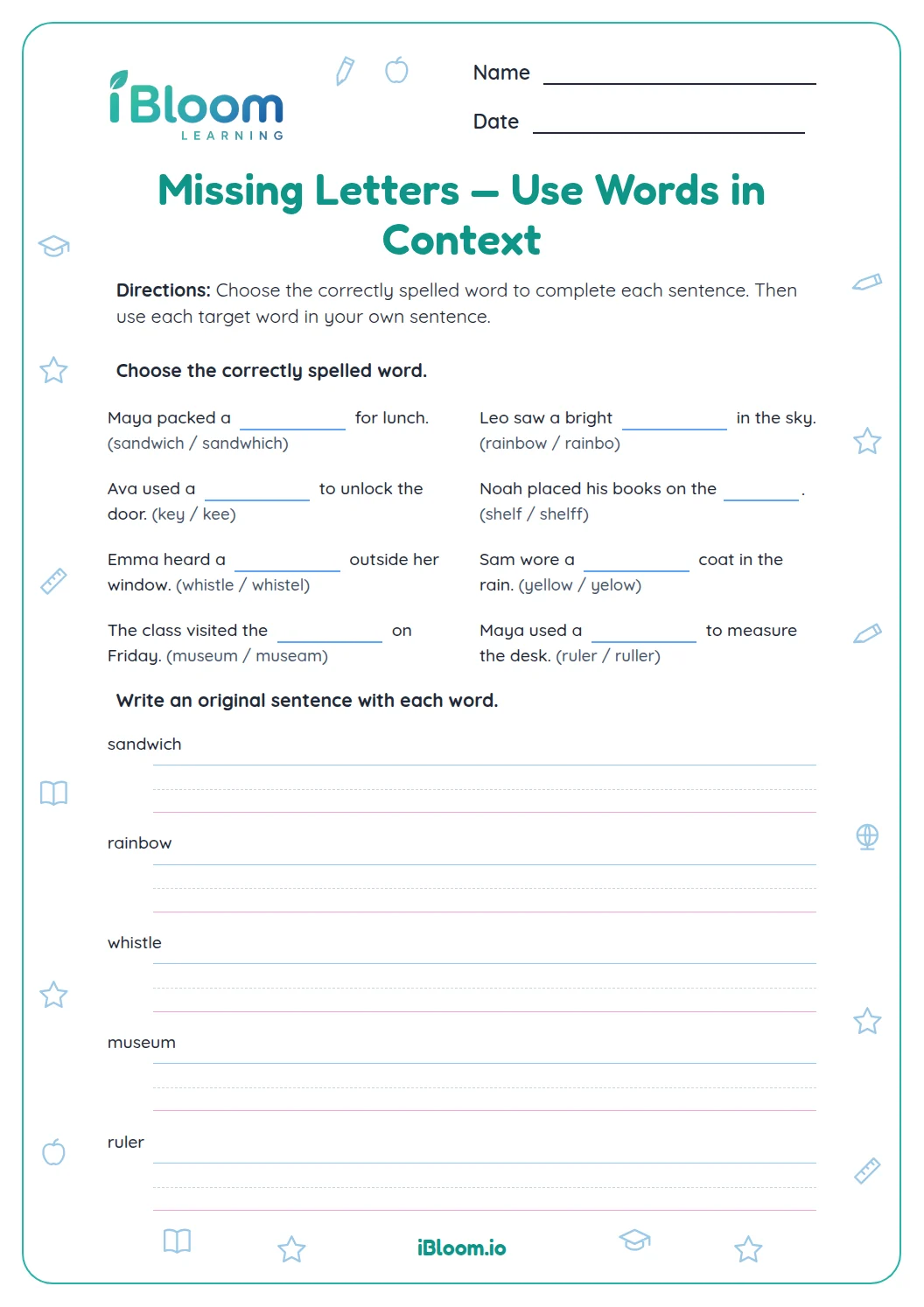
Part C asks for one sentence using rain and coat, then another using seed and green. Children choose what to say while keeping the target words spelled correctly.
The key supplies sample sentences, twelve missing vowel pairs, and the filled crossword. For a spelling error, identify the useful vowel pair, write the corrected word, and check it again in its sentence or crossing entry.
How to use this worksheet
- 1Read the three vowel pairs ai, ee, and oa aloud with the child.
- 2Complete Part A and say each finished word.
- 3Read all eight crossword clues before choosing a starting word.
- 4Write one letter per square and check the printed word length.
- 5Use crossing letters to finish the grid.
- 6Write the two Part C sentences, then check the spelling work with the key.
Mistakes to check together
The mistake
Putting the whole word rain into the Part A blank.
The fix
The printed r and n stay in place; write only ai between them.
The mistake
Using one e in seed or green.
The fix
Compare the two ee words and check the required number of letters.
The mistake
Changing a crossing letter to fit one answer without checking the other.
The fix
Read both clues and make sure the shared square belongs to two correctly spelled words.
Common Core alignment
Apply vowel-pair patterns and known spellings to complete words and a crossword.
On this sheet: Part A practices ai, ee, and oa; Parts B–C apply spellings in crossing entries and original sentences.
Show the official wordingHide the official wording
Use spelling patterns and generalizations (e.g., word families, position-based spellings, syllable patterns, ending rules, meaningful word parts) in writing words.
What to practice next
Make more practice
Further reading
Questions parents and teachers ask
Is there a real crossword grid on this worksheet?
Yes, Part B has an eight-word crossword with across and down clues. Children enter one letter in each box and use shared squares to check their spellings. Part A comes first with eleven missing-letter questions, giving practice with patterns that appear in several of the crossword answers.
What should children write in the first eleven blanks?
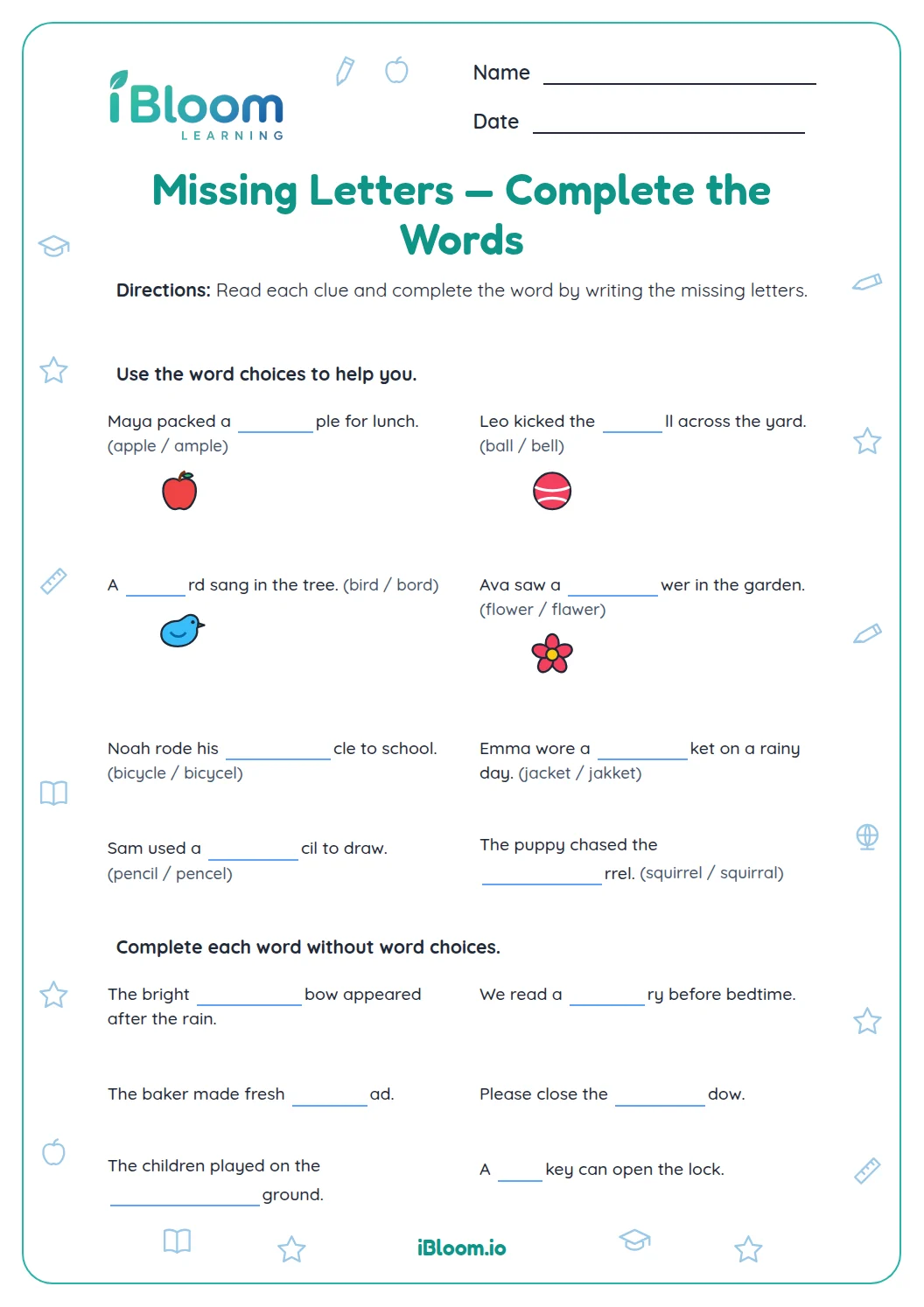
The first eleven items ask children to fill the missing vowel pair and say the whole word. They use ai, ee, and oa in familiar words such as rain, seed, and boat. The key shows each pair, so children can compare both the spelling pattern and the completed word.
Which words are in the crossword?
The crossword answers are storm, seed, tree, green, train, rain, boat, and coat. Each clue describes one of those words and gives its letter count. Several repeat words or patterns from Part A, allowing children to use their earlier spelling work while they solve a different kind of task.
Can my child look back at Part A?
Yes, looking back at Part A is a useful way to check a spelling pattern. Ask the child to identify the pattern that helps, then write the crossword word one letter per box. Afterward, check the crossing entry too, so the earlier exercise supports careful solving rather than copying without checking.
How can I help without giving away a word?
Read the clue aloud and ask what kind of thing it describes. Next, count the boxes together and name any letters already supplied by crossings. Let the child propose a word, then test its meaning, length, and spelling before checking the completed grid on the answer key.
What should the two written sentences include?
The first sentence must include rain and coat, and the second must include seed and green. Children can choose their own events, as long as each sentence makes sense and both target words are spelled correctly. The key gives examples; other complete sentences with the required words are acceptable.