



About this worksheet
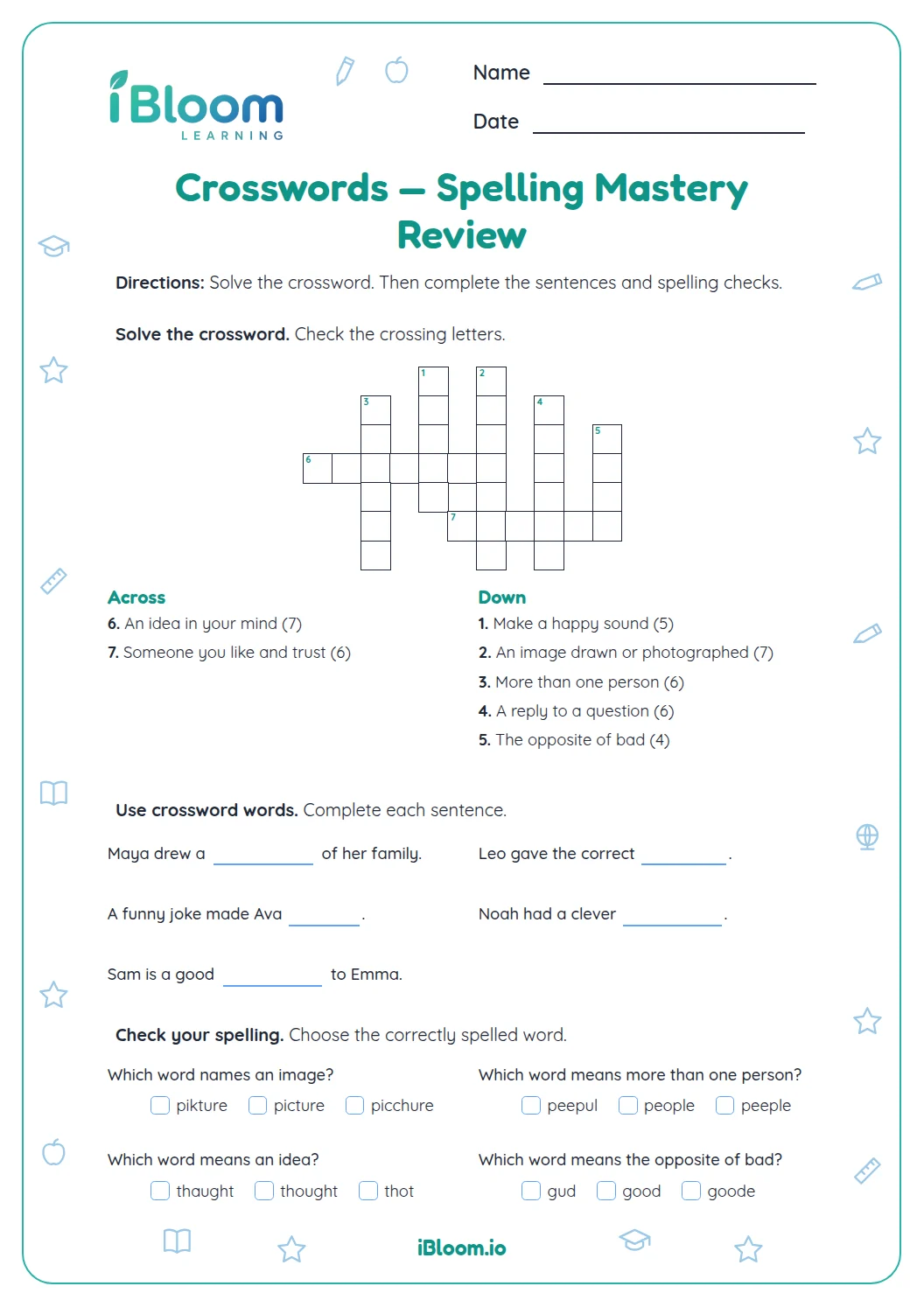
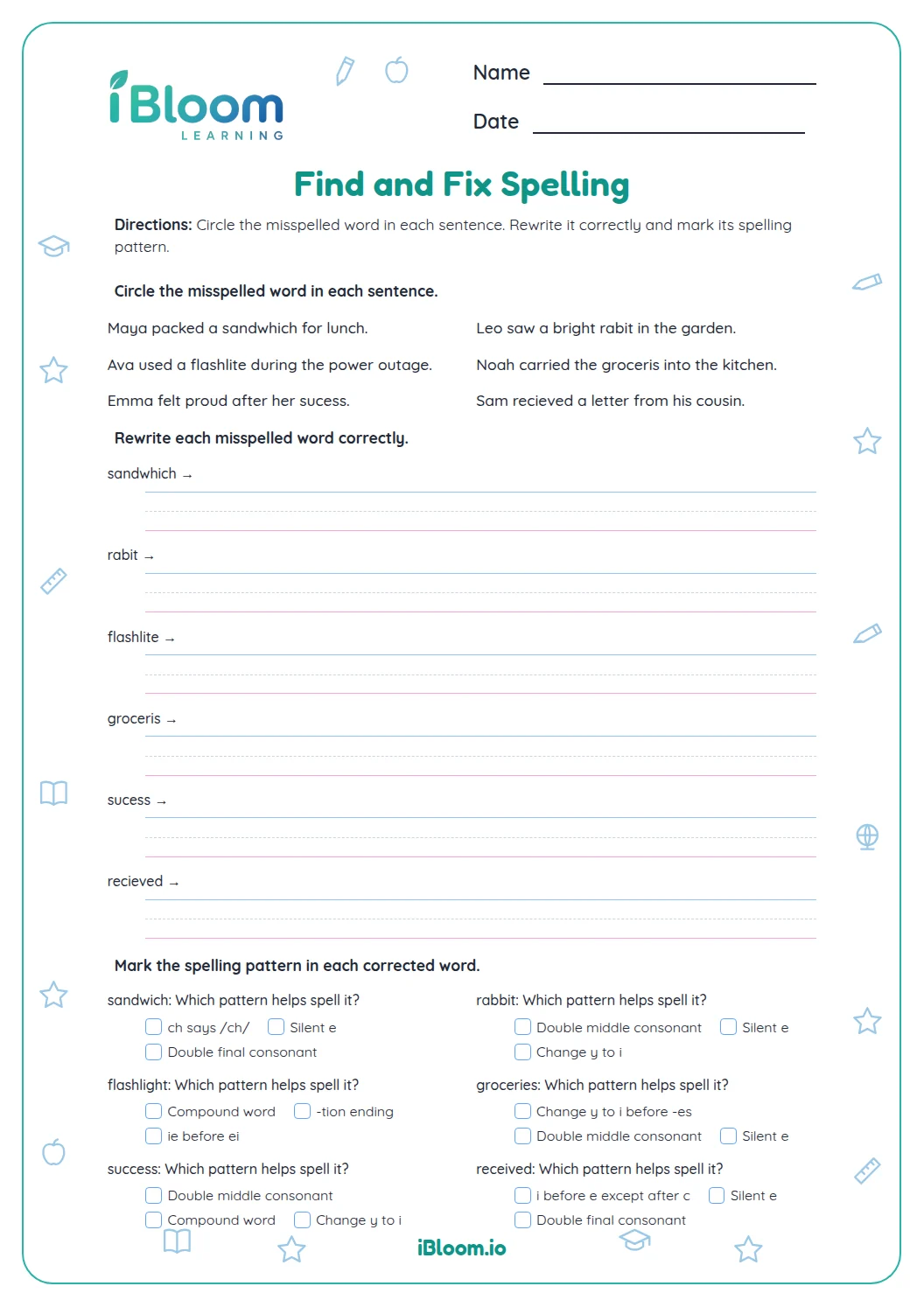
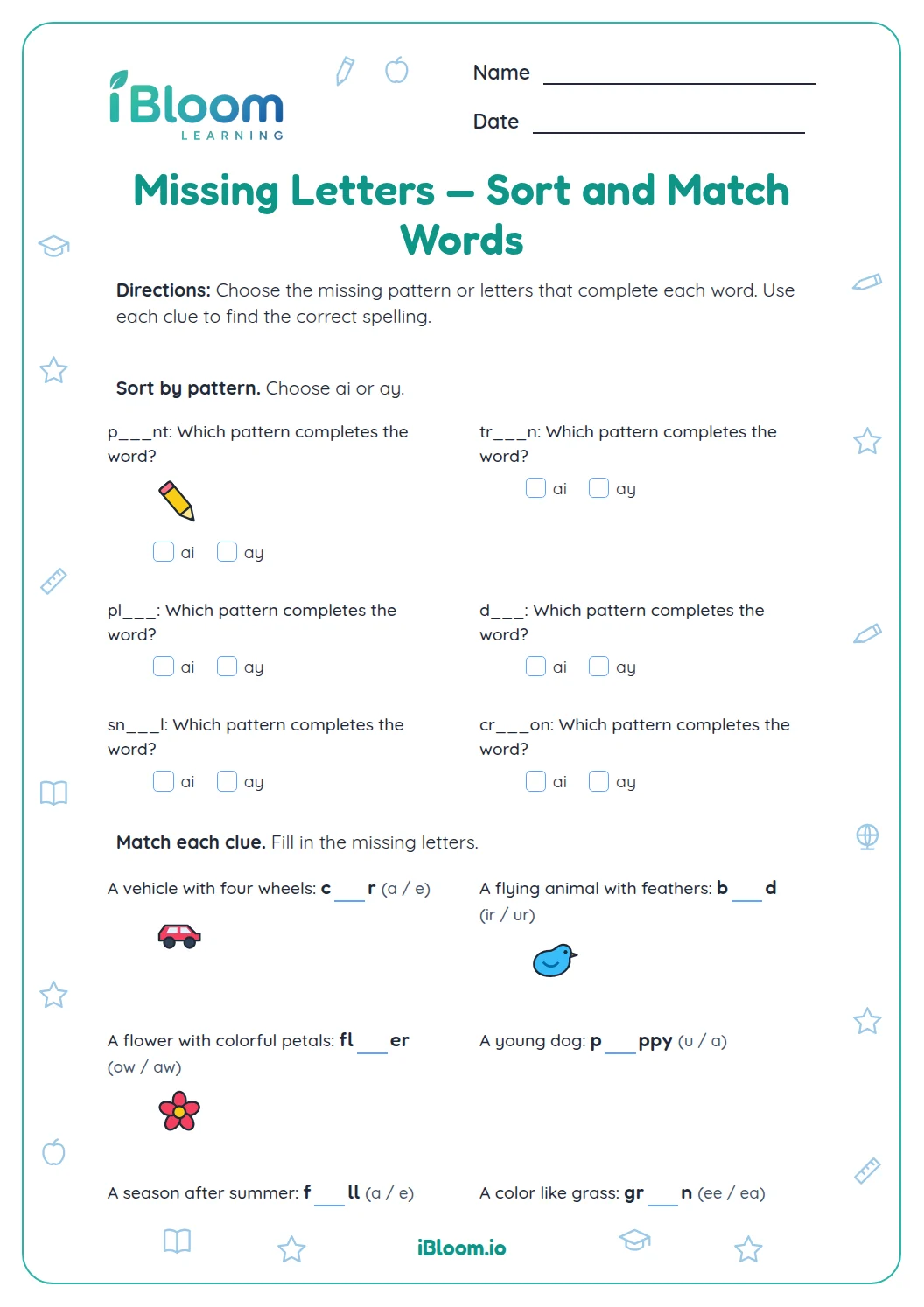
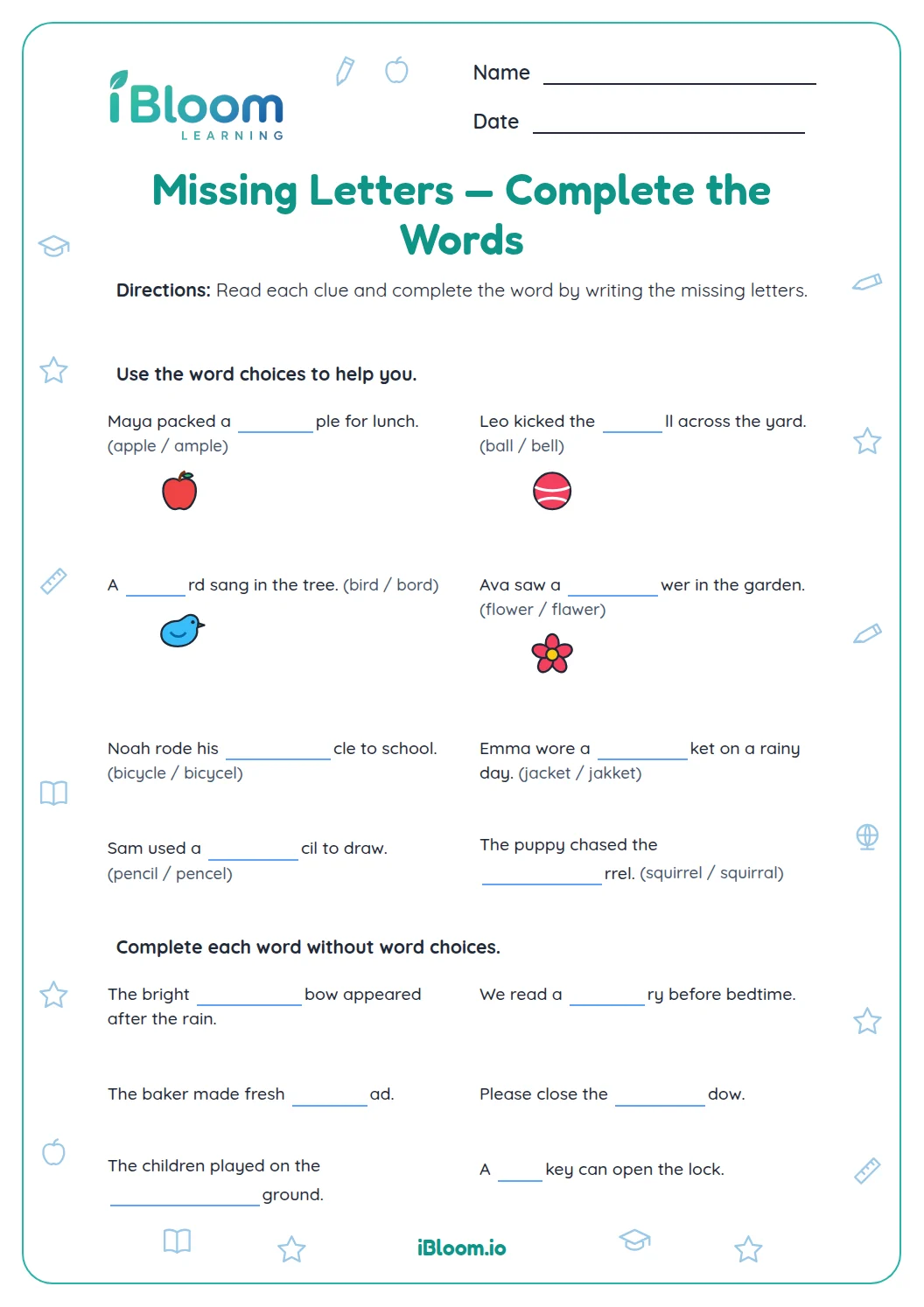
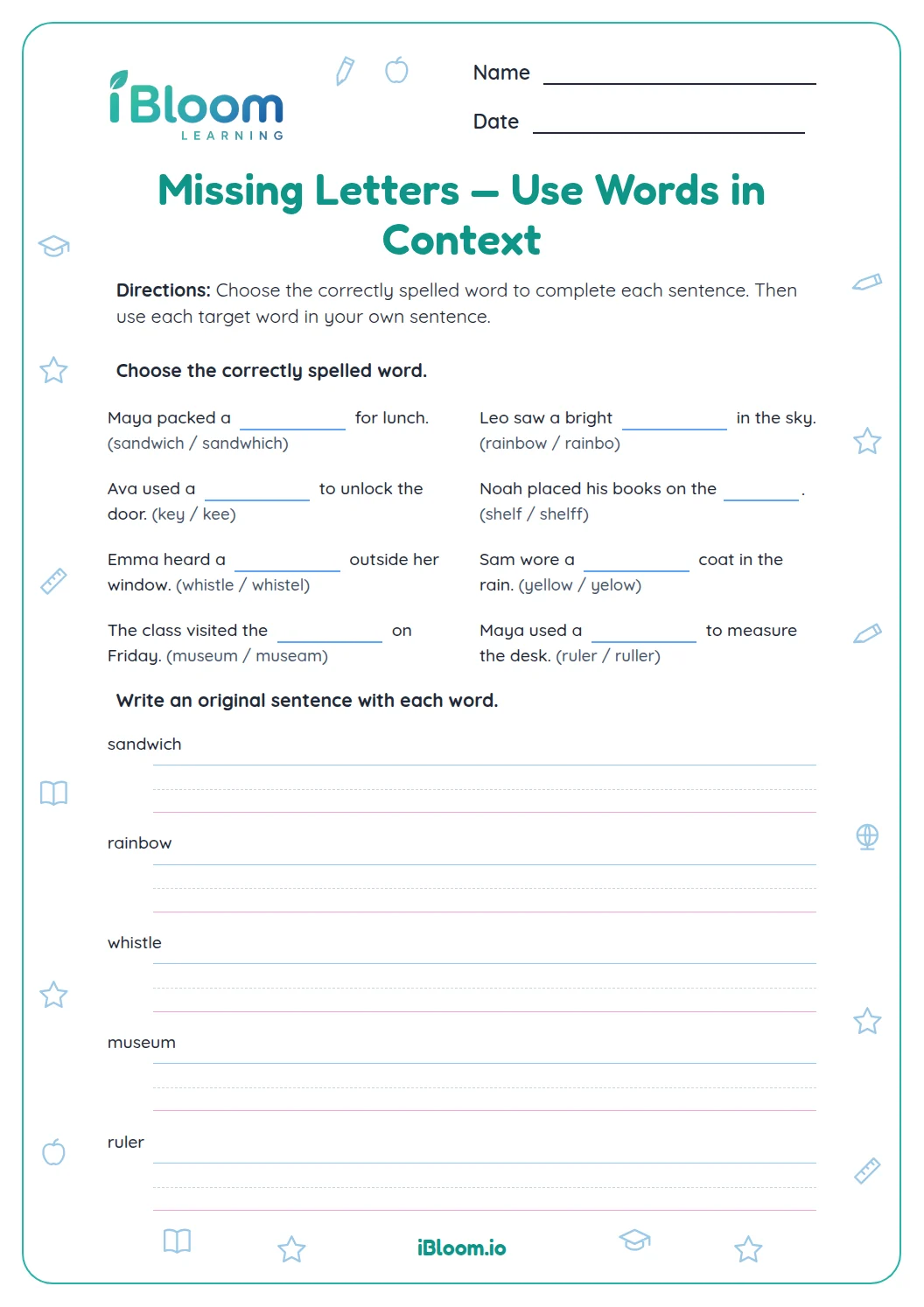
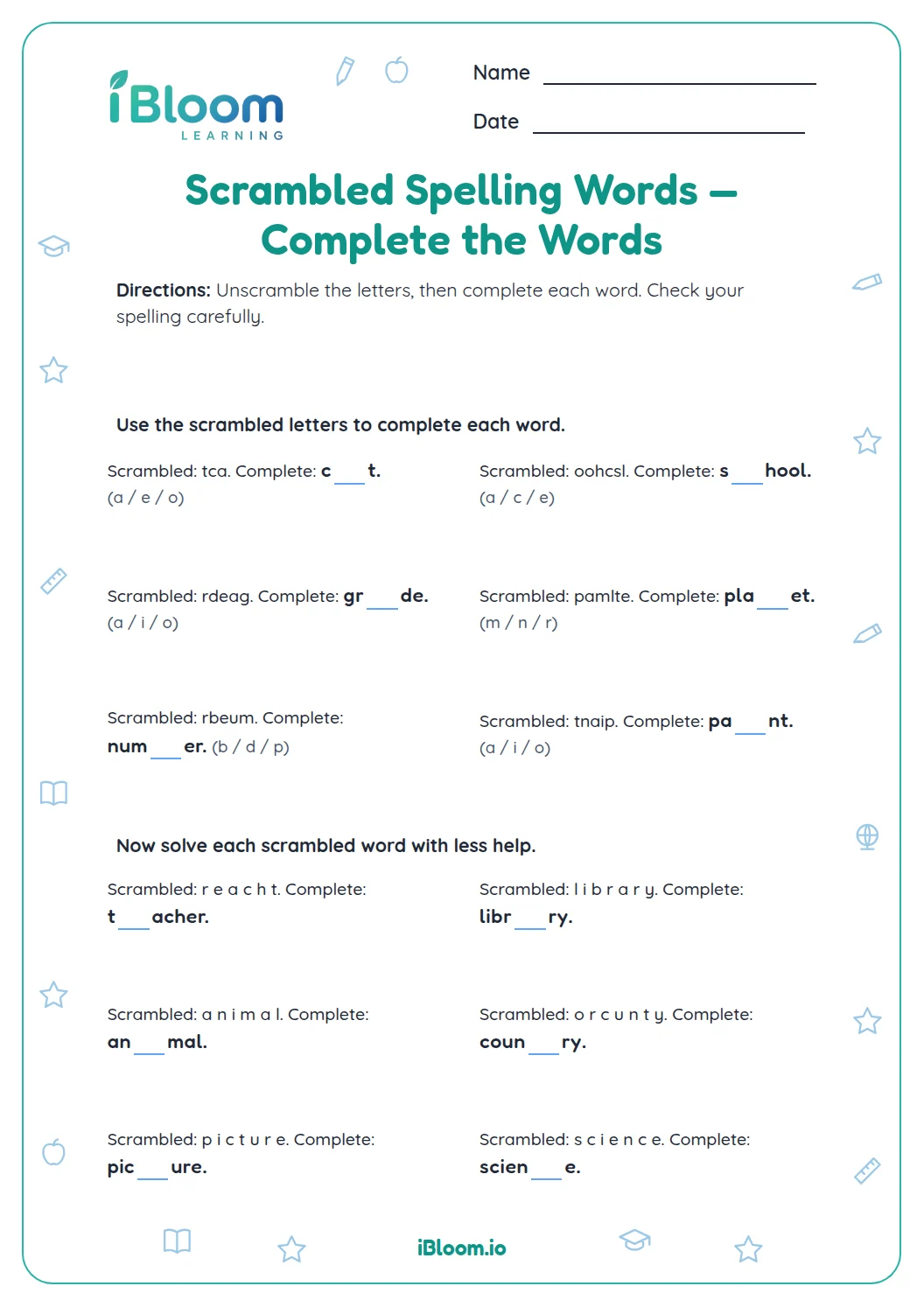
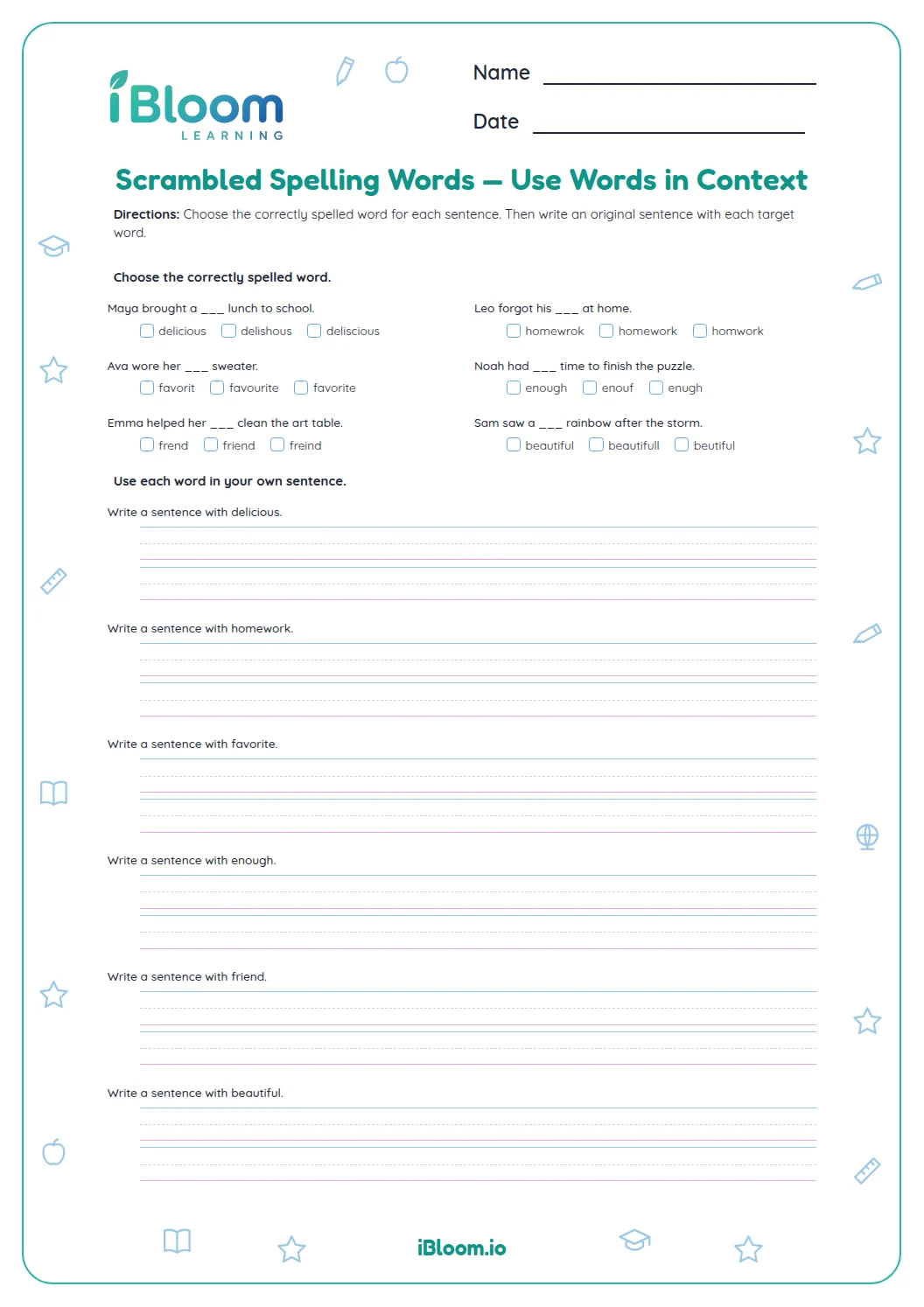
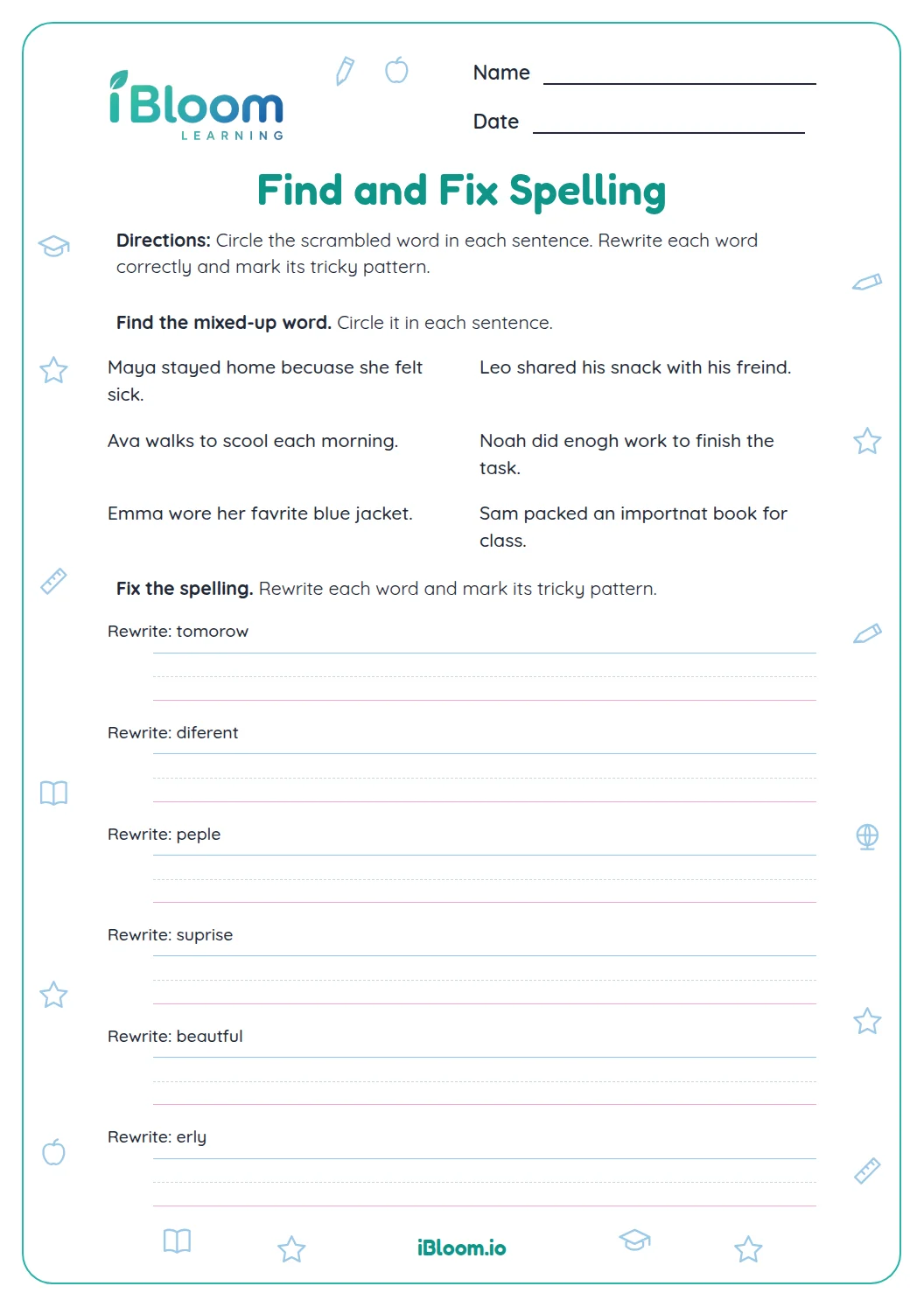
This Grade 3 spelling worksheet combines a seven-clue crossword with vowel-team and spelling-choice practice. Part A clues lead to familiar words; Part B asks children to identify words with ai or oa; Part C matches clues to conventional spellings. The activities practice accurate spelling of studied words and align with Common Core L.3.2e. The worksheet and its separate answer key each span two pages.
Aligned to L.3.2e
How do the crossword clues work?
Part A has seven short clues. Use the clue meaning to write one word in the crossword; crossing letters can help check a spelling.
How can you spot an ai or oa team?
In Part B, look for the two letters together in a word. “Rain” contains ai, while “boat” contains oa.
How do you choose the conventional spelling?
Part C gives a meaning and several spellings. Read each choice carefully and select the standard spelling, such as “road” for a path used by cars and buses.
How to use this worksheet
- 1Read each Part A clue and find its word in the crossword.
- 2Use crossing letters to check crossword spellings.
- 3In Part B, look for the exact ai or oa team named.
- 4In Part C, choose the conventional spelling that matches the meaning.
- 5Review the completed words with the key.
Common spelling slips and fixes
The mistake
Choosing a crossword answer from the clue topic but not its exact meaning.
The fix
Reread the whole clue and check the crossing letters.
The mistake
Looking for the letters ai or oa in any order.
The fix
Check for the exact two-letter team named in the question.
The mistake
Picking a plausible sound-alike spelling.
The fix
Compare the letter sequence with the familiar conventional spelling.
Common Core alignment
This worksheet gives children focused practice with a named Common Core skill.
Spell studied words conventionally while sorting and matching their spelling.
On this sheet: [{'href': '/free-worksheet-generator/crossword', 'label': 'Crossword worksheet generator', 'note': 'Create another clue-based word activity.'}]
Show the official wordingHide the official wording
Use conventional spelling for high-frequency and other studied words and for adding suffixes to base words (e.g., sitting, smiled, cries, happiness).
What to practice next
Make more practice
Further reading
Questions parents and teachers ask
What does the crossword section practice?
Part A gives seven short clues for familiar words and places the answers in a crossword. Children use each clue’s meaning and the crossing letters to check the spelling. The answer key shows the completed grid and clue answers. Pause after each part and ask the learner to explain how the clue or operation supports the answer.
Which vowel teams appear on the worksheet?
Part B focuses on ai and oa. Children choose words containing the requested letter pair, such as ai in “rain” or oa in “boat.” The section asks them to notice the exact vowel team within a word. Pause after each part and ask the learner to explain how the clue or operation supports the answer.
How is Part C different from the crossword?
Part C presents a meaning and several spelling choices. Children select the conventional spelling that matches the clue, such as “road” for a path used by cars and buses. It gives direct spelling-choice practice after the crossword clues. Pause after each part and ask the learner to explain how the clue or operation supports the answer.
Can children complete this spelling sheet at home?
Yes. Children can solve the crossword and choices on their own or with an adult reading clues aloud. Encourage them to check crossing letters and compare the full spelling before using the answer key. Pause after each part and ask the learner to explain how the clue or operation supports the answer.
How long should the worksheet take?
About 20 minutes is a reasonable estimate for seven crossword clues, four vowel-team choices, and four spelling matches. A child who wants to double-check each word may need longer, and the work can be split across two sessions. Pause after each part and ask the learner to explain how the clue or operation supports the answer.