



About this worksheet
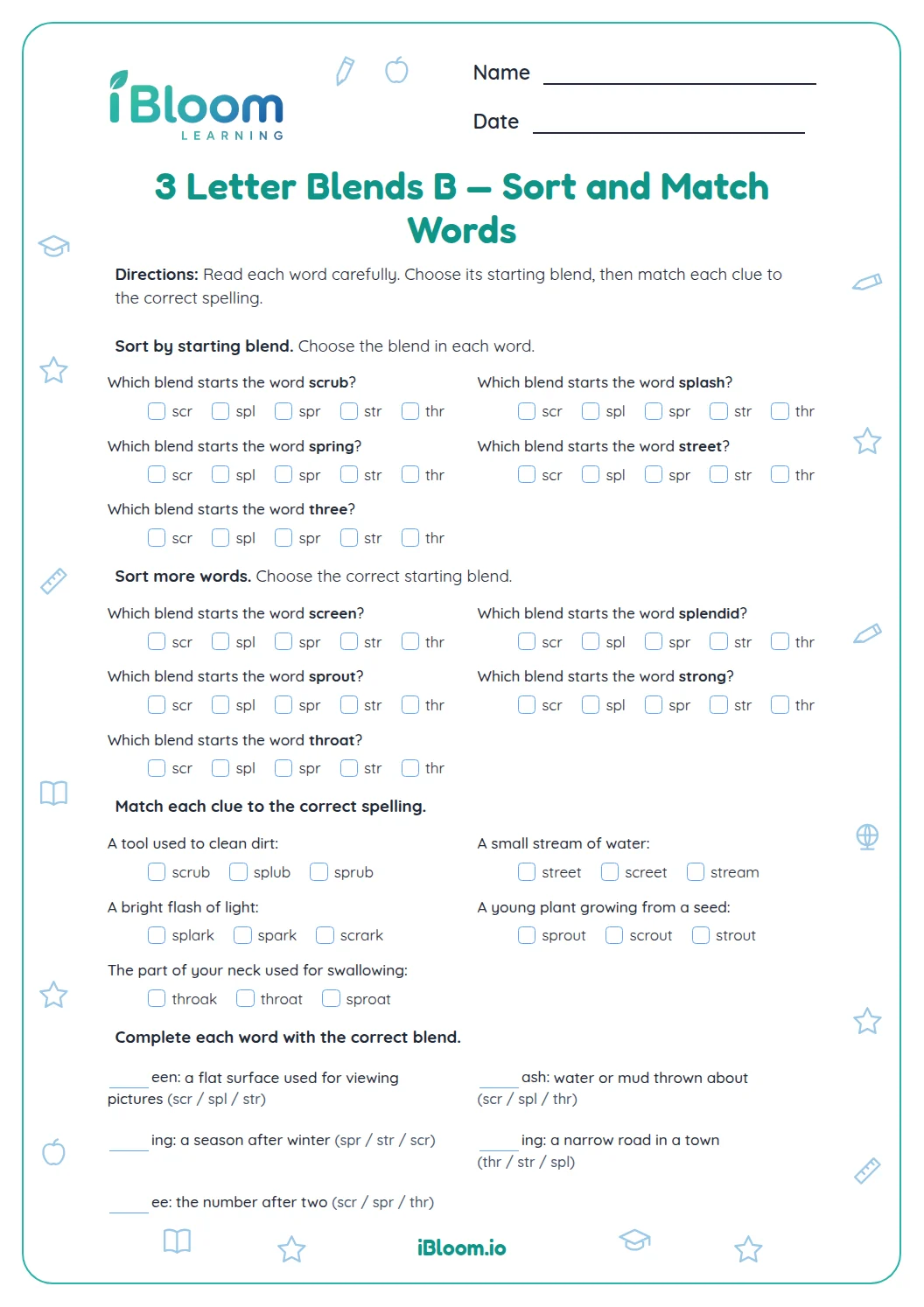
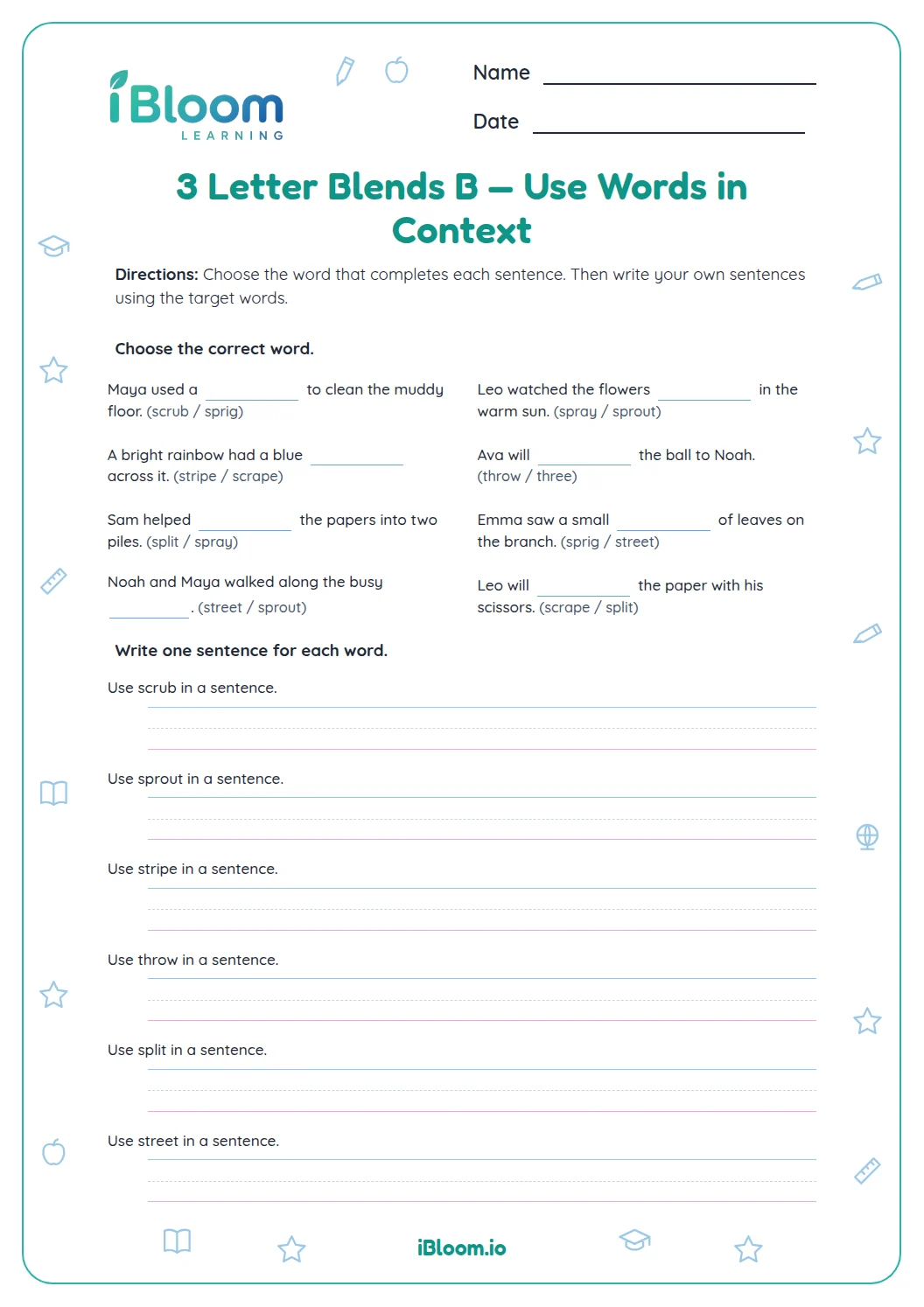
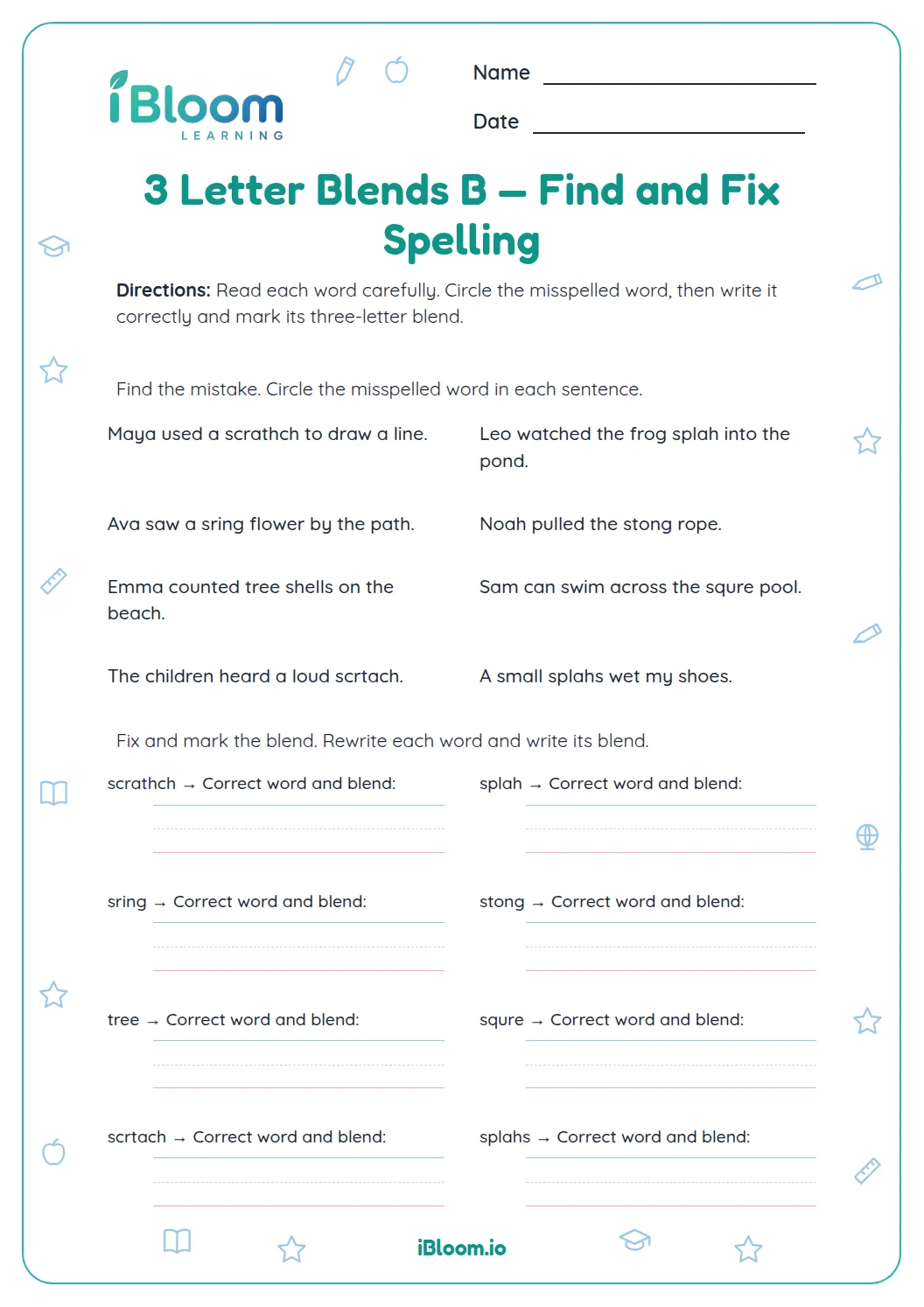
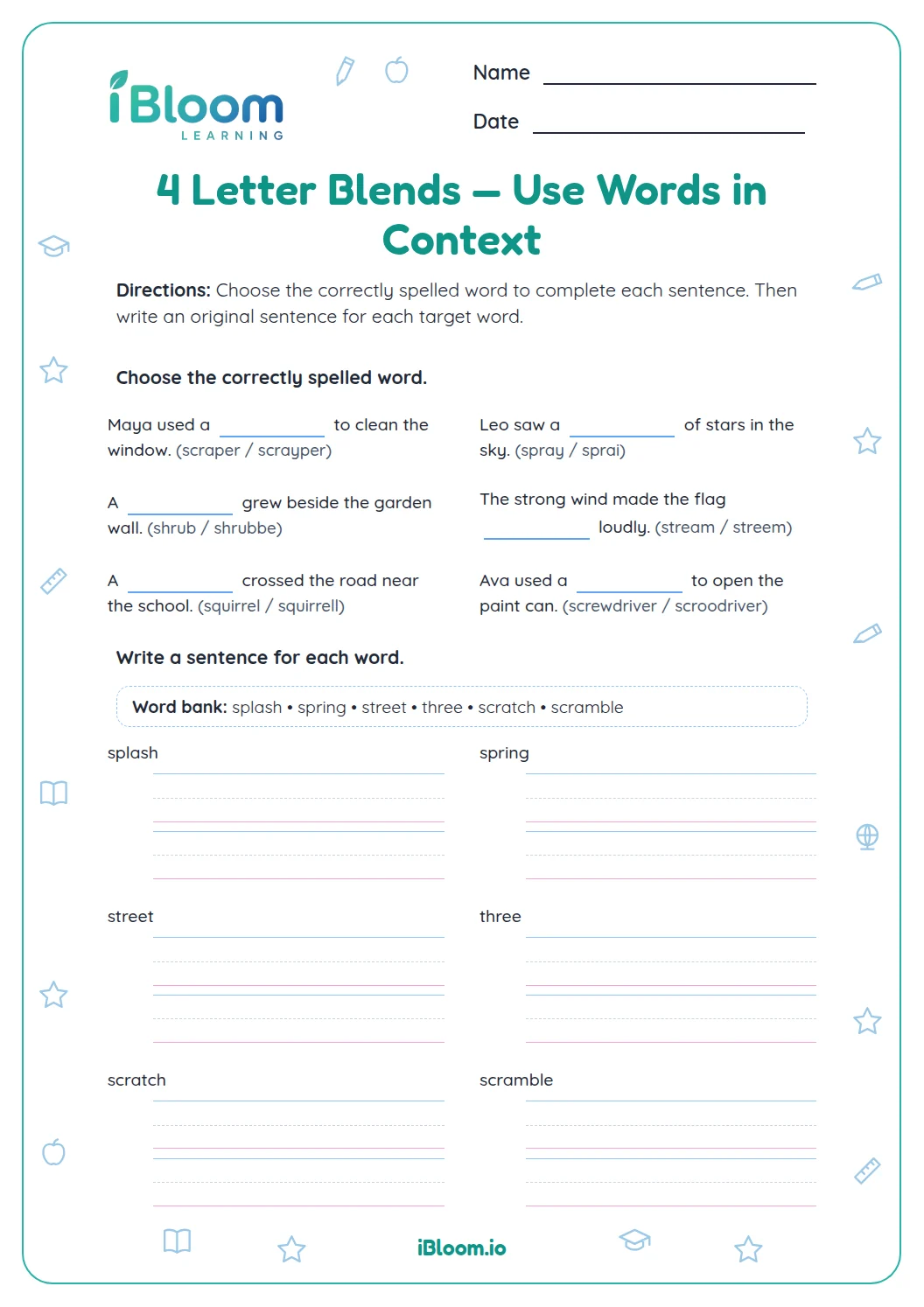
This Grade 3 printable practices words that begin with scr, spl, spr, str, and thr. Part A asks children to choose a correctly spelled whole word that fits each sentence. Part B asks them to write a complete word without choices. The answer key is included.
Aligned to L.3.2f
What is a three-letter blend?
A consonant blend places two or three consonants together, with each sound heard in the word. This worksheet focuses on five three-letter beginnings: scr, spl, spr, str, and thr. Children read the word as a whole while noticing the opening letters.
The sentence gives a meaning clue. A scraper smooths an edge, and a sprout begins to grow; both the spelling and the sentence must fit.
How does a sentence help with spelling?
Read the complete sentence first, then test the spelling that makes sense in it. For a blank, say the target word, listen to its beginning, and write the complete spelling.
- 1The bean seed began to ___ in the warm soil.
- 2A seed begins to grow by sprouting.
- 3The word is sprout, which begins with spr.
- 4Write sprout in the blank.
What does each part ask children to do?
Part A has eight sentences with three whole-word choices each. Part B has eight sentence blanks and no word bank. The word contexts include gardening, animals, music, and everyday actions, with one intended answer per question.
How to use this worksheet
- 1Read the entire sentence before choosing.
- 2Say the target word aloud and listen for its first three letters.
- 3In Part A, compare the spellings before selecting one.
- 4In Part B, write the complete word in the blank.
- 5Reread the sentence to make sure the word fits its meaning.
Common mistakes and quick fixes
The mistake
Choosing by sound alone
The fix
Check all three beginning letters as well as the rest of the word.
The mistake
Writing only the blend
The fix
Use the sentence clue to spell the whole missing word.
The mistake
Mixing up similar choices
The fix
Read each choice slowly and compare the letters in its opening blend.
Common Core alignment
The questions ask children to use recognizable spelling patterns while selecting and writing words.
Apply spelling patterns when choosing and writing words.
On this sheet: Children select or write words that use the target beginning blends.
Show the official wordingHide the official wording
Use spelling patterns and generalizations (e.g., word families, position-based spellings, syllable patterns, ending rules, meaningful word parts) in writing words.
What to practice next
Make more practice
Further reading
Questions parents and teachers ask
Which three-letter blends appear on this worksheet?
The words practice scr, spl, spr, str, and thr at the beginnings of words. Part A asks children to recognize a correctly spelled whole word in a sentence. Part B asks them to write a different whole word without choices.
How many spelling questions are included?
There are 16 questions across two parts: eight multiple-choice spelling selections and eight whole-word blanks. A separate answer key lists the intended word for each sentence. Read the context aloud if a word is unfamiliar. Ask the child to identify the blend and reread the completed sentence.
Why does Part B ask for the whole word?
Writing the whole word gives children practice connecting the three-letter beginning blend to the rest of its spelling. The sentence supplies a meaning clue, so rereading helps check whether the completed word makes sense. Ask the child to identify the blend and reread the completed sentence.
Should my child say the blend aloud?
Saying the word aloud can help children notice its beginning sounds. Then have them look at the first three letters and compare them with the spelling choices. The rest of the word matters too, especially in Part B. Ask the child to identify the blend and reread the completed sentence.
What if a child writes a different word that fits?
Part A gives three complete words to compare. Part B has no choices, so children supply the entire missing word. In both parts, the sentence provides a clue about which word fits the meaning. Ask the child to identify the blend and reread the completed sentence.
Is the worksheet appropriate for Grade 3?
Yes. The separate answer key lists each intended word, including the Part B answers. After checking, ask the child to point out the first three letters and name the blend that begins that word. Ask the child to identify the blend and reread the completed sentence.