









About this worksheet
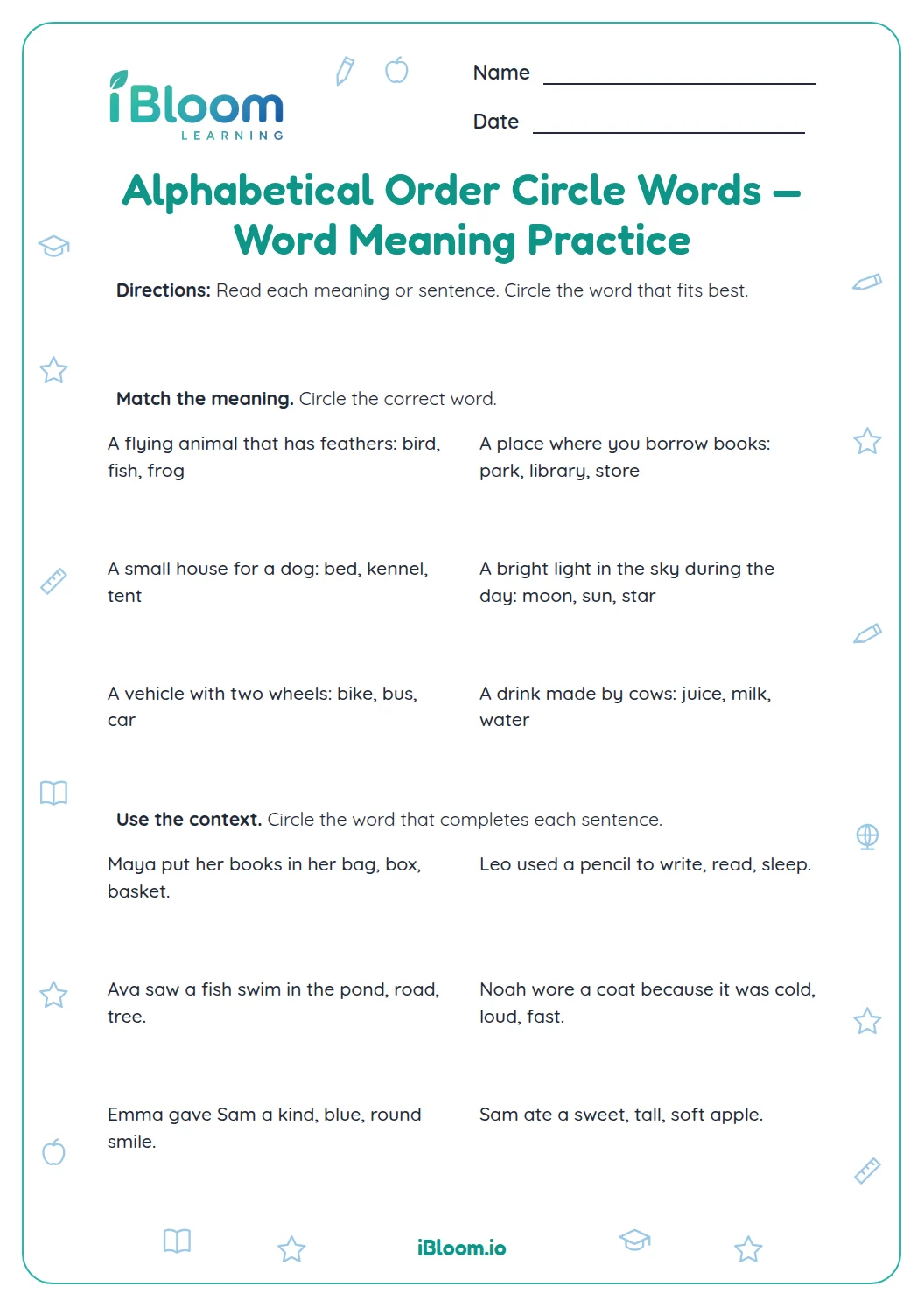
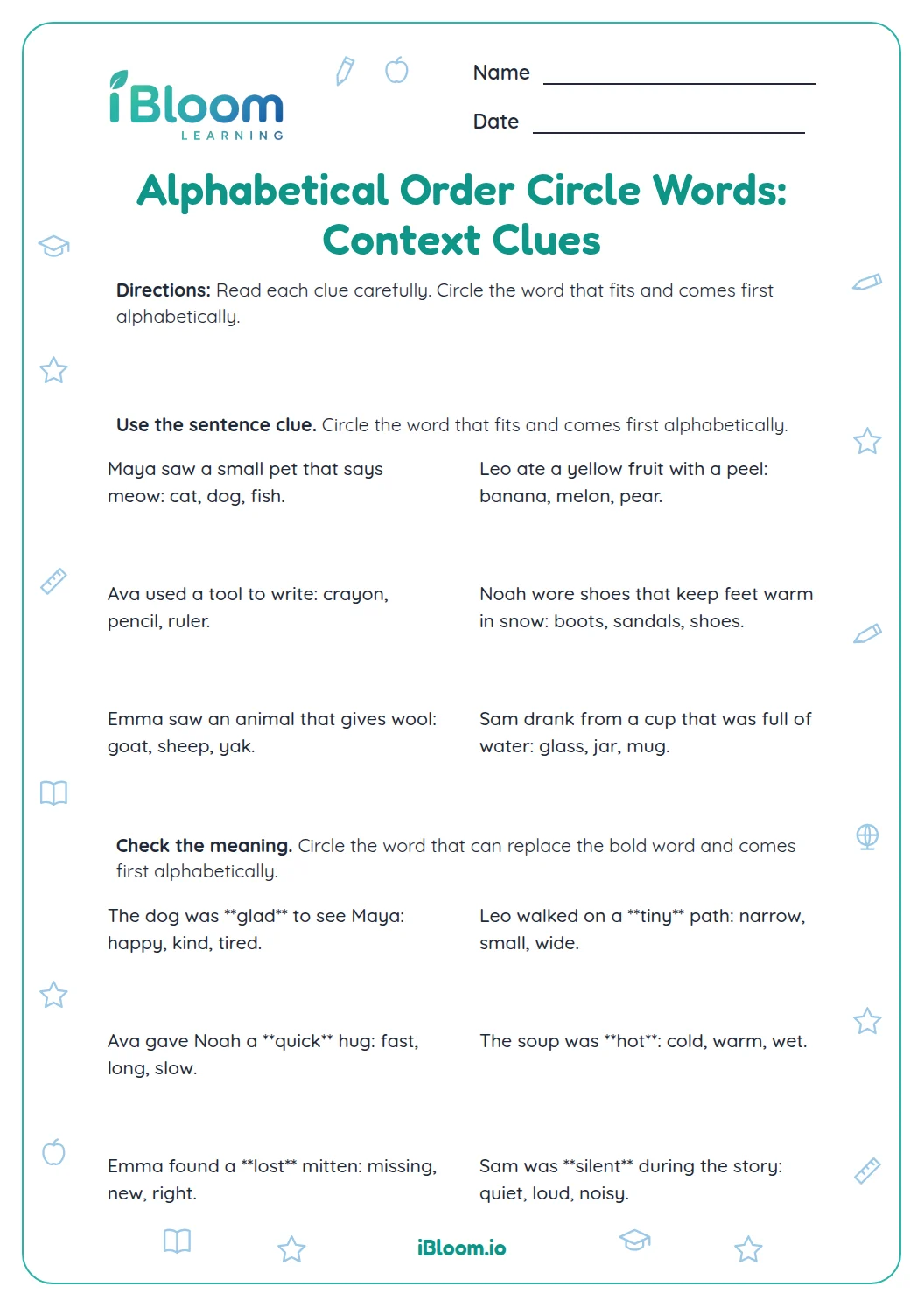
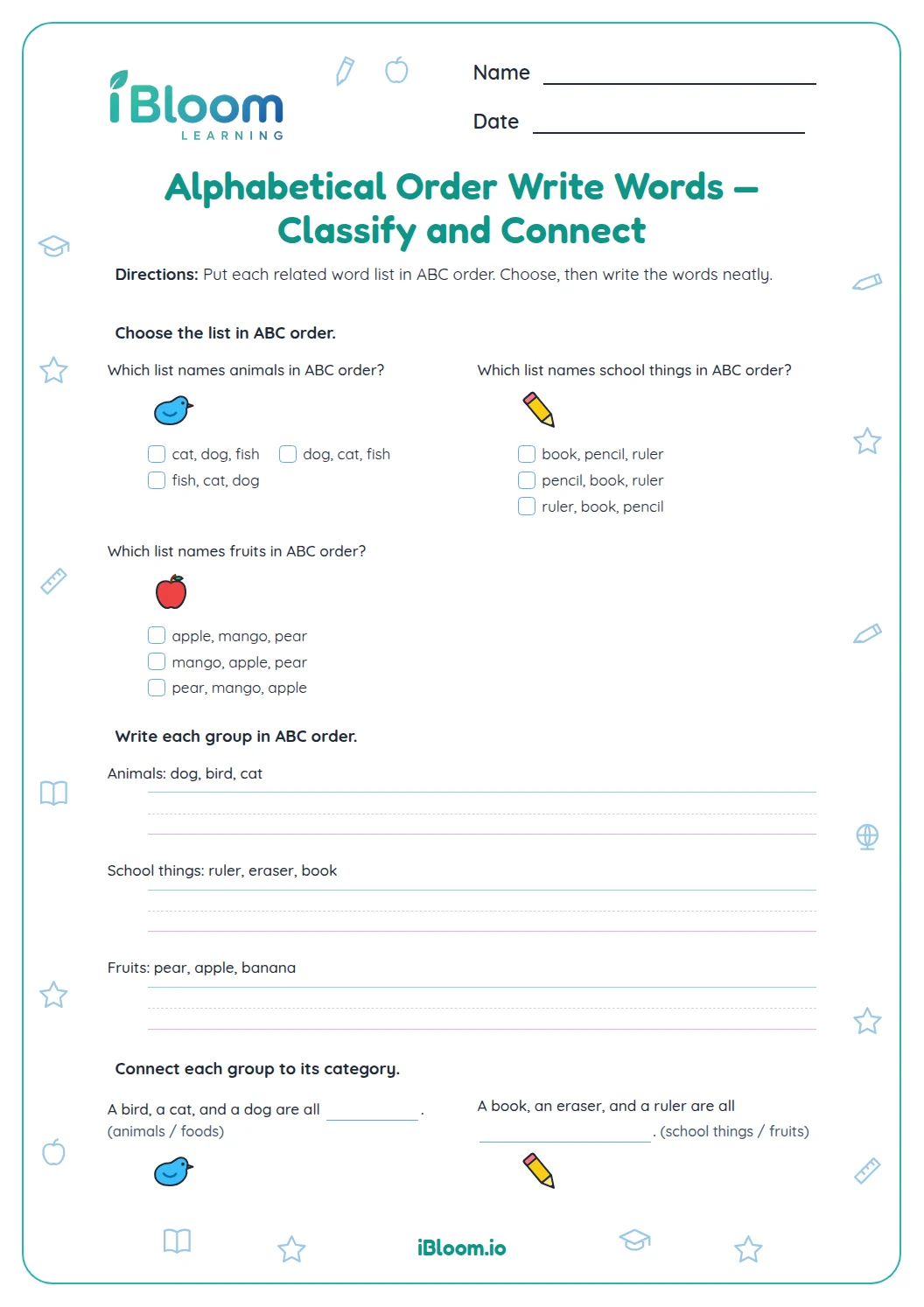
This Grade 1 printable gives learners 14 chances to compare familiar words by their beginning letters. Children write five three-word groups in A-to-Z order, circle the first word in four short rows, and answer five questions about words that come first, last, or belong in an ordered list. The groups use short, familiar words and include examples that begin with the same letter, so learners need to compare the next letter when needed. The two-page sheet has a separate answer key.
How do children put words in A-to-Z order?
Look at the first letter in each word. If two words begin with the same letter, compare the next letters until they differ. Write the word with the earlier letter first. The first part has five groups of three familiar words.
- 1nest, map, leaf
- 2Compare first letters: n, m, l
- 3l comes before m, and m before n
- 4Write: leaf, map, nest
- Part A: write five groups in order
- Part B: circle the first word in four rows
- Part C: answer five first, last, and order checks
What does “circle the first word” mean?
It means choose the word that would appear earliest in a dictionary-style A-to-Z list. For ant, kite, and leaf, ant comes first because A precedes K and L. In rows with the same first letter, look at the next letter.
How can families check the work?
Ask the learner to say the first letter of each word, then point to the letter that comes earliest. If two starting letters match, compare the next letters. Use the answer key after the child has completed all three parts.
How to use this worksheet
- 1Read every word in the group before answering.
- 2Say the first letter of each word and compare them in ABC order.
- 3When first letters match, compare the next letter.
- 4Write the complete group in order or circle the earliest word as directed.
- 5Check the answer key and explain one choice aloud.
Check these common slips
The mistake
Comparing only the first letter when two words start alike.
The fix
Move to the second letter, as with bat, bell, and bike.
The mistake
Choosing the word that is most familiar instead of the earliest alphabetically.
The fix
Name the letters in order and compare their positions.
The mistake
Reversing the order when asked for the last word.
The fix
Follow whether the prompt asks for first or last before circling.
What to practice next
Make more practice
Questions parents and teachers ask
How do children alphabetize words that start with the same letter?
Compare the next letter. For bat, bell, and bike, all three begin with B, so compare a, e, and i. A comes first, so bat is first. Continue one letter at a time whenever the letters still match.
What does “comes first” mean on this sheet?
It means the word that would appear earliest in A-to-Z order. Look at each word’s letters from left to right and stop at the first difference. Several questions ask for a first word; others ask for the last word or a fully ordered list.
How many questions are included?
There are 14 questions in three parts: five groups to write in order, four circle-the-first-word rows, and five order checks. The answer key is separate and lists the correct order or selected word for every item. The answer key is a separate printable page set and lists answers for every part.
Is the word list appropriate for Grade 1?
The page uses short, familiar words such as dog, apple, sun, hat, and jam. Children can focus on letter order rather than decoding long vocabulary. Some groups share an initial letter, giving practice with comparing a second letter.
How should I help without giving the answer?
Ask your child to say the first letter of each choice and point to the letter that comes earliest in the alphabet. When two words share a first letter, prompt them to compare the next letter. Then let them make the choice and check it with the key.
Does the answer key come with the worksheet?
Yes. A separate answer key is included for all 14 questions. It shows the written word orders and the words or lists selected in the circle and order-check parts. Learners can finish the sheet first, then use the key to review any differences.