

About this worksheet
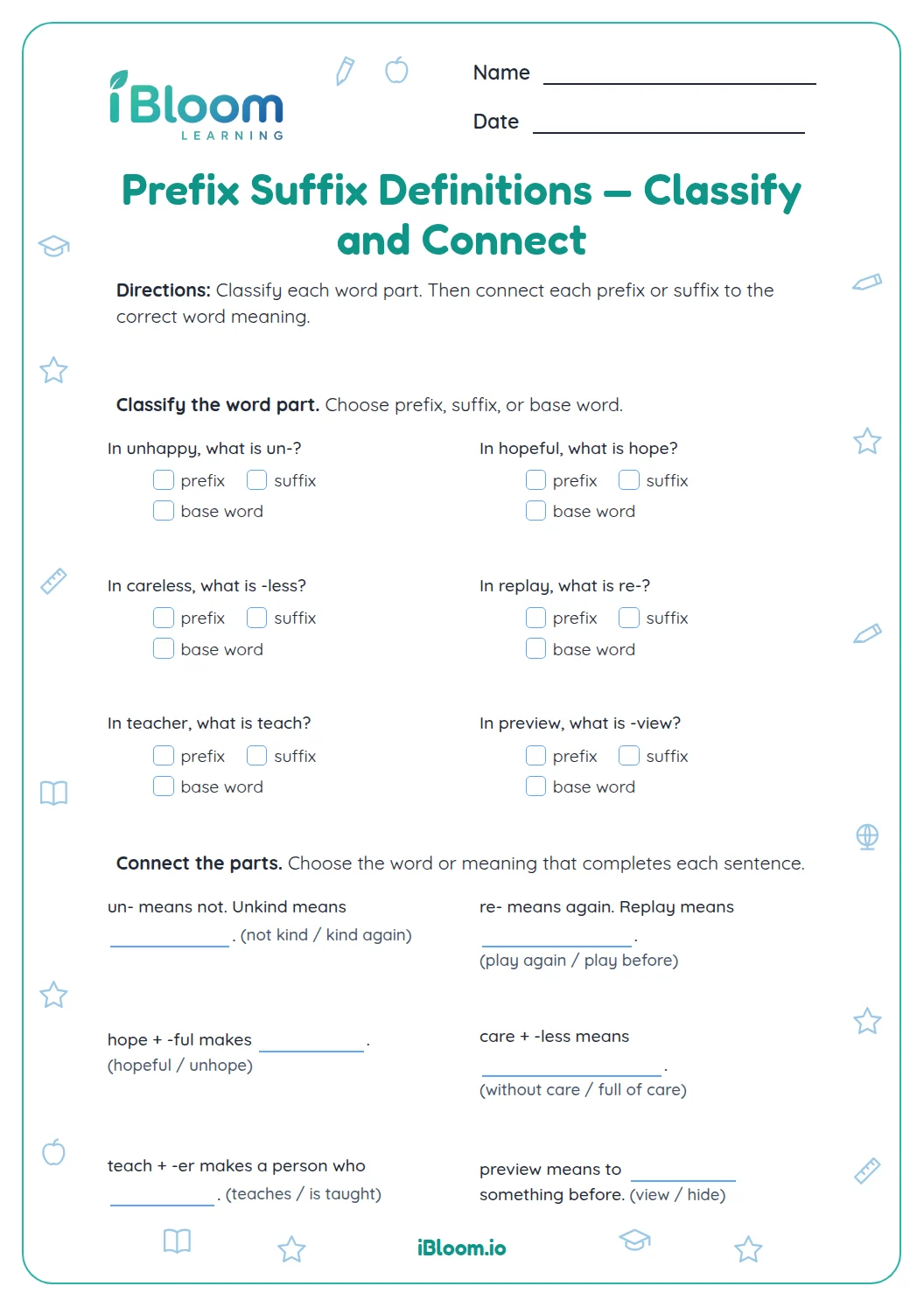
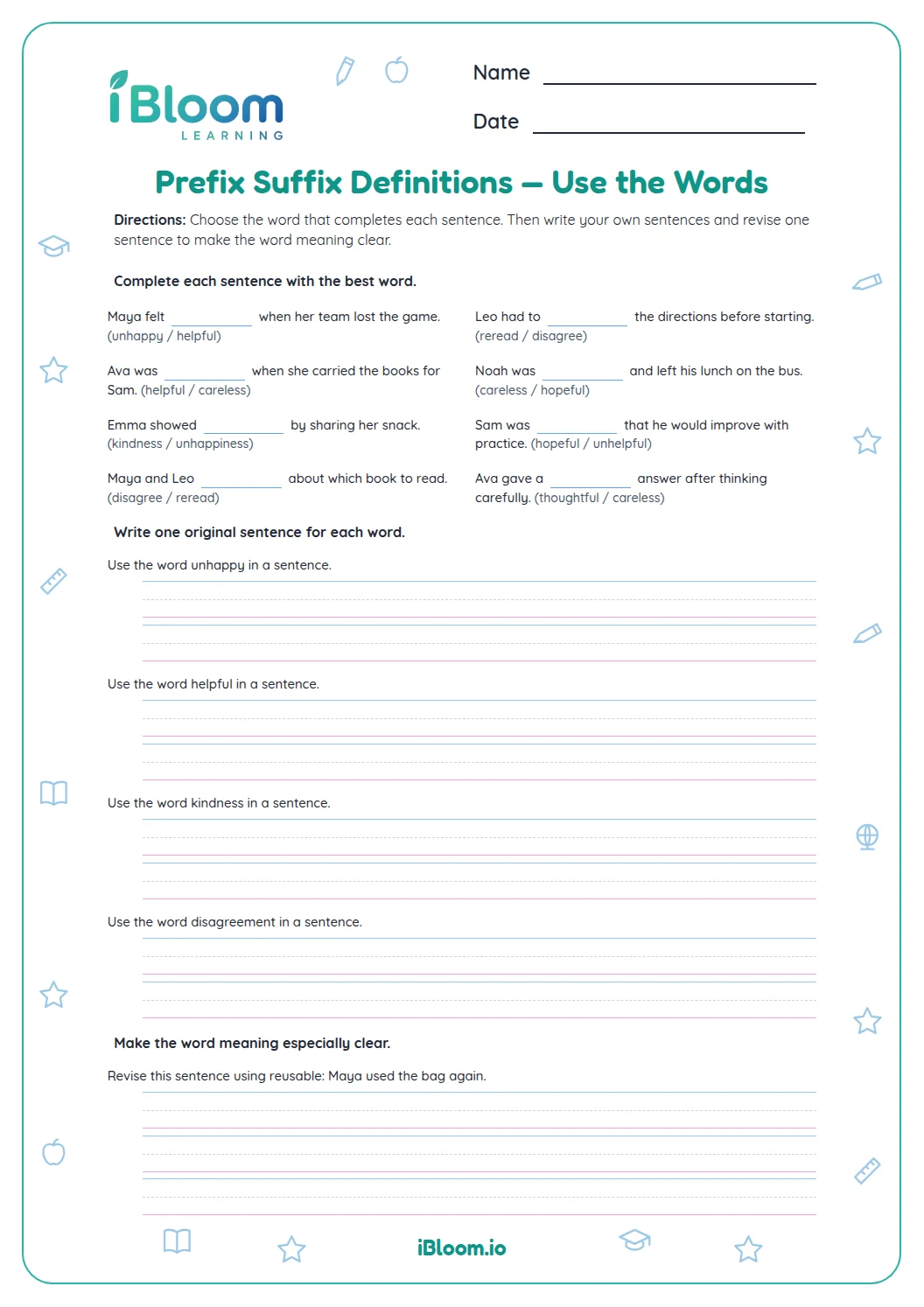
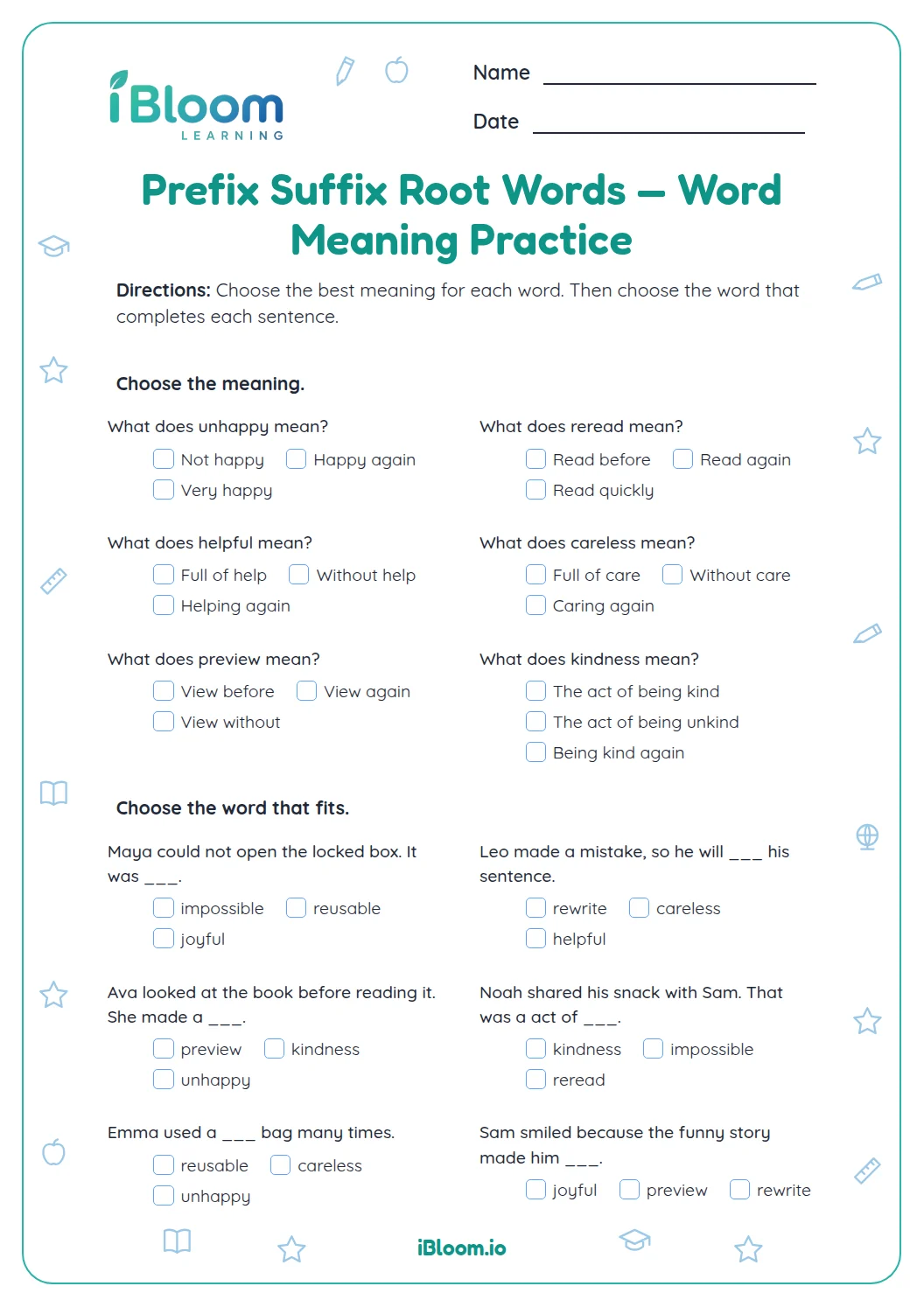
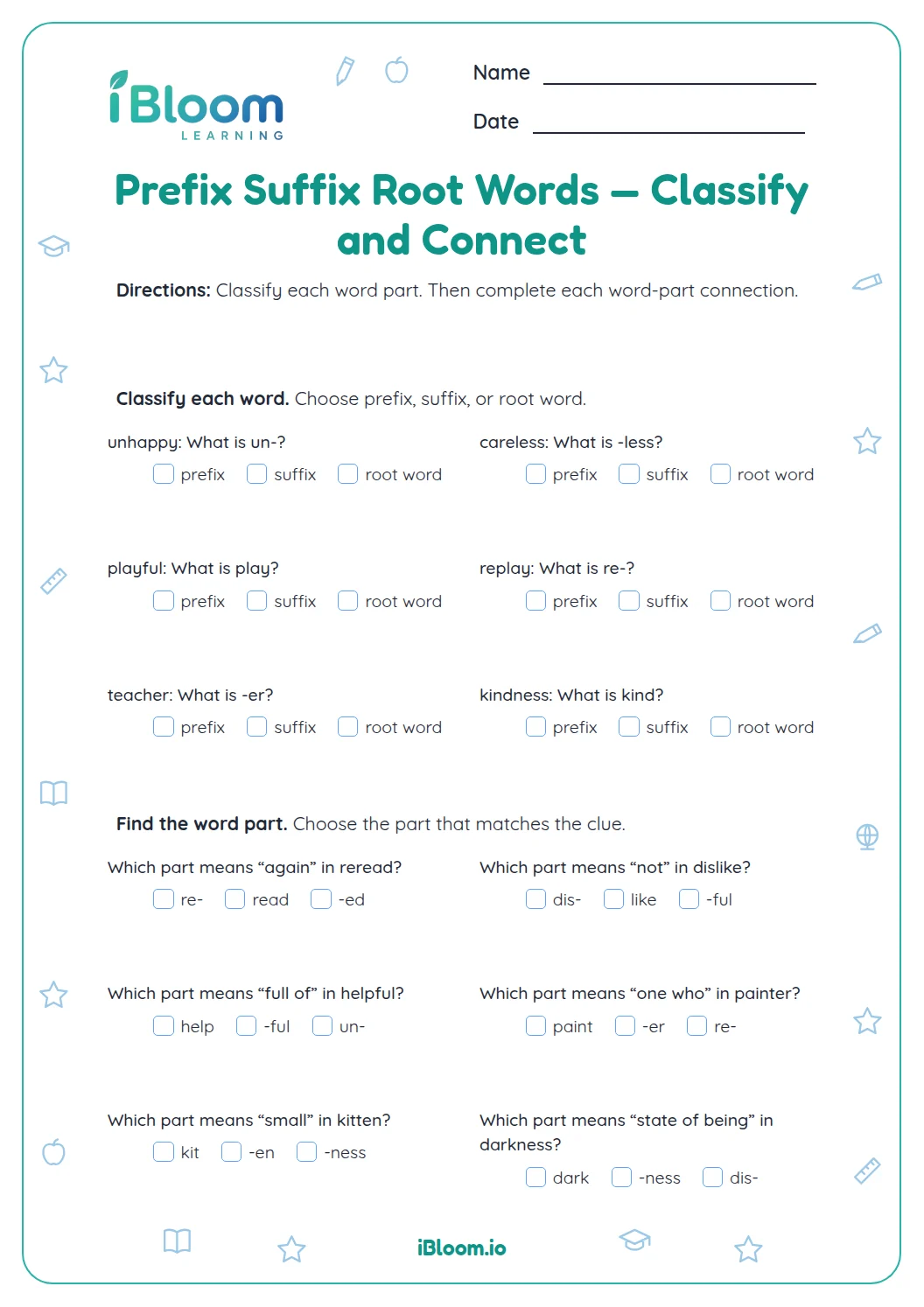
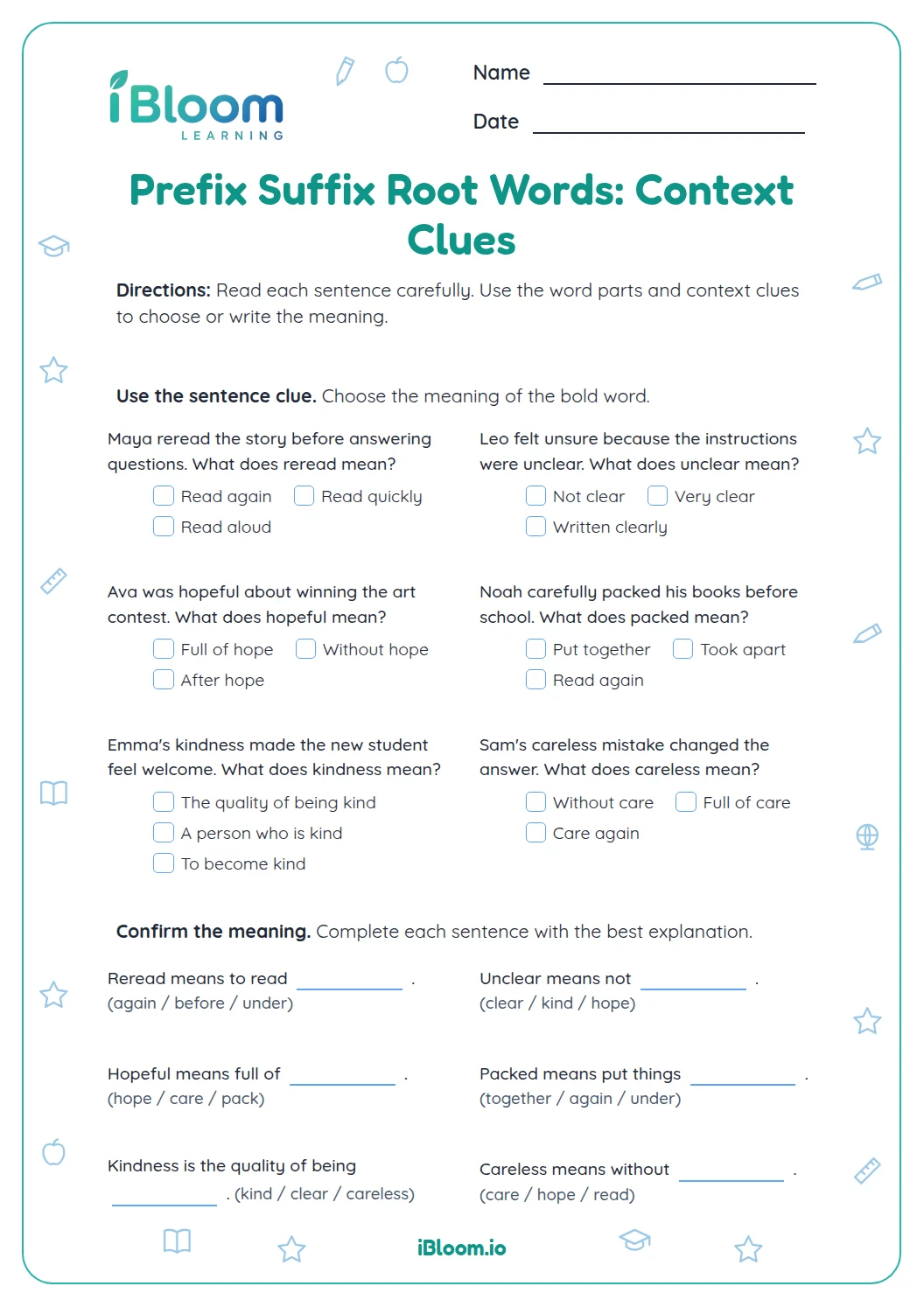
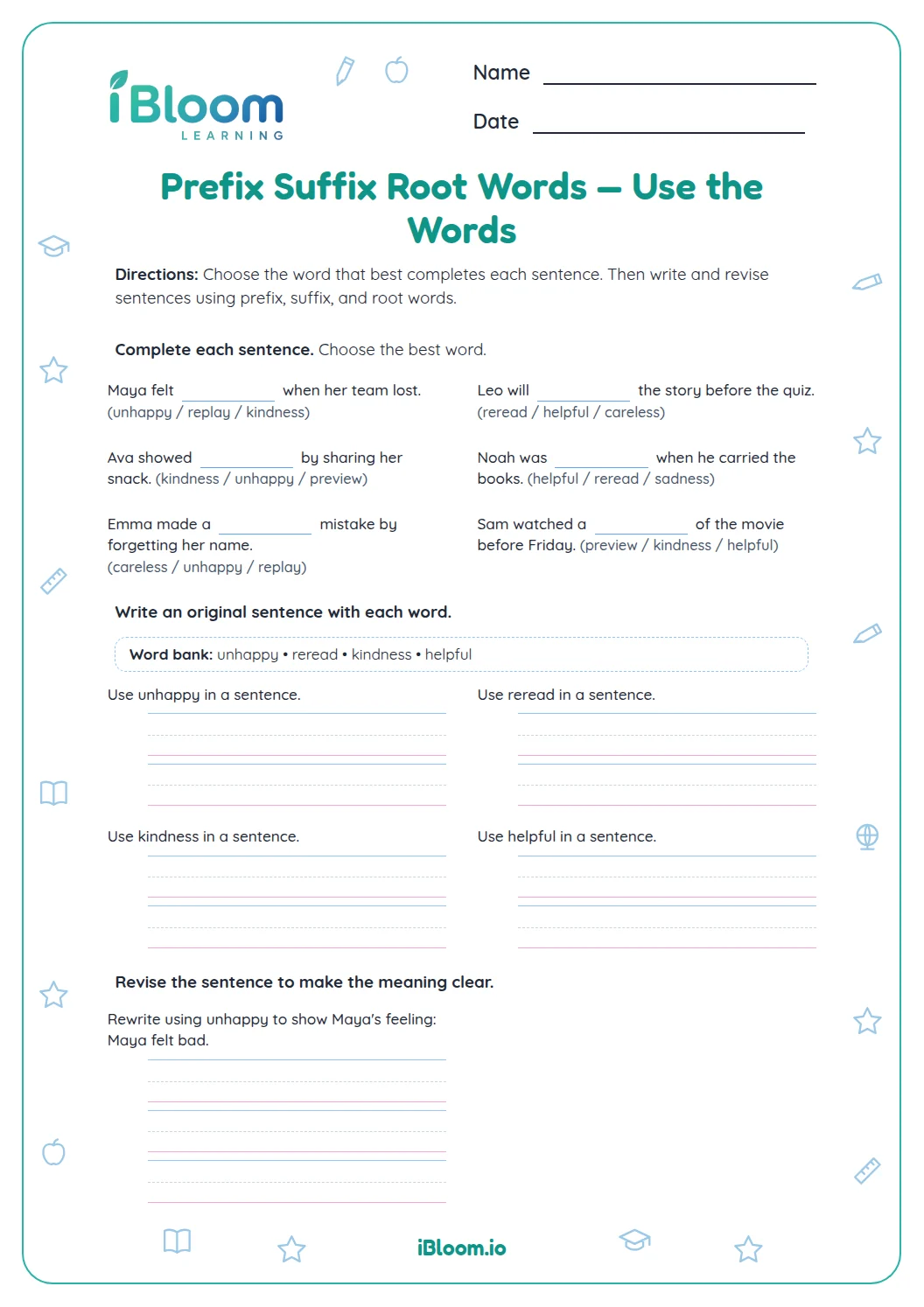
This Grade 3 vocabulary page gives 14 multiple-choice items about common affixes. In Part A, learners use the whole word to choose meanings for words such as unhappy, replay, and careless. In Part B, they identify what a prefix or suffix contributes to a word. The practice aligns with CCSS L.3.4b, and a separate answer key is included.
Aligned to L.3.4b
What is an affix?
A prefix is a word part added at the beginning of a base word, and a suffix is added at the end. In unhappy, un- changes happy to mean not happy. In joyful, -ful changes joy to an adjective meaning full of joy.
How does the worksheet use whole words?
Part A asks learners to choose a definition for words such as replay and careless. The child reads the whole word, notices the familiar base and affix, then checks which definition matches the combined meaning.
What changes in Part B?
Part B names a prefix or suffix and asks what it adds to a word. For example, learners identify re- as again and -ment as the act or result. This helps connect an affix’s meaning across more than one word.
- 1unhappy
- 2un- means not; happy is the base word.
- 3unhappy means not happy.
How to use this worksheet
- 1Read the entire word before choosing.
- 2Find the base word you already know.
- 3Locate the beginning or ending word part.
- 4Combine the base meaning and affix meaning.
- 5Check that the choice describes the complete word.
Common mistakes and quick fixes
The mistake
Using the base word alone.
The fix
Include the meaning added by the prefix or suffix.
The mistake
Mixing up a prefix and a suffix.
The fix
A prefix comes before the base; a suffix comes after it.
The mistake
Choosing a definition that fits only part of the word.
The fix
Read the choice with the full word and check that both parts make sense.
Common Core alignment
This worksheet gives practice with the skill named in the standard.
Determine a new word’s meaning when a known affix is added to a known word.
On this sheet: The questions use familiar prefixes and suffixes to determine the meanings of words.
Show the official wordingHide the official wording
Determine the meaning of the new word formed when a known affix is added to a known word (e.g., agreeable/disagreeable, comfortable/uncomfortable, care/careless, heat/preheat).
What to practice next
Further reading
Questions parents and teachers ask
What is the difference between a prefix and a suffix?
A prefix is attached to the beginning of a base word, as un- is in unhappy. A suffix is attached to the end, as -ful is in joyful. This worksheet asks learners to use both kinds of word parts to understand familiar Grade 3 words.
How many questions are on the page?
There are 14 multiple-choice questions in two parts. The first six ask for whole-word meanings, and the next eight ask learners to identify meanings of prefixes or suffixes. The answer key is a separate page. Ask which word part supports that meaning.
What does re- mean in rebuild?
In rebuild, re- means again, so rebuild means build again. The worksheet includes this kind of prefix question in Part B, where learners connect an affix to the meaning it adds to a base word. Ask which word part supports that meaning.
Can a child use the answer key while working?
It is useful to complete a part first, then check the key. If an answer differs, ask the learner to point out the base word and affix and explain how their meanings combine. That makes a correction part of the word study.
How long does the worksheet take?
Plan for about 15 minutes to read and answer the 14 questions. Learners may take longer if they talk through unfamiliar words or compare the meaning of each answer choice. Adults can read the directions aloud if helpful. Ask which word part supports that meaning.