




About this worksheet
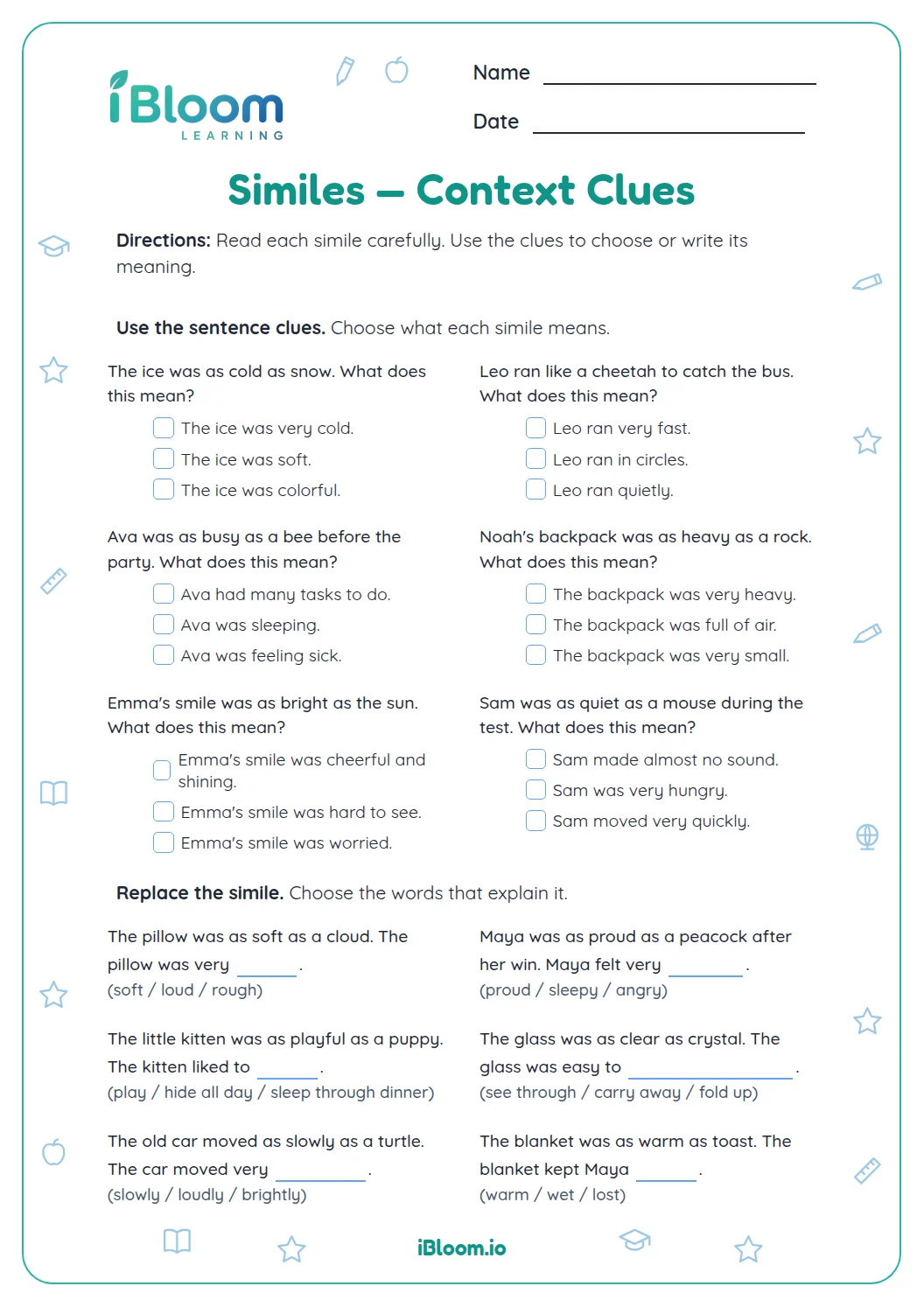
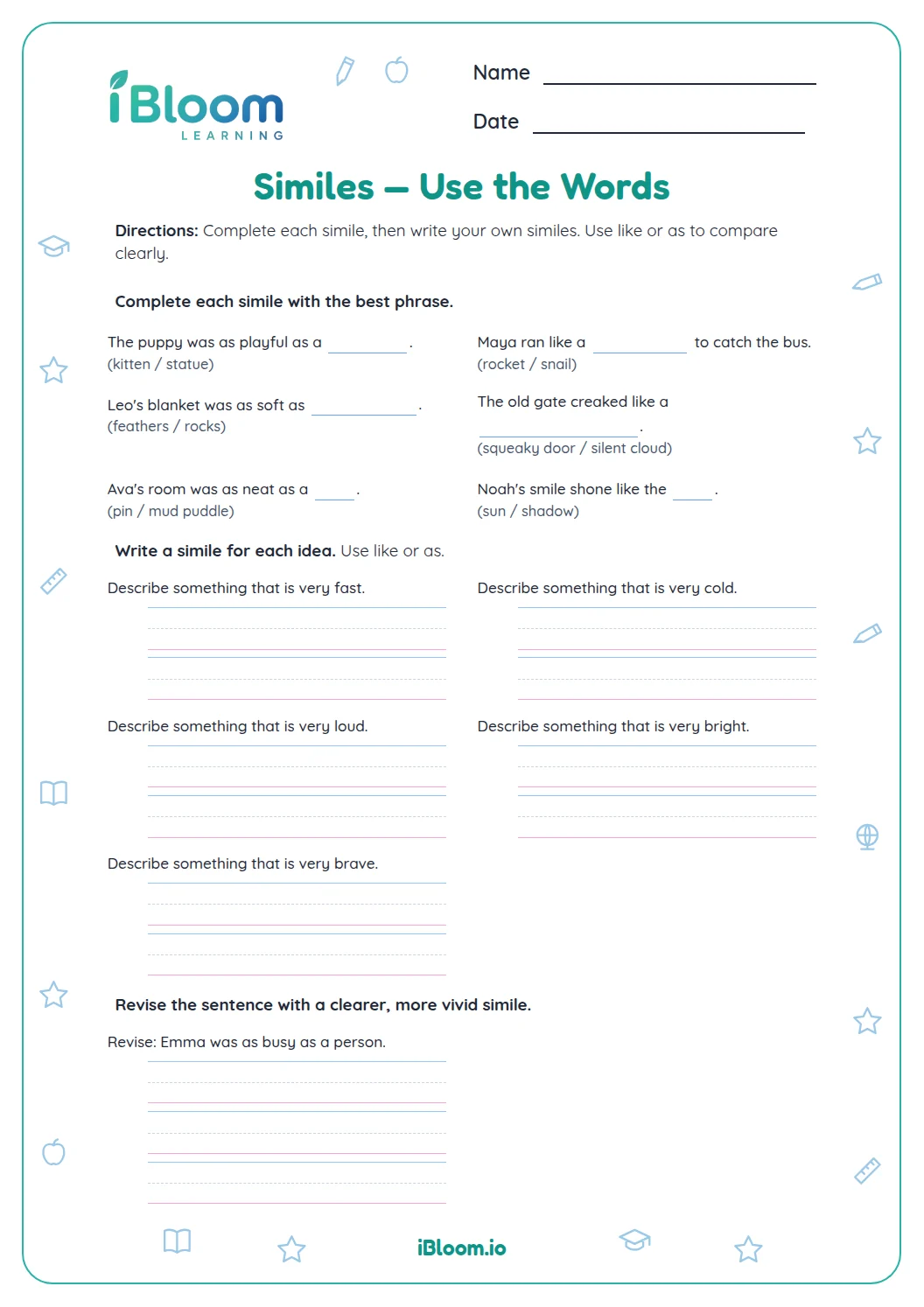
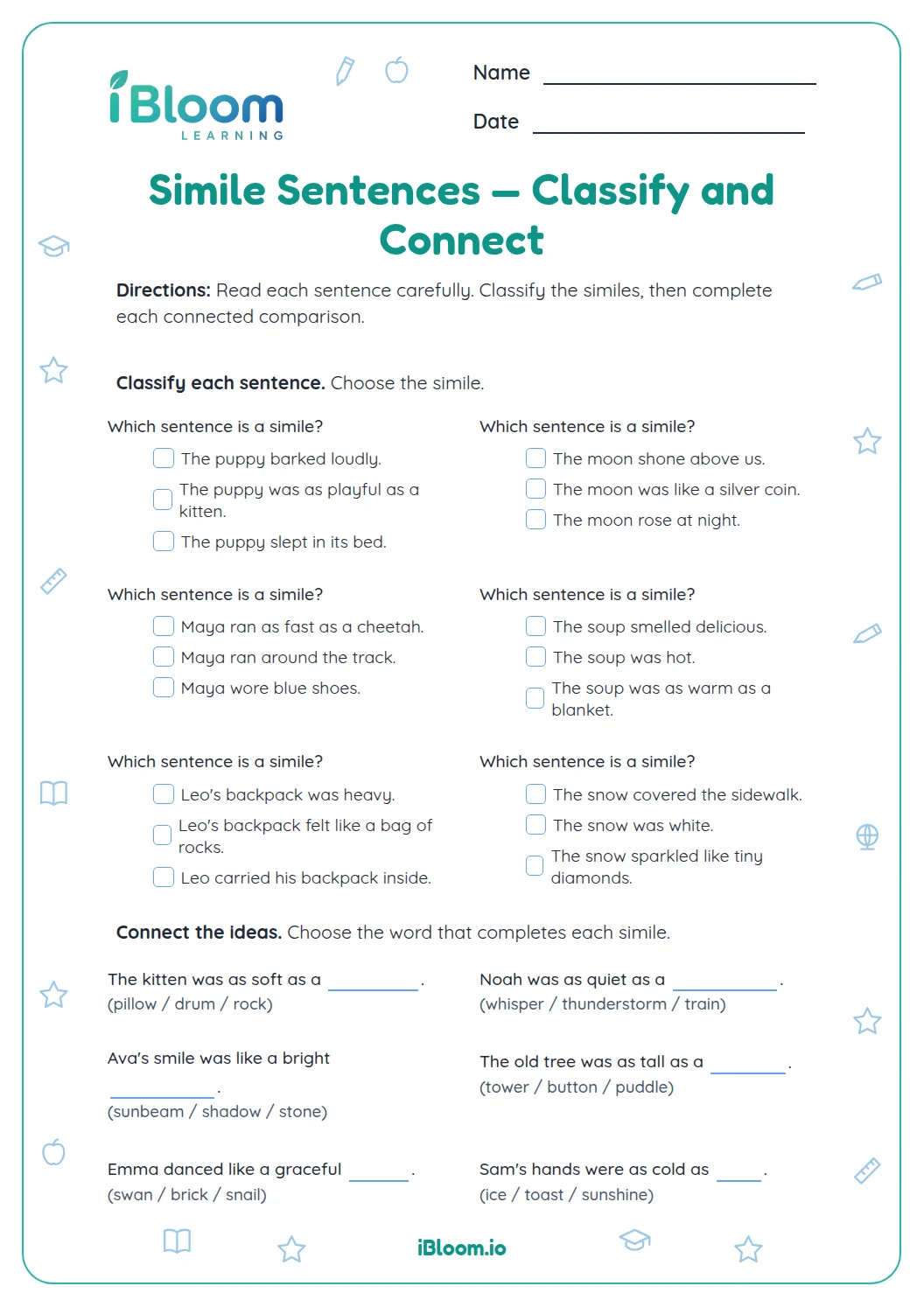
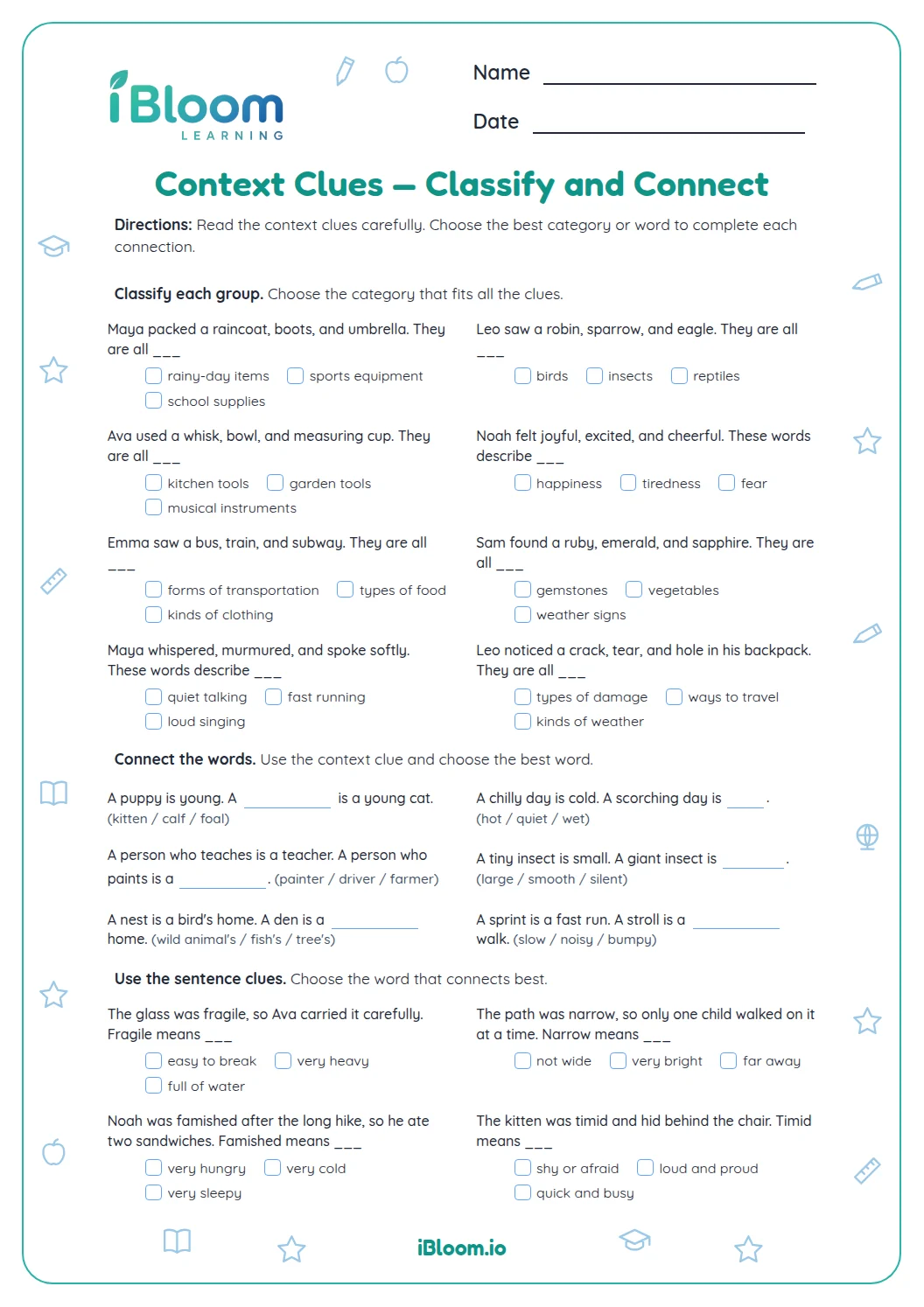
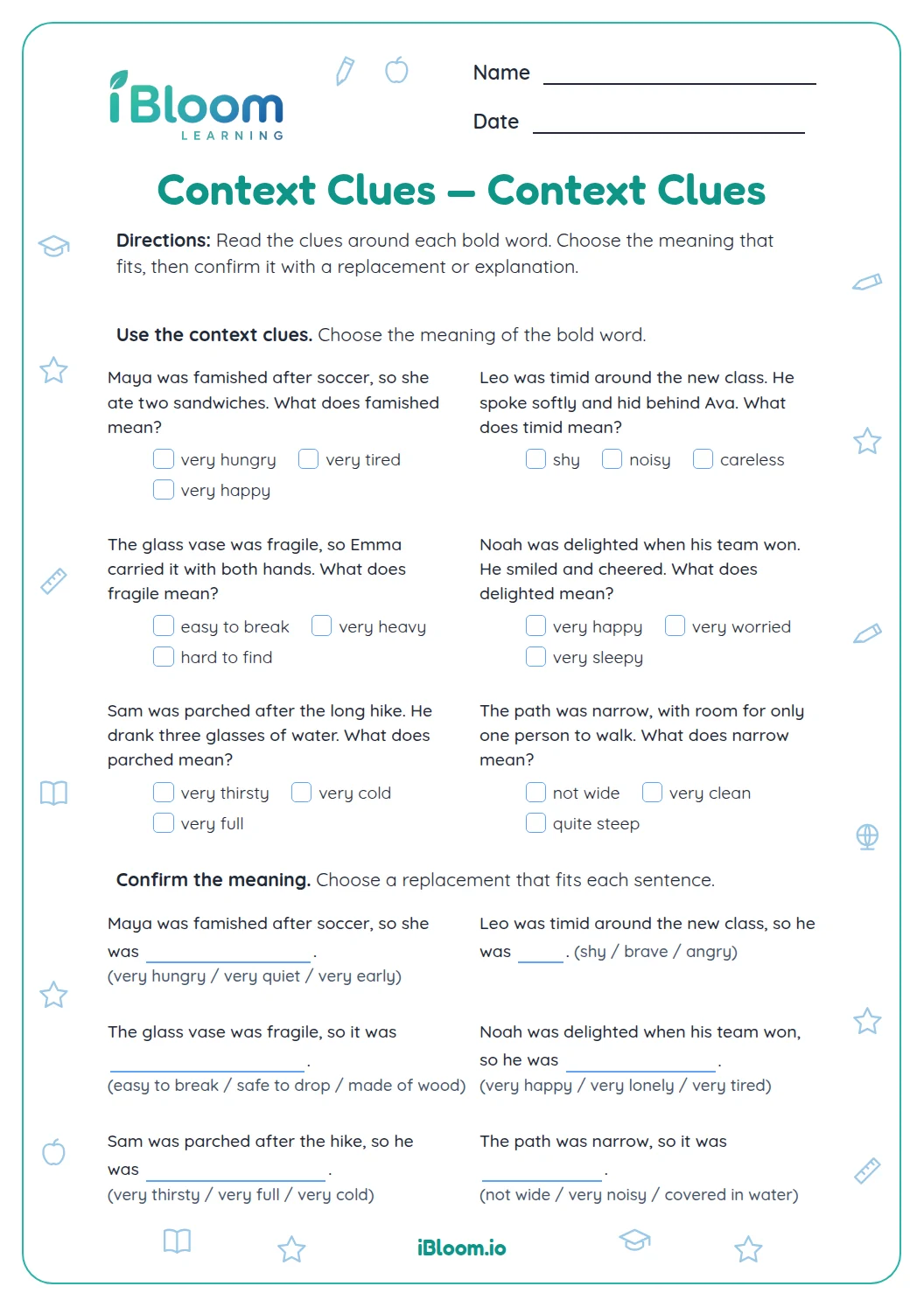
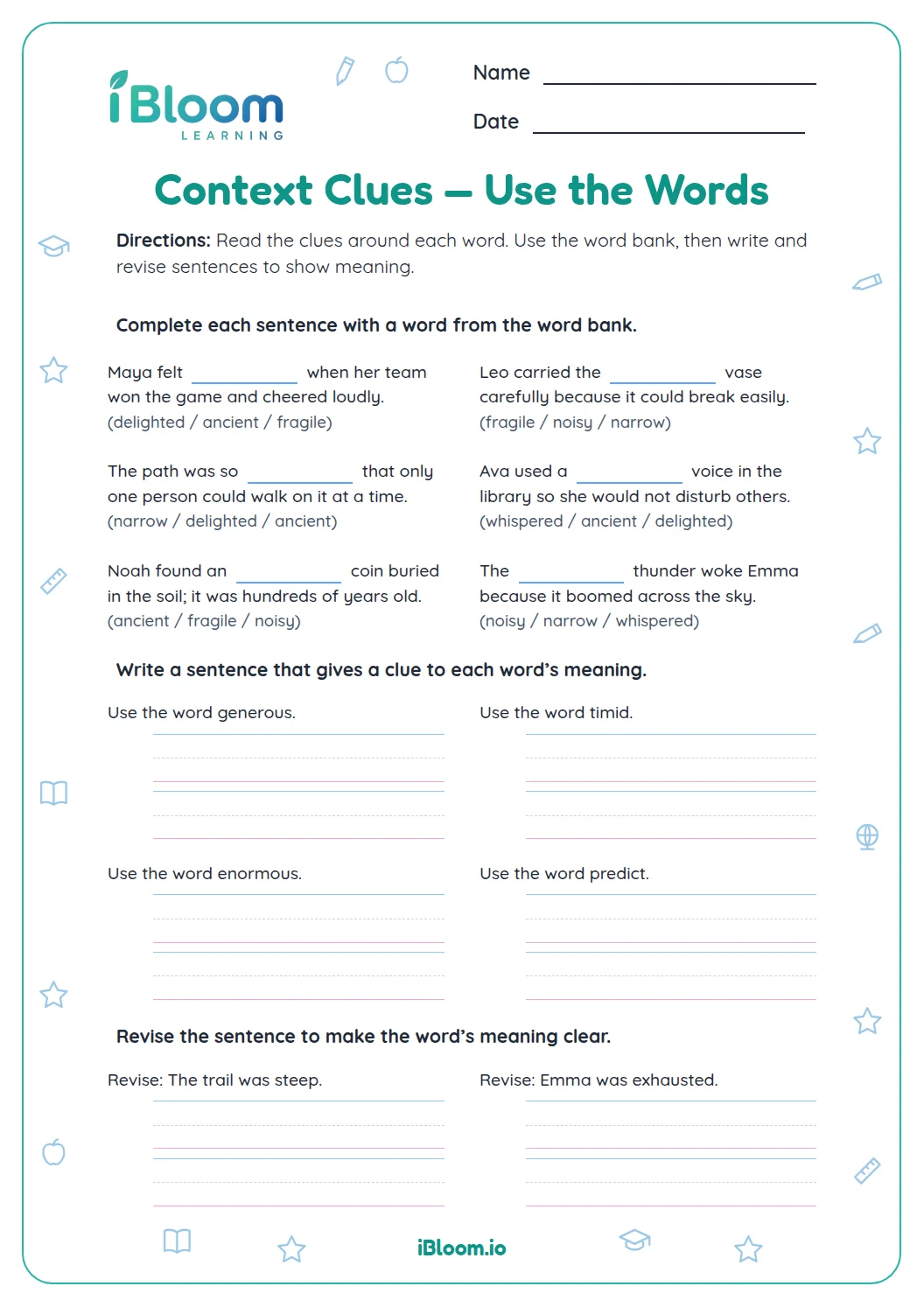
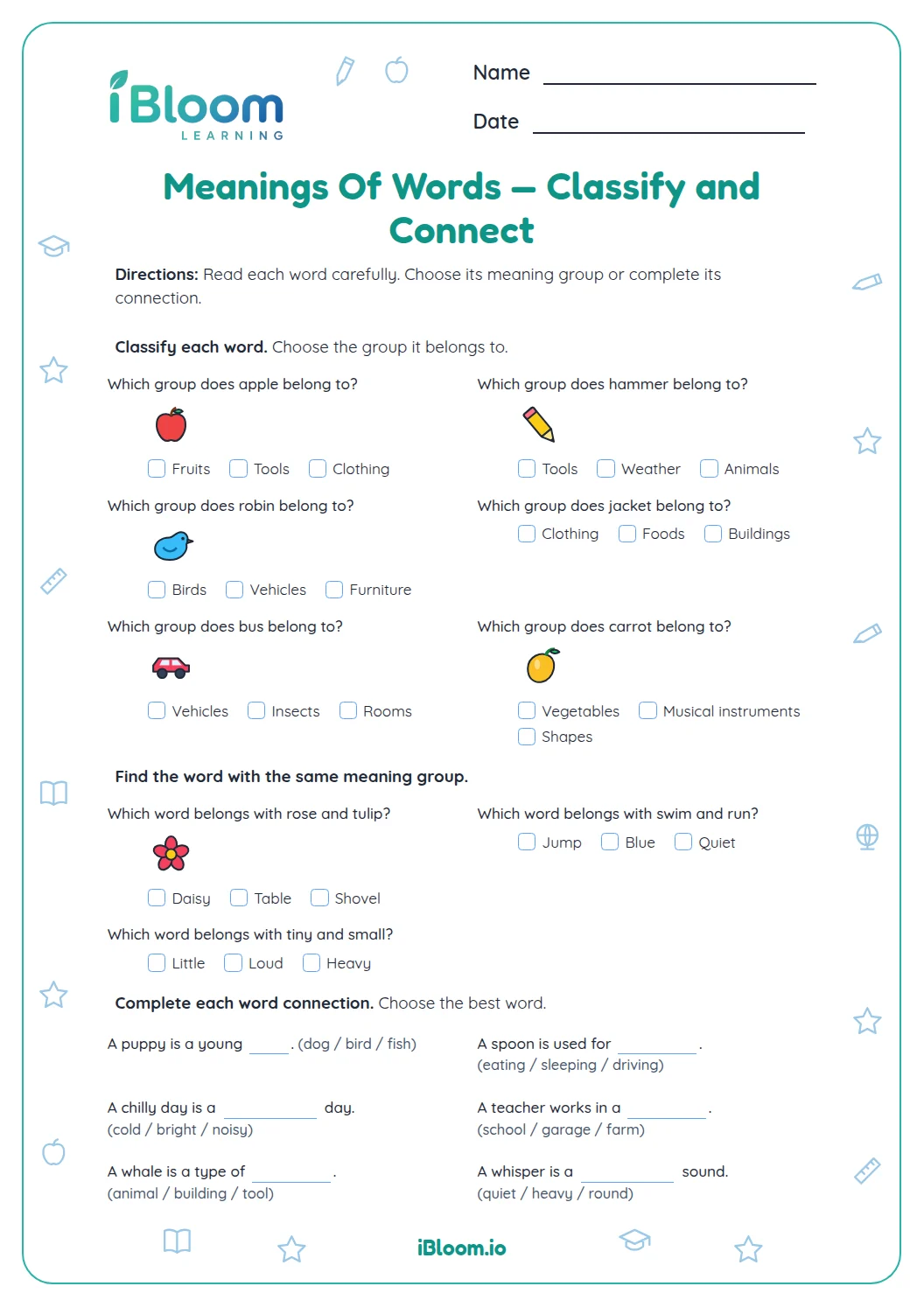
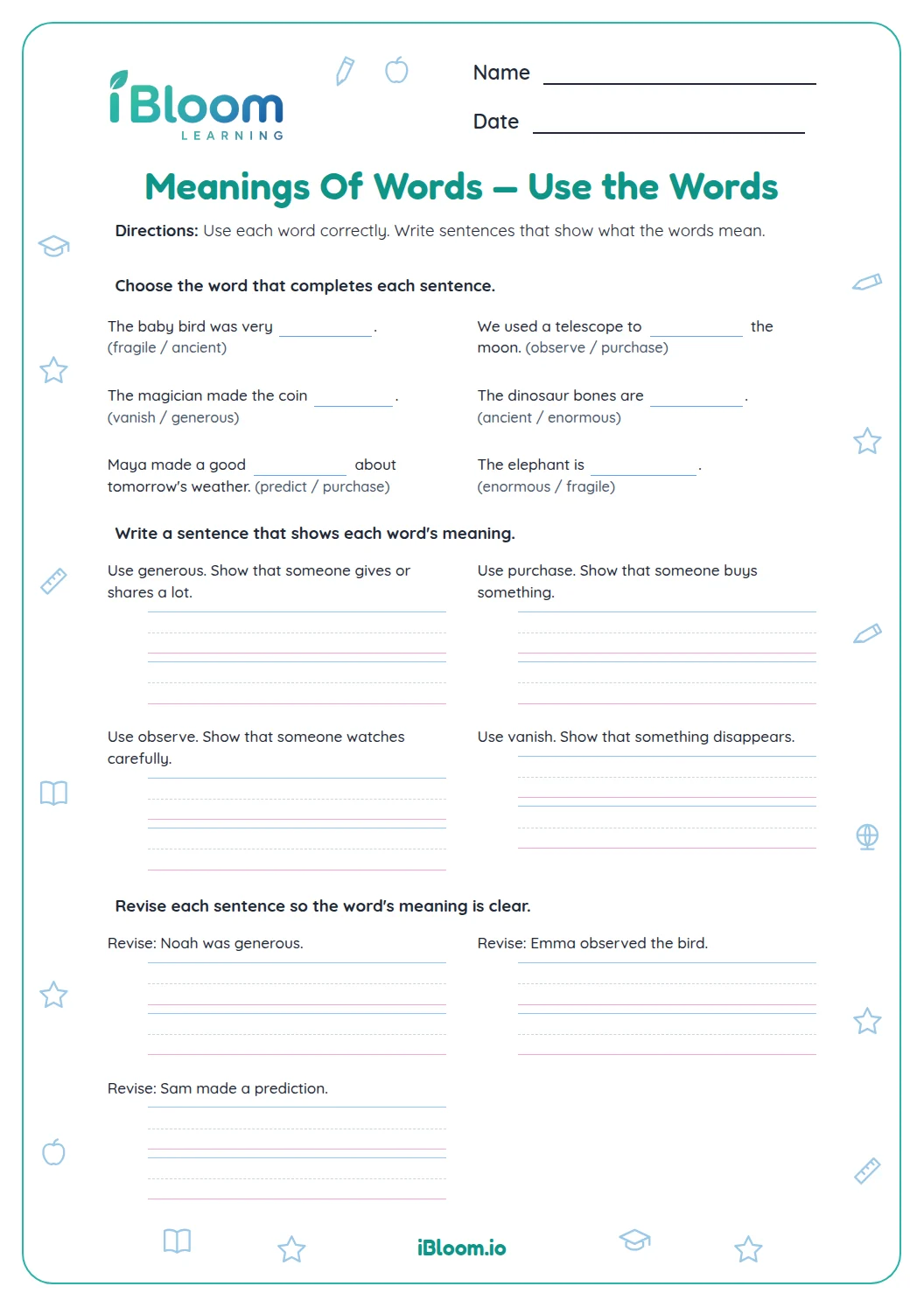
This free printable Grade 3 worksheet builds simile meaning and interpretation through 14 focused questions. Children use precise word meanings, relationships, and sentence clues in 3 short parts. It practices CCSS L.3.5.a: interpret nonliteral comparisons in context. The answer key is provided on a separate page.
Aligned to L.3.5.a
What does simile meaning and interpretation mean?
This worksheet asks learners to interpret words and comparisons in context. Children should use details in the whole sentence and check that the selected meaning fits all of them.
How can a clue help?
Read all the words around the target. A detail that describes an action, place, or result can narrow the meaning. Test the choice by rereading the sentence with that meaning in mind.
- 1Question 1: The pond was as smooth as glass after the wind stopped. What does the simile suggest?
- 2Answer: The water was calm.
- 3Use the clue in the sentence to rule out meanings that do not fit.
What will children practice?
The 14 questions move through 14 focused items: Interpret the Simile and additional practice. The answer key supports a quick review.
How to use this worksheet
- 1Read each complete sentence before looking at the choices.
- 2Underline or say the detail that gives a clue.
- 3Try the possible meanings in the sentence.
- 4Choose the one meaning that fits the whole idea.
- 5Use the answer key to review any choice that did not fit.
Common mistakes and quick fixes
The mistake
Choosing a familiar meaning without checking the sentence.
The fix
Reread the whole sentence and test the meaning in place.
The mistake
Using only one nearby word as a clue.
The fix
Check the action and the other details together.
The mistake
Picking a choice that fits part of the sentence but not all of it.
The fix
Read the sentence again with the choice substituted.
Common Core alignment
Students use vocabulary relationships and sentence details to work out meaning.
Interpret nonliteral comparisons in context.
On this sheet: Each item gives a sentence or comparison to interpret using word meaning.
Show the official wordingHide the official wording
Distinguish the literal and nonliteral meanings of words and phrases in context (e.g., take steps).
What to practice next
Make more practice
Further reading
Questions parents and teachers ask
What skill does this Grade 3 worksheet practice?
It practices simile meaning and interpretation by asking children to use words and sentence details to find a fitting meaning. The questions move from direct clues to comparisons and context, giving learners a chance to explain their choice aloud before checking the answer key.
How many questions are included?
There are 14 questions across the worksheet. Each item has one best answer, and the separate answer key gives a quick way for a parent or teacher to review the work after the learner finishes. Invite learners to explain the clue behind an answer before checking it.
How should a child use the answer key?
Have the learner attempt every question first, then compare each response with the key. For a missed item, reread the clue and test the correct meaning in the original sentence. This turns checking into another round of vocabulary practice.
Can this worksheet be used in a classroom?
Yes. It can serve as independent practice, a literacy center task, or a short review with a partner. Ask learners to point to the phrase that helped them choose, then invite them to explain why another choice does not fit.
What should a child do when two choices seem possible?
Reread the full sentence and check every detail, including what the subject does and what happens next. A strong choice fits the whole sentence. Encourage the learner to substitute each choice and listen for the one that makes sense.