




About this worksheet
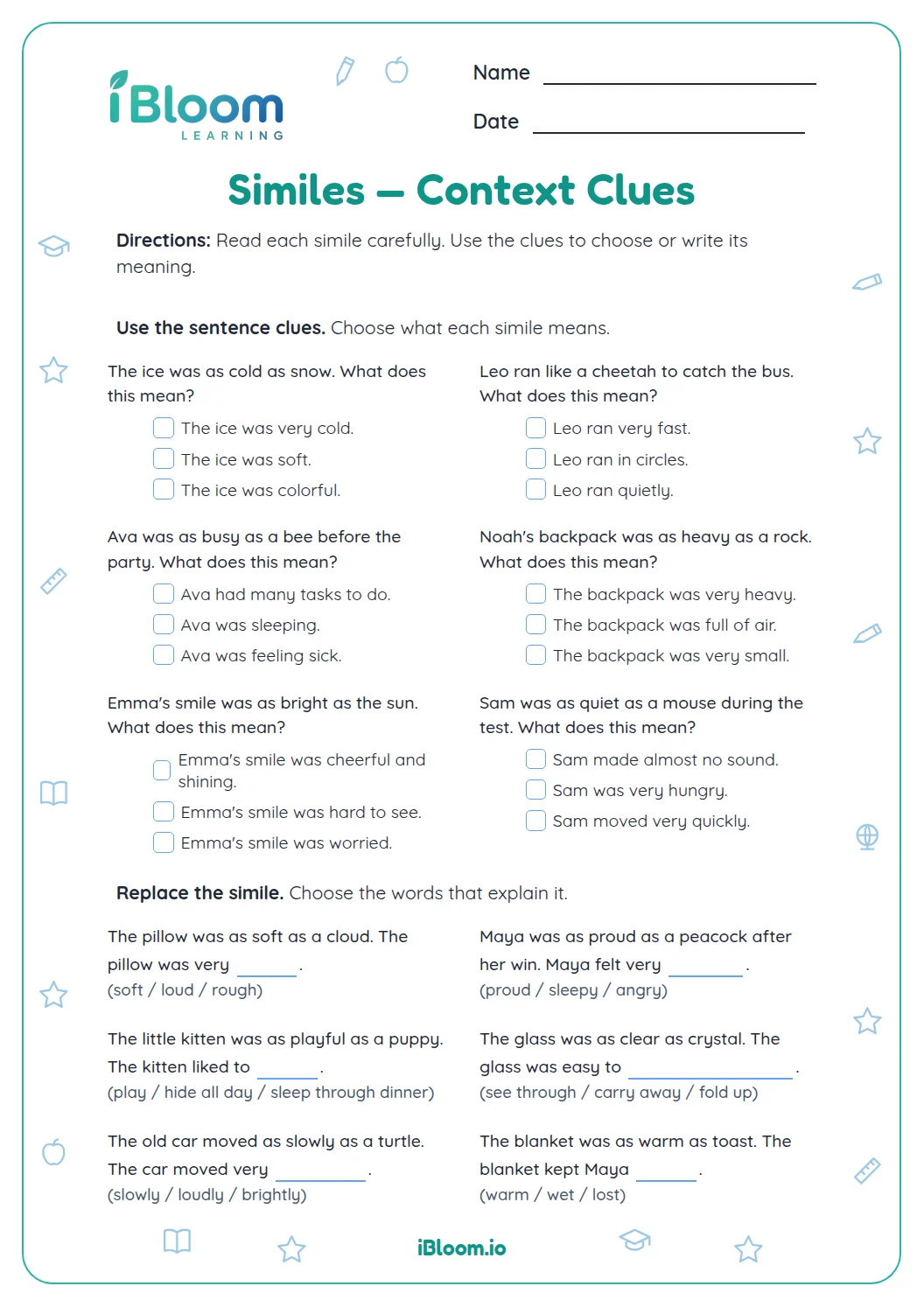
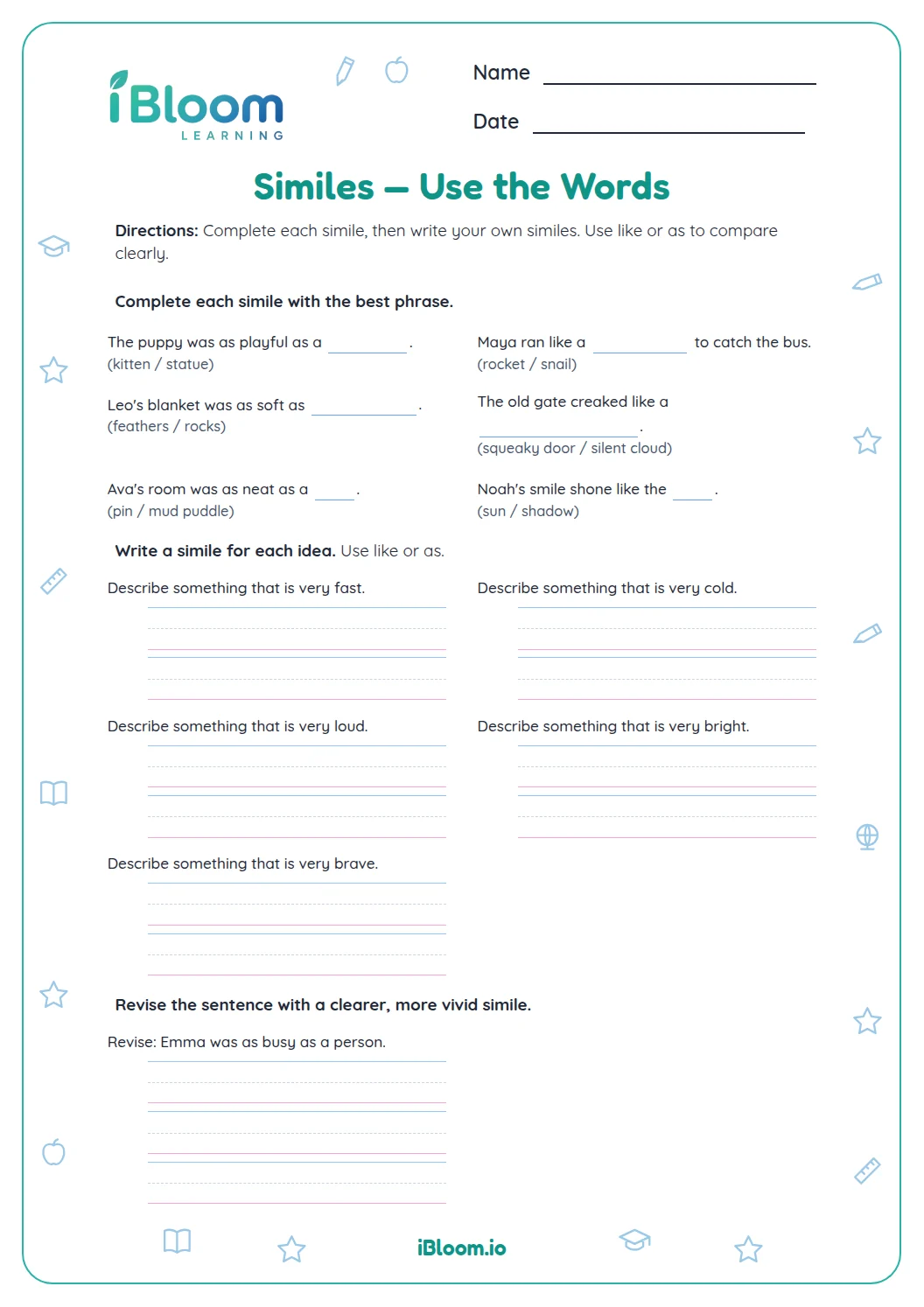
This Grade 3 worksheet connects similes with word meaning. Children read comparisons such as “as busy as a bee” and choose what the descriptive word suggests, then complete six similes with a fitting word. A separate answer key is included.
Aligned to L.3.5
How does a simile communicate meaning?
A simile compares two different things, often with like or as. The comparison helps readers picture a quality: an object may be smooth as glass or a voice as soft as a whisper. The words around the comparison help identify the intended meaning.
Children do not need to believe the two things are literally the same. They look for the quality the comparison highlights.
How can a child interpret one comparison?
Read the whole sentence, identify what is being compared, and name a quality that fits both. Then check that the chosen meaning matches the sentence.
- 1The child was as busy as a bee.
- 2A bee moves around while gathering food.
- 3Here, busy means doing many things.
- 4Choose “doing many things.”
What is the difference between the two parts?
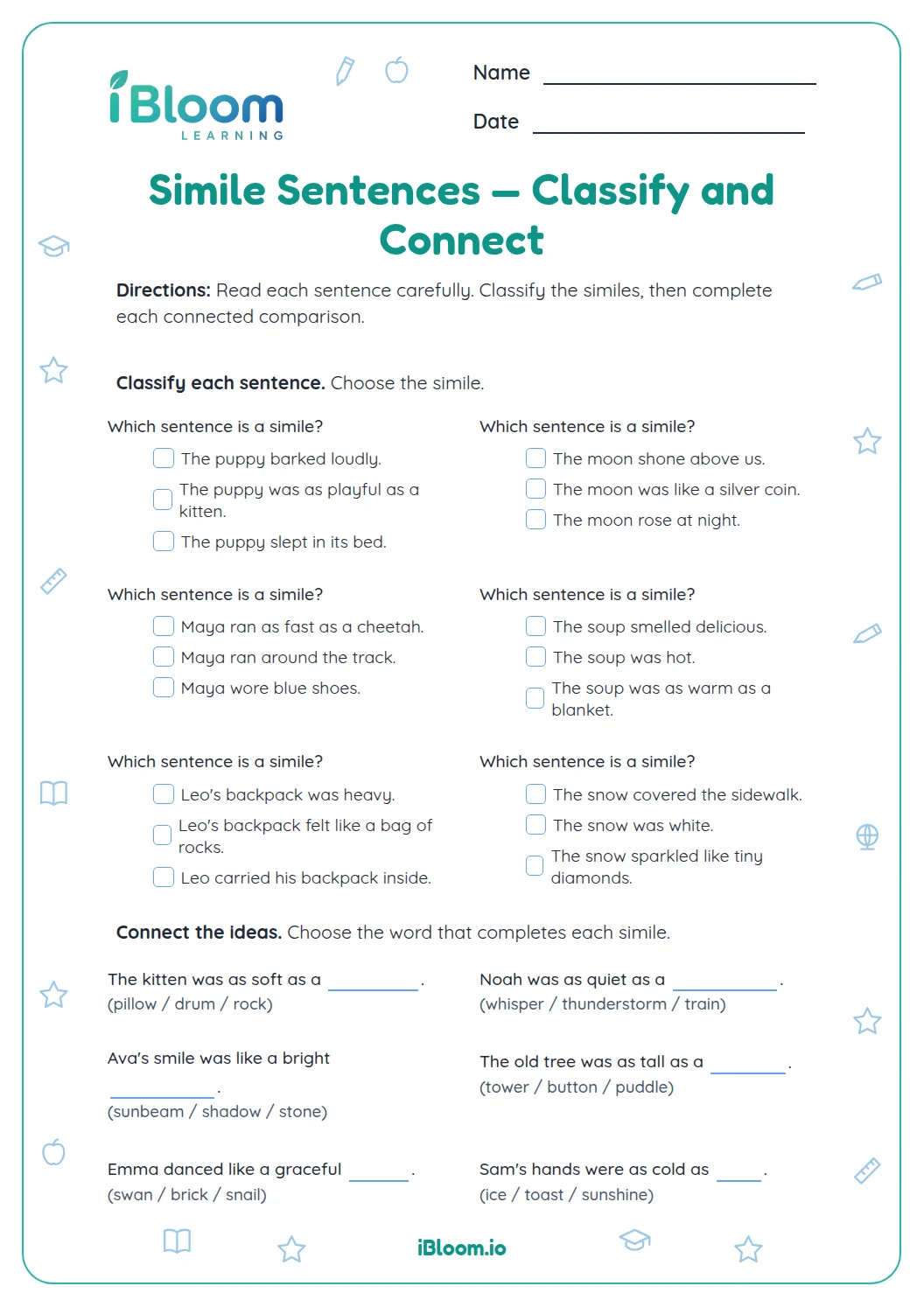
Part A has eight similes and asks what a describing word means in context. Part B has eight comparisons with one missing word or phrase. The answers focus on qualities such as color, size, sound, movement, and feeling.
How to use this worksheet
- 1Read the complete sentence once.
- 2Find the two things being compared.
- 3Think of a quality they can share.
- 4For a blank, test each choice in the sentence.
- 5Reread the simile to check that the meaning is sensible.
Common mistakes and quick fixes
The mistake
Taking the comparison literally
The fix
Ask which quality the comparison highlights instead of treating the two things as identical.
The mistake
Choosing a vivid word that does not fit
The fix
Read the sentence again with the choice inserted and check the shared quality.
The mistake
Ignoring the word after the blank
The fix
Use the whole simile, including its comparison partner, to guide the choice.
Common Core alignment
This sheet uses sentence context to explore figurative comparisons and word meaning.
Understand figurative language and word meaning in context.
On this sheet: Children interpret similes in context and choose the meaning that the comparison conveys.
Show the official wordingHide the official wording
Demonstrate understanding of figurative language, word relationships and nuances in word meanings.
What to practice next
Make more practice
Further reading
Questions parents and teachers ask
What does a simile help a reader understand?
A simile compares two things, often using “like” or “as.” On this worksheet, children read each comparison and use the shared quality to choose a word meaning, then complete similes with a fitting descriptive word. Ask the child to name the shared quality in the comparison.
How many simile questions are on the sheet?
There are 14 questions across two worksheet pages: eight questions about meanings in similes and six simile completions. The separate answer key marks each choice. A child can explain which comparison helped make the choice. Ask the child to name the shared quality in the comparison.
Do all similes use the word like?
In “as busy as a bee,” the comparison suggests activity. It does not say that the child is an insect. The phrase helps readers understand the descriptive word busy as doing many things. Ask the child to name the shared quality in the comparison.
Why might “as busy as a bee” not mean a person is an insect?
First read the whole comparison, then identify the quality shared by the two things. For “as straight as an arrow,” the shared quality is not curving. Reread the answer in the sentence to check that it fits. Ask the child to name the shared quality in the comparison.
Can a simile have more than one possible interpretation?
Yes. Part B asks children to choose a word that completes each comparison, such as “as slippery as a fish.” The answer should create a sensible comparison and match the sentence around the blank. Ask the child to name the shared quality in the comparison.
Is this simile practice suitable for Grade 3?
Yes. The answer key is printed on separate pages and marks the intended choice for each item. Ask the child to explain what quality the simile compares before looking at the key. Ask the child to name the shared quality in the comparison.